Sound insulation
US20140034415A1
2014-02-06
13/755,572
2013-01-31
✅ Patent granted
US 9,475,260 B2
2016-10-25
-
-
Jeremy Luks
The Belles Group, P.C.
2033-01-31
Abstract:
A sound insulation device (D) includes at least three layers:
-
- a first layer (1), facing a sound source to be blocked, comprising a blackout cloth with a weight greater than 250 g/m2,
- a second layer (2) including a metalized cloth, a metalized face (2a) of the cloth being disposed in contact with the first layer,
- a third layer (3) including a brushed cotton cloth having a weight greater than 250 g/m2, disposed in contact with the second layer (2) on the side opposite the first layer (1),
the metalized cloth being produced by in vacuo metallization of a woven substrate previously calendered by the application of a compression force.
Assignee:
- Brunswick et Fils 2 🇫🇷 Paris, France
- BRUNSWICK ET FILS 1 🇫🇷 , France
Applicant:
Interested in similar patents?
Get notified when new applications in this technology area are published.
Classification:
G10K11/168 » CPC main
Methods or devices for transmitting, conducting or directing sound in general; Methods or devices for protecting against, or for damping, noise or other acoustic waves in general; Methods or devices for protecting against, or for damping, noise or other acoustic waves in general; Selection of materials Plural layers of different materials, e.g. sandwiches
B32B5/024 » CPC further
Layered products characterised by the non- homogeneity or physical structure, i.e. comprising a fibrous, filamentary, particulate or foam layer; Layered products characterised by having a layer differing constitutionally or physically in different parts characterised by structural features of a layer Woven fabric
B32B5/02 IPC
Layered products characterised by the non- homogeneity or physical structure, i.e. comprising a fibrous, filamentary, particulate or foam layer; Layered products characterised by having a layer differing constitutionally or physically in different parts characterised by structural features of a layer
B32B7/02 » CPC main
Layered products characterised by the relation between layers; Layered products characterised by the relative orientation of features between layers, or by the relative values of a measurable parameter between layers, i.e. products comprising layers having different physical, chemical or physicochemical properties; Layered products characterised by the interconnection of layers Physical, chemical or physicochemical properties
D06M11/83 » CPC further
Treating fibres, threads, yarns, fabrics or fibrous goods made from such materials, with inorganic substances or complexes thereof; Such treatment combined with mechanical treatment, e.g. mercerising with metals; with metal-generating compounds, e.g. metal carbonyls; Reduction of metal compounds on textiles
D06M17/00 » CPC further
Producing multi-layer textile fabrics
E04B1/84 IPC
Constructions in general; Structures which are not restricted either to walls, e.g. partitions, or floors or ceilings or roofs; Insulation or other protection; Elements or use of specified material therefor; Heat, sound or noise insulation, absorption, or reflection . Other building methods affording favourable thermal or acoustical conditions, e.g. accumulating of heat within walls specifically with respect to sound only Sound-absorbing elements
B32B2307/102 » CPC further
Properties of the layers or laminate having particular acoustical properties Insulating
E04B1/8409 » CPC further
Constructions in general; Structures which are not restricted either to walls, e.g. partitions, or floors or ceilings or roofs; Insulation or other protection; Elements or use of specified material therefor; Heat, sound or noise insulation, absorption, or reflection . Other building methods affording favourable thermal or acoustical conditions, e.g. accumulating of heat within walls specifically with respect to sound only; Sound-absorbing elements sheet-shaped
E04B2001/7691 » CPC further
Constructions in general; Structures which are not restricted either to walls, e.g. partitions, or floors or ceilings or roofs; Insulation or other protection; Elements or use of specified material therefor; Heat, sound or noise insulation, absorption, or reflection . Other building methods affording favourable thermal or acoustical conditions, e.g. accumulating of heat within walls specifically with respect to heat only Heat reflecting layers or coatings
B32B5/26 » CPC further
Layered products characterised by the non- homogeneity or physical structure, i.e. comprising a fibrous, filamentary, particulate or foam layer; Layered products characterised by having a layer differing constitutionally or physically in different parts characterised by the presence of two or more layers which are next to each other and are fibrous, filamentary, formed of particles or foamed one layer being a fibrous or filamentary layer another layer also being fibrous or filamentary
E04B1/76 IPC
Constructions in general; Structures which are not restricted either to walls, e.g. partitions, or floors or ceilings or roofs; Insulation or other protection; Elements or use of specified material therefor; Heat, sound or noise insulation, absorption, or reflection . Other building methods affording favourable thermal or acoustical conditions, e.g. accumulating of heat within walls specifically with respect to heat only
B32B2262/062 » CPC further
Composition or structural features of fibres which form a fibrous or filamentary layer or are present as additives; Vegetal fibres Cellulose fibres, e.g. cotton
Description
FIELD OF THE INVENTION
The field of the present invention relates to a sound insulation device.
BACKGROUND
In a context of improving the quality of life, the preservation of the habitat from sound nuisances is important.
The openings from a building to the outside very often have poor sound insulation and the glazed area is tending to increase with the aim of improving the entry of natural light. Existing solutions use fabrics that enable only a limited performance in terms of sound insulation or use metal films that generate highly unpleasant crumpling noises.
The object of the invention is thus to provide a sound insulation device that offers sound insulation performance but does not generate unwanted noises degrading the level of comfort of the building and has an agreeable aesthetic appearance enabling harmonious integration into the building.
SUMMARY OF THE INVENTION
A sound insulation device of the invention is characterized in that it includes at least three layers:
-
- a first layer, facing a sound source to be blocked, comprising a blackout cloth with a weight greater than 250 g/m2,
- a second layer including a metalized cloth, a metalized face of the cloth being disposed in contact with the first layer,
- a third layer including a brushed cotton cloth having a weight greater than 250 g/m2, disposed in contact with the second layer on the side opposite the first layer,
the metalized cloth being produced by in vacuo metallization of a woven substrate previously calendered by the application of a compression force.
The woven substrate advantageously includes threads with a maximum weight of 70 deniers with a minimum of 30 filaments per thread.
The use of fine strands enables the brilliance of the substrate and therefore the brilliance of the metalized fabric to be increased. A thread including 36 filaments is preferably used having a weight of 50 deniers.
Tests carried out by the inventor have shown that the use of a woven substrate, commonly referred to as cloth, was essential to achieve the flexibility objectives.
In the case of use of the sound insulation of the invention as a curtain, the flexibility of the cloth has a high impact on the fall and aesthetic appearance of a curtain made from it.
The cloth used for the third layer may include brushed cotton.
It is desirable to use materials of high weight in order to maximize the sound insulation properties. The first layer preferably comprises a blackout cloth having a weight greater than 260 g/m2.
The third layer may also comprise a blackout cloth having a weight greater than 260 g/m2.
The woven substrate used, also referred to as cloth, is preferably based on synthetic fibers.
The woven substrate may be based on microfibers, i.e. fibers having more than 100 filaments per decitex, or fine strands, i.e. fibers having close to 100 filaments per decitex.
Using synthetic fibers makes it possible to provide a material that can at least partially melt without burning. The use of microfibers or fine strands enables the flexibility of the cloth to be preserved.
The weaving of the threads is dense and very tight. The woven substrate preferably comprises at least 42 warp threads and 40 weft threads per inch. The woven substrate more preferably comprises 44 warp threads and 41 weft threads per inch.
The cloth used for the second layer is preferably washed before calendering, prior to the deposition of a metallic layer. This operation is also known as desizing. Indeed, in the usual cloth fabrication techniques a deposit of size is applied to the threads before they are woven. This size must be eliminated, notably to preserve the flexibility of the product.
To obtain optimum desizing, it is possible to perform two desizing passes, for example using soda for one of the two passes.
Calendering is effected in one pass or a plurality of successive passes on one or both faces of the substrate and during calendering a compression force is applied to the cloth at a high temperature.
One pass at 15 m/minute on each face at a temperature of 195° C. and a force of 80 tonnes enables the required effect to be obtained.
The objective is to evacuate some of the air present in the cloth. It is found that a vacuum pressure of 2.3×10⁻³ atm (higher value 24×10−2 atm) is necessary to enable the metallization phase to be carried out. The thread count, i.e. all of the properties of the cloth, and the treatments carried out on the cloth make it possible to remain below this value.
The metallization phase is effected in vacuo at 400 m/minute, notably, by vapor phase deposition of metal. The metal deposited may be aluminum or silver, for example.
Other features and advantages of the invention will become apparent in the course of the following description of a preferred embodiment given with reference to the appended drawing but in no way limiting on the invention.
BRIEF DESCRIPTION OF THE DRAWING
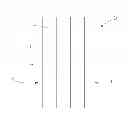
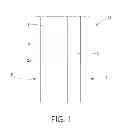
FIG. 1 is a diagrammatic view partly in section of a device of the invention.
DETAILED DESCRIPTION OF THE PREFERRED EMBODIMENT
There can be seen in FIG. 1 a device D of the invention including a first layer 1 facing an outdoor area E from which come sounds to be blocked.
The first layer 1 is contiguous with a second layer 2 or internal layer composed of a cloth including a metallic layer 2a on the face in contact with the first layer 1.
Finally, a third layer 3 is disposed in contact with the second face of the second layer 2, on the side opposite the first layer 1.
Tests have been carried out demonstrating that the insulation in accordance with the invention can enable attenuation of external noise by up to 7 dB, i.e. a reduction of three quarters.
The insulation of the invention is therefore particularly suited to the production of curtains placed in front of windows or french windows inside dwellings.
Claims
1. A sound insulation device (D), which includes at least three layers:
a first layer, facing a sound source to be blocked, comprising a blackout cloth with a weight greater than 250 g/m2,
a second layer including a metalized cloth, a metalized face of the cloth being disposed in contact with the first layer,
a third layer including a brushed cotton cloth having a weight greater than 250 g/m2, disposed in contact with the second layer on the side opposite the first layer,
the metalized cloth being produced by in vacuo metallization of a woven substrate previously calendered by the application of a compression force.
2. The sound insulation device as claimed in claim 1, wherein the metalized cloth includes threads with a maximum weight of 70 deniers with a minimum of 30 filaments per thread.
3. The sound insulation device as claimed in claim 1, wherein the cloth used for the third layer includes brushed cotton.
4. The sound insulation device as claimed in claim 1, wherein the first layer comprises a blackout cloth having a weight greater than 260 g/m2.
5. The sound insulation device as claimed in claim 1, wherein the third layer comprises a blackout cloth having a weight greater than 260 g/m2.
Images & Drawings included:
Sources:
- United States Patent and Trademark Office - verify current appl. status at the USPTO↗
Similar patent applications:
- » 20240042742
Composition for sound insulating sheet member, sound insulating sheet member, and sound insulating structure body - » 20210039361
Composition for sound insulating sheet member, sound insulating sheet member, and sound insulating structure body - » 20160355076
Transmitted sound insulating member, and transmitted sound insulating structure including the transmitted sound insulating member - » 20200017411
Sound insulating material, sound insulating plate and partition structure of train carriage - » 20240181975
METHOD FOR PRODUCING A SOUND INSULATION WITH FLEECE INSULATION AND SOUND INSULATION - » 20180001810
Method for manufacturing sound insulation material, sound insulation material manufactured using the method and carpet for vehicle using the same - » 20130025965
Sound insulation floor structure and sound insulation floor component as well as method for reducing floor impact sound - » 20200269775
Sound insulation composition and sound insulation sheet for vehicle - » 20180319969
Sound insulation composition and sound insulation sheet for vehicle - » 20230124844
Sound insulation plate and sound insulation structure using the same
Recent applications in this class:
- » 20250266026 2025-08-21
Sound-Attenuating Device and Method of Use Thereof - » 20250182731 2025-06-05
ENERGY EFFICIENT SOUNDPROOFING WINDOW RETROFITS - » 20250124908 2025-04-17
SYSTEM, APPARATUS, AND METHOD FOR SOUND CONTROL - » 20250118282 2025-04-10
SYSTEMS AND METHODS FOR SOUND ABSORBERS - » 20250095620 2025-03-20
SOUNDPROOF HEAT-DISSIPATION COVER, COVER MEMBER, AND MANUFACTURING METHOD OF SOUNDPROOF HEAT DISSIPATION COVER - » 20250069574 2025-02-27
ACOUSTIC ABSORPTIVE PANEL - » 20250046289 2025-02-06
SOUND BARRIER SYSTEM - » 20250046288 2025-02-06
PARTICLE ACOUSTIC DAMPER POUCH - » 20250037691 2025-01-30
SOLID ADHESIVE FILM FOR ACOUSTIC LINER AND METHOD - » 20250029587 2025-01-23
ACOUSTIC ARTICLE, DECORATIVE ELEMENT, AND SYSTEM COMPRISING SAME
Recent applications for this Assignee:
- » 20120178321 2012-07-12
METHOD FOR PRODUCING A METALLISED FABRIC, AND RESULTING FABRIC