Metal-oxide nanofiller, method for synthesising same, and use thereof in a fluorocarbon-resin non-stick coating
US20140034651A1
2014-02-06
13/990,431
2011-11-30
✅ Patent granted
US 9,862,843 B2
2018-01-09
WO; PCT/FR2011/052829; 20111130
WO; WO2012/072953; 20120607
Yan Lan
The Webb Law Firm
2034-11-16
Abstract:
Provided is a metal-oxide nanofiller including at least two graft chains, at least one of the chains being hydrophilic and the other being a hydrophobic chain compatible with fluorinated polymers. The hydrophobic chain is an oligomer, the weight-average molar mass Mw of which is between 300 and 20,000 g/mol−1. Also provided is a non-stick coating comprising such a filler, as well as to a culinary article provided with such a coating.
Inventors:
- BRUNO AMEDURI 50 🇫🇷 Montpellier, France
- Bernard Boutevin 31 🇫🇷 Montpellier, France
- Jean-Luc Perillon 26 🇫🇷 Saint Paul Trois Chateaux, France
- Nelly Durand 2 🇫🇷 Mulhouse, France
- Cedric Loubat 7 🇫🇷 Vendargues, France
- Barbara Gantillon 2 🇫🇷 Poisy, France
Assignee:
- SEB S.A. 459 🇫🇷 Ecully, France
- ECOLE NATIONALE SUPERIEURE DE CHIMIE DE MONTPELLIER 39 🇫🇷 Montpellier, France
- SPECIFIC POLYMERS 1 🇫🇷 Clapiers, France
Applicant:
Interested in similar patents?
Get notified when new applications in this technology area are published.
Classification:
A47J36/025 » CPC further
Parts, details or accessories of cooking-vessels; Selection of specific materials, e.g. heavy bottoms with copper inlay or with insulating inlay Vessels with non-stick features, e.g. coatings
C09C1/3081 » CPC main
Treatment of specific inorganic materials other than fibrous fillers ; Preparation of carbon black; Compounds of silicon; Silicic acid Treatment with organo-silicon compounds
C09C1/30 IPC
Treatment of specific inorganic materials other than fibrous fillers ; Preparation of carbon black; Compounds of silicon Silicic acid
A47J36/02 IPC
Parts, details or accessories of cooking-vessels Selection of specific materials, e.g. heavy bottoms with copper inlay or with insulating inlay
C09C1/40 IPC
Treatment of specific inorganic materials other than fibrous fillers ; Preparation of carbon black Compounds of aluminium
C09C1/309 » CPC further
Treatment of specific inorganic materials other than fibrous fillers ; Preparation of carbon black; Compounds of silicon; Silicic acid Combinations of treatments provided for in groups -
B05D5/08 IPC
Processes for applying liquids or other fluent materials to surfaces to obtain special surface effects, finishes or structures to obtain an anti-friction or anti-adhesive surface
B05D5/083 » CPC further
Processes for applying liquids or other fluent materials to surfaces to obtain special surface effects, finishes or structures to obtain an anti-friction or anti-adhesive surface involving the use of fluoropolymers
C09C1/3072 » CPC further
Treatment of specific inorganic materials other than fibrous fillers ; Preparation of carbon black; Compounds of silicon; Silicic acid Treatment with macro-molecular organic compounds
C09C1/407 » CPC further
Treatment of specific inorganic materials other than fibrous fillers ; Preparation of carbon black; Compounds of aluminium Aluminium oxides or hydroxides
C09C3/006 » CPC further
Treatment in general of inorganic materials, other than fibrous fillers, to enhance their pigmenting or filling properties Combinations of treatments provided for in groups -
C09C3/12 » CPC further
Treatment in general of inorganic materials, other than fibrous fillers, to enhance their pigmenting or filling properties Treatment with organosilicon compounds
C01P2002/86 » CPC further
Crystal-structural characteristics defined by measured data other than those specified in group by NMR- or ESR-data
C01P2004/61 » CPC further
Particle morphology; Particles characterised by their size Micrometer sized, i.e. from 1-100 micrometer
C01P2004/62 » CPC further
Particle morphology; Particles characterised by their size Submicrometer sized, i.e. from 0.1-1 micrometer
C01P2004/64 » CPC further
Particle morphology; Particles characterised by their size Nanometer sized, i.e. from 1-100 nanometer
B82Y30/00 » CPC further
Nanotechnology for materials or surface science, e.g. nanocomposites
C09C3/00 IPC
Treatment in general of inorganic materials, other than fibrous fillers, to enhance their pigmenting or filling properties
C09C3/10 » CPC further
Treatment in general of inorganic materials, other than fibrous fillers, to enhance their pigmenting or filling properties Treatment with macromolecular organic compounds
C01P2006/12 » CPC further
Physical properties of inorganic compounds Surface area
Description
The present invention generally relates to a nanoparticulate filler (or nanofiller) of a metal-oxide such as silica, and its usage in a fluorocarbon resin-based aqueous dispersion. The present invention also relates to a non-stick coating comprising such a filler, as well as to a culinary article provided with such a coating.
The synthesis of the nanofiller and the manner in which to achieve the non-stick coating and culinary article are also concerned.
The main purpose of the present invention is to introduce as delicately as possible a filler in the form of metal-oxide nanoparticles such as silica in fluorocarbon resin-based non-stick coatings, such as for example polytetrafluoroethylene, (PTFE). For this, it is essential to make the filler (particularly the silica) compatible with the fluorocarbon resin particularly when is in the form an of emulsion comprising a continual aqueous phase and a discontinuous phase constituted by the resin. In fact, the fluorocarbon resin-based non-stick coatings are initially prepared from such emulsions, then are applied onto a substrate and fritted.
A solution known by the skilled person consists in improving the compatibility of the silica nanoparticles with the PTFE by grafting to it a fluorinated chain, such as for example a poly(HEPO)silane which makes the nanoparticles compatible with the PTFE.
However, the major drawback of a silica modified by a poly(HEPO)silane is that it is too hydrophobic and cannot be used in the dispersion formulations of PTFE typically used to achieve non-stick coatings or textile impregnation products. In fact, it is not possible to disperse such a silica in an aqueous medium, and hence much less so in a PTFE emulsion.
The technical issue sought to be resolved by the present invention hence consists more particularly in making the silica (or any other metal oxide usable as a filler in an aqueous dispersion of fluorocarbon resin) compatible with the PTFE (hence hydrophobic), but also dispersible in aqueous medium.
In order to resolve this technical issue, the applicant has implemented a metal-oxide nanoparticle synthesis method, which not only comprises the grafting of a chain compatible with the PTFE (or any other fluorocarbon resin usable within the scope of the present invention), for example poly(HEPO)silane, but also the grafting of a polyalkylene glycol-based second chain modified by a silane.
The applicant has discovered surprisingly that this method lead to an unexpected and surprising effect: the two grafts can coexist simultaneously on the same particle, without rejection from any of them. In fact, one would have expected that once grafted by the hydrophilic and hydrophobic chains, the particle would reject the graft of opposite nature.
One thus obtains a nanofiller (particularly of silica), that is perfectly wettable and which is easily incorporated into the dispersion. Furthermore, this nanofiller also has surfactant characteristics which allow it to super-stabilize the PTFE dispersions.
The present invention relates to a nanofiller of a metal-oxide comprising at least two graft chains, at least one of the chains being hydrophilic and the other being a hydrophobic chain compatible with fluorinated polymers.
According to the invention, the hydrophobic chain is an oligomer, the weight-average molar mass Mw of which is between 300 and 20.000 g/mol−1.
Preferably, the weight-average molar masses Mw of the hydrophobic chain are between 500 and 10.000 g/mol−1, and better between 1000 and 5000 g/mol−1. More preferably, the weight-average molar masses Mw of the hydrophobic chain are comprised between 1000 and 1500 g/mol−1.
By nanofiller, is meant within the meaning of the present invention, a filler that comes in the form of nanoparticles whereof one of the dimensions ranges between 5 and 2000 nm, preferably between 20 and 200 nm, and better still between 10 and 100 nm.
By way of metal oxide usable in the non-stick coating according to the invention, one may particularly name silica, alumina, cerium oxide, zinc oxide, vanadium oxide and zirconium oxide, and titanium dioxide. The preferred metal oxide is silica, and particularly colloidal silica or pyrogenic silica.
Advantageously, the hydrophilic chain is a derivative of polyalkylene glycol modified by:
-
- either an alkoxysilane,
- or an acid or a phosphoric ester,
- or an acid or phosphinic ester,
- or a carboxylic acid.
Preferably, the hydrophilic chain is a derivative of polyethylene-glycol (PEG) or a derivative of polypropylene-glycol (PEG), and better still a derivative of polyethylene glycol (PEG) or polypropylene glycol (PPG) modified by an alkoxysilane (particularly a triethoxysilane or a trimethoxysilane).
Regarding the hydrophobic chain, according to a first particularly advantageous embodiment of the present invention, it is an HFPO oligomer modified by an alkoxysilane.
According to other equally advantageous embodiments of the invention, it is also possible to use vinylidene fluoride (VDF), tetrafluoroethylene (TFE) or VDF-TFE co-oligomers, VDF-hexafluoropropylene, VDF-chlorotrifluoroethylene, alone or mixed and modified by an alkoxysilane.
A preferred nanofiller may be constituted of silica comprising two graft chains:
-
- one of the chains being a hydrophilic chain consisting in a derivative of polyethylene glycol modified by a triethoxysilane, and
- the other chain being an oligomer of the hexafluoropropylene oxide (HFPO) modified by a triethoxysilane or a methyldiethoxysilane.
The present invention also relates to a dispersion in aqueous phase of at least a fluorocarbon resin comprising a nanofiller according the invention.
The fluorocarbon resin used in the dispersion according to the invention may be advantageously selected amongst the polytetrafluoroethylene (PTFE), the copolymer of tetrafluoroethylene and perfluoro propylvinylether (PFA), and the copolymer tetrafluoroethylene and hexafluoropropylene (FEP), the polyvinylidene fluoride (PVDF), the MVA (copolymer of TFE/PMVE), the terpolymer TFE/PMVE/FAVE, the ETFE and their mixtures.
The dispersion according to the invention may further comprise, the fluorocarbon resin and the nanofiller, pigments (for example carbon black, iron oxides, mixed oxides of cobalt and manganese or even titanium dioxide), and/or additives selected among the thickening agents, surfactants, stabilizers and cosolvents.
The present invention also relates to a method of synthesis of a silica nanofiller comprising a hydrophilic chain consisting in a derivative of polyalkylene glycol modified by an alkoxysilane and a hydrophobic chain consisting in a HEPO hydrophobic oligomer, and/or a VDF and/or a TFE modified by an alkoxysilane, said method comprising the following steps:
-
- providing a polyalkylene glycol modified by an alkoxysilane;
- the oligomerization of said hydrophobic oligomer, followed by its functionalization by an alkoxysilane;
- the grafting onto the silica nanofiller on the one hand of said hydrophobic oligomer functionalized by an alkoxysilane, and on the other hand of the polyalkylene glycol modified by an alkoxysilane.
The metal-oxide is such as defined beforehand, and the same holds true for the functionalized and modified HFPO oligomer and PEG.
According to a first advantageous embodiment of the synthesis method of the nanofiller of the present invention, the grafting is a two-step grafting, in which:
-
- first, the grafting of the functionalized HFPO oligomer is achieved on the silica nanofiller; then
- second, the grafting of the modified polyalkylene glycol is achieved on the silica nanofiller.
According to a second advantageous embodiment of the method of synthesis of the nanofiller of the present invention, the functionalized HFPO oligomer and the modified polyalkylene glycol are simultaneously grafted onto the silica nanofiller.
According to a third advantageous embodiment of the method of synthesis of the nanofiller of the present invention, the grafting of the HFPO and PEG oligomers is achieved by amidation of the oligo(HFPO)ester with the polyethylene glycol) w-amines.
The present invention further relates to a non-stick coating comprising a least one layer comprising at least a fluorocarbon resin alone or mixed with a thermally stable bonding resin and resistant to at least 200° C., this (these) resin(s) forming a continuous fritted lattice, said non-stick coating being characterized in that it comprises a nanofiller according to the invention.
Such a non-stick coating has improved corrosion resistant, abrasion-resistant and non-stick properties as is illustrated in the examples.
The fluorocarbon resin is such as defined before.
The bonding resin may advantageously be selected among polyamide-imids (PAI), polyether-imids (PEI), polyamids (PA), polyimids (PI), polyetherketones (PEK), polyetheretherketones (PEEK), polythersulfones (PES), polyphenylene sulfides (PPS), polybenzimidazoles (PBI).
Advantageously, the non-stick coating according to the invention comprises a layer of primer base and at least a finishing layer, each comprising at least a fluorocarbon resin alone or mixed with a thermally stable bonding resin resistant to at least 200° C. The nanofiller may be indifferently included in one or the other of the prime and finishing layers, but is preferably included in the prime layer.
Last, the present invention relates to a culinary article comprising a support exhibiting an inner side able to receive foods and an outer side intended to be disposed towards the source of heat, characterized in that the inner side is coated with a non-stick coating according to the invention.
By way of support usable for achieving the culinary article according to the invention, a hollow bowl will be advantageously be used as previously described, exhibiting a base and a lateral wall rising from the base.
The usable support within the framework of the present invention will advantageously be achieved in a material selected from amongst metals, wood, glass, plastic and ceramic materials.
By way of metal supports usable in the method according to the invention, it may advantageously be cited aluminum supports or aluminum alloys, anodized or not, or in polished, brushed or microbeaded aluminum, or in polished, brushed or microbeaded stainless steel or cast aluminum, or in beaten or polished copper. Multilayer composite supports can also be cited, for example aluminum (or aluminum alloy)/stainless steel bi-layer supports and stainless steel/aluminum (or aluminum alloy)/stainless steel tri-layer supports.
The culinary article according to the invention is achieved according to the following method, which comprises the following steps:
-
- a step of introducing a nanofiller according to the invention such as previously defined in a dispersion in aqueous phase of fluorocarbon resin, then
- a step of applying on a substrate said dispersion comprising the fluorinated polymer and said nanofiller.
Other advantages and features of the present invention will result from the following description, given by way of non limiting example and made with reference to the examples and accompanying figures:
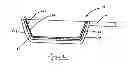
FIG. 1 represents a schematic cross-sectional view of an example of culinary article in accordance with the invention, exhibiting a non-stick coating on its inner surface,
FIG. 2 schematically represents the reaction scheme of the synthesis of the silica nanofiller of example 1A (route A) and 1B (route B).
FIG. 2 is commented in example 1.
FIG. 1 particularly represents, by way of culinary article example a pan 1 with a grip handle 11, which comprises a hollow metal bowl 2 having a base 21 and a lateral wall 22 rising from the base 21.
The bowl 2 exhibits a concave inner side 201 intended to be disposed on the side of food liable to be introduced therein, and an outer side 202 intended to be arranged towards a source of heat (for example a cooking plate).
The inner side 201 is covered with a non-stick coating 3, which comprises a layer of primer base 31 covering the inner side 201, and a finishing layer 32 covering the layer of primer base 31. The prime 31, finishing 32 and decorative layers 33 are PTFE-based.
EXAMPLES
Products
Supports
-
- aluminum supports sanded on its two main sides (having a measured arithmetic mean roughness Ra comprised between 4 and 6 μm);
- smooth, merely degreased aluminum supports.
Fillers
-
- colloidal silica commercialized under trade name LUDOX AM 30 by company GRACE DAVISON: it is an unmodified colloidal silica surface with a specific surface area of approximately 220 m2/g and presented in the form of an aqueous dispersion with 30% dry matter, the size of the particles is estimated at 50 nm;
- pyrogenic silica commercialized under trade name AEROSIL 150 by company EVONIK with a specific surface area of approximately 150 m2/g in solid form the size of the particles is estimated at 14nm;
- monomer: HFPO (having a purity of 97%) under name commercialized by ABCR;
- vinylidene fluoride (VDF);
- polyethylene glycol;
- polyethylene glycol amine commercialized under trade name Jeffamine® 1000 by company HUNTSMAN;
- methoxy-PEG-triethoxysilane oligomer of formula CH3-0-(CH2CH2O)9-(CH2)3-Si(Oet)3 commercialized by company SPECIFIC POLYMERS.
Pigments
-
- pigment flakes (mica and titanium oxide) commercialized by company MERCK under brand names Iriodin 153 and 225:
Tests
Evaluating the Stability of a PTFE Dispersion with a Silica-Based Filler
It consists in evaluating the stability of the viscosity of a primer formulation applied by spraying PTFE-based spray comprising a silica filler (colloidal silica or silica nanofiller according to the invention) by BYK-Gardner cup according to DIN EN ISO 2433/ASTM D5125 standard:
-
- use of a 2.5 cup for the primers applied by spraying and measurement of the dry flow time (which corresponds to a viscosity) of the liquid and at ambient temperature in the orifice of calibrated diameter
- follow-up of the development of the viscosity by the measurement of the dry flow time and at ambient temperature straight after the formulation of the primer and follow up of the development of this viscosity over time at ambient temperature;
- follow-up of the development of the viscosity by measurement of the dry flow time and at ambient temperature straight after the formulation of the primer and stoving at 40% C of the formulated primers;
- then follow-up of the development time of the flow time hence of the viscosity, which is measured at ambient temperature.
Evaluating the Abrasion Resistance
The abrasion resistance of a non-stick coating on a sanded aluminum substrate is evaluated.
This test realized in accordance with the AFNOR NF D21-511 $3.3.7 standard consists:
-
- on the one hand in evaluating the scratch resistance of the prime layer by subjecting it to a green abrasive pad of SCOTCH BRITE type (registered trademark), the scratch resistance being estimated quantitatively by the number of passages with the pad needed to create the first scratch mark (corresponding to the appearance of the support constitutive metal); and
- on the other hand in evaluating the loss of the non-stick property of the prime layer throughout the test, the latter being quantitatively estimated by the number of cycles carried out until the loss of the non-stick property of the prime layer (test using carbonized milk—in accordance with the NF D 21-511 standard): the latter is measured according to the more or less easy cleaning of the carbonized milk. The notation is as follows:
100: means that the film of carbonized milk is entirely removed by simple application of a water jet from a kitchen tap;
50: means that circular movements need to be carried out on the object under the water jet in order to entirely unstick the carbonized film; 25: means that a 10-minute soak is needed and possibly forcing the removal by wiping with a wet sponge to completely remove the film; 0: means that after the previous process, all or part of the carbonized film remains stuck.
Evaluating the Adherence of a Non-Stick Coating on a Smooth Aluminum Substrate
This test is carried out by grid pattern in accordance with the ISO 2409 standard, followed by a 9 hour immersion of the article (by 3 cycles of 3 hours in boiling water).
Then, a check is carried out to see whether the non-stick coating exhibits a detachment or not. The notation is as follows:
-
- to obtain a notation of 100, no square should become unstuck (excellent adherence);
- in the event of un-sticking the value recorded is equal to 100 minus the number of unstuck squares.
Evaluating the Corrosion Resistance of the Prime Layer on a Smooth Aluminum Substrate
The corrosion resistance of a non-stick coating is evaluated deposited on an aluminum substrate, by evaluating its resistance to the diffusion of salt towards the metal substrate which corrodes. This evaluation is carried out in practice by immersion, during 20 hours, of the substrate coated with the prime layer, in a saline aqueous solution brought to a boil. This saline solution comprises 10% in weight of sodium chloride. The protocol of this test is that defined in the AFNOR NF D21-511 $ 3.3.5. standard.
Following each immersion, a visual check is carried out of the final aspect of the coating, consisting in marking the presence or absence of corrosion traces (by visual observation with the naked eye or with the binocular magnifier). It consists in practice to detect the possible presence of traces such as blisters with area extension, white traces under the coating. This observation is followed by a cross-cut test in accordance with the ISO 2409 standard.
Comparative Example 1A (with Colloidal Silica)
A primer base composition CPC1A is achieved including the following compounds, their respective quantities being indicated in g for 1000 g of composition:
| PFA (50% dry matter) | 92 g | |
| PTFE dispersion (60% dry matter) | 226 g | |
| Carbon black dispersion (25% dry matter) | 41 g | |
| PAI in aqueous phase + solvent (NMP) | 434 g | |
| (9.5% dry matter) | ||
| Alkylphenol ethoxyl-based non-ionic surfactant | 21 g | |
| (13%) | ||
| Colloidal silica (30% dry) | 62 g | |
| NH4OH (d = 0.9) | 2 g | |
| Water | 123 g | |
| Total | 1000 g | |
Comparative Example 1B (with Pyrogenic Silica)
A primer base composition CPC1B is achieved including the following compounds, their respective quantities being indicated in g for 1000 g of composition:
| PFA (50% dry matter) | 78 g | |
| PTFE dispersion (60% dry matter) | 192 g | |
| Carbon black dispersion (25% dry matter) | 39 g | |
| PAI in aqueous phase + solvent (NMP) | 590 g | |
| (9.5% dry matter) | ||
| Pyrogenic silica | 24 g | |
| Alkylphenol ethoxyl-based non-ionic surfactant | 70 g | |
| (3.7%) | ||
| NH4OH (d = 0.9) | 7 g | |
| Total | 1000 g | |
A finishing composition CF1 (colorless and without silica) is further achieved comprising the following compounds, their respective quantities being indicated in g for 1000 g of composition:
| PTFE dispersion (60% dry) | 844 g | |
| PFA dispersion (50% dry) | 5 g | |
| Carbon black (25% dry) | 0.2 g | |
| Octylphenol 11 mole ethoxylate: | 3.7 g | |
| Sodium lauryl sulfate: | 3.2 g | |
| Water: | 47.6 g | |
| Xylene: | 38.7 g | |
| Acrylique copolymer >95%: | 5.1 g | |
| Oleic acid: | 1.1 g | |
| triethanolamine: | 1.3 g | |
| Iriodin 153: | 2 g | |
| Propylene Glycol: | 12.1 g | |
| WATER | 35.9 g | |
| Total | 1000 g | |
One side of the aluminum substrates is typically coated (sanded or smooth depending on the tests to be carried out) by proceeding as follows:
-
- a finished layer of the CPC1A or CPC1B composition is sprayed onto this inner side;
- the thus formed wet prime layer is then dried at a temperature of around 65% until it is no longer sticky;
- the finishing composition CF1 is then sprayed onto the primer layer;
- after drying, curing the assembly at a temperature of the order of 420° C. +/−10° C.
It is obtained substrates coated with a non-stick coating, wherein the colloidal silica is found in the prime layer. The thus obtained pieces then undergo the set of previously mentioned tests in the present application.
The results obtained following these different tests are collected in table 1 of results hereinafter.
Comparative Example 2
It is sought to achieve a prime composition identical to the CPC1A composition, but by replacing the colloidal silica by a pyrogenic silica (CPC1B composition) comprising a hydrophobic chain constituted of an HFPO oligomer.
The grafting of the hexafluoropropene oxide (HEPO) on the silica is carried out by hydrolysis-condensation of hexafluoropropene oxide (HEPO) oligomers.
First, anionic addition polymerization is carried out by opening the hexafluoropropene oxide (HEPO) cycle as follows:
-
- the polymerization has been carried out in a Hastelloy reactor of 100 mL (HC-276) fitted with a mechanical agitator, a rupture disk, valves and a manometer;
- after heating the reactor while under vacuum at 50-70° C. during one hour and placed under argon (typically three cycles empty/argon have been carried out), the KF has been added under a flow of argon. The reactor is then closed then heated during one hour under inert atmosphere, then the tetraglyme and the C4FsHs are introduced in vacuo;
- when the liquid reagents have been introduced, the reactor is cooled by a methanol cooler thanks to its double envelope;
- the HFPO in gaseous form is added by double weighing;
- then the autoclave is connected with an outer bath and heated to 10° C. (before heating, the temperature of the reactor was of −20° C.);
- the polymerization is stopped at the end of 2-3 hours by adding 15-20 mL of methanol;
- the terminal groups are esterified in 1 h at 30° C.;
- after opening the reactor, the recovered product is washed in water in order to solubilize the excess Tetraglyme;
- the aqueous phase is then separated using a dropping funnel and the solvent (in the organic phase) is evaporated by rotating evaporator. The resulting product is colorless and viscous.
The quantitative values are as follows: the reactor is loaded with 0.41 g (7.1 mmol) of KF, 2.9 mL (13.2 mmol) of tetraglyme and 10 mL of C4F5H5. Then 45 g (0.27 mol) of hexafluoropropene oxide are transferred to the reactor. The polymerization starts when the temperature is close to 0° C. and is stopped after 2 h by adding 15 mL of methanol. The polymer is washed three times with distilled water in order to remove the tetraglyme, the methanol and the catalyst. The solvents are evaporated using a rotating evaporator at 40-50° C. In this case, the yield is of 56%, the molar masses are of 1290 g/mol by NMR and 1207 by CPV.
Second, at the surface of the pyrogenic silica a hydrolysis-condensation is carried out by grafting onto the oligomers of the hexafluoropropene oxide (HFPO) with an alkoxysilane;
The quantitative values are as follows: 1.0 g of pyrogenic silica, vacuum dried beforehand during 2 h at 200° C., is dispersed in a water/ethanol solution (10/90, 100 mL). This dispersion is then placed under argon with a vigorous agitation during 15 minutes.
Then 2.6 g (1.7 mmol) of functionalized oligo(HFPO) amido (propyl) trimethoxysilane (HFPOx-Si(OEt)3) are added therein. The mixture is refluxed during 24 h at 80° C., then filtered and washed several times with distilled water. The white powder obtained (SiO2—SiOy-HFPOx) is vacuum dried during 4 h at 80° C. until constant weight is reached.
By this method, it has been possible to prepare hydrophobic silica with a 130° contact angle.
In this case it is not possible to introduce this grafted silica in a PTFE-based dispersion (of CPC1A type where colloidal silica would have been replaced by this modified silica), the formulation precipitates and implementation in the form of a stable dispersion is not possible.
Example 1
It is sought to achieve a prime composition identical to the CPC1 composition, but by replacing the colloidal silica by a silica nanofiller according to the invention including a double coating composed of the HFPO oligomer and the polyethylene glycol (PEG) oligomer.
The grafting onto the pyrogenic silica of a “double strand” composed of a VDF oligomer functionalized by Si(OEt)3 and a PEG oligomer functionalized by Si(OEt)3 is carried out by hydrolysis-condensation. The purpose is to make compatible and thus increase the colloidal silica dispersion in PTFE coatings.
Synthesis of the VDF Oligomer
Use of a methoxy-PEG-triethoxysilane of formula CH3—O—(CH2CH2O)9—(CH2)3—Si(Oet)3 Provided by Specific Polymers and a Pyrogenic Silica: AEROSIL 150 from EVONIK
Example 1A
a Grafting of the Double Strand is Achieved Onto the Pyrogenic Silica by Method A (Illustrated on FIG. 2)
Silica is modified with fluorinated chains in a first step with the following conditions: 3.0 g of silica, vacuum dried beforehand during 2 h at 200° C., is dispersed in a water/ethanol solution (10-90, 150 mL). This dispersion is then placed under argon with a vigorous agitation during 15 minutes. Then, 1.26 g (1.8 mmol) of oligo(HEPO) functionalized amido(propyl) triethoxysilane (HFPO3-Si(OEt)3) are added therein. The mixture is refluxed during 24 h at 80° C., then filtered and washed several times with distilled water. The white powder obtained (SiO2—SiOy-HFPO3) is vacuum dried during 4 h at 80° C. 1 g (1.8 mmol) PEG9-Si(OEt)3) were then grafted at the surface of the silica by using the same method of synthesis. A white powder is also recovered (PEG9- SiOy- SiO2- SiOy-HFPOx) with x=3;
The HFPO/PEG ratio is such that the PEG5- SiOy- SiO2- SiOy-HFPO3 has the following proportions: [SiO2]0:[HFPO]0:[PEG]0:100:5:5
This rate is optimized: it makes it possible to reduce the hydrophobicity of the silica with respect to comparative example 2.
In this case, the contact angle is of 86°±2: this makes it particularly possible to be able to consider an implementation of this silica in aqueous phase.
Example 1B
a Grafting on the Double Strand is Achieved Onto the Pyrogenic Silica by Method B (Illustrated on FIG. 2)
The method is similar to the previous one, the only difference relates to the simultaneous addition of the two types of strands to modify 1.00 g of silica 0.08 g (0.114 mmol) of HFPO3-Si(OEt)3 and 0.58 g (1.06 mmol) of PEG5-Si(OEt)3. The white powder obtained (PEG5-SiOy—SiO2—SiOy-HFPO3)is vacuum dried during 4 h at 80° C.
Then a first prime composition is achieved according to the invention C1 by replacing the pyrogenic silica of CPC1B by this double grafted silica (according to example 1A or 1B), with the following quantity, replacing 1/1/p.
Then, typically one of the sides of the aluminum substrate is coated by composition C1, then the finishing composition CF1 (identical to that used in comparative example 1).
Substrates coated with a non-stick coating are obtained, wherein the double grafted silica is found in the prime layer. The thus obtained pieces then undergo the series of aforementioned tests of the present application.
The results obtained following these different tests are collected in table of results 1 hereinafter.
Example 2
This example is different from example 1 by a decrease in the rate of silica added to the formulation of type CPC1B, such that the quantity of silica described in example 1 is in a ratio with respect to the pyrogenic silica of 2/1/p.
The obtained results following these different tests are collected in table of results 1 hereinafter.
Example 3
It is sought to achieve a prime composition identical to composition CPC1, but by replacing the colloidal silica by a silica nanofiller according to the invention comprising a dual coating composed of VDF oligomer and ethylene glycol oligomer (PEG).
This grafting onto the pyrogenic silica of a “double strand” composed of VDF-Si(OEt)3 and oligo(PEG) is carried out by hydrolysis-condensation.
The purpose is to make compatible and thus increase the dispersion of colloidal silica in PTFE coatings.
Synthesis of VDF Oligomer
The oligomerization of the VDF (vinylidene fluoride) has been achieved by a Hastelloy autoclave (HC 276) of 160 mL fitted with a manometer, a mechanical anchor in Hastelloy, a rupture disk (3000 PSI), and gas inlet and discharge valves. An electronic system has made it possible to regulate and control both the agitation and the temperature in the autoclave.
Before the reaction, the autoclave is pressurized at 30 nitrogen bars in order to check for the absence of leaks.
Then, the autoclave is conditioned based on various empty cycles (10−2 mbar)/nitrogen in order to get rid of any traces of oxygen.
Then, liquid and solid reagents, dissolved in an appropriate solvent of polar type, not leading to any transfer reactions are introduced under vacuum into the autoclave (via a funnel):
-
- 2.00 g (or 0.005 mol) of di-tert-butyl peroxydicarbonate by way of initiator, for example the product commercialized under name Perkadox® 16S by AKZO NOBEL,
- 3.34 g (or 0.0074 mol) of C6F13I by way of transfer agent,
- 80 mL of acetonitrile (solvent).
Then, the reactor is cooled and placed under vacuum before transferring therein, under vacuum, 20.2 g (or 0.316 mol) of gaseous vinylidene fluoride (VDF) by double weighting (that is to say by difference of masses of the autoclave before and after the introduction of VDF).
The reactor is gradually heated by stage up to the following temperatures 40° C. (around 10 minutes), 50° C. (around 20 minutes), and finally 60° C. (4 hours). At 60° C., the pressure is of 19 bars, then it drops to 1 bar after 4 hours of heating at this temperature.
After these 4 hours of heating at 60° C., the reactor is stopped, then cooled. It is immersed in ice during around 60 minutes then degassed and opened. A brown liquid mixture is obtained.
After evaporation of the solvent (here acetonitrile), the residue is dissolved in the acetone, then the oligomers thus produced are precipitated in methanol. They are filtered, dried then weighed: oligomers in the form of powder are obtained, whereas the filtrate (which contains telomeres of lesser molar masses) is evaporated then dried.
These two fractions are constituted of:
-
- (1) 13.2 g of a yellow powder corresponding to higher molar masses (oligomers), and
- (2) 16.6 g of a brown wax (telomeres of low molar masses).
These two fractions are characterized by NMR spectroscopy of 19F and 1H:
NMR of 1H (acetone d6, ppm) δ: 3.75 (—CF2CF2CH2I, 2H); 3.50 (—CH2CF2I, 2H); 3.30 (—CF2—CF2CH2—CF2CH2—CF2—, 2H); 2.80 (—[CH2—CF2]nI, 2nH); absence of the signal at 2.4 ppm
Assigned to the inverse diades VDF-VDF tail-tail
NMR of 19F (acetone d6, ppm) δ: −39 (—CH2CF2I, 2F); −82 (CF3CF2—, 3F); −92 (—[CF2CH2]n, 2nF); normal additions head-tail; −109 (—CF2—CF2—CH2—I, 2F); −112 (—CF2—CF2—(CF2)x-CF2—CH2—) absence of signals at −113 and −116 ppm assigned to tail-tail inverse additions in the VDF-VDF diades; −122 to −124 (CF3—CF2—(CF2)x-CF2, 2F); −126 (CF3—CF2—, 2F).
Functionalization of the VDF Oligomer
In a triple-neck flask provided with a cooler and a nitrogen inlet are successively introduced: 0.053 g (namely 0.00032 mol) of tert-butyl-peroxypivalate, 1.125 g (namely 0.0057 mole) of vinyltriethoxysilane, 10.02 g (namely 0.0029 mole) of aforementioned oligomer and 20 mL of dry acetonitrile.
The reactive mixture is heated during 4 hours at 74° C. After cooling, the triethoxysilane modified VDF oligomer is precipitated in dry pentane and filtered, then dried.
The NMR specter of 1H and 19F show the characteristic signals of VDF units and the end CH2CHISi (OEt)3:
NMR of 1H (acetone d6, ppm) disappearance of signals at 3.75 (—CF2CF2CH2I) and at 3.50 (—CH2CF2I, 2H); presence of a multiple peak with center at 4.5 ppm, assigned to CHI and quadruplet and triplet towards 3.8 ppm and 1.2 ppm (respectively assigned at OCH2 and CH3); of signal at 3.30 (—CF2—CF2CH2—CF2CH2—CF2—, 2H); 2.80 (—[CH2-CF2]n and CHICH2VDF).
NMR of 19F (acetone d6, ppm) disappearance of signal at −39 (assigned to group —CH2CF2I, 2F); presence of groups at −82 (CF3CF2—, 3F); −92 (—[CF2CH2]n, 2nF); −112 (−CF2—CF2—(CF2)x-CF2—CH2—) and presence of signals between −122 and −124 (CF3—CF2—(CF2)x-CF2, 2F); −126 (CF3—CF2—, 2F).
Use of a Methoxy-PEG-triethoxysilane of Formula CH3—O—(CH2CH2O)9—(CH2)3—Si(Oet)3 Provided by Specific Polymers and a Pyrogenic Silica: AEROSIL 150 by EVONIK
Example 3A
a Grafting is Achieved of the Double Strand on the Pyrogenic Silica by Method A (Illustrated on FIG. 2).
Silica is modified by fluorinated chains in a first step with the following conditions: 3.0 g of silica, vacuum dried beforehand during 2 h at 200° C. is dispersed in a solution of water/ethanol (10/90, 150 mL).
This dispersion is then placed under argon with vigorous agitation during 15 minutes. Then 1.26 g (1.8 mmol) of (VDF) oligo functionalized by an amido(propyl) triethoxysilane (HFPO3-Si(OEt)3) are added therein.
The mixture is refluxed during 24 hours at 80° C. then filtered and washed several times with distilled water. The white powder obtained (SiO2—SiOy-VDFx) is vacuum dried during 4 h at 80° C. 1 g (1.8 mmol) of PEG9-Si(OEt)3) are then grafted onto the surface of the silica by using the same method of synthesis. A white powder is also recovered (PEG9-SiOy—SiO2—SiOy-VDFx) with x=3;
The VDF/PEG ratio is such that the PEG5-SiOy—SiO2—SiOy-VDF3 is in the proportions: [SiO2]0:[VDF]0:[PEG]0:100:5:5
This rate is optimized: it makes it possible to reduce the hydrophobia of the silica with respect to the comparative example 2.
In this case, the contact angle is of 86°±2: this particularly makes it possible to be able to consider implementing this silica in aqueous phase.
Example 3B
a Grafting of the Double Strand on the Pyrogenic Silica is Carried Out by Method B (Illustrated on FIG. 2)
The method is similar to the previous one, the only difference relating to the simultaneous addition of the two types of strands to modify 1.00 g of silica 0.08 g (0.114 mmol) of PVDF-Si(OEt)3 and 0.58 g (1.06 mmol) of PEG5-Si(OEt)3. The white powder obtained (PEG5-SiOy—SiO2—SiOy-HFPO3) is vacuum dried during 4 h at 80° C.
Then is achieved a prime composition according to the invention C3 by replacing the pyrogenic silica of CPC1B by this double grafted silica (according to example 3A or 3B), with the following quantity, replacement 1/1/p.
Then, one of the sides of the aluminum substrate is typically coated one by the composition C1, then the finishing composition CF1 (identical to that used in comparative example 1).
It is obtained substrates coated with a non-stick coating, wherein the double grafted silica is found in the prime layer. The thus, obtained pieces then undergo the series of aforementioned tests of the present application.
The results obtained following these different tests are collected in the table of results 1 hereinafter.
Example 4
This example is different from example IA by an increase in the size of the nanoparticles, which is here of the order of 1200 nm.
The results obtained following these different tests are collected in the table of results 1 hereinafter.
| TABLE 1 | |||||||||
| Comparative | |||||||||
| Comparative | example | Comparative | |||||||
| example 1A | 1B | example 2 | Example 1A | Example 1B | Example 2 | Example 3A | Example 3B | Example 4 | |
| Feasibility | OK | Not Ok | Not ok | ok | ok | ok | ok | ok | ok |
| of the | |||||||||
| implementation in | |||||||||
| aqueous | |||||||||
| phase | |||||||||
| stability | <30 days | — | — | >6 months | >6 months | >6 months | >6 months | >6 months | >4 months |
| of the | |||||||||
| viscosity | |||||||||
| of a primer | |||||||||
| at ambient | |||||||||
| temperature | |||||||||
| stability | <10 days | — | — | >30 days | >30 days | >30 days | >30 days | >30 days | >15 days |
| of the | |||||||||
| viscosity | |||||||||
| of the | |||||||||
| primer at | |||||||||
| 40° C. | |||||||||
| Adherence | Not ok | — | — | Ok | OK | OK | OK | OK | OK |
| test on a | |||||||||
| smooth | |||||||||
| aluminum | |||||||||
| substrate | |||||||||
| Behavior | Bad 100% | — | — | Ok 100% | Ok 100% | Ok 100% | Ok 100% | Ok 100% | Ok 100% |
| under | corrosion | conform | conform | conform | conform | conform | conform | ||
| corrosion | points | ||||||||
| on smooth | |||||||||
| aluminum | |||||||||
| substrate | |||||||||
| abrasion | Appearance | — | — | Appearance | Appearance | Appearance | Appearance | Appearance | Appearanc |
| resistance | of | of | of | of | of | of | of | ||
| on sanded | scratches | scratches | scratches | scratches | scratches | scratches | scratches | ||
| aluminum | on the | on the | on the | on the | on the | on the | on the | ||
| substrate | metal: 1000 | metal: 11000 | metal: 15000 | metal: 7000 | metal: 13000 | metal: 13000 | metal: 1000 | ||
| scrubbings | scrubbings | scrubbings | scrubbings | scrubbings | scrubbings | scrubbings | |||
| Total loss | Total loss | Total loss | Total loss | Total loss | Total loss | Total loss | |||
| of non- | of non- | of non- | of non- | of non- | of non- | of non- | |||
| stick | stick | stick | stick | stick | stick | stick | |||
| property | property | property | property | property | property | property | |||
| 4000 | 20000 | 25000 | 16000 | 19000 | 19000 | 14000 | |||
| scrubbings | scrubbings | scrubbings | scrubbings | scrubbings | scrubbings | scrubbings | |||
Claims
1. A nanofiller of a metal-oxide comprising at least two graft chains, at least one of the chains being hydrophilic and the other being a hydrophobic chain compatible with fluorinated polymers, wherein the hydrophobic chain is an oligomer, the weight-average molar mass Mw of which is between 300 and 20.000 g/mol'1.
2. The nanofiller according to claim 1, wherein the hydrophobic chain is an oligomer, the weight-average molar mass Mw of which is between 500 and 10.000 g/mol−1.
3. The nanofiller according to claim 2, wherein the hydrophobic chain is an oligomer, the weight-average molar mass Mw of which is between 1000 and 5000 g/mol−1.
4. The nanofiller according to claim 1, wherein the metal oxide is selected among the group constituted of silica, alumina, cerium oxide, zinc oxide, vanadium oxide, zirconium oxide, and titanium dioxide.
5. The nanofiller according to claim 4, wherein the metal oxide is silica, colloidal silica or pyrogenic silica.
6. The nanofiller according to claim 1, wherein the hydrophilic chain is a derivative of polyalkylene glycol modified by:
either an alkoxysilane,
or an acid or a phosphonic ester,
or an acid or phosphinic ester,
or a carboxylic acid.
7. The nanofiller according to claim 6, wherein the polyalkylene glycol derivative is a polyethylene-glycol (PEG) derivative or a polypropylene glycol (PPG) derivative.
8. The nanofiller according to claim 6, wherein the hydrophilic chain is a derivative of polyethylene glycol modified by an alkoxysilane.
9. The nanofiller according to claim 1, wherein the hydrophobic chain or chains is (or are) an oligomer of hexafluoropropylene oxide (HFPO), of vinylidene fluoride (VDF), of tetrafluoroethylene (TFE) or co-oligomers VDF-TFE, VDF-hexafluoropropylene, VDF-chlorotrifluoroethylene, alone or in mixtures and modified by an alkoxysilane.
10. The nanofiller according to claim 5, wherein it is constituted of silica comprising two graft chains:
one of the chains being a hydrophilic chain consisting in a derivative of polyethylene glycol modified by a triethoxysilane, and
the other chain being an oligomer of the hexafluoropropylene oxide (HFPO) modified by a triethoxysilane or a methyldiethoxysilane.
11. A dispersion in aqueous phase of at least a fluorocarbon resin comprising a nanofiller such as defined according to claim 1.
12. The dispersion according to claim 11, wherein the fluorocarbon resin is selected among the polytetrafluoroethylene (PTFE), the copolymer of tetrafluoroethylene and perfluoro propylvinylether (PFA), and the copolymer of tetrafluoroethylene and hexafluoropropylene (FEP), the polyvinylidene fluoride (PVDF), the MVA (copolymer of TFE/PMVE), the terpolymer TFE/PMVE/FAVE, the ETFE and their mixtures.
13. The dispersion according to claim 11 wherein it further comprises pigments, and/or additives selected among the thickening agents, surfactants, stabilizers and cosolvents.
14. A method of synthesis of a silica nanofiller comprising a hydrophilic chain consisting in a derivative of polyalkylene glycol modified by an alkoxysilane and a hydrophobic chain consisting in a hydrophobic oligomer of HFPO, and/or a VDF and/or a TFE modified by an alkoxysilane, said method comprising the following steps:
providing a polyalkylene glycol modified by an alkoxysilane;
the oligomerization of said hydrophobic oligomer, followed by its functionalization by an alkoxysilane;
the grafting on the silica nanofiller on the one hand of said hydrophobic oligomer functionalized by an alkoxysilane, and on the other hand of polyalkylene glycol modified by an alkoxysilane.
15. The method according to claim 14 wherein the grafting is a two-step grafting, in which:
first, the functionalized hydrophobic oligomer HFPO is grafted on the silica nanofiller; then
second, the modified polyalkylene glycol is grafted on the silica nanofiller.
16. The method according to claim 14, wherein the grafting of the functionalized hydrophobic oligomer and the modified polyalkylene glycol is achieved simultaneously on the silica nanofiller.
17. A non-stick coating comprising at least a layer comprising at least a fluorocarbon resin alone or mixed with a thermally stable bonding resin and resistant to at least 200° C., this (these) resin(s) forming a continuous fritted lattice, wherein it comprises a nanofiller such as defined according to claim 1.
18. The non-stick coating according to claim 17 wherein the fluorocarbon resin is selected among the polytetrafluoroethylene (PTFE), the copolymer of tetrafluoroethylene and perfluoro propylvinylether (PFA), and the copolymer of tetrafluoroethylene and hexafluoropropene (FEP), the polyvinylidene fluoride (PVDF), the MVA (copolymer of TFE/PMVE), the terpolymer TFE/PMVE/FAVE, the ETFE and their mixtures.
19. The non-stick coating according to claim 17, wherein the bonding resin is selected among polyamides imids (PAT), polyether-imids (PEI), polyamids (PA), polyimids (PI), polyetherketones (PEK), polyetheretherketones (PEEK), polythersulfones (PES), polyphenylene sulfides (PPS), polybenzimidazoles (PBI).
20. The non-stick coating according to claim 17, wherein it comprises a bonding primer layer and at least a finishing layer.
21. A culinary article comprising a support exhibiting an inner side able to receive foods and an outer side intended to be disposed towards the source of heat, wherein the inner side is coated with a non-stick coating such as defined according to claim 17.
22. The culinary article according to claim 21, wherein the support is a hollow bowl having a base and a lateral wall rising from said base.
23. The culinary article according to claim 21, wherein the support is achieved in a material selected among the metals, wood, glass, ceramics and plastic material.
24. The culinary article according to claim 23, wherein the support is a metal support in anodized aluminum or unanodized aluminum, or in polished, brushed or microbeaded aluminum, or cast aluminum, or in beaten or polished copper.
25. A method for achieving a non-stick coating such as defined according to claim 17, wherein it comprises the following steps:
a step of introducing a nanofiller in a dispersion in aqueous phase of at least a fluorinated polymer, then
a step of applying on a substrate said dispersion comprising the fluorinated polymer and said nanofiller.
Images & Drawings included:


Sources:
- United States Patent and Trademark Office - verify current appl. status at the USPTO↗
Similar patent applications:
Recent applications in this class:
- » 20250197644 2025-06-19
ESTER-DISPERSED SILICA SOL AND PRODUCTION METHOD THEREFOR - » 20240327644 2024-10-03
Filler for electronic materials and method for producing same, slurry for electronic materials, and resin composition for electronic materials - » 20240309214 2024-09-19
METHOD FOR MANUFACTURING SURFACE-TREATED SOL-GEL SILICA PARTICLE, SURFACE-TREATED SOL-GEL SILICA PARTICLE, AND TONER EXTERNAL ADDITIVE FOR ELECTROSTATIC CHARGE IMAGE DEVELOPMENT - » 20240270973 2024-08-15
LOW-DIELECTRIC-TANGENT SILICA SOL, AND METHOD FOR PRODUCING LOW-DIELECTRIC-TANGENT SILICA SOL - » 20240132726 2024-04-25
SILOXANE-FUNCTIONALIZED SILICA - » 20240117192 2024-04-11
METHOD FOR MANUFACTURING SURFACE-TREATED GAS-PHASE-PROCESS SILICA PARTICLE, SURFACE-TREATED GAS-PHASE-PROCESS SILICA PARTICLE, AND TONER EXTERNAL ADDITIVE FOR ELECTROSTATIC CHARGE IMAGE DEVELOPMENT - » 20230125516 2023-04-27
METHOD FOR PRODUCING SURFACE-TREATED SILICA POWDER, RESIN COMPOSITION, AND SLURRY - » 20230108010 2023-04-06
PREPARATION METHOD FOR SPHERICAL SILICA POWDER FILLER, POWDER FILLER OBTAINED THEREBY AND USE THEREOF - » 20230100957 2023-03-30
Composition for Liquid-Based Additive Manufacturing - » 20230081969 2023-03-16
PREPARATION METHOD FOR SPHERICAL SILICA POWDER FILLER, POWDER FILLER OBTAINED THEREBY AND USE THEREOF
Recent applications for this Assignee:
- » 20250261786 2025-08-21
Milk Frothing Device And Corresponding Beverage Dispensing Machine - » 20250221594 2025-07-10
Vacuum Cleaner Equipped With A User Interface With Improved Sealing - » 20250221588 2025-07-10
Support Base For A Handheld Vacuum Cleaner - » 20250213733 2025-07-03
EMULSION FOR ULTRASOUND ABLATION SURGERY - » 20250204715 2025-06-26
Food Preparation Appliance Comprising An Inner Lid - » 20250185836 2025-06-12
Electric Food Preparation Appliance - » 20250185834 2025-06-12
Electric Food Preparation Appliance - » 20250169663 2025-05-29
Cleaning Unit For Suction Head - » 20250154311 2025-05-15
BIOBASED POLYURETHANE RESIN COMPOSITION, MANUFACTURING METHOD AND USE IN PARTICULAR IN THE TECHNIQUE OF DOMING - » 20250134299 2025-05-01
Fluorinated Peek Composite Coating With High Mechanical Performance