Five-piece optical lens system
US20140063619A1
2014-03-06
13/602,292
2012-09-03
✅ Patent granted
US 8,743,484 B2
2014-06-03
-
-
Darryl J Collins | Gary O'Neill
Banger Shia
2032-09-03
Abstract:
A five-piece optical lens system includes, in order from the object side to the image side: a first lens element with a positive refractive power having a convex object-side surface and at least one aspheric surface; a second lens element with a negative refractive power having a concave image-side surface and at least one aspheric surface; a third lens element with a positive refractive power having at least one aspheric surface; a fourth lens element with a positive refractive power having a concave object-side surface and a convex image-side surface, and at least one aspheric surface; a fifth lens element with a negative refractive power having a concave image-side surface and at least one aspheric surface. Thereby, such a system not only can be applied to a high resolution mobile phone, but also has a wide field of view, big stop, high pixel, high resolution and low height.
Assignee:
- NEWMAX TECHNOLOGY CO., LTD. 41 🇹🇼 Taichung, Taiwan
Applicant:
Interested in similar patents?
Get notified when new applications in this technology area are published.
Classification:
G02B13/0045 » CPC further
Optical objectives specially designed for the purposes specified below; Miniaturised objectives for electronic devices, e.g. portable telephones, webcams, PDAs, small digital cameras characterised by the lens design having at least one aspherical surface having five or more lenses
G02B13/18 » CPC main
Optical objectives specially designed for the purposes specified below with lenses having one or more non-spherical faces, e.g. for reducing geometrical aberration
G02B9/60 IPC
Optical objectives characterised both by the number of the components and their arrangements according to their sign, i.e. + or - having five components only
Description
BACKGROUND OF THE INVENTION
1. Field of the Invention
The present invention relates to an optical lens system, and more particularly to a five-piece optical lens system.
2. Description of the Prior Art
In recent years, with the popularity of the mobile phone cameras, the optical lens system has become smaller in size, and the electronic sensor of a general digital camera is typically a CCD (Charge Coupled Device) or CMOS (Complementary Metal Oxide Semiconductor) sensor. Due to advances in semiconductor manufacturing, the pixel size of sensor has been reduced continuously, and miniaturized optical lens systems have increasingly higher resolution. Therefore, there's an increasing demand for an imaging lens system with better image quality.
Conventional miniaturized lens systems used in portable electronic products mostly consist of four lens elements, however, the resolution of the mobile phone camera has been improved rapidly. As the pixel size of electronic imaging sensors gradually becomes smaller and smaller, the system requires higher image quality, and miniaturization and high performance have become the trend of modern electronic products. The conventional optical lens system comprising four lens elements cannot satisfy the requirements of higher resolution optical lens systems.
The present invention mitigates and/or obviates the aforementioned disadvantages.
SUMMARY OF THE INVENTION
The primary objective of the present invention is to provide a five-piece optical lens system without having an excessively long total track length, the five-piece optical lens system not only can be applied to a high resolution mobile phone, but also has a wide field of view, big stop, high pixel, high resolution and low height.
A five-piece optical lens system in accordance with the present invention comprises, in order from the object side to the image side: a first lens element with a positive refractive power having a convex object-side surface, at least one of the object-side and an image-side surfaces of the first lens element being aspheric; a second lens element with a negative refractive power having a concave image-side surface, at least one of an object-side and the image-side surfaces of the second lens element being aspheric; a third lens element with a positive refractive power, at least one of an object-side and an image-side surfaces of the third lens element being aspheric; a fourth lens element with a positive refractive power having a concave object-side surface and a convex image-side surface, at least one of the object-side and the image-side surfaces of the fourth lens element being aspheric; a fifth lens element with a negative refractive power having a concave image-side surface, at least one of an object-side and the image-side surfaces of the fifth lens element being aspheric; and a stop located before the object-side surface of the first lens element (between the object side and the first lens element) or between the first lens element and the second lens element. The refractive index of the first lens element is N1, the Abbe number of the first lens element is V1, the refractive index of the second lens element is N2, the Abbe number of the second lens element is V2, and they satisfy the relations: N1<1.57; V1>40; N2>1.57; V2<40. If N1, V1, N2 and V2 satisfy the above relations, it will be favorable to correct the chromatic aberration within the system, and the material of the first and second lens elements will be appropriate, which can prevent the generation of excessive aberrations in case of a wide field of view.
According to one aspect of the present five-piece optical lens system, the focal length of the first lens element is f1, the focal length of the second lens element is f2, and they satisfy the relation: 0.3<|f1|/|f2|<0.9. If |f1|/|f2| satisfies the above relation, a wide field of view, big stop, high pixel and low height can be provided and the resolution can be improved evidently. Contrarily, If ∥f1|/|f2| exceeds the above range, the performance and resolution of the optical lens system will be reduced, and the yield rate will be low.
According to another aspect of the present five-piece optical lens system, the focal length of the first lens element is f1, the focal length of the second lens element and the third lens element combined is f23, and they satisfy the relation: 0.3<|f1|/|f23|<0.8. If |f1|/|f23| satisfies the above relation, a wide field of view, big stop, high pixel and low height can be provided and the resolution can be improved evidently. Contrarily, If |f1|/|f23| exceeds the above range, the performance and resolution of the optical lens system will be reduced, and the yield rate will be low.
According to another aspect of the present five-piece optical lens system, the focal length of the second lens element is f2, the focal length of the third lens element and the fourth lens element combined is f34, and they satisfy the relation: 0.7<|f2|/|f34|<2.7. If |f2|/|f34| satisfies the above relation, a wide field of view, big stop, high pixel and low height can be provided and the resolution can be improved evidently. Contrarily, If |f2|/|f34| exceeds the above range, the performance and resolution of the optical lens system will be reduced, and the yield rate will be low.
According to another aspect of the present five-piece optical lens system, the focal length of the fourth lens element is f4, the focal length of the fifth lens element is f5, and they satisfy the relation: 0.7<|f4|/|f5|<1.7. If |f4|/|f5| satisfies the above relation, a wide field of view, big stop, high pixel and low height can be provided and the resolution can be improved evidently. Contrarily, If |f4|/|f5| exceeds the above range, the performance and resolution of the optical lens system will be reduced, and the yield rate will be low.
According to another aspect of the present five-piece optical lens system, the focal length of the first lens element and the second lens element combined is f12, the focal length of the five-piece optical lens system is f, and they satisfy the relation: 0.75<|f12|/f<1.25. If |f12|/f satisfies the above relation, a wide field of view, big stop, high pixel and low height can be provided and the resolution can be improved evidently. Contrarily, If |f12|/f exceeds the above range, the performance and resolution of the optical lens system will be reduced, and the yield rate will be low.
According to another aspect of the present five-piece optical lens system, the focal length of the first lens element, the second lens element and the third lens element combined is f123, the focal length of the five-piece optical lens system is f, and they satisfy the relation: 0.6<|f123|/f<0.25. If |f123|/f satisfies the above relation, a wide field of view, big stop, high pixel and low height can be provided and the resolution can be improved evidently. Contrarily, If |f123|/f exceeds the above range, the performance and resolution of the optical lens system will be reduced, and the yield rate will be low.
According to another aspect of the present five-piece optical lens system, the image height perpendicular to the optical axis is IH, the distance from the object-side surface of the first lens element to the image plane along the optical axis is TL, and they satisfy the relation: 0.55<|IH/TL|<0.95. If |IH/TL| satisfies the above relation, a wide field of view, high pixel and low height can be provided and the resolution can be improved evidently.
According to another aspect of the present five-piece optical lens system, the focal length of the five-piece optical lens system is f, the distance from the object-side surface of the first lens element to the image plane along the optical axis is TL, and they satisfy the relation: 0.75<|f/TL|<1.5. If |f/TL| satisfies the above relation, the total track length of the optical lens system can be relatively short, and the requirement of miniaturization can be satisfied.
The present invention will be presented in further details from the following descriptions with the accompanying drawings, which show, for purpose of illustrations only, the preferred embodiments in accordance with the present invention.
BRIEF DESCRIPTION OF THE DRAWINGS
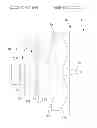
FIG. 1A shows an optical lens system in accordance with a first embodiment of the present invention;
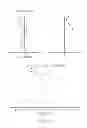
FIG. 1B shows the longitudinal spherical aberration curve, the distortion curve, and the image plane curve of the first embodiment of the present invention;
FIG. 2A shows an optical lens system in accordance with a second embodiment of the present invention;
FIG. 2B shows the longitudinal spherical aberration curve, the distortion curve, and the image plane curve of the second embodiment of the present invention;
FIG. 3A shows an optical lens system in accordance with a third embodiment of the present invention;
FIG. 3B shows the longitudinal spherical aberration curve, the distortion curve, and the image plane curve of the third embodiment of the present invention;
FIG. 4A shows an optical lens system in accordance with a fourth embodiment of the present invention;
FIG. 4B shows the longitudinal spherical aberration curve, the distortion curve, and the image plane curve of the fourth embodiment of the present invention;
FIG. 5A shows an optical lens system in accordance with a fifth embodiment of the present invention;
FIG. 5B shows the longitudinal spherical aberration curve, the distortion curve, and the image plane curve of the fifth embodiment of the present invention;
FIG. 6A shows an optical lens system in accordance with a sixth embodiment of the present invention;
FIG. 6B shows the longitudinal spherical aberration curve, the distortion curve, and the image plane curve of the sixth embodiment of the present invention.
DETAILED DESCRIPTION OF THE PREFERRED EMBODIMENTS
Referring to FIG. 1A, which shows a five-piece optical lens system in accordance with a first embodiment of the present invention, and FIG. 1B shows the longitudinal spherical aberration curves, the distortion curve, and the image plane curve of the first embodiment of the present invention. A five-piece optical lens system in accordance with the first embodiment of the present invention comprises, in order from the object side A to the image side B:
A stop 100.
A first lens element 110 with a positive refractive power made of plastic has a convex object-side surface 111 and a convex image-side surface 112, and the object-side surface 111 and the image-side surface 112 of the first lens element 110 are aspheric.
A second lens element 120 with a negative refractive power made of plastic has a convex object-side surface 121 and a concave image-side surface 122, and the object-side surface 121 and the image-side surface 122 of the second lens element 120 are aspheric.
A third lens element 130 with a negative refractive power made of plastic has a convex object-side surface 131 and a concave image-side surface 132, and the object-side surface 131 and the image-side surface 132 of the third lens element 130 are aspheric.
A fourth lens element 140 with a positive refractive power made of plastic has a concave object-side surface 141 and a convex image-side surface 142, and the object-side surface 141 and the image-side surface 142 of the fourth lens element 140 are aspheric.
A fifth lens element 150 with a negative refractive power made of plastic has a convex object-side surface 151 and a concave image-side surface 152, and the object-side surface 151 and the image-side surface 152 of the fifth lens element 150 are aspheric.
An IR cut filter 160 made of glass is located between the image-side surface 152 of the fifth lens element 150 and an image plane 170 and has no influence on the focal length of the five-piece optical lens system.
The equation for the aspheric surface profiles of the first embodiment is expressed as follows:
z = ch 2 1 + [ 1 - ( k + 1 ) c 2 h 2 ] 0.5 + Ah 18 4 + Bh 6 + Ch 8 + Dh 10 + Eh 12 + Gh 14 + …
wherein:
z represents the value of a reference position with respect to a vertex of the surface of a lens and a position with a height h along the optical axis 180;
k represents the conic constant;
c represents the reciprocal of the radius of curvature;
A, B, C, D, E, G, . . . : represent the high-order aspheric coefficients.
In the first embodiment of the present five-piece optical lens system, the focal length of the five-piece optical lens system is f, and it satisfies the relation:
f=3.65.
-
- In the first embodiment of the present five-piece optical lens system, the f-number of the five-piece optical lens system is Fno, and it satisfies the relation:
Fno=2.2.
In the first embodiment of the present five-piece optical lens system, the field of view of the five-piece optical lens system is 2ω, and it satisfies the relation:
2ω=78°.
In the first embodiment of the present five-piece optical lens system, the focal length of the first lens element 110 is f1, the focal length of the second lens element 120 is f2, and they satisfy the relation:
|f1|/|f2|=0.5230.
In the first embodiment of the present five-piece optical lens system, the focal length of the first lens element 110 is f1, the focal length of the second lens element 120 and the third lens element 130 combined is f23, and they satisfy the relation:
|f1|/|f23|=0.5679.
In the first embodiment of the present five-piece optical lens system, the focal length of the second lens element 120 is f2, the focal length of the third lens element 130 and the fourth lens element 140 combined is f34, and they satisfy the relation:
|f2|/|f34|=2.2848.
In the first embodiment of the present five-piece optical lens system, the focal length of the fourth lens element 140 is f4, the focal length of the fifth lens element 150 is f5, and they satisfy the relation:
|f4|/|f5|=0.9692.
In the first embodiment of the present five-piece optical lens system, the focal length of the first lens element 110 and the second lens element 120 combined is f12, the focal length of the five-piece optical lens system is f, and they satisfy the relation:
|f12|/f=1.0343.
In the first embodiment of the present five-piece optical lens system, the focal length of the first lens element 110, the second lens element 120 and the third lens element 130 combined is f123, the focal length of the five-piece optical lens system is f, and they satisfy the relation:
|f123|/f=1.0609.
In the first embodiment of the present five-piece optical lens system, the image height perpendicular to the optical axis 180 is IH, the distance from the object-side surface 111 of the first lens element 110 to the image plane 170 along the optical axis 180 is TL, and they satisfy the relation:
|IH/TL|=0.8341.
In the first embodiment of the present five-piece optical lens system, the focal length of the six-piece optical lens system is f, the distance from the object-side surface 111 of the first lens element 110 to the image plane 170 along the optical axis 180 is TL, and they satisfy the relation:
|f/TL|=1.2573.
In the first embodiment of the present five-piece optical lens system, the refractive index of the first lens element 110 is N1, the Abbe number of the first lens element 110 is V1, the refractive index of the second lens element 120 is N2, the Abbe number of the second lens element 120 is V2, and they satisfy the relations:
N1=1.544;
V1=56.0;
N2=1.634;
V2=23.9.
The detailed optical data of the first embodiment is shown in table 1, and the aspheric surface data is shown in table 2, wherein the units of the radius of curvature, the thickness and the focal length are expressed in mm. In the tables 1 and 2, the surfaces 2 and 3 represent the object-side surface 111 and the image-side surface 112 of the first lens element 110, respectively, the surfaces 4 and 5 represent the object-side surface 121 and the image-side surface 122 of the second lens element 120, respectively, the surfaces 6 and 7 represent the object-side surface 131 and the image-side surface 132 of the third lens element 130, respectively, the surfaces 8 and 9 represent the object-side surface 141 and the image-side surface 142 of the fourth lens element 140, respectively, and the surfaces 10 and 11 represent the object-side surface 151 and the image-side surface 152 of the fifth lens element 150, respectively.
| TABLE 1 |
| (Embodiment 1) |
| f(focal length) = 3.65 mm, Fno = 2.2, 2ω = 78 . |
| Curvature | ||||||
| Surface | Radius | Thickness | Material | nd | vd | |
| 0 | Object | Infinity | Infinity | |||
| 1 | Stop | Infinity | −0.18 | |||
| 2 | Lens 1 | 1.560484(ASP) | 0.529349 | Plastic | 1.544 | 56 |
| 3 | −61.7217(ASP) | −0.02524 | ||||
| 4 | Lens 2 | 7.795235(ASP) | 0.24 | Plastic | 1.634 | 23.9 |
| 5 | 2.349035(ASP) | 0.484414 | ||||
| 6 | Lens 3 | 9.785376(ASP) | 0.296197 | Plastic | 1.634 | 23.9 |
| 7 | 8.125674(ASP) | 0.172623 | ||||
| 8 | Lens 4 | −2.1032(ASP) | 0.768773 | Plastic | 1.535 | 56 |
| 9 | −0.87066(ASP) | 0.363076 | ||||
| 10 | Lens 5 | 12.23327(ASP) | 0.384254 | Plastic | 1.535 | 56 |
| 11 | 1.128661(ASP) | 0.4 | ||||
| 12 | IR-filter | Infinity | 0.21 | Glass | 1.5168 | 64.167336 |
| 13 | Infinity | 0.699849 | ||||
| 14 | Image | Infinity | ||||
| TABLE 2 |
| Aspheric Coefficients |
| Surface | 2 | 3 | 4 | 5 | 6 |
| K = | −7.03465 | −100 | 49.91608 | −6.60061 | −150 |
| A = | 0.219293 | −0.07102 | −0.12469 | 0.011657 | −0.16411 |
| B = | −0.18567 | 0.144296 | 0.278037 | 0.167821 | −0.12709 |
| C = | 0.133611 | −0.22796 | −0.02286 | 0.011227 | 0.244685 |
| D = | −0.11778 | 0.236783 | −0.69789 | −0.1806 | −0.21674 |
| E = | 0.08363 | −0.44906 | 0.851034 | 0.110964 | 0.168086 |
| F = | −0.07228 | 0.325208 | −0.25057 | 0.070388 | −0.058 |
| Surface | 7 | 8 | 9 | 10 | 11 |
| K = | −38.6362 | 0.925801 | −2.95677 | 9.818339 | −6.62833 |
| A = | −0.08048 | 0.108739 | −0.10512 | −0.04445 | −0.06593 |
| B = | −0.08476 | 0.034323 | 0.091522 | −0.02259 | 0.018425 |
| C = | 0.105923 | −0.21092 | −0.09451 | 0.011224 | −0.00657 |
| D = | −0.03733 | 0.3037 | 0.066521 | −8.74E−04 | 0.001541 |
| E = | 0.014924 | −0.17604 | −0.01908 | −1.65E−04 | −1.94E−04 |
| F = | −0.0067 | 0.036447 | 0.001844 | 2.11E−05 | 1.00E−05 |
Referring to FIG. 2A, which shows a five-piece optical lens system in accordance with a second embodiment of the present invention, and FIG. 2B shows the longitudinal spherical aberration curves, the distortion curve, and the image plane curve of the second embodiment of the present invention. A five-piece optical lens system in accordance with the second embodiment of the present invention comprises, in order from the object side A to the image side B:
A first lens element 210 with a positive refractive power made of plastic has a convex object-side surface 211 and a concave image-side surface 212, and the object-side surface 211 and the image-side surface 212 of the first lens element 210 are aspheric.
A stop 200.
A second lens element 220 with a negative refractive power made of plastic has a convex object-side surface 221 and a concave image-side surface 222, and the object-side surface 221 and the image-side surface 222 of the second lens element 220 are aspheric.
A third lens element 230 with a negative refractive power made of plastic has a convex object-side surface 231 and a concave image-side surface 232, and the object-side surface 231 and the image-side surface 232 of the third lens element 230 are aspheric.
A fourth lens element 240 with a positive refractive power made of plastic has a concave object-side surface 241 and a convex image-side surface 242, and the object-side surface 241 and the image-side surface 242 of the fourth lens element 240 are aspheric.
A fifth lens element 250 with a negative refractive power made of plastic has a convex object-side surface 251 and a concave image-side surface 252, and the object-side surface 251 and the image-side surface 252 of the fifth lens element 250 are aspheric.
An IR cut filter 260 made of glass is located between the image-side surface 252 of the fifth lens element 250 and an image plane 270 and has no influence on the focal length of the five-piece optical lens system.
The equation for the aspheric surface profiles of the second embodiment is expressed as follows:
z = ch 2 1 + [ 1 - ( k + 1 ) c 2 h 2 ] 0.5 + Ah 25 4 + Bh 6 + Ch 8 + Dh 10 + Eh 12 + Gh 14 + …
wherein:
z represents the value of a reference position with respect to a vertex of the surface of a lens and a position with a height h along the optical axis 280;
k represents the conic constant;
c represents the reciprocal of the radius of curvature;
A, B, C, D, E, G, . . . : represent the high-order aspheric coefficients.
In the second embodiment of the present five-piece optical lens system, the focal length of the five-piece optical lens system is f, and it satisfies the relation:
f=3.76.
-
- In the second embodiment of the present five-piece optical lens system, the f-number of the five-piece optical lens system is Fno, and it satisfies the relation:
Fno=2.2.
In the second embodiment of the present five-piece optical lens system, the field of view of the five-piece optical lens system is 2ω, and it satisfies the relation:
2ω=78°.
In the second embodiment of the present five-piece optical lens system, the focal length of the first lens element 210 is f1, the focal length of the second lens element 220 is f2, and they satisfy the relation:
|f1|/|f2|=0.4876.
In the second embodiment of the present five-piece optical lens system, the focal length of the first lens element 210 is f1, the focal length of the second lens element 220 and the third lens element 230 combined is f23, and they satisfy the relation:
|f1|/|f23|=0.5149.
In the second embodiment of the present five-piece optical lens system, the focal length of the second lens element 220 is f2, the focal length of the third lens element 230 and the fourth lens element 240 combined is f34, and they satisfy the relation:
|f2|/|f34|=2.3878.
In the second embodiment of the present five-piece optical lens system, the focal length of the fourth lens element 240 is f4, the focal length of the fifth lens element 250 is f5, and they satisfy the relation:
|f4|/|f5|=0.9240.
In the second embodiment of the present five-piece optical lens system, the focal length of the first lens element 210 and the second lens element 220 combined is f12, the focal length of the five-piece optical lens system is f, and they satisfy the relation:
|f12|/f=0.9676.
In the second embodiment of the present five-piece optical lens system, the focal length of the first lens element 210, the second lens element 220 and the third lens element 230 combined is f123, the focal length of the five-piece optical lens system is f, and they satisfy the relation:
|f123|/f=0.9808.
In the second embodiment of the present five-piece optical lens system, the image height perpendicular to the optical axis 280 is IH, the distance from the object-side surface 211 of the first lens element 210 to the image plane 270 along the optical axis 280 is TL, and they satisfy the relation:
|IH/TL|=0.8108.
In the second embodiment of the present five-piece optical lens system, the focal length of the six-piece optical lens system is f, the distance from the object-side surface 211 of the first lens element 210 to the image plane 270 along the optical axis 280 is TL, and they satisfy the relation:
|f/TL|=1.2373.
In the second embodiment of the present five-piece optical lens system, the refractive index of the first lens element 210 is N1, the Abbe number of the first lens element 210 is V1, the refractive index of the second lens element 220 is N2, the Abbe number of the second lens element 220 is V2, and they satisfy the relations:
N1=1.544;
V1=56;
N2=1.632;
V2=23.
The detailed optical data of the second embodiment is shown in table 3, and the aspheric surface data is shown in table 4, wherein the units of the radius of curvature, the thickness and the focal length are expressed in mm. In the tables 3 and 4, the surfaces 1 and 2 represent the object-side surface 211 and the image-side surface 212 of the first lens element 210, respectively, the surfaces 4 and 5 represent the object-side surface 221 and the image-side surface 222 of the second lens element 220, respectively, the surfaces 6 and 7 represent the object-side surface 231 and the image-side surface 232 of the third lens element 230, respectively, the surfaces 8 and 9 represent the object-side surface 241 and the image-side surface 242 of the fourth lens element 240, respectively, and the surfaces 10 and 11 represent the object-side surface 251 and the image-side surface 252 of the fifth lens element 250, respectively.
| TABLE 3 |
| (Embodiment 2) |
| f(focal length) = 3.76 mm, Fno = 2.2, 2ω = 78 . |
| Curvature | ||||||
| Surface | Radius | Thickness | Material | nd | vd | |
| 0 | Object | Infinity | Infinity | |||
| 1 | Lens 1 | 1.409001(ASP) | 0.557694 | Plastic | 1.544 | 56 |
| 2 | 12.72085(ASP) | 0.00081 | ||||
| 3 | Stop | Infinity | −0.077232 | |||
| 4 | Lens 2 | 8.597133(ASP) | 0.257871 | Plastic | 1.632 | 23 |
| 5 | 2.572209(ASP) | 0.401973 | ||||
| 6 | Lens 3 | 13.80282(ASP) | 0.286068 | Plastic | 1.632 | 23 |
| 7 | 11.77551(ASP) | 0.204 | ||||
| 8 | Lens 4 | −2.090746(ASP) | 0.817394 | Plastic | 1.544 | 56 |
| 9 | −0.917573(ASP) | 0.07593 | ||||
| 10 | Lens 5 | 4.419141(ASP) | 0.531655 | Plastic | 1.535 | 56 |
| 11 | 1.016634(ASP) | 0.4 | ||||
| 12 | IR-filter | Infinity | 0.21 | Glass | 1.5168 | 64.167336 |
| 13 | Infinity | 0.825 | ||||
| 14 | Image | Infinity | ||||
| TABLE 4 |
| Aspheric Coefficients |
| Surface | 1 | 2 | 4 | 5 | 6 |
| K = | −5.08906 | −117.339 | 62.63813 | −6.99315 | −743.878 |
| A = | 0.227204 | −0.08056 | −0.11453 | 0.020637 | −0.18032 |
| B = | −0.17451 | 0.120012 | 0.239681 | 0.213589 | −0.13538 |
| C = | 0.160468 | −0.23323 | −0.04268 | −0.04482 | 0.219536 |
| D = | −0.11231 | 0.287923 | −0.63216 | −0.2501 | −0.26031 |
| E = | 0.063739 | −0.37575 | 0.965873 | 0.295571 | 0.126041 |
| F = | −0.0965 | 0.109184 | −0.47291 | 0.069364 | −0.07564 |
| Surface | 7 | 8 | 9 | 10 | 11 |
| K = | −356.93 | 0.976431 | −3.64558 | −14.4646 | −6.77222 |
| A = | −0.09585 | 0.106488 | −0.06943 | −0.03869 | −0.0561 |
| B = | −0.08844 | 0.032446 | 0.07915 | −0.02331 | 0.014293 |
| C = | 0.10561 | −0.21198 | −0.09651 | 0.010919 | −0.00596 |
| D = | −0.04173 | 0.307385 | 0.066702 | −9.30E−04 | 0.001494 |
| E = | 0.010989 | −0.17294 | −0.0194 | −1.71E−04 | −2.06E−04 |
| F = | −0.00138 | 0.033784 | 0.001671 | 2.53E−05 | 1.18E−05 |
Referring to FIG. 3A, which shows a five-piece optical lens system in accordance with a third embodiment of the present invention, and FIG. 3B shows the longitudinal spherical aberration curves, the distortion curve, and the image plane curve of the third embodiment of the present invention. A five-piece optical lens system in accordance with the third embodiment of the present invention comprises, in order from the object side A to the image side B:
A first lens element 310 with a positive refractive power made of plastic has a convex object-side surface 311 and a convex image-side surface 312, and the object-side surface 311 and the image-side surface 312 of the first lens element 310 are aspheric.
A stop 300.
A second lens element 320 with a negative refractive power made of plastic has a concave object-side surface 321 and a concave image-side surface 322, and the object-side surface 321 and the image-side surface 322 of the second lens element 320 are aspheric.
A third lens element 330 with a positive refractive power made of plastic has a concave object-side surface 331 and a convex image-side surface 332, and the object-side surface 331 and the image-side surface 332 of the third lens element 330 are aspheric.
A fourth lens element 340 with a positive refractive power made of plastic has a concave object-side surface 341 and a convex image-side surface 342, and the object-side surface 341 and the image-side surface 342 of the fourth lens element 340 are aspheric.
A fifth lens element 350 with a negative refractive power made of plastic has a convex object-side surface 351 and a concave image-side surface 352, and the object-side surface 351 and the image-side surface 352 of the fifth lens element 350 are aspheric.
An IR cut filter 360 made of glass is located between the image-side surface 352 of the fifth lens element 350 and an image plane 370 and has no influence on the focal length of the five-piece optical lens system.
The equation for the aspheric surface profiles of the third embodiment is expressed as follows:
z = ch 2 1 + [ 1 - ( k + 1 ) c 2 h 2 ] 0.5 + Ah 32 4 + Bh 6 + Ch 8 + Dh 10 + Eh 12 + Gh 14 + …
wherein:
z represents the value of a reference position with respect to a vertex of the surface of a lens and a position with a height h along the optical axis 380;
k represents the conic constant;
c represents the reciprocal of the radius of curvature;
A, B, C, D, E, G, . . . : represent the high-order aspheric coefficients.
In the third embodiment of the present five-piece optical lens system, the focal length of the five-piece optical lens system is f, and it satisfies the relation:
f=3.67.
-
- In the third embodiment of the present five-piece optical lens system, the f-number of the five-piece optical lens system is Fno, and it satisfies the relation:
Fno=2.2.
In the third embodiment of the present five-piece optical lens system, the field of view of the five-piece optical lens system is 2ω, and it satisfies the relation:
2ω=78°.
In the third embodiment of the present five-piece optical lens system, the focal length of the first lens element 310 is f1, the focal length of the second lens element 320 is f2, and they satisfy the relation:
|f1|/|f2|=0.5951.
In the third embodiment of the present five-piece optical lens system, the focal length of the first lens element 310 is f1, the focal length of the second lens element 320 and the third lens element 330 combined is f23, and they satisfy the relation:
|f1|/|f23|=0.5628.
In the third embodiment of the present five-piece optical lens system, the focal length of the second lens element 320 is f2, the focal length of the third lens element 330 and the fourth lens element 340 combined is f34, and they satisfy the relation:
|f2|/|f34|=1.4379.
In the third embodiment of the present five-piece optical lens system, the focal length of the fourth lens element 340 is f4, the focal length of the fifth lens element 350 is f5, and they satisfy the relation:
|f4|/|f5|=0.9599.
In the third embodiment of the present five-piece optical lens system, the focal length of the first lens element 310 and the second lens element 320 combined is f12, the focal length of the five-piece optical lens system is f, and they satisfy the relation:
|f12|/f=0.9758.
In the third embodiment of the present five-piece optical lens system, the focal length of the first lens element 310, the second lens element 320 and the third lens element 330 combined is f123, the focal length of the five-piece optical lens system is f, and they satisfy the relation:
|f123|/f=0.9480.
In the third embodiment of the present five-piece optical lens system, the image height perpendicular to the optical axis 380 is IH, the distance from the object-side surface 311 of the first lens element 310 to the image plane 370 along the optical axis 380 is TL, and they satisfy the relation:
|IH/TL|=0.8307.
In the third embodiment of the present five-piece optical lens system, the focal length of the six-piece optical lens system is f, the distance from the object-side surface 311 of the first lens element 310 to the image plane 370 along the optical axis 380 is TL, and they satisfy the relation:
|f/TL|=1.2611.
In the third embodiment of the present five-piece optical lens system, the refractive index of the first lens element 310 is N1, the Abbe number of the first lens element 310 is V1, the refractive index of the second lens element 320 is N2, the Abbe number of the second lens element 320 is V2, and they satisfy the relations:
N1=1.535;
V1=56;
N2=1.632;
V2=23.
The detailed optical data of the third embodiment is shown in table 5, and the aspheric surface data is shown in table 6, wherein the units of the radius of curvature, the thickness and the focal length are expressed in mm. In the tables 5 and 6, the surfaces 1 and 2 represent the object-side surface 311 and the image-side surface 312 of the first lens element 310, respectively, the surfaces 4 and 5 represent the object-side surface 321 and the image-side surface 322 of the second lens element 320, respectively, the surfaces 6 and 7 represent the object-side surface 331 and the image-side surface 332 of the third lens element 330, respectively, the surfaces 8 and 9 represent the object-side surface 341 and the image-side surface 342 of the fourth lens element 340, respectively, and the surfaces 10 and 11 represent the object-side surface 351 and the image-side surface 352 of the fifth lens element 350, respectively.
| TABLE 5 |
| (Embodiment 3) |
| f(focal length) = 3.67 mm, Fno = 2.2, 2ω = 78 . |
| Curvature | ||||||
| Surface | Radius | Thickness | Material | nd | vd | |
| 0 | Object | Infinity | Infinity | |||
| 1 | Lens 1 | 1.425039(ASP) | 0.600755 | Plastic | 1.535 | 56 |
| 2 | −13.9825(ASP) | 0.034869 | ||||
| 3 | Stop | Infinity | −0.051359 | |||
| 4 | Lens 2 | −10.2631(ASP) | 0.24115 | Plastic | 1.632 | 23 |
| 5 | 3.546948(ASP) | 0.289223 | ||||
| 6 | Lens 3 | −24.3302(ASP) | 0.243481 | Plastic | 1.632 | 23 |
| 7 | −17.1989(ASP) | 0.291339 | ||||
| 8 | Lens 4 | −1.88967(ASP) | 0.802245 | Plastic | 1.535 | 56 |
| 9 | −0.98424(ASP) | 0.270639 | ||||
| 10 | Lens 5 | 4.169054(ASP) | 0.509484 | Plastic | 1.535 | 56 |
| 11 | 1.123768(ASP) | 0.432498 | ||||
| 12 | IR-filter | Infinity | 0.21 | Glass | 1.5168 | 64.167336 |
| 13 | Infinity | 0.653205 | ||||
| 14 | Image | Infinity | ||||
| TABLE 6 |
| Aspheric Coefficients |
| Surface | 1 | 2 | 4 | 5 | 6 |
| K = | −1.25393 | 235.4792 | 143.2145 | 13.81208 | 500 |
| A = | 0.055968 | 0.148624 | 0.276214 | 0.130146 | −0.15083 |
| B = | 0.036531 | −0.30728 | −0.41368 | −0.21105 | −0.07647 |
| C = | −0.11357 | 0.541283 | 0.529727 | 0.152809 | −0.0654 |
| D = | 0.186597 | −0.67714 | −0.24646 | 0.186268 | −0.06612 |
| E = | −0.13465 | 0.350556 | 0.071494 | −0.19352 | 0.025326 |
| Surface | 7 | 8 | 9 | 10 | 11 |
| K = | 277.4768 | −0.61453 | −0.56198 | −186.983 | −7.41353 |
| A = | −0.05925 | 0.025956 | 0.117385 | −0.09176 | −0.06708 |
| B = | −0.05595 | −0.1237 | −0.03337 | 0.020817 | 0.016404 |
| C = | 0.018876 | 0.164573 | −0.01088 | −4.19E−04 | −0.00371 |
| D = | 0.026344 | −0.05638 | 0.020761 | −2.27E−04 | 4.30E−04 |
| E = | −0.00786 | 0 | −3.32E−04 | 1.49E−05 | −1.64E−05 |
Referring to FIG. 4A, which shows a five-piece optical lens system in accordance with a fourth embodiment of the present invention, and FIG. 4B shows the longitudinal spherical aberration curves, the distortion curve, and the image plane curve of the fourth embodiment of the present invention. A five-piece optical lens system in accordance with the fourth embodiment of the present invention comprises, in order from the object side A to the image side B:
A first lens element 410 with a positive refractive power made of plastic has a convex object-side surface 411 and a convex image-side surface 412, and the object-side surface 411 and the image-side surface 412 of the first lens element 410 are aspheric.
A stop 400.
A second lens element 420 with a negative refractive power made of plastic has a concave object-side surface 421 and a concave image-side surface 422, and the object-side surface 421 and the image-side surface 422 of the second lens element 420 are aspheric.
A third lens element 430 with a positive refractive power made of plastic has a concave object-side surface 431 and a convex image-side surface 432, and the object-side surface 431 and the image-side surface 432 of the third lens element 430 are aspheric.
A fourth lens element 440 with a positive refractive power made of plastic has a concave object-side surface 441 and a convex image-side surface 442, and the object-side surface 441 and the image-side surface 442 of the fourth lens element 440 are aspheric.
A fifth lens element 450 with a negative refractive power made of plastic has a convex object-side surface 451 and a concave image-side surface 452, and the object-side surface 451 and the image-side surface 452 of the fifth lens element 450 are aspheric.
An IR cut filter 460 made of glass is located between the image-side surface 452 of the fifth lens element 450 and an image plane 470 and has no influence on the focal length of the five-piece optical lens system.
The equation for the aspheric surface profiles of the fourth embodiment is expressed as follows:
z = ch 2 1 + [ 1 - ( k + 1 ) c 2 h 2 ] 0.5 + Ah 4 + Bh 6 + Ch 8 + Dh 10 + Eh 12 + Gh 14 + …
wherein:
z represents the value of a reference position with respect to a vertex of the surface of a lens and a position with a height h along the optical axis 480;
k represents the conic constant;
c represents the reciprocal of the radius of curvature;
A, B, C, D, E, G, . . . : represent the high-order aspheric coefficients.
In the fourth embodiment of the present five-piece optical lens system, the focal length of the five-piece optical lens system is f, and it satisfies the relation:
f=4.13.
-
- In the fourth embodiment of the present five-piece optical lens system, the f-number of the five-piece optical lens system is Fno, and it satisfies the relation:
Fno=2.2.
In the fourth embodiment of the present five-piece optical lens system, the field of view of the five-piece optical lens system is 2ω, and it satisfies the relation:
2ω=72°.
In the fourth embodiment of the present five-piece optical lens system, the focal length of the first lens element 410 is f1, the focal length of the second lens element 420 is f2, and they satisfy the relation:
|f1|/|f2|=0.6969.
In the fourth embodiment of the present five-piece optical lens system, the focal length of the first lens element 410 is f1, the focal length of the second lens element 420 and the third lens element 430 combined is f23, and they satisfy the relation:
|f1|/|f23|=0.5256.
In the fourth embodiment of the present five-piece optical lens system, the focal length of the second lens element 420 is f2, the focal length of the third lens element 430 and the fourth lens element 440 combined is f34, and they satisfy the relation:
|f2|/|f34|=1.0029.
In the fourth embodiment of the present five-piece optical lens system, the focal length of the fourth lens element 440 is f4, the focal length of the fifth lens element 450 is f5, and they satisfy the relation:
|f4|/|f5|=1.0272.
In the fourth embodiment of the present five-piece optical lens system, the focal length of the first lens element 410 and the second lens element 420 combined is f12, the focal length of the five-piece optical lens system is f, and they satisfy the relation:
|f12|/f=0.9423.
In the fourth embodiment of the present five-piece optical lens system, the focal length of the first lens element 410, the second lens element 420 and the third lens element 430 combined is f123, the focal length of the five-piece optical lens system is f, and they satisfy the relation:
|f123|/f=0.9006.
In the fourth embodiment of the present five-piece optical lens system, the image height perpendicular to the optical axis 480 is IH, the distance from the object-side surface 411 of the first lens element 410 to the image plane 470 along the optical axis 480 is TL, and they satisfy the relation:
|IH/TL|=0.7374.
In the fourth embodiment of the present five-piece optical lens system, the focal length of the six-piece optical lens system is f, the distance from the object-side surface 411 of the first lens element 410 to the image plane 470 along the optical axis 480 is TL, and they satisfy the relation:
|f/TL|=1.1918.
In the fourth embodiment of the present five-piece optical lens system, the refractive index of the first lens element 410 is N1, the Abbe number of the first lens element 410 is V1, the refractive index of the second lens element 420 is N2, the Abbe number of the second lens element 420 is V2, and they satisfy the relations:
N1=1.535;
V1=56;
N2=1.632;
V2=23.
The detailed optical data of the fourth embodiment is shown in table 7, and the aspheric surface data is shown in table 8, wherein the units of the radius of curvature, the thickness and the focal length are expressed in mm. In the tables 7 and 8, the surfaces 1 and 2 represent the object-side surface 411 and the image-side surface 412 of the first lens element 410, respectively, the surfaces 4 and 5 represent the object-side surface 421 and the image-side surface 422 of the second lens element 420, respectively, the surfaces 6 and 7 represent the object-side surface 431 and the image-side surface 432 of the third lens element 430, respectively, the surfaces 8 and 9 represent the object-side surface 441 and the image-side surface 442 of the fourth lens element 440, respectively, and the surfaces 10 and 11 represent the object-side surface 451 and the image-side surface 452 of the fifth lens element 450, respectively.
| TABLE 7 |
| (Embodiment 4) |
| f(focal length) = 4.13 mm, Fno = 2.2, 2ω = 72 . |
| Sur- | Curvature | Thick- | Ma- | |||
| face | Radius | ness | terial | nd | vd | |
| 0 | Object | Infinity | Infinity | |||
| 1 | Lens 1 | 1.404268 | 0.633157 | Plastic | 1.535 | 56 |
| (ASP) | ||||||
| 2 | −20.3075 | 0.065565 | ||||
| (ASP) | ||||||
| 3 | Stop | Infinity | 0.04781 | |||
| 4 | Lens 2 | −9.41436 | 0.236474 | Plastic | 1.632 | 23 |
| (ASP) | ||||||
| 5 | 3.536815 | 0.350823 | ||||
| (ASP) | ||||||
| 6 | Lens 3 | −17.3117 | 0.326268 | Plastic | 1.632 | 23 |
| (ASP) | ||||||
| 7 | −11.9557 | 0.32006 | ||||
| (ASP) | ||||||
| 8 | Lens 4 | −1.86311 | 0.78298 | Plastic | 1.535 | 56 |
| (ASP) | ||||||
| 9 | −1.06311 | 0.293306 | ||||
| (ASP) | ||||||
| 10 | Lens 5 | 4.742773 | 0.439353 | Plastic | 1.535 | 56 |
| (ASP) | ||||||
| 11 | 1.260459 | 0.432498 | ||||
| (ASP) | ||||||
| 12 | IR- | Infinity | 0.21 | Glass | 1.5168 | 64.167336 |
| filter | ||||||
| 13 | Infinity | 0.790859 | ||||
| 14 | Image | Infinity | ||||
| TABLE 8 |
| Aspheric Coefficients |
| Surface | 1 | 2 | 4 | 5 | 6 |
| K = | −1.33169 | 419.5454 | 102.2433 | 13.07666 | 0 |
| A = | 0.055605 | 0.164087 | 0.283172 | 0.164354 | −0.05233 |
| B = | 0.083407 | −0.30518 | −0.43211 | −0.19851 | −0.00193 |
| C = | −0.11663 | 0.601584 | 0.502069 | 0.0924 | −0.01973 |
| D = | 0.112649 | −0.61699 | −0.24476 | 0.143403 | −0.02135 |
| E = | −0.01969 | 0.24602 | −0.02826 | −0.13529 | 0.022495 |
| Surface | 7 | 8 | 9 | 10 | 11 |
| K = | 0 | −0.5149 | −0.53573 | −200 | −8.97719 |
| A = | −0.013 | 0.029173 | 0.111875 | −0.11038 | −0.07827 |
| B = | 0.005104 | −0.149 | −0.04802 | 0.022367 | 0.017472 |
| C = | 0.008838 | 0.167561 | −0.00444 | −4.90E−05 | −0.00362 |
| D = | 0.001294 | −0.04388 | 0.021025 | −2.11E−04 | 3.52E−04 |
| E = | −0.00381 | 0 | −0.00252 | 1.81E−06 | −1.01E−05 |
Referring to FIG. 5A, which shows a five-piece optical lens system in accordance with a fifth embodiment of the present invention, and FIG. 5B shows the longitudinal spherical aberration curves, the distortion curve, and the image plane curve of the fifth embodiment of the present invention. A five-piece optical lens system in accordance with the fifth embodiment of the present invention comprises, in order from the object side A to the image side B:
A first lens element 510 with a positive refractive power made of plastic has a convex object-side surface 511 and a convex image-side surface 512, and the object-side surface 511 and the image-side surface 512 of the first lens element 510 are aspheric.
A stop 500.
A second lens element 520 with a negative refractive power made of plastic has a concave object-side surface 521 and a concave image-side surface 522, and the object-side surface 521 and the image-side surface 522 of the second lens element 520 are aspheric.
A third lens element 530 with a positive refractive power made of plastic has a convex object-side surface 531 and a convex image-side surface 532, and the object-side surface 531 and the image-side surface 532 of the third lens element 530 are aspheric.
A fourth lens element 540 with a positive refractive power made of plastic has a concave object-side surface 541 and a convex image-side surface 542, and the object-side surface 541 and the image-side surface 542 of the fourth lens element 540 are aspheric.
A fifth lens element 550 with a negative refractive power made of plastic has a convex object-side surface 551 and a concave image-side surface 552, and the object-side surface 551 and the image-side surface 552 of the fifth lens element 550 are aspheric.
An IR cut filter 560 made of glass is located between the image-side surface 552 of the fifth lens element 550 and an image plane 570 and has no influence on the focal length of the five-piece optical lens system.
The equation for the aspheric surface profiles of the fifth embodiment is expressed as follows:
z = ch 2 1 + [ 1 - ( k + 1 ) c 2 h 2 ] 0.5 + Ah 4 + Bh 6 + Ch 8 + Dh 10 + Eh 12 + Gh 14 + …
wherein:
z represents the value of a reference position with respect to a vertex of the surface of a lens and a position with a height h along the optical axis 580;
k represents the conic constant;
c represents the reciprocal of the radius of curvature;
A, B, C, D, E, G, . . . : represent the high-order aspheric coefficients.
In the fifth embodiment of the present five-piece optical lens system, the focal length of the five-piece optical lens system is f, and it satisfies the relation:
f=4.10.
-
- In the fifth embodiment of the present five-piece optical lens system, the f-number of the five-piece optical lens system is Fno, and it satisfies the relation:
Fno=2.2.
In the fifth embodiment of the present five-piece optical lens system, the field of view of the five-piece optical lens system is 2ω, and it satisfies the relation:
2ω=71.5°.
In the fifth embodiment of the present five-piece optical lens system, the focal length of the first lens element 510 is f1, the focal length of the second lens element 520 is f2, and they satisfy the relation:
|f1|/|f2|=0.52295.
In the fifth embodiment of the present five-piece optical lens system, the focal length of the first lens element 510 is f1, the focal length of the second lens element 520 and the third lens element 530 combined is f23, and they satisfy the relation:
|f1|/|f23|=0.58686.
In the fifth embodiment of the present five-piece optical lens system, the focal length of the second lens element 520 is f2, the focal length of the third lens element 530 and the fourth lens element 540 combined is f34, and they satisfy the relation:
|f2|/|f34|=1.27233.
In the fifth embodiment of the present five-piece optical lens system, the focal length of the fourth lens element 540 is f4, the focal length of the fifth lens element 550 is f5, and they satisfy the relation:
|f4|/|f5|=1.54187.
In the fifth embodiment of the present five-piece optical lens system, the focal length of the first lens element 510 and the second lens element 520 combined is f12, the focal length of the five-piece optical lens system is f, and they satisfy the relation:
|f12|/f=1.026441.
In the fifth embodiment of the present five-piece optical lens system, the focal length of the first lens element 510, the second lens element 520 and the third lens element 530 combined is f123, the focal length of the five-piece optical lens system is f, and they satisfy the relation:
|f123|/f=0.824081.
In the fifth embodiment of the present five-piece optical lens system, the image height perpendicular to the optical axis 580 is IH, the distance from the object-side surface 511 of the first lens element 510 to the image plane 570 along the optical axis 580 is TL, and they satisfy the relation:
|IH/TL|=0.732.
In the fifth embodiment of the present five-piece optical lens system, the focal length of the six-piece optical lens system is f, the distance from the object-side surface 511 of the first lens element 510 to the image plane 570 along the optical axis 580 is TL, and they satisfy the relation:
|f/TL|=1.125267.
In the fifth embodiment of the present five-piece optical lens system, the refractive index of the first lens element 510 is N1, the Abbe number of the first lens element 510 is V1, the refractive index of the second lens element 520 is N2, the Abbe number of the second lens element 520 is V2, and they satisfy the relations:
N1=1.544;
V1=56;
N2=1.632;
V2=23.
The detailed optical data of the fifth embodiment is shown in table 9, and the aspheric surface data is shown in table 10, wherein the units of the radius of curvature, the thickness and the focal length are expressed in mm. In the tables 9 and 10, the surfaces 1 and 2 represent the object-side surface 511 and the image-side surface 512 of the first lens element 510, respectively, the surfaces 4 and 5 represent the object-side surface 521 and the image-side surface 522 of the second lens element 520, respectively, the surfaces 6 and 7 represent the object-side surface 531 and the image-side surface 532 of the third lens element 530, respectively, the surfaces 8 and 9 represent the object-side surface 541 and the image-side surface 542 of the fourth lens element 540, respectively, and the surfaces 10 and 11 represent the object-side surface 551 and the image-side surface 552 of the fifth lens element 550, respectively.
| TABLE 9 |
| (Embodiment 5) |
| f(focal length) = 4.10 mm, Fno = 2.2, 2ω = 71.5 . |
| Sur- | Curvature | Thick- | Ma- | |||
| face | Radius | ness | terial | nd | vd | |
| 0 | Object | Infinity | Infinity | |||
| 1 | Lens 1 | 1.382134 | 0.663264 | Plastic | 1.544 | 56 |
| (ASP) | ||||||
| 2 | −11.2838 | 0.05171 | ||||
| (ASP) | ||||||
| 3 | Stop | Infinity | 0.48248 | |||
| 4 | Lens 2 | −6.62492 | 0.269085 | Plastic | 1.632 | 23 |
| (ASP) | ||||||
| 5 | 3.131978 | 0.348336 | ||||
| (ASP) | ||||||
| 6 | Lens 3 | 13.36022 | 0.327074 | Plastic | 1.632 | 23 |
| (ASP) | ||||||
| 7 | −18.7735 | 0.325368 | ||||
| (ASP) | ||||||
| 8 | Lens 4 | −1.48552 | 0.504355 | Plastic | 1.544 | 56 |
| (ASP) | ||||||
| 9 | −1.12544 | 0.192599 | ||||
| (ASP) | ||||||
| 10 | Lens 5 | 4.418314 | 0.589184 | Plastic | 1.535 | 56 |
| (ASP) | ||||||
| 11 | 1.304062 | 0.432498 | ||||
| (ASP) | ||||||
| 12 | IR- | Infinity | 0.21 | Glass | 1.5168 | 64.167336 |
| 13 | filter | Infinity | 0.650027 | |||
| 14 | Image | Infinity | ||||
| TABLE 10 |
| Aspheric Coefficients |
| Surface | 1 | 2 | 4 | 5 | 6 |
| K = | −1.4065 | 111.7767 | 55.73148 | 8.864469 | −487.936 |
| A = | 0.052734 | 0.130233 | 0.246302 | 0.118515 | −0.0166 |
| B = | 0.079827 | −0.19662 | −0.35288 | −0.1076 | −0.12878 |
| C = | −0.12883 | 0.341834 | 0.549758 | 0.088171 | 0.150627 |
| D = | 0.130901 | −0.32336 | −0.47954 | 0.011915 | −0.04331 |
| E = | −0.04245 | 0.123619 | 0.22432 | −0.00897 | −0.0274 |
| Surface | 7 | 8 | 9 | 10 | 11 |
| K = | −1000 | −0.64395 | −0.6986 | −124.267 | −10.1586 |
| A = | −0.01558 | 0.267164 | 0.245819 | −0.09139 | −0.07673 |
| B = | −0.04746 | −0.18403 | −0.05679 | 0.022243 | 0.017718 |
| C = | −3.63E−04 | 0.059801 | −0.01178 | −3.92E−04 | −0.00371 |
| D = | 0.024666 | −0.03999 | 0.014741 | −2.68E−04 | 3.33E−04 |
| E = | −0.00469 | 0.018742 | −0.00336 | −1.36E−06 | −7.90E−06 |
Referring to FIG. 6A, which shows a five-piece optical lens system in accordance with a sixth embodiment of the present invention, and FIG. 6B shows the longitudinal spherical aberration curves, the distortion curve, and the image plane curve of the sixth embodiment of the present invention. A five-piece optical lens system in accordance with the sixth embodiment of the present invention comprises, in order from the object side A to the image side B:
A stop 600.
A first lens element 610 with a positive refractive power made of plastic has a convex object-side surface 611 and a convex image-side surface 612, and the object-side surface 611 and the image-side surface 612 of the first lens element 610 are aspheric.
A second lens element 620 with a negative refractive power made of plastic has a concave object-side surface 621 and a concave image-side surface 622, and the object-side surface 621 and the image-side surface 622 of the second lens element 620 are aspheric.
A third lens element 630 with a negative refractive power made of plastic has a concave object-side surface 631 and a convex image-side surface 632, and the object-side surface 631 and the image-side surface 632 of the third lens element 630 are aspheric.
A fourth lens element 640 with a positive refractive power made of plastic has a concave object-side surface 641 and a convex image-side surface 642, and the object-side surface 641 and the image-side surface 642 of the fourth lens element 640 are aspheric.
A fifth lens element 650 with a negative refractive power made of plastic has a concave object-side surface 651 and a concave image-side surface 652, and the object-side surface 651 and the image-side surface 652 of the fifth lens element 650 are aspheric.
An IR cut filter 660 made of glass is located between the image-side surface 652 of the fifth lens element 650 and an image plane 670 and has no influence on the focal length of the five-piece optical lens system.
The equation for the aspheric surface profiles of the sixth embodiment is expressed as follows:
z = ch 2 1 + [ 1 - ( k + 1 ) c 2 h 2 ] 0.5 + Ah 4 + Bh 6 + Ch 8 + Dh 10 + Eh 12 + Gh 14 + …
wherein:
z represents the value of a reference position with respect to a vertex of the surface of a lens and a position with a height h along the optical axis 680;
k represents the conic constant;
c represents the reciprocal of the radius of curvature;
A, B, C, D, E, G, . . . : represent the high-order aspheric coefficients.
In the sixth embodiment of the present five-piece optical lens system, the focal length of the five-piece optical lens system is f, and it satisfies the relation:
f=3.29.
-
- In the sixth embodiment of the present five-piece optical lens system, the f-number of the five-piece optical lens system is Fno, and it satisfies the relation:
Fno=2.4.
In the sixth embodiment of the present five-piece optical lens system, the field of view of the five-piece optical lens system is 2ω, and it satisfies the relation:
2ω=72°.
In the sixth embodiment of the present five-piece optical lens system, the focal length of the first lens element 610 is f1, the focal length of the second lens element 620 is f2, and they satisfy the relation:
|f1|/|f2|=0.4409.
In the sixth embodiment of the present five-piece optical lens system, the focal length of the first lens element 610 is f1, the focal length of the second lens element 620 and the third lens element 630 combined is f23, and they satisfy the relation:
|f1|/|f23|=0.59426.
In the sixth embodiment of the present five-piece optical lens system, the focal length of the second lens element 620 is f2, the focal length of the third lens element 630 and the fourth lens element 640 combined is f34, and they satisfy the relation:
|f2|/|f34|=2.38843.
In the sixth embodiment of the present five-piece optical lens system, the focal length of the fourth lens element 640 is f4, the focal length of the fifth lens element 650 is f5, and they satisfy the relation:
|f4|/|f5|=1.12698.
In the sixth embodiment of the present five-piece optical lens system, the focal length of the first lens element 610 and the second lens element 620 combined is f12, the focal length of the five-piece optical lens system is f, and they satisfy the relation:
|f12|/f=0.981891.
In the sixth embodiment of the present five-piece optical lens system, the focal length of the first lens element 610, the second lens element 620 and the third lens element 630 combined is f123, the focal length of the five-piece optical lens system is f, and they satisfy the relation:
|f123|/f=1.174148.
In the sixth embodiment of the present five-piece optical lens system, the image height perpendicular to the optical axis 680 is IH, the distance from the object-side surface 611 of the first lens element 610 to the image plane 670 along the optical axis 680 is TL, and they satisfy the relation:
|IH/TL|=0.6283.
In the sixth embodiment of the present five-piece optical lens system, the focal length of the six-piece optical lens system is f, the distance from the object-side surface 611 of the first lens element 610 to the image plane 670 along the optical axis 680 is TL, and they satisfy the relation:
|f/TL|=0.844369.
In the sixth embodiment of the present five-piece optical lens system, the refractive index of the first lens element 610 is N1, the Abbe number of the first lens element 610 is V1, the refractive index of the second lens element 620 is N2, the Abbe number of the second lens element 620 is V2, and they satisfy the relations:
N1=1.544;
V1=56;
N2=1.634;
V2=23.9.
The detailed optical data of the sixth embodiment is shown in table 11, and the aspheric surface data is shown in table 12, wherein the units of the radius of curvature, the thickness and the focal length are expressed in mm. In the tables 11 and 12, the surfaces 2 and 3 represent the object-side surface 611 and the image-side surface 612 of the first lens element 610, respectively, the surfaces 4 and 5 represent the object-side surface 621 and the image-side surface 622 of the second lens element 620, respectively, the surfaces 6 and 7 represent the object-side surface 631 and the image-side surface 632 of the third lens element 630, respectively, the surfaces 8 and 9 represent the object-side surface 641 and the image-side surface 642 of the fourth lens element 640, respectively, and the surfaces 10 and 11 represent the object-side surface 651 and the image-side surface 652 of the fifth lens element 650, respectively.
| TABLE 11 |
| (Embodiment 6) |
| f(focal length) = 3.29 mm, Fno = 2.4, 2ω = 72 . |
| Curvature | ||||||
| Surface | Radius | Thickness | Material | nd | vd | |
| 0 | Object | Infinity | Infinity | |||
| 1 | Stop | Infinity | −0.14 | |||
| 2 | Lens 1 | 1.257717(ASP) | 0.53791 | Plastic | 1.544 | 56 |
| 3 | −10.6924(ASP) | −0.01687 | ||||
| 4 | Lens 2 | −6.50807(ASP) | 0.207915 | Plastic | 1.634 | 23.9 |
| 5 | 5.774778(ASP) | 0.367295 | ||||
| 6 | Lens 3 | −3.56904(ASP) | 0.200937 | Plastic | 1.634 | 23.9 |
| 7 | −5.96871(ASP) | 0.216628 | ||||
| 8 | Lens 4 | −2.51481(ASP) | 0.670584 | Plastic | 1.535 | 56 |
| 9 | −0.78734(ASP) | 0.322166 | ||||
| 10 | Lens 5 | −2.43075(ASP) | 0.267001 | Plastic | 1.535 | 56 |
| 11 | 1.472389(ASP) | 0.201325 | ||||
| 12 | IR- | Infinity | 0.21 | Glass | 1.5168 | 64.167336 |
| 13 | filter | Infinity | 0.661236 | |||
| 14 | Image | Infinity | ||||
| TABLE 12 |
| Aspheric Coefficients |
| Surface | 2 | 3 | 4 | 5 | 6 |
| K = | −6.40473 | −327.411 | −7.58397 | −0.5696 | 2.265561 |
| A = | 0.396694 | −0.07431 | 0.015451 | 0.036839 | −0.37053 |
| B = | −0.57742 | 0.229223 | 0.090642 | 0.103057 | −0.36481 |
| C = | 1.118485 | −1.16632 | 1.115503 | 0.332189 | 1.666059 |
| D = | −1.50649 | 2.712228 | −6.64135 | −2.15986 | −3.11627 |
| E = | 0.565855 | −3.03995 | 14.93765 | 5.054825 | 3.270529 |
| F = | 0.05396 | 0.385305 | −11.7765 | −2.71382 | −0.19358 |
| Surface | 7 | 8 | 9 | 10 | 11 |
| K = | 5.481504 | 2.311236 | −3.16194 | −25.3068 | −12.2623 |
| A = | −0.20832 | 0.048054 | −0.13415 | −0.03963 | −0.10933 |
| B = | −0.26781 | 0.093992 | 0.298908 | −0.08476 | 0.045783 |
| C = | 0.661678 | −1.0436 | −0.5219 | 0.056217 | −0.02713 |
| D = | −0.34404 | 2.04679 | 0.472168 | −0.00546 | 0.010508 |
| E = | 0.25237 | −1.8395 | −0.18552 | −0.00234 | −0.00231 |
| F = | −0.00483 | 0.604988 | 0.025396 | 4.18E−04 | 2.11E−04 |
| TABLE 13 | ||||||
| Embodiment | Embodiment | Embodiment | Embodiment | Embodiment | Embodiment | |
| 1 | 2 | 3 | 4 | 5 | 6 | |
| |f1|/|f2| | 0.5230 | 0.4876 | 0.5951 | 0.6969 | 0.52295 | 0.4409 |
| |f1|/|f23| | 0.5679 | 0.5149 | 0.5628 | 0.5256 | 0.58686 | 0.59426 |
| |f2|/|f34| | 2.2848 | 2.3878 | 1.4379 | 1.0029 | 1.27233 | 2.38843 |
| |f4|/|f5| | 0.9692 | 0.9240 | 0.9599 | 1.0272 | 1.54187 | 1.12698 |
| |f12|/f | 1.0343 | 0.9676 | 0.9758 | 0.9423 | 1.026441 | 0.981891 |
| |f123|/f | 1.0609 | 0.9808 | 0.9480 | 0.9006 | 0.824081 | 1.174148 |
| |IH/TL| | 0.8341 | 0.8108 | 0.8307 | 0.7374 | 0.732 | 0.6283 |
| |f/TL| | 1.2573 | 1.2373 | 1.2611 | 1.1918 | 1.125267 | 0.844369 |
| N1 | 1.544 | 1.544 | 1.535 | 1.535 | 1.544 | 1.544 |
| N2 | 1.634 | 1.632 | 1.632 | 1.632 | 1.632 | 1.634 |
| V1 | 56.0 | 56.0 | 56.0 | 56.0 | 56.0 | 56.0 |
| V2 | 23.9 | 23.0 | 23.0 | 23.0 | 23.0 | 23.9 |
It is to be noted that the tables 1-12 show different data from the different embodiments, however, the data of the different embodiments is obtained from experiments. Therefore, any product of the same structure is deemed to be within the scope of the present invention even if it uses different data. Table 13 lists the relevant data for the various embodiments of the present invention.
In the present five-piece optical lens system, the lens elements can be made of glass or plastic. If the lens elements are made of glass, there is more freedom in distributing the refractive power of the five-piece optical lens system. If the lens elements are made of plastic, the cost will be effectively reduced.
In the present five-piece optical lens system, if the object-side or the image-side surface of the lens elements is convex, the object-side or the image-side surface of the lens elements in proximity of the optical axis is convex. If the object-side or the image-side surface of the lens elements is concave, the object-side or the image-side surface of the lens elements in proximity of the optical axis is concave.
While we have shown and described various embodiments in accordance with the present invention, it should be clear to those skilled in the art that further embodiments may be made without departing from the scope of the present invention.
Claims
1. A five-piece optical lens system comprising, in order from an object side to an image side:
a stop;
a first lens element with a positive refractive power having a convex object-side surface, at least one of the object-side and an image-side surfaces of the first lens element being aspheric;
a second lens element with a negative refractive power having a concave image-side surface, at least one of an object-side and the image-side surfaces of the second lens element being aspheric;
a third lens element with a positive refractive power, at least one of an object-side and an image-side surfaces of the third lens element being aspheric;
a fourth lens element with a positive refractive power having a concave object-side surface and a convex image-side surface, at least one of the object-side and the image-side surfaces of the fourth lens element being aspheric;
a fifth lens element with a negative refractive power having a concave image-side surface, at least one of an object-side and the image-side surfaces of the fifth lens element being aspheric;
wherein a refractive index of the first lens element is N1, an Abbe number of the first lens element is V1, a refractive index of the second lens element is N2, an Abbe number of the second lens element is V2, a focal length of the second lens element is f2, a focal length of the third lens element and the fourth lens element combined is f34, and they satisfy the relations:
0.7<1f2|/|f34|<2.7;
N1<1.57;
V1>40;
N2>1.57;
V2<40.
2. (canceled)
3. (canceled)
4. The five-piece optical lens system as claimed in claim 1, wherein a focal length of the first lens element is f1, a focal length of the second lens element is f2, and they satisfy the relation:
0.3<|f1|/|f2|<0.9.
5. The five-piece optical lens system as claimed in claim 1, wherein a focal length of the first lens element is f1, a focal length of the second lens element and the third lens element combined is f23, and they satisfy the relation:
0.3<|f1|/|f23|<0.8.
6. (canceled)
7. The five-piece optical lens system as claimed in claim 1, wherein a focal length of the fourth lens element is f4, a focal length of the fifth lens element is f5, and they satisfy the relation:
0.7<|f4|/|f5|<1.7.
8. The five-piece optical lens system as claimed in claim 1, wherein a focal length of the first lens element and the second lens element combined is f12, a focal length of the five-piece optical lens system is f, and they satisfy the relation:
0.75<|f12|/f<1.25.
9. The five-piece optical lens system as claimed in claim 1, wherein a focal length of the first lens element, the second lens element and the third lens element combined is f123, a focal length of the five-piece optical lens system is f, and they satisfy the relation:
0.6<|f123|/f<0.25.
10. The five-piece optical lens system as claimed in claim 1, wherein, a distance from the object-side surface of the first lens element to the image plane along an optical axis is TL, and an image height perpendicular to the optical axis is IH, and they satisfy the relation:
0.55<|IH/TL|<0.95.
11. The five-piece optical lens system as claimed in claim 1, wherein a focal length of the five-piece optical lens system is f, a distance from the object-side surface of the first lens element to an image plane along an optical axis is TL, and they satisfy the relation:
0.75<|f/TL|<1.5.
Images & Drawings included:








Sources:
- United States Patent and Trademark Office - verify current appl. status at the USPTO↗
Similar patent applications:
- » 14306229
Five-piece optical lens system - » 15641320
Five-piece optical lens system - » 20130170048
Five-piece optical lens system - » 20140247509
Five-piece optical lens system - » 20180372995
Five-piece optical lens system with a wide field of view - » 20190011671
Five-piece optical lens system with a wide field of view - » 20200379217
Five-piece optical lens system with a wide field of view - » 20210382274
Five-piece optical lens system with a wide field of view
Recent applications in this class:
- » 20250258361 2025-08-14
OPTICAL SYSTEM - » 20250231382 2025-07-17
OPTICAL SYSTEM AND IMAGE PICKUP APPARATUS - » 20250208385 2025-06-26
OPTICAL SYSTEM, VEHICLE-MOUNTED CAMERA AND VEHICLE - » 20250189769 2025-06-12
IMAGING OPTICAL SYSTEM - » 20250123471 2025-04-17
OPTICAL SYSTEM, OPTICAL MODULE, AND LIDAR DEVICE - » 20250085517 2025-03-13
OPTICAL LENS ASSEMBLY - » 20250044560 2025-02-06
OPTICAL SYSTEM AND CAMERA MODULE COMPRISING SAME - » 20250028156 2025-01-23
OPTICAL ELEMENT, FRONT OPTICAL UNIT OF AN OBJECTIVE, OBJECTIVE AND MICROSCOPE - » 20250004260 2025-01-02
NEAR-EYE DISPLAY DEVICE AND NEAR-EYE DISPLAY OPTICAL ASSEMBLY - » 20240361581 2024-10-31
OPTICAL SYSTEM AND IMAGING APPARATUS INCLUDING THE SAME
Recent applications for this Assignee:
- » 20240142753 2024-05-02
OPTICAL LENS ASSEMBLY AND PHOTOGRAPHING MODULE - » 20240053579 2024-02-15
LENS MODULE - » 20230217091 2023-07-06
Optical lens assembly and photographing module - » 20230176330 2023-06-08
OPTICAL LENS ASSEMBLY AND PHOTOGRAPHING MODULE - » 20230140383 2023-05-04
LENS BARREL AND OPTICAL RECOGNITION DEVICE - » 20230090332 2023-03-23
Optical lens assembly and photographing module - » 20230047080 2023-02-16
Optical lens assembly and photographing module - » 20220291484 2022-09-15
Three-piece compact optical lens system - » 20220229269 2022-07-21
Imaging lens assembly and optical verification system - » 20220121006 2022-04-21
Five-piece infrared single focus lens system including five lenses of +−+++, +−++−, or +++−+ refractive powers