Bulk carbon nanotube and metallic composites and method of fabricating
US20140080378A1
2014-03-20
13/621,585
2012-09-17
✅ Patent granted
US 8,865,604 B2
2014-10-21
-
-
Matthew Matzek
Armstrong Teasdale LLP
2032-09-17
Abstract:
In one embodiment, a bulk carbon nanotube and metallic composite is provided. The bulk carbon nanotube and metallic composite includes a bulk carbon nanotube material layer including a plurality of carbon nanotubes, and a metal film applied across the bulk carbon nanotube material layer. The metal film penetrates into the interstices between individual carbon nanotubes to reduce an electrical resistance between the plurality of carbon nanotubes.
Assignee:
- The Boeing Company 17,071 🇺🇸 Chicago, IL, United States
Applicant:
Interested in similar patents?
Get notified when new applications in this technology area are published.
Classification:
H01B1/04 » CPC main
Conductors or conductive bodies characterised by the conductive materials; Selection of materials as conductors mainly consisting of carbon-silicon compounds, carbon or silicon
C23C16/06 » CPC further
Chemical coating by decomposition of gaseous compounds, without leaving reaction products of surface material in the coating, i.e. chemical vapour deposition [CVD] processes characterised by the deposition of metallic material
C23C18/54 » CPC further
Chemical coating by decomposition of either liquid compounds or solutions of the coating forming compounds, without leaving reaction products of surface material in the coating; Contact plating Contact plating, i.e. electroless electrochemical plating
H01B1/02 » CPC further
Conductors or conductive bodies characterised by the conductive materials; Selection of materials as conductors mainly consisting of metals or alloys
H01B1/023 » CPC further
Conductors or conductive bodies characterised by the conductive materials; Selection of materials as conductors mainly consisting of metals or alloys Alloys based on aluminium
H01B1/026 » CPC further
Conductors or conductive bodies characterised by the conductive materials; Selection of materials as conductors mainly consisting of metals or alloys Alloys based on copper
B32B2310/028 » CPC further
Treatment by energy or chemical effects using vibration, e.g. sonic or ultrasonic
B32B37/06 » CPC further
Methods or apparatus for laminating, e.g. by curing or by ultrasonic bonding characterised by the heating method
Y10T156/10 » CPC further
Adhesive bonding and miscellaneous chemical manufacture Methods of surface bonding and/or assembly therefor
Y10T428/2938 » CPC further
Stock material or miscellaneous articles; Coated or structually defined flake, particle, cell, strand, strand portion, rod, filament, macroscopic fiber or mass thereof; Rod, strand, filament or fiber; Coated or with bond, impregnation or core Coating on discrete and individual rods, strands or filaments
Y10T428/294 » CPC further
Stock material or miscellaneous articles; Coated or structually defined flake, particle, cell, strand, strand portion, rod, filament, macroscopic fiber or mass thereof; Rod, strand, filament or fiber; Coated or with bond, impregnation or core including metal or compound thereof [excluding glass, ceramic and asbestos]
Y10T428/2958 » CPC further
Stock material or miscellaneous articles; Coated or structually defined flake, particle, cell, strand, strand portion, rod, filament, macroscopic fiber or mass thereof; Rod, strand, filament or fiber; Coated or with bond, impregnation or core including metal or compound thereof [excluding glass, ceramic and asbestos] Metal or metal compound in coating
Y10T428/30 » CPC further
Stock material or miscellaneous articles Self-sustaining carbon mass or layer with impregnant or other layer
Y10T442/2418 » CPC further
Fabric [woven, knitted, or nonwoven textile or cloth, etc.]; Coated or impregnated woven, knit, or nonwoven fabric which is not [a] associated with another preformed layer or fiber layer or, [b] with respect to woven and knit, characterized, respectively, by a particular or differential weave or knit, wherein the coating or impregnation is neither a foamed material nor a free metal or alloy layer Coating or impregnation increases electrical conductivity or anti-static quality
Y10T442/655 » CPC further
Fabric [woven, knitted, or nonwoven textile or cloth, etc.]; Nonwoven fabric [i.e., nonwoven strand or fiber material]; Including a free metal or alloy constituent Metal or metal-coated strand or fiber material
Y10T442/657 » CPC further
Fabric [woven, knitted, or nonwoven textile or cloth, etc.]; Nonwoven fabric [i.e., nonwoven strand or fiber material]; Including a free metal or alloy constituent Vapor, chemical, or spray deposited metal layer
B32B9/04 IPC
Layered products comprising a layer of a particular substance not covered by groups - comprising such substance as the main or only constituent of a layer, next to another layer of a
B32B15/14 IPC
Layered products comprising a layer of metal next to a fibrous or filamentary layer
B05D5/12 IPC
Processes for applying liquids or other fluent materials to surfaces to obtain special surface effects, finishes or structures to obtain a coating with specific electrical properties
B82Y40/00 IPC
Manufacture or treatment of nanostructures
B82Y30/00 IPC
Nanotechnology for materials or surface science, e.g. nanocomposites
B32B15/00 IPC
Layered products comprising a layer of metal
D04H1/00 IPC
Non-woven fabrics formed wholly or mainly of staple fibres or like relatively short fibres
Description
BACKGROUND OF THE DISCLOSURE
The field of the disclosure relates generally to composite materials and, more particularly, to bulk carbon nanotube and metallic composites.
At least some known carbon nanotubes (CNT) are formed from a one-atom thick sheet of graphite commonly referred to as “graphene”. The sheet is rolled into a cylinder that has a diameter of the order of a nanometer and a length on the order of a micrometer. Known CNTs exhibit extraordinary strength and electrical properties, and are efficient conductors of heat. The two most common types of CNTs are single-walled carbon nanotubes (SWCNTs) that are formed from a single layer of graphene, and multi-walled carbon nanotubes (MWCNTs) that are formed from multiple concentric cylinders or a graphene sheet that is rolled around itself.
CNTs are lightweight and have a very high elastic modulus. The conductive properties of CNTs depend upon the diameter and the chirality of the hexagonal carbon lattice extending along the tube. A slight change in the winding of the hexagonal lattice along the tube can result in the CNT functioning either as a metal or a semiconductor. For example, hexagonal rows that are parallel to the tube axis produce a metallic structure known as an “armchair” configuration. In contrast, alternating rows of carbon bonds around the tube circumference produce a semi-conducting structure known as a “zigzag” configuration. Although individual CNTs may be highly electrically conductive, high contact resistance between multiple CNTs results in low electrical conductivity of bulk CNT materials.
BRIEF DESCRIPTION OF THE DISCLOSURE
In one embodiment, a bulk carbon nanotube and metallic composite is provided. The bulk carbon nanotube and metallic composite includes a bulk carbon nanotube material layer including a plurality of carbon nanotubes, and a metal film applied across the bulk carbon nanotube material layer. The metal film penetrates into the interstices between individual carbon nanotubes to reduce an electrical resistance between the plurality of carbon nanotubes.
In another embodiment, a bulk carbon nanotube and metallic composite strip is provided. The bulk carbon nanotube and metallic composite strip includes a first bulk carbon nanotube and metallic composite coupled to a second bulk carbon nanotube and metallic composite. The first and second bulk carbon nanotube and metallic composites each include a bulk carbon nanotube material layer comprising a plurality of carbon nanotubes, and a metal film applied across the bulk carbon nanotube material layer. The metal film penetrates into the interstices between individual carbon nanotubes to reduce an electrical resistance between the plurality of carbon nanotubes.
In yet another embodiment, a method of fabricating a bulk carbon nanotube and metallic composite is provided. The method includes forming a first bulk carbon nanotube material layer comprising a plurality of carbon nanotubes, and depositing a metal film across the bulk carbon nanotube material layer. The metal film penetrates into the interstices between individual carbon nanotubes to reduce an electrical resistance between the plurality of carbon nanotubes.
BRIEF DESCRIPTION OF THE DRAWINGS
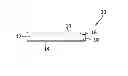
FIG. 1 is schematic view of an exemplary bulk CNT and metallic composite;
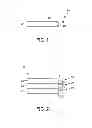
FIG. 2 is a schematic view of an exemplary bulk CNT and metallic composite strip; and
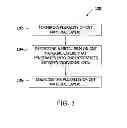
FIG. 3 is a block diagram of an exemplary method of fabricating a bulk CNT and metallic composite strip.
DETAILED DESCRIPTION OF THE DISCLOSURE
FIG. 1 illustrates an exemplary bulk carbon nanotube (CNT) and metallic composite 10 that includes a bulk CNT material layer 12 and one or more thin metal films or layers 14. In the exemplary embodiment, bulk CNT layer 12 includes opposed first and second sides 16 and 18, respectively, and a layer of metal film 14 is deposited across each side 16 and 18. FIG. 2 illustrates an exemplary bulk CNT and metallic composite strip 20 that is fabricated by welding bulk CNT layers 12 together, as will be described in more detail. The methods described herein produce a bulk CNT and metallic composite strip 20 that has a high weight-normalized electrical conductivity, a high thermal conductivity, and a high mechanical strength.
In the exemplary embodiment, bulk CNT layer 12 is fabricated from a plurality of metallic CNTs (not shown), such as “armchair” CNTs, that are each oriented with a chiral angle that is substantially parallel to the tube axis of each CNT. When a graphene sheet (not shown) that forms each CNT is wrapped with an armchair chirality, each formed CNT has an increased metallic character and has an increased capability for tremendously high current density. Alternatively, bulk CNT layer 12 may include a number of semi-conductor CNTs (not shown) in addition to the metallic CNTs. In the exemplary embodiment, bulk CNT layer 12 is a non-woven sheet or a yarn. Alternatively, any other form of bulk CNT layer 12 may be used that enables composite 10 to function as described herein.
In the exemplary embodiment, metal film 14 is applied across CNT layer sides 16 and 18 and penetrates into the interstices between individual CNTs. In the exemplary embodiment, the amount of metal used to form metal film 14 is enough to facilitate low electrical resistance interconnects between a substantial number of the CNTs. In the exemplary embodiment, metal film 14 is a thin-film of aluminum that penetrates the bulk CNT layer 12 and coats a large fraction of the CNTs. Alternatively, metal film 14 may be any electrically conductive metal or combination of metals that enables bulk CNT and metallic composite 10 to function as described herein. In the exemplary embodiment, metal film 14 is applied directly across CNT layer 12 via chemical vapor deposition and/or electroless plating. As such, in the exemplary embodiment, the process facilitates depositing metal within the interstices of the bulk CNT layer. Alternatively, metal film 14 may be applied via a sputtering and/or a physical vapor deposition process. However, any other metal deposition process may be used that enables bulk CNT and metallic composite 10 to function as described herein.
In the exemplary embodiment, multiple bulk CNT and metallic composites 10 are coupled together via a welding process that forms a bulk CNT and metallic composite strip 20. In the exemplary embodiment, and as shown in FIG. 2, three CNT and metallic composites 10 are coupled together along their sides 16 and/or 18. Additionally, CNT and metallic composites 10 may be joined in an end-to-end orientation (not shown). Moreover, any number of CNT and metallic composites 10 may be coupled together to form a bulk CNT and metallic composite strip 20 with any desired length, width and/or thickness. In the exemplary embodiment, CNT and metallic composites 10 are joined together via an ultrasonic welding process. Alternatively, CNT and metallic composites 10 are joined together via an ultrasonic additive manufacturing (UAM) process that sequentially couples layers of patterned metal together to produce net shape products having complex interior cavities.
FIG. 3 illustrates an exemplary method 100 of fabricating a bulk CNT and metallic composite strip 20. Method 100 includes forming 102 a plurality of CNT material layers 12 from a plurality of single-walled carbon nanotubes (SWCNTs) and/or multi-walled carbon nanotubes (MWCNTs). In the exemplary embodiment, CNT material layers 12 are a non-woven sheet or a yarn. The method further includes depositing 104 a metal film 14 across one or more sides 16 and 18 of CNT material layer 12 to form a bulk CNT and metallic composite 10. In the exemplary embodiment, metal film 14 is deposited by at least one of a chemical vapor deposition, an electroless plating, a sputtering, and a physical vapor deposition process. The method also includes coupling 106 multiple bulk CNT and metallic composites 10 together to form a bulk CNT and metallic composite strip 20. In the exemplary embodiment, bulk CNT and metallic composites 10 are coupled together via at least one of an ultrasonic welding and an ultrasonic additive manufacturing process.
EXAMPLE
In one example, non-woven sheets of bulk CNT material layers 12 are fabricated from individual SWCNTs having a diameter between about 2 nm and about 5 nm, individual MWCNTs having a diameter between about 20 nm and about 50 nm, or a combination of both. Each bulk CNT layer 12 is formed with a cross-sectional thickness of between about 20 μm and about 100 μm. A bulk CNT and metallic composite 10 is formed by coating each side 16 and 18 of bulk CNT layer 12 with approximately 3,000 Å (0.3 μm) of metallic material. For example, in the exemplary embodiment, a metallic material such as aluminum, copper, nickel, titanium, silver, gold or chromium, or any combination thereof, may be used to form metallic composite 10. Alternatively, any metallic material may be used that enables metallic composite 10 to function as described herein. The resulting bulk CNT and metallic composites 10 are coupled together via an ultrasonic welding process to form a bulk CNT and metallic composite strip 20. The ultrasonic welding process facilitates reducing open space within composites 10 and reducing a thickness of each bulk CNT and metallic composite 10 by approximately 20%. As such, bulk CNT and metallic composite 10 has a decreased electrical resistance between individual CNTs and a decreased electrical resistance. In the example, bulk CNT and metallic composite strip 20 is fabricated with dimensions measuring roughly one cm wide, 10 cm long, and is one to several composites 10 thick.
As described herein, a bulk CNT and metallic composite is fabricated with an increased specific electrical conductivity that is superior to other materials such as copper and aluminum. In addition, the composite exhibits a high electrical conductivity, a high thermal conductivity, and a high mechanical strength. The bulk CNT composite formed with the above techniques reduces contact resistance between individual CNTs and reduced open space within each bulk CNT and metallic composite. Further, a plurality of bulk CNT and metallic composites are coupled to form a high strength, highly electrically conductive bulk CNT and metallic composite strip. The bulk CNT composite material having superior qualities makes it ideal for applications such as EMI shielding, wire conductors for power transmission line, spacecraft harness, and electric motors.
This written description uses examples to disclose the various embodiments, including the best mode, and also to enable any person skilled in the art to practice such embodiments, including making and using any devices or systems and performing any incorporated methods. The patentable scope is defined by the claims, and may include other examples that occur to those skilled in the art. Such other examples are intended to be within the scope of the claims if they have structural elements that do not differ from the literal language of the claims, or if they include equivalent structural elements with insubstantial differences from the literal languages of the claims.
Claims
What is claimed is:1. A bulk carbon nanotube and metallic composite comprising:
a bulk carbon nanotube material layer comprising a plurality of carbon nanotubes; and
a metal film applied across said bulk carbon nanotube material layer, said metal film penetrating into the interstices between individual carbon nanotubes to reduce an electrical resistance between said plurality of carbon nanotubes.
2. The composite of claim 1, wherein at least a portion of said plurality of carbon nanotubes are metallic carbon nanotubes.
3. The composite of claim 1, wherein said plurality of carbon nanotubes comprises at least one of single-walled carbon nanotubes and multi-walled carbon nanotubes.
4. The composite of claim 1, wherein said bulk carbon nanotube material layer is at least one of a non-woven sheet and a yarn.
5. The composite of claim 1, wherein said metal film is applied across said bulk carbon nanotube material layer using at least one of a chemical vapor deposition process, an electroless plating process, a sputtering process, and a physical vapor deposition process.
6. The composite of claim 1, wherein said metal film comprises at least one of aluminum, nickel, copper, titanium, silver, gold and chromium.
7. A bulk carbon nanotube and metallic composite strip comprising:
a first bulk carbon nanotube and metallic composite coupled to a second bulk carbon nanotube and metallic composite, said first and second bulk carbon nanotube and metallic composites each comprising:
a bulk carbon nanotube material layer comprising a plurality of carbon nanotubes; and
a metal film applied across said bulk carbon nanotube material layer, said metal film penetrating into the interstices between individual carbon nanotubes to reduce an electrical resistance between said plurality of carbon nanotubes.
8. The composite strip of claim 7, wherein said first bulk carbon nanotube and metallic composite is coupled to said second bulk carbon nanotube and metallic composite using at least one of an ultrasonic welding process and an ultrasonic additive manufacturing process.
9. The composite strip of claim 7, wherein at least a portion of said plurality of carbon nanotubes are metallic carbon nanotubes.
10. The composite strip of claim 7, wherein said plurality of carbon nanotubes comprises at least one of single-walled carbon nanotubes and multi-walled carbon nanotubes.
11. The composite strip of claim 7, wherein said bulk carbon nanotube material layer is at least one of a non-woven sheet and a yarn.
12. The composite strip of claim 7, wherein said metal film is applied onto said bulk carbon nanotube material layer using at least one of a chemical vapor deposition process, an electroless plating process, a sputtering process, and a physical vapor deposition process.
13. A method of fabricating a bulk carbon nanotube and metallic composite, the method comprising:
forming a first bulk carbon nanotube material layer comprising a plurality of carbon nanotubes; and
depositing a metal film across the bulk carbon nanotube material layer, said metal film penetrating into the interstices between individual carbon nanotubes to reduce an electrical resistance between the plurality of carbon nanotubes.
14. The method of claim 13, further comprising fabricating a second bulk carbon nanotube and metallic composite, and coupling the second bulk carbon nanotube and metallic composite to the first bulk carbon nanotube and metallic composite to form a bulk carbon nanotube and metallic composite strip.
15. The method of claim 14, further comprising coupling the second bulk carbon nanotube and metallic composite to the first bulk carbon nanotube and metallic composite using at least one of an ultrasonic welding process and an ultrasonic additive manufacturing process.
16. The method of claim 13, wherein forming the first bulk carbon nanotube material layer comprises forming at least a portion of the layer using metallic carbon nanotubes.
17. The method of claim 13, wherein forming the first bulk carbon nanotube material layer comprises forming at least a portion of the layer using at least one of single-walled carbon nanotubes and multi-walled carbon nanotubes.
18. The method of claim 13, wherein forming the first bulk carbon nanotube material layer comprises forming at least a portion of the layer using at least one of a non-woven sheet and a yarn.
19. The method of claim 13, wherein depositing the metal film comprises applying the metal film onto the bulk carbon nanotube material layer using at least one of a chemical vapor deposition process, an electroless plating process, a sputtering process, and a physical vapor deposition process.
20. The method of claim 13, wherein depositing the metal film comprises applying at least one of aluminum, nickel, copper, titanium, silver, gold and chromium onto the bulk carbon nanotube material layer.
Images & Drawings included:
Sources:
- United States Patent and Trademark Office - verify current appl. status at the USPTO↗
Similar patent applications:
Recent applications in this class:
- » 20250239379 2025-07-24
APPARATUS AND METHOD FOR GROWING DISCRETE ULTRALONG CYLINDRICAL SP2 CARBON STRUCTURES - » 20250182923 2025-06-05
POWER STORAGE DEVICE - » 20250140436 2025-05-01
POWER STORAGE DEVICE - » 20250079036 2025-03-06
Conductive Color Coatings - » 20240363262 2024-10-31
CARBON NANOTUBE-TO-METAL ASSEMBLIES - » 20240355499 2024-10-24
SPIRAL GRAPHENE NANOCRYSTAL, GRAPHENE FILM, INTERCONNECTSTRUCTURE, ELECTRONIC DEVICE INCLUDING SAME, AND METHOD OF FABRICATING INTERCONNECT STRUCTURE - » 20240120127 2024-04-11
METHOD FOR PRODUCING AN ELECTRICALLY CONDUCTIVE CARBON CONDUCTOR WITH CARBON STRUCTURAL FORMS - » 20240112827 2024-04-04
ULTRACONDUCTIVE METAL COMPOSITE FORMS AND THE SYNTHESIS THEREOF - » 20240047097 2024-02-08
METHOD FOR PRODUCING AN ELECTRICALLY CONDUCTIVE CONDUCTOR STRAND HAVING AT LEAST ONE CARBON CONDUCTOR - » 20240047096 2024-02-08
GRAPHENE IN ELECTROMAGNETIC SYSTEMS
Recent applications for this Assignee:
- » 20250215535 2025-07-03
REFRACTORY COMPLEX CONCENTRATED ALLOYS FOR IMPROVED OXIDATION RESISTANCE AND STRUCTURAL STABILITY - » 20250153561 2025-05-15
COMPOSITE TANKS FOR REUSABLE LAUNCH VEHICLES AND METHODS OF FABRICATING THEREOF - » 20250121564 2025-04-17
ADDITIVE MANUFACTURING SYSTEM AND METHOD USING ROBOTIC ARMS - » 20240426919 2024-12-26
BATTERY REAL-TIME INTERNAL SHORT CIRCUIT DETECTION - » 20240401953 2024-12-05
Personal Navigation Device Operable in GNSS-Denied Environment - » 20240328752 2024-10-03
AIRCRAFT WEAPONS POD INCLUDING RAIL LAUNCHER - » 20240328371 2024-10-03
BONDED DOUBLE WALL SEAL ASSEMBLY - » 20240328348 2024-10-03
METHODS AND SYSTEMS FOR GENERATING POWER AND THERMAL MANAGEMENT HAVING DUAL LOOP ARCHITECTURE - » 20240327029 2024-10-03
METEOROLOGICAL EQUIPMENT TO SUPPORT FLIGHT OPERATIONS OF VERTICAL TAKEOFF AND LANDING AIRCRAFT - » 20240317402 2024-09-26
System and method for transferring individuals to and from a toilet of a lavatory