Carpet seam tape and method for joining carpet
US20140083610A1
2014-03-27
13/626,986
2012-09-26
✅ Patent granted
US 8,980,042 B2
2015-03-17
-
-
Mark A Osele
Brian J. Teague
2033-08-03
Abstract:
A method for joining two carpet segments, each carpet segment having an underside and at least one edge. The method comprises abutting one edge of one carpet segment with one edge of the other carpet segment; positioning a length of seam tape under the abutting edges, and activating the adhesive to secure the seam tape to the undersides of both carpet segments. The seam tape comprises an elongated base layer that is resilient in a transverse direction and an adhesive applied to the base layer. The adhesive may comprise a hot-melt thermoplastic adhesive. The base layer may comprise a resilient textile or fabric, such as cotton denim and elastane.
Applicant:
Interested in similar patents?
Get notified when new applications in this technology area are published.
Classification:
C09J7/21 » CPC further
Adhesives in the form of films or foils characterised by their carriers Paper; Textile fabrics
C09J7/35 » CPC further
Adhesives in the form of films or foils characterised by the adhesive composition Heat-activated
Y10T428/2481 » CPC further
Stock material or miscellaneous articles; Structurally defined web or sheet [e.g., overall dimension, etc.]; Discontinuous or differential coating, impregnation or bond [e.g., artwork, printing, retouched photograph, etc.] including layer of mechanically interengaged strands, strand-portions or strand-like strips
Y10T428/28 » CPC further
Stock material or miscellaneous articles Web or sheet containing structurally defined element or component and having an adhesive outermost layer
Y10T428/2826 » CPC further
Stock material or miscellaneous articles; Web or sheet containing structurally defined element or component and having an adhesive outermost layer; Heat or solvent activated or sealable; Heat sealable Synthetic resin or polymer
Y10T442/2738 » CPC further
Fabric [woven, knitted, or nonwoven textile or cloth, etc.]; Coated or impregnated woven, knit, or nonwoven fabric which is not [a] associated with another preformed layer or fiber layer or, [b] with respect to woven and knit, characterized, respectively, by a particular or differential weave or knit, wherein the coating or impregnation is neither a foamed material nor a free metal or alloy layer Coating or impregnation intended to function as an adhesive to solid surfaces subsequently associated therewith
Y10T442/2746 » CPC further
Fabric [woven, knitted, or nonwoven textile or cloth, etc.]; Coated or impregnated woven, knit, or nonwoven fabric which is not [a] associated with another preformed layer or fiber layer or, [b] with respect to woven and knit, characterized, respectively, by a particular or differential weave or knit, wherein the coating or impregnation is neither a foamed material nor a free metal or alloy layer; Coating or impregnation intended to function as an adhesive to solid surfaces subsequently associated therewith Heat-activatable adhesive
Y10T442/277 » CPC further
Fabric [woven, knitted, or nonwoven textile or cloth, etc.]; Coated or impregnated woven, knit, or nonwoven fabric which is not [a] associated with another preformed layer or fiber layer or, [b] with respect to woven and knit, characterized, respectively, by a particular or differential weave or knit, wherein the coating or impregnation is neither a foamed material nor a free metal or alloy layer; Coated or impregnated natural fiber fabric [e.g., cotton, wool, silk, linen, etc.] Coated or impregnated cellulosic fiber fabric
B32B37/12 IPC
Methods or apparatus for laminating, e.g. by curing or by ultrasonic bonding characterised by using adhesives
A47G27/0443 » CPC main
Floor fabrics; Fastenings therefor; Carpet fasteners; Carpet-expanding devices ; Laying carpeting; Tools therefor; Laying carpeting, e.g. wall-to-wall carpeting using hot-melt adhesives; Irons therefor
B29C65/4815 » CPC further
Joining of preformed parts ; Apparatus therefor using adhesives, i.e. using supplementary joining material; solvent bonding characterised by the type of adhesives; Non-reactive adhesives, e.g. physically hardening adhesives Hot melt adhesives, e.g. thermoplastic adhesives
B29C65/5021 » CPC further
Joining of preformed parts ; Apparatus therefor using adhesives, i.e. using supplementary joining material; solvent bonding using adhesive tape, e.g. thermoplastic tape; using threads or the like characterised by the structure of said adhesive tape, threads or the like being multi-layered
B29C65/5028 » CPC further
Joining of preformed parts ; Apparatus therefor using adhesives, i.e. using supplementary joining material; solvent bonding using adhesive tape, e.g. thermoplastic tape; using threads or the like characterised by the structure of said adhesive tape, threads or the like being textile in woven or non-woven form
B29C65/5035 » CPC further
Joining of preformed parts ; Apparatus therefor using adhesives, i.e. using supplementary joining material; solvent bonding using adhesive tape, e.g. thermoplastic tape; using threads or the like characterised by the structure of said adhesive tape, threads or the like being in thread form, i.e. in the form of a single filament, e.g. in the form of a single coated filament
B29C66/1142 » CPC further
General aspects of processes or apparatus for joining preformed parts; General aspects dealing with the joint area or with the area to be joined; Particular design of joint configurations particular design of the joint cross-sections; Joint cross-sections comprising a single joint-segment, i.e. one of the parts to be joined comprising a single joint-segment in the joint cross-section; Single butt joints Single butt to butt joints
B29C66/21 » CPC further
General aspects of processes or apparatus for joining preformed parts; General aspects dealing with the joint area or with the area to be joined; Particular design of joint configurations particular design of the joint lines, e.g. of the weld lines said joint lines being formed by a single dot or dash or by several dots or dashes, i.e. spot joining or spot welding
B29C66/232 » CPC further
General aspects of processes or apparatus for joining preformed parts; General aspects dealing with the joint area or with the area to be joined; Particular design of joint configurations particular design of the joint lines, e.g. of the weld lines said joint lines being multiple and parallel or being in the form of tessellations said joint lines being multiple and parallel, i.e. the joint being formed by several parallel joint lines
B29C65/5042 » CPC further
Joining of preformed parts ; Apparatus therefor using adhesives, i.e. using supplementary joining material; solvent bonding using adhesive tape, e.g. thermoplastic tape; using threads or the like covering both elements to be joined
B29C66/43 » CPC further
General aspects of processes or apparatus for joining preformed parts; General aspects of joining substantially flat articles, e.g. plates, sheets or web-like materials; Making flat seams in tubular or hollow articles; Joining single elements to substantially flat surfaces; Joining substantially flat articles ; Making flat seams in tubular or hollow articles Joining a relatively small portion of the surface of said articles
B29L2031/7652 » CPC further
Other particular articles; Articles provided with piles, e g. nap on cloth Pile carpets
C09J2203/314 » CPC further
Applications of adhesives in processes or use of adhesives in the form of films or foils for carpets
C09J2400/263 » CPC further
Presence of inorganic and organic materials; Presence of organic materials; Presence of textile or fabric in the substrate
Y10T428/24843 » CPC further
Stock material or miscellaneous articles; Structurally defined web or sheet [e.g., overall dimension, etc.]; Discontinuous or differential coating, impregnation or bond [e.g., artwork, printing, retouched photograph, etc.] with heat sealable or heat releasable adhesive layer
Y10T428/2817 » CPC further
Stock material or miscellaneous articles; Web or sheet containing structurally defined element or component and having an adhesive outermost layer; Heat or solvent activated or sealable Heat sealable
B29C65/02 IPC
Joining of preformed parts ; Apparatus therefor by heating, with or without pressure
B32B3/06 IPC
Layered products comprising a layer with external or internal discontinuities or unevennesses, or a layer of non-planar form ; Layered products having particular features of form characterised by features of form at particular places, e.g. in edge regions for securing layers together; for attaching the product to another member, e.g. to a support, or to another product, e.g. groove/tongue, interlocking
B32B37/18 IPC
Methods or apparatus for laminating, e.g. by curing or by ultrasonic bonding characterised by the properties of the layers with all layers existing as coherent layers before laminating involving the assembly of discrete sheets or panels only
A47G27/04 IPC
Floor fabrics; Fastenings therefor Carpet fasteners; Carpet-expanding devices ; Laying carpeting; Tools therefor
B29C65/50 IPC
Joining of preformed parts ; Apparatus therefor using adhesives, i.e. using supplementary joining material; solvent bonding using adhesive tape, e.g. thermoplastic tape; using threads or the like
B29C65/00 IPC
Joining of preformed parts ; Apparatus therefor
B32B7/14 » CPC main
Layered products characterised by the relation between layers; Layered products characterised by the relative orientation of features between layers, or by the relative values of a measurable parameter between layers, i.e. products comprising layers having different physical, chemical or physicochemical properties; Layered products characterised by the interconnection of layers; Interconnection of layers using interposed adhesives or interposed materials with bonding properties applied in spaced arrangements, e.g. in stripes
B29C65/48 IPC
Joining of preformed parts ; Apparatus therefor using adhesives, i.e. using supplementary joining material; solvent bonding
Description
FIELD OF THE INVENTION
The present invention relates to carpet seam tape and methods for joining carpet.
BACKGROUND
When installing carpet, it is common for the room in which the carpet is being installed to have at least one dimension (length or width) that is greater than the length of a standard roll of carpet (which is typically twelve feet). In such a case, a single unitary segment of carpet from a roll cannot cover the entire floor of the room, and two or more segments must be pieced together. When two or more segments are pieced together, an edge of one segment is abutted against an edge of another segment, and these edges are joined (“seamed”) together using seam tape.
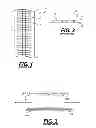
FIGS. 1 and 2 illustrate top and cross-sectional views, respectively, of prior art seam tape. Prior art seam tape 10 comprises an elongated base layer 12, scrim 14, and an adhesive 16 (the adhesive is omitted from FIG. 1 for clarity). The base layer typically comprises paper or other relatively inelastic material. The scrim typically comprises woven threads and provides strength and additional inelasticity to the seam tape. The adhesive typically comprises a hot-melt thermoplastic adhesive applied to a large portion of the base layer. The scrim is embedded within the adhesive.
When joining carpet edges together, the edge of one carpet segment is positioned to abut the edge of the other carpet segment. The seam tape is positioned under the abutting edges, and the adhesive is activated by applying heat to the top surface of the carpet above the seam tape. The heat melts the adhesive and the melted adhesive bonds to the underside of both carpet segments as the adhesive cures.
After the carpet segments are positioned to cover the entire floor and the seams are joined using seam tape, the carpet is stretched at the outer edges and the outer edges are secured to the floor using tack strips. The stretching tightens the carpet to remove any slack and wrinkles FIG. 3 illustrates what happens when the carpet is stretched in a direction transverse to the carpet seam (indicated by the arrows in FIG. 3). The top image of FIG. 3 illustrates the unstretched carpet. As the carpet is stretched and the two carpet segments 18A, 18B are pulled away from each other, the inelasticity of the seam tape 10 causes the seam to lift off the floor, resulting in an unsightly bulge in the carpet (illustrated in the bottom image of FIG. 3). This is called seam “peaking” or “profiling” and is highly undesirable.
BRIEF SUMMARY
In one embodiment of the invention, a method for joining two carpet segments, each carpet segment having an underside and at least one edge, comprises abutting one edge of one carpet segment with one edge of the other carpet segment; positioning a length of seam tape under the abutting edges, the seam tape comprising an elongated base layer being resilient in a transverse direction; and an adhesive applied to the base layer; and activating the adhesive to secure the seam tape to the undersides of both carpet segments.
In another embodiment of the invention, a method for joining two carpet segments, each carpet segment having an underside and at least one edge, comprises abutting one edge of one carpet segment with one edge of the other carpet segment; positioning a length of seam tape under the abutting edges, the seam tape comprising an elongated base layer comprising fabric; and an adhesive applied to the base layer; and activating the adhesive to secure the seam tape to the undersides of both carpet segments.
In another embodiment of the invention, a method for joining two carpet segments, each carpet segment having an underside and at least one edge, comprises abutting one edge of one carpet segment with one edge of the other carpet segment; positioning a length of seam tape under the abutting edges, the seam tape comprising an elongated base layer; and an adhesive applied to the base layer; and activating the adhesive to secure the seam tape to the undersides of both carpet segments. In this embodiment, the seam tape does not comprise a scrim.
In any of the above methods, the adhesive may comprise a hot-melt thermoplastic adhesive, and the base layer may comprise fabric, such as cotton and elastane or denim and elastane. In any of the above methods, the adhesive may comprise (a) a unitary mass of adhesive, (b) a plurality of beads of adhesive, or (c) a plurality of spots of adhesive.
In another embodiment of the invention, carpet seam tape for joining two carpet segments comprises an elongated base layer being resilient in a transverse direction; and an adhesive applied to the base layer.
In another embodiment of the invention, carpet seam tape for joining two carpet segments comprises an elongated base layer comprising fabric; and an adhesive applied to the base layer.
In another embodiment of the invention, carpet seam tape for joining two carpet segments comprises an elongated base layer; and an adhesive applied to the base layer. However, the seam tape does not comprise a scrim.
In any of the above carpet seam tapes, the adhesive may comprise a hot-melt thermoplastic adhesive, and the base layer may comprise fabric, such as cotton and elastane or denim and elastane. In any of the above methods, the adhesive may comprise (a) a unitary mass of adhesive, (b) a plurality of beads of adhesive, or (c) a plurality of spots of adhesive.
In another embodiment of the invention, a carpet system comprises two carpet segments; and carpet seam tape affixed to and joining the two carpet segments. The carpet seam tape comprises an elongated base layer being resilient in a transverse direction; and an adhesive applied to the base layer.
In another embodiment of the invention, a carpet system comprises two carpet segments; and carpet seam tape affixed to and joining the two carpet segments. The carpet seam tape comprises an elongated base layer comprising fabric; and an adhesive applied to the base layer.
In another embodiment of the invention, a carpet system comprises two carpet segments; and carpet seam tape affixed to and joining the two carpet segments. The carpet seam tape comprises an elongated base layer; and an adhesive applied to the base layer. However, the seam tape does not comprise a scrim.
In any of the above carpet systems, the adhesive may comprise a hot-melt thermoplastic adhesive, and the base layer may comprise fabric, such as cotton and elastane or denim and elastane. In any of the above methods, the adhesive may comprise (a) a unitary mass of adhesive, (b) a plurality of beads of adhesive, or (c) a plurality of spots of adhesive.
BRIEF DESCRIPTION OF THE SEVERAL VIEWS OF THE DRAWING(S)
Having thus described the invention in general terms, reference will now be made to the accompanying drawings, which are not necessarily drawn to scale, and wherein:
FIG. 1 is a top view of prior art seam tape;
FIG. 2 is a cross-sectional view of the prior art seam tape of FIG. 1 along the indicated line;
FIG. 3 illustrates carpet segments joined using the prior art seam tape of FIG. 1;
FIG. 4 is a top view of seam tape, in accordance with an embodiment of the present invention;
FIG. 5 is a cross-sectional view of the seam tape of FIG. 4;
FIG. 6 illustrates carpet segments joined using the seam tape of FIG. 4;
FIG. 7 is a top view of seam tape, in accordance with an alternative embodiment of the present invention; and
FIG. 8 is a cross-sectional view of the seam tape of FIG. 7.
DETAILED DESCRIPTION
Embodiments of the invention provide the ability to securely join carpet segments while preventing seam peaking when the joined carpet is stretched. Referring now to FIGS. 4 and 5, top and cross-sectional views are illustrated, respectively, of seam tape in accordance with an embodiment of the present invention. The seam tape 30 of embodiments of the invention comprises an elongated base layer 32 and an adhesive 36 applied to the base layer. Notably, the seam tape does not comprise a scrim. The elongated base layer may comprise any suitable material that is resilient (stretches and rebounds) in a transverse (perpendicular to the longitudinal axis) direction. For example, the elongated base layer may comprise a textile or fabric (including combinations of different textiles or fabrics), rubber, polymer (including combinations of different polymers), and combinations thereof. In one embodiment of the invention, the elongated base layer comprises a fabric that combines cotton (such as denim) and elastane (such as Lycra or Spandex). For example, the fabric that is used to make “stretch jeans” may be used for the base layer. Such a fabric may be, for example, 98% denim and 2% elastane or 95% denim and 5% elastane, although different amounts of denim and elastane may be used. Optionally, one or more additional materials may be combined with the cotton and elastane. For example, the elongated base layer may comprise a fabric that combines polyester with the cotton and elastane, such as a combination of 78% cotton denim, 18% polyester, and 4% elastane. The fabric may be dyed or undyed. The adhesive typically comprises a hot-melt thermoplastic adhesive.
The material selected for the elongated base layer should be as resilient as the carpet to which the seam tape is to be secured, such as to not impede the carpet from stretching. However, it may also be desirable for the material to not be significantly more resilient than the carpet. Such a material should provide enough stretch to the seam tape to reduce the likelihood of seam peaking, but not so much stretch as to allow a gap to be visible at the seam. As different types of carpets may have different amounts of resiliency, it may be desirable to have different types of seam tapes, each with a different amount of resiliency to match a different type of carpet. Alternatively, it may be desirable to have a single type of seam tape that has sufficient resiliency to be used with a wide variety of different types of carpet.
For purposes of this application, the terms “textile” and “fabric” are used interchangeably to refer to a flexible woven material comprising a network of natural or artificial fibers (often referred to as thread or yarn). Textiles are formed by weaving, knitting, crocheting, knotting, or pressing fibers together. For purposes of this application, the terms “textile” and “fabric” specifically exclude paper.
FIG. 6 illustrates what happens when carpet that is joined using carpet seam tape 30 of embodiments of the invention is stretched in a direction transverse to the carpet seam (indicated by the arrows in FIG. 6). As the two carpet segments 38A, 38B are pulled away from each other, the elasticity of the seam tape 30 prevents the seam from lifting off the floor, thereby preventing seam peaking It does this by allowing the stretch to “reach” the seam. That is, the portions of the carpet that are affixed to the seam tape (of embodiments of the invention) are able to stretch (along with the seam tape). In contrast, the prior art seam tape does not allow the portions of the carpet that are affixed to the prior art seam tape to stretch (because the prior art seam tape does not stretch).
Referring now to FIGS. 7 and 8, top and cross-sectional views are illustrated, respectively, of seam tape in accordance with an alternative embodiment of the present invention. The seam tape 50 of alternative embodiments of the invention comprises an elongated base layer 52 and an adhesive 56 applied to the base layer. As above, seam tape 50 does not comprise a scrim. Rather than a unitary mass of adhesive applied to the base layer, seam tape 50 comprises a plurality of “beads” of glue. The beads of glue are illustrated as being substantially parallel to the longitudinal axis of the seam tape and to each other, but other configurations may be used. The beads are illustrated as being continuous, but may be non-continuous beads or may even comprise individual “dots” or “spots” of adhesive. Such a non-unitary application of adhesive to the base layer may be desirable where a non-flexible (or insufficiently flexible) adhesive is used. Some types of adhesives, once cured, may be less flexible than other types of adhesives. For example, high melt glue is less flexible, once cured, than low melt glue. Using a non-unitary application of adhesive to the base layer when a less flexible adhesive is used prevents (or at least reduces) the adhesive from restricting the tape (and therefore the carpet) from stretching.
While four beads of adhesive are illustrated in FIGS. 7 and 8, the amount of adhesive in each bead and the spacing and number of the beads may vary, depending on the type of adhesive, the type of carpet, etc. It is desirable that the amount of adhesive and the spacing of the beads be selected such that the beads remain separate and do not run together when the seam tape is heated and the adhesive is melted. Since the use of such beads is typically limited to glues that are relatively less flexible, ensuring that the beads remain separate after melting helps maintain the continued resiliency of the seam tape.
The carpet seam tape of embodiments of the invention offers many improvements over prior art seam tape. The carpet seam tape of embodiments of the invention lays flat despite stretching of the carpet because the elasticity of the seam tape allows the carpet to stretch. The carpet seam tape of embodiments of the invention is easier to manufacture and less expensive due at least to the lack of a scrim. The carpet seam tape of embodiments of the invention provides a bond that is better capable of withstanding repeated steam cleaning due to its use of fabric rather than paper as the base layer.
When the carpet seam tape of embodiments of the invention is used to seam carpet, the edges of the carpet should be “seam sealed” as per standard carpet seaming practices established by the Carpet and Rug Institute. This seam sealing step further reduces the likelihood of peaking It is anticipated that all other standard seaming techniques will work when the carpet seam tape of embodiments of the invention is used to seam carpet, and therefore should be used.
In addition to joining carpet segments during installation of carpet, the carpet seam tape of embodiments of the invention may be used in a carpet mill to join the ends of carpet rolls to form larger carpet rolls.
The terminology used herein is for the purpose of describing particular embodiments only and is not intended to be limiting of the invention. As used herein, the singular forms “a”, “an” and “the” are intended to include the plural forms as well, unless the context clearly indicates otherwise. It will be further understood that the terms “comprises” and/or “comprising,” when used in this specification, specify the presence of stated features, integers, steps, operations, elements, and/or components, but do not preclude the presence or addition of one or more other features, integers, steps, operations, elements, components, and/or groups thereof.
The corresponding structures, materials, acts, and equivalents of all means or step plus function elements in the claims below are intended to include any structure, material, or act for performing the function in combination with other claimed elements as specifically claimed. The description of the present invention has been presented for purposes of illustration and description, but is not intended to be exhaustive or limited to the invention in the form disclosed. Many modifications and variations will be apparent to those of ordinary skill in the art without departing from the scope and spirit of the invention. The embodiment was chosen and described in order to best explain the principles of the invention and the practical application, and to enable others of ordinary skill in the art to understand the invention for various embodiments with various modifications as are suited to the particular use contemplated.
Claims
That which is claimed:1. A method for joining two carpet segments, each carpet segment having an underside and at least one edge, the method comprising:
abutting one edge of one carpet segment with one edge of the other carpet segment;
positioning a length of seam tape under the abutting edges, the seam tape comprising:
an elongated base layer being resilient in a transverse direction; and
an adhesive applied to the base layer; and
activating the adhesive to secure the seam tape to the undersides of both carpet segments.
2. The method of claim 1, wherein the adhesive comprises a hot-melt thermoplastic adhesive.
3. The method of claim 1, wherein the base layer comprises textile or fabric.
4. The method of claim 3, wherein the textile or fabric comprises cotton and elastane.
5. The method of claim 3, wherein the textile or fabric comprises denim and elastane.
6. The method of claim 1, wherein the adhesive comprises (a) a unitary mass of adhesive, (b) a plurality of beads of adhesive, or (c) a plurality of spots of adhesive.
7. A method for joining two carpet segments, each carpet segment having an underside and at least one edge, the method comprising:
abutting one edge of one carpet segment with one edge of the other carpet segment;
positioning a length of seam tape under the abutting edges, the seam tape comprising:
an elongated base layer comprising textile or fabric; and
an adhesive applied to the base layer; and
activating the adhesive to secure the seam tape to the undersides of both carpet segments.
8. The method of claim 7, wherein the adhesive comprises a hot-melt thermoplastic adhesive.
9. The method of claim 7, wherein the base layer comprises textile or fabric that is resilient in a transverse direction.
10. The method of claim 9, wherein the textile or fabric comprises cotton and elastane.
11. The method of claim 9, wherein the textile or fabric comprises denim and elastane.
12. The method of claim 7, wherein the adhesive comprises (a) a unitary mass of adhesive, (b) a plurality of beads of adhesive, or (c) a plurality of spots of adhesive.
13. A method for joining two carpet segments, each carpet segment having an underside and at least one edge, the method comprising:
abutting one edge of one carpet segment with one edge of the other carpet segment;
positioning a length of seam tape under the abutting edges, the seam tape comprising:
an elongated base layer; and
an adhesive applied to the base layer;
wherein the seam tape does not comprise a scrim; and
activating the adhesive to secure the seam tape to the undersides of both carpet segments.
14. The method of claim 13, wherein the adhesive comprises a hot-melt thermoplastic adhesive.
15. The method of claim 13, wherein the base layer comprises textile or fabric that is resilient in a transverse direction.
16. The method of claim 15, wherein the textile or fabric comprises cotton and elastane.
17. The method of claim 15, wherein the textile or fabric comprises denim and elastane.
18. The method of claim 13, wherein the adhesive comprises (a) a unitary mass of adhesive, (b) a plurality of beads of adhesive, or (c) a plurality of spots of adhesive.
19. Carpet seam tape for joining two carpet segments, the carpet seam tape comprising:
an elongated base layer being resilient in a transverse direction; and
an adhesive applied to the base layer.
20. The carpet seam tape of claim 19, wherein the adhesive comprises a hot-melt thermoplastic adhesive.
21. The carpet seam tape of claim 19, wherein the base layer comprises textile or fabric.
22. The carpet seam tape of claim 21, wherein the textile or fabric comprises cotton and elastane.
23. The carpet seam tape of claim 21, wherein the textile or fabric comprises denim and elastane.
24. The carpet seam tape of claim 19, wherein the adhesive comprises (a) a unitary mass of adhesive, (b) a plurality of beads of adhesive, or (c) a plurality of spots of adhesive.
25. Carpet seam tape for joining two carpet segments, the carpet seam tape comprising:
an elongated base layer comprising fabric; and
an adhesive applied to the base layer.
26. The carpet seam tape of claim 25, wherein the adhesive comprises a hot-melt thermoplastic adhesive.
27. The carpet seam tape of claim 25, wherein the base layer comprises textile or fabric that is resilient in a transverse direction.
28. The carpet seam tape of claim 27, wherein the textile or fabric comprises cotton and elastane.
29. The carpet seam tape of claim 27, wherein the textile or fabric comprises denim and elastane.
30. The carpet seam tape of claim 25, wherein the adhesive comprises (a) a unitary mass of adhesive, (b) a plurality of beads of adhesive, or (c) a plurality of spots of adhesive.
31. Carpet seam tape for joining two carpet segments, the carpet seam tape comprising:
an elongated base layer; and
an adhesive applied to the base layer;
wherein the seam tape does not comprise a scrim.
32. The carpet seam tape of claim 31, wherein the adhesive comprises a hot-melt thermoplastic adhesive.
33. The carpet seam tape of claim 31, wherein the base layer comprises textile or fabric that is resilient in a transverse direction.
34. The carpet seam tape of claim 33, wherein the textile or fabric comprises cotton and elastane.
35. The carpet seam tape of claim 33, wherein the textile or fabric comprises denim and elastane.
36. The carpet seam tape of claim 31, wherein the adhesive comprises (a) a unitary mass of adhesive, (b) a plurality of beads of adhesive, or (c) a plurality of spots of adhesive.
Images & Drawings included:



Sources:
- United States Patent and Trademark Office - verify current appl. status at the USPTO↗
Similar patent applications:
- » 20150150400
CARPET SEAM TAPE AND METHOD FOR JOINING CARPET
Recent applications in this class:
- » 20250143496 2025-05-08
CARPET SEAMING IRON - » 20230031166 2023-02-02
Carpet seaming iron - » 20150282656 2015-10-08
CARPET SEAMING IRON - » 20150150401 2015-06-04
CARPET SEAM TAPE - » 20150150400 2015-06-04
CARPET SEAM TAPE AND METHOD FOR JOINING CARPET - » 20090277589 2009-11-12
Carpet Seaming Apparatus