Phalaenopsis orchid plant named 'Pixie'
US20140090134P1
2014-03-27
13/998,019
2013-09-24
Abstract:
A new and distinct Phalaenopsis plant named ‘Pixie’ particularly characterized by flowers which are purple with white edges and a purple labellum; plants which may be propagated economically and uniformly using tissue culture; plants which produce more than one inflorescence; long and sturdy inflorescences; and relatively short, dark-green foliage.
Assignee:
- Floricultura 82 🇳🇱 Heemskerk, Netherlands
Interested in similar patents?
Get notified when new applications in this technology area are published.
Classification:
A01H5/00 IPC
Products
A01H5/00 IPC
Angiosperms, i.e. flowering plants, characterised by their plant parts; Angiosperms characterised otherwise than by their botanic taxonomy
Description
LATIN NAME OF THE GENUS AND SPECIES OF THE PLANT CLAIMED
Phalaenopsis hybrid
VARIETY DENOMINATION
‘Pixie’
BACKGROUND OF THE INVENTION
The present invention relates to a new and distinct cultivar of Phalaenopsis plant, botanically known as Phalaenopsis of the Orchidaceae family, and hereinafter referred to by the cultivar name ‘Pixie’.
Phalaenopsis comprises a genus of about 55 species of herbaceous perennials many of which, or the hybrids thereof, are suitable for cultivation in the home or greenhouse. Phalaenopsis is predominantly epiphytic or rock-dwelling, and is native to tropical Asia, the Malay Archipelago, and Oceania. The species typically has 2-ranked, fleshy, oblong or elliptic leaves affixed to a short central stem (monopodial growth), which vary in size from 5 to 8 inches to over 2 feet. The leaves may be entirely green or mottled with silver grey.
Phalaenopsis orchids, often referred to as ‘Moth Orchids’ in the horticultural trade, are frequently used to furnish cut flowers for the florist trade or sold as flowering potted-plants for home or interiorscape.
Phalaenopsis produces upright or pendent lateral racemes, often with many showy flowers which open in succession beginning with the lowermost. The flowers possess three sepals and three petals; the lateral ones being alike. The lowermost petal, called the labellum, is three-lobed and is often more brightly-colored than the other flower segments. Flower colors include various shades of pink, white, yellow and red-brown.
Phalaenopsis orchids are typically propagated from seeds. Asexual propagation of Phalaenopsis is often done from off-shoots which frequently arise from the lower bracts of the inflorescence. The resulting plants are detached from the mother plant and may be planted in a suitable substrate.
The new Phalaenopsis ‘Pixie’ is a product of a controlled breeding program conducted by the inventor, René Schoone, in Strengweg, Heemskerk, The Netherlands. The objective of the breeding program was to develop a new Phalaenopsis cultivar particularly characterized by its attractive and unique colored flowers, economical propagation via tissue culture, rapid growth, and a plant dimension suitable for packaging and shipping to the market.
The new Phalaenopsis ‘Pixie’ originated from a cross made by the inventor in 2000 in Strengweg, Heemskerk, The Netherlands. The female or seed parent is the Phalaenopsis cultivar designated ‘Carmela's Pixie’, unpatented. The male or pollen parent is the Phalaenopsis cultivar designated ‘King Shiang's Rose’, unpatented. The new Phalaenopsis ‘Pixie’ was discovered and selected by the inventor as a single flowering plant within the progeny of the stated cross in a controlled environment in 2008 in Strengweg, Heemskerk, The Netherlands.
Asexual reproduction of the new Phalaenopsis cultivar by tissue culture was first performed in July, 2008 in Cieweg 13, Heemskerk, The Netherlands, and has demonstrated that the combination of characteristics as herein disclosed for the new cultivar are firmly fixed and retained through successive generations of asexual reproduction. The new cultivar asexually reproduces true-to-type.
BRIEF DESCRIPTION OF THE INVENTION
The following traits have been repeatedly observed and are determined to be unique characteristics of ‘Pixie’, which in combination distinguish this Phalaenopsis as a new and distinct cultivar:
1. flowers which are purple with white edges and a purple labellum;
2. plant produces more than one inflorescence;
3. plants may be propagated economically and uniformly using tissue culture;
4. inflorescences are long and sturdy; and
5. relatively short, dark-green foliage.
In comparison with the parental cultivars of ‘Pixie’, the female parent ‘Carmela's Pixie’ has white with purple flowers and are about 5 to 6 cm in size. The male parent ‘King Shiang's Rose’ has pink/red colored flowers and are about 4 to 5 cm in size, whereas the flowers of ‘Pixie’ are purple with white edges and are about 4 cm in size.
Presently, there is no commercial cultivar to which ‘Pixie’ can be meaningfully compared.
BRIEF DESCRIPTION OF THE PHOTOGRAPHS
The accompanying photographs illustrate the overall appearance of the new Phalaenopsis ‘Pixie’ showing the colors as true as is reasonably possible with colored reproductions of this type. Colors in the photographs may differ slightly from the color values cited in the detailed botanical description, which accurately describe the color of ‘Pixie’.
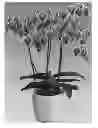
FIG. 1 shows a side view perspective of a typical flowering plant of ‘Pixie’ in a 12 cm pot, at 16 months of age.
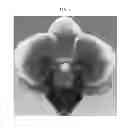
FIG. 2 shows a close-up view of the typical buds and flowers of ‘Pixie’.
FIG. 3 shows a close-up view of the typical leaves of ‘Pixie’.
DETAILED BOTANICAL DESCRIPTION
The new Phalaenopsis cultivar ‘Pixie’ has not been observed under all possible environmental conditions. The phenotype of the new cultivar may vary with variations in environment such as temperature, light intensity, and day length without any change in the genotype of the plant.
The aforementioned photographs, together with the following observations, measurements and values describe plants of ‘Pixie’ as grown in a greenhouse in Strengweg, Heemskerk, The Netherlands, under conditions which closely approximate those generally used in commercial practice. Initially, the ideal temperature to grow plants of ‘Pixie’ is 27° C. during the day and at night. Then, during the flowering phase of ‘Pixie’, the ideal growing temperature is 20-22° C. during the day and 18° C. at night. Light levels for growing ‘Pixie’ are a minimum of 5,000 lux and a maximum of 10,000 lux. A balanced fertilizer with level of 200 ppm N, 87 ppm P, 168 ppm K is applied. Duration of growth of ‘Pixie’ from potting size is between 10 and 14 months.
Color references are made to The Royal Horticultural Society Colour Chart (R.H.S.), 2007 edition, except where general colors of ordinary significance are used. Color values were taken under daylight conditions at approximately noon in Zaandammerweg, Assendelft, The Netherlands. The age of the ‘Pixie’ plants described is 12 months after potting.
- Classification:
-
- Botanical.—Phalaenopsis hybrid.
-
- Parentage:
-
- Female or seed parent.—Phalaenopsis cultivar designated ‘Carmela's Pixie’, unpatented.
- Male or pollen parent.—Phalaenopsis cultivar designated ‘King Shiang's Rose’, unpatented.
-
- Propagation:
-
- Type.—tissue culture.
- Rooting habit and description.—Fleshy; approximately 4 mm-7 mm wide and grey/green in color (RHS 193B); freely branching. It takes 12 weeks for plants growing in tissue culture to initiate roots.
-
- Plant:
-
- Size at maturity.—Height: about 50 cm Spread: about 50 cm.
- Growth habit.—small; green leaves (RHS 141B) and a relatively large raceme.
- Vigor.—moderate.
- Crop time.—Following asexual propagation, at about 26 weeks 2 leaves appear; at about 30 weeks 3-4 leaves appear; after a cold treatment of about 4-8 weeks at a temperature of about 19° C. about 2 peduncles with flowers appear.
-
- Foliage:
-
- Quantity per plant.—About 6 to 9 leaves are produced before flowering.
- Arrangement and attachment.—half up/horizontal and on two sides.
- Overall shape of leaf.—oval, the tip is blunt and asymmetric.
- Texture (upper & underside).—smooth and leathery.
- Pubescence.—none.
- Mature leaf length.—about 12 to 16 cm.
- Mature leaf width.—about 6 to 8 cm.
- Mature leaf thickness.—about 2 mm.
- Mature leaf color (upper surface).—green (RHS 141B).
- Mature leaf color (under surface).—green (RHS 143C).
- Leaf base.—acute.
- Margin.—entire.
- Venation.—Pattern: parallel Color of midvein: upper surface: green (RHS 141B) Under surface: green (RHS 143C).
-
- Raceme:
-
- Quantity per plant.—about 1 to 3.
- Number of flowers per raceme.—about 35.
- Length.—about 42 cm.
- Diameter.—about 3 to 5 mm.
- Strength.—strong.
- Aspect.—upright.
- Texture.—glabrous and smooth.
- Color.—brown (RHS 200B) with green spots (RHS 143C).
- Internode.—Length: about 16 to 21 mm.
-
- Inflorescence description:
- Appearance: Upright to slightly pendant, racemose inflorescence with bilaterally symmetrical flowers that open in succession beginning with the lowermost flower.
- Buds:
-
- Height (from base to tip).—about 15 mm.
- Diameter (at midpoint).—about 11 mm.
- Shape.—oval with a rounding on the side.
- Color.—yellow/green (RHS 147D) with some red/purple (RHS 71A).
-
- Flowering time: For an untreated plant (flowering plant that has not undergone cold-treatment where the plant grows at a temperature of 18° C. to 19° C. for about 4 to 8 weeks after a period of about 30 weeks at a temperature of 25° C.), 2 racemes appear with about 16 to 20 flower buds and flowers per inflorescence. First flowers can be expected approximately 4 to 6 months after planting a plant with a leaf diameter of 3 to 5 cm. Flowers persistent.
- Flowering longevity: On the plant: about 4 to 6 months; lastingness of cut flowers: has not been observed
- Fragrance: No fragrance
- Flower:
-
- Rate of opening.—Flowers fully opened about 2 to 3 days after petal and sepal separation.
- Orientation at opening.—slanted upward and outward.
- Shape.—Typical shape of phalaenopsis orchid; see FIG. 2.
- Size.—Height: about 3 cm Diameter: about 4 cm Depth of tube: about 10 mm.
-
- Petals:
-
- Quantity and arrangement.—six petals that are trimerous, overlapping and arranged in 2 whorls. Petals are more pronounced than sepals.
- Arrangement.—Inner whorl of petals comprises 3 petals, 2 lateral petals and labellum.
- 2 lateral petals.—Overall shape: broadly ovate and weakly cupped Apex: round Margin: entire and weakly undulate Base: broadly ovate Length: about 21 mm Width: about 18 mm Texture: Upper surface: smooth and satiny Under surface: smooth and satiny Color (when fully opened) upper surface: purple (RHS N78A). At the base and all around the edges white (RHS NN155D) Under surface: purple (RHS N78C). At the base and all around the edges white (RHS NN155D) Labellum: Overall shape: 3-lobed with 2 prominent callosities at central junction of the lateral lobes and base of the midlobe. Lateral lobes of labellum fold upward about the column; the midlobe extends forward and is terminated by 2 short stubs appendages at the apex. Lateral lobes of the labellum are ovate in shape while the midlobe is triangular with a bump and a rib on it Margin: entire and weakly undulate Apex: oval Length: about 15 mm Width (not flattened): about 15 mm Texture: Upper & under surface: smooth and satiny Color (when fully opened): Midlobe: upper surface: At the base, in the center red/purple (RHS 59A). the rest is purple (RHS N78A). At the bottom on the edges some white (RHS NN155D). At the base also thin edges of yellow/orange (RHS 15A). Under surface: In the center from top till bottom white (RHS N155D). From base till the corners, the edges are grey/red (RHS 179A) which runs into purple (RHS N78A) and then into RHS N78D. Lateral lobes: upper surface: At the base white (RHS NN155D) with some red/purple stripes/spots (RHS 59A). Upper half is purple (RHS N78A). Lower edge is red/purple (RHS 59A). Under surface: At the base white (RHS NN155D) which runs into RHS 76C and then into purple (RHS N78A). Chirri: small (about 2 mm) Color: white (RHS NN155D) Pestle (Callosities): Length: about 3 mm Width (not flattened): about 4 mm Color: yellow (RHS 7A) with white (RHS NN155C) and with red/purple spots (RHS 59B).
-
- Sepals:
-
- Arrangement.—Outer whorl of petals comprises 3 sepals.
- Overall shape.—egg-shaped Length: about 18 mm Width: about 14 mm Margin: entire and weakly undulate Apex: oval, little pointy Texture: Upper & under surface: smooth and satiny Color (when fully opened): Upper surface: Dorsal: purple (RHS N78A). At the base and all the edges are white (RHS NN155D). Lateral: purple (RHS N78A). At the base and all the edges are white (RHS NN155D). In the white at the base are also some red/purple spots (RHS 59B). Under surface: Dorsal & lateral: purple (RHS N78C) with on the edges white (RHS NN155D). On the midvein little darker purple (RHS N78A).
-
- Reproductive organs:
- Arrangement: The stamens, style and stigmas are fused into a single, short structure called the column, possessing one terminal anther with pollen grains united into a pollinia, which are covered by an anther cap. The stigma is located under the column behind the pollinia. The ovary is inferior with three carpels present. The plant has not produced seed.
- Column:
-
- Length.—about 9 mm.
- Diameter.—about 4 mm.
- Color.—white (RHS NN155D) and some purple (RHS N78B).
-
- Pollinia:
-
- Quantity.—two.
- Size.—about 1 mm.
- Color.—yellow/orange (RHS 24A).
-
- Ovary:
-
- Length.—about 2 mm.
- Diameter.—about 1 mm.
- Color.—white (RHS NN155D) with little purple (RHS N78A).
-
- Pedicel:
-
- Length.—about 16 to 21 mm.
- Diameter.—about 2 mm.
- Texture.—glabrous and smooth.
- Color.—purple (RHS N78D) and white (RHS N155B).
-
- Disease/pest resistance/susceptibility: No specific resistance or susceptibility observed
- Temperature tolerance: Tolerant to a low temperature of about 15° C. and to a high temperature about 30° C.
Claims
What is claimed is:1. A new and distinct Phalaenopsis plant named ‘Pixie’, as illustrated and described herein.
Images & Drawings included:


Sources:
- United States Patent and Trademark Office - verify current appl. status at the USPTO↗
Recent applications in this class:
- » 20240292771 2024-08-29
Campanula plant named 'Twilight' - » 20240251691 2024-07-25
HYDRANGEA PLANT NAMED 'HYLV17520' - » 20240251690 2024-07-25
Vaccinium Plant Named 'BWPBLUE02' - » 20240251689 2024-07-25
BLUEBERRY PLANT NAMED 'FC13-113' - » 20240251688 2024-07-25
BLUEBERRY PLANT NAMED 'FCM14-057' - » 20240237567 2024-07-11
PONGAMIA VARIETIES - » 20240224827 2024-07-04
PELARGONIUM PLANT NAMED 'PEQZ0103' - » 20240215470 2024-06-27
Agapanthus plant named 'Monsapho' - » 20240215469 2024-06-27
plant named ‘LOCORA3519’ - » 20240206359 2024-06-20
CORYLUS PLANT NAMED 'BWM01'
Recent applications for this Assignee:
- » 20180310453 2018-10-25
Phalaenopsis orchid plant named 'Felicity' - » 20180310452 2018-10-25
Phalaenopsis orchid plant named 'Lady Luck' - » 20180310451 2018-10-25
Phalaenopsis orchid plant named 'SELFIE' - » 20180310450 2018-10-25
PHALAENOPSIS ORCHID PLANT NAMED 'TIGRIS' - » 20180310449 2018-10-25
Phalaenopsis orchid plant named 'HARPER SEVEN' - » 20180310448 2018-10-25
PHALAENOPSIS ORCHID PLANT NAMED 'ETERNAL FLAME' - » 20180092273 2018-03-29
Phalaenopsis orchid plant named 'Misty Snow' - » 20180092272 2018-03-29
Phalaenopsis orchid plant named 'Calm Storm'' - » 20180092271 2018-03-29
PHALAENOPSIS ORCHID PLANT NAMED 'FLOR352635' - » 20180092270 2018-03-29
Phalaenopsis orchid plant named 'Butterfly Kisses'