Hand hygiene
US20140110427A1
2014-04-24
14/061,728
2013-10-23
✅ Patent granted
US 10,448,792 B2
2019-10-22
-
-
Patrick M. Buechner
Steven A. Hill, Esq.
2033-10-23
Abstract:
A system, method, and apparatus for preventing one with dirty hands from entering or exiting an area without first using a hand washing system. Typical uses would be in hospitals, where patients are endangered by health care workers who may propagate microorganisms and thus illness from patient to patient. The subject technology seeks to stop one from passing by having a barrier block passage. Overrides for bypass system on an emergency basis or when hands are otherwise necessarily occupied, such as in carrying a tray or other objects. Sensors detect presence of obstructions in the movement of the barrier. Further, the barrier may be broken should an emergency arise. Current implementation presumes that one's hands are dirty, and thus entry or exit is initially. Once hand washing has occurred, then entry or exit is allowed.
Inventors:
- Wade Gagich 1 🇺🇸 Chardon, OH, United States
- Ronald Bercaw 1 🇺🇸 Chardon, OH, United States
- Dean Cawthon 2 🇺🇸 Mentor, OH, United States
- Clifford Cawthon 2 🇺🇸 Mentor, OH, United States
Applicant:
Interested in similar patents?
Get notified when new applications in this technology area are published.
Classification:
G08B21/245 » CPC further
Alarms responsive to a single specified undesired or abnormal condition and not otherwise provided for; Status alarms; Reminder alarms, e.g. anti-loss alarms Reminder of hygiene compliance policies, e.g. of washing hands
E06B11/08 » CPC further
Means for allowing passage through fences, barriers or the like, e.g. stiles Turnstiles; Gates for control of entry or exit of persons, e.g. in supermarkets
E01F13/022 » CPC further
Arrangements for obstructing or restricting traffic, e.g. gates, barricades ; Preventing passage of vehicles of selected category or dimensions free-standing Pedestrian barriers; Barriers for channelling or controlling crowds
E01F13/02 IPC
Arrangements for obstructing or restricting traffic, e.g. gates, barricades ; Preventing passage of vehicles of selected category or dimensions free-standing
A61L2202/14 » CPC further
Aspects relating to methods or apparatus for disinfecting or sterilising materials or objects; Apparatus features Means for controlling sterilisation processes, data processing, presentation and storage means, e.g. sensors, controllers, programs
A47K17/00 » CPC main
Other equipment, e.g. separate apparatus for deodorising, disinfecting or cleaning devices without flushing for toilet bowls, seats or covers; Holders for toilet brushes
G08B21/24 IPC
Alarms responsive to a single specified undesired or abnormal condition and not otherwise provided for; Status alarms Reminder alarms, e.g. anti-loss alarms
Description
CROSS-REFERENCE TO RELATED APPLICATIONS
Priority is claimed for provisional application Ser. No. 61/717,921, filing date 24 Oct. 2012, entitled Hand Hygiene System.
STATEMENT REGARDING FEDERALLY SPONSORED RESEARCH OR DEVELOPMENT
Not Applicable
REFERENCE TO SEQUENCE LISTING, A TABLE, OR A COMPUTER PROGRAM LISTING COMPACT DISK APPENDIX
Not Applicable
BACKGROUND OF THE INVENTION
The subject technology is in the technical field of hand sanitation assurance and enforcement for protection against contamination, as well as systems, methods, and apparatus making use thereof.
SUMMARY OF THE INVENTION
Hand washing is widely recognized as the primary critical procedure for preventing health care associated infections. Transient microorganisms may reside on hands, being picked up from others, from surfaces, from tools, or from the air. Thus, they can be spread. For people who are already debilitated because of another injury or infection, the introduction of additional microorganisms may cause further damage and may very well kill.
Although common practice today requires the use of gloves to mitigate the spread of microorganisms from person to patient, hand washing remains critical. Indeed, the use of gloves introduces another possible transmission and receiving medium for microorganisms, as gloves must still come into contact with hands as gloves are donned, used, and doffed.
Consider the normal case of a person who works in a health care institution, and who has one or more patients to serve. Service may be medical, a simple delivery of food, delivery of mail, personal hygiene care, simply a visit to check on well-being, social visit, and many other possibilities where one person comes in contact with another.
The hands of such a person in a care giving role should be washed frequently, and always before or after certain events. These events include:
-
- At the start and finish of the person's shift and breaks;
- Before and after any direct contact with the patient, with special care required for patients with suppressed immunities;
- Between procedures performed on the same patient;
- Before and after contact with invasive devices that may come into contact with microorganisms, such as catheters, respiratory equipment;
- After contact with body substances, such as blood;
- After handling soiled equipment, clothing or bed linen;
- After the removal of gloves;
- Before and after personal activities, including toilet use, eating, food handling, coughing, and sneezing.
A taxonomy of health care hand washing includes at least social, clinical, and surgical washing. Each requires a different degree of comprehensiveness and resulting cleanliness. Social hand washing is that which is sufficient prior to or following non-invasive social contact. Soap and water are generally sufficient, with care taken not to re-contaminate the hands through post-washing touches of sink handles, soap dispensers, towel dispensers, and other surfaces. Social washing is generally sufficient after a cough or sneeze, before and after meals, and certainly after toilet use. A clinical hand wash is much more rigorous, and is used before and after procedures where the patient is being served in relative isolation. Anti-microbial soap with an antiseptic agent is normally required for clinical hand washing. Surgical hand washing is the most rigorous, as it is required before and after very invasive procedures which of course include surgery. Anti-microbial cleansers with more power agents that used in clinical hand washing are required.
Hand sanitizers are in wide use today and are useful for social and some clinical use where contact with a patient is direct but non-invasive. Typical protocol consists essentially of the following when in the presence of a patient:
-
- 1. Wash before touching a patient
- 2. Wash before any clean or aseptic procedure
- 3. Wash risk of exposure to bodily fluids
- 4. Wash after touching a patient
- 5. Wash after touching patient surroundings
A significant risk of harm can be mitigated by adding a step at entry to, and another step at exit from, an area where the patient resides, and applied as an envelope around the typical protocol mentioned above. The resulting protocol is then as follows:
-
- 1. Wash hands before entry, to mitigate bringing microorganisms into the area
- 2. Wash before touching a patient
- 3. Wash before any clean or aseptic procedure
- 4. Wash after risk of exposure to bodily fluids
- 5. Wash after touching a patient
- 6. Wash after touching patient surroundings
- 7. Wash hands before exit, to mitigate bringing microorganisms outside of the area
The subject technology is a method, system, and apparatus for preventing a person with dirty hands from engaging in activity that may put others in danger. Typical uses would be in hospitals, where patients would be endangered by health care workers who may propagate illness from patient to patient. However, unlike other systems that merely warn or sound an alarm when a person fails to wash hands, the subject technology seeks to stop the person from proceeding with contact by having a barrier block passage. The other systems may even warn or sound an alarm in such a way that only the person whose hands should be washed will know. The subject technology is patient centric, and does not rely on the person to perceive a warning or to act upon it. Furthermore, the patient and others may see entry and exit, and whether hands were washed. The proposed system acts to deter entry or exit, and thus ensures that the person's attention is alerted and that a patient to be served is protected. Overrides allow the care giver to bypass the system on an emergency basis or when hands are otherwise necessarily occupied, such as in carrying a tray or other objects.
Current implementation of the subject technology presumes that the person's hands are dirty, and thus entry or exit is denied from the start. Once hand washing has occurred, then entry or exit is allowed.
BRIEF DESCRIPTION OF THE DRAWINGS
FIG. 1 shows the subject technology from a front view.
FIG. 2 shows the subject technology from a side view.
FIG. 3A is a perspective view, with a barrier tending to prevent passage.
FIG. 3B is a perspective view, with the barrier tending to allow passage.
FIG. 4 shows a range of motion of the barrier in preventing or allowing passage, and flexibility in placement of the subject technology.
FIG. 5 provides shows controls, graphics, and indicators.
FIG. 6 shows an interior view of one element of the subject technology.
FIG. 7 is a state diagram for the subject technology.
FIG. 8 is a flowchart for one manner of operation of the subject technology.
FIG. 9 is a schematic of electrical control.
FIG. 10 is a schematic of control at the barrier.
DETAILED DESCRIPTION OF THE INVENTION
| Reference Numbers |
| 100 | hand hygiene device |
| 102 | arm |
| 104 | reservoir |
| 106 | fill tube |
| 108 | fill port |
| 110 | body |
| 112 | hub |
| 114 | release latch |
| 116 | bracket |
| 118 | estop switch |
| 120 | dispense-only switch |
| 122 | indicators |
| 124 | proximity sensors |
| 126 | dispense port |
| 128 | motion sensor |
| 132 | range |
| 150 | graphic |
| 152 | dispense tube |
| 154 | trap |
| 156 | group selector |
| 200 | state diagram |
| 202 | arm-off |
| 204 | arm-down |
| 206 | arm-move-up |
| 208 | arm-up |
| 210 | arm-move-down |
| 212 | sleep |
| 214 | dispense |
| 216 | clean-up |
| (events) | |
| 2001 | arm-removed |
| 2002 | arm-attached |
| 2003 | arm-horizontal |
| 2004 | estop-or-proximity |
| 2005 | switch-active |
| 2006 | no-estop-or-no-proximity-or-timeout |
| 2007 | proximity-and-more-than-zero-group-count |
| 2008 | group-count-zero |
| 2009 | timeout |
| 2010 | wake-up |
| 2012 | clean-up-done |
| 300 | flow chart |
| 302 | start |
| 304 | detect arm position |
| 306 | check latch engaged |
| 308 | engage arm and set light pattern a |
| 310 | obstruction detected |
| 312 | estop pressed |
| 314 | set light pattern b |
| 316 | hand detected |
| 318 | hand-free |
| 320 | set reminder, set light pattern d |
| 322 | disengage arm |
| 324 | wait |
| 326 | estop un-pressed |
| 328 | dispense only |
| 330 | dtermine group count |
| 336 | detect passage |
| 338 | sanitize hands |
| 340 | sanitize hands |
| 342 | more hands to sanitize |
| 344 | set light pattern c |
| 346 | timeout |
| 400 | electrical control |
| 402 | electrical controller |
| 404 | reservoir lighting |
| 406 | power |
| 408 | pump interface |
| 410 | arm motor |
| 412 | arm communication and power port |
| 500 | arm control |
| 502 | arm controller |
| 506 | wireless interface |
| 508 | accelerometer |
| 510 | proximity sensors |
| 512 | obstruction sensors |
| 514 | approaching object sensors |
| 516 | lighting array |
| 518 | estop switch interface |
| 520 | dispense-only switch interface |
| 522 | group selector interface |
FIG. 1 shows a front view of the hand hygiene device 100, comprising a body 110, a reservoir 104 attached to the body 110, an arm 102 that rotates about a hub 112, the hub 112 attached to the body 110, a release latch 114 for releasing the arm 102, a fill tube 106, and a fill tube port 108. The reservoir 104 would contain sanitizing fluid to be used for sanitation. It would be transparent or otherwise configured so that one may see the level of fluid in the reservoir 104. Fluid would enter the reservoir 104 through the fill tube port 108 and the fill tube 106, and would be dispensed through the arm 102. A bracket 116 is attached to the body 110 so that the hand hygiene device 100 may be attached to a wall or other structure so as to manage passage of care givers into or out of an area. The arm 102 is shown in position to block passage, which is normal position. The arm 102 is easily breakable, as may be required in an emergency. And, the arm 102 is easily released via the release latch 114, also as required in an emergency.
FIG. 2 is a side view of the hand hygiene device 100, with the arm 102 in blocking position, although not easily seen in FIG. 2.
FIG. 3A is a perspective view of the hand hygiene device 100, again with the arm 102 in blocking position.
FIG. 3B, however, is a perspective view showing the arm 102 in position to allows passage.
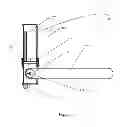
FIG. 4 shows a range 132 of motion for the arm 102, thus allowing the hand hygiene device 100 to be placed to left, right, center, top, and other locations with respect to a passage way. The range 132 of motion allows the arm 102 to be positioned as required to block or allow passage, based on placement of the hand hygiene device 100.
FIG. 5 shows additional detail of the arm 102 exterior. An estop switch 118 is deployed allowing passage on an emergency basis. The estop switch 118 is used to move the arm 102 to allow passage without regard to hand washing events. Once the emergency passes, then the arm 102 is returned to normal, blocking position.
A dispense-only switch 120 allows a care giver to sanitize hands while the arm 102 is in blocking position, as may be required during care giving procedures after the care giver attained passage. An array of indicators 122, which may be light emitting diode (LED) or other illuminators direct the care giver where to place hands in order to receive sanitizing. Further, the array of indicators 122 may be capable of displaying various colors and in various arrangements to display a variety of messages to the care giver. An array of proximity sensors 124 detect the presence of an object, such as an hand, an obstruction, or people passing close by. To allow an enumerated group to pass, a care giver may use a group selector 156 to indicate how many individuals would be allowed to pass once the arm 102 is positioned to allow passage. In such case, the hand hygiene device 100 will count the number of individuals and the arm 102 will return to normal, blocking position after the count. Sanitizing fluid would be pumped from the reservoir 104 and through the arm 102, to be dispensed at a dispense port 126 on the arm 102.
FIG. 6 is an interior view of the arm 102 showing a dispense tube 152 which provides a channel through which sanitizing fluid passes through the arm to the dispense port 126. A trap 154 is provided before the dispense port 126 in order to prevent dripping of sanitizing fluid that remains in the dispense tube 152.
FIG. 7 is a state diagram 200 that shows various operational states of the hand hygiene device 100. The states include arm-off 202, arm-down 204, arm-move-up 206, arm-up 208, arm-move-down 210, sleep 212, dispense 214, and clean-up 216. The states and positions of the arm 102 are all relative. That is to say, whether a particular state or position is blocking or allowing passage depends on other information. Various events cause transitions from state to state. The hand hygiene device 100 is normally in sleep 212 state, to conserve energy. Upon a wake-up 2010 event, the transition is to arm-down 204. Transition from arm-down 204 may be to sleep 212, dispense 214, arm-off 202, or arm-move-up 206 according to the events shown in FIG. 7. Arm-move-up 206 is a transitory state indicating that the arm 102 is in motion. In addition to arrival at arm-move-up 206 via the arm-down 204 state, arrival may be via arm-move-down 210 and clean-up 216 states. Subsequent states to arm-move-up 206 include arm-up 208 and arm-off 202. From arm-up 208 state, two transitions may occur: to arm-move-down 210, which is a another transitory state; or to arm-off 202. From arm-move-down 210, possible transitions include arm-move-up 206, arm-down 204, and arm-off 202. Dispense 214 causes sanitizer to be dispensed. The subsequent state is clean-up 216, which causes sanitizing fluid to be partially sucked back into the dispense tube 152 to prevent dripping. Various transitions, as shown, account for arm-removed 2001, arm-attached 2002, arm-horizontal 2003, estop-or-proximity 2004 (indicating that estop switch was pressed or that a care giver has approached and used hands-free proximity sensor to gain entrance without dispensing), switch-active 2005, no-estop-or-no-proximity-or-timeout 2006, proximity-and-more-than-one-group-count 2007 (a group is passing and care givers are present, but the not all of the selected count have passed by), group-count-zero 2008 (meaning all in the enumerated group have passed by), timeout 2009, and clean-up-done 2012.
FIG. 8 comprises a flowchart 300 of various operations and checks. This particular implementation contemplates an array of lights as indicators, to be set to various patterns to convey different information. Indicators 122 are one such implementation of lights. For discussion purposes, these light patterns are designated a through d. From start 302, the hand hygiene device 100 must determine arm position 304, and check latch engaged 306. Upon check latch engaged 306 being “yes,” the next operation is engage arm and set light pattern a 308. If no obstruction detected 310, then further check is made for estop pressed 312. If so, flow continues to set light pattern b 314, disengage arm 322, and wait 324 for estop un-pressed 326. Upon estop un-pressed 326, control continues back to engage arm and set light pattern a 308. If, at obstruction detected 310, an obstruction is present, then control flows to disengage arm 322, followed by wait 324 through detect passage 336 or timeout 346. Upon detect passage 336 or timeout 346, control continues back to engage arm and set light pattern a 308.
Suppose, at the test for estop pressed 312, the determination is “no.” Control then flows to hand detected 316. From there, two control threads are possible. One includes a test for hand-free 318, which, if true, then proceeds to set reminder and set light pattern d 320 (to remind the care giver to sanitize hands), disengage arm 322, and proceed through wait 324, detect passage 336, and timeout 346 before returning to engage arm and set light pattern a 308.
Hands free operation raises the arm 102 without regard to hand washing events, but does so for a short period. Hands free operation may be initiated by the estop switch 118, and tested at estop pressed 312. This would also be used when a person is carrying a tray or some other object and cannot wash hands while holding the tray or object.
If hand-free 318 is not “yes”, then control flows to determine group count 330 and sanitize hands 340 for each care giver according to the count. The other thread includes a test for dispense only 328, which, if true, leads to sanitize hands 338 and, regardless, back to engage arm and set light pattern a 308.
FIG. 9 shows electrical control 400, comprising an electrical controller 402, power 406, reservoir lighting 404, arm communication and power port 412, arm motor 410, and pump interface 408. The electrical controller 402 is typically a microprocessor or other programmed controlled device, programmed to manage the states and flow control of the hand hygiene device 100. Power 406 includes battery pack, typically chargeable, and electrical current from normal building sources such as wall outlets. The reservoir lighting 404 has aesthetic purpose as well as illuminating the reservoir 103 so that one may easily see the level of the fluid inside. The arm communication and power port 412 is a conduit for communication and electrical current to the arm 102, via the arm control 500 in FIG. 10. The arm motor 410 controls the various positions of the arm 102, as directed by the electrical controller 302. The pump interface 408 manages a pump that delivers sanitizing fluid from the reservoir 103 to the arm 102, via the dispense tube 152, trap 154, and dispense port 126 shown in FIG. 6.
FIG. 10, arm control 500, shows an arm controller 502, the arm communication and power port 412 from FIG. 9, wireless interface 506, accelerometer 508, proximity sensors 510, obstruction sensors 512, approaching object sensors 514, lighting array 516, estop switch interface 518, dispense-only switch interface 520, and group selector interface 522. Wireless interface 506 provides a means to provision the hand hygiene device 100 and to retrieve information from it wirelessly. The accelerometer 508 provides position and motion information concerning the arm 102, so that arm 102 position, speed, direction, and other such aspects may be controlled. Proximity sensors 510 detect hands close to the arm 102 for dispensing sanitizing fluid. Proximity sensors 510 are also used for determining hands free entry: when set for hands free operation, then the presence of a hand will raise the arm 102 without requiring dispensing. Proximity sensors 510 are also used to count care givers as they pass by, with the arm 102 raised, when the hand hygiene device 100 is set to allow a group to pass. Approaching object sensors 514 detect care givers as they approach the hand hygiene device 100. Obstruction sensors 510 are deployed so as to detect an object in the path of the arm 102. The lighting array 516 serves various purposes, as discussed previously. The estop switch interface 518, dispense switch interface 520, and group selector interface 522 convey information about the particular, respective switch setting back to the electric controller 402 via the arm communication and power port 412.
In all modes of operation, the hand hygiene device 100 is operational from front or back, and thus a single deployment may manage passage to and from a given area.
Various additional embodiments of the hand hygiene device include, without limitation:
-
- 1. Use of commercially available reservoirs, attachable in place of the reservoir discussed here.
- 2. Attachment to a doorway or to a movable platform not attached to a doorway.
- 3. Remote dispensing from a reservoir that is located away from the body and arm, but connected with conduits for fluid.
- 4. Use of non-fluid sanitizing means, such as forms of light, gasses, and other methods
- 5. Holographic arm or other display.
- 6. Remote dispensing from a reservoir that is located at the body and arm, but connected with conduits for fluid to nearby local satellite dispensers in the particular area, such as bedside; each satellite dispenser not being association with passage to or from the area.
While the foregoing written description of the hand hygiene device enables one of ordinary skill to make and use what is considered presently to be the best mode thereof, those of ordinary skill will understand and appreciate the existence of variations, combinations, and equivalents of the specific embodiment, method, and examples herein. The subject technology presented here should therefore not be limited by the above described embodiments, methods, or examples, but by all embodiments and methods within the scope and spirit of the subject technology.
Claims
We claim:1. A hand hygiene device comprising
a body,
a reservoir attached to said body, said reservoir containing sanitizing material,
an arm attached to said body, said arm being movable to deter or to allow passage of one or more individuals,
said arm further being releasable and breakable to allow passage,
a means for sensing presence of an object in the path of said arm,
a means for sensing approach of one or more individuals,
control logic establishing a normal state in which passage is deterred,
said control logic further operating to deter passage of said one or more individuals unless said sanitizing material has been dispensed,
said control logic further operating to allow passage of said one or more individuals if said sanitizing material has been dispensed,
emergency mode to allow passage of said one or more individuals without sanitizing material being dispensed,
and said control logic further allowing passage to more than one individual before returning to said normal state.
2. A hand hygiene encouragement method comprising the steps of
initially deterring passage of an individual to or from an area, said step comprising a normal mode,
sensing the approach of said individual,
awaiting a request from said individual to receive hand sanitation services,
dispensing said hand sanitation services,
allowing passage of said individual to or from said area after providing said sanitation services,
if said individual indicates an emergency state, then allowing passage of said individual to or from said area without providing said sanitation services,
return to said normal mode after passage of said individual,
3. A hand hygiene system comprising
a dispensing device for dispensing hand sanitation services,
a deterrence device for controlling passage of one or more individuals to or from an area,
approach sensing means to determine presence of said one or more individuals,
hand sensing means to determine presence and location of hands to be sanitized,
control logic to operate said dispensing device and said deterrence device and using information from said approach sensing means and said hand sensing means,
said control logic further operating to deter passage of said one or more individuals to or from said area unless said hand sanitizing services have been performed,
and said control logic further operating to allow passage of said one or more individuals on an emergency basis without said hand sanitizing services have been performed.
Images & Drawings included:



Sources:
- United States Patent and Trademark Office - verify current appl. status at the USPTO↗
Similar patent applications:
- » 20240100211
Hand hygiene monitoring and user reinforcement at an intelligent hand hygiene device - » 20220193294
Hand hygiene monitoring and user reinforcement at an intelligent hand hygiene device - » 20240237861
TOWEL DISPENSER FOR A HYGIENE STATION FOR HUMAN HAND HYGIENE, AND HYGIENE STATION - » 20250256000
DEVICE AND METHOD FOR QUALITY CONTROL OF HAND HYGIENE AND FOR DISINFECTION OF HANDS - » 14849241
System, device, and method for measurement of hand hygiene technique - » 15962920
Retrofit compliance apparatus and compliance system for hand hygiene dispensers - » 10356766
Method for monitoring hand hygiene compliance - » 10052354
Systems and methods for improving hand hygiene compliance - » 20050248461
Systems and methods for measuring hand hygiene compliance - » 17246554
Intelligent device for hand hygiene and mobile device disinfection
Recent applications in this class:
- » 20250228418 2025-07-17
TOILET CLEANING UTENSIL SET HOLDER AND TOILET CLEANING UTENSIL SET - » 20250228417 2025-07-17
Bathroom Sanitation Arrangement - » 20250143525 2025-05-08
CLEARING ROD - » 20250064276 2025-02-27
Toilet Seat Disinfection Assembly - » 20240415343 2024-12-19
Paper Toilet Basket Device - » 20240389803 2024-11-28
Portable Toilet with Tethered Agitators - » 20240349958 2024-10-24
Scrubbing tool having a movable two-section handle and a dissolvable cleaning head - » 20240065495 2024-02-29
CLEANING BRUSH AND KIT THEREOF - » 20240008696 2024-01-11
Scrubbing tool having a dissolvable cleaning head - » 20230346174 2023-11-02
Toilet Accessory Organizer