Method for producing a carbon-coated lithium sulfide and use thereof
US20140110635A1
2014-04-24
14/123,985
2012-06-14
✅ Patent granted
US 9,023,252 B2
2015-05-05
WO; PCT/EP2012/061058; 20120614
WO; WO2012/171888; 20121220
Khanh Tuan Nguyen | Danny N Kang
Norton Rose Fulbright US LLP
2032-06-14
Abstract:
The invention relates to a novel method for producing a carbon-doped lithium sulfide powder, according to which elementary lithium is reacted with elementary sulfur and/or a sulfur-containing compound selected from the group containing CS2, COS, SO2 and SO, in a liquid state, in an aliphatic or cycloaliphatic hydrocarbon solvent. The products of the method according to the invention are used to produce lithium battery electrodes or a lithium-ion-conducting solid.
Inventors:
- Ulrich Wietelmann 75 🇩🇪 Friedrichsdorf, Germany
- Ulrich Peter Wietelmann, I 1 🇩🇪 Friedrichsdorf, Germany
Assignee:
- ROCKWOOD LITHIUM GMBH 7 🇩🇪 Frankfurt am Main, Germany
Applicant:
Interested in similar patents?
Get notified when new applications in this technology area are published.
Classification:
H01B1/18 » CPC main
Conductors or conductive bodies characterised by the conductive materials; Selection of materials as conductors; Conductive material dispersed in non-conductive inorganic material the conductive material comprising carbon-silicon compounds, carbon or silicon
C01P2002/54 » CPC further
Crystal-structural characteristics; Solid solutions containing elements as dopants one element only
C01P2004/30 » CPC further
Particle morphology extending in three dimensions
C01P2006/60 » CPC further
Physical properties of inorganic compounds Optical properties, e.g. expressed in CIELAB-values
H01B1/06 IPC
Conductors or conductive bodies characterised by the conductive materials; Selection of materials as conductors mainly consisting of other non-metallic substances
C01B17/22 » CPC further
Sulfur; Compounds thereof Alkali metal sulfides or polysulfides
H01M4/136 » CPC further
Electrodes; Electrodes composed of, or comprising, active material; Electrodes for accumulators with non-aqueous electrolyte, e.g. for lithium-accumulators; Processes of manufacture thereof Electrodes based on inorganic compounds other than oxides or hydroxides, e.g. sulfides, selenides, tellurides, halogenides or LiCoFy
H01M4/58 IPC
Electrodes; Electrodes composed of, or comprising, active material; Selection of substances as active materials, active masses, active liquids of inorganic compounds other than oxides or hydroxides, e.g. sulfides, selenides, tellurides, halogenides or LiCoF; of polyanionic structures, e.g. phosphates, silicates or borates
H01M4/62 IPC
Electrodes; Electrodes composed of, or comprising, active material Selection of inactive substances as ingredients for active masses, e.g. binders, fillers
H01M4/1397 » CPC further
Electrodes; Electrodes composed of, or comprising, active material; Electrodes for accumulators with non-aqueous electrolyte, e.g. for lithium-accumulators; Processes of manufacture thereof; Processes of manufacture of electrodes based on inorganic compounds other than oxides or hydroxides, e.g. sulfides, selenides, tellurides, halogenides or LiCoFy
H01M4/36 IPC
Electrodes; Electrodes composed of, or comprising, active material Selection of substances as active materials, active masses, active liquids
H01M10/052 » CPC further
Secondary cells; Manufacture thereof; Accumulators with non-aqueous electrolyte Li-accumulators
C01P2002/72 » CPC further
Crystal-structural characteristics defined by measured X-ray, neutron or electron diffraction data by d-values or two theta-values, e.g. as X-ray diagram
C01P2004/03 » CPC further
Particle morphology depicted by an image obtained by SEM
C01P2004/32 » CPC further
Particle morphology extending in three dimensions Spheres
C01P2006/12 » CPC further
Physical properties of inorganic compounds Surface area
C01P2006/40 » CPC further
Physical properties of inorganic compounds Electric properties
H01M4/5815 » CPC further
Electrodes; Electrodes composed of, or comprising, active material; Selection of substances as active materials, active masses, active liquids of inorganic compounds other than oxides or hydroxides, e.g. sulfides, selenides, tellurides, halogenides or LiCoF; of polyanionic structures, e.g. phosphates, silicates or borates; Chalcogenides or intercalation compounds thereof Sulfides
H01M4/625 » CPC further
Electrodes; Electrodes composed of, or comprising, active material; Selection of inactive substances as ingredients for active masses, e.g. binders, fillers; Electric conductive fillers Carbon or graphite
H01M4/366 » CPC further
Electrodes; Electrodes composed of, or comprising, active material; Selection of substances as active materials, active masses, active liquids; Composites as layered products
Description
The invention relates to a method for producing a carbon-coated lithium sulfide, and use thereof.
Rechargeable electrochemical storage systems are presently becoming increasingly important in many areas of everyday life. In addition to the long-standing applications as automobile starter batteries and as an energy source for portable electronic devices, considerable growth is predicted in the future for electric automobile drives and for stationary energy storage. Traditional lead/sulfuric acid accumulators are not suitable for the new applications because their capacity is far too low, and they cannot be cycled frequently enough. In contrast, the best prospects are seen with lithium batteries.
However, lithium accumulators according to the prior art likewise have too little energy storage capacity for many applications. Present lithium-ion batteries have specific energy densities between approximately 100 and 250 Wh/kg. In addition, they usually contain costly elements such as cobalt and/or nickel. Lithium/sulfur and lithium/air systems have much higher (theoretical) energy densities:
| Theoretical energy density |
| Battery system | Wh/L | Wh/kg | |
| Li ion (LiC6/Ni, Mn, Co oxide) | 1710 | 510 | |
| Lithium/sulfur | 2710 | 2450 | |
| Lithium/air | 5830 | ||
The technical challenges in the development of Li/air systems are still so great that a marketable system is not expected for at least another 10-20 years (M. Jacoby, Chem. Eng. News Nov. 22 (2010) 29-31). The prospects for the lithium/sulfur system appear to be much more favorable. One drawback of this system is the use of lithium metal anodes. Lithium metal is relatively costly compared to saline materials or the graphite used in lithium-ion batteries. In addition, this battery has the further disadvantage that it loses capacity too rapidly during charging and discharging.
It has therefore been proposed to assemble the lithium/sulfur battery in the discharged state; i.e., a lithium-free (or low-lithium) material such as a tin/carbon composite is used as the anode, and lithium sulfide is used as the cathode (B. Scrosati, Angew. Chem. 2010, 122, 2421-2424). Unfortunately, this battery configuration has likewise proven to have insufficient cyclical stability. The main reason is that soluble oligosulfur compounds (Li2S3 and Li2S4, for example) may form during cycling. As a result, the cathode loses redox-active material (Y. Li, J. Power Sources 195 (2010) 2945-2949; D. Aurbach, J. Electrochem. Soc. 156(8), A694-A702 (2009)). To improve the conductivity of the cathode material (sulfur or lithium sulfide), formation of a composite with carbon is often resorted to. Thus, T. Takeuchi has reported that commercially available sulfide powder may be coated with graphitic carbon in an arc plasma process (J. Electrochem. Soc. 157 (11) A1196-A1201 (2010)). However, such coating processes are energy-intensive and require expensive coating equipment and high-vacuum technology, and consequently entail high costs. Another approach to producing Li2S/C composites is to grind commercially available lithium sulfide powder in a ball mill, for example (B. Scrosati, Angew. Chem. 2010, 122, 2421-2424). Grinding processes likewise have a fairly complicated technology and require the availability of finished components. Lithium sulfide is obtainable from the chemical trade, but only at high cost, for example 560.00 for 50 g from Alfa Aesar (list price, 2011-2013 catalog edition). Lastly, it is known that the reaction of lithium with sulfur in boiling naphthalene results in a main product having the approximate composition of Li2S and containing impurities of free metal (elemental lithium), carbides, and polysulfides (T. G. Pearson and P. L. Robinson, J. Chem. Soc. 1931, 413-420).
The object of the invention is to provide a simple method involving the cost-effective production of lithium sulfide in a pure phase, and the cost-effective formation of a composite of same with conductivity-increasing accompanying substances, preferably carbon.
The object is achieved by a method which allows the simultaneous production of lithium sulfide and formation of a composite of same with a conductivity-increasing additive.
To this end, the raw materials lithium metal and sulfur and/or a sulfur-containing compound selected from the group comprising CS2, COS, SO, SO2 are reacted in a hydrocarbon-based solvent at temperatures above approximately 120° C. to 300° C., preferably above 150° C. to 250° C., particularly preferably above 180° C. to 200° C. The solvent is preferably selected from the group of saturated hydrocarbons. It has surprisingly been found that when saturated hydrocarbons are used as the solvent, a product in a pure phase which is coated or doped with noncrystalline (“X-ray amorphous”) carbon is obtained. In contrast, when aromatic or partially aromatic solvents are used, products containing lithium carbide or lithium hydride impurities often result. In addition, the reaction in aromatics or partial aromatics is sometimes inhibited, as shown by the residual content of elemental lithium. Solvents are preferably used which are liquid under the reaction conditions, i.e., which have boiling points of at least 120° C., more preferably at least 150° C., and particularly preferably boiling points >180° C. Examples include octane, nonane, decane, undecane, dodecane, or any given mixtures of these compounds, whether they are linear, branched, or cyclic. Commercially available paraffin boiling fractions such as Shellsol®D70 or D100 are very particularly preferred.
The carbon content of the materials according to the invention is between 0.5% and 50%, preferably between 1% and 20%. The carbon content may be varied in a targeted manner by selecting the reaction conditions (primarily the temperature) and by selecting the sulfur raw material. Higher carbon contents are obtained in particular by using carbon-containing sulfur compounds, preferably carbon disulfide (CS2) and/or carbonyl sulfide (COS). The reaction may proceed using only these compounds as the sulfur source according to
4Li+CS2→2Li2S+C
or
4Li+COS→Li2S+Li2O+C.
In one very particularly preferred embodiment, a mixture of elemental sulfur and carbon disulfide is used. The molar ratio to be selected depends on the desired C content. In general, the molar ratio of sulfur to carbon disulfide may vary between 99:1 and 1:99, particularly preferably between 50:50 and 95:5. It is preferred that the sulfur source is used at least in the stoichiometry necessary for complete reaction or in excess (1% to 30%).
The method according to the invention is preferably carried out as a one-step process, in particular as a one-vessel process.
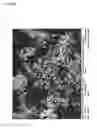
The product according to the invention is characterized by a high specific surface as the result of a cauliflower-like morphology. Since the achievable current density of electrode materials is scaled to the specific surface, among other factors, materials structured in this way are also suitable for achieving relatively high power, such as that necessary for automotive drive batteries, for example.
The lithium sulfide/carbon composite materials according to the invention are used for the production of lithium battery electrodes or the production of lithium ion-conductive solids, for example for use as a separator in lithium batteries.
The invention is explained in greater detail below with reference to three examples, two comparative examples, and ten figures.
The analyses of the crystalline structure and the assignments were conducted using the AXS (Discover D8) from Bruker; Cu K-α radiation, Sol X detector under the following conditions: Start: 5°—end: 75° (2 theta measuring range); 2 s measuring time/0.02° measuring increment; temperature: 25° C.
The figures show the following:
FIG. 1—UEL 10 153 (Li2S from Li and S), crystalline phase—lithium sulfide (Li2S) (red lines)
FIG. 2—Scanning electron microscope (SEM) recording from Example 1
FIG. 3—UEL 10 162 (Li2S from Li and S), crystalline phase—lithium sulfide (Li2S) (red lines)
FIG. 4—SEM recording from Example 2
FIG. 5—UEL 11 044 (gray sample), crystalline phase—lithium sulfide (Li2S) (red lines)
FIG. 6—SEM recording from Example 3
FIG. 7—UEL 11 043 crystalline phase—lithium sulfide (Li2S) (red lines); sulfur (S) (green lines); lithium hydride (LiH) (blue lines); lithium acetylide (Li2C2) (orange lines)
FIG. 8—SEM recording from Comparative Example 1
FIG. 9—UEL 11 042 (ochre sample)—lithium sulfide (Li2S) (red lines); lithium (Li) (green lines); lithium hydride (LiH) (blue lines)
FIG. 10—SEM recording from Comparative Example 2
EXAMPLE 1
Production of Li2S/C Composite from Sulfur and Lithium Powder at Approximately 140° C. in Paraffin Oil, Receiving Vessel Containing Sulfur
19.8 g powdered sulfur in 520 g Shellsol® D100 was placed in an inerted (i.e., free of water and air, filled with Ar) stainless steel double-shell reactor, and was melted/dissolved at a 140° C. shell temperature, with stirring. 8.33 g lithium powder was then added in portions (1 g per mol) through a reactor opening. The reaction was exothermic, as shown by a rise in the internal temperature from 136° C. to just under 140° C. After the last portion was added, stirring was continued for 1 h at 150° C., and the mixture was then cooled to 80° C. and the suspension was pressed onto a filter frit using a Teflon immersion tube, washed (first with Shellsol®, then tree times with pentane), and dried to a constant weight at room temperature (RT). A quantitative product yield (99.8% of theoretical) was obtained. The powder was free-flowing with a grayish-brown tint.
EXAMPLE 2
Production of Li2S/C Composite from Sulfur and Lithium Powder at Approximately 190° C. in Paraffin Oil, Receiving Bessel Containing Lithium
9.24 g lithium metal in 497 g Shellsol® D100 was melted in the reactor according to Example 1. 21.98 g powdered sulfur was metered in in portions over a period of approximately 1 h at an internal temperature of approximately 190° C., with stirring. After the addition was complete, stirring was continued for 2 h at 190° C. and the mixture was then cooled. After filtration and vacuum drying, 32.1 g of a dark gray, very free-flowing powder was obtained.
- XRD: Lithium sulfide in a pure phase (FIG. 3)
- SEM: Cauliflower-like surface structure (FIG. 4)
- C content: 4.7%
- Li content: 41.1 mmol/g; S content: 20.5 mmol/g (→94% Li2S content)
EXAMPLE 3
Production of Li2S/C Composite from Sulfur/Carbon Disulfide and Lithium Powder at 190° C. in Paraffin Oil, Receiving Vessel Containing Lithium, and Secondary Reaction at 190° C.
9.98 g lithium in 504 g Shellsol® D-100 was melted in the reactor according to Example 1. 15.8 g powdered sulfur was metered in in portions at an internal temperature of 185° C., with good stirring. A 30% solution of 5.6 g carbon disulfide in Shellsol® D100 was then added dropwise over a period of 15 minutes. After the addition was complete, additional sulfur (8.0 g) was added. After stirring for 2 h at 190° C., the mixture was cooled and the product was isolated (35.1 g of an almost black powder).
- XRD: Lithium sulfide in a pure phase (FIG. 5)
- SEM: Cauliflower-like surface structure (FIG. 6)
- C content: 7.2%
- Li content: 39.9 mmol/g; S content: 20.0 mmol/g (→92% Li2S content)
COMPARATIVE EXAMPLE 1
Production of Li2S/C Composite from Sulfur and Lithium Powder at Approximately 190° C. in Biphenyl
7.67 g lithium in 450 g biphenyl was melted in the reactor according to Example 1. 18.25 g powdered sulfur was metered in in portions over a period of 1 h at an internal temperature of approximately 190° C. After metering was complete, stirring was continued for 2 h at 190° C. The mixture was cooled to 120° C., and 500 mL decane was added (to prevent solidification). The mixture was then hot-filtered and washed with heptane, and the filter residue was vacuum-dried. 25.8 g of a dark gray product was obtained.
- XRD: Lithium sulfide with LiH and Li2C2 impurities (FIG. 7)
- SEM: Cauliflower-like surface structure (FIG. 8)
- C content: 6%
- Li content: 40.0 mmol/g; S content: 10.0 mmol/g
COMPARATIVE EXAMPLE 2
Production of Li2S/C Composite from Sulfur and Lithium Powder at 190° C. in Tetralin
8.92 g lithium in 556 g tetralin was melted in the reactor according to Example 1. 21.22 g powdered sulfur was metered in in portions over a period of approximately 1 h at an internal temperature of approximately 190° C. After metering was complete, stirring was continued for 2 h at 190° C. The mixture was cooled to 80° C. and then hot-filtered and washed with heptane, and the filter residue was vacuum-dried. 25.4 g of a yellow-ochre product was obtained.
- XRD: Lithium sulfide with LiH and metallic lithium impurities (FIG. 9)
- SEM: Cauliflower-like surface structure (FIG. 10)
- C content: 1.1%
- Li content: 41.5 mmol/g; S content: 12.0 mmol/g
The examples show that lithium sulfide powder in a pure phase with a large specific surface was formed when saturated hydrocarbon solvents were used. The carbon content in the product increased when CS2 was used. The carbon was present predominantly in elemental form, presumably in a graphitic modification. When an aromatic solvent such as biphenyl was used, a C-doped lithium sulfide was likewise formed; however, this product had marked amounts of crystalline lithium carbide and lithium hydride impurities. When partially aromatic solvent such as tetralin was used, the reaction was not complete (elemental lithium remained in the product), and lithium hydride was formed as a by-product. The C content was much lower than when a saturated hydrocarbon solvent was used. The reaction may be brought to completion by longer reaction times and/or stoichiometric changes.
Claims
1. Method for producing a carbon-doped lithium sulfide powder, characterized in that elemental lithium is reacted with elementary sulfur and/or a sulfur-containing compound selected from the group comprising CS2, COS, SO2, and SO, in a liquid state in an aliphatic or cycloaliphatic hydrocarbon solvent.
2-15. (canceled)
Images & Drawings included:





Sources:
- United States Patent and Trademark Office - verify current appl. status at the USPTO↗
Similar patent applications:
Recent applications in this class:
- » 20240055151 2024-02-15
CONDUCTIVE ELEMENT - » 20240047098 2024-02-08
Polymer-silica hybrid pdots and methods of use thereof - » 20230335307 2023-10-19
PROCESS FOR MANUFACTURING A CARBON-METAL COMPOSITE MATERIAL AND USE THEREOF FOR MANUFACTURING AN ELECTRIC CABLE - » 20210366628 2021-11-25
Process for manufacturing a carbon-metal composite material and use thereof for manufacturing an electric cable - » 20210343445 2021-11-04
Polymer-silica hybrid pdots and methods of use thereof - » 20210193347 2021-06-24
COMPOSITE MATERIAL, CONDUCTIVE MATERIAL, CONDUCTIVE PARTICLES, AND CONDUCTIVE FILM - » 20200312481 2020-10-01
Polymer-silica hybrid Pdots and methods of use thereof - » 20200168356 2020-05-28
Conducting polymer composite containing ultra-low loading of graphene - » 20200005960 2020-01-02
Polymer-silica hybrid Pdots and methods of use thereof - » 20180108449 2018-04-19
Thermoelectric composite material and method for preparing thermoelectric composite material
Recent applications for this Assignee:
- » 20150291708 2015-10-15
Low-viscosity concentrated solutions of alkaline earth metal alkoxides in aprotic solvents and processes for preparation thereof - » 20140163187 2014-06-12
η:η-cyclopentadienylidene-phosphorane constrained geometry complexes of rare earth metals - » 20140155562 2014-06-05
Homoleptic rare earth triaryl complexes - » 20140124708 2014-05-08
Method for producing a carbon-coated lithium sulfide and use thereof - » 20130327249 2013-12-12
ELECTRODES FOR LITHIUM BATTERIES - » 20130296161 2013-11-07
Low-viscosity, concentrated solutions of magnesium complexes for producing polymerization catalysts and method for producing the same