Method and apparatus for a configurable active noise canceller
US20140112491A1
2014-04-24
13/655,060
2012-10-18
✅ Patent granted
US 9,082,392 B2
2015-07-14
-
-
Paul Huber
Mima Abyad | Frank D. Cimino
2033-08-24
Abstract:
A method and apparatus for active noise canceling. The method includes retrieving an input sample from at least one of a feedback or feedforward microphone digitized through the sigma-delta converter, retrieving the input sample and a related filter, wherein the filter is customized to the particular headset, outputting a filtered signal through a speaker without any interpolation and reducing order of CIC filters, and outputting a response sharply tapered down.
Inventors:
- Nitish Krishna Murthy 7 🇺🇸 Allen, TX, United States
- Edwin Randolph Cole 5 🇺🇸 Dallas, TX, United States
- Supriyo Palit 14 🇮🇳 Kolkata, India
- Jorge Francisco Arbona Miskimen 2 🇺🇸 Dallas, TX, United States
Assignee:
- TEXAS INSTRUMENTS INCORPORATED 18,931 🇺🇸 Dallas, TX, United States
Applicant:
Interested in similar patents?
Get notified when new applications in this technology area are published.
Classification:
G10K11/17881 » CPC main
Methods or devices for transmitting, conducting or directing sound in general; Methods or devices for protecting against, or for damping, noise or other acoustic waves in general; Methods or devices for protecting against, or for damping, noise or other acoustic waves in general using interference effects; Masking sound by electro-acoustically regenerating the original acoustic waves in anti-phase; General system configurations using both a reference signal and an error signal the reference signal being an acoustic signal, e.g. recorded with a microphone
G10K11/17817 » CPC further
Methods or devices for transmitting, conducting or directing sound in general; Methods or devices for protecting against, or for damping, noise or other acoustic waves in general; Methods or devices for protecting against, or for damping, noise or other acoustic waves in general using interference effects; Masking sound by electro-acoustically regenerating the original acoustic waves in anti-phase characterised by the analysis of input or output signals, e.g. frequency range, modes, transfer functions characterised by the analysis of the acoustic paths, e.g. estimating, calibrating or testing of transfer functions or cross-terms between the output signals and the error signals, i.e. secondary path
G10K11/17821 » CPC further
Methods or devices for transmitting, conducting or directing sound in general; Methods or devices for protecting against, or for damping, noise or other acoustic waves in general; Methods or devices for protecting against, or for damping, noise or other acoustic waves in general using interference effects; Masking sound by electro-acoustically regenerating the original acoustic waves in anti-phase characterised by the analysis of input or output signals, e.g. frequency range, modes, transfer functions characterised by the analysis of the input signals only
G10K11/1783 » CPC further
Methods or devices for transmitting, conducting or directing sound in general; Methods or devices for protecting against, or for damping, noise or other acoustic waves in general; Methods or devices for protecting against, or for damping, noise or other acoustic waves in general using interference effects; Masking sound by electro-acoustically regenerating the original acoustic waves in anti-phase handling or detecting of non-standard events or conditions, e.g. changing operating modes under specific operating conditions
G10K11/1785 » CPC further
Methods or devices for transmitting, conducting or directing sound in general; Methods or devices for protecting against, or for damping, noise or other acoustic waves in general; Methods or devices for protecting against, or for damping, noise or other acoustic waves in general using interference effects; Masking sound by electro-acoustically regenerating the original acoustic waves in anti-phase Methods, e.g. algorithms; Devices
G10K11/17854 » CPC further
Methods or devices for transmitting, conducting or directing sound in general; Methods or devices for protecting against, or for damping, noise or other acoustic waves in general; Methods or devices for protecting against, or for damping, noise or other acoustic waves in general using interference effects; Masking sound by electro-acoustically regenerating the original acoustic waves in anti-phase; Methods, e.g. algorithms; Devices of the filter the filter being an adaptive filter
G10K11/17855 » CPC further
Methods or devices for transmitting, conducting or directing sound in general; Methods or devices for protecting against, or for damping, noise or other acoustic waves in general; Methods or devices for protecting against, or for damping, noise or other acoustic waves in general using interference effects; Masking sound by electro-acoustically regenerating the original acoustic waves in anti-phase; Methods, e.g. algorithms; Devices for improving speed or power requirements
G10K11/17875 » CPC further
Methods or devices for transmitting, conducting or directing sound in general; Methods or devices for protecting against, or for damping, noise or other acoustic waves in general; Methods or devices for protecting against, or for damping, noise or other acoustic waves in general using interference effects; Masking sound by electro-acoustically regenerating the original acoustic waves in anti-phase; General system configurations using an error signal without a reference signal, e.g. pure feedback
G10K11/17885 » CPC further
Methods or devices for transmitting, conducting or directing sound in general; Methods or devices for protecting against, or for damping, noise or other acoustic waves in general; Methods or devices for protecting against, or for damping, noise or other acoustic waves in general using interference effects; Masking sound by electro-acoustically regenerating the original acoustic waves in anti-phase; General system configurations additionally using a desired external signal, e.g. pass-through audio such as music or speech
G10K11/16 IPC
Methods or devices for transmitting, conducting or directing sound in general; Methods or devices for protecting against, or for damping, noise or other acoustic waves in general Methods or devices for protecting against, or for damping, noise or other acoustic waves in general
G10K2210/1081 » CPC further
Details of active noise control [ANC] covered by but not provided for in any of its subgroups; Applications; Communication systems, e.g. where useful sound is kept and noise is cancelled Earphones, e.g. for telephones, ear protectors or headsets
G10K2210/3028 » CPC further
Details of active noise control [ANC] covered by but not provided for in any of its subgroups; Means; Computational Filtering, e.g. Kalman filters or special analogue or digital filters
G10K2210/3033 » CPC further
Details of active noise control [ANC] covered by but not provided for in any of its subgroups; Means; Computational Information contained in memory, e.g. stored signals or transfer functions
G10K2210/3214 » CPC further
Details of active noise control [ANC] covered by but not provided for in any of its subgroups; Means; Physical Architectures, e.g. special constructional features or arrangements of features
G10K11/178 IPC
Methods or devices for transmitting, conducting or directing sound in general; Methods or devices for protecting against, or for damping, noise or other acoustic waves in general; Methods or devices for protecting against, or for damping, noise or other acoustic waves in general using interference effects; Masking sound by electro-acoustically regenerating the original acoustic waves in anti-phase
Description
BACKGROUND OF THE INVENTION
1. Field of the Invention
Embodiments of the present invention generally relate to a method and apparatus for a configurable active noise canceller. In one embodiment, the present invention relates to a configurable active noise canceller that may be used in a digital system
2. Description of the Related Art
Currently, due to latencies, analogue solutions are used in active noise cancelling devices, such as headsets. Even though such analog solutions tend to have a high bandwidth of noise cancellation, they offer limited tuning of the cancellation profile and music equalization. Furthermore, since music is equalized even when the active noise canceller is OFF, turning off the active noise canceller usually requires either a separate channel for music or turning off the music completely, which is an expensive solution. Hence, the music is usually turned off when the active noise canceller is not active.
Therefore, there is a need for a method and/or apparatus for an improved configurable active noise canceller.
SUMMARY OF THE INVENTION
Embodiments of the present invention relate to a method and apparatus for active noise canceling. The method includes retrieving an input sample from at least one of a feedback or feedforward microphone digitized through the sigma-delta converter, retrieving the input sample and a related filter, wherein the filter is customized to the particular headset, outputting a filtered signal through a speaker without any interpolation and reducing order of CIC filters, and outputting a response sharply tapered down.
BRIEF DESCRIPTION OF THE DRAWINGS
So that the manner in which the above recited features of the present invention can be understood in detail, a more particular description of the invention, briefly summarized above, may be had by reference to embodiments, some of which are illustrated in the appended drawings. It is to be noted, however, that the appended drawings illustrate only typical embodiments of this invention and are therefore not to be considered limiting of its scope, for the invention may admit to other equally effective embodiments.
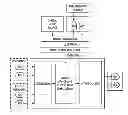
FIG. 1 embodiment depicting a block diagram of an active noise cancellation using a fixed controller at oversampled data rates;
FIG. 2 is a flow diagram depicting a method for active noise canceling;
FIG. 3 is an embodiment depicting a controller;
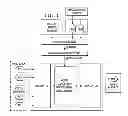
FIG. 4 is an embodiment depicting an alternate path for music equalization for non-active noise canceller;
FIG. 5 is an embodiment depicting a feedback active noise cancellation for a headset;
FIG. 6 is an alternate embodiment depicting a feedback active noise cancellation for a headset;
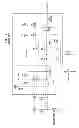
FIG. 7 is an embodiment of an analog implementation of an active noise cancellation controller;
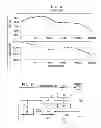
FIG. 8 is an embodiment depicting an open loop response feedback of an analog active noise canceller; and
FIG. 9 is an embodiment depicting a wideband adaptive feedback digital active noise canceller with FXLMS.
DETAILED DESCRIPTION
Described herein is a a feedback active noise canceller using a fixed controller at oversampled data rates. FIG. 1 is an embodiment depicting a block diagram of an active noise cancellation using a fixed controller at oversampled data rates. In this embodiment, the active noise canceller comprises analogue to digital converters, a digital signal processor, and digital to analogue converters. The analogue to digital converters convert the left and right internal, i.e feed-back, microphone signals into the digital domain and the left and right external i.e. feed-forward, microphone signals into the digital domain. The digital signal processor is configurable and programmable at sample rates much higher than the typical audio sample rate. The digital to analogue converters convert the noise and audio data into the analog domain and into the headphone speakers.
FIG. 2 is a flow diagram depicting a method for an active noise canceller using a fixed controller at oversampled data rates. The method starts at step 200 and proceeds to step 202. At step 202, the method 200 retrieves a digital input sample. The digitized input sample is from feedback or feedforward microphone and may be digitized through the sigma-delta converter. At step 204, the method 200 retrieves and filter the input sample, the filtering may be customized to the particular headset. The filter may be computed automatically or manually tuned for a target response. At step 206, the method 200 outputs the filtered signal without any interpolation and reduced order of CIC filters. At step 208, the method 200 outputs a response sharply tapered down. The method 200 ends at step 210.
For commercial headset active noise canceller solutions, a wideband implementation is necessary that may work with low-medium quality headset design. Oversampled data rates achieve both of these goals. The data may get sampled at 8-10 times the audio sample rate. These sample rates is much higher than the data rates used for audio applications.
As a result, active noise canceller may utilize hardware CIC filters for anti aliasing. A separate decimation component is avoided as the aliasing frequencies are close to 192 KHz. This is outside the range of hearing for humans. The decimation component also significantly contributes to the overall latency of the system. By not using a decimation filter the latency is minimized in the software processing. Also, oversampling allows for the use of hardware copy-paste filters for anti imaging, which avoids a separate interpolation component. Hence, the headphone and the microphone elements act as anti imaging/aliasing filters by filtering out higher frequencies, i.e. above 20 KHz.
In one embodiment, processing is performed at 384 KHz. At this sample rate we have an 8 sample delay in the ADC/DAC chain due to the CIC and the copy paste interpolation/decimation process. This corresponds to 20us latency without using any filtering in the DSP. At these low delays, an analog-like controller design is implemented to perform noise cancellation. FIG. 3 is an embodiment depicting a controller. In this embodiment, the noise cancellation of interest is assumed to be below 1000 Hz. When data is oversampled, the delays are negligible for controller operation, which reduces the significance of such delays. As a result, a digital low pass filter may be used for noise cancellation. Since the latency of the filters increase with group delay, the lower order digital filters perform better noise cancellation. This structure has the bandwidth of the analog implementation along with advantages of digital solutions, which include low complexity solution, fixed music equalization, alternate path for music equalization for non-active noise canceller cases are possible, and tunable active noise canceller response. FIG. 4 is an embodiment depicting an alternate path for music equalization for non-active noise canceller. In FIG. 4, grey is the music path for active noise cancellation and black shows music path with active noise cancellation disabled
Oversampled data rates allow for low latency in the feedback path giving good wideband performance for noise cancellation. A digital control provides easily tunable cancellation and music response as compared to analog systems and allows for separate ANC-on and ANC-off music paths. This allows for separate equalization for the headphones when the ANC is disabled. In an analog setup, additional data path is required for this feature making it expensive in terms of power and number of components.
As a result, a single solution is possible across a large selection of headphones. This lowers the overall silicon costs and provides them with a tunable equalizer for the headphone response. This solution offers the bandwidth of cancellation comparable to an analog solution with the tenability of a digital ANC.
FIG. 5 is an embodiment depicting a feedback active noise cancellation for a headset. FIG. 6 is an alternate embodiment depicting a feedback active noise cancellation for a headset. The objective of the controller is to generate anti-noise y(n) to drive the error e(n) to zero. The controller can be fixed or adaptive. The stability of the system is a function of the headphone acoustics (i.e. secondary path) and the controller response.
Under steady state conditions E(ω)=D(ω)−S(ω)W(ω)E(ω)→E(ω)=D(ω)/(1+S(ω) W(ω)). If S(ω) were flat and without phase shift E(ω) could be made small by applying a large gain W(ω) over the frequencies of interest. In a digital system, S(ω) includes the delays caused by ND conversion filtering and D/A conversion and the headphone acoustics. As the delays in the SP become significant the controller becomes in-efficient and the bandwidth of cancellation reduces.
FIG. 7 is an embodiment of an analog implementation of an active noise cancellation controller in accordance with the prior art. The noise path in the controller consists of a non-inverting amplifier (filter 1) followed by an inverting amplifier (filter 2). FIG. 8 is an embodiment depicting an open loop response feedback of an analog active noise canceller. Filter 2 also pre-equalizes the music to compensate for the attenuation cased by ANC.
The digital feedback active noise canceller is implemented using a Filtered-X-Ims algorithm. FIG. 9 is an embodiment depicting a wideband adaptive feedback digital active noise canceller with FXLMS. As described in FIG. 9, the FIR controller is adapted using the LMS algorithm to reduce the error e(n). The input to LMS is generated using e(n) and the secondary path estimate SP. This signal is filtered by SP to align the error with the estimated desired signal.
Table 1 describes a comparison of analogue and digital active noise canceller solution.
| TABLE 1 | |
| Analog ANC | Digital ANC |
| Secondary Path | |
| Low delay in secondary path | At audio frequencies the delays in |
| secondary path and the controller is | |
| significant due to A/D→anti- | |
| alising→controller→D/A conversion | |
| Bandwidth | |
| High Bandwidth of cancellation. Due to | The signal chain delays significantly |
| low delays high cancellation is possible | decrease the cancellation bandwidth |
| by designing a controller with high gain | |
| in the frequency of interest | |
| Controller design. | |
| Due to low delays in the SP, the design | The controller design needs to be |
| of a controller is a low pass filter. | adaptive/predictive to compensate for |
| delays in the secondary path. This is | |
| computationally expensive | |
| Secondary Path Variability | |
| Since the secondary path (controller | In the digital domain the changes in |
| path) is very fast, small movements in | secondary path due to headphone |
| the headphone manifest as small changes | movement become significant and the |
| in the secondary path and the controller still | controller has to readapt to the |
| operates with good phase margins. | changes [1]. This re-adaptation time is |
| very long leading to poor cancellation | |
| performance. | |
| Narrow Band Performance | |
| The analog controllers need extensive | Very good narrow band cancellation |
| design for good narrowband | can be achieved as the phase lag in |
| cancellation. The controller design | the secondary path can be |
| needs to accommodate for the phase | compensated by adaptive filters. The |
| lag in the secondary path for exact | variations in the secondary path are also |
| noise cancellation for narrow band noise. | easier to handle |
| Music Playback | |
| Since the controller is fixed, | Compensating for music is |
| compensating for music playback is | computationally due to the adaptive |
| implemented as an equalizers to | nature of the feedback path. The music |
| equalize for low frequency attenuations | is filtered using an inverse secondary |
| path and controller filter to negate the | |
| attenuation caused by feedback. | |
While the foregoing is directed to embodiments of the present invention, other and further embodiments of the invention may be devised without departing from the basic scope thereof, and the scope thereof is determined by the claims that follow.
Claims
What is claimed is:1. A method of a digital processor for active noise cancelling, comprising:
retrieving an input sample from at least one of a feedback or feedforward microphone digitized through the sigma-delta converter;
retrieving the input sample and a related filter, wherein the filter is customized to the particular headset;
outputting a filtered signal through a speaker without any interpolation and reducing order of CIC filters; and
outputting a response sharply tapered down.
2. An active noise canceller, comprising:
means for retrieving an input sample from at least one of a feedback or feedforward microphone digitized through the sigma-delta converter;
means for retrieving the input sample and a related filter, wherein the filter is customized to the particular headset;
means for outputting a filtered signal through a speaker without any interpolation and means for reducing order of CIC filters; and
means for outputting a response sharply tapered down.
3. A non-transitory computer readable medium with executable computer instructions, when executed the instructions perform a method for active noise cancelling, the method comprising:
retrieving an input sample from at least one of a feedback or feedforward microphone digitized through the sigma-delta converter;
retrieving the input sample and a related filter, wherein the filter is customized to the particular headset;
outputting a filtered signal through a speaker without any interpolation and reducing order of CIC filters; and
outputting a response sharply tapered down.
Images & Drawings included:


Sources:
- United States Patent and Trademark Office - verify current appl. status at the USPTO↗
Recent applications in this class:
- » 20250239250 2025-07-24
ACTIVE NOISE CANCELLATION FOR WEARABLE HEAD DEVICE - » 20250131908 2025-04-24
METHODS, APPARATUSES AND COMPUTER PROGRAM PRODUCTS FOR PROVIDING ACTIVE VIBRATION CONTROL SYSTEMS - » 20250104688 2025-03-27
Headphone with Multiple Reference Microphones ANC and Transparency - » 20250087200 2025-03-13
SOUND SYSTEM - » 20250078804 2025-03-06
NOISE CONTROL APPARATUS, NOISE CONTROL SYSTEM, NOISE CONTROL METHOD, AND PROGRAM - » 20250069582 2025-02-27
APPARATUS, SYSTEM, AND METHOD OF ACTIVE ACOUSTIC CONTROL (AAC) IN A VEHICLE - » 20250046292 2025-02-06
LOCATION-BASED PRESETS FOR AUDITORY DEVICES - » 20250037699 2025-01-30
COMPUTATIONAL ARCHITECTURE FOR ACTIVE NOISE REDUCTION DEVICE - » 20240321255 2024-09-26
Sound suppression apparatus, sound suppression system and wearable sound device - » 20240221717 2024-07-04
SYSTEMS AND METHODS FOR ADAPTIVE ADDITIVE SOUND
Recent applications for this Assignee:
- » 20250291595 2025-09-18
CIRCUIT, SYSTEM, AND METHOD FOR MATRIX DECIMATION - » 20250286550 2025-09-11
TRANSISTOR SHUTDOWN CIRCUT - » 20250279725 2025-09-04
CONDUCTION MODE CONTROL - » 20250274138 2025-08-28
SWITCH REGULATOR - » 20250267687 2025-08-21
ENHANCED BROADCAST TRANSMISSION IN UNSLOTTED CHANNEL HOPPING MEDIUM ACCESS CONTROL - » 20250266825 2025-08-21
BOOTSTRAP CIRCUIT - » 20250247097 2025-07-31
LEVEL SHIFTER CIRCUIT - » 20250247082 2025-07-31
LOW AREA AND POWER MULTI-BIT FLIP-FLOP - » 20250246995 2025-07-31
SWITCHING CONVERTER DEADTIME CONTROL - » 20250246345 2025-07-31
TRIMMING RESISTOR USING MODULATED SIGNAL