Food packaging
US20140131428A1
2014-05-15
14/129,868
2012-06-29
✅ Patent granted
US 9,144,939 B2
2015-09-29
WO; PCT/NL2012/050457; 20120629
WO; WO2013/002639; 20130103
Gary Elkins
Eric Karich | Karich & Associates
2032-06-29
Abstract:
A packaging 1 comprises a carton tray 3 provided with a flange 17 to which a relatively thick separating ring 15 is sealed. A film 19 is applied to this separating ring and to the inside of the tray. Once the tray 3 has been filled, the open topside of the tray is closed by a cover film 25.
By holding the carton tray 3 and pulling the separating ring 15 from the tray 3 once the contents of the food packaging 1 have been consumed, the plastic film 19 together with the separating ring 15 can be separated from the tray 3 in a simple manner. The thin carton can be pressed together and folded in a simple manner. The thin plastic film and the separating ring hardly take up any space and can be disposed of in the respective waste stream.
Assignee:
- VAN STEEN-DEKKER BEHEER BV 1 🇳🇱 Hoofddorp, Netherlands
- Van Steen-Dekker Beheer, BV 1 🇳🇱 Huizan, Netherlands
- Monique Balke-Schoonderwoert 1 🇳🇱 Hoofddorp, Netherlands
Applicant:
Interested in similar patents?
Get notified when new applications in this technology area are published.
Classification:
B65D25/14 » CPC further
Details of other kinds or types of rigid or semi-rigid containers Linings or internal coatings
B29C65/76 » CPC main
Joining of preformed parts ; Apparatus therefor Making non-permanent or releasable joints
B65D5/56 » CPC further
Rigid or semi-rigid containers of polygonal cross-section, e.g. boxes, cartons or trays, formed by folding or erecting one or more blanks made of paper; Details of containers or of foldable or erectable container blanks Linings or internal coatings, e.g. pre-formed trays provided with a blow- or thermoformed layer
B29C65/5057 » CPC further
Joining of preformed parts ; Apparatus therefor using adhesives, i.e. using supplementary joining material; solvent bonding using adhesive tape, e.g. thermoplastic tape; using threads or the like positioned between the surfaces to be joined
B29L2031/712 » CPC further
Other particular articles Containers; Packaging elements or accessories, Packages
B29C65/5092 » CPC further
Joining of preformed parts ; Apparatus therefor using adhesives, i.e. using supplementary joining material; solvent bonding using adhesive tape, e.g. thermoplastic tape; using threads or the like characterised by the tape handling mechanisms, e.g. using vacuum
B29C65/5071 » CPC further
Joining of preformed parts ; Apparatus therefor using adhesives, i.e. using supplementary joining material; solvent bonding using adhesive tape, e.g. thermoplastic tape; using threads or the like of particular form, e.g. being C-shaped, T-shaped and being composed by one single element
B29C66/112 » CPC further
General aspects of processes or apparatus for joining preformed parts; General aspects dealing with the joint area or with the area to be joined; Particular design of joint configurations particular design of the joint cross-sections; Joint cross-sections comprising a single joint-segment, i.e. one of the parts to be joined comprising a single joint-segment in the joint cross-section Single lapped joints
B29C66/131 » CPC further
General aspects of processes or apparatus for joining preformed parts; General aspects dealing with the joint area or with the area to be joined; Particular design of joint configurations particular design of the joint cross-sections; Single flanged joints; Fin-type joints; Single hem joints; Edge joints; Interpenetrating fingered joints; Other specific particular designs of joint cross-sections not provided for in groups - Single flanged joints, i.e. one of the parts to be joined being rigid and flanged in the joint area
B29C66/53461 » CPC further
General aspects of processes or apparatus for joining preformed parts; General aspects of joining tubular articles; General aspects of joining long products, i.e. bars or profiled elements; General aspects of joining single elements to tubular articles, hollow articles or bars; General aspects of joining several hollow-preforms to form hollow or tubular articles; Joining tubular articles, profiled elements or bars; Joining single elements to tubular articles, hollow articles or bars; Joining several hollow-preforms to form hollow or tubular articles; Joining single elements to tubular articles, hollow articles or bars; Joining single elements to open ends of tubular or hollow articles or to the ends of bars said single elements being substantially flat joining substantially flat covers and/or substantially flat bottoms to open ends of container bodies
B29C66/72328 » CPC further
General aspects of processes or apparatus for joining preformed parts characterised by the composition, physical properties or the structure of the material of the parts to be joined; Joining with non-plastics material characterised by the structure of the material of the parts to be joined being multi-layered comprising a non-plastics layer consisting of natural products or their composites, not provided for in - Paper
B29C66/7486 » CPC further
General aspects of processes or apparatus for joining preformed parts characterised by the composition, physical properties or the structure of the material of the parts to be joined; Joining with non-plastics material; Joining plastics material to non-plastics material to natural products or their composites, not provided for in groups - Paper, e.g. cardboard
B29C66/849 » CPC further
General aspects of processes or apparatus for joining preformed parts; General aspects of machine operations or constructions and parts thereof; Specific machine types or machines suitable for specific applications Packaging machines
B29C66/851 » CPC further
General aspects of processes or apparatus for joining preformed parts; General aspects of machine operations or constructions and parts thereof; Specific machine types or machines suitable for specific applications Bag or container making machines
B65B7/164 » CPC further
Closing containers or receptacles after filling; Closing semi-rigid or rigid containers or receptacles not deformed by, or not taking-up shape of, contents, e.g. boxes or cartons by feeding web material to securing means Securing by heat-sealing
B65D15/22 » CPC further
Containers having bodies formed by interconnecting or uniting two or more rigid, or substantially rigid, sections made of different materials of polygonal cross-section
B29C66/71 » CPC further
General aspects of processes or apparatus for joining preformed parts characterised by the composition, physical properties or the structure of the material of the parts to be joined; Joining with non-plastics material characterised by the composition of the plastics material of the parts to be joined
B29C66/7352 » CPC further
General aspects of processes or apparatus for joining preformed parts characterised by the composition, physical properties or the structure of the material of the parts to be joined; Joining with non-plastics material characterised by the intensive physical properties of the material of the parts to be joined, by the optical properties of the material of the parts to be joined, by the extensive physical properties of the parts to be joined, by the state of the material of the parts to be joined or by the material of the parts to be joined being a thermoplastic or a thermoset characterised by the extensive physical properties of the parts to be joined Thickness, e.g. very thin
B29C65/50 IPC
Joining of preformed parts ; Apparatus therefor using adhesives, i.e. using supplementary joining material; solvent bonding using adhesive tape, e.g. thermoplastic tape; using threads or the like
B29C65/00 IPC
Joining of preformed parts ; Apparatus therefor
B65B7/16 IPC
Closing containers or receptacles after filling Closing semi-rigid or rigid containers or receptacles not deformed by, or not taking-up shape of, contents, e.g. boxes or cartons
B65D77/20 » CPC further
Packages formed by enclosing articles or materials in preformed containers, e.g. boxes, cartons, sacks or bags; Container closures formed after filling by applying separate lids or covers, i.e. flexible membrane or foil-like covers
B65D5/563 » CPC further
Rigid or semi-rigid containers of polygonal cross-section, e.g. boxes, cartons or trays, formed by folding or erecting one or more blanks made of paper; Details of containers or of foldable or erectable container blanks; Linings or internal coatings, e.g. pre-formed trays provided with a blow- or thermoformed layer Laminated linings; Coatings
Description
FIELD OF THE INVENTION
The invention relates to a food packaging comprising an open-topped carton tray which is folded out of a sheet or is shaped by a carton sheet pressed into a mould, which tray comprises a bottom, a side wall and a flange extending along the peripheral edge of the side wall, which packaging further includes a plastic film sealed to the inside of the tray and sealed with its edge to the flange of the tray.
STATE OF THE ART
A packaging of this type is known from WO2009/138786. With this known packaging the film is applied directly to the flange. After the contents of the packaging have been consumed, the film can be removed from the tray after which the carton and the plastic film can be disposed of separately and recycled.
SUMMARY OF THE INVENTION
It is an object of the invention to provide a packaging of the type defined in the opening paragraph with which the plastic film can be separated from the carton tray in a simpler manner. To this end the packaging according to the invention is characterized in that between the film and the flange a flexible plastic separating ring is positioned which is sealed to the flange and to which the edge of the film is sealed. The separating ring is thicker than the film and can hence be pulled away from the tray in a simpler manner. When the separating ring is removed, the film which is applied to the separating ring is also removed from the tray.
An embodiment of the packaging according to the invention is characterized in that the carton tray does not have a stable shape and is retained in a stable shape as a result of the sealed film and/or separating ring. As a result, the tray can be made from a thinner carton sheet than in the absence of a separating ring, so that the packaging may be made of less material.
The invention likewise relates to a method for manufacturing a packaging, comprising the folding or shaping from a carton sheet of a carton tray flanged along the periphery of the open top, and the sealing of a film to the inside and flange of the tray. With respect to the method the invention is characterized in that prior to the film being sealed to the tray first a plastic separating ring is sealed to the flange after which the film is sealed to the inside of the tray and to the separating ring.
BRIEF DESCRIPTION OF THE DRAWINGS
The invention will now be described in more detail based on an example of embodiment of the method and the food packaging according to the invention while reference is made to the appended drawing figures, in which:
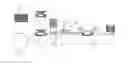
FIG. 1 gives a diagrammatic representation of a production line for manufacturing the packaging according to the invention;
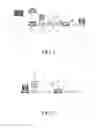
FIG. 2 gives a diagrammatic representation of a packaging line in which the packagings represented in FIG. 1 are used;
FIG. 3 shows a cross section of a packaging according to the invention;
FIG. 4 shows a detail of the flange of the packaging in the place of the lip of the separating ring; and
FIG. 5 shows the detail shown in FIG. 4 during the pulling away of the separating ring and the film from the tray.
DETAILED DESCRIPTION OF THE DRAWINGS
FIG. 1 shows in a diagrammatic manner a production line for manufacturing the packaging according to the invention. The packaging comprises a carton tray 3 which can be manufactured in two different ways. When manufactured in one way, sheets from a stack of already die-cut sheets 5 of perforated carton of about 150 gr/m2 are individually positioned in a mould 7. Then the die-cut sheet is shaped in the mould into a folded tray 3. When manufactured in the other way a roll of perforated carton 9 of about 150 gr/m2 is unwound. Then in a heated mould 11 a plate is die-cut and pressed into a tray mould.
The carton may be provided with a coating, so that the plastic film sticks better to it. The thickness of the coating is 5% at most of the thickness of the carton.
Subsequently, a plastic separating ring 15 of PE is laid onto the flange 17 of the carton tray 3 and then sealed over the entire periphery to the flange 13.
A flexible plastic film 19 having a thickness of about 70 micrometers and also made of PE is then wound off over the tray 3 and pulled into the tray under vacuum. The film 19 sticks to the carton and is sealed with its edge 19B to the separating ring 15. Then the whole is die-cut from the film 19. The loose trays 3 are stacked and are ready for processing.
FIG. 2 gives a diagrammatic representation of a packaging line in which the packagings manufactured in FIG. 1 are used. The trays 3 are taken from the stack one by one and taken to a filling station 21. Food is put into the tray there after which the tray 3 is transported to a sealing station 23. Here a cover film 25 is stretched out over the open topside of the tray 3 and sealed to the edge of the film already present on the flange of the tray. Subsequently, the tray 3 is cut away away from the cover film 25.
FIG. 3 shows a cross section of the packaging 1 according to the invention. The separating ring 15 is sealed to the flange 17 of the tray 3. On this separating ring and on the inside of the tray the foil 19 is present. Once the tray 3 has been filled, the open topside of the tray 3 is sealed by a cover film 25.
The plastic separating ring 15 is provided with a lip 27 that projects from the flange, see FIG. 4. Once the contents in the packaging 1 have been consumed, the plastic film 19 together with the separating ring 15 can be separated from the carton tray in a simple manner by holding the carton tray 3 and pulling the lip 27 of the separating ring from the tray 3 (see FIG. 5). As a result, the thin carton loses its rigidity and can be pressed together and folded in a simple manner. The thin plastic film and the separating ring hardly take up any space and can be disposed of in the respective waste stream.
Albeit the invention has been described in the foregoing with reference to the drawings, it should be observed that the invention is not by any manner or means restricted to the embodiments shown in the drawings. The invention also extends to all embodiments deviating from the embodiments shown in the drawings within the spirit and scope defined by the claims.
Claims
1. A food packaging comprising an open-topped carton tray which is folded out of a sheet or is shaped by a carton sheet pressed into a mould, which tray comprises a bottom, a side wall and a flange extending along the peripheral edge of the side wall, which packaging further includes a plastic film sealed to the inside of the tray and sealed with its edge to the flange of the tray, characterized in that between the film and the flange a flexible plastic separating ring is positioned which is sealed to the flange and on which the film is sealed to the edge.
2. A packaging as claimed in claim 1, characterized in that the carton tray does not have a stable shape and is retained in a stable shape as a result of the sealed film and/or separating ring.
3. A method for manufacturing a packaging, comprising the folding or shaping from a carton sheet of a carton tray flanged along the periphery of the open top, and the sealing of a film to the inside and flange of the tray, characterized in that prior to the film being sealed to the tray first a plastic separating ring is sealed to the flange after which the film is sealed to the inside of the tray and to the separating ring.
Images & Drawings included:

Sources:
- United States Patent and Trademark Office - verify current appl. status at the USPTO↗
Similar patent applications:
- » 20210086969
Film for food packaging, stretch film for food packaging, film for automatic packaging machine for food packaging, and method for packaging food - » 20120228182
HEAT SEALABLE FOOD PACKAGING FILMS, METHODS FOR THE PRODUCTION THEREOF, AND FOOD PACKAGES COMPRISING HEAT SEALABLE FOOD PACKAGING FILMS - » 20150030727
FOOD PACKAGE, FOOD PACKAGING SYSTEM AND METHODS OF ASSEMBLY - » 20190276212
Partial Shell for Packaging a Food Product, Packaging for a Food Product and Packaged Food Product - » 20100104701
TIGHTLY-FITTING FOOD PACKAGE AND FOOD PACKAGING METHOD - » 10483583
Self-absorbing gas-barrier receptacle for food packaging and food package obtained therefrom - » 20060118551
Microwave heatable tray for frozen food, package of frozen food, package of frozen sushi, and method of thawing frozen sushi - » 20190202588
METHOD FOR PACKAGING FOOD CAPSULES AND PACKAGED FOOD PRODUCT PRODUCED BY MEANS OF SAME - » 20050255200
Food packaging bag, food-packaged body, and method for manufacturing the same - » 20220315288
Food Packaging Material and Food Package
Recent applications in this class:
- » 20240416593 2024-12-19
HYBRID JOINT - » 20220203628 2022-06-30
Flow path sealing structure, bag-shaped container, and method of manufacturing the same - » 20190016061 2019-01-17
STRETCH RELEASE ADHESIVE, BATTERY ASSEMBLY AND HOUSING ASSEMBLY - » 20160346994 2016-12-01
Method for Forming Unbonded Fibrous Structures - » 20160250805 2016-09-01
Pull tab design for stretch release adhesive - » 20160052200 2016-02-25
Method of drying bioabsorbable coating over stents - » 20140150972 2014-06-05
Temporary adhesion of chemically similar substrates - » 20130239391 2013-09-19
Connecting method - » 20100323093 2010-12-23
Method of drying bioabsorbable coating over stents - » 20090032532 2009-02-05
Packaging with lid sealable to container and a method of sealing the packaging