Ectoparasiticidal methods and formulations
US20140135280A1
2014-05-15
14/073,905
2013-11-07
✅ Patent granted
US 8,921,327 B2
2014-12-30
-
-
Kristin Vajda
McAndrews, Held & Malloy, Ltd.
2033-11-07
Abstract:
Provided are novel methods and formulations for topically controlling ectoparasite infestations in animals using spinetoram, or a pharmaceutically acceptable salt thereof.
Assignee:
- ELI LILLY AND COMPANY 1,141 🇺🇸 Indianapolis, IN, United States
Applicant:
Interested in similar patents?
Get notified when new applications in this technology area are published.
Classification:
A01N43/22 » CPC main
Biocides, pest repellants or attractants, or plant growth regulators containing heterocyclic compounds having rings with one or more oxygen or sulfur atoms as the only ring hetero atoms with one hetero atom rings with more than six members
A61K9/0017 » CPC further
Medicinal preparations characterised by special physical form; Galenical forms characterised by the site of application; Skin, i.e. galenical aspects of topical compositions Non-human animal skin, e.g. pour-on, spot-on
A61K47/10 » CPC further
Medicinal preparations characterised by the non-active ingredients used, e.g. carriers or inert additives; Targeting or modifying agents chemically bound to the active ingredient; Organic compounds, e.g. natural or synthetic hydrocarbons, polyolefins, mineral oil, petrolatum or ozokerite containing oxygen, e.g. ethers, acetals, ketones, quinones, aldehydes, peroxides Alcohols; Phenols; Salts thereof, e.g. glycerol; Polyethylene glycols [PEG]; Poloxamers; PEG/POE alkyl ethers
A61K9/00 IPC
Medicinal preparations characterised by special physical form
A61K31/704 » CPC further
Medicinal preparations containing organic active ingredients; Carbohydrates; Sugars; Derivatives thereof; Compounds having saccharide radicals attached to non-saccharide compounds by glycosidic linkages attached to a carbocyclic compound, e.g. phloridzin attached to a condensed carbocyclic ring system, e.g. sennosides, thiocolchicosides, escin, daunorubicin
A61K47/22 » CPC further
Medicinal preparations characterised by the non-active ingredients used, e.g. carriers or inert additives; Targeting or modifying agents chemically bound to the active ingredient; Organic compounds, e.g. natural or synthetic hydrocarbons, polyolefins, mineral oil, petrolatum or ozokerite Heterocyclic compounds, e.g. ascorbic acid, tocopherol or pyrrolidones
Description
Ectoparasites such as fleas, lice, blowflies, mosquitoes, ticks and mites are problematic for man and animal alike. Such pests seriously impact productivity in the domesticated animal industry by reducing weight gain, causing poor quality hide, wool, and meat, and in some cases resulting in death. Ectoparasites also cause disease and discomfort in companion animals. Ectoparasites are known to carry bacteria and viruses which are pathogenic to humans. The diseases which ectoparasites cause include malaria, lymphatic filariasis, trachoma, trypanosomiasis, and river blindness, for example.
Efforts for controlling ectoparasites have included the use of insecticides and pesticides. For example, spinosyns, which are naturally derived fermentation products, have been employed as ectoparasiticides in animals and humans. (Snyder, U.S. Pat. No. 6,063,771 and U.S. Pat. No. 6,664,237; Kassebaum et al., U.S. Pat. No. 6,933,318; and Janssen et al., U.S. Pat. No. 7,030,095).
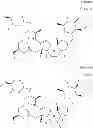
Derivatives of spinosyns have been employed in agricultural applications. (DeAmicis et al., U.S. Pat. No. 6,001,981). Spinetoram is the common name for a mixture of 25-90%, preferably 50-90% (2R,3aR,5aR,5bS,9S,13S,14R,16a5,16bR)-2-(6-deoxy-3-O-ethyl-2,4-di-O-methy-1-.alpha.-L-mannopyranosyloxy)-13-[(2R,5S,6R)-5-(dimethylamino)tetrahydro-6-methylpyran-2-yloxy]-9-ethyl-2,3,3a,4,5,5a,5b,6,9,10,11,12,13,14,16a,16b-hexadecahydro-14-methyl-1H-as-indaceno[3,2-d]oxacyclododecine-7,15-dione (referred to as “dihydro-Et-J”, formula I below), and 10-75%, preferably 10-50% (2R,3aR,5aS,5bS,9S,13S,14R,16aS,16bS)-2-(6-deoxy-3-O-ethyl-2,4-di-O-methy-1-.alpha.-L-mannopyranosyloxy)-13-[(2R,5S,6R)-5-(dimethylamino)tetrahydro-6-methylpyran-2-yloxy]-9-ethyl-2,3,3a,5a,5b,6,9,10,11,12,13,14,16a,16b-tet-radecahydro-4,14-dimethyl-1H-as-indaceno[3,2-o]oxacyclododecine-7,15-dione (referred to as “Et-L”, formula II below).
(Podhorez et al., U.S. 2008/0108800A1). Spinetoram is described as providing long-lasting control of a broad spectrum of insect pests in a variety of crops (Dow AgroSciences Spinetoram Technical Bulletin, November 2006). It has been reported spinetoram has been registered in New Zealand as an insecticide in the pome fruit market (“Dow AgroSciences Receives First Global Registration for Spinetoram Insecticide,” Dow AgroSciences Newsroom, Corporate News, Aug. 10, 2007).
Spinetoram has been developed and commercialized as a topical flea control product in the USA, and is marketed under the trade name Assurity™. Assurity received authorization for marketing in November 2010. The formulation of Assurity contains, in % w/w: 39.6% of spinetoram (210 mg), about 54% benzyl alcohol, about 0.1% of butylated hydroxytoluene, and about 0.1% of citric acid.
While the use of spinosyns and other insecticides and pesticides have been beneficial, alternative or improved formulations and methods are needed. Desirable formulations and methods would not only provide alternative therapies, but would also overcome one or more limitations of current therapies. Such limitations include toxicity, safety, efficacy (potency and duration), resistance, and side effect issues. One such benefit is reducing the amount of active ingredient used and thus also reducing the amount of active ingredient exposed to the environment and target animal. Also impacting the beneficial use of insecticides and pesticides are administration obstacles, which include mode and recurrence of administration, as well as undesirable side effects, such as irritation or hair loss. For example, reducing the frequency of administration while maintaining efficacy is desirable, as dosing animals is often inconvenient and/or difficult.
The present invention encompasses ectoparasiticidal methods and formulations, particularly for use in cats, which provide alternative options for combating ectoparasiticite infestations. Further, the formulations of the present invention overcome one or more limitations in the use of current insecticides and pesticides, particularly in providing efficacious, long term, safe, topical control of ectoparasites. The invention provides excellent speed-of-kill and residual efficacies.
The invention provides methods of controlling ectoparasite infestations of a cat by topically administering an effective amount of spinetoram, or a pharmaceutically acceptable salt thereof, to the cat. The invention also provides pharmaceutical formulations for topically controlling ectoparasite infestations using spinetoram, or a pharmaceutically acceptable salt thereof, and a pharmaceutically acceptable carrier. The invention also provides methods for controlling flea infestations of a cat by topically administering an effective amount of spinetoram or a pharmaceutically acceptable salt thereof to said cat. Another aspect of the methods and formulations using spinetoram is the ability to provide long term topical control of ectoparasite infestations, thus decreasing the recurrence of dosing an animal, such as no more than every one or two weeks, or every month or more, as well as initial knock-down efficacy.
The term “cat” includes Felis catus and Felis silvestris catus. While the inventions may be used with a cat of any age, the cat preferably is eight weeks or older. Mature cats generally weigh from 2.5 to 6 kg, while kittens generally weigh 0.7 to 1.2 kg.
Ectoparasites include insect and acarine pests which commonly infest or infect cats, and include the egg, larval, pupal, nymphal, and adult stages thereof. Such pests include fleas, lice, mosquitoes, mites, ticks, and blood-sucking, biting or nuisance fly species. A particular target is fleas, and more particularly Ctenocephalides felis, wherever located in the world, including those found in Europe.
“Controlling” refers to either ameliorating or eliminating a current infestation, or preventing an infestation, in a cat.
“Topically” is defined as applying to the outside surface area of cat, and includes the skin or hair. Preferably, topically is not a non-trivial systemic, such as transdermal, application.
“Effective amount” refers to the amount of spinetoram, or a pharmaceutically acceptable salt thereof, sufficient to control an ectoparasite, and includes causing a measurable reduction in the ectoparasite infestation population. This control may be the result of spinetoram or its conjugate or pharmaceutically acceptable salt entering the system of the pest when it feeds, or through a repellant action due to the presence of spinetoram or its conjugate or salt thereof.
“Pharmaceutically acceptable” as used in this application, for example with reference to salts and formulation components such as carriers and ingredients, includes “veterinary acceptable” and “dermatological acceptable”.
Pharmaceutically acceptable salts and common methodology for preparing them are known in the art. See, e.g., P. Stahl, et al., HANDBOOK OF PHARMACEUTICAL SALTS: PROPERTIES, SELECTION AND USE, (VCHA/Wiley-VCH, 2002); S. M. Berge, et al., “Pharmaceutical Salts,” Journal of Pharmaceutical Sciences, Vol. 66, No. 1, January 1977.
The term “about” when used with amounts, is to be read as including the amount(s) specified, and amounts within ±2% of the amount(s).
The term “carrier” is used herein to describe any ingredient other than the active components in a formulation. The choice of carrier will to a large extent depend on factors such as the particular mode of administration, the effect of the carrier on solubility and stability, and the nature of the dosage form. As such, the present formulations can also contain other optional ingredients, such as: antioxidants, buffering agents, preservatives, surfactants, chelating agents, humectants, miscibilizing agents, UV-absorbing compounds or photostabilizers, viscosity-modifying agents, antimicrobial agents, dyes, perfumes, conditioners, deodorants and physiologically or dermatological acceptable diluents, excipients or adjuvants. Such agents are known in the art.
Spinetoram and its salts may be formulated as liquid pharmaceutical compositions for topical administration, and preferably in unit dose form. The pharmaceutical formulations of this invention include benzyl alcohol and propylene carbonate. The composition in one aspect contains about 70-100 mg of spinetoram. In another aspect, the composition contains about 85-95 mg of spinetoram. In another aspect, the composition contains about 91 mg of spinetoram, or a pharmaceutically acceptable salt thereof.
The term “unit dose” or “unit dosage” form means physically discrete units suitable as unitary dosages for administration, each unit containing a predetermined quantity of active material calculated to produce the desired therapeutic effect, in association with one or more pharmaceutically acceptable carriers.
In one aspect of the invention, the wt % of spinetoram, or a pharmaceutically acceptable salt thereof, in the formulation is about 8-14 wt/wt %. In another aspect of the invention, the wt % of spinetoram, or a pharmaceutically acceptable salt thereof, in the formulation is about 10-12 wt/wt %. In another aspect of the invention, the wt % of spinetoram, or a pharmaceutically acceptable salt thereof, in the formulation is about 11.2 wt/wt %. Preferably, the total amount of the formulation is about 0.7 mL.
In one aspect of the invention, the amount of benzyl alcohol is about 15-20 wt % of the formulation. In another aspect of the invention, the amount of benzyl alcohol is about 17-19 wt % of the formulation. In another aspect of the invention, the amount of benzyl alcohol is about 18 wt % of the formulation. Preferably, the total amount of the formulation is about 0.7 mL.
In one aspect of the invention, the amount of propylene carbonate is about 65-75 wt % of the formulation. In another aspect of the invention, the amount of propylene carbonate is about 67-71 wt % of the formulation. In another aspect of the invention, the amount of propylene carbonate is about 69 wt % of the formulation. Preferably, the total amount of the formulation is about 0.7 mL.
In one aspect of the invention, the range for spinetoram, or a pharmaceutically acceptable salt thereof, is from about 11-142 mg/kg weight of the target animal. In another aspect of the invention, the range for spinetoram, or a pharmaceutically acceptable salt thereof, is from about 14-135 mg/kg weight of the target animal. In another aspect of the invention, the range for spinetoram, or a pharmaceutically acceptable salt thereof, is from about 15-130 mg/kg weight of the target animal
In one aspect of the invention, the formulation is a topical liquid pharmaceutical formulation comprising about 8-14 wt/wt % of spinetoram, or a pharmaceutically acceptable salt thereof, about 15-20 wt/wt % of benzyl alcohol, and about 65-75 wt/wt % of propylene carbonate, and optionally one or more pharmaceutically acceptable carriers. Preferably, the total amount of this formulation is about 0.7 mL.
In one aspect of the invention, the formulation is a topical liquid pharmaceutical formulation comprising about 11.2 wt/wt % of spinetoram, about 18 wt/wt % of benzyl alcohol, and about 69 wt/wt % of propylene carbonate, and optionally one or more pharmaceutically acceptable carriers. Preferably, the total amount of this formulation is about 0.7 mL.
Administration of spinetoram or a salt thereof may be topically administered by any suitable application. The compound and formulations can be administered topically to an animal by the direct laying on or spreading of the composition on the skin or hair. Preferably, the formulation is applied at the base of the skull. Formulations can be applied by spot-on application, plunge or spray dipping, jetting with a hand held spray or in a race, or as a back-line spray or pour-on. The administration can occur daily, weekly, biweekly, or monthly, depending on the severity of the infestation and exposure to the pest, for instance. While monthly administration is normally preferred in most situations, it should be understood sufficient residual efficacy after dosing extends 5, 6, 7, 8, or 9 weeks or more in some instances.
The following formulation is tested for speed to kill, residual efficacy, and side effect profile.
Formulation 1
Formulation Specific Gravity: 1.16
| Spinetoram: | 11.2 | wt/wt % (91 mg) | |
| Benzyl alcohol | 18.0 | wt/wt % | |
| Propylene carbonate | ~69 | wt/wt % | |
| Butylated hydroxytoluene | 0.1 | wt/wt % | |
| Citric acid | 0.1 | wt/wt % | |
A residual flea speed-of-kill study is conducted on cats to illustrate Formulation I begins killing within 30 minutes and that it reaches 90% kill within 8 hours on fleas. As seen in Table 1, Formulation 1 meets the criteria on day one of administration for both killing within 30 minutes as well as being greater than 90% kill at 8 hours. After 4 weeks, approximately 97% kill is still achieved within 12 hours.
| TABLE 1 | |
| Speed of Kill Study |
| Measured Parameter | 30 min | 4 hours | 8 hours | 12 hours | 24 hours |
| Day 0 |
| Arithmetic Mean % | 14.38 | 15.64 | 91.04 | 100 | — |
| Efficacy | |||||
| Geometric Mean % | 14.55 | 20.10 | 95.29 | 100 | — |
| Efficacy | |||||
| Median (Live Flea Count) | 66.5 | 66.5 | 4.5 | 0.0 | — |
| Min, Max (Live Flea | 45, 100 | 31, 89 | 0, 14 | 0, 0 | — |
| Count) | |||||
| ±Std. Dev. | 20.38 | 23.28 | 6.36 | 0.00 | — |
| Day 7 |
| Arithmetic Mean % | 52.52 | 95.89 | 99.78 | 100 | — |
| Efficacy | |||||
| Geometric Mean % | 55.32 | 97.61 | 99.84 | 100 | — |
| Efficacy | |||||
| Median (Live Flea Count) | 35.5 | 2.5 | 0.0 | 0.0 | — |
| Min, Max (Live Flea | 21, 64 | 0, 12 | 0, 1 | 0, 0 | — |
| Count) | |||||
| ±Std. Dev. | 16.31 | 4.50 | 0.41 | 0.00 | — |
| Day 14 |
| Arithmetic Mean % | 23.69 | 79.36 | 86.65 | 96.01 | — |
| Efficacy | |||||
| Geometric Mean % | 25.84 | 80.54 | 91.16 | 97.66 | — |
| Efficacy | |||||
| Median (Live Flea Count) | 66.0 | 14.0 | 6.5 | 1.5 | — |
| Min, Max (Live Flea | 32, 72 | 11, 32 | 1, 28 | 0, 10 | — |
| Count) | |||||
| ±Std. Dev. | 15.07 | 7.91 | 10.41 | 3.82 | — |
| Days 21-22 |
| Arithmetic Mean % | — | 59.65 | 89.80 | 92.55 | 98.80 |
| Efficacy | |||||
| Geometric Mean % | — | 61.47 | 93.42 | 94.83 | 99.10 |
| Efficacy | |||||
| Median (Live Flea Count) | — | 29.5 | 4.5 | 4.0 | 0.5 |
| Min, Max (Live Flea | — | 14, 48 | 1, 18 | 0, 14 | 0, 2 |
| Count) | |||||
| ±Std. Dev. | — | 11.88 | 7.56 | 4.96 | 0.98 |
| Days 28-29 |
| Arithmetic Mean % | — | 36.05 | 78.63 | 90.43 | 94.55 |
| Efficacy | |||||
| Geometric Mean % | — | 40.47 | 89.47 | 95.48 | 96.72 |
| Efficacy | |||||
| Median (Live Flea Count) | — | 44.5 | 8.5 | 4.5 | 3.0 |
| Min, Max (Live Flea | — | 21, 66 | 0, 46 | 0, 23 | 0, 11 |
| Count) | |||||
| ±Std. Dev. | — | 18.10 | 18.30 | 8.81 | 4.22 |
Residual activity of Formulation 1 is tested twice. Results are shown in Table 2. Outstanding efficacy is illustrated through Day 30 and Day 37.
| TABLE 2 | ||||||
| Measured | ||||||
| Parameter | Day 2 | Day 9 | Day 16 | Day 23 | Day 30 | Day 37 |
| Residual Study I |
| Arithmetic | 100 | 100 | 100 | 99.39 | 97.10 | 89.56 |
| Mean % | ||||||
| Efficacy | ||||||
| Geometric | 100 | 100 | 100 | 99.67 | 98.05 | 96.01 |
| Mean % | ||||||
| Efficacy | ||||||
| Median | 0.0 | 0.0 | 0.0 | 0.0 | 1.5 | 1.5 |
| (Life Flea | ||||||
| Count) | ||||||
| Min, Max | 0, 0 | 0, 0 | 0, 0 | 0, 3 | 0, 6 | 0, 28 |
| (# Live | ||||||
| Fleas) | ||||||
| Mean | 0.00 | 0.00 | 0.00 | 0.38 | 2.13 | 7.13 |
| (SD) | (0.00) | (0.00) | (0.00) | (1.06) | (2.30) | (10.16) |
| Residual Study II |
| Arithmetic | 100 | 100 | 100 | 99.04 | 99.79 | 96.73 |
| Mean % | ||||||
| Efficacy | ||||||
| Geometric | 100 | 100 | 100 | 99.37 | 99.84 | 97.85 |
| Mean % | ||||||
| Efficacy | ||||||
| Median | 0.0 | 0.0 | 0.0 | 0.0 | 0.0 | 1.5 |
| (Life Flea | ||||||
| Count) | ||||||
| Min, Max | 0, 0 | 0, 0 | 0, 0 | 0, 1 | 0, 1 | 0, 7 |
| (# Live | ||||||
| Fleas) | ||||||
| Mean | 0.00 | 0.00 | 0.00 | 0.75 | 0.13 | 2.00 |
| (SD) | (0.00) | (0.00) | (0.00) | (1.16) | (0.35) | (2.45) |
A study is conducted to evaluate the safety and side effect profile of Formula 1 on cats. Formulation 1 is well tolerated in cats, particularly in that there is no or little hair loss observed.
The studies illustrate that the desired efficacy and side effect profile is provided by the invention. As the amount of spinetoram used in the invention is lower than what is commercially available, the exposure of the environment and the target animal to the active ingredient is reduced. Additionally, the invention's solvent system provided the desired safety and side effect profile while other solvents/solvent systems failed to do so.
Claims
We claim:1. A topical liquid pharmaceutical formulation comprising about 8-14 wt/wt % of spinetoram, or a pharmaceutically acceptable salt thereof, about 15-20 wt/wt % of benzyl alcohol, and about 65-75 wt/wt % of propylene carbonate, and optionally one or more pharmaceutically acceptable carriers.
2. The formulation of claim 1, wherein said spinetoram, or a pharmaceutically acceptable salt thereof, is present in an amount of about 70-100 milligrams.
3. The formulation of claim 2, wherein said spinetoram, or a pharmaceutically acceptable salt thereof, is present in an amount of about 85-95 milligrams.
4. The formulation of claim 3, wherein said spinetoram, or a pharmaceutically acceptable salt thereof, is present in an amount of about 91 milligrams.
5. The formulation of claim 1, wherein said spinetoram, or a pharmaceutically acceptable salt thereof, is present in an amount of about 10-12 wt/wt % of the formulation.
6. The formulation of claim 5, wherein said spinetoram, or a pharmaceutically acceptable salt thereof, is present in an amount of about 11.2 wt/wt %.
7. The formulation of claim 1, wherein said benzyl alcohol is present in an amount of about 17-19 wt/wt %.
8. The formulation of claim 7, wherein said benzyl alcohol is present in an amount of about 18 wt/wt %.
9. The formulation of claim 1, wherein said propylene carbonate is present in an amount of about 67-71 wt/wt %.
10. The formulation of claim 9, wherein said propylene carbonate is present in an amount of about 69 wt/wt %.
11. The formulation of claim 1, wherein said pharmaceutical formulation has a volume of about 0.7 ml.
12. The formulation of claim 1, wherein said formulation is unit dosage form.
13. A topical liquid pharmaceutical formulation comprising about 11.2 wt/wt % of spinetoram, about 18 wt/wt % of benzyl alcohol, and about 69 wt/wt % of propylene carbonate, and optionally one or more pharmaceutically acceptable carriers.
14. The formulation of claim 13, wherein said formulation has a volume of about 0.7 ml.
15. The formulation of claim 13, wherein said formulation is in unit dosage form.
16. A method of controlling an ectoparasite infestation on a cat which comprises topically administering a formulation of claim 1 on said cat.
17. The method of claim 16, wherein said administration is spot-on, plunge or spray dipping, jetting with a hand held spray or in a race, or as a back-line spray or pour-on.
18. The method of claim 16, wherein said administration is carried out no more than biweekly.
19. The method of claim 18, wherein said administration is carried out no more than monthly.
20. The method of claim 16, wherein said ectoparasite is Ctenocephalides felis.
21. A method of controlling an ectoparasite infestation on a cat which comprises topically administering a formulation of claim 13 on said cat.
22. The method of claim 21, wherein said administration is spot-on, plunge or spray dipping, jetting with a hand held spray or in a race, or as a back-line spray or pour-on.
23. The method of claim 21, wherein said administration is carried out no more than biweekly.
24. The method of claim 23, wherein said administration is carried out no more than monthly.
25. The method of claim 21, wherein said ectoparasite is Ctenocephalides felis.
Images & Drawings included:
Sources:
- United States Patent and Trademark Office - verify current appl. status at the USPTO↗
Similar patent applications:
- » 15079845
Ectoparasiticidal formulations and methods using combinations of insect growth regulators - » 20100286076
ECTOPARASITICIDAL METHODS AND FORMULATIONS - » 20100324129
Ectoparasiticidal methods and formulations - » 20150045313
Ectoparasiticidal Methods and Formulations - » 20140031306
Single dose oral formulations and methods for treatment of cats with ectoparasiticidal spinosad - » 20160101127
Single Dose Oral Formulations and Methods for Treatment of Cats with Ectoparasiticidal Spinosad
Recent applications in this class:
- » 20250040547 2025-02-06
COMPOSITION CONTAINING A MACROLIDE INSECTICIDAL COMPOUND AND POLYCATIONIC RHEOLOGY MODIFIER - » 20240237648 2024-07-18
SYNERGISTIC OIL DISPERSION AGROCHEMICAL COMPOSITION CONTAINING SPINETORAM - » 20240237647 2024-07-18
SPINOSYN PESTICIDAL COMPOSITIONS - » 20230413819 2023-12-28
METHODS FOR CONTROLLING FLEA AND TICK INFESTATIONS IN A MAMMAL - » 20230413818 2023-12-28
FEED AND METHODS FOR CONTROLLING TICK INFESTATIONS IN A MAMMAL - » 20230404077 2023-12-21
METHODS AND FORMULATIONS FOR CONTROLLING FLEA INFESTATIONS - » 20230240295 2023-08-03
METHOD OF AND A COMPOSITION FOR PROTECTING PLANTS AGAINST PLANT PATHOGENS - » 20230011898 2023-01-12
LIQUID PESTICIDAL COMPOSITION - » 20220386604 2022-12-08
METHOD OF AND COMPOSITION FOR PROTECTING PLANTS AGAINST CERCOSPORA LEAF SPOT - » 20220361494 2022-11-17
AGRICULTURAL BIOSTIMULANTS INCLUDING SELECTED BRASSINOSTEROIDS AND TRIACONTANOL
Recent applications for this Assignee:
- » 20250127916 2025-04-24
ANTIBODY DRUG CONJUGATE (ADC) TARGETING NECTIN 4 AND COMPRISING AN EXATECAN PAYLOAD - » 20250059251 2025-02-20
INCRETIN ANALOGS AND USES THEREOF - » 20250042899 2025-02-06
PROCESS TO MAKE GLP1 RA AND INTERMEDIATES THEREFOR - » 20240400636 2024-12-05
Processes and intermediates for preparing tirzepatide - » 20240209055 2024-06-27
Protein tyrosine-tyrosine analogs and methods of using the same - » 20240190870 2024-06-13
FGFR3 inhibitor compounds - » 20240173425 2024-05-30
HUMAN CD33 ANTIBODIES AND GLUCOCORTICOID CONJUGATES - » 20240148694 2024-05-09
TREATMENT OF ANDROGEN DEPRIVATION THERAPY ASSOCIATED SYMPTOMS - » 20240091456 2024-03-21
MEDICATION DELIVERY DEVICE INCLUDING DISPOSABLE AND REUSABLE PORTIONS - » 20240076269 2024-03-07
KCNQ POTENTIATORS