Wide-angle image lens with high resolution
US20140146399A1
2014-05-29
13/711,619
2012-12-12
✅ Patent granted
US 8,928,998 B2
2015-01-06
-
-
James Jones
Novak Druce Connolly Bove + Quigg LLP
2033-02-25
Abstract:
A wide-angle image lens, in the order from the object side to the image side thereof, includes a first lens, a second lens, a third lens, a fourth lens, a fifth lens and an image plane. The wide-angle image lens satisfies the formulas: D/TTL>1.16;D/L>1.17;Z/Y>0, wherein D is the maximum image diameter of the wide-angle image plane; TTL is the total length of the wide-angle image lens; L is a distance from an outmost edge of an image surface of the fifth lens to an optical axis of the wide-angle image lens; Z is a distance from a central point of the objective surface of the fourth lens to an outmost edge of the image surface of the fourth lens, Y is a distance from the outmost edge of the image surface of the fourth lens to the optical axis.
Assignee:
- HON HAI PRECISION INDUSTRY CO., LTD. 10,014 🇹🇼 New Taipei, Taiwan
Applicant:
Interested in similar patents?
Get notified when new applications in this technology area are published.
Classification:
G02B13/18 » CPC further
Optical objectives specially designed for the purposes specified below with lenses having one or more non-spherical faces, e.g. for reducing geometrical aberration
G02B9/60 » CPC main
Optical objectives characterised both by the number of the components and their arrangements according to their sign, i.e. + or - having five components only
G02B3/02 IPC
Simple or compound lenses with non-spherical faces
Description
BACKGROUND
1. Technical Field
The present disclosure relates to lenses and, particularly, to a wide-angle image lens with high resolution.
2. Description of Related Art
Image sensors are used to capture an image. A size of an image sensor, such as a complementary metal oxide semiconductor device (CMOS), decreases with development of technology. For proper matching with the image sensor, an image lens, which is essentially comprised of a number of lenses, should be able to meet requirements, such as, high resolution and small distance. However, the existing image lenses cannot meet these requirements, thus, results in poor imaging effect.
Therefore, it is desirable to provide a wide-angle image lens, which can overcome the limitations described above.
BRIEF DESCRIPTION OF THE DRAWINGS
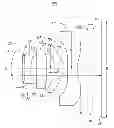
FIG. 1 is a schematic view of a wide-angle image lens in accordance with the present disclosure.
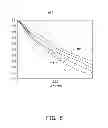
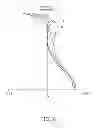
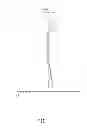
FIGS. 2˜5 are graphs respectively showing spherical aberration, field curvature, distortion, and characteristic curves of modulation transfer function occurring in the wide-angle image lens, which is in a telephoto state, according to a first exemplary embodiment.
FIGS. 6˜9 are graphs respectively showing spherical aberration, field curvature, distortion, and characteristic curves of modulation transfer function occurring in the wide-angle image lens, which is in a wide-angle state, according to the first exemplary embodiment.
FIGS. 10˜13 are graphs respectively showing spherical aberration, field curvature, distortion, and characteristic curves of modulation transfer function occurring in the wide-angle image lens, which is in a telephoto state, according to a second exemplary embodiment.
FIGS. 14˜17 are graphs respectively showing spherical aberration, field curvature, distortion, and characteristic curves of modulation transfer function occurring in the wide-angle image lens, which is in a wide-angle state, according to the second exemplary embodiment.
FIGS. 18˜21 are graphs respectively showing spherical aberration, field curvature, distortion, and characteristic curves of modulation transfer function occurring in the wide-angle image lens, that is in a telephoto state, according to a third exemplary embodiment.
FIGS. 22˜25 are graphs respectively showing spherical aberration, field curvature, distortion, and characteristic curves of modulation transfer function occurring in the wide-angle image lens, which is in a wide-angle state, according to the third exemplary embodiment.
DETAILED DESCRIPTION
Embodiments of the disclosure will now be described in detail with reference to the accompanying drawings.
FIG. 1 shows a wide-angle image lens 100, according to an exemplary embodiment, optically capturing an image of an object at an object side and forming a corresponding image on an image plane 20. The wide-angle image lens 100 includes, in an order from the object side to the image side, a first lens L1 with positive refraction power, a second lens L2 with negative refraction power, a third lens L3 with positive refraction power, a fourth lens L4 with positive refraction power, a fifth lens L5 with negative refraction power, an IR-cut filter 10, and the image plane 20.
The first lens L1 includes a convex first surface S1 facing the object side and a convex second surface S2 facing the image side.
The second lens L2 includes a convex third surface S3 facing the object side and a concave fourth surface S4 facing the image side.
The third lens L3 includes a convex third surface S5 facing the object side and a convex sixth surface S6 facing the image side.
The fourth lens L4 includes a concave seventh surface S7 facing the object side and a convex eighth surface S8 facing the image side.
The fifth lens L5 includes a concave ninth surface S9 facing the object side and a concave tenth surface S10 facing the image side.
The IR-cut filter 10 includes an eleventh surface S11 facing the object side and a twelfth surface S12 facing the image side.
The wide-angle image lens 100 further includes an aperture stop 30. The aperture stop 30 is positioned between the first lens L1 and the second lens L2. Light rays enter the wide-angle image lens 100, passing through the first lens L1, the aperture stop 30, the second lens L2, the third lens L3, the fourth lens L4, the fifth lens L5, and the IR-cut filter 10, finally forming optical images on the image plane 20. The aperture stop 30 is for adjusting light flux from the first lens L1 to the second lens L2. In addition, the aperture stop 30 facilitates uniform light transmission when light passes through the first lens L1 to correct coma aberrations of the image lens 100. The IR-cut filter 10 filters/removes infrared light from the light rays.
The wide-angle image lens 100 satisfies the formulas:
D/TTL>1.16; (1)
D/L>1.17; (2)
Z/Y>0; (3)
wherein D is the maximum image diameter of the image plane 20; TTL is a total length of the wide-angle image lens 100; L is a distance from an outmost edge of the tenth surface S10 to an optical axis O of the wide-angle image lens along a direction perpendicular to the optical axis of the wide-angle image lens 100; Z is a distance from a central point of the seventh surface S7 to an outmost edge of the eighth surface S8 along the optical axis O, Y is a distance from the outmost edge of the eighth surface S8 to the optical axis along a direction perpendicular to the optical axis O.
The formulas (1) to (2) are for shortening the length of the wide-angle image lens 100, and reducing the aberration of the field curvature and spherical aberration in the zoom process. Formula (3) is for properly distributing the refraction power, while maintaining a relatively small spherical aberration. If the wide-angle image lens 100 does not satisfy the formulas (1) to (3), the distance of the wide-angle image lens 100 cannot be maintained and the images captured by the wide-angle image lens 100 cannot be corrected.
The wide-angle image lens 100 further satisfies the formulas:
R31/F3>R11/F1>0; (4)
R12/F1<R32/F3<0; (5)
wherein R11 is the curvature radius of the first surface S1 of the first lens L1; R12 is the curvature radius of the second surface S2 of the first lens L1; R31 is the curvature radius of the fifth surface S5 of the third lens L3, R32 is the curvature radius of the sixth surface S6 of the third lens L3; F1 is a focal length of the first lens L1, and F3 is a focal length of the third lens L3.
Formulas (4)-(5) are for maintaining quality of images captured by the wide-angle image lens 100. If the wide-angle image lens 100 does not satisfy the formulas (4) to (5), the images captured by the wide-angle image lens 100 cannot be corrected.
The wide-angle image lens 100 further satisfies the formula:
R52/F5<R51/F5; (6)
wherein R51 is the curvature radius of the ninth surface S9 of the fifth lens L5; R52 is the curvature radius of the tenth surface S10 of the fifth lens L5; F5 is a focal length of the fifth lens L5.
Formula (6) is for correcting chromatic aberration of the wide-angle image lens 100. If the wide-angle image lens 100 does not satisfy the formula (6), the images captured by the wide-angle image lens 100 will have a greater chromatic aberration.
The wide-angle image lens 100 further satisfies the formulas:
R11/F1>0.55 and R12/F1<−2.11. (7)
The wide-angle image lens 100 further satisfies the formulas:
R51/F5<15.06 and R52/F5<−0.33. (8)
The wide-angle image lens 100 further satisfies the formulas:
R51/F5<15.06 and R52/F5<−0.33. (8)
The wide-angle image lens 100 further satisfies the formulas:
R31/F3>0.65 and R32/F3<−1.12. (9)
The wide-angle image lens 100 further satisfies the formulas:
Vd1>53, Vd3>53, Vd4>53, Vd5>53 and Vd2<33; (10)
wherein Vd1 is the Abbe number of the first lens L1; Vd2 is the Abbe number of the second lens L2; Vd3 is the Abbe number of the third lens L3; Vd4 is the Abbe number of the fourth lens L4; Vd5 is the Abbe number of the fifth lens L5.
All of the first, second, third, fourth, fifth, sixth, seventh, eighth, ninth, tenth surfaces S1, S2, S3, S4, S5, S6, S7, S8, S9 and S10 are aspherical surfaces. Each aspherical surface is shaped according to the formula:
Z = ch 2 1 + 1 - ( k + 1 ) c 2 h 2 + ∑ A i h i
wherein Z is the length of a line drawn from a point on the aspherical surface to the tangential plane of the aspherical surface, h is the height from the optical axis to the point on the aspherical surface, c is a vertex curvature (=1/R, the radius of curvature), k is a conic constant, and Ai are the correction coefficients, to the order of “i” of the aspherical surface.
Detailed examples of the wide-angle imaging lens 100 are given below in accompany with FIGS. 2-25, but it should be noted that the wide-angle imaging lens 100 is not limited by these examples. Listed below are the symbols used in these detailed examples:
FNo: F number;
2ω: field angle;
ri: radius of curvature of the surface Si;
Di: distance between surfaces on the optical axis of the surface Si and the surface Si+1;
Ni: refractive index of the surface Si;
Vi: Abbe constant of the surface Si;
Ki: Secondary curvature of the surface Si.
EXAMPLE 1
Tables 1-4 show a first embodiment of the wide-angle image lens 100.
| TABLE 1 | ||||||
| Di | ||||||
| Surface | type | ri (mm) | (mm) | ni | Vi | ki |
| first surface S1 | aspherical | 1.53 | 0.42 | 1.54 | 56.1 | −0.17 |
| second surface S2 | aspherical | −4.81 | 0.01 | — | — | −51.42 |
| aperture stop 30 | standard | infinity | 0.06 | — | — | — |
| third surface S3 | aspherical | 4.05 | 0.22 | 1.64 | 23.9 | 1.98 |
| fourth surface S4 | aspherical | 1.20 | 0.23 | — | — | −8.18 |
| fifth surface S5 | aspherical | 5.44 | 0.31 | 1.53 | 56.0 | −36.46 |
| sixth surface S6 | aspherical | −12.23 | 0.46 | — | — | — |
| seventh surface S7 | aspherical | −1.62 | 0.35 | 1.53 | 56.0 | 1.08 |
| eighth surface S8 | aspherical | −0.70 | 0.18 | — | — | −3.22 |
| ninth surface S9 | aspherical | 4.37 | 0.32 | 1.53 | 56.0 | −4.12 |
| tenth surface S10 | aspherical | 0.78 | 0.31 | — | — | −6.33 |
| eleventh surface S11 | standard | infinity | 0.30 | 1.52 | 58.6 | — |
| twelfth surface S12 | standard | infinity | 0.48 | — | — | — |
| image plane 20 | standard | — | — | — | — | — |
| TABLE 2 | |||||
| aspherical | first | second | third | fourth | fifth |
| coefficient | surface S1 | surface S2 | surface S3 | surface S4 | surface S5 |
| A4 | −0.0256 | 0.0854 | −0.1124 | 0.1592 | −0.1544 |
| A6 | 5.2E−03 | −0.0109 | 0.6468 | 0.1830 | 4.1E−03 |
| A8 | −0.0811 | −0.2036 | −1.2390 | −0.3943 | 0.1705 |
| A10 | 0.0818 | 0.4005 | 0.6063 | −0.0755 | 0.2424 |
| A12 | 0.1152 | −0.4813 | 0.8055 | 0.6476 | 0.0896 |
| A14 | −0.1984 | 0.0976 | −0.9602 | −0.3824 | −0.1467 |
| A16 | −0.0759 | 7.9E−03 | — | — | 9.2E−03 |
| TABLE 3 | |||||
| aspherical | sixth | seventh | eighth | ninth | tenth |
| coefficient | surface S6 | surface S7 | surface S8 | surface S9 | surface S10 |
| A4 | −0.1277 | 0.1356 | −0.1011 | −0.1949 | −0.1443 |
| A6 | −0.0147 | 0.0286 | 0.1272 | 0.0446 | 0.0609 |
| A8 | −0.0913 | −0.0346 | 0.0220 | 7.0E−03 | −0.0253 |
| A10 | 0.0584 | −0.0357 | −0.0266 | −2.4E−03 | 5.1E−03 |
| A12 | 0.1231 | 0.0305 | 1.5E−03 | −1.6E−04 | −2.7E−04 |
| A14 | 0.2192 | 0.0242 | 5.0E−04 | 8.0E−05 | −7.8E−05 |
| A16 | 0.1179 | 6.1E−03 | −1.1E−03 | −8.9E−06 | 1.0E−05 |
| TABLE 4 | ||
| F (mm) | F/No | 2ω |
| 2.98 | 2.22 | 75.29° |
In the first embodiment, D=4.595 mm; TTL=3.65 mm; Z=0.093 mm; Y=1.17 mm; L=3.60 mm; F1=2.18 mm; F3=7.06 mm; F5=−1.82 mm.
FIGS. 2-5 are graphs showing spherical aberration, field curvature, distortion, and characteristic curves of modulation transfer function occurring in the first exemplary embodiment of the wide-angle image lens 100 in a telephoto state. FIGS. 6-9, are graphs showing spherical aberration, field curvature, distortion, and lateral chromatic aberration of the first exemplary embodiment of the wide-angle image lens 100 in a wide angle state. In FIGS. 2 and 6, curves are spherical aberration characteristic curves of I light (wavelength: 510 nm), II light (wavelength: 610 nm), III light (wavelength: 650 nm), IV light (wavelength: 555 nm) and V light (wavelength: 470 nm) of the wide-angle image lens 100. The spherical aberration of the wide-angle image lens 100 of the first exemplary embodiment is from −0.05 mm to 0.05 mm. As illustrated in FIGS. 3 and 7, the curves T and S are respectively the tangential field curvature curve and the sagittal field curvature curve. The field curvature of the first exemplary embodiment of the wide-angle image lens 100 is from −0.20 mm to 0.20 mm. In FIGS. 4 and 8, the distortion of the first exemplary embodiment of the wide-angle image lens 100 is from −3.00% to 3.00%. Furthermore, as shown in FIG. 5, for half of the Nyquist frequency (about 223 lp/mm), the MTF of the central field is greater than 55% (see curve mc), the MTF of the 0.8 field is greater than 35% (see curve mp), the MTF between the central field and the 0.8 field is in a range of: 35%˜55% (see curve mt, for example). As shown in FIG. 9, for half of the Nyquist frequency (about 223 lp/mm), the MTF of the central field is greater than 50% (see curve mc). The MTF of the 0.8 field is greater than 30% (see curve mp). The MTF between the central field and the 0.8 field is in a range of: 30%˜50% (see curve mt, for example). Overall, in this embodiment, the spherical aberration, the field curvature and the distortion are limited in a small range.
EXAMPLE 2
Tables 5-8 show a second embodiment of the wide-angle image lens 100.
| TABLE 5 | ||||||
| Di | ||||||
| Surface | type | ri (mm) | (mm) | ni | vi | ki |
| first surface S1 | aspherical | 1.49 | 0.44 | 1.54 | 56.1 | 0.03 |
| second surface S2 | aspherical | −7.19 | 0.01 | — | — | 32.50 |
| aperture stop 30 | standard | infinity | 0.07 | — | — | — |
| third surface S3 | aspherical | 2.84 | 0.19 | 1.64 | 23.9 | −36.80 |
| fourth surface S4 | aspherical | 1.10 | 0.20 | — | — | −8.03 |
| fifth surface S5 | aspherical | 5.14 | 0.33 | 1.53 | 56.0 | 28.60 |
| sixth surface S6 | aspherical | −6.68 | 0.46 | — | — | — |
| seventh surface S7 | aspherical | −1.49 | 0.42 | 1.53 | 56.0 | 1.36 |
| eighth surface S8 | aspherical | −0.63 | 0.19 | — | — | −3.03 |
| ninth surface S9 | aspherical | −21.05 | 0.27 | 1.53 | 56.0 | — |
| tenth surface S10 | aspherical | 0.84 | 0.31 | — | — | −8.10 |
| eleventh surface S11 | standard | infinity | 0.30 | 1.52 | 58.6 | — |
| twelfth surface S12 | standard | infinity | 0.46 | — | — | — |
| image plane 20 | standard | — | — | — | — | — |
| TABLE 6 | |||||
| aspherical | first | second | third | fourth | fifth |
| coefficient | surface S1 | surface S2 | surface S3 | surface S4 | surface S5 |
| A4 | −0.0180 | 0.0675 | −0.1523 | 0.1517 | −0.0784 |
| A6 | −0.0179 | 0.2130 | 0.7601 | 0.0567 | −0.0651 |
| A8 | 0.0784 | −0.4801 | −1.1308 | −0.2158 | 0.1597 |
| A10 | −0.0757 | 0.0279 | −0.7901 | 0.0494 | 0.2922 |
| A12 | −0.1741 | 0.2735 | 2.2604 | −0.7032 | 5.5E−03 |
| A14 | 0.5021 | 1.3521 | −0.5236 | 1.1346 | −0.3549 |
| A16 | −0.4351 | −2.2929 | — | — | 0.1856 |
| TABLE 7 | |||||
| aspherical | sixth | seventh | eighth | ninth | tenth |
| coefficient | surface S6 | surface S7 | surface S8 | surface S9 | surface S10 |
| A4 | −0.0298 | −0.0161 | −0.2441 | −0.1105 | −0.1654 |
| A6 | 0.0125 | 0.1293 | 0.1547 | −0.0150 | 0.0840 |
| A8 | −0.2359 | 0.1835 | 0.0950 | 0.0501 | −0.0389 |
| A10 | 0.1087 | −0.1440 | −9.8E−03 | −0.0182 | 9.0E−03 |
| A12 | 0.2458 | −0.1933 | −0.0159 | 2.0E−03 | −2.4E−04 |
| A14 | 0.1833 | −0.0350 | −0.0174 | — | −2.9E−04 |
| A16 | 0.2146 | 0.3295 | 2.1E−03 | — | 3.9E−05 |
| TABLE 8 | ||
| F (mm) | F/No | 2ω |
| 2.98 | 2.23 | 75.06° |
In the second embodiment, D=4.595 mm; TTL=3.65 mm; Z=0.126 mm; Y=1.13 mm; L=3.57 mm; F1=2.30 mm; F3=5.47 mm; F5=−1.50 mm.
FIGS. 10-13 are graphs showing spherical aberration, field curvature, distortion, and characteristic curves of modulation transfer function occurring in the second exemplary embodiment of the wide-angle image lens 100 in the telephoto state. FIGS. 14-17 are graphs showing spherical aberration, field curvature, distortion, and lateral chromatic aberration of the second exemplary embodiment of the wide-angle image lens 100 in the wide angle state. In FIGS. 10 and 14, curves are spherical aberration characteristic curves of I light (wavelength: 510 nm), II light (wavelength: 610 nm), III light (wavelength: 650 nm), IV light (wavelength: 555 nm) and V light (wavelength: 470 nm) of the wide-angle image lens 100. The spherical aberration of the wide-angle image lens 100 of the second exemplary embodiment is from −0.05 mm to 0.05 mm. As illustrated in FIGS. 11 and 15, the curves T and S are respectively the tangential field curvature curve and the sagittal field curvature curve. The field curvature of the second exemplary embodiment of the wide-angle image lens 100 is from −0.20 mm to 0.20 mm. In FIGS. 12 and 16, the distortion of the second exemplary embodiment of the wide-angle image lens 100 is from −3.00% to 3.00%. Furthermore, as shown in FIG. 13, for half of the Nyquist frequency (about 223 lp/mm), the MTF of the central field is greater than 55% (see curve mc), the MTF of the 0.8 field is greater than 35% (see curve mp), the MTF between the central field and the 0.8 field is in a range of: 35%˜55% (see curve mt, for example). As shown in FIG. 17, for half of the Nyquist frequency (about 223 lp/mm), the MTF of the central field is greater than 50% (see curve mc), the MTF of the 0.8 field is greater than 30% (see curve mp), the MTF between the central field and the 0.8 field is in a range of: 30%˜50% (see curve mt, for example). Overall, in this embodiment, the spherical aberration, the field curvature and the distortion are limited in a small range.
EXAMPLE 3
Tables 9-12 show a third embodiment of the wide-angle image lens 100.
| TABLE 9 | ||||||
| Di | ||||||
| Surface | type | ri (mm) | (mm) | ni | vi | ki |
| first surface S1 | aspherical | 1.52 | 0.41 | 1.54 | 56.1 | −0.12 |
| second surface S2 | aspherical | −5.75 | −0.01 | — | — | −31.09 |
| aperture stop 30 | standard | infinity | 0.10 | — | — | — |
| third surface S3 | aspherical | 3.51 | 0.19 | 1.64 | 23.9 | −6.34 |
| fourth surface S4 | aspherical | 1.17 | 0.22 | — | — | −7.90 |
| fifth surface S5 | aspherical | 4.82 | 0.32 | 1.53 | 56.0 | 2.99 |
| sixth surface S6 | aspherical | −11.83 | 0.45 | — | — | — |
| seventh surface S7 | aspherical | −1.55 | 0.39 | 1.53 | 56.0 | 1.19 |
| eighth surface S8 | aspherical | −0.66 | 0.19 | — | — | −3.22 |
| ninth surface S9 | aspherical | 4.53 | 0.28 | 1.53 | 56.0 | −2.60 |
| tenth surface S10 | aspherical | 0.74 | 0.31 | — | — | −6.28 |
| eleventh surface S11 | standard | infinity | 0.30 | 1.52 | 58.6 | — |
| twelfth surface S12 | standard | infinity | 0.51 | — | — | — |
| image plane 20 | standard | — | — | — | — | — |
| TABLE 10 | |||||
| aspherical | first | second | third | fourth | fifth |
| coefficient | surface S1 | surface S2 | surface S3 | surface S4 | surface S5 |
| A4 | −0.0237 | 0.0957 | −0.1345 | 0.1586 | −0.1313 |
| A6 | 2.4E−03 | 0.0589 | 0.6779 | 0.1618 | −4.5E−03 |
| A8 | −0.0122 | −0.3192 | −1.1131 | −0.3752 | 0.1915 |
| A10 | 0.0214 | 0.1267 | 0.1293 | −0.1225 | 0.2207 |
| A12 | −0.0292 | −0.2068 | −0.1216 | −0.0410 | −0.0136 |
| A14 | 0.0919 | 1.6179 | 1.3575 | 0.7339 | −0.2623 |
| A16 | −0.2459 | −2.0582 | — | — | 0.2131 |
| TABLE 11 | |||||
| aspherical | sixth | seventh | eighth | ninth | tenth |
| coefficient | surface S6 | surface S7 | surface S8 | surface S9 | surface S10 |
| A4 | −0.0776 | 0.1172 | −0.1380 | −0.1976 | −0.1543 |
| A6 | −0.0307 | 0.0697 | 0.1376 | 0.0474 | 0.0709 |
| A8 | −0.1005 | −0.0160 | 0.0314 | 8.1E−03 | −0.0296 |
| A10 | 0.0801 | −0.0626 | −0.0240 | −2.7E−03 | 6.1E−03 |
| A12 | 0.1177 | 2.1E−03 | 3.9E−04 | −3.8E−04 | −2.3E−04 |
| A14 | 0.1594 | 0.0284 | −1.5E−03 | 3.2E−05 | −1.2E−04 |
| A16 | 0.1705 | 0.0533 | −2.2E−03 | 1.9E−05 | 1.2E−05 |
| TABLE 12 | ||
| F (mm) | F/No | 2ω |
| 2.98 | 2.22 | 75.31° |
In the third embodiment, D=4.595 mm; TTL=3.66 mm; Z=0.091 mm; Y=1.16 mm; L=3.63 mm; F1=2.24 mm; F3=6.42 mm; F5=−1.71 mm.
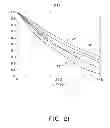
FIGS. 18-21 are graphs showing spherical aberration, field curvature, distortion, and characteristic curves of modulation transfer function occurring in the third exemplary embodiment of the wide-angle image lens 100 in the telephoto state. FIGS. 22-25 are graphs showing spherical aberration, field curvature, distortion, and lateral chromatic aberration of the third exemplary embodiment of the wide-angle image lens 100 in the wide angle state. In FIGS. 18 and 22, curves are spherical aberration characteristic curves of I light (wavelength: 510 nm), II light (wavelength: 610 nm), III light (wavelength: 650 nm), IV light (wavelength: 555 nm) and V light (wavelength: 470 nm) of the wide-angle image lens 100. The spherical aberration of the wide-angle image lens 100 of the third exemplary embodiment is from −0.05 mm to 0.05 mm. As illustrated in FIGS. 19 and 23, the curves T and S are respectively the tangential field curvature curve and the sagittal field curvature curve. The field curvature of the third exemplary embodiment of the wide-angle image lens 100 is from −0.20 mm to 0.20 mm. In FIGS. 20 and 24, the distortion of the third exemplary embodiment of the wide-angle image lens 100 is from −3.00% to 3.00%. Furthermore, as shown in FIG. 21, for half of the Nyquist frequency (about 223 lp/mm), the MTF of the central field is greater than 55% (see curve mc), the MTF of the 0.8 field is greater than 35% (see curve mp), the MTF between the central field and the 0.8 field is in a range of: 35%˜55% (see curve mt, for example). As shown in FIG. 25, for half of the Nyquist frequency (about 223 lp/mm), the MTF of the central field is greater than 50% (see curve mc), the MTF of the 0.8 field is greater than 30% (see curve mp), the MTF between the central field and the 0.8 field is in a range of: 30%˜50% (see curve mt, for example). Overall, in this embodiment, the spherical aberration, the field curvature and the distortion are limited in a small range.
Particular embodiments are shown and described by way of illustration only. The principles and the features of the present disclosure may be employed in various and numerous embodiments thereof without departing from the scope of the disclosure as claimed. The above-described embodiments illustrate the scope of the disclosure but do not restrict the scope of the disclosure.
Claims
What is claimed is:1. A wide-angle image lens, in the order from the object side to the image side thereof, comprising:
a first lens having positive refraction power and comprising a first surface facing the object side and a second surface facing the image side;
a second lens having negative refraction power and comprising a third surface facing the object side and a fourth surface facing the image side;
a third lens having positive refraction power and comprising a fifth surface facing the object side and a sixth surface facing the image side;
a fourth lens having positive refraction power and comprising a seventh surface facing the object side and an eighth surface facing the image side;
a fifth lens having negative refraction power and comprising a ninth surface facing the object side and a tenth surface facing the image side; and
an image plane;
wherein the image lens satisfies the following formulas:
D/TTL>1.16;
D/L>1.17;
Z/Y>0;
wherein D is the maximum image diameter of the image plane; TTL is a total length of the image lens, L is a distance from an outmost edge of the tenth surface to an optical axis of the image lens along a direction perpendicular to the optical axis of the image lens, Z is a distance from a central point of the seventh surface to an outmost edge of the eighth surface along the optical axis, Y is a distance from the outmost edge of the eighth surface to the optical axis along a direction perpendicular to the optical axis.
2. The wide-angle image lens as claimed in claim 1, wherein the wide-angle image lens further satisfies the formulas:
R31/F3>R11/F1>0;
R12/F1<R32/F3<0;
wherein R11 is a curvature radius of the first surface of the first lens; R12 is a curvature radius of the second surface; R31 is a curvature radius of the fifth surface, R32 is a curvature radius of the sixth surface; F1 is a focal length of the first lens, and F3 is a focal length of the third lens.
3. The wide-angle image lens as claimed in claim 2, wherein the wide-angle image lens further satisfies the formulas:
R31/F3>0.65; R32/F3<−1.12; R11/F1>0.55; and R12/F1<−2.11.
4. The wide-angle image lens as claimed in claim 1, wherein the wide-angle image lens further satisfies the formula:
R52/F5<R51/F5;
Wherein R51 is a curvature radius of the ninth surface of the fifth lens; R52 is a curvature radius of the tenth surface of the fifth lens; F5 is a focal length of the fifth lens.
5. The wide-angle image lens as claimed in claim 4, wherein the wide-angle image lens further satisfies the formulas:
R51/F5<15.06 and R52/F5<−0.33.
6. The wide-angle image lens as claimed in claim 1, wherein the wide-angle image lens further satisfies the formulas:
Vd1>53, Vd3>53, Vd4>53, Vd5>53 and Vd2<33;
wherein Vd1 is the Abbe number of the first lens; Vd2 is the Abbe number of the second lens; Vd3 is the Abbe number of the third lens; Vd4 is the Abbe number of the fourth lens; Vd5 is the Abbe number of the fifth lens.
7. The wide-angle image lens as claimed in claim 1, wherein the first, second, third, fourth, fifth, sixth, seventh, eighth, ninth, tenth surfaces are aspherical surfaces.
8. The wide-angle image lens as claimed in claim 1, wherein the first surface is a convex surface facing the object side, the second surface is a convex surface facing the image side, the third surface is a convex surface facing the object side, the fourth surface is a concave surface facing the image side, the fifth surface is a convex surface facing the object side, the sixth surface is a convex surface facing the image side, the seven surface is a concave surface facing the object side, the eighth surface is a convex surface facing the image side, the ninth surface is a concave surface facing the object side, and the tenth surface is a concave surface facing the image side.
9. The wide-angle image lens as claimed in claim 1, further comprising an aperture stop, wherein the aperture stop is positioned between the first lens and the second lens.
10. The image lens as claimed in claim 1, further comprising an IR-cut filter, wherein the IR-cut filter is positioned between the fifth lens and the image plane.
Images & Drawings included:







Sources:
- United States Patent and Trademark Office - verify current appl. status at the USPTO↗
Similar patent applications:
Recent applications in this class:
- » 20250291154 2025-09-18
PHOTOGRAPHY OPTICAL LENS ASSEMBLY, IMAGE CAPTURING UNIT AND ELECTRONIC DEVICE - » 20250251569 2025-08-07
Optical Imaging Lens Assembly - » 20250244560 2025-07-31
OPTICAL IMAGING SYSTEM - » 20250199268 2025-06-19
IMAGING OPTICAL LENS ASSEMBLY, IMAGE CAPTURING APPARATUS AND ELECTRONIC DEVICE - » 20250189760 2025-06-12
OPTICAL SYSTEM, AND OPTICAL MODULE AND CAMERA MODULE COMPRISING SAME - » 20250147275 2025-05-08
IMAGING LENS SYSTEM AND CAMERA MODULE - » 20250147274 2025-05-08
OPTICAL IMAGING LENS ASSEMBLY, IMAGING APPARATUS AND ELECTRONIC DEVICE - » 20250085509 2025-03-13
OPTICAL SYSTEM, OPTICAL APPARATUS, AND METHOD FOR MANUFACTURING OPTICAL SYSTEM - » 20250076611 2025-03-06
ZOOM LENS, OPTICAL APPARATUS, AND METHOD FOR MANUFACTURING ZOOM LENS - » 20250044552 2025-02-06
PHOTOGRAPHING OPTICAL LENS SYSTEM, IMAGING APPARATUS AND ELECTRONIC DEVICE
Recent applications for this Assignee:
- » 20250218287 2025-07-03
METHOD OF GENERATING AND PROMPTING TRAFFIC INFORMATION, AND ROADSIDE DEVICE THEREOF - » 20250178535 2025-06-05
METHOD FOR CONSTRUCTING 3D PANORAMIC VIEW MODEL, VEHICLE-MOUNTED DEVICE, AND STORAGE MEDIUM - » 20250074444 2025-03-06
METHOD FOR EARLY WARNING A BLIND AREA, ELECTRONIC DEVICE AND STORAGE MEDIUM - » 20240416754 2024-12-19
DISPLAY CONTROL DEVICE, DISPLAY EQUIPMENT, AND VEHICLE EMPLOYING DEVICE - » 20240411051 2024-12-12
Light-emitting device array and optical transceiver system having the same - » 20240324114 2024-09-26
DISPLAY CONTROL DEVICE AND VEHICLE EMPLOYING DEVICE - » 20240295957 2024-09-05
METHOD FOR CONTROLLING ELECTRONIC DEVICE, ELECTRONIC DEVICE AND COMPUTER STROAGE MEDIUM EMPLOYING METHOD - » 20240257357 2024-08-01
METHOD FOR DETECTING OBSTACLES, ELECTRONIC DEVICE, AND STORAGE MEDIUM - » 20240203133 2024-06-20
LANE LINE RECOGNITION METHOD, ELECTRONIC DEVICE AND STORAGE MEDIUM - » 20240194999 2024-06-13
Robot using limiting device for locking battery