Cold rolled steel sheet
US20140147663A1
2014-05-29
13/824,772
2011-09-27
✅ Patent granted
US 9,321,246 B2
2016-04-26
WO; PCT/JP2011/071956; 20110927
WO; WO2012/043511; 20120405
Vera Katz
RatnerPrestia
2032-01-12
Abstract:
In order to obtain a cold rolled steel sheet having excellent press formability, a cold rolled steel sheet has, on a surface thereof, an organic-inorganic composite film containing: an organic resin; and a crystalline layered material. The organic-inorganic composite film has an average film thickness of 0.10 to 2.0 μm and contains 0.5 part or more by weight of the crystalline layered material as a solid with respect to 100 parts by weight of a solid of the organic resin. The crystalline layered material preferably is, for example, a layered double hydroxide represented by [M2+1-xM3+x(OH)2] [An−]x/n.zH2O, where: M2+ is one or more of Mg2+, Ca2+, Fe2+, Ni2+, and Zn2+; M3+ is one or more of Al3+, Fe3+, and Cr3+; and An− is one or more of OH−, CO32 , Cl−, and (SO4) 2−.
Inventors:
- Katsuya Hoshino 3 🇯🇵 Chiyoda-ku, Japan
- Tatsuya Miyoshi 3 🇯🇵 Chiyoda-ku, Japan
- Shinji Ootsuka 2 🇯🇵 Chiyoda-ku, Japan
- Takayoshi Yano 2 🇯🇵 Chiyoda-ku, Japan
Assignee:
- JFE STEEL CORPORATION 2,096 🇯🇵 Tokyo, Japan
- JFE Steel Corporation 687 🇯🇵 Chiyoda-ku, TOKYO, Japan
Applicant:
Interested in similar patents?
Get notified when new applications in this technology area are published.
Classification:
B32B15/18 » CPC further
Layered products comprising a layer of metal comprising iron or steel
C10M2207/1233 » CPC further
Organic hydrocarbon compounds containing hydrogen, carbon and oxygen as ingredients in lubricant compositions; Carboxylix acids; Neutral salts thereof having carboxyl groups bound to acyclic or cycloaliphatic carbon atoms having hydrocarbon chains of seven or less carbon atoms polycarboxylic used as base material
C10M111/04 » CPC further
Lubrication compositions characterised by the base-material being a mixture of two or more compounds covered by more than one of the main groups - , each of these compounds being essential at least one of them being a macromolecular organic compound
B05D1/28 » CPC further
Processes for applying liquids or other fluent materials performed by transfer from the surfaces of elements carrying the liquid or other fluent material, e.g. brushes, pads, rollers
C08G18/64 IPC
Polymeric products of isocyanates or isothiocyanates with compounds having active hydrogen characterised by the compounds used containing active hydrogen; High-molecular-weight compounds Macromolecular compounds not provided for by groups -
B05D2202/10 » CPC further
Metallic substrate based on Fe
C10M169/04 » CPC further
Lubricating compositions characterised by containing as components a mixture of at least two types of ingredient selected from base-materials, thickeners or additives, covered by the preceding groups, each of these compounds being essential Mixtures of base-materials and additives
C08G18/643 » CPC further
Polymeric products of isocyanates or isothiocyanates with compounds having active hydrogen characterised by the compounds used containing active hydrogen; High-molecular-weight compounds; Macromolecular compounds not provided for by groups - having nitrogen Reaction products of epoxy resins with at least equivalent amounts of amines
C08G18/8061 » CPC further
Polymeric products of isocyanates or isothiocyanates with compounds having active hydrogen characterised by the isocyanates or isothiocyanates used; Polyisocyanates or polyisothiocyanates; Masked polyisocyanates masked with compounds having only one group containing active hydrogen
C09D175/06 » CPC further
Coating compositions based on polyureas or polyurethanes; Coating compositions based on derivatives of such polymers; Polyurethanes from polyesters
C10M2201/062 » CPC further
Inorganic compounds or elements as ingredients in lubricant compositions; Metal compounds Oxides; Hydroxides; Carbonates or bicarbonates
C10M2201/0623 » CPC further
Inorganic compounds or elements as ingredients in lubricant compositions; Metal compounds; Oxides; Hydroxides; Carbonates or bicarbonates used as base material
C10M2201/081 » CPC further
Inorganic compounds or elements as ingredients in lubricant compositions; Inorganic acids or salts thereof containing halogen
C10M2201/082 » CPC further
Inorganic compounds or elements as ingredients in lubricant compositions; Inorganic acids or salts thereof containing nitrogen
C10M2201/084 » CPC further
Inorganic compounds or elements as ingredients in lubricant compositions; Inorganic acids or salts thereof containing sulfur, selenium or tellurium
C10M2207/122 » CPC further
Organic hydrocarbon compounds containing hydrogen, carbon and oxygen as ingredients in lubricant compositions; Carboxylix acids; Neutral salts thereof having carboxyl groups bound to acyclic or cycloaliphatic carbon atoms having hydrocarbon chains of seven or less carbon atoms monocarboxylic
C10M2207/1273 » CPC further
Organic hydrocarbon compounds containing hydrogen, carbon and oxygen as ingredients in lubricant compositions; Carboxylix acids; Neutral salts thereof having carboxyl groups bound to acyclic or cycloaliphatic carbon atoms having hydrocarbon chains of eight up to twenty-nine carbon atoms, i.e. fatty acids polycarboxylic used as base material
C10M2207/141 » CPC further
Organic hydrocarbon compounds containing hydrogen, carbon and oxygen as ingredients in lubricant compositions; Carboxylix acids; Neutral salts thereof having carboxyl groups bound to carbon atoms of six-membered aromatic rings monocarboxylic
C10M2207/1423 » CPC further
Organic hydrocarbon compounds containing hydrogen, carbon and oxygen as ingredients in lubricant compositions; Carboxylix acids; Neutral salts thereof having carboxyl groups bound to carbon atoms of six-membered aromatic rings polycarboxylic used as base material
C10M2209/0845 » CPC further
Organic compounds containing oxygen as ingredients in lubricant compositions; Macromolecular compounds obtained by reactions only involving carbon-to-carbon unsaturated bonds containing monomers having an unsaturated radical bound to a carboxyl radical, e.g. acrylate type; Acrylate; Methacrylate used as base material
C10M2209/1023 » CPC further
Organic compounds containing oxygen as ingredients in lubricant compositions; Macromolecular compoundss obtained otherwise than by reactions only involving carbon-to-carbon unsaturated bonds; Polyesters used as base material
C10M2209/1033 » CPC further
Organic compounds containing oxygen as ingredients in lubricant compositions; Macromolecular compoundss obtained otherwise than by reactions only involving carbon-to-carbon unsaturated bonds; Polyethers, i.e. containing di- or higher polyoxyalkylene groups used as base material
C10M2217/0453 » CPC further
Organic macromolecular compounds containing nitrogen as ingredients in lubricant compositions; Macromolecular compounds from nitrogen-containing monomers obtained otherwise than by reactions only involving carbon-to-carbon unsaturated bonds; Polyureas; Polyurethanes used as base material
C10M2219/042 » CPC further
Organic compounds containing sulfur, selenium or tellurium as ingredients in lubricant compositions containing sulfur-to-oxygen bonds, i.e. sulfones, sulfoxides Sulfate esters
C10M2229/02 » CPC further
Organic compounds containing atoms of elements not provided for in groups, , , , or as ingredients in lubricant compositions Unspecified siloxanes; Silicones
Y10T428/265 » CPC further
Stock material or miscellaneous articles; Web or sheet containing structurally defined element or component, the element or component having a specified physical dimension; Coating layer not in excess of 5 mils thick or equivalent; Up to 3 mils 1 mil or less
B32B15/06 » CPC main
Layered products comprising a layer of metal comprising metal as the main or only constituent of a layer, next to another layer of a of natural rubber or synthetic rubber
C08G18/80 IPC
Polymeric products of isocyanates or isothiocyanates with compounds having active hydrogen characterised by the isocyanates or isothiocyanates used; Polyisocyanates or polyisothiocyanates Masked polyisocyanates
C09D175/04 » CPC further
Coating compositions based on polyureas or polyurethanes; Coating compositions based on derivatives of such polymers Polyurethanes
C10M2201/1023 » CPC further
Inorganic compounds or elements as ingredients in lubricant compositions; Compounds containing silicon; Silicates used as base material
Description
CROSS REFERENCE TO RELATED APPLICATIONS
This application is the U.S. National Phase application of PCT International Application No. PCT/JP2011/071956, filed Sep. 27, 2011, and claims priority to Japanese Patent Application No. 2010-217990, filed Sep. 29, 2010, the disclosure of both applications being incorporated herein by reference in their entireties for all purposes.
FIELD OF THE INVENTION
The present invention relates to a cold rolled steel sheet having excellent press formability.
BACKGROUND OF THE INVENTION
Cold rolled steel sheets are widely used in various fields with a focus on uses in automotive bodies. For such uses, they are subjected to press-forming to be made available for use. In particular, from a viewpoint of recent strengthening of CO2 emission regulations, usage ratios of high-strength steel sheets tend to increase with the aim to reduce weights of automotive bodies. However, of cold rolled steel sheets, for those having a base material with a strength exceeding 440 Mpa, the higher the strength of the base material, the higher the contact pressure during press forming becomes and the more the hardness of the cold rolled steel sheet approaches the hardness of a mold, and thus, there is a problem in that scratches called mold galling are likely to occur, which are formed by a cold rolled steel sheet being galled by a mold. More specifically, during continuous press forming, molds are severely worn down, and this adversely affects productivity of automobiles, by ruining the appearance of molded articles, for example.
As a method for suppressing the occurrence of mold galling in cold rolled steel sheets, a surface treatment on molds is widely used. In this method, however, adjustment of molds cannot be performed after a surface treatment. Further, this method has another problem of high cost. Therefore, there is a strong demand for cold rolled steel sheets harder to cause mold galling (with improved mold galling resistance).
A large number of techniques have been reported for forming lubricating films on the surfaces of cold rolled steel sheets. Patent Literature 1 describes a technique for forming on a steel sheet a lubricating film containing: an alkali metal borate; and, as a lubricant, a mixture of zinc stearate and a wax.
Patent Literature 2 describes a technique for forming on a steel sheet a lithium silicate as a film component with a wax and a metallic soap, which are added thereto as lubricants.
Patent Literature 3 describes a lubricant-coated steel sheet in which a polyurethane resin having a silanol group or a hydroxy group is formed with a thickness of 1 to 15 μm, and which has excellent continuous formability in high contact-pressure forming. Patent Literature
Patent Literature 1: Japanese Patent Application Laid-open No. 2007-275706
Patent Literature 2: Japanese Patent Application Laid-open No. 2002-307613
Patent Literature 3: Japanese Patent Application Laid-open No. 2001-234119
SUMMARY OF THE INVENTION
Although in Patent Literature 1 to 3, lubricity is achieved by the lubricants or the like contained, required characteristics are not fully satisfied particularly in parts under high contact-pressure like high-strength cold rolled steel sheets.
The present invention provides a cold rolled steel sheet having excellent press formability, by which mold galling is hard to occur and elaborate press forming is possible, for difficult-to-form materials such as a high-strength steel sheet on which the contact pressure increases during press forming.
Much of the lubricity of lubricating films depends on the lubricating performance of a lubricant in the film, and it is considered that development of a novel lubricant is required. The inventors of the present invention have thus diligently performed studies to invent a technique that utilizes deformation caused by an interlayer slip of a crystalline layered material as a lubricating mechanism. If the interlayer slip occurs by a low stress, resistance when the slip occurs is expected to be small even under a high pressure (contact pressure) and excellent lubricity is expected to be achieved. To discover specific crystalline layered materials, substances in which layers are bonded by a weak bonding strength such as an intermolecular force, hydrogen bonding, and electrostatic energy, were extracted. It has been found that by applying predetermined amounts of those extracted crystalline layered materials on surfaces of cold rolled steel sheets, slidability improves dramatically (sliding resistance decreases). Further, it has been found that from a viewpoint of adhesiveness upon applying the crystalline layered materials, it is effective to mix the crystalline layered materials with organic resins to form organic-inorganic composite films. Furthermore, it has been found that, as crystalline layered materials, layered double hydroxides are suitable in which divalent and trivalent metal hydroxides are bonded with anions by electrostatic energy.
The present invention has been made based on the foregoing findings, and a summary of aspects of the invention is provided below.
[1] A cold rolled steel sheet having, on a surface thereof, an organic-inorganic composite film containing: an organic resin; and a crystalline layered material, wherein the organic-inorganic composite film has an average film thickness of 0.10 to 2.0 μm and contains 0.5 part or more by weight of the crystalline layered material as a solid with respect to 100 parts by weight of a solid of the organic resin.
[2] In [1] above, the cold rolled steel sheet characterized in that the crystalline layered material is a layered double hydroxide represented by [M2+1-xM3+x(OH)2] [An−]x/n.zH2O, wherein: M2+ is one or more of Mg2+, Ca2+, Fe2+, Ni2+, 3/4Zr4+, and Mo3+; and An− is one or more of OH−, F−, CO32−, Cl−, Br−, (C2O4)2−, I−, (NO3)−, (SO4)2−, (BrO3)−, (IO3)−, (V10O28)6−, (Si2O5)2−, (ClO4)−, (CH3COO)−, [C6H4(CO2)2−, (C6H5COO)−, [C8H16(CO2)2]2−, n(C8H17SO4)−, n(C12H25SO4)−, n(C18H37SO4)−, and SiO44−.
[3] In [1] above, the cold rolled steel sheet characterized in that the crystalline layered material is a layered double hydroxide represented by [M2+1-xM3+x(OH)2] [An−]x/n.zH2O, wherein: M2+ is one or more of Mg2+, Ca2+, Fe2+, Ni2+, and Zn2+; M3+ is one or more of Al3+, Fe3+, and Cr3+; and An− is one or more of OH−, CO32−, Cl−, and (SO4)2−.
[4] In any of [1] to [3] above, the cold rolled steel sheet characterized in that the organic resin is one or more selected from an epoxy resin, a polyhydroxy polyether resin, a polyester resin, a urethane resin, a silicone resin, and an acrylic resin.
According to the present invention, a cold rolled steel sheet having excellent press formability with a small sliding resistance in a part at which mold galling tends to occur, even when a contact pressure increases during press forming.
BRIEF DESCRIPTION OF THE DRAWINGS
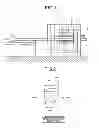
FIG. 1 is a schematic front view of a friction coefficient measuring apparatus.
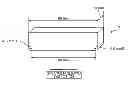
FIG. 2 is a schematic perspective view illustrating a first shape and dimensions of a bead 6 in FIG. 1 (bead shape 1).
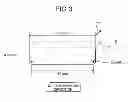
FIG. 3 is a schematic perspective view illustrating a second shape and dimensions of the bead 6 in FIG. 1 (bead shape 2).
DETAILED DESCRIPTION OF EMBODIMENTS OF THE INVENTION
A cold rolled steel sheet of an embodiment of the present invention has an organic-inorganic composite film containing on a surface of the cold rolled steel sheet an organic resin and a crystalline layered material, and the organic-inorganic composite film has an average film thickness of 0.10 to 2.0 μm and contains 0.5 part by weight or more of the crystalline layered material as a solid with respect to 100 parts by weight of a solid of the organic resin. These are the most important aspects of the cold rolled steel sheet of the present invention.
By coating a predetermined amount of the crystalline layered material on the surface of the cold rolled steel sheet, slidability is improved dramatically. A mechanism of lubrication of the crystalline layered material contained in the organic-inorganic composite film may be understood as follows. When a mold and a cold rolled steel sheet slide, a shear stress is generated on a surface of the cold rolled steel sheet due to an adhesive force between the surfaces of the mold and the cold rolled steel sheet. The presence of a crystalline layered material between the cold rolled steel sheet and the mold causes deformation of the crystalline layered material due to interlayer slips and absorbance of a shear deformation stress generated on the surfaces. Even after the cold rolled steel sheet is worn down and the crystalline layered material is scraped off from the surface of the cold rolled steel sheet, the crystalline layered material adheres to the mold and exhibits an effect of reducing the friction resistance between the mold and the cold rolled steel sheet, and thus even under a high contact-pressure condition supposing a high-strength steel sheet, the effect is achieved sufficiently. Further, containing the organic resin in the organic-inorganic composite film is effective from the viewpoint of adhesiveness upon coating and allows the surface of the cold rolled steel sheet to be coated with the crystalline layered material with a uniform thickness.
The thickness of the organic-inorganic composite film containing the organic resin and the crystalline layered material (hereinafter may be simply referred to as the organic-inorganic composite film), which is a thickness when its cross section is observed with a SEM, is 0.10 μm or more and 2.0 μm or less as an average film thickness. When the average film thickness is less than 0.10 μm, it is difficult to form the film uniformly on the surface of the cold rolled steel sheet. When the average film thickness exceeds 2.0 μm, there is a concern that a spot weldability that is important in automobile manufacture is decreased. The thickness of the organic-inorganic composite film may be measured from a result of observing an FIB-processed cross section with a SEM with an acceleration voltage of 5 kV or less. Identification of a crystal structure about whether the crystalline layered material is crystalline may be performed by thin-film X-ray diffraction.
The crystalline layered material is contained in an amount of 0.5 part by weight or more as a solid with respect to 100 parts by weight of a solid of the organic resin. When the solid of the crystalline layered material is less than 0.5 part by weight, the amount of the crystalline layered material contacting the mold when the mold and the cold rolled steel sheet slide is small, and thus the effect cannot be achieved sufficiently.
In embodiments of the present invention, the crystalline layered material is, from among unit crystal lattices, a crystal in which plate-shaped covalent bond crystals are layered over one another with relatively weak bonding such as an intermolecular force, hydrogen bonding, and electrostatic energy. A layered double hydroxide having a structure representable by [M2+1-xM3+x(OH)2] [An−]x/n.zH2O, in particular, has a layered crystal structure, since anions that are negatively charged are bonded with positively charged plate-shaped divalent and trivalent metal hydroxides by electrostatic energy in order to keep electric balance and has stacked layers, and is preferably used as the crystalline layered material of the present invention. Being the layered double hydroxide indicated by [M2+1-xM3+x(OH)2] [An−]x/n.zH2O is known to be identifiable by X-ray diffraction and a substance representable by the formula is known to be a layered crystal.
The M2+ is preferably one or more of Mg2+, Ca2+, Fe2+, Ni2+, Zn2+, Pb2+, and Sn2+. In particular, Mg2+, Ca2+, Fe2+, Ni2+, and Zn2+ are more preferable because they have been identified as layered double hydroxide species that are produced naturally or artificially and they are able to exist as layered double hydroxides stably.
The M3+ is preferably one or more of Al3+, Fe3+, Cr3+, 3/4Zr4+, and Mo3+. In particular, Al3+, Fe3+, and Cr3+are more preferable because they have been identified as layered double hydroxide species that are produced naturally or artificially and they are able to exist as layered double hydroxides stably.
The An− is preferably one or more of OH−, F−, CO32−, Cl−, Br−, (C2O4)2−, I−, (NO3)−, (SO4)2−, (BrO3)−, (IO3)−, (V10O28)6−, (Si2O5)2−, (ClO4)−, (CH3COO)−, [C6H4(CO2)2]2−, (C6H5COO)−, [C8H16(CO2)2]2−, n(C8H17SO4)−, n(C12H25SO4)−, n(C18H37SO4)−, and SiO44−. They have been confirmed to be incorporated as interlayer anions of layered double hydroxides, and they are able to exist as layered double hydroxides. In particular, OH−, CO32−, Cl−, and (SO4)2− may be used as the anions more preferably because they are easier to be incorporated as the interlayer anions than other anions of layered double hydroxide species upon film formation on a surface of a cold rolled steels sheet, and the film formation is possible in a short period of time.
Next, a method of producing an organic-inorganic composite film on a surface of a cold rolled steel sheet will be explained. First, a method of producing a crystalline layered material will be described. Herein, a method of producing a layered double hydroxide, which is a crystalline layered material, in a powdery form, will be described as an example. For example, a method of dropping an anion-containing solution into a cation-containing aqueous solution will be described. An aqueous solution containing any one or more anions of inorganic anions or organic anions (An−) is dropped into an aqueous solution containing any one or more of divalent cations (M2+) and any one or more of trivalent cations (M3+). A 2.0-mole NaOH solution is dropped to adjust the solution so that the pH of the reaction suspension becomes 10±0.1. The divalent cations and trivalent cations present in the reaction suspension exist in a colloidal form as hydroxides. When one or more specific anions from among OH—, F−, CO32−, Cl−, Br−, (C2O4)2−, I−, (NO3)−, (SO4)2−, (BrO3)−, (IO3)−, (V10O28)6−, (Si2O5)2−, (ClO4)−, (CH3COO)−, [C6H4(CO2)2]2−, C6H5COO)−, [C8H16(CO2)2]2−, n(C8H17SO4)−, n(C12H25SO4)−, n(C18H37SO4)−, and SiO44− are dropped into the suspension, the hydroxides precipitate as a layered double hydroxide. The obtained precipitate is then separated using a centrifugal separator and dried to obtain a powdery layered double hydroxide. Whether the obtained powdery substance is a layered compound may be confirmed by X-ray diffraction.
The powdery layered double hydroxide obtained as described above and the organic resin are then mixed as appropriate and stirred to prepare a coating composition. For stirring, a coating disperser (a sand grinder) may be used, for example. A stirring time is adjusted as appropriate. To sufficiently disperse the powdery layered double hydroxide in an organic solvent, the stirring time is preferably 30 minutes or more. The organic resin may be one or more selected from epoxy resins, polyhydroxy polyether resins, polyester resins, urethane resins, silicone resins, and acrylic resins. From the viewpoint of corrosion resistance, in particular, with respect to an epoxy resin as a base material, its molecular weight is preferably optimized as appropriate or a part of the resin is preferably modified with urethane, polyester, amine, or the like, in order to improve workability.
Furthermore, as needed, an additive may be added, which is one or more of: an organic coloring pigment (for example, a fused polycyclic organic pigment, a phthalocyanine organic pigment, or the like); a coloring dye (for example, a water-soluble azo metallic dye or the like); an inorganic pigment (for example, titanium oxide or the like); a conductive pigment (for example: metallic powder such as zinc, aluminum, or nickel; iron phosphate; antimony-doped tin oxide; or the like); a coupling agent (for example, a titanium coupling agent or the like); a melamine-cyanuric acid adduct; and the like.
Next, the obtained coating composition is applied on the surface of the cold rolled steel sheet and baked. Means for applying the obtained coating composition on the surface of the cold rolled steel sheet is not particularly limited. A roll coater is preferably used. For a heat-drying (baking) treatment, a dryer, a hot stove, a high-frequency induction heating furnace, an infrared furnace, or the like may be used, but from the viewpoint of corrosion resistance, the high-frequency induction heating furnace is particularly preferable. Heat treatment is preferably conducted within a range of 50 to 350° C. or preferably 80 to 250° C. in reached plate temperature. If a heating temperature is less than 50° C., a large amount of a solvent within the film remains and the corrosion resistance becomes insufficient. If the heating temperature exceeds 350° C., it is not only non-economical but also defects may occur in the film and degrade the corrosion resistance. As described, the cold rolled steel sheet having, on a surface thereof, the organic-inorganic composite film containing the organic resin and the crystalline layered material is obtained.
Even if N, Pb, Na, Mn, Ba, Sr, Si, or the like is incorporated into the organic-inorganic composite film due to impurities being contained in the treatment liquid used in the film forming treatment or the like, the effect of the present invention is not impaired.
EXAMPLES
The present invention will be explained in further detail with reference to examples. The layered double hydroxide was produced by dropping an aqueous solution containing any one or more anions of inorganic anions or organic anions (An−) (Composition of Aqueous Solution 2 in Table 1) into an aqueous solution containing any one or more of divalent cations (M2+) and any one or more of trivalent cations (M3+) listed in Table 1 (Composition of Aqueous
Solution 1 in Table 1). A 2.0-mole NaOH solution was dropped therein to adjust the solution so that the pH of the reaction suspension became 10±0.1. The obtained precipitate was then filtered and dried to obtain a powdery layered double hydroxide. It was identified to be a layered double hydroxide by X-ray diffraction.
| TABLE 1 | |||
| Composition of Aqueous | Composition of crystalline layered material (layered | ||
| No. | Composition of Aqueous Solution 1 | Solution 2 | double hydroxide)(Identification results) |
| 1 | Magnesium nitrate hexahydrate 113 g/L | Sodium carbonate | ICDD card reference code: 01-089-0460 |
| Aluminum hydrate nonahydrate 83 g/L | decahydrate 31 g/L | [Mg0.667Al0.333(OH)2][CO32−]0.167•0.5H2O | |
| Magnesium Aluminum Hydroxide Carbonate Hydrate | |||
| 2 | Zinc nitrate heptahydrate 131 g/L | Sodium carbonate | ICDD card reference code: 00-048-1021 |
| Aluminum nitrate nonahydrate 83 g/L | decahydrate 31 g/L | [Zn0.71Al0.28(OH)2][CO32−]0.145•H2O | |
| Zinc Aluminum Carbonate Hydroxide Hydrate | |||
| 3 | Iron(II) sulfate heptahydrate 122 g/L | Sodium carbonate | ICDD card reference code: 00-050-1380 |
| Iron(III) nitrate nonahydrate 89 g/L | decahydrate 31 g/L | [Fe0.67Fe0.33(OH)2][CO32−]0.145•0.33H2O | |
| Iron Carbonate Hydroxide Hydrate | |||
| 4 | Nickel nitrate hexahydrate 128 g/L | Sodium sulfate | ICDD card reference code: 00-042-0573 |
| Iron(III) nitrate nonahydrate 89 g/L | decahydrate 31 g/L | [Ni0.75Fe0.125(OH)2][SO42−]0.25•0.5H2O | |
| Iron Nickel Sulfate Hydroxide Hydrate | |||
| 5 | Magnesium nitrate hexahydrate 113 g/L | Sodium hydroxide 5 g/L | ICDD card reference code: 00-038-0478 |
| Aluminum hydrate nonahydrate 83 g/L | [Mg0.75Al0.25(OH)2][OH−]0.25•0.5H2O | ||
| Magnesium Aluminum Hydroxide Hydrate | |||
| 6 | Magnesium nitrate hexahydrate 113 g/L | Sodium chloride 6 g/L | ICDD card reference code: 00-020-0500 |
| Iron(III) nitrate 89 g/L | [Mg0.75Fe0.25(OH)2][Cl−]0.25•0.5H2O | ||
| Magnesium Iron Oxide Chloride Hydroxide Hydrate | |||
| 7 | Calcium nitrate tetrahydrate 104 g/L | Sodium chloride 6 g/L | ICDD card reference code: 00-035-0105 |
| Aluminum nitrate nonahydrate 83 g/L | [Ca0.67Al0.33(OH)2][Cl−]0.33•0.67H2O | ||
| Calcium Aluminum Hydroxide Chloride Hydrate | |||
| 8 | Magnesium nitrate hexahydrate 113 g/L | Sodium carbonate | ICDD card reference code: 00-045-1475 |
| Chromium(III) nitrate nonahydrate 88 g/L | decahydrate 31 g/L | [Mg0.67Cr0.33(OH)2][CO32−]0.157•0.5H2O | |
| Magnesium Chromium Carbonate Hydroxide Hydrate | |||
| 9 | Iron(II) sulfate heptahydrate 122 g/L | Sodium carbonate | ICDD card reference code: 00-051-1527 |
| Aluminum nitrate nonahydrate 83 g/L | decahydrate 31 g/L | [Fe0.67Al0.33(OH)2][CO32−]0.157•0.5H2O | |
| Iron Aluminum Oxide Carbonate Hydroxide Hydrate | |||
| 10 | Nickel nitrate hexahydrate 128 g/L | Sodium carbonate | ICDD card reference code: 00-015-0087 |
| Aluminum nitrate nonahydrate 83 g/L | decahydrate 31 g/L | [Ni0.67Al0.33(OH)2][CO32−,OH−]0.157•0.5H2O | |
| Nickel Aluminum Oxide Carbonate Hydroxide Hydrate | |||
The coating compositions to be the organic-inorganic composite films formed on the surfaces were prepared by using organic resins listed in Table 2 as resin compositions, mixing the layered double hydroxides produced by the above-described method thereinto as listed in Table 3, and stirring using a coating disperser (a sand grinder) for 45 minutes.
| TABLE 2 | ||
| No. | Classification | Base resin |
| 1 | Thermosetting | Amine-modified epoxy resin/Blocked isocyanate |
| resin | cured | |
| 2 | Urethane-modified epoxy resin/Blocked | |
| isocyanate cured | ||
| 3 | Epichlorohydrin type epoxy resin/Blocked | |
| isocyanate cured | ||
| 4 | Polyester type urethane resin/Melamine cured | |
| 5 | Water- | Ionomer of ethylene-acrylic acid copolymer |
| 6 | dispersible | Ethylene-acrylic copolymer (Emulsion |
| resin | polymerization) | |
| 7 | Styrene-acrylic copolymer | |
| 8 | Polyurethane resin | |
As a steel sheet for a substrate of a coating, a cold rolled steel sheet with a plate thickness of 0.7 mm that had been subjected to temper rolling was used. The surface of the cold rolled steel sheet obtained as described above was subjected to an alkaline degreasing treatment, washed with water, and dried, and thereafter, the above-described coating composition was applied thereon by a roll coater and baked (heat dried) at a baking temperature of 140° C. as listed in Table 3. The film thickness of the organic-inorganic composite film was adjusted by the solid content of the coating composition (heating residue) or a coating condition (e.g., a roll force, a roll rotational speed, or the like).
The average film thicknesses of the organic-inorganic composite films on the surfaces of the cold rolled steel sheets obtained as described above were measured, and the layered double hydroxides were identified. As a method for evaluating press formability indicating the ease of elaborate press forming, measurement of kinetic friction coefficients and evaluation of mold galling resistances were conducted. Each measurement method and identification method are as follows.
(1) Method of Measuring the Average Film Thickness of the Organic-Inorganic Composite Film
A cross section of a film was sputtered at 45 degrees using an FIB, the cross section was observed with an ultra-low acceleration SEM, 10 points were extracted and measured, and an average value thereof was regarded as an average film thickness of that film.
(2) Method of Identifying the Layered Double Hydroxides
Presence of the crystalline layered double hydroxides was identified by an X-ray diffraction method. Peaks obtained by the X-ray diffraction method using a Cu—Kαradiation were compared with ICDD cards to identify the layered double hydroxides. The matched cards were as follows.
- (a) Magnesium Aluminum Hydroxide Carbonate Hydrate
- ICDD card reference code: 01-089-0460
- [Mg0.667Al0.333(OH)2] [CO32−]0.167.0.5H2O
- (b) Zinc Aluminum Carbonate Hydroxide Hydrate
- ICDD card reference code: 00-048-1021
- [Zn0.71Al0.29(OH)2] [CO32−]0.145.H2O
- (c) Iron Carbonate Hydroxide Hydrate
- ICDD card reference code: 00-050-1380
- [Fe0.67Fe0.33(OH)2] [CO32−]0.145.0.33H2O
- (d) Iron Nickel Sulfate Hydroxide Hydrate
- ICDD card reference code: 00-042-0573
- [Ni0.75Fe0.25(OH)2] [SO42−]0.125.0.5H2O
- (e) Magnesium Aluminum Hydroxide Hydrate
- ICDD card reference code: 00-038-0478
- [Mg0.75Al0.25(OH)2] [OH−]0.25.0.5H2O
- (f) Magnesium Iron Oxide Chloride Hydroxide Hydrate
- ICDD card reference code: 00-020-0500
- [Mg0.75Fe0.25(OH)2] [Cl−]0.25.0.5H2O
- (g) Calcium Aluminum Hydroxide Chloride Hydrate
- ICDD card reference code: 00-035-0105
- [Ca0.67Al0.33(OH)2] [Cl−]0.33.0 67H2O
- (h) Magnesium Chromium Carbonate Hydroxide Hydrate
- ICDD card reference code: 00-045-1475
- [Mg0.67Cr0.33(OH)2] [CO32−]0.157.0.5H2O
- (i) Iron Aluminum Oxide Carbonate Hydroxide Hydrate
- ICDD card reference code: 00-051-1527
- [Fe0.67Al0.33(OH)2] [CO32−]0.157.0.5H2O
- (j) Nickel Aluminum Oxide Carbonate Hydroxide Hydrate
- ICDD card reference code: 00-015-0087
- [Ni0.67Al0.33(OH)2] [CO32−, OH−]0.157.0.5H2O
(3) Method of Measuring the Kinetic Friction Coefficients
To evaluate the press formability (in particular, the press formability in drawing and inflow portions) the kinetic friction coefficient of each sample was measured as follows. FIG. 1 is a schematic front view illustrating a friction coefficient measuring apparatus. As illustrated in the figure, a kinetic friction coefficient measuring specimen 1 taken from a sample is fixed to a specimen stand 2, and the specimen stand 2 is fixed to an upper surface of a slide table 3, which is horizontally movable. On a lower surface of the slide table 3, a slide table support 5, which has rollers 4 contacting the lower surface and is vertically movable, is provided, and a first load cell 7 for measuring a pressing load N to the kinetic friction coefficient measuring specimen 1 from a bead 6 by pushing up the slide table support 5 is attached to the slide table support 5. To measure a sliding resistance force N for moving the slide table 3 horizontally with the above-described pressing force being acted, a second load cell 8 is attached to one end of the slide table 3. As a lubricating oil, the PRETON R352L manufactured by Sugimura Chemical Industrial Co., Ltd. was applied on the surface of the kinetic friction coefficient measuring specimen 1 to conduct tests.
FIG. 2 is a schematic perspective view illustrating a first shape and dimensions of the bead 6 used (hereinafter, bead shape 1). It is slid with a bottom surface of the bead 6 pressed against the surface of the kinetic friction coefficient measuring specimen 1. The shape of the bead 6 illustrated in FIG. 2 is formed of: a width of 10 mm; a length in a specimen sliding direction of 12 mm; and curved surfaces with a curvature of 4.5 mmR at portions of both ends in the sliding direction, and the bead's bottom surface, against which the specimen is pressed, has a plane with a width of 10 mm and a length in the sliding direction of 3 mm.
FIG. 3 is a schematic perspective view illustrating a second shape and dimensions of the bead 6 used (hereinafter, bead shape 2). It is slid with a bottom surface of the bead 6 pressed against the surface of the kinetic friction coefficient measuring specimen 1. The shape of the bead 6 illustrated in FIG. 3 is formed of: a width of 10 mm; a length in the specimen sliding direction of 69 mm; and curved surfaces with a curvature of 4.5 mmR at lower portions of both ends in the sliding direction, and the bead's bottom surface against which the specimen is pressed has a plane with a width of 10 mm and a length in the sliding direction of 60 mm.
The measurement of kinetic friction coefficients was conducted under three conditions in which the pressing loads N were 400, 1200, and 1600 kgf at room temperature (25° C.) so that contact pressures supposing press forming of a high-strength steel sheet are exerted. The specimens' drawing speed (a horizontal moving speed of the slide table 3) was 100 cm/min or 20 cm/min. Under these conditions, the pressing load N and the sliding resistance force F were measured, and the kinetic friction coefficient μ between the sample and the bead 6 was calculated by the equation: μ=F/N.
Combinations of the bead shape, pressing load, and drawing speed are as follows:
- Condition 1: Bead shape 1, a pressing load of 400 kgf, and a drawing speed of 100 cm/min
- Condition 2: Bead shape 1, a pressing load of 1200 kgf, and a drawing speed of 100 cm/min
- Condition 3 Bead shape 1, a pressing load of 1600 kgf, and a drawing speed of 100 cm/min
- Condition 4: Bead shape 2, a pressing load of 400 kgf, and a drawing speed of 20 cm/min
Method of Evaluating Mold Galling Resistance
In addition to the kinetic friction coefficient, in cold rolled steel sheets, mold galling is likely to occur because a cold rolled steel sheet and a mold adhere to each other in portions having a long sliding distance and the sliding resistance increases. Using the friction coefficient measuring apparatus illustrated in FIG. 1, therefore, sliding tests were repeated 50 times, and mold galling resistance was evaluated, with a count of how many repeated times the kinetic friction coefficient increased by 0.01 or more being regarded as a repeat count of mold galling occurrences. If no increase in the kinetic friction coefficient was recognized even after the sliding tests were repeated 50 times, the repeat count was regarded as 50 times or more. The test were conducted, like the above-described (3) method of measuring the kinetic friction coefficient, under the above-described conditions 1 to 3 so that a contact pressure supposing press forming of a high-strength steel sheet was realized.
The test results thus obtained are listed in Table 3 with the conditions.
| TABLE 3 | |||
| Surface film layer | Kinetic friction | Mold galling |
| Organic | Crystalline | Average | coefficient | resistance |
| Steel | resin | layered material | film | Baking | Con- | Con- | Con- | Con- | Con- |
| sheet | Type | Amount | Compound | Amount | thickness | temperature | di- | Condi- | di- | di- | di- | Condi- | di- | ||
| Category | No. | type | *2 | *3 | type *1 | *3 | (μm) | (° C.) | tion 1 | tion 2 | tion 3 | tion 4 | tion 1 | tion 2 | tion 3 |
| Comparative | 1 | Cold | 1 | 100 | — | — | 1.0 | 140 | 0.137 | 0.093 | — *4 | 0.171 | 50 or | 5 | 0 |
| Example | rolled | more | |||||||||||||
| Inventive | 2 | steel | 1 | 100 | 1 | 20 | 1.0 | 140 | 0.082 | 0.065 | 0.057 | 0.142 | 50 or | 32 | 22 |
| Example | sheet | more | |||||||||||||
| Inventive | 3 | 1 | 100 | 2 | 20 | 1.0 | 140 | 0.080 | 0.064 | 0.057 | 0.142 | 50 or | 33 | 23 | |
| Example | more | ||||||||||||||
| Inventive | 4 | 1 | 100 | 3 | 20 | 1.0 | 140 | 0.081 | 0.066 | 0.056 | 0.143 | 50 or | 30 | 20 | |
| Example | more | ||||||||||||||
| Inventive | 5 | 1 | 100 | 4 | 20 | 1.0 | 140 | 0.079 | 0.064 | 0.056 | 0.142 | 50 or | 31 | 21 | |
| Example | more | ||||||||||||||
| Inventive | 6 | 1 | 100 | 5 | 20 | 1.0 | 140 | 0.078 | 0.064 | 0.056 | 0.143 | 50 or | 33 | 20 | |
| Example | more | ||||||||||||||
| Inventive | 7 | 1 | 100 | 6 | 20 | 1.0 | 140 | 0.080 | 0.064 | 0.057 | 0.140 | 50 or | 35 | 20 | |
| Example | more | ||||||||||||||
| Inventive | 8 | 1 | 100 | 7 | 20 | 1.0 | 140 | 0.081 | 0.065 | 0.057 | 0.142 | 50 or | 29 | 23 | |
| Example | more | ||||||||||||||
| Inventive | 9 | 1 | 100 | 8 | 20 | 1.0 | 140 | 0.079 | 0.065 | 0.058 | 0.142 | 50 or | 28 | 23 | |
| Example | more | ||||||||||||||
| Inventive | 10 | 1 | 100 | 9 | 20 | 1.0 | 140 | 0.080 | 0.065 | 0.058 | 0.143 | 50 or | 31 | 25 | |
| Example | more | ||||||||||||||
| Inventive | 11 | 1 | 100 | 10 | 20 | 1.0 | 140 | 0.080 | 0.066 | 0.057 | 0.140 | 50 or | 30 | 22 | |
| Example | more | ||||||||||||||
| Inventive | 12 | 2 | 100 | 1 | 20 | 1.0 | 140 | 0.080 | 0.065 | 0.057 | 0.141 | 50 or | 32 | 22 | |
| Example | more | ||||||||||||||
| Inventive | 13 | 3 | 100 | 1 | 20 | 1.0 | 140 | 0.082 | 0.064 | 0.056 | 0.141 | 50 or | 33 | 22 | |
| Example | more | ||||||||||||||
| Inventive | 14 | 4 | 100 | 1 | 20 | 1.0 | 140 | 0.081 | 0.065 | 0.057 | 0.140 | 50 or | 35 | 23 | |
| Example | more | ||||||||||||||
| Inventive | 15 | 5 | 100 | 1 | 20 | 1.0 | 140 | 0.079 | 0.065 | 0.058 | 0.140 | 50 or | 33 | 26 | |
| Example | more | ||||||||||||||
| Inventive | 16 | 6 | 100 | 1 | 20 | 1.0 | 140 | 0.080 | 0.065 | 0.056 | 0.140 | 50 or | 32 | 25 | |
| Example | more | ||||||||||||||
| Inventive | 17 | 7 | 100 | 1 | 20 | 1.0 | 140 | 0.081 | 0.064 | 0.056 | 0.140 | 50 or | 29 | 22 | |
| Example | more | ||||||||||||||
| Inventive | 18 | 8 | 100 | 1 | 20 | 1.0 | 140 | 0.081 | 0.066 | 0.056 | 0.142 | 50 or | 28 | 24 | |
| Example | more | ||||||||||||||
| Inventive | 19 | 1 | 100 | 1 | 0.5 | 1.0 | 140 | 0.091 | 0.070 | 0.061 | 0.162 | 50 or | 20 | 10 | |
| Example | more | ||||||||||||||
| Inventive | 20 | 1 | 100 | 1 | 1 | 1.0 | 140 | 0.088 | 0.069 | 0.062 | 0.155 | 50 or | 21 | 12 | |
| Example | more | ||||||||||||||
| Inventive | 21 | 1 | 100 | 1 | 10 | 1.0 | 140 | 0.085 | 0.067 | 0.060 | 0.150 | 50 or | 25 | 16 | |
| Example | more | ||||||||||||||
| Inventive | 22 | 1 | 100 | 1 | 100 | 1.0 | 140 | 0.075 | 0.060 | 0.053 | 0.134 | 50 or | 50 or | 50 or | |
| Example | more | more | more | ||||||||||||
| Inventive | 23 | 1 | 100 | 1 | 120 | 1.0 | 140 | 0.075 | 0.059 | 0.052 | 0.129 | 50 or | 50 or | 50 or | |
| Example | more | more | more | ||||||||||||
| Inventive | 24 | 1 | 100 | 1 | 20 | 0.1 | 140 | 0.091 | 0.070 | 0.055 | 0.162 | 50 or | 20 | 10 | |
| Example | more | ||||||||||||||
| Inventive | 25 | 1 | 100 | 1 | 20 | 0.5 | 140 | 0.086 | 0.059 | 0.052 | 0.155 | 50 or | 21 | 12 | |
| Example | more | ||||||||||||||
| Inventive | 26 | 1 | 100 | 1 | 20 | 1.5 | 140 | 0.076 | 0.060 | 0.053 | 0.134 | 50 or | 50 or | 42 | |
| Example | more | more | |||||||||||||
| Inventive | 27 | 1 | 100 | 1 | 20 | 2.0 | 140 | 0.072 | 0.059 | 0.052 | 0.129 | 50 or | 50 or | 50 or | |
| Example | more | more | more | ||||||||||||
| *1: Number of a crystalline layered material listed in Table 1 | |||||||||||||||
| *2: Number of an organic resin listed in Table 2 | |||||||||||||||
| *3: Part(s) by weight (solid content) wt % | |||||||||||||||
| *4: Immeasurable due to occurrence of mold galling |
The following has become clear from the test results listed in Table 3. No. 1 is an example not containing a crystalline layered material and a comparative example with respect to the present invention. The comparative example has high kinetic friction coefficients and poor mold galling resistances. Nos. 2 to 27 are examples containing organic resins and crystalline layered materials and are examples of the present invention. The inventive examples of Nos. 2 to 27 have lower kinetic friction coefficients and better mold galling resistances than the comparative example of No. 1.
The cold rolled steel sheet of the present invention is excellent in press formability; and therefore applicable in wide-ranging fields with a focus on uses in automotive bodies requiring difficult-to-form materials.
Reference Signs List
1 Friction coefficient measuring specimen
2 Specimen stand
3 Slide table
4 Rollers
5 Slide table support
6 Bead
7 First load cell
8 Second load cell
9 Rail
N Pressing load
F Sliding resistance force
Claims
1. A cold rolled steel sheet comprising, on a surface thereof, an organic-inorganic composite film containing: an organic resin; and a crystalline layered material, wherein the organic-inorganic composite film has an average film thickness of 0.10 to 2.0 μm and contains 0.5 part or more by weight of the crystalline layered material as a solid with respect to 100 parts by weight of a solid of the organic resin.
2. The cold rolled steel sheet according to claim 1, wherein the crystalline layered material is a layered double hydroxide represented by [M2+1-xM3+x(OH)2][An−]x/n.zH2O, wherein:
M2+ is one or more of Mg2+, Ca2+, Fe2+, Ni2+, Zn2+, Pb2+, and Sn2+;
M3+ is one or more of Al3+, Fe3+, Cr3+, 3/4Zr4+, and Mo3+; and
An− is one or more of OH−, F−, CO32−, Cl−, Br−, (C2O4)2−, I−, (NO3)−, (SO4)2−, (BrO3)−, (IO3)−, (V10O28)6−, (Si2O5)2−, (ClO4)−, (CH3COO)−, [C6H4(CO2)2]2−, (C6H5COO)−, [C8H16(CO2)2]2−, n(C8H17SO4)−, n(C12H25SO4)−, n(C18H37SO4)−, and SiO44−.
3. The cold rolled steel sheet according to claim 1, wherein the crystalline layered material is a layered double hydroxide represented by [M2+1-xM3+x(OH)2][An−]x/n.zH2O, wherein:
M2+ is one or more of Mg2+, Ca2+, Fe2+, Ni2+, and Zn2+;
M3+ is one or more of Al3+, Fe3+, and Cr3+; and
An− is one or more of OH−, CO32−, Cl−, and (SO4)2−.
4. The cold rolled steel sheet according to claim 1, wherein the organic resin is one or more selected from an epoxy resin, a polyhydroxy polyether resin, a polyester resin, a urethane resin, a silicone resin, and an acrylic resin.
5. The cold rolled steel sheet according to claim 2, wherein the organic resin is one or more selected from an epoxy resin, a polyhydroxy polyether resin, a polyester resin, a urethane resin, a silicone resin, and an acrylic resin.
6. The cold rolled steel sheet according to claim 3, wherein the organic resin is one or more selected from an epoxy resin, a polyhydroxy polyether resin, a polyester resin, a urethane resin, a silicone resin, and an acrylic resin.
Images & Drawings included:
Sources:
- United States Patent and Trademark Office - verify current appl. status at the USPTO↗
Similar patent applications:
- » 20150203948
Cold rolled steel sheet, electrogalvanized cold-rolled steel sheet, hot-dip galvanized cold-rolled steel sheet, alloyed hot-dip galvanized cold rolled steel sheet, and manufacturing methods of the same - » 20080251167
Bake-hardenable cold rolled steel sheet with superior strength, galvannealed steel sheet using the cold rolled steel sheet and method for manufacturing the cold rolled steel sheet - » 20080251168
Bake-Hardenable Cold Rolled Steel Sheet With Superior Strength and Aging Resistance, Gal-Vannealed Steel Sheet Using the Cold Rolled Steel Sheet and Method For Manufacturing the Cold Rolled Steel Sheet - » 20170306507
COLD-ROLLED STEEL SHEET, METHOD OF MANUFACTURING COLD-ROLLED STEEL SHEET, AUTOMOBILE MEMBER AND FACILITY FOR MANUFACTURING COLD-ROLLED STEEL SHEET - » 20240247348
STOCK COLD-ROLLED STEEL SHEET WITH FE-BASED COATING FILM, METHOD FOR PRODUCING STOCK COLD-ROLLED STEEL SHEET WITH FE-BASED COATING FILM, METHOD FOR PRODUCING COLD-ROLLED STEEL SHEET WITH FE-BASED COATING FILM, METHOD FOR PRODUCING HOT-DIPPED GALVANIZED STEEL SHEET, AND METHOD FOR PRODUCING ALLOYED HOT-DIPPED GALVANIZED STEEL SHEET - » 20240076766
QT HEAT TREATED HIGH CARBON HOT ROLLED STEEL SHEET, HIGH CARBON COLD ROLLED STEEL SHEET, QT HEAT TREATED HIGH CARBON COLD ROLLED STEEL SHEET, AND MANUFACTURING METHODS THEREOF - » 20250171869
STEEL SHEET, MEMBER, METHODS FOR MANUFACTURING THE SAME, METHOD FOR MANUFACTURING HOT-ROLLED STEEL SHEET FOR COLD-ROLLED STEEL SHEET, AND METHOD FOR MANUFACTURING COLD-ROLLED STEEL SHEET - » 20250163531
STEEL SHEET, MEMBER, METHODS FOR MANUFACTURING THE SAME, METHOD FOR MANUFACTURING HOT-ROLLED STEEL SHEET FOR COLD-ROLLED STEEL SHEET, AND METHOD FOR MANUFACTURING COLD-ROLLED STEEL SHEET - » 20230106818
NON-ORIENTED ELECTRICAL STEEL SHEET, CORE, COLD-ROLLED STEEL SHEET, METHOD FOR MANUFACTURING NON-ORIENTED ELECTRICAL STEEL SHEET, AND METHOD FOR MANUFACTURING COLD-ROLLED STEEL SHEET - » 20160130680
Cold-rolled steel sheet, galvanized cold-rolled steel sheet and method of manufacturing the same
Recent applications in this class:
- » 20240227356 2024-07-11
FLUORINATED-RUBBER-METAL LAMINATE - » 20240131818 2024-04-25
FLUORINATED-RUBBER-METAL LAMINATE - » 20230140565 2023-05-04
RUBBER-METAL LAMINATE AND GASKET - » 20200164621 2020-05-28
RUBBER COMPOSITION FOR DIRECT VULCANIZATION BONDING AND MOLDED METAL/RUBBER COMPOSITE - » 20190047257 2019-02-14
MEMEBER, ELECTRIC/ELECTRONIC COMPONENT, ELECTRIC/ELECTRONIC DEVICE, AND MEMBER-MANUFACTURING METHOD - » 20180170006 2018-06-21
Rubber Composition, Rubber Composition Metal Laminate, and Vulcanized Rubber Product - » 20180170005 2018-06-21
CURABLE COMPOSITION, PREPREG, METAL FOIL WITH COMPOSITION, METAL-CLAD LAMINATE AND WIRING BOARD - » 20160001523 2016-01-07
Laminate and process for producing same - » 20150147545 2015-05-28
ELASTOMERIC BILAYER ARMOR INCORPORATING SURFACE-HARDENED SUBSTRATES - » 20140044975 2014-02-13
Rubber metal laminate
Recent applications for this Assignee:
- » 20250290218 2025-09-18
SURFACE-TREATED STEEL SHEET AND METHOD OF PRODUCING SAME - » 20250290186 2025-09-18
STEEL SHEET, MEMBER, AND METHODS FOR PRODUCING SAME - » 20250290185 2025-09-18
STEEL SHEET, MEMBER, AND METHODS FOR PRODUCING SAME - » 20250290183 2025-09-18
HIGH STRENGTH STEEL PLATE FOR SOUR GAS APPARATUSES AND HIGH STRENGTH STEEL PIPE OR TUBE USING THE SAME - » 20250290181 2025-09-18
CONTINUOUSLY CAST SLAB - » 20250283185 2025-09-11
METHOD FOR MELTING DIRECT REDUCED IRON, SOLID IRON AND METHOD FOR PRODUCING THE SAME, MATERIAL FOR CIVIL ENGINEERING AND CONSTRUCTION AND METHOD FOR PRODUCING THE SAME, AND SYSTEM FOR MELTING DIRECT REDUCED IRON - » 20250281996 2025-09-11
WELDED JOINT, WELDED MEMBER, METHOD OF PRODUCING SAME, AND RESISTANCE SPOT WELDING METHOD - » 20250277659 2025-09-04
METHOD FOR DETERMINING GAP AND DEVICE FOR DETERMINING GAP BETWEEN STEEL SHEETS IN RESISTANCE SPOT WELDING - » 20250276354 2025-09-04
PRESS-FORMING METHOD AND METHOD OF MANUFACTURING PRESS-FORMED PRODUCT - » 20250276352 2025-09-04
HOT PRESSED MEMBER, STEEL SHEET FOR HOT PRESS FORMING, AND METHOD OF PRODUCING HOT PRESSED MEMBER