Connector having insertion detection
US20140148037A1
2014-05-29
13/825,294
2011-09-23
✅ Patent granted
US 8,979,599 B2
2015-03-17
WO; PCT/FR2011/052212; 20110923
WO; WO2012/038673; 20120329
Tho D Ta
Harness, Dickey & Pierce, P.L.C.
2031-09-23
Abstract:
An electrical connector includes a moulded body having at least one recess for receiving an electrical contact crimped onto a power supply wire. The body includes a flap that is mobile between a position allowing the insertion of a contact into the recess, and a locked position in which the flap locks the contact in the recess. The flap is translatably mobile relative to the body and forms a single hinged part with the latter. A system also includes a bulb provided with a connection socket and the connector.
Assignee:
- TBI 4 🇫🇷 Les Neyrolles, France
Applicant:
Interested in similar patents?
Get notified when new applications in this technology area are published.
Classification:
H01R2201/26 » CPC further
Connectors or connections adapted for particular applications for vehicles
H01R13/641 » CPC further
Details of coupling devices of the kinds covered by groups or -; Means for preventing incorrect coupling by indicating incorrect coupling; by indicating correct or full engagement
H01R13/4362 » CPC further
Details of coupling devices of the kinds covered by groups or -; Securing contact members in or to a base or case; Insulating of contact members; Securing in a demountable manner; Securing a plurality of contact members by one locking piece or operation; Insertion of locking piece perpendicular to direction of contact insertion comprising a temporary and a final locking position
H01R4/18 IPC
Electrically-conductive connections between two or more conductive members in direct contact, i.e. touching one another; Means for effecting or maintaining such contact; Electrically-conductive connections having two or more spaced connecting locations for conductors and using contact members penetrating insulation effected solely by twisting, wrapping, bending, crimping, or other permanent deformation by crimping
H01R33/06 » CPC further
Coupling devices specially adapted for supporting apparatus and having one part acting as a holder providing support and electrical connection via a counterpart which is structurally associated with the apparatus, e.g. lamp holders; Separate parts thereof; Two-pole devices with two current-carrying pins, blades or analogous contacts, having their axes parallel to each other
H01R13/514 IPC
Details of coupling devices of the kinds covered by groups or -; Bases; Cases composed as a modular blocks or assembly, i.e. composed of co-operating parts provided with contact members or holding contact members between them
H01R13/436 » CPC main
Details of coupling devices of the kinds covered by groups or -; Securing contact members in or to a base or case; Insulating of contact members; Securing in a demountable manner Securing a plurality of contact members by one locking piece or operation
H01R4/185 » CPC further
Electrically-conductive connections between two or more conductive members in direct contact, i.e. touching one another; Means for effecting or maintaining such contact; Electrically-conductive connections having two or more spaced connecting locations for conductors and using contact members penetrating insulation effected solely by twisting, wrapping, bending, crimping, or other permanent deformation by crimping for cylindrical elongated bodies, e.g. cables having circular cross-section comprising a U-shaped wire-receiving portion combined with a U-shaped insulation-receiving portion
H01R2103/00 » CPC further
Two poles
Description
CROSS-REFERENCE TO RELATED APPLICATIONS
This application is a National Phase Entry of International Application No. PCT/FR2011/052212, filed on Sep. 23, 2011, which claims priority to French Patent Application Serial No. 10/57725, filed on Sep. 24, 2010, both of which are incorporated by reference herein.
FIELD OF THE INVENTION
The present invention relates to the field of connectors, more particularly intended for electrical connections, and specially the connection of electrical sockets in the field of automobiles.
BACKGROUND
Connectors are known, in the state of the art, which are intended for receiving electrical contacts crimped onto a power supply wire. Such connectors of the state of the art comprise a body made of moulded plastic material provided with recesses for receiving the electrical contact and locking the latter after the insertion thereof. A second locking is provided by a hinged flap folding over the recess intended for housing the electrical contacts. Such foldable flap is provided with inner protrusions preventing the tilting thereof when the contacts are not correctly positioned.
The drawback of the prior solutions relates to the production of a part including a foldable flap. Such parts must resist various mechanical and thermal constraints, which makes the presence of a moulded hinge not much adapted. More particularly, the production of a moulded hinge is an obstacle to the utilisation of filled plastic materials since this would entail too low mechanical resistance of the area exposed to bending.
SUMMARY
The solution brought by the present invention consists in producing a connector as two translatably mobile pre-assembled elements, with no hinge or deformable portion. The invention, in its broadest sense, relates to an electrical connector consisting of a moulded body comprising at least one recess for receiving an electrical contact crimped onto a power supply wire, the body comprising a flap that is mobile between a position allowing the insertion of a contact into the recess, and a locked position in which the flap locks the contact in the recess, wherein the flap is translatably mobile relative to the body and forms a single hinged part with the latter. Advantageously, the flap is provided with two side flanks connected by a transversal flank, the side flanks cooperating with the side surfaces of the body by forming guiding slides, with the side flanks being provided, at the lower ends thereof, with longitudinal stops preventing the removal of the mobile flap relative to the body.
Preferably, the body is provided with complementary longitudinal stops for holding the longitudinal stops of the flap. According to a particular embodiment, the body is further provided, in the lower part thereof, with two peripheral extensions cooperating with the longitudinal stops to lock the flap by clipping on the body. According to a preferred alternative solution, the flap is provided, on the inner surface thereof, with two cleats having sections matching hollows provided on the electrical contacts.
The invention also relates to a system including a bulb provided with a complementary connection socket and a connector consisting of a moulded body comprising at least one recess for receiving an electrical contact crimped onto a power supply wire, the body comprising a flap that is mobile between a position allowing the insertion of a contact into the recess, and a locked position in which the flap locks the contact in the recess, wherein the flap is translatably mobile relative to the body and forms a single hinged part with the latter, and the socket is provided with a recess for inserting the connector, with the section of the recess being so configured as to prevent the insertion of the connector when the flap is not in the locked position.
BRIEF DESCRIPTION OF THE DRAWINGS
The present invention will be best understood when reading the following description, while referring to the appended drawings relative to a non limiting exemplary embodiment, where:
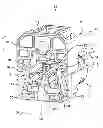
FIG. 1 shows a three-quarters back view of a connector according to the invention;
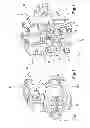
FIG. 2 shows a three-quarters front view of a connector according to the invention; and
FIG. 3 shows a cross-sectional view through a recess.
DETAILED DESCRIPTION
FIGS. 1 and 2 show three-quarters back and three-quarters front views, respectively, of a connector according to the invention. It is composed of a main body 1 made of a moulded plastic material, and a translatably mobile flap 2. The main body is provided, on the front part thereof, with an interface area 3 having a section matching that of the device intended to be powered, for instance the socket of a bulb of the H9 or H11 types. The body 1 is provided with two longitudinal recesses 6, 7 opening at the front in the interface area 3 and opening at the back in order to enable the insertion of electrical contacts 4, 5 previously crimped onto the power supply wires. The electrical contacts 4, 5 are provided, as shown in FIG. 3, with two protruding noses 8 positioned on the opposite faces of the contact, and clipped in the inner wall of the recess 6.
The main body 1 cooperates with a mobile flap 2 forming a frame overlapping the rear part 9 of the body 1. Such flap is provided with two side flanks 10, 11 connected by a transversal flank 12. The side flanks 10, 11 cooperate with the side surfaces 13, 14 of the body 1 and form guiding slides. The side flanks 10, 11 are provided, at the lower ends thereof, with longitudinal stops 15, 16 preventing the removal of the mobile flap relative to the body 1. For this purpose, the body 1 is provided with complementary longitudinal stops 17, 18.
The body is further provided, in the lower part thereof, with two peripheral extensions 19, 20 cooperating with said longitudinal stops 15, 16 for locking the flap 2 by clipping on the body 1. The inner surface of the flap is provided with two cleats 21, 22 having sections matching hollows 23, 24 provided on the electrical contacts 4, 5. Such cleats have two functions. On the one hand, they limit the motion of the flap 2 when the contacts are not properly engaged. As a matter of fact, they are stopped by the contact 4, 5 areas placed in front of the recesses 23, 24. On the other hand, they lock the contacts 4, 5 since the cleats engage, when the flap is in the lower position, into the hollow space of the recesses 23, 24 and thus prevent the longitudinal motion of the contacts 4, 5 in the recesses 6, 7 and, more specially the sudden removal of the contacts.
The connector is provided, when in locked position, with a section matching the section of the complementary electrical means, for instance the socket of a H9 or H11 bulb. On the contrary, when the flap is not in the locked position, it forms a protrusion preventing the insertion of the connector into the matching female part. The body 1 is further provided with a locking area 30 extending in a longitudinal direction and having a shape matching a receiving area provided on the lamp base, or more generally an area for receiving the female element to be connected.
The body 1 and the flap 2 compose two hinged and pre-assembled elements of a single part produced by moulding in an injection mould in a main direction and including a sliding box. The injection in a first longitudinal direction 25 makes it possible to mould the front part of the body and more particularly the front part of the recesses 6, 7 and the male interface area 3, as well as the area of the flap provided with the cleats 21, 22. The injection in the second longitudinal direction 26 makes it possible to mould the rear part of the body and the rear part of the recesses 6, 7 as well as the rear of the flap 2, more particularly the frame defined by the transversal flank and the upper part of the side flanks. It also makes it possible to form the longitudinal stops 15, 16 of the flap 2 as well as the stops 17, 18 and 19, 20 of the body 1.
The sliding box of the mould which is mobile in a direction 27 perpendicular to the two main directions makes it possible to unmould the cleat holders 21, 22 as well as the flap-guiding slides relative to the body 1. The second part of the sliding box which is mobile in a direction 28 perpendicular to the two main directions makes it possible to unmould the second part of the flap slides.
Claims
1. An electrical connector comprising a moulded body comprising at least one recess operably receiving an electrical contact crimped onto a power supply wire, the body comprising a flap that is mobile between a position allowing the insertion of a contact into the recess, and a locked position in which the flap locks the contact in the recess, the flap being translatably mobile relative to the body and forming a single hinged part with the latter.
2. An electrical connector according to main claim 1, wherein the flap has two side flanks connected by a transversal flank, the side flanks cooperating with the side surfaces of the body by forming guiding slides, with the side flanks being provided, at the lower ends thereof, with longitudinal stops preventing the removal of the mobile flap relative to the body.
3. An electrical connector according to claim 1, wherein the body is provided with a complementary first set of longitudinal stops operably holding a second set of longitudinal stops.
4. An electrical connector according to claim 1, wherein the body is further provided, in the lower part thereof, with two peripheral extensions cooperating with longitudinal stops to lock the flap by clipping on the body.
5. An electrical connector according to claim 1, wherein the flap is provided, on the inner surface thereof, with two cleats having sections matching hollows provided on the electrical contacts.
6. A system comprising a bulb provided with a complementary connection socket and a connector including a moulded body comprising at least one recess operably receiving an electrical contact crimped onto a power supply wire, the body further comprising a flap that is mobile between a position allowing the insertion of a contact into the recess, and a locked position in which the flap locks the contact in the recess, the flap being translatably mobile relative to the body and forming a single hinged part with the latter, and the socket being provided with a recess for inserting the connector, with the section of the recess being so configured as to prevent the insertion of the connector when the flap is not in the locked position.
Images & Drawings included:

Sources:
- United States Patent and Trademark Office - verify current appl. status at the USPTO↗
Similar patent applications:
- » 20150318645
Modular inserted connector detecting structure - » 20050268459
System and method for detecting connector pin insertion in printed circuit board assemblies - » 10375132
Apparatus and method for detecting incorrect connector insertion, and program for carrying out the method - » 20140187091
Connector having a detection switch including a spring portion and detection terminal for detecting insertion of a mating connector - » 20050191887
Connector device for detecting insertion or removal of plug from common jack - » 11500291
Card connector capable of detecting insertion of card - » 20080132110
Card connector capable of detecting inserted card - » 20230344172
Module connector damage detection and controlled insertion - » 20100120281
Card connector capable of detecting card insertion - » 20200251870
Detection device and method for detecting insertion depth of terminal of cable connector
Recent applications in this class:
- » 20250047028 2025-02-06
ELECTRICAL CIRCULAR CONNECTOR COMPRISING AN INSULATING BODY AND CONTACT ELEMENT SECURING - » 20240413562 2024-12-12
CONNECTOR - » 20240356264 2024-10-24
Connector Cover Having Integral TPA (Terminal Position Assurance) Features - » 20240213703 2024-06-27
CONNECTOR - » 20240145977 2024-05-02
CONNECTOR POSITION ASSURANCE FOR AN ELECTRICAL CONNECTOR - » 20240145976 2024-05-02
ELECTRICAL CONNECTOR ASSEMBLY - » 20240106149 2024-03-28
Connector including a pair of housing members - » 20230402783 2023-12-14
CONNECTOR AND WIRE HARNESS - » 20230246376 2023-08-03
MODULE CONNECTOR - » 20230223715 2023-07-13
CONNECTOR FOR HIGH-SPEED SIGNAL TRANSMISSION WITH RIGID ALIGNMENT FUNCTION
Recent applications for this Assignee:
- » 20140254138 2014-09-11
Hybrid socket with locking function for single-filament or dual-filament bulb - » 20130224973 2013-08-29
ELECTRICAL DEVICE, IN PARTICULAR A SOCKET AND CONNECTOR, HAVING A SECONDARY LOCK, METHOD FOR MOULDING SUCH A DEVICE AND MOULD FOR PRODUCING SUCH A DEVICE - » 20130102204 2013-04-25
Double-locking socket for an electric bulb