Cable connection structure of camera module for vehicle
US20140151118A1
2014-06-05
14/234,596
2012-07-02
✅ Patent granted
US 9,590,321 B2
2017-03-07
WO; PCT/KR2012/005223; 20120702
WO; WO2013/015536; 20130131
Ishwarbhai B Patel | Paresh Paghadal
Birch, Stewart, Kolasch & Birch, LLP
2032-08-16
Abstract:
Disclosed is a cable connection structure of a camera module for a vehicle, the cable connection structure including a cable unit having at least one wire member, a flexible printed circuit board (FPCB) having a terminal on one end thereof and having a connecting portion on the other end, the terminal being soldered to a wire metal piece exposed at an end of the wire member and having a number corresponding to a number of the wire member, the connecting portion being connected to the camera module, and a molded connector surrounding a joining portion between the cable unit and the FPCB.
Inventors:
- Sangyeal Han 12 🇰🇷 Seoul, South Korea
- Heungsun Kim 3 🇰🇷 Seoul, South Korea
- Bumsig Cho 11 🇰🇷 Seoul, South Korea
Assignee:
- LG INNOTEK, CO., LTD. 5,701 🇰🇷 Seoul, South Korea
Applicant:
Interested in similar patents?
Get notified when new applications in this technology area are published.
Classification:
H01R4/02 » CPC main
Electrically-conductive connections between two or more conductive members in direct contact, i.e. touching one another; Means for effecting or maintaining such contact; Electrically-conductive connections having two or more spaced connecting locations for conductors and using contact members penetrating insulation Soldered or welded connections
H01R12/59 » CPC further
Structural associations of a plurality of mutually-insulated electrical connecting elements, specially adapted for printed circuits, e.g. printed circuit boards [PCBs], flat or ribbon cables, or like generally planar structures, e.g. terminal strips, terminal blocks; Coupling devices specially adapted for printed circuits, flat or ribbon cables, or like generally planar structures; Terminals specially adapted for contact with, or insertion into, printed circuits, flat or ribbon cables, or like generally planar structures; Fixed connections for flexible printed circuits, flat or ribbon cables or like structures
H05K3/3405 » CPC further
Apparatus or processes for manufacturing printed circuits; Assembling printed circuits with electric components, e.g. with resistor electrically connecting electric components or wires to printed circuits by soldering Edge mounted components, e.g. terminals
H05K3/3405 » CPC further
Apparatus or processes for manufacturing printed circuits; Assembling printed circuits with electric components, e.g. with resistor electrically connecting electric components or wires to printed circuits by soldering Edge mounted components, e.g. terminals
G08B13/19634 » CPC further
Burglar, theft or intruder alarms; Actuation by interference with heat, light, or radiation of shorter wavelength; Actuation by intruding sources of heat, light, or radiation of shorter wavelength using passive radiation detection systems using image scanning and comparing systems using television cameras Electrical details of the system, e.g. component blocks for carrying out specific functions
H01R13/5845 » CPC further
Details of coupling devices of the kinds covered by groups or -; Means for relieving strain on wire connection, e.g. cord grip, for avoiding loosening of connections between wires and terminals within a coupling device terminating a cable the strain relief being achieved by molding parts around cable and connections
H01R13/6658 » CPC further
Details of coupling devices of the kinds covered by groups or -; Structural association with built-in electrical component with built-in electronic circuit on printed circuit board
H01R13/6666 » CPC further
Details of coupling devices of the kinds covered by groups or -; Structural association with built-in electrical component with built-in electronic circuit with built-in overvoltage protection
H01R13/6683 » CPC further
Details of coupling devices of the kinds covered by groups or -; Structural association with built-in electrical component with built-in electronic circuit with built-in sensor
H01R2201/26 » CPC further
Connectors or connections adapted for particular applications for vehicles
H04N5/2257 » CPC further
Details of television systems; Studio circuitry; Studio devices; Studio equipment ; Cameras comprising an electronic image sensor, e.g. digital cameras, video cameras, TV cameras, video cameras, camcorders, webcams, camera modules for embedding in other devices, e.g. mobile phones, computers or vehicles; Television cameras ; Cameras comprising an electronic image sensor, e.g. digital cameras, video cameras, camcorders, webcams, camera modules specially adapted for being embedded in other devices, e.g. mobile phones, computers or vehicles Mechanical and electrical details of cameras or camera modules for embedding in other devices
H05K1/189 » CPC further
Printed circuits; Printed circuits structurally associated with non-printed electric components characterised by the use of a flexible or folded printed circuit
H05K1/189 » CPC further
Printed circuits; Printed circuits structurally associated with non-printed electric components characterised by the use of a flexible or folded printed circuit
H01R13/405 » CPC further
Details of coupling devices of the kinds covered by groups or -; Securing contact members in or to a base or case; Insulating of contact members Securing in non-demountable manner, e.g. moulding, riveting
H05K3/34 IPC
Apparatus or processes for manufacturing printed circuits; Assembling printed circuits with electric components, e.g. with resistor electrically connecting electric components or wires to printed circuits by soldering
H05K3/34 IPC
Apparatus or processes for manufacturing printed circuits; Assembling printed circuits with electric components, e.g. with resistor electrically connecting electric components or wires to printed circuits by soldering
H01R13/66 IPC
Details of coupling devices of the kinds covered by groups or - Structural association with built-in electrical component
H01R13/58 IPC
Details of coupling devices of the kinds covered by groups or - Means for relieving strain on wire connection, e.g. cord grip, for avoiding loosening of connections between wires and terminals within a coupling device terminating a cable
G08B13/196 IPC
Burglar, theft or intruder alarms; Actuation by interference with heat, light, or radiation of shorter wavelength; Actuation by intruding sources of heat, light, or radiation of shorter wavelength using passive radiation detection systems using image scanning and comparing systems using television cameras
G03B17/02 » CPC further
Details of cameras or camera bodies; Accessories therefor Bodies
H04N5/225 IPC
Details of television systems; Studio circuitry; Studio devices; Studio equipment ; Cameras comprising an electronic image sensor, e.g. digital cameras, video cameras, TV cameras, video cameras, camcorders, webcams, camera modules for embedding in other devices, e.g. mobile phones, computers or vehicles Television cameras ; Cameras comprising an electronic image sensor, e.g. digital cameras, video cameras, camcorders, webcams, camera modules specially adapted for being embedded in other devices, e.g. mobile phones, computers or vehicles
H05K1/18 IPC
Printed circuits Printed circuits structurally associated with non-printed electric components
H05K1/18 IPC
Printed circuits Printed circuits structurally associated with non-printed electric components
H05K2201/10356 » CPC further
Indexing scheme relating to printed circuits covered by; Details of components or other objects attached to or integrated in a printed circuit board; Other objects, e.g. metallic pieces Cables
H05K2201/10356 » CPC further
Indexing scheme relating to printed circuits covered by; Details of components or other objects attached to or integrated in a printed circuit board; Other objects, e.g. metallic pieces Cables
Description
TECHNICAL FIELD The present invention relates to a cable connection structure of a camera module for a vehicle.
BACKGROUND ART
As a camera module is recently miniaturized and a storage space for storing an image is implemented as memory, various types of camera modules have been applied to a vehicle. When compared with cameras applied to portable electronic devices, such camera modules are easily susceptible to water and contaminants. Thus, a cable connection structure capable of preventing permeation of water and dust is required.
Generally, a cable coupled to a camera module has a connector on a base of a housing in which the camera module is installed, and a plug member coupled with the cable is connected to the connector. Further, in order to prevent water or dust from entering a junction between the connector and the plug member, a sealing member such as an O-ring is inserted into the junction. The connector and the plug member are connected to each other using a fixing member that is fastened by a screw-type fastening method and is made of a resin material.
However, such a connection structure is problematic in that the fixing member made of the resin material is continuously subjected to an elastic restoring force of the sealing member such as the O-ring, so that a portion of the fixing member corresponding to the sealing member may be bent or deformed.
Further, since a connecting operation must be performed using an additional fastening member such as a screw, with the O-ring being interposed between the connector and the plug member, it is difficult to automate an assembly operation and thereby the assembly operation is generally performed manually. As a result, assemblability is poor.
Furthermore, when the connection structure is comprised of the connector and the plug member, a mounting area of a printed circuit board increases, thus undesirably causing an increase in size of a part. In the case of a small-sized camera module, the plug member must be miniaturized. To this end, the cable comprises cables of different thicknesses, which are joined together using a joint member such as a joint terminal. It is cumbersome to implement such a configuration.
DISCLOSURE OF INVENTION
Technical Problem
Accordingly, the present invention provides a cable connection structure of a camera module for a vehicle, which is excellent in waterproof effect and dustproof effect and has improved assemblability.
Solution to Problem
In one general aspect of the present invention, there is provided a cable connection structure of a camera module for a vehicle, the cable connection structure comprising: a cable unit having at least one wire member; a flexible printed circuit board (FPCB) having a terminal on one end thereof and having a connecting portion on the other end, the terminal being soldered to a wire metal piece exposed at an end of the wire member and having a number corresponding to a number of the wire member, the connecting portion being connected to the camera module; and a molded connector surrounding a joining portion between the cable unit and the FPCB.
Preferably, the cable unit includes a separation preventing rib protruding from an outer circumference thereof to a predetermined height so as to prevent separation of the molded connector.
Preferably, the molded connector includes on an outer circumference thereof a coupling groove to be coupled to a cover member that is coupled to an external housing of the camera module.
Preferably, the cover member is made of any one of soft resin, rubber, and silicone rubber.
Preferably, the connecting portion comprises a ZIP connector.
Advantageous Effects of Invention
As apparent from the above description, the cable connection structure of the present invention is advantageous in that it prevents an inflow of contaminants including water and dust without using an additional sealing member such as an O-ring, and needs not perform an assembly operation manually, so that assemblability is improved.
BRIEF DESCRIPTION OF DRAWINGS
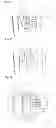
FIG. 1 is a perspective view illustrating a state in which a flexible printed circuit board (FPCB) and wires are connected to each other by soldering;
FIG. 2 is a perspective view illustrating a state in which a connector is formed by a molding member, at a position where the FPCB and the wires of FIG. 1 are soldered; and
FIG. 3 is a perspective view illustrating a state in which the connector is connected to a base of a camera module for a vehicle.
BEST MODE FOR CARRYING OUT THE INVENTION
Hereinafter, a cable connection structure of a camera module for a vehicle according to the present invention will be described with reference to the accompanying drawings.
As shown in FIGS. 1 to 3, the cable connection structure of the camera module for the vehicle according to the present invention includes a cable unit 10, a flexible printed circuit board (FPCB) 20, and a connector 30.
Referring to FIG. 1, the cable unit 10 includes at least four wire members 11 therein, each of the wire members 11 individually having a sheath. A wire metal piece 11a of each wire member 11 is exposed at an end of the wire member 11 for the purpose of connection. In order to prevent impurities including water from entering the wire members 11, all the wire members 11 of the cable unit 10 have external sheaths that are formed of a thermal shrinkage cable or the like.
In order to prevent separation of the connector 30 that will be described below in detail, a separation preventing rib 15 is provided at a position near the end of the cable unit 10 in such a way as to protrude outwards from an outer circumference thereof. Operation of the separation preventing rib 15 will be described again later.
The FPCB 20 is made of a flexible material, and has a plurality of wiring circuits therein. The respective wiring circuits are conductively connected to the wire members 11 of the cable unit 10 to transceive power and signals with the wire members 11. The FPCB includes a plurality of terminals 21 on one end thereof, and a connecting portion 22 on the other end thereof. The terminals 21 are joined to the wire metal pieces 11a exposed at ends of the wire members 11 by soldering S. The connecting portion 22 is connected to a connector of the camera module for the vehicle (not shown).
The connecting portion 22 may be embodied in various types. According to the preferred embodiment of the present invention, it is preferable that the connecting portion 22 comprise a ZIP connector. Since the ZIP connector is small in volume for connection and enables connection and disconnection through snap fitting, the ZIP connector is suitable for connection of the terminals of the FPCB.
The connector 30 functions to seal a joining portion between the cable unit 10 and the FPCB 20. As shown in FIG. 2, the connector 30 is configured so that a soldering portion between the FPCB 20 and the cable unit 10 is located in a mold. Thereby, after molding is formed, only the connecting portion 22 of the FPCB 20 is exposed at one end of the connector 30, and only a sheath of the cable unit 10 is exposed at the other end. Such a configuration prevents the terminals 21 undergoing the soldering operation from being exposed to an outside, thus preventing a short-circuit or a malfunction from occurring due to an inflow of water or contaminants.
Meanwhile, as shown in FIG. 2, the separation preventing rib 15 protruding from the cable unit 10 is configured to be located in the mold together with the joining portion between the cable unit 10 and the FPCB 20 when the connector 30 is formed, thus allowing the separation preventing rib 15 to be positioned in the connector 30. The separation preventing rib 15 can prevent the connector 30 from being separated from the cable unit 10, even if the connector 30 is subjected to a force in a longitudinal direction of the cable unit 10.
A coupling groove 31 having a predetermined depth is provided along an outer circumference of the connector 30. The coupling groove 31 is used to couple the connector 30 with a cover member 40 that is assembled with an external housing (not shown) of the camera module. The cover member 40 may be made of any one of soft resin, rubber, and silicone rubber. The cover member 40 may have on an end thereof a screw hole 41 to which a screw is fastened. Preferably, the cover member 40 takes a shape of a cup having an opening 40a at a position corresponding to the external housing so that the cover member 40 is assembled with the external housing (not shown).
As described above, the present invention obviates the necessity of inserting the separate sealing member such as the O-ring to provide a waterproof structure in cable connecting and fixing operation, thus simplifying an assembly operation, and eliminates operation of manually installing the sealing member and the fixing unit, thus improving productivity owing to process automation.
Further, since the molded connector 30 for connecting the cable unit 10 with the FPCB 20 is manufactured as a single part, the number of parts is reduced and a reduction in manufacturing cost is achieved.
Further, since it has only to snap-fit the connecting portion, provided on the end of the FPCB 20 and comprising the ZIP connector 22, into the camera module, the assembly is convenient.
Although the preferred embodiments of the present invention have been disclosed for illustrative purposes, those skilled in the art will appreciate that various modifications, additions and substitutions are possible, without departing from the scope and spirit of the invention as disclosed in the accompanying claims.
INDUSTRIAL APPLICABILITY
As described above, the present invention provides a cable connection structure of a camera module for a vehicle, which can be applied to a cable connection structure of electronic equipment installed at a position frequently exposed to contaminants, such as water or dust.
Claims
1. A cable connection structure of a camera module for a vehicle, comprising:
a cable unit having at least one wire member;
a flexible printed circuit board (FPCB) having a terminal on one end thereof and having a connecting portion on the other end, the terminal being soldered to a wire metal piece exposed at an end of the wire member and having a number corresponding to a number of the wire member, the connecting portion being connected to the camera module; and
a molded connector surrounding a joining portion between the cable unit and the FPCB.
2. The cable connection structure as set forth in claim 1, wherein the cable unit includes a separation preventing rib protruding from an outer circumference thereof to a predetermined height so as to prevent separation of the molded connector.
3. The cable connection structure as set forth in claim 1, wherein the molded connector includes on an outer circumference thereof a coupling groove to be coupled to a cover member that is coupled to an external housing of the camera module.
4. The cable connection structure as set forth in claim 3, wherein the cover member is made of any one of soft resin, rubber, and silicone rubber.
5. The cable connection structure as set forth in claim 1, wherein the connecting portion comprises a ZIP connector.
Images & Drawings included:

Sources:
- United States Patent and Trademark Office - verify current appl. status at the USPTO↗
Recent applications in this class:
- » 20240291172 2024-08-29
VEHICULAR GLASS MODULE - » 20240047898 2024-02-08
Contacts and Connectors - » 20230060577 2023-03-02
Connection structure and manufacturing method therefor - » 20220263253 2022-08-18
Cable assembly - » 20210159612 2021-05-27
TERMINAL JOINING STRUCTURE - » 20200185839 2020-06-11
Disk having an electric connecting element - » 20190296451 2019-09-26
Method for manufacturing electrical connection assembly - » 20190207327 2019-07-04
Circuit board and card - » 20190207326 2019-07-04
Electrical connector including an insulation body and contacts - » 20190148843 2019-05-16
Terminal-equipped electric wire, and terminal
Recent applications for this Assignee:
- » 20250286443 2025-09-11
MOTOR - » 20250286280 2025-09-11
ANTENNA SUBSTRATE - » 20250284091 2025-09-11
LENS DRIVING APPARATUS, CAMERA MODULE, AND OPTICAL DEVICE - » 20250284090 2025-09-11
LENS DRIVING DEVICE, AND CAMERA MODULE AND OPTICAL DEVICE INCLUDING SAME - » 20250282381 2025-09-11
SYSTEM, METHOD, AND COMPUTER PROGRAM PRODUCT FOR DYNAMIC DETECTION THRESHOLD FOR LIDAR OF AN AUTONOMOUS VEHICLE - » 20250282244 2025-09-11
DEVICE AND METHOD FOR CHARGING ELECTRIC VEHICLE WITH DIFFERENT CHARGING STANDARDS - » 20250276601 2025-09-04
DEVICE AND METHOD FOR CHARGING ELECTRIC VEHICLE WITH DIFFERENT CHARGING STANDARDS - » 20250267369 2025-08-21
CAMERA MODULE AND OPTICAL DEVICE INCLUDING THE SAME CAPABLE OF PERFORMING ACCURATE OIS FEEDBACK OPERATION - » 20250267352 2025-08-21
CAMERA MODULE - » 20250264694 2025-08-21
OPTICAL SYSTEM AND CAMERA MODULE INCLUDING SAME