Shielding electrical connector and method of making the same
US20140179160A1
2014-06-26
14/140,584
2013-12-26
✅ Patent granted
US 9,263,841 B2
2016-02-16
-
-
James Harvey | Oscar C Jimenez
Wei Te Chung | Ming Chieh Chang
2033-12-26
Abstract:
An electrical connector includes a seat having a signal contact receiving slot and a grounding contact receiving slot, and a signal contact and a grounding contact retained therein. The seat includes a first insulating member and a second insulating member surrounding the first insulating member, wherein the grounding contact receiving slot is defined on the first insulating member, the first insulating member further includes a through hole substantially parallel to the grounding contact receiving slot, a shielding member is defined on at least the inner surfaces of the grounding contact receiving slot and the through hole, the second insulating member includes a column formed into the through hole, the signal contact receiving slot is defined on the column of the second insulating member.
Inventors:
- YEN-CHIH CHANG 56 🇹🇼 New Taipei, Taiwan
- KE-HAO CHEN 32 🇹🇼 New Taipei, Taiwan
- TZU-YAO HWANG 47 🇹🇼 New Taipei, Taiwan
Assignee:
- HON HAI PRECISION INDUSTRY CO., LTD. 10,014 🇹🇼 New Taipei, Taiwan
Applicant:
Interested in similar patents?
Get notified when new applications in this technology area are published.
Classification:
H01R13/658 » CPC main
Details of coupling devices of the kinds covered by groups or -; Protective earth or shield arrangements on coupling devices, e.g. anti-static shielding High frequency shielding arrangements, e.g. against EMI [Electro-Magnetic Interference] or EMP [Electro-Magnetic Pulse]
H01R43/24 » CPC main
Apparatus or processes specially adapted for manufacturing, assembling, maintaining, or repairing of line connectors or current collectors or for joining electric conductors for assembling or disassembling contact members with insulating base, case or sleeve Assembling by moulding on contact members
H01R13/6599 » CPC further
Details of coupling devices of the kinds covered by groups or -; Protective earth or shield arrangements on coupling devices, e.g. anti-static shielding ; High frequency shielding arrangements, e.g. against EMI [Electro-Magnetic Interference] or EMP [Electro-Magnetic Pulse]; Shield material Dielectric material made conductive, e.g. plastic material coated with metal
H01R43/18 » CPC further
Apparatus or processes specially adapted for manufacturing, assembling, maintaining, or repairing of line connectors or current collectors or for joining electric conductors for manufacturing bases or cases for contact members
H01R12/57 » CPC further
Structural associations of a plurality of mutually-insulated electrical connecting elements, specially adapted for printed circuits, e.g. printed circuit boards [PCBs], flat or ribbon cables, or like generally planar structures, e.g. terminal strips, terminal blocks; Coupling devices specially adapted for printed circuits, flat or ribbon cables, or like generally planar structures; Terminals specially adapted for contact with, or insertion into, printed circuits, flat or ribbon cables, or like generally planar structures; Fixed connections for rigid printed circuits or like structures characterised by the terminals surface mounting terminals
H01R13/2421 » CPC further
Details of coupling devices of the kinds covered by groups or -; Contact members; Contacts for co-operating by abutting resilient; resiliently-mounted characterized by the resilient means using coil springs
H01R13/6588 » CPC further
Details of coupling devices of the kinds covered by groups or -; Protective earth or shield arrangements on coupling devices, e.g. anti-static shielding ; High frequency shielding arrangements, e.g. against EMI [Electro-Magnetic Interference] or EMP [Electro-Magnetic Pulse]; Shield structure; Shielding material individually surrounding or interposed between mutually spaced contacts with through openings for individual contacts
Y10T29/49208 » CPC further
Metal working; Method of mechanical manufacture; Electrical device making; Conductor or circuit manufacturing; Contact or terminal manufacturing by assembling plural parts
H01R13/504 » CPC further
Details of coupling devices of the kinds covered by groups or -; Bases; Cases composed of different pieces different pieces being moulded, cemented, welded, e.g. ultrasonic, or swaged together
H01R13/24 IPC
Details of coupling devices of the kinds covered by groups or -; Contact members; Contacts for co-operating by abutting resilient; resiliently-mounted
Description
BACKGROUND OF THE INVENTION
1. Field of the Invention
The present disclosure relates to an electrical connector, and more particularly to a shielding electrical connector having an improved shielding effect and easy to be manufactured.
2. Description of the Related Art
Various electrical connectors are widely used in computer and other electronic devices. An electrical connector for electrically connecting a Central Processing Unit (CPU) to a Printed Circuit Board (PCB) typically comprises an insulating housing and a plurality of contacts retained therein. The contacts connect the CPU and the PCB so as to establish an electrical connection therebetween. However with rapid increasing of the amount and speed of the data transmitted by the contacts, the arrangement density of the contacts increases and the Electro Magnetic Interference (EMI) between the contacts becomes more and more serious. Therefore, an electrical connector with shielding member around the contacts is provided.
For example, U.S. Pat. No. 8,167,652 issued to Ju on May 1, 2012 discloses a shielding electrical connector. The electrical connector comprises an insulating body defining a plurality of receiving slots and a plurality of terminals received in the receiving slots, wherein a shielding body is formed on the inner surface of the receiving slot by physical-plating and an insulating paint layer is formed on the shielding body by immersing, spraying or coating to isolate the terminals and the shielding body. However as the insulating paint layer is formed on the shielding body by immersing, spraying or coating, the insulating paint layer is very thin and easy to be punctured by the terminal. While if the insulating paint layer is formed thicker, it affects the dimension of the receiving slot, and it is difficult for the assembling of the terminals.
In view of the above, an improved electrical connector is desired to overcome the problems mentioned above.
SUMMARY OF THE INVENTION
Accordingly, an object of the present disclosure is to provide an electrical connector having an improved shielding effect and easy to be manufactured.
In order to achieve the object set forth, an electrical connector comprising a seat having a signal contact receiving slot and a grounding contact receiving slot, and a signal contact and a grounding contact retained therein is provided. The seat comprises a first insulating member and a second insulating member surrounding the first insulating member, wherein the grounding contact receiving slot is defined on the first insulating member, the first insulating member further includes a through hole substantially parallel to the grounding contact receiving slot, a shielding member is defined on at least the inner surfaces of the grounding contact receiving slot and the through hole, the second insulating member includes a column formed into the through hole, the signal contact receiving slot is defined on the column of the second insulating member.
BRIEF DESCRIPTION OF THE DRAWINGS
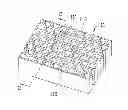
FIG. 1 is a perspective view of a first insulating member in accordance with a preferred embodiment of the present disclosure;
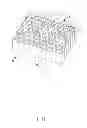
FIG. 2 is a perspective, sectional view of the first insulating member shown in FIG. 1 along line 2-2;
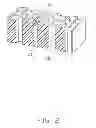
FIG. 3 is a view similar to the FIG. 2, wherein the first insulating member is coated by a shielding member;
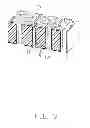
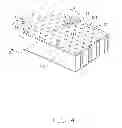
FIG. 4 is a perspective view of the electrical connector in accordance with the preferred embodiment of the present disclosure;
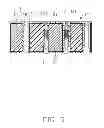
FIG. 5 is a cross sectional view of the electrical connector shown in
FIG. 4 along line 5-5.
DESCRIPTION OF PREFERRED EMBODIMENT
Reference will now be made to the drawings to describe the present disclosure in detail.
FIGS. 1 to 5 show an electrical connector 100 in accordance with a preferred embodiment of the present disclosure. The electrical connector 100 comprises a seat 1, a plurality of signal contacts 3 retained in the seat 1, at least one grounding contact 2 retained in the seat 1, and a plurality of solder balls 4.
Referring to FIG. 4 and FIG. 5, the seat 1 comprises a first insulating member 11 and a second insulating member 12. The first insulating member 11 defines a plurality of grounding contact receiving slots 111 for receiving the grounding contact 2 and a plurality of through holes 112 surrounding the grounding contact receiving slots 111. The inner surfaces of the grounding contact receiving slots 111 and the through holes 112 are coated by shielding members 13. The second insulating member 12 is formed on the first insulating member 11 by injection molding process and comprises a plurality of columns 122 formed in the through holes 112 of the first insulating member 11. Each of the columns 122 comprises a signal contact receiving slot 121 for receiving the signal contact 3. The signal contact receiving slot 121 has the same structure with the grounding contact receiving slot 111 while the signal contact 3 is the same with the grounding contact 2 for non-distinctive assembling. The grounding contact 2 is received in the grounding contact receiving slot 111 and contacts the shielding member 13 while the signal contact 3 is received in the signal contact receiving slot 121 and disconnects the shielding member 13.
Referring to FIG. 1 to FIG. 4, the manufacturing process of the electrical connector 100 will be described as follows. Firstly, form the first insulating member 11 by first injection molding process. The first insulating member 11 comprises at least a grounding contact receiving slot 111 and a plurality of through holes 112. The dimension of the through hole 112 is larger than the dimension of the grounding contact receiving slot 111 in a horizontal direction. The first insulating member 11 comprises at least a protrusion 110 corresponding to the grounding contact receiving slot 111. Secondly, the first insulating member 11 is coated by the shielding member 13. The inner surface of the grounding contact receiving slot 111, the inner surface of the through holes 112 and other surfaces of the first insulating member 11 are coated by the shielding member 13. Thirdly, form the second insulating member 12 on the first insulating member 11 by second injection molding process. The second insulating member 12 is coated on the surface except the inner surface of the grounding contact receiving slot 111 of the first insulating member 11 and forms a top surface 120 of the seat 1. The top surface of the protrusion 110 and the top surface 120 of the seat 1 are coplanar. The second insulating member 12 comprises a plurality of columns 122 formed in the through holes 112 of the first insulating member 11. The column 122 being in a tubular form, comprises a signal contact receiving slot 121 for receiving the signal contact 3. Finally, assemble the grounding contact 2 and the signal contact 3 into the grounding contact receiving slot 111 and the signal contact receiving slot 121 correspondingly. The grounding contact 2 electrically contacts the shielding member 13 on the inner surface of the grounding contact receiving slot 111 while the signal contact 3 is isolated from the shielding member by the column 122.
In the preferred embodiment of the present disclosure as described above, the electrical connector 100 is formed by twice injection molding process and a plating process. The shielding member 13 is defined on at least the inner surface of the grounding contact receiving slot 111 and the inner surface of the through hole 112. The shielding member 13 defined on the inner surface of the through hole 112 surrounds the signal contact receiving slot 121 and isolates from the signal contact 3 by the column 122. Therefore, the signal contact 3 can be well shielded and the risk of shorting the shielding member 13 can be avoided. Alternately, another embodiment may have the second insulating member 12 be in a straight form and insert-molded or pre-assembled with the corresponding signal contact 3 as a sub-assembly and commonly inserted, in an interference fit, into the corresponding through hole 112, which is already coated with the shielding member 13, for finalize the whole connector assembly.
Although the present invention has been described with reference to particular embodiments, it is not to be construed as being limited thereto. Various alterations and modifications can be made to the embodiments without in any way departing from the scope or spirit of the present invention as defined in the appended claims.
Claims
What is claimed is:1. An electrical connector for electrically connecting a central processing unit (CPU) to a printed circuit board (PCB), comprising:
a signal contact;
a grounding contact; and
a seat comprising a signal contact receiving slot and a grounding contact receiving slot, the seat comprising a first insulating member and a second insulating member surrounding the first insulating member; wherein
the grounding contact receiving slot is defined on the first insulating member, the first insulating member further comprises a through hole substantially parallel to the grounding contact receiving slot, a shielding member is defined on at least the inner surfaces of the grounding contact receiving slot and the through hole, the second insulating member comprises a column formed into the through hole, the signal contact receiving slot is defined on the column of the second insulating member, and wherein the grounding contact is received in the grounding contact receiving slot and contacts the shielding member while the signal contact is received in the signal contact receiving slot and isolated from the shielding member.
2. The electrical connector as claimed in claim 1, wherein the shielding member is formed by plating.
3. The electrical connector as claimed in claim 1, wherein the structure of the signal contact is the same with the grounding contact, the shape of the signal contact receiving slot is the same with the grounding contact receiving slot.
4. The electrical connector as claimed in claim 1, wherein the first insulating member comprises a protrusion corresponding to the grounding contact receiving slot, the shielding member is further defined on a top surface of the protrusion.
5. The electrical connector as claimed in claim 4, wherein the second insulating member forms a top surface of the seat, the top surface of the seat is coplanar with the top surface of the protrusion.
6. The electrical connector as claimed in claim 5, wherein the first insulating member is fully covered by the second insulating member except the top surface of the protrusion and the inner surface of the grounding contact receiving slot.
7. The electrical connector as claimed in claim 1, wherein the first insulating member is covered by the shielding member completely.
8. The electrical connector as claimed in claim 1, wherein the seat comprises more signal contact receiving slots than grounding contact receiving slots.
9. The electrical connector as claimed in claim 1, wherein the second insulating member is insert-molded within the first insulating member.
10. A method for making an electrical connector, comprising the steps of:
forming a first insulating member by injection molding process, the first insulating member comprising a plurality of grounding contact receiving slots and a plurality of through holes;
forming a shielding member onto the first insulating member by plating process, the shielding member defined on at least the inner surface of the grounding contact receiving slots and the inner surface of the through holes;
forming a second insulating member on at least the shielding member of the through hole, the second insulating member comprising a plurality of columns formed into the through holes of the first insulating member, each of the columns comprising a signal contact receiving slot;
assembling grounding contacts into the grounding contact receiving slots and signal contacts into the signal contact receiving slots, the grounding contacts connect the shielding member while the signal contact is isolated from the shielding member by the column.
11. The method as claimed in claim 10, wherein the signal contact has the same structure with the grounding contact while the signal contact receiving slot has the same shape with the grounding contact receiving slot.
12. The method as claimed in claim 10, wherein the first insulating member comprises a protrusion corresponding to the grounding contact receiving slot, the shielding member is further defined on the protrusion.
13. The method as claimed in claim 12, wherein the second insulating member surrounds the first insulating member and forms a top surface, the protrusion of the first insulating member is coplanar with the top surface of the second insulating member.
14. The method as claimed in claim 10, wherein the first insulating member is coated by the shielding member completely.
15. The method as claimed in claim 10, wherein the dimension of the through hole is larger than the dimension of the grounding contact receiving slot and capable of accommodating the grounding contact receiving slot.
16. An electrical connector comprising:
a seat including a first insulating member and a second insulating member, said first insulating member defining a plurality of through holes extending therethrough in a vertical direction;
a shielding layer coated upon an interior surface of each of the through holes;
a second insulating member including a plurality of columnar bodies each with a corresponding signal contact disposed into the corresponding through hole and upon the corresponding coated interior surface of the corresponding through hole; wherein
each of said columnar bodies defines a tubular structure in the corresponding through hole, and a thickness of said tubular structure is dimensioned much larger than a so-called layer by coating for efficiently holding the corresponding signal contact therein.
17. The electrical connector as claimed in claim 16, wherein the first insulating member further includes a plurality of grounding contact receiving slots with said shielding layer coated upon an interior surface of each of said grounding contact receiving slots, and a plurality of grounding contacts are disposed in the corresponding grounding contact receiving slots, respectively.
18. The electrical connector as claimed in claim 17, wherein the through hole is dimensioned transversely larger than the grounding contact receiving slot.
19. The electrical connector as claimed in claim 16, wherein the columnar body is pre-assembled with the corresponding signal contact as a subassembly before commonly inserted into the corresponding coated through hole.
20. The electrical connector as claimed in claim 19, wherein said signal contact is fixed to the corresponding columnar body via an insert molding process.
Images & Drawings included:
Sources:
- United States Patent and Trademark Office - verify current appl. status at the USPTO↗
Similar patent applications:
- » 20140357121
Shielding electrical connector and method of making the same - » 11788521
Shielded electric connector and cable assembly and method for making same - » 20220255278
Method of making electrical connector having upper and lower contacts from a first carrier and two discrete middle shielding plates from a second carrier
Recent applications in this class:
- » 20250293465 2025-09-18
CABLE CONNECTOR - » 20240063583 2024-02-22
ELECTRIC CONNECTOR - » 20230307877 2023-09-28
Connector having a grounding member - » 20210194186 2021-06-24
Connector having a connector body conductive member - » 20210194185 2021-06-24
CONNECTOR HAVING A GROUNDING MEMBER - » 20210194184 2021-06-24
CONNECTOR HAVING A GROUNDING MEMBER - » 20200153168 2020-05-14
Connector having a grounding member - » 20190273343 2019-09-05
GROUNDING CONNECTION ELEMENT FOR SHIELDING ELECTRICAL COMPONENTS WHICH ARE ARRANGED IN PLASTIC HOUSINGS, AS WELL AS METHOD FOR ITS INSTALLATION - » 20190131744 2019-05-02
High-voltage interlock system - » 20190103710 2019-04-04
Connector having a grounding member
Recent applications for this Assignee:
- » 20250218287 2025-07-03
METHOD OF GENERATING AND PROMPTING TRAFFIC INFORMATION, AND ROADSIDE DEVICE THEREOF - » 20250178535 2025-06-05
METHOD FOR CONSTRUCTING 3D PANORAMIC VIEW MODEL, VEHICLE-MOUNTED DEVICE, AND STORAGE MEDIUM - » 20250074444 2025-03-06
METHOD FOR EARLY WARNING A BLIND AREA, ELECTRONIC DEVICE AND STORAGE MEDIUM - » 20240416754 2024-12-19
DISPLAY CONTROL DEVICE, DISPLAY EQUIPMENT, AND VEHICLE EMPLOYING DEVICE - » 20240411051 2024-12-12
Light-emitting device array and optical transceiver system having the same - » 20240324114 2024-09-26
DISPLAY CONTROL DEVICE AND VEHICLE EMPLOYING DEVICE - » 20240295957 2024-09-05
METHOD FOR CONTROLLING ELECTRONIC DEVICE, ELECTRONIC DEVICE AND COMPUTER STROAGE MEDIUM EMPLOYING METHOD - » 20240257357 2024-08-01
METHOD FOR DETECTING OBSTACLES, ELECTRONIC DEVICE, AND STORAGE MEDIUM - » 20240203133 2024-06-20
LANE LINE RECOGNITION METHOD, ELECTRONIC DEVICE AND STORAGE MEDIUM - » 20240194999 2024-06-13
Robot using limiting device for locking battery