Method and nanocomposite for treating wastewater
US20140183138A1
2014-07-03
13/730,571
2012-12-28
✅ Patent granted
US 9,156,021 B2
2015-10-13
-
-
David A Reifsnyder
Richard C Litman
2034-02-11
Abstract:
The method and nanocomposite for treating wastewater provides a method of treating aniline-containing wastewater with a magnetic nanocomposite. Nickel nitrate, iron nitrate and citric acid are dissolved in deionized water to form a metal nitrate and citric acid solution, which is then pH balanced. The pH balanced solution is then heated to form a gel, which is then ignited to form powdered NiFe2O4. Nanoparticles of the powdered NiFe2O4 combustion product are then mixed with multi-walled carbon nanotubes to form a magnetic nanocomposite, such that the magnetic nanocomposite includes approximately 75 wt % of the multi-walled carbon nanotubes and approximately 25 wt % of the NiFe2O4. The magnetic nanocomposite may then be mixed into a volume of aniline-containing wastewater for adsorption of the aniline by the nanocomposite. A magnetic field is then applied to the mixture to magnetically separate the magnetic nanocomposite and the adsorbed aniline from the wastewater.
Inventors:
- MOHAMED ABDEL SALAM 6 🇸🇦 JEDDAH, Saudi Arabia
- MOHAMED A. GABAL 1 🇸🇦 JEDDAH, Saudi Arabia
- ABDULLAH Y. OBAID 2 🇸🇦 JEDDAH, Saudi Arabia
Assignee:
- KING ABDULAZIZ UNIVERSITY 524 🇸🇦 JEDDAH, Saudi Arabia
Applicant:
Interested in similar patents?
Get notified when new applications in this technology area are published.
Classification:
C02F1/281 » CPC further
Treatment of water, waste water, or sewage by sorption using inorganic sorbents
B01J20/28009 » CPC main
Solid sorbent compositions or filter aid compositions; Sorbents for chromatography; Processes for preparing, regenerating or reactivating thereof characterised by their form or physical properties characterised by their physical properties Magnetic properties
B01J20/28 IPC
Solid sorbent compositions or filter aid compositions; Sorbents for chromatography; Processes for preparing, regenerating or reactivating thereof characterised by their form or physical properties
C02F1/28 IPC
Treatment of water, waste water, or sewage by sorption
B01J20/205 » CPC further
Solid sorbent compositions or filter aid compositions; Sorbents for chromatography; Processes for preparing, regenerating or reactivating thereof comprising inorganic material comprising free carbon; comprising carbon obtained by carbonising processes Carbon nanostructures, e.g. nanotubes, nanohorns, nanocones, nanoballs
B01J20/0225 » CPC further
Solid sorbent compositions or filter aid compositions; Sorbents for chromatography; Processes for preparing, regenerating or reactivating thereof comprising inorganic material comprising compounds of metals not provided for in Compounds of Fe, Ru, Os, Co, Rh, Ir, Ni, Pd, Pt
B01J20/0229 » CPC further
Solid sorbent compositions or filter aid compositions; Sorbents for chromatography; Processes for preparing, regenerating or reactivating thereof comprising inorganic material comprising compounds of metals not provided for in; Compounds of Fe, Ru, Os, Co, Rh, Ir, Ni, Pd, Pt Compounds of Fe
B01J20/02 IPC
Solid sorbent compositions or filter aid compositions; Sorbents for chromatography; Processes for preparing, regenerating or reactivating thereof comprising inorganic material
B01J20/3078 » CPC further
Solid sorbent compositions or filter aid compositions; Sorbents for chromatography; Processes for preparing, regenerating or reactivating thereof; Processes for preparing, regenerating, or reactivating Thermal treatment, e.g. calcining or pyrolizing
C02F1/283 » CPC further
Treatment of water, waste water, or sewage by sorption using coal, charred products, or inorganic mixtures containing them
B01J2220/42 » CPC further
Aspects relating to sorbent materials; Aspects relating to the composition of sorbent or filter aid materials Materials comprising a mixture of inorganic materials
C02F1/488 » CPC further
Treatment of water, waste water, or sewage with magnetic or electric fields for separation of magnetic materials, e.g. magnetic flocculation
C02F2101/38 » CPC further
Nature of the contaminant; Organic compounds containing nitrogen
C02F2305/08 » CPC further
Use of specific compounds during water treatment Nanoparticles or nanotubes
B01J20/30 IPC
Solid sorbent compositions or filter aid compositions; Sorbents for chromatography; Processes for preparing, regenerating or reactivating thereof Processes for preparing, regenerating, or reactivating
B01J20/06 » CPC further
Solid sorbent compositions or filter aid compositions; Sorbents for chromatography; Processes for preparing, regenerating or reactivating thereof comprising inorganic material comprising oxides or hydroxides of metals not provided for in group
B01J20/20 IPC
Solid sorbent compositions or filter aid compositions; Sorbents for chromatography; Processes for preparing, regenerating or reactivating thereof comprising inorganic material comprising free carbon; comprising carbon obtained by carbonising processes
C02F1/48 IPC
Treatment of water, waste water, or sewage with magnetic or electric fields
Description
BACKGROUND OF THE INVENTION
1. Field of the Invention
The present invention relates to compositions for treating wastewater, and particularly to a method and nanocomposite for treating wastewater, the nanocomposite being a mixture of multi-wall carbon nanotubes and ferrite nanoparticles.
2. Description of the Related Art
Due to a wide variety of manufacturing processes, contaminated wastewater has become a great concern, not only to the environment, but as a potential toxin for both human and animal life which may be exposed to the wastewater. Aniline is a particularly toxic byproduct often found in wastewater. Aniline-containing wastewater is presently treated using photo-decomposition, electrolysis, adsorption, oxidation, biodegradation, and combinations of these processes. Each, however, is relatively inefficient and is costly, both in terms of resources and financial costs.
There is great interest in the use of multi-walled carbon nanotubes for the removal of pollutants from water. However, the formation of multi-walled carbon nanotubes composites can be difficult, and the removal thereof from the water being treated is also quite difficult. Magnetic separation is an efficient process for the removal of nanocomposites from water, as well as pollutants seeded with a magnetic material such as magnetite (Fe3O4), using a high gradient magnetic separator. Thus, it would be desirable to provide a nanocomposite with magnetic properties, and which also efficiently adsorbs organic matter, such as aniline, from wastewater.
Thus, a method and nanocomposite for treating wastewater solving the aforementioned problems is desired.
SUMMARY OF THE INVENTION
The method and nanocomposite for treating wastewater relates to a method of treating wastewater containing organic matter with a magnetic nanocomposite and a method of making the magnetic nanocomposite. In order to make the magnetic nanocomposite, nickel nitrate, iron nitrate and citric acid are dissolved in deionized water to form a metal nitrate and citric acid solution. An ammonia solution is selectively added to the nitrate and citric acid solution to form a pH balanced solution having a pH of 7.0. The pH balanced solution is then heated to form a gel, which is dried and then ignited to form a powdered NiFe2O4 combustion product. The powdered NiFe2O4 combustion product is then mixed with multi-walled carbon nanotubes to form a magnetic nanocomposite, such that the magnetic nanocomposite includes approximately 75 wt % of the multi-walled carbon nanotubes and approximately 25 wt % of the NiFe2O4.
The magnetic nanocomposite may then be mixed into a volume of aniline-containing wastewater for adsorption of the aniline by the nanocomposite. A magnetic field is then applied to the mixture to magnetically separate the magnetic nanocomposite and the adsorbed aniline from the wastewater, and the magnetic nanocomposite and the adsorbed aniline may then be easily removed from the wastewater.
These and other features of the present invention will become readily apparent upon further review of the following specification and drawings.
BRIEF DESCRIPTION OF THE DRAWINGS
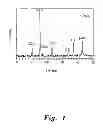
FIG. 1 is an X-ray diffraction plot of a NiFe2O4 precursor of a nanocomposite for treating wastewater according to the present invention.
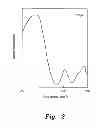
FIG. 2 is a Fourier transform infrared spectroscopy transmittance graph of the NiFe2O4 precursor of FIG. 1.
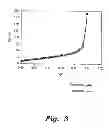
FIG. 3 illustrates a surface area analysis for the nanocomposite for treating wastewater according to the present invention.
FIG. 4 is a graph illustrating aniline removal from wastewater as a function of added magnetic nanocomposite mass in a method for treating wastewater according to the present invention.
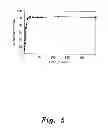
FIG. 5 is a graph illustrating aniline removal from wastewater by the magnetic nanocomposite as a function of exposure time in a method for treating wastewater according to the present invention.
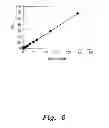
FIG. 6 is a pseudo-second-order plot illustrating the adsorption of the aniline by the magnetic nanocomposite as a function of time in a method for treating wastewater according to the present invention.
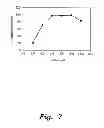
FIG. 7 is a graph illustrating aniline removal from the wastewater by the magnetic nanocomposite as a function of solution pH in a method for treating wastewater according to the present invention.
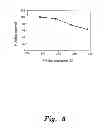
FIG. 8 is a graph illustrating aniline removal from the wastewater by the magnetic nanocomposite as a function of solution temperature in a method for treating wastewater according to the present invention.
Similar reference characters denote corresponding features consistently throughout the attached drawings.
DETAILED DESCRIPTION OF THE PREFERRED EMBODIMENTS
The method and nanocomposite for treating wastewater relates to a method of treating aniline-containing wastewater with a magnetic nanocomposite, to the nanocomposite, and to a method of making the magnetic nanocomposite. The nanocomposite includes nanoparticles of magnetite (NiFe2O4), which are made by a sol gel process. In order to make the magnetic nanocomposite, nickel nitrate [Ni(NO3)2.6H2O], iron nitrate [Fe(NO3)2.9H2O] and citric acid (C6H8O7.H2O) are dissolved in deionized water to form a metal nitrate and citric acid solution. The metal nitrates and the citric acid are provided in a 1:1 molar ratio.
An ammonia solution is selectively added to the metal nitrate and citric acid solution to form a pH balanced solution having a pH of 7.0. The pH balanced solution is then heated at a temperature of approximately 80° C. to form a gel, which is dried and then ignited to form a powdered NiFe2O4 combustion product. When the dried gel is ignited at any point, the combustion rapidly propagates forward and is left to completely combust, forming a loose powder of nanoparticle size. Preferably, complete ignition is performed in a muffle furnace at a temperature of approximately 700° C. Complete combustion is found to take approximately two hours. FIG. 1 is an X-ray diffraction plot of the prepared NiFe2O4. FIG. 2 illustrates the relative transmittance of the NiFe2O4 via Fourier transform infrared spectroscopy (FTIR).
The powdered NiFe2O4 combustion product is then thoroughly mixed with multi-walled carbon nanotubes to form a magnetic nanocomposite, such that the magnetic nanocomposite is a homogenous mixture including approximately 75 wt % of the multi-walled carbon nanotubes and approximately 25 wt % of the NiFe2O4.
The magnetic nanocomposite may then be mixed into a volume of aniline-containing wastewater for adsorption of the aniline by the magnetic nanocomposite. A magnetic field is then applied to the mixture to magnetically separate the magnetic nanocomposite and the adsorbed aniline from the wastewater, and the magnetic nanocomposite and the adsorbed aniline may then be easily removed from the wastewater.
The NiFe2O4 on its own has a saturation magnetization of 30.2 EMU per gram, a remanent magnetization of 11.70 EMU per gram, and a magnetic coercivity of 162 Oe (measured by a vibrating sample magnetometer). The multi-walled carbon nanotubes, on their own, have a saturation magnetization of 0.1 EMU per gram, a remanent magnetization of 0.04 EMU per gram, and a magnetic coercivity of 68 Oe. The mixed nanocomposite has a saturation magnetization of 3.2 EMU per gram, a remanent magnetization of 1.15 EMU per gram, and a magnetic coercivity of 164 Oe.
FIG. 3 illustrates a surface area analysis for the mixed magnetic nanocomposite, and FIG. 4 illustrates the effect of the mixed magnetic nanocomposite mass on the aniline removal from the wastewater. FIG. 5 shows the effect of contact time on the removal of aniline from the wastewater, showing that most of the aniline is removed after only approximately 20 minutes of exposure. FIG. 6 is a pseudo-second-order plot illustrating the adsorption of the aniline by the magnetic nanocomposite as a function of time. FIG. 7 shows the effect of solution pH on the removal of aniline from the wastewater by the magnetic nanocomposite. FIG. 8 illustrates the effectiveness of aniline removal from the wastewater as a function of temperature.
It is to be understood that the present invention is not limited to the embodiments described above, but encompasses any and all embodiments within the scope of the following claims.
Claims
I claim:1. A method of making a magnetic nanocomposite, comprising the steps of:
dissolving nickel nitrate, iron nitrate and citric acid in deionized water to form a metal nitrate and citric acid solution;
selectively adding an ammonia solution to the metal nitrate and citric acid solution to form a pH balanced solution having a pH of 7.0;
heating the pH balanced solution to form a gel;
igniting the gel to form a powdered NiFe2O4 combustion product of nanoparticle size; and
mixing the powdered NiFe2O4 combustion product with multi-walled carbon nanotubes to form a magnetic nanocomposite having about 75 wt % of the multi-walled carbon nanotubes and about 25 wt % of the NiFe2O4.
2. The method of making a magnetic nanocomposite as recited in claim 1, wherein said step of dissolving the nickel nitrate, the iron nitrate and the citric acid in the deionized water comprises dissolving the metal nitrates and the citric acid in a molar ratio of 1:1 in the deionized water.
3. The method of making a magnetic nanocomposite as recited in claim 2, wherein said step of heating the pH balanced solution comprises heating the pH balanced solution at a temperature of about 80° C.
4. The method of making a magnetic nanocomposite as recited in claim 3, wherein said step of igniting the gel to form the powdered NiFe2O4 combustion product comprises complete ignition of the gel in a furnace at a temperature of about 700° C. for a time period of about two hours.
5. A method of treating aniline-containing wastewater with a magnetic nanocomposite, comprising the steps of:
mixing a magnetic nanocomposite into aniline-containing wastewater, the magnetic nanocomposite being about 75 wt % of multi-walled carbon nanotubes and about 25 wt % nanoparticles of NiFe2O4, whereby said magnetic nanocomposite adsorbs aniline from the aniline-containing wastewater;
applying a magnetic field to the mixture to magnetically separate the magnetic nanocomposite and the adsorbed aniline from the wastewater; and
removing the magnetic nanocomposite and the adsorbed aniline from the wastewater.
6. A nanocomposite for treating wastewater, consisting of a homogenous mixture containing about 75 wt % of multi-walled carbon nanotubes and about 25 wt % nanoparticles of NiFe2O4.
Images & Drawings included:

Sources:
- United States Patent and Trademark Office - verify current appl. status at the USPTO↗
Recent applications in this class:
- » 20240408577 2024-12-12
Wastewater treatment method for aqueous solutions - » 20240408576 2024-12-12
Batch method for wastewater treatment - » 20240408575 2024-12-12
Method for treating an aqueous solution - » 20230415122 2023-12-28
DESALINATION OF WATER USING A COMPLEXING AGENT ATTACHED TO A MAGNETIC NANOPARTICLE - » 20230381743 2023-11-30
METHOD FOR PREPARING HIGHLY POROUS POLYMER PARTICLES FOR DIAGNOSTIC APPLICATIONS - » 20230241583 2023-08-03
SURFACE MOLECULARLY IMPRINTED MAGNETIC NANOMETER MATERIAL OF SALVIANOLIC ACID A, PREPARATION METHOD THEREFOR AND USE THEREOF - » 20230084588 2023-03-16
MAGNETIC NANOPARTICLE COATED POROUS MATERIALS FOR RECOVERY OF CONTAMINANTS - » 20220297086 2022-09-22
Method for preparing an iron oxide particle core composite - » 20220280917 2022-09-08
Method for removing a pollutant from aqueous solution - » 20220097024 2022-03-31
METHOD FOR PREPARING MONOLITHIC COATED SURFACES
Recent applications for this Assignee:
- » 20250282764 2025-09-11
IMIDAZOLE HETEROCYCLE BASED COMPOUNDS AND METHODS OF TREATING CANCER - » 20240383756 2024-11-21
METHOD OF MAKING CARBON NANOTUBE BUNDLES - » 20240247880 2024-07-25
MICROCHANNEL COMPACT HEAT EXCHANGING SYSTEM - » 20240174612 2024-05-30
Benzaldehyde compounds with direct polymer destabilizing effects to treat sickle cell disease - » 20240165813 2024-05-23
System and methods for multi-robotic multi-product U-shaped disassembly line - » 20230293705 2023-09-21
NANOPARTICLES INCLUDING A GLATIRAMOID USEFUL IN POLYNUCLEOTIDE DELIVERY - » 20230255981 2023-08-17
Therapeutic inhibition affinity of copper (II) complex and their diazenyl pyridinone heterocyclic ligands against SARS-CoV2 - » 20230192484 2023-06-22
Method of dry reforming of methane - » 20230147397 2023-05-11
Multi-wall carbon nanotubes catalyst synthesis and use thereof - » 20230017509 2023-01-19
Injectable drug delivery implant composition and method of use thereof