Adhesion improver for amine curing epoxy resin paint
US20140187670A1
2014-07-03
14/065,697
2013-10-29
✅ Patent granted
US 9,822,277 B2
2017-11-21
-
-
Kregg T Brooks
Wenderoth, Lind & Ponack, L.L.P.
2033-10-29
Abstract:
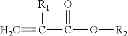
An adhesion improver for amine curing epoxy resin paint which, when added in a small amount to amine curing epoxy resin paint, is capable of preventing the inhibition of adhesion caused by amine blushing and of giving good interlayer adhesion is provided. This adhesion improver is a composition which contains a polymer obtained by the polymerization of (A) acrylic acid ester and/or methacrylic acid ester which has a formula as follows:
- wherein R1 denotes a hydrogen atom or a methyl group, and R2 denotes a branched alkyl group having 3 to 18 carbon atoms,
- and (B) acrylic acid ester other than (A) above and/or methacrylic acid ester other than (A) above and/or vinyl ether.
Assignee:
- KUSUMOTO CHEMICALS, LTD. 15 🇯🇵 Tokyo, Japan
Applicant:
Interested in similar patents?
Get notified when new applications in this technology area are published.
Classification:
C09D163/00 » CPC main
Coating compositions based on epoxy resins; Coating compositions based on derivatives of epoxy resins
C08G59/40 » CPC further
Polycondensates containing more than one epoxy group per molecule ; Macromolecules obtained by polymerising compounds containing more than one epoxy group per molecule using curing agents or catalysts which react with the epoxy groups; Macromolecules obtained by polymerising compounds containing more than one epoxy group per molecule using curing agents or catalysts which react with the epoxy groups ; e.g. general methods of curing characterised by the curing agents used
C08L33/08 » CPC further
Compositions of homopolymers or copolymers of compounds having one or more unsaturated aliphatic radicals, each having only one carbon-to-carbon double bond, and only one being terminated by only one carboxyl radical, or of salts, anhydrides, esters, amides, imides or nitriles thereof; Compositions of derivatives of such polymers; Homopolymers or copolymers of esters of esters containing only carbon, hydrogen and oxygen, which oxygen atoms are present only as part of the carboxyl radical Homopolymers or copolymers of acrylic acid esters
C09D133/08 » CPC further
Coating compositions based on homopolymers or copolymers of compounds having one or more unsaturated aliphatic radicals, each having only one carbon-to-carbon double bond, and at least one being terminated by only one carboxyl radical, or of salts, anhydrides, esters, amides, imides, or nitriles thereof; Coating compositions based on derivatives of such polymers; Homopolymers or copolymers of esters of esters containing only carbon, hydrogen and oxygen, the oxygen atom being present only as part of the carboxyl radical Homopolymers or copolymers of acrylic acid esters
C08L33/062 » CPC further
Compositions of homopolymers or copolymers of compounds having one or more unsaturated aliphatic radicals, each having only one carbon-to-carbon double bond, and only one being terminated by only one carboxyl radical, or of salts, anhydrides, esters, amides, imides or nitriles thereof; Compositions of derivatives of such polymers; Homopolymers or copolymers of esters of esters containing only carbon, hydrogen and oxygen, which oxygen atoms are present only as part of the carboxyl radical Copolymers with monomers not covered by
C09D133/06 » CPC further
Coating compositions based on homopolymers or copolymers of compounds having one or more unsaturated aliphatic radicals, each having only one carbon-to-carbon double bond, and at least one being terminated by only one carboxyl radical, or of salts, anhydrides, esters, amides, imides, or nitriles thereof; Coating compositions based on derivatives of such polymers; Homopolymers or copolymers of esters of esters containing only carbon, hydrogen and oxygen, the oxygen atom being present only as part of the carboxyl radical
C08L33/06 » CPC further
Compositions of homopolymers or copolymers of compounds having one or more unsaturated aliphatic radicals, each having only one carbon-to-carbon double bond, and only one being terminated by only one carboxyl radical, or of salts, anhydrides, esters, amides, imides or nitriles thereof; Compositions of derivatives of such polymers; Homopolymers or copolymers of esters of esters containing only carbon, hydrogen and oxygen, which oxygen atoms are present only as part of the carboxyl radical
C09D133/062 » CPC further
Coating compositions based on homopolymers or copolymers of compounds having one or more unsaturated aliphatic radicals, each having only one carbon-to-carbon double bond, and at least one being terminated by only one carboxyl radical, or of salts, anhydrides, esters, amides, imides, or nitriles thereof; Coating compositions based on derivatives of such polymers; Homopolymers or copolymers of esters of esters containing only carbon, hydrogen and oxygen, the oxygen atom being present only as part of the carboxyl radical Copolymers with monomers not covered by
C08L29/10 » CPC further
Compositions of homopolymers or copolymers of compounds having one or more unsaturated aliphatic radicals, each having only one carbon-to-carbon double bond, and at least one being terminated by an alcohol, ether, aldehydo, ketonic, acetal or ketal radical; Compositions of hydrolysed polymers of esters of unsaturated alcohols with saturated carboxylic acids; Compositions of derivatives of such polymers Homopolymers or copolymers of unsaturated ethers
C09D129/10 » CPC further
Coating compositions based on homopolymers or copolymers of compounds having one or more unsaturated aliphatic radicals, each having only one carbon-to-carbon double bond, and at least one being terminated by an alcohol, ether, aldehydo, ketonic, acetal, or ketal radical; Coating compositions based on hydrolysed polymers of esters of unsaturated alcohols with saturated carboxylic acids; Coating compositions based on derivatives of such polymers Homopolymers or copolymers of unsaturated ethers
C08L33/10 » CPC further
Compositions of homopolymers or copolymers of compounds having one or more unsaturated aliphatic radicals, each having only one carbon-to-carbon double bond, and only one being terminated by only one carboxyl radical, or of salts, anhydrides, esters, amides, imides or nitriles thereof; Compositions of derivatives of such polymers; Homopolymers or copolymers of esters of esters containing only carbon, hydrogen and oxygen, which oxygen atoms are present only as part of the carboxyl radical Homopolymers or copolymers of methacrylic acid esters
C08G59/50 » CPC further
Polycondensates containing more than one epoxy group per molecule ; Macromolecules obtained by polymerising compounds containing more than one epoxy group per molecule using curing agents or catalysts which react with the epoxy groups; Macromolecules obtained by polymerising compounds containing more than one epoxy group per molecule using curing agents or catalysts which react with the epoxy groups ; e.g. general methods of curing characterised by the curing agents used Amines
C08L63/00 IPC
Compositions of epoxy resins; Compositions of derivatives of epoxy resins
C09D133/10 IPC
Coating compositions based on homopolymers or copolymers of compounds having one or more unsaturated aliphatic radicals, each having only one carbon-to-carbon double bond, and at least one being terminated by only one carboxyl radical, or of salts, anhydrides, esters, amides, imides, or nitriles thereof; Coating compositions based on derivatives of such polymers; Homopolymers or copolymers of esters of esters containing only carbon, hydrogen and oxygen, the oxygen atom being present only as part of the carboxyl radical Homopolymers or copolymers of methacrylic acid esters
C08F216/14 IPC
Copolymers of compounds having one or more unsaturated aliphatic radicals, each having only one carbon-to-carbon double bond, and at least one being terminated by an alcohol, ether, aldehydo, ketonic, acetal or ketal radical by an ether radical Monomers containing only one unsaturated aliphatic radical
C09J133/10 » CPC further
Adhesives based on homopolymers or copolymers of compounds having one or more unsaturated aliphatic radicals, each having only one carbon-to-carbon double bond, and at least one being terminated by only one carboxyl radical, or of salts, anhydrides, esters, amides, imides, or nitriles thereof; Adhesives based on derivatives of such polymers; Homopolymers or copolymers of esters of esters containing only carbon, hydrogen and oxygen, the oxygen atom being present only as part of the carboxyl radical Homopolymers or copolymers of methacrylic acid esters
C08F220/18 » CPC further
Copolymers of compounds having one or more unsaturated aliphatic radicals, each having only one carbon-to-carbon double bond, and only one being terminated by only one carboxyl radical or a salt, anhydride ester, amide, imide or nitrile thereof; Monocarboxylic acids having less than ten carbon atoms; Derivatives thereof; Esters of monohydric alcohols or phenols of phenols or of alcohols containing two or more carbon atoms with acrylic or methacrylic acids
Description
TECHNICAL FIELD
This invention relates to a novel adhesion improver for amine curing epoxy resin paint which, when added in a small amount to amine curing epoxy resin paint, is capable of preventing the inhibition of adhesion caused by amine blushing and of giving good interlayer adhesion.
BACKGROUND ART
When applied with amine-based curing agent such as polyamine and polyamidepolyamine under low temperature and high humidity, epoxy resin paint has remarkable problems such as the inhibition of adhesion of top coating caused by amine blushing and the blushing of coating film. In order to overcome these problems, it has been proposed to improve amine-based curing agent or to improve epoxy resin.
In connection with the improvement of amine-based curing agent, Official Gazette of Japanese Patent Application KOKAI Publication No. H09-202821 discloses that curing agent which is obtained from a Mannich reaction of (A) a hydroxy aromatic compound modified with an aromatic hydrocarbon formaldehyde resin, (B) a polyamine, and (C) an aldehyde has a comparatively low viscosity and excellent hydrophobicity and allows neither amine blushing nor insufficient crosslinking to occur.
In connection with the improvement of epoxy resin, Official Gazette of Japanese Patent Application KOKAI Publication No. S58-109567 discloses that a corrosion-resistant paint composition which comprises as essential components a liquid polyhydric phenol glycidyl ether type epoxy resin (A) which is a reaction product obtained by the reaction of a monohydric phenol with a reaction product of a polyhydric phenol and epichlorohydrin or by the simultaneous reaction of a polyhydric phenol, a monohydric phenol and epichlorohydrin, wherein monohydric phenol in each of the above-mentioned reactions accounts for 3-15% by weight of the whole reaction products, an amino compound (B) which contains at least two active hydrogen atoms per molecule, and a rust-inhibiting pigment (C) exhibits a very high curing rate, and hardly causes amine blushing.
SUMMARY OF INVENTION
Objective to be Achieved by this Invention
A great deal of labor and cost is required for the change of the designing of curing agent, resin, paint, etc., for the purpose of improvement as mentioned above. There had been known, however, no more convenient way to replace these means for the sake of ameliorating the inhibition of adhesion caused by amine blushing. Thus, the objective of this invention is to provide an adhesion improver for amine curing epoxy resin paint which can be used as a novel, convenient means to ameliorate the inhibition of adhesion caused by amine blushing.
Means to Achieve the Objective
This invention provides an adhesion improver for amine curing epoxy resin paint which comprises a composition which contains a polymer obtained by the polymerization of (A) acrylic acid ester and/or methacrylic acid ester (hereinafter referred to as monomer (A)) which has a formula as follows:
wherein R1 denotes a hydrogen atom or a methyl group, and R2 denotes a branched alkyl group having 3 to 18 carbon atoms, and (B) acrylic acid ester other than monomer (A) and/or methacrylic acid ester other than monomer (A) and/or vinyl ether (hereinafter referred to as monomer (B)), said polymer comprising 50 to 100% by weight, based on the weight of total monomer components, of a portion made from the polymerization of monomer (A) and 0 to 50% by weight, based on the weight of total monomer components, of a portion made from the polymerization of monomer (B), and said polymer having a number average molecular weight of 1000 to 30000. The above-mentioned objective is achieved by adding this adhesion improver to amine curing epoxy resin paint.
Effects of Invention
The adhesion improver of this invention, when added to amine curing epoxy resin paint, can prevent amine blushing and can thereby ameliorate the inhibition of adhesion of top coating caused by amine blushing.
MODE IN WHICH TO WORK THIS INVENTION
The adhesion improver for amine curing epoxy resin paint of this invention contains a polymer which is obtained by the polymerization of monomer (A) and monomer (B). When the proportion of monomer (A) is less than 50% by weight on the basis of the weight of total monomers which are used for the production of the polymer, the effect of preventing the inhibition of adhesion which is caused by amine blushing would be insufficient.
Alkyl group R2 in monomer (A) has 3 to 18 carbon atoms. When R2 has more than 18 carbon atoms, the effect of preventing the inhibition of adhesion which is caused by amine blushing would be insufficient. R2 has preferably 3 to 8 carbon atoms.
The polymer has a number average molecular weight of 1000 to 30000. When the number average molecular weight is lower than 1000 or higher than 30000, the effect of preventing the inhibition of adhesion which is caused by amine blushing would be insufficient. The number average molecular weight is preferably in the range from 2000 to 20000, in particular from 3000 to 10000.
Examples of monomer (A) include (meth)acrylic acid isopropyl ester, (meth)acrylic acid isobutyl ester, (meth)acrylic acid 2-butyl ester, (meth)acrylic acid tert-butyl ester, (meth)acrylic acid 2-pentyl ester, (meth)acrylic acid 3-pentyl ester, (meth)acrylic acid isoamyl ester, (meth)acrylic acid tert-amyl ester, (meth)acrylic acid neopentyl ester, (meth)acrylic acid 2-hexyl ester, (meth)acrylic acid 3-hexyl ester, (meth)acrylic acid 2-methyl-1-pentyl ester, (meth)acrylic acid 3-methyl-1-pentyl ester, (meth)acrylic acid 4-methyl-1-pentyl ester, (meth)acrylic acid isoheptyl ester, (meth)acrylic acid isooctyl ester, (meth)acrylic acid isononyl ester and (meth)acrylic acid isodecyl ester, which can be used singly or in combination of two or more.
Monomer (B) also can be used singly or in combination of two or more. Examples of monomer (B) include (meth)acrylic esters such as (meth)acrylic acid methyl ester, (meth)acrylic acid ethyl ester, (meth)acrylic acid n-propyl ester, (meth)acrylic acid n-butyl ester, (meth)acrylic acid n-octyl ester, (meth)acrylic acid lauryl ester, (meth)acrylic acid stearyl ester, (meth)acrylic acid cyclohexyl ester, (meth)acrylic acid benzyl ester, (meth)acrylic acid isobornyl ester, (meth)acrylic acid 2-methoxyethyl ester, (meth)acrylic acid 2-ethoxyethyl ester, (meth)acrylic acid 2-butoxyethyl ester, (meth)acrylic acid 2-octoxyethyl ester, (meth)acrylic acid 2-lauroxyethyl ester, (meth)acrylic acid 3-methoxybutyl ester, (meth)acrylic acid 4-methoxybutyl ester, (meth)acrylic acid ethyl carbitol ester, (meth)acrylic acid methoxy polyethylene glycol ester (the number of ethylene glycol units (m) is 1 to 50), (meth)acrylic acid methoxy polypropylene glycol ester (the number of propylene glycol units (m) is 1 to 50); and vinyl ethers such as methyl vinyl ether, ethyl vinyl ether, n-propyl vinyl ether, i-propyl vinyl ether, n-butyl vinyl ether, i-butyl vinyl ether, tert-butyl vinyl ether, n-octyl vinyl ether, 2-ethylhexyl vinyl ether and cyclohexyl vinyl ether.
In the above-mentioned explanation, the expression “(meth)acrylic acid ester” means acrylic acid ester and/or methacrylic acid ester.
The polymer of this invention is to be synthesized by emulsion polymerization, suspension polymerization, solution polymerization, bulk polymerization, etc. As a polymerization initiator, there is to be used conventional azo-type polymerization initiator or peroxide. Since this invention relates to the function of polymer, it is not limited at all by how to synthesize polymer.
Paint to which the adhesion improver for amine curing epoxy resin paint of this invention is to be applied is paint which comprises glycidyl-ether type epoxy resin that is curable by the addition of amine type curing agent such as aliphatic polyamine and polyamidepolyamine resin.
It is optional when to add the adhesion improver for amine curing epoxy resin paint of this invention to paint. It can be added during the paint production process (e.g., when pigment is being ground) or after the paint has been produced.
The dosage of adhesion improver of this invention which is to be added to amine curing epoxy resin paint differs depending on the species of resin for paint or the formulation of pigment. Usually, however, it is preferably 0.1% by weight to 5% by weight as non-volatile components on the basis of resin components, more desirably 0.25% by weight to 2% by weight. When the dosage is less than 0.1% by weight, insufficient interlayer adhesion would be given. When it is more than 5% by weight, the physical property of coating film is likely to be affected adversely in various respects.
EXAMPLES
This invention is explained in more detail in the following Examples. Those Examples are, however, not intended to limit this invention. Incidentally, “part(s)” and “%” in the following mean “part(s) by weight” and “% by weight” respectively.
Production Example 1
A 1000-mL reactor equipped with stirrer, reflux condenser, dropping funnel, thermometer and nitrogen gas blowing port was fed with 96.4 parts of butyl acetate, which was then refluxed while nitrogen gas was being introduced. Under the condition that butyl acetate be refluxed, the following dropping solution (a-1) was dropped with the dropping funnel at a constant rate over a period of 100 minutes.
| Dropping solution (a-1) |
| Acrylic acid isobutyl ester | 207.1 parts | |
| Acrylic acid n-butyl ester | 207.1 parts | |
| tert-Amylperoxy 2-ethylhexanoate | 20.7 parts | |
After the dropping of dropping solution (a-1) was over, reaction was made to proceed further 40 minutes with reflux temperature maintained. After the reaction was over, the content of non-volatile components was adjusted to 50% with butyl acetate to give adhesion improver [A-1]. The number average molecular weight of thus synthesized copolymer in terms of the number average molecular weight of standard polystyrene measured by gel permeation chromatography was 6100.
Production Example 2
Adhesion improver [A-2] was obtained in the same manner as in Production Example 1 except that dropping solution (a-1) was replaced with dropping solution (a-2) as follows.
| Dropping solution (a-2) |
| Acrylic acid isobutyl ester | 289.7 parts | |
| Acrylic acid n-butyl ester | 124.5 parts | |
| tert-Amylperoxy 2-ethylhexanoate | 20.7 parts | |
The number average molecular weight of thus synthesized copolymer in terms of the number average molecular weight of standard polystyrene measured by gel permeation chromatography was 6000.
Production Example 3
Adhesion improver [A-3] was obtained in the same manner as in Production Example 1 except that dropping solution (a-1) was replaced with dropping solution (a-3) as follows.
| Dropping solution (a-3) |
| Acrylic acid isobutyl ester | 414.2 parts | |
| tert-Amylperoxy 2-ethylhexanoate | 20.7 parts | |
The number average molecular weight of thus synthesized polymer in terms of the number average molecular weight of standard polystyrene measured by gel permeation chromatography was 6300.
Production Example 4
Adhesion improver [A-4] was obtained in the same manner as in Production Example 1 except that dropping solution (a-1) was replaced with dropping solution (a-4) as follows.
| Dropping solution (a-4) |
| Acrylic acid isooctyl ester | 244.3 parts | |
| Acrylic acid n-butyl ester | 169.9 parts | |
| tert-Amylperoxy 2-ethylhexanoate | 20.7 parts | |
The number average molecular weight of thus synthesized copolymer in terms of the number average molecular weight of standard polystyrene measured by gel permeation chromatography was 5400.
Production Example 5
Adhesion improver [A-5] was obtained in the same manner as in Production Example 1 except that dropping solution (a-1) was replaced with dropping solution (a-5) as follows.
| Dropping solution (a-5) |
| Acrylic acid tert-butyl ester | 207.1 parts | |
| Acrylic acid n-butyl ester | 207.1 parts | |
| tert-Amylperoxy 2-ethylhexanoate | 20.7 parts | |
The number average molecular weight of thus synthesized copolymer in terms of the number average molecular weight of standard polystyrene measured by gel permeation chromatography was 5500.
Production Example 6
Adhesion improver [A-6] was obtained in the same manner as in Production Example 1 except that dropping solution (a-1) was replaced with dropping solution (a-6) as follows.
| Dropping solution (a-6) |
| Acrylic acid isobutyl ester | 289.7 parts | |
| i-Butyl vinyl ether | 124.5 parts | |
| tert-Amylperoxy 2-ethylhexanoate | 20.7 parts | |
The number average molecular weight of thus synthesized copolymer in terms of the number average molecular weight of standard polystyrene measured by gel permeation chromatography was 4000.
Production Example 7
Adhesion improver [A-7] was obtained in the same manner as in Production Example 1 except that dropping solution (a-1) was replaced with dropping solution (a-7) as follows.
| Dropping solution (a-7) |
| Methacrylic acid isobutyl ester | 207.1 parts | |
| Acrylic acid n-butyl ester | 207.1 parts | |
| tert-Amylperoxy 2-ethylhexanoate | 4.1 parts | |
The number average molecular weight of thus synthesized copolymer in terms of the number average molecular weight of standard polystyrene measured by gel permeation chromatography was 27000.
Production Example 8
A 2000-mL reactor equipped with stirrer, reflux condenser, dropping funnel, thermometer and nitrogen gas blowing port was fed with 96.4 parts of high boiling solvent SHELLSOL TK (high boiling solvent manufactured by Shell Chemicals Japan Ltd.), which was then refluxed while nitrogen gas was being introduced. Under the condition that SHELLSOL TK be refluxed (about 190° C.), the following dropping solution (a-8) was dropped with the dropping funnel at a constant rate over a period of 100 minutes.
| Dropping solution (a-8) |
| Acrylic acid isobutyl ester | 207.1 parts | |
| Acrylic acid n-butyl ester | 207.1 parts | |
| SHELLSOL TK | 414.2 parts | |
| tert-Amylperoxy acetate | 49.7 parts | |
After the dropping of dropping solution (a-8) was over, reaction was made to proceed further 40 minutes with reflux temperature maintained. After the reaction was over, the content of non-volatile components was adjusted to 40% with SHELLSOL TK to give adhesion improver [A-8]. The number average molecular weight of thus synthesized copolymer in terms of the number average molecular weight of standard polystyrene measured by gel permeation chromatography was 1300.
Production Example 9
Adhesion improver [A-9] was obtained in the same manner as in Production Example 1 except that dropping solution (a-1) was replaced with dropping solution (a-9) as follows.
| Dropping solution (a-9) |
| Acrylic acid i-stearyl ester | 270.2 parts | |
| Acrylic acid n-butyl ester | 144.0 parts | |
| tert-Amylperoxy 2-ethylhexanoate | 20.7 parts | |
The number average molecular weight of thus synthesized copolymer in terms of the number average molecular weight of standard polystyrene measured by gel permeation chromatography was 3900.
Production Example 10
Adhesion improver [A-10] was obtained in the same manner as in Production Example 1 except that dropping solution (a-1) was replaced with dropping solution (a-10) as follows.
| Dropping solution (a-10) |
| Acrylic acid isopropyl ester | 207.1 parts | |
| Acrylic acid n-butyl ester | 207.1 parts | |
| tert-Amylperoxy 2-ethylhexanoate | 20.7 parts | |
The number average molecular weight of thus synthesized copolymer in terms of the number average molecular weight of standard polystyrene measured by gel permeation chromatography was 6000.
Production Comparative Example 1
Adhesion improver [N-1] was obtained in the same manner as in Production Example 1 except that dropping solution (a-1) was replaced with dropping solution (n-1) as follows.
| Dropping solution (n-1) |
| Acrylic acid n-butyl ester | 414.2 parts | |
| tert-Amylperoxy 2-ethylhexanoate | 20.7 parts | |
The number average molecular weight of thus synthesized polymer in terms of the number average molecular weight of standard polystyrene measured by gel permeation chromatography was 5900.
Production Comparative Example 2
Adhesion improver [N-2] was obtained in the same manner as in Production Example 1 except that dropping solution (a-1) was replaced with dropping solution (n-2) as follows.
| Dropping solution (n-2) |
| Acrylic acid i-butyl ester | 124.3 parts | |
| Acrylic acid n-butyl ester | 289.9 parts | |
| tert-Amylperoxy 2-ethylhexanoate | 20.7 parts | |
The number average molecular weight of thus synthesized copolymer in terms of the number average molecular weight of standard polystyrene measured by gel permeation chromatography was 6100.
Production Comparative Example 3
Adhesion improver [N-3] was obtained in the same manner as in Production Example 1 except that dropping solution (a-1) was replaced with dropping solution (n-3) as follows.
| Dropping solution (n-3) |
| Acrylic acid n-butyl ester | 232.6 parts | |
| Acrylic acid ethyl ester | 181.6 parts | |
| tert-Amylperoxy 2-ethylhexanoate | 20.7 parts | |
The number average molecular weight of thus synthesized copolymer in terms of the number average molecular weight of standard polystyrene measured by gel permeation chromatography was 5500.
Production Comparative Example 4
A 2000-mL reactor equipped with stirrer, reflux condenser, dropping funnel, thermometer and nitrogen gas blowing port was fed with 96.4 parts of high boiling solvent SHELLSOL TK (high boiling solvent manufactured by Shell Chemicals Japan Ltd.), which was then refluxed while nitrogen gas was being introduced. Under the condition that SHELLSOL TK be refluxed (about 190° C.), the following dropping solution (n-4) was dropped with the dropping funnel at a constant rate over a period of 100 minutes.
| Dropping solution (n-4) |
| Acrylic acid isobutyl ester | 207.1 parts | |
| Acrylic acid n-butyl ester | 207.1 parts | |
| SHELLSOL TK | 414.2 parts | |
| tert-Amylperoxy acetate | 62.1 parts | |
After the dropping of dropping solution (n-4) was over, reaction was made to proceed further 40 minutes with reflux temperature maintained. After the reaction was over, the content of non-volatile components was adjusted to 40% with SHELLSOL TK to give adhesion improver [N-4]. The number average molecular weight of thus synthesized copolymer in terms of the number average molecular weight of standard polystyrene measured by gel permeation chromatography was 800.
Production Comparative Example 5
Adhesion improver [N-5] was obtained in the same manner as in Production Example 1 except that dropping solution (a-1) was replaced with dropping solution (n-5) as follows.
| Dropping solution (n-5) |
| Acrylic acid isobutyl ester | 207.1 parts | |
| Acrylic acid n-butyl ester | 207.1 parts | |
| tert-Amylperoxy 2-ethylhexanoate | 3.3 parts | |
The number average molecular weight of thus synthesized copolymer in terms of the number average molecular weight of standard polystyrene measured by gel permeation chromatography was 33000.
Production Comparative Example 6
Adhesion improver [N-6] was obtained in the same manner as in Production Example 1 except that dropping solution (a-1) was replaced with dropping solution (n-6) as follows.
| Dropping solution (n-6) |
| Acrylic acid isoeicosyl ester | 270.2 parts | |
| Acrylic acid n-butyl ester | 144.0 parts | |
| tert-Amylperoxy 2-ethylhexanoate | 20.7 parts | |
The number average molecular weight of thus synthesized copolymer in terms of the number average molecular weight of standard polystyrene measured by gel permeation chromatography was 3700.
| TABLE 1 |
| Adhesion improver in Production Examples |
| Adhesion | Number average molecular | Non-volatile | |
| improver | weight | components (%) | |
| Production | A-1 | 6100 | 50 |
| Example 1 | |||
| Production | A-2 | 6000 | 50 |
| Example 2 | |||
| Production | A-3 | 6300 | 50 |
| Example 3 | |||
| Production | A-4 | 5400 | 50 |
| Example 4 | |||
| Production | A-5 | 5500 | 50 |
| Example 5 | |||
| Production | A-6 | 4000 | 50 |
| Example 6 | |||
| Production | A-7 | 27000 | 50 |
| Example 7 | |||
| Production | A-8 | 1300 | 40 |
| Example 8 | |||
| Production | A-9 | 3900 | 50 |
| Example 9 | |||
| Production | A-10 | 6000 | 50 |
| Example 10 | |||
| TABLE 2 |
| Adhesion improver in Production Comparative Examples |
| Non-volatile | |||
| Adhesion | Number average | components | |
| improver | molecular weight | (%) | |
| Production Comparative | N-1 | 5900 | 50 |
| Example 1 | |||
| Production Comparative | N-2 | 6100 | 50 |
| Example 2 | |||
| Production Comparative | N-3 | 5500 | 50 |
| Example 3 | |||
| Production Comparative | N-4 | 800 | 40 |
| Example 4 | |||
| Production Comparative | N-5 | 33000 | 50 |
| Example 5 | |||
| Production Comparative | N-6 | 3700 | 50 |
| Example 6 | |||
Example of Paint Test
The above-mentioned adhesion improvers were subjected to performance test with amine curing epoxy resin paint composition of the formulation as mentioned in Table 3, 1).
| TABLE 3 |
| 1) First layer |
| Amine curing epoxy resin paint |
| (Part A) |
| Raw material | Quantity (part) | Supplier |
| Epikote 828 | 40.0 | Mitsubishi Chemical Corporation |
| Necires EPX-L2 | 5.0 | PTI JAPAN |
| Talc #1 | 35.0 | TAKEHARA KAGAKU |
| KOGYO CO., LTD. | ||
| Tipaque R 820 | 10.0 | ISHIHARA SANGYO KAISHA, |
| LTD. | ||
| Xylene | 5.0 | |
| n-Butanol | 5.0 | |
| DISPARLON 6650 | 1.0 | Kusumoto Chemicals, Ltd. |
| (Part B) |
| Curing agent: | VERSAMID 140 (manufactured by Cognis Japan Ltd.)/ |
| xylene/n-butanol = 6/2/2 (20.0 parts) | |
| Diluent: | xylene/methyl amyl ketone/n-butanol = 1/1/1 |
| 2) Second layer |
| 2K acrylic urethane paint |
| (Part A) |
| Raw material | Quantity (part) | Supplier |
| Acrydic A801 | 100.00 | DIC Corporation |
| Tipaque CR-93 | 68.11 | ISHIHARA SANGYO KAISHA, |
| LTD. | ||
| Xylene | 16.00 | |
| Butyl acetate | 4.00 | |
| Carbon Black | 0.30 | Mitsubishi Chemical Corporation |
| MA100 | ||
| DISPARLON | 1.02 | Kusumoto Chemicals, Ltd. |
| 4200-20 | ||
| 1% di-n-butyl tin | 0.68 | |
| dilaurate (ethyl | ||
| acetate solution) | ||
| (Part B) |
| Curing agent: | BURNOCK DN-980 (manufactured by DIC Corporation; |
| 24.15 parts) | |
To Part A of Table 3, 1), the adhesion improvers A-1 to A-7 of Table 1 and N-1 to N-5 of Table 2 were each added in the proportion of 0.25% as non-volatile components. The resultant mixture was dispersed with a dissolver at 2000 rpm for one minute.
Curing agent of Table 3, 1) was added to the above-mentioned amine curing epoxy resin paint which contained adhesion improver, and mixed. The resultant mixture was applied to a zinc phosphate-treated steel plate with a 700 μm applicator. Thus coated plate was left to stand for three days at a temperature of 10° C. and a humidity of 80%. This coated plate was further coated by a 250 μm applicator with 2K acrylic urethane paint of Table 3, 2). Thus obtained coated plate was made to cure under room conditions for one week. Interlayer adhesion property was evaluated in accordance with the JIS-K-5400.6.15 cross cut test, as mentioned below.
Eleven parallel vertical cuts and eleven parallel horizontal cuts were made at an interval of 1 mm on the coating film of specimen (coated plate) with a cutter and a cutter guide to give a lattice pattern of 100 squares per cm2. Cellotape (trademark of a cellophane tape manufactured by Nichiban Co., Ltd.) was pressed firmly over the lattice. The tape was then removed, and the number of remaining squares was counted.
Table 4 shows results of the test above.
| TABLE 4 | ||
| Dosage of non-volatile | ||
| Adhesion improver | components added (%) | Adhesion |
| A-1 | 0.25 | 100/100 |
| A-2 | 0.25 | 100/100 |
| A-3 | 0.25 | 100/100 |
| A-4 | 0.25 | 100/100 |
| A-5 | 0.25 | 100/100 |
| A-6 | 0.25 | 100/100 |
| A-7 | 0.25 | 50/100 |
| A-8 | 0.25 | 40/100 |
| A-9 | 0.25 | 20/100 |
| A-10 | 0.25 | 100/100 |
| N-1 | 0.25 | 0/100 |
| N-2 | 0.25 | 0/100 |
| N-3 | 0.25 | 0/100 |
| N-4 | 0.25 | 0/100 |
| N-5 | 0.25 | 0/100 |
| N-6 | 0.25 | 0/100 |
Claims
1. An adhesion improver for amine curing epoxy resin paint, which comprises a composition which contains a polymer obtained by the polymerization of (A) acrylic acid ester and/or methacrylic acid ester (hereinafter referred to as monomer (A)) which has a formula as follows:
wherein R1 denotes a hydrogen atom or a methyl group, and R2 denotes a branched alkyl group having 3 to 18 carbon atoms,
and (B) acrylic acid ester other than monomer (A) and/or methacrylic acid ester other than monomer (A) and/or vinyl ether (hereinafter referred to as monomer (B)), said polymer comprising 50 to 100% by weight, based on the weight of total monomer components, of a portion made from the polymerization of monomer (A) and 0 to 50% by weight, based on the weight of total monomer components, of a portion made from the polymerization of monomer (B), and said polymer having a number average molecular weight of 1000 to 30000.
2. The adhesion improver of claim 1 wherein R2 has 3 to 8 carbon atoms.
3. The adhesion improver of claim 1 wherein the number average molecular weight is 2000 to 20000, preferably 3000 to 10000.
4. The adhesion improver of claim 1 wherein monomer (A) is at least one selected from the group consisting of (meth)acrylic acid isopropyl ester, (meth)acrylic acid isobutyl ester, (meth)acrylic acid 2-butyl ester, (meth)acrylic acid tert-butyl ester, (meth)acrylic acid 2-pentyl ester, (meth)acrylic acid 3-pentyl ester, (meth)acrylic acid isoamyl ester, (meth)acrylic acid tert-amyl ester, (meth)acrylic acid neopentyl ester, (meth)acrylic acid 2-hexyl ester, (meth)acrylic acid 3-hexyl ester, (meth)acrylic acid 2-methyl-1-pentyl ester, (meth)acrylic acid 3-methyl-1-pentyl ester, (meth)acrylic acid 4-methyl-1-pentyl ester, (meth)acrylic acid isoheptyl ester, (meth)acrylic acid isooctyl ester, (meth)acrylic acid isononyl ester and (meth)acrylic acid isodecyl ester.
5. The adhesion improver of claim 1 wherein monomer (B) is at least one selected from the group consisting of (meth)acrylic acid methyl ester, (meth)acrylic acid ethyl ester, (meth)acrylic acid n-propyl ester, (meth)acrylic acid n-butyl ester, (meth)acrylic acid n-octyl ester, (meth)acrylic acid lauryl ester, (meth)acrylic acid stearyl ester, (meth)acrylic acid cyclohexyl ester, (meth)acrylic acid benzyl ester, (meth)acrylic acid isobornyl ester, (meth)acrylic acid 2-methoxyethyl ester, (meth)acrylic acid 2-ethoxyethyl ester, (meth)acrylic acid 2-butoxyethyl ester, (meth)acrylic acid 2-octoxyethyl ester, (meth)acrylic acid 2-lauroxyethyl ester, (meth)acrylic acid 3-methoxybutyl ester, (meth)acrylic acid 4-methoxybutyl ester, (meth)acrylic acid ethyl carbitol ester, (meth)acrylic acid methoxy polyethylene glycol ester (the number of ethylene glycol units (m) is 1 to 50), (meth)acrylic acid methoxy polypropylene glycol ester (the number of propylene glycol units (m) is 1 to 50), methyl vinyl ether, ethyl vinyl ether, n-propyl vinyl ether, i-propyl vinyl ether, n-butyl vinyl ether, i-butyl vinyl ether, tert-butyl vinyl ether, n-octyl vinyl ether, 2-ethylhexyl vinyl ether and cyclohexyl vinyl ether.
6. A method for improving the adhesion of amine curing epoxy resin paint which comprises adding to amine curing epoxy resin paint a composition which contains a polymer obtained by the polymerization of monomer (A) which has a formula as follows:
wherein R1 denotes a hydrogen atom or a methyl group, and R2 denotes a branched alkyl group having 3 to 18 carbon atoms,
and monomer (B), said polymer comprising 50 to 100% by weight, based on the weight of total monomer components, of a portion made from the polymerization of monomer (A) and 0 to 50% by weight, based on the weight of total monomer components, of a portion made from the polymerization of monomer (B), and said polymer having a number average molecular weight of 1000 to 30000.
7. The method of claim 6 wherein said composition is added in the proportion of 0.1% by weight to 5% by weight, preferably 0.25% by weight to 2% by weight, as non-volatile components on the basis of the weight of resin, to amine curing epoxy resin paint.
8. The method of claim 6 wherein R2 has 3 to 8 carbon atoms.
9. The method of claim 6 wherein the number average molecular weight is 2000 to 20000, preferably 3000 to 10000.
10. The method of claim 6 wherein monomer (A) is at least one selected from the group consisting of (meth)acrylic acid isopropyl ester, (meth)acrylic acid isobutyl ester, (meth)acrylic acid 2-butyl ester, (meth)acrylic acid tert-butyl ester, (meth)acrylic acid 2-pentyl ester, (meth)acrylic acid 3-pentyl ester, (meth)acrylic acid isoamyl ester, (meth)acrylic acid tert-amyl ester, (meth)acrylic acid neopentyl ester, (meth)acrylic acid 2-hexyl ester, (meth)acrylic acid 3-hexyl ester, (meth)acrylic acid 2-methyl-1-pentyl ester, (meth)acrylic acid 3-methyl-1-pentyl ester, (meth)acrylic acid 4-methyl-1-pentyl ester, (meth)acrylic acid isoheptyl ester, (meth)acrylic acid isooctyl ester, (meth)acrylic acid isononyl ester and (meth)acrylic acid isodecyl ester.
11. The method of claim 6 wherein monomer (B) is at least one selected from the group consisting of (meth)acrylic acid methyl ester, (meth)acrylic acid ethyl ester, (meth)acrylic acid n-propyl ester, (meth)acrylic acid n-butyl ester, (meth)acrylic acid n-octyl ester, (meth)acrylic acid lauryl ester, (meth)acrylic acid stearyl ester, (meth)acrylic acid cyclohexyl ester, (meth)acrylic acid benzyl ester, (meth)acrylic acid isobornyl ester, (meth)acrylic acid 2-methoxyethyl ester, (meth)acrylic acid 2-ethoxyethyl ester, (meth)acrylic acid 2-butoxyethyl ester, (meth)acrylic acid 2-octoxyethyl ester, (meth)acrylic acid 2-lauroxyethyl ester, (meth)acrylic acid 3-methoxybutyl ester, (meth)acrylic acid 4-methoxybutyl ester, (meth)acrylic acid ethyl carbitol ester, (meth)acrylic acid methoxy polyethylene glycol ester (the number of ethylene glycol units (m) is 1 to 50), (meth)acrylic acid methoxy polypropylene glycol ester (the number of propylene glycol units (m) is 1 to 50), methyl vinyl ether, ethyl vinyl ether, n-propyl vinyl ether, i-propyl vinyl ether, n-butyl vinyl ether, i-butyl vinyl ether, tert-butyl vinyl ether, n-octyl vinyl ether, 2-ethylhexyl vinyl ether and cyclohexyl vinyl ether.
Images & Drawings included:


Sources:
- United States Patent and Trademark Office - verify current appl. status at the USPTO↗
Recent applications in this class:
- » 20190002709 2019-01-03
Aqueous dispersions, coating compositions formed with aqueous dispersions, and multi-layer coatings - » 20180030287 2018-02-01
Coating agent for oil seal - » 20180022942 2018-01-25
Peel-resistant self-healing coatings and stains for porous substrates - » 20180016449 2018-01-18
Corrosion-resistant coatings and methods of making the same - » 20180002547 2018-01-04
Low chloride paint detackifier - » 20170292030 2017-10-12
Epoxy/amine adducts for dispersing solids - » 20170283628 2017-10-05
Multifunctional coated powders and high solids dispersions - » 20170275479 2017-09-28
Low dust additives comprising emulsified powder for joint compounds and joint compounds thereof - » 20170240751 2017-08-24
Three-dimension forming support material, three-dimension forming support material cartridge, and three-dimension forming composition set - » 20170204278 2017-07-20
Sprayable, thermal and acoustic insulating surfacing
Recent applications for this Assignee:
- » 20240059906 2024-02-22
RHEOLOGY CONTROL AGENTS FOR WATER-BASED RESINS AND WATER-BASED PAINT COMPOSITIONS - » 20230257551 2023-08-17
RHEOLOGY CONTROL AGENT AND CURABLE COMPOSITION USING THE SAME - » 20220135798 2022-05-05
RHEOLOGY CONTROL AGENT AND CURABLE COMPOSITION USING THE SAME - » 20210301148 2021-09-30
Surface control agent for water-based coating, water-based coating composition, coating film, and multilayer coating film - » 20200165485 2020-05-28
Anti-settling agent composition for aqueous paint - » 20180251653 2018-09-06
READILY THERMALLY DEGRADABLE ORGANIC RESIN BINDER - » 20180044551 2018-02-15
Layer migration control agent - » 20170051162 2017-02-23
Additive for aqueous coating material for imparting distinctness of image to coating film - » 20160130457 2016-05-12
READILY THERMALLY DEGRADABLE ORGANIC RESIN BINDER - » 20140251178 2014-09-11
Viscosity modifier for high concentration dispersion of inorganic fine particles and high concentration dispersion of inorganic fine particles which contains the same