THREE-PIECE CAN
US20140197181A1
2014-07-17
14/211,959
2014-03-14
Abstract:
A can for processed or non-processed foods is provided, for use by food companies or others, which is a three-piece can and which has a cylindrical shape. One of the ends is expanded (necked-out), thus top and bottom have different diameters, but within limits not to compromise rolling on flat surfaces and guides minimizing friction between the external part of the cylindrical body with the finish or artwork while rolling. The can may also be stacked, since it is provided with different diameters top and bottom, which fit in when stacked.
Inventors:
- Pedro Shigueru TAKAHARA 2 🇧🇷 Sao Paulo (SP), Brazil
- Jairo Carlos Dos SANTOS 2 🇧🇷 Sao Paulo (SP), Brazil
Assignee:
- RIMET EMPREENDIMENTOS INDUSTRIAIS E COMERCIAIS S.A. 1 🇧🇷 Resende - Rio de Janeiro, Brazil
Interested in similar patents?
Get notified when new applications in this technology area are published.
Classification:
B65D7/46 » CPC main
Containers having bodies formed by interconnecting or uniting two or more rigid, or substantially rigid, components made wholly or mainly of metal; Details of metal walls; Reinforcing or strengthening parts or members Corrugations
Description
RELATED APPLICATIONS
The present application is a Continuation of U.S. patent application Ser. No. 13/233,201, filed Sep. 15, 2011, which claims priority under 35 U.S.C. Section 119 to Brazilian Patent application number MU 9002109-6 filed Sep. 17, 2010, the entire contents of which are hereby incorporated by reference.
FIELD OF INVENTION
The object of the present application is to provide a can for processed or non-processed foods, for use by food companies or others. Said can has an enhanced construction in order to improve its use and efficiency over existing similar ones.
BACKGROUND
Cans for foods and other uses generally comprise three pieces with welded cylindrical bodies, seamed by a mechanical process at their upper ends by a top and at their lower ends by a bottom of the same shape, are already known in the state of the art. Said cans may or may not be provided with rims in the cylindrical body to reinforce it, allowing the use of thin sheets.
There are two basic types for these cans:
-
- Three-piece cans with top and bottom of same diameter—These can are made of welded cylindrical bodies (tubes), which are calendered and welded into the final diameter of the can, then receiving conventional processes of flap formation, beading and closing the top or bottom according to clients' requirements. One example of this kind of can is seen in FIG. 1 of the state of the art.
- Three-piece cans with bigger top and smaller bottom in diameter—These are made of welded cylindrical bodies (tubes), calendered and welded in the final diameter of the can, with an additional process of diameter reduction on one of the ends of the tube (necking), then followed by conventional processes of flap formation, beading and closing the smaller diameter bottom, allowing the stacking of filled cans by the difference between top and bottom diameters. One example of this kind of can is shown in FIG. 2 of the state of the art.
With the advent of sterilization in continuous rotating autoclave (cooker cooler), the two kinds of cans mentioned above have shown some unsurmountable inconveniences for their processing:
-
- Three-piece cans with top and bottom of same diameter—In this case, the rolling process of cans used in the continuous rotating autoclave is easily performed, and the body of the cans (tube) may be previously printed, with no loss in print quality after the rolling process. However, this solution harms the correct stacking, since the cans do not fit with each other.
- Three-piece cans with larger top and smaller bottom in diameter with diameter reduction at one of the ends of the tube (necking). These cans have the advantage of being easily stacked. The neck-in is made on the can by the hanging of one of the ends of the can whose single objective is to improve stacking. To prevent the can from rolling around its own axis due to the big difference between the top and the bottom of the can, an additional rim (reinforcement) on the body near the smaller bottom is required, so that the friction during the process may allow the can to be rolled in the continuous sterilization system without damaging the body of the can. In this case, excessive friction damages the artwork, finish and/or tin from the body of the can at that reinforcement point. Due to this problem, the can is only labeled afterwards, creating additional processing steps and lowering process speed. Furthermore, due to its smaller diameter top, this kind of can is more difficult to open with conventional can openers because of the neck formed in the cylindrical body at that point to fasten the smaller top, which makes the correct placement of the opener more difficult.
SUMMARY
Bearing the above in mind and in order to overcome the mentioned problems, the present invention has been developed. It relates to a three-piece can, having a cylindrical shape with a top and a bottom of different diameters. One of the ends undergoes an expansion process (increase in diameter or necking-out), but within certain limits not to compromise its rolling on flat guides and surfaces minimizing friction of the external part of the cylindrical body having a coating or artwork while rolling. Said can may also be piled up, since it is provided with top and bottom of different diameters which fit in when stacked.
This embodiment of the can solves the above inconveniences, since the expanded cylindrical shape of the assembly allows for appropriate flexibility during the use, meeting various forms of use of stackable cans with the artwork already printed on the cylindrical body, especially in automatic thermal processing equipment of continous rotating type (cooker cooler) where rolling of the can is required. The can according to the invention also has the advantage of allowing the final user to open the can at either end with a conventional can opener, usually at the cleanest end due to stacking.
BRIEF DESCRIPTION OF THE DRAWINGS
To better visualize the present invention, the attached figures are presented as mere examples, not limiting the present application, wherein:
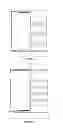
FIG. 1 is a partial cross section of a conventional three-piece can with top and bottom of same diameter;
FIG. 2 is a partial cross section of a conventional three-piece can with top and bottom of different diameters and reduced diameter at one of the ends of the tube (necking);
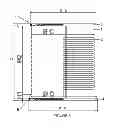
FIG. 3 is a partial cross section of a can according to the present invention, provided with an expansion of its upper part (necked out);
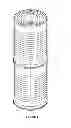
FIG. 4 is a view of a stack of cans of the present invention; and
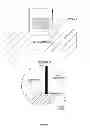
FIG. 5 is a detailed view of a can rolling over a flat surface, showing the lack of contact between the body of the can (tube) and the surface due to the presence of a free space (gap).
DETAILED DESCRIPTION OF THE PREFERRED EMBODIMENTS
The object of the present invention will be disclosed based on the above listed figures given as examples, but not limiting the scope of protection of the present model, wherein the final can is generically indicated as L.
The present invention is directed to a can L, made of a welded body 1, which is initially cylindrical and which subsequently has one of its edges expanded (necked-out), the body 1 is optionally provided with reinforcement ribs 2 in its body when the metal sheet to form the body 1 is thin.
The can L is preferably made of tinplate and/or chrome- plated steel, appropriately smoothed and printed with the artwork defined by the user. The cylindrical body 1 is formed by the conventional process of plate cutting, formation of the body, calendering and welding. Initially, the body 1 is built with the base dimension (smaller), the tube is expanded at one of its ends (necked-out), the flange (flap) is formed and subsequently the ribs 2 for radial reinforcement of the can L.
Said can L has an upper closing consisting of a conventional or easy-to-open top 3 and a conventional or easy-to-open bottom 4. Said top 3 or bottom 4 is seamed at one of the ends according to the needs of the user. When seamed, said top 3 and bottom 4 form upper 5 and lower 6 ends that support the body of the can when it is rolled.
Said ends 3, 4 have different diameters, wherein the difference between them should be comprised within a range between 2 and 6 mm. Said difference between diameters defines a range where the difference cannot be higher than 4 mm to allow the can to roll around its axis without deviation and, at the same time, allow it to be piled up. As an example, the table below shows the ratio between the diameter of the top 3 and bottom 4:
| Top (3) | Bottom (4) | |
| 49 | 52 | |
| 57 | 60 | |
| 62 | 65 | |
| 70 | 73 | |
| 80 | 83 | |
| 96 | 99 | |
| 124 | 127 | |
| 152 | 155 | |
FIG. 3 illustrates a three-piece can in accordance of preset invention. The three-piece can L may also be defined by comprising a cylindrical body (1), a top (3) and a bottom (4). The cylindrical body (1) is seamed to both top (3) and bottom (4) so forming an upper seam (5) and a lower seam (6), respectively. Preferentially, top (3) is a usually know as easy-to-open top.
The cylindrical body (1) comprises a first section having a first diameter C, a second expanded section having a second diameter D larger than first diameter C. As the seam thickness for upper or lower seams are basically equal to each other, it came out that the total top diameter B of can L is first diameter C plus twice the seam thickness. In the same sense, the total bottom diameter A of can L is second expanded diameter D plus twice the seam thickness. As it will be clear to a technician in the art, the difference between total diameters D and C is equal to the difference between diameters A and B. According to present invention, first C and second D diameters differs from 2 mm to 4 mm. Preferably, second expanded diameter D is 3 mm larger than first diameter C.
Also, the first section of cylindrical body (1) is H2 height and the second expanded section is H1 height. This way, the total height of the cylindrical body (1) is H1+H2 and the total height of can L is the cylindrical body height (H1+H2) plus twice upper or lower seam height, as upper seam (5) and lower seam (6) are basically equal to each other.
The can is sent to the user with one of the ends (larger or smaller) already seamed according to the client's requirements and/or tooling in the client's plant to close the cans after product filling.
If the user makes use of continuous rotating equipment (cooker cooler), the roling of the can L without harm to its body 1 is guaranteed by the support given by the upper 5 and lower 6 edges, which create a gap as shown in FIG. 5.
The present invention presents several advantages to the conventional models, since the cans may be processed in continuous rotating autoclave systems (cooker cooler systems), and the cans may be stacked.
In addition, the user will not need tooling adaptations, since the closing process is conventional and the tops and bottoms used are those which are already abundant on the market.
The proposed can, with said construction, may be made in diverse sizes and capacities to meet different needs of users of this kind of packaging.
Claims
What is claimed is:1. A three-piece can comprising a cylindrical body, a top and a bottom, the cylindrical body being seamed to both top and bottom forming an upper seam and a lower seam respectively, wherein said cylindrical body comprises a first section having a first diameter (C), a second expanded section having a second diameter (D) larger than first diameter (C), said first and second diameters differing by 2 mm to 4 mm, and wherein the upper and bottom seams defining support edges for the can to be rolled on flat surfaces.
2. The three-piece can of claim 1, wherein second expanded diameter (D) is 3 mm larger than first diameter (C).
3. The three-piece can of claim 1, wherein the first section of cylindrical body has a first height (H2), the second expanded section has a second height (H1), and wherein the first height (H2) is 5 to 50 times the first height (H1).
4. The three-piece can of claim 1, wherein the first section of cylindrical body comprises ribs.
Images & Drawings included:

Sources:
- United States Patent and Trademark Office - verify current appl. status at the USPTO↗
Similar patent applications:
- » 20090013866
Three-piece oil ring and combination of the three-piece oil ring and piston - » 20050055905
Three-piece frame assembly for window of enclosure - » 20060011670
Three-piece swimwear hanger - » 20050148965
Three-piece garment having an absorbent insert secured with variable adhesive regions - » 20050181891
Three-piece solid golf ball - » 20050181892
Three-piece solid golf ball - » 20050058502
Three-piece loose-leaf binder - » 20060116655
Three-piece disposable undergarment with folded crotch member and method for the manufacture thereof - » 20060249975
Three-piece windshield - » 20050017614
Split lock arm for three-piece slide assembly
Recent applications in this class:
- » 20140291336 2014-10-02
Steel drum and method for manufacturing such a steel drum - » 20130306659 2013-11-21
Strengthened food container and method - » 20120255960 2012-10-11
Metal sheet container for transporting dangerous products - » 20120067905 2012-03-22
THREE-PIECE CAN - » 20050028576 2005-02-10
Method and container having reinforcing rib structures