Refractive Body Panels (Vehicle Refractive Panels)
US20140203142A1
2014-07-24
14/161,575
2014-01-22
Abstract:
Refractive body panels replace traditional metal or fiberglass panels and consist primarily of dyed and moldable plastic in a prism configuration under clear polycarbonate; a bi-layer unit working in concert to scatter and/or change the direction of light to illuminate the exterior and increase safety and performance; the bi-layer unit works together to reduce the weight of a vehicle; the dyed prism allows for panels in various colors: the panels attach to a vehicle's frame as a direct pre-market or post-market replacement (including polyurethane bumpers) and require minimal modifications to the structural design of foot-powered vehicles, motorcycles, cars, trucks, boats, etc.
Interested in similar patents?
Get notified when new applications in this technology area are published.
Classification:
B62D29/043 » CPC further
Superstructures, characterised by the material thereof predominantly of synthetic material Superstructures
B64C1/12 » CPC main
Fuselages; Constructional features common to fuselages, wings, stabilising surfaces and the like; Frames; Stringers; Longerons ; Fuselage sections Construction or attachment of skin panels
B63B5/24 » CPC further
Hulls characterised by their construction of non-metallic material made predominantly of plastics
B62D29/04 IPC
Superstructures, characterised by the material thereof predominantly of synthetic material
Description
BACKGROUND
The automotive industry's move to use fiberglass body panels to reduce weight and improve speed, safety, and utility reflects a willingness to rethink the contribution of body panels to a vehicle overall value. Refractive Body Panels scatter and/or change the direction of light providing a wide-range of vehicles with greater visibility and safety, decreased weigh and increased fuel mileage, lower maintenance and no rust.
BRIEF SUMMARY
Refractive Body Panels consist primarily of moldable plastic in a prism configuration under clear polycarbonate; a bi-layer unit working in concert to scatter and/or change the direction of light to illuminate the exterior of a car and increase visibility, safety, and fuel mileage; decrease weight, maintenance costs, and rust. The panels are applicable to all vehicles from foot-powered vehicles to cars, motorcycles, trucks, boats, etc.
DETAILED DESCRIPTION
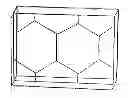
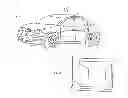
These body panels depend on a bi-layer unit consisting primarily of a moldable plastic in a prism configuration under polycarbonate plastic (as shown in views, FIG. 1 and FIG. 2). The panels scatter and/or change the direction of light, thereby increasing a vehicle's presence, safety, and performance. The panels attach to a vehicle's frame as a pre-market or a post-market replacement (including polyurethane bumpers) and require minimal modifications to the overall structural design of a vehicle. The bi-layer unit illuminates the exterior and improves visibility over painted panels. The polycarbonate covering is stronger than the current industrial standard; therefore, it reduces vibration, dents, scratches, and cracks.
BRIEF DESCRIPTION OF THE VIEWS OF THE DRAWING
FIG. 1 Vehicle with view of Refractive Body Panel
FIG. 2 Cutout of a Refractive Body panel referencing front, side, and rear of vehicle.
Claims
1. Refractive body panels consist primarily of moldable plastic in a prism configuration under clear polycarbonate; a bi-layer unit that works in concert to scatter and/or change the direction of light to illuminate the exterior and increase a vehicle's presence, safety, and performance; the bi-layer unit reduces overall weight and includes, the dyed prism allows for panels in various colors: the panels attach to a vehicle's frame as a direct pre-market option or post-market replacement (including polyurethane bumpers) and requires minimal modifications to the structural design of foot-powered vehicles, motorcycles, cars, trucks, boats, etc.
Images & Drawings included:
Sources:
- United States Patent and Trademark Office - verify current appl. status at the USPTO↗
Recent applications in this class:
- » 20250171131 2025-05-29
ANTI-CRIPPLING ELEMENT STIFFENER AND ASSOCIATED METHODS - » 20240294244 2024-09-05
AIRCRAFT WITH CARBON FIBER MATERIAL AND A METHOD OF MANUFACTURE - » 20230406476 2023-12-21
Aircraft including a fuselage and a panel removably fixed to the fuselage with the aid of fixing means - » 20230382511 2023-11-30
STIFFENER INTEGRATION IN AN ISOGRID STRUCTURE - » 20230242235 2023-08-03
PANEL SYSTEMS AND METHODS FOR HELICOPTERS - » 20230159151 2023-05-25
AEROSPACE COMPONENT JOINTS FOR AIRCRAFT AND RELATED METHODS - » 20230128247 2023-04-27
Resistive Skin Element for an Acoustic Panel Intended for an Aircraft - » 20230026741 2023-01-26
METHOD FOR MANUFACTURING A STRUCTURAL ELEMENT FOR A FUSELAGE OF AN AIRCRAFT - » 20230016471 2023-01-19
METHOD OF PERMANENTLY JOINING COMPOSITE PARTS MADE FROM THERMOPLASTIC MATERIAL, ARRANGEMENT OF COMPOSITE PARTS, AND AIRCRAFT - » 20230002027 2023-01-05
SYSTEM FOR FUSING THERMOPLASTIC COMPOSITE STRUCTURES