Grapevine plant named 'CAR98-710'
US20140208468P1
2014-07-24
13/694,972
2013-01-23
Abstract:
A new and distinct variety of grapevine plant named ‘CAR98-710’ particularly distinguished by black colored, seedless berries, medium to large berries and clusters, and excellent integrity of clusters and berries through October, is disclosed.
Assignee:
- M. Caratan, Inc. 2 🇺🇸 Delano, CA, United States
Interested in similar patents?
Get notified when new applications in this technology area are published.
Classification:
A01H5/00 IPC
Products
A01H5/00 IPC
Angiosperms, i.e. flowering plants, characterised by their plant parts; Angiosperms characterised otherwise than by their botanic taxonomy
Description
GENUS AND SPECIES
Vitis vinifera
VARIETY DENOMINATION
‘CAR98-710’
BACKGROUND OF THE NEW PLANT
The present invention comprises a new and distinct variety of grapevine botanically known as Vitis vinifera and hereinafter referred to by the variety name ‘CAR98-710’. The new variety originated from a cross conducted in May 1998 in Delano, Calif. between the female grapevine plant named ‘Black Globe’ (U.S. Plant Pat. No. 17,875) and the male grapevine plant named ‘552’ (U.S. Plant Pat. No. 9,916). A single plant was selected for further evaluation and asexual propagation.
The new variety was first propagated in December 2005 in Delano, Calif. by vegetative cuttings and has been asexually reproduced repeatedly by vegetative cuttings for 3 generations. ‘CAR98-710’ has been found to retain its distinctive characteristics through successive asexual propagations.
Plant Breeder's Rights for this variety have not been applied for. ‘CAR98-710’ has not been made publicly available anywhere in the world more than one year prior to filing of this application.
SUMMARY OF THE INVENTION
The following are the most outstanding and distinguishing characteristics of this new variety when grown under normal horticultural practices in Delano, Calif.
1. Black colored, seedless berries;
2. Medium to large berries and clusters; and
3. Excellent integrity of clusters and berries through October.
DESCRIPTION OF THE PHOTOGRAPHS
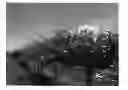
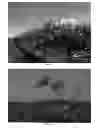
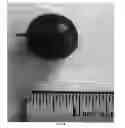
This new grapevine plant is illustrated by the accompanying photographs which show clusters of fruit, leaves, canes, tendrils and berries. The colors shown are as true as can be reasonably obtained by conventional photographic procedures. The photographs are taken from a mature plant about 7 years old, grown in a field in Delano, Calif.
FIG. 1 shows overall vine and cane habit at bloom.
FIG. 2 shows a close up of a growing shoot tip at bloom.
FIG. 3 shows the upper surface of a mature leaf.
FIG. 4 shows the lower surface of a mature leaf.
FIG. 5 shows a close up of an immature primary fruit cluster.
FIG. 6 shows mature fruit clusters on the vine.
FIG. 7 shows mature primary fruit clusters at harvest.
FIG. 8 shows a close up of a single berry at harvest.
DESCRIPTION OF THE NEW VARIETY
The following detailed descriptions set forth the distinctive characteristics of ‘CAR98- 710’. The data which defines these characteristics were collected from asexual reproductions carried out in Delano, Calif. The plant history was taken on mature 7 year old grapevines grown under field conditions in Delano, Calif. All color references were obtained under natural light. Color references are primarily to the Munsell Color Charts for Plant Tissues by Munsell Color, 617 Little Britain Rd., New Windsor, N.Y. 12553-6148. Common color names are also occasionally employed.
DETAILED BOTANICAL DESCRIPTION OF THE NEW PLANT
- Classification:
-
- Family.—Vitaceae.
- Botanical name.—Vitis vinifera.
- Variety name.—‘CAR98-710’.
-
- Parentage:
-
- Female parent.—‘Black Globe’ (U.S. Plant Pat. No. 17,875).
- Male parent.—‘552’ (U.S. Plant Pat. No. 9,916).
-
- Plant:
-
- Plant habit and growth.—Trailing with light to moderate secondary shoot development.
- Time to maturity.—3 to 4 years.
- Height (at maturity).—Cordon: 120.0 cm Canopy: 200.0 cm.
- Width (at maturity).—190.0 cm.
- Vigor.—High.
- Productivity.—Medium.
-
- Trunk:
-
- Diameter (measured 60 cm from floor).—7.3 cm.
- Surface texture.—Coarse, rough.
- Color.—Exposed surface: 5YR 6/2 Non-exposed: 5YR 4/4.
-
- Canes (dormant fruiting canes measured on April 3):
-
- Diameter (measured at base).—1.55 cm.
- Length.—112.0 cm.
- Surface texture (both immature and mature canes).—Smooth.
- Form (woody shoot cross section form).—Pith in center with diaphragm at nodes.
- Color (mature at base).—5YR 4/6.
- Color (immature at 6 weeks).—2.5GY 7/8 Anthocyanin: Absent.
- Internode length (upper mature sun cane).—5.5 cm Number of nodes: 40.
-
- Time of bud burst (50% of buds broken): April 2
- Tendrils:
-
- Form.—Bifid, and occasionally trifid.
- Size.—General: Medium Length (average): 16.0 cm to 22.0 cm on mature canes Diameter (measured at base of tendril): 3.0 mm.
- Texture.—Smooth, no pubescence.
- Distribution.—Discontinuous Predominate sequence: Tendril, tendril, no tendril, tendril, tendril, no tendril.
- Color (mature).—Three weeks old: 5GY 6/6 Six weeks old: 2.5GY 8/6 Anthocyanin: Absent.
- Color (immature, 1 week old).—2.5GY 7/8 Anthocyanin: Absent.
-
- Growing tips (young shoot):
-
- Pubescence.—Very slight.
- Color.—2.5GY 6/6.
- Anthocyanin.—2.5YR 5/8.
- Shape.—Fully open.
- Apex.—Normal, triangular.
-
- Leaves:
-
- Shape.—Pentagonal.
- Apex.—Pointed.
- Base.—Rounded.
- Margin.—Irregular teeth.
- Height of teeth on margin.—2.0 mm to 5.0 mm, variable.
- Shape of teeth on margin.—Convex.
- Texture (mature leaf).—Upper surface: Slight blistering Lower surface: Glabrous.
- Immature leaf.—Length: 6.5 cm at 2 weeks old Width: 9.0 cm at 2 weeks old Surface appearance: Shiny Color: Upper surface: 2.5GY 7/10 Lower surface: 2.5GY 6/8.
- Mature leaf.—Length: 10.0 cm at ninth node from growing tip Surface appearance: Dull Color: Upper surface: 5GY 4/4 Lower surface: 5GY 6/4.
- Venation.—Pattern: Primary and secondary veins on the upper surface are visible due to their lighter color contrasting with the interveinal tissue; the lower surface veins are raised Color: Upper surface: 2.5GY 8/6 (yellow-green) Lower surface: 2.5GY 8/4 (cream) Anthocyanin: Absent.
- Petiolar sinus.—Mostly slightly open to slightly closed; upper leaf sinus slightly closed (90%) to slightly open (10%).
- Petiole.—Length (on tenth leaf from tip): 7.0 cm Diameter: 2.0 mm to 2.5 mm Color: 2.5GY 8/8 (yellowish green) to 10R 5/8 (copper).
-
- Floral cluster:
-
- General description and location.—First floral cluster occurs on the fourth node.
- Quantity of inflorescences per cluster (average).—300.
- Length (not including the peduncle).—17.0 cm.
- Width.—13.5 cm.
- Peduncle length.—6.0 cm to 8.0 cm.
- Inflorescences.—Hermaphroditic.
- Stamens.—Upright.
- Anthers.—Normal size, light yellow.
- Date of bloom.—Beginning May 9th, 50% by May 12th and 80% by May 13th.
- Pollen amount.—Moderate to abundant.
- Calyptra.—Description: Complete separation from flower base Color: 5GY 5/8.
-
- Fruit:
-
- Time of year of commercial harvest and shipment.—Mid August to late September.
- Cluster (primary bunches).—General size: Large Weight: 900.0 g Length (without peduncle): 20.0 cm Width: 16.0 cm Density: Medium Peduncle length: 5.5 cm Peduncle diameter: 0.5 cm Peduncle color: 2.5GY 6/6 Number of berries per cluster: Large cluster: 111 Medium cluster: 75 Small cluster: 37 Berry: Size: 9.0 g Shape: Mostly globose Uniformity: Very good Brix content: 18.4 on August 21st Diameter: 2.3 cm Length: 2.5 cm Skin color: 5R 3/2 Pedicel: Length: 0.8 cm Diameter: 0.2 cm Color: 5GY 6/6 Strength of attachment to berry: Moderately strong.
- Cluster (secondary bunches).—General size: Small Weight: 90.0 g Length (without peduncle): 6.4 cm Width: 6.5 cm Density: Medium Peduncle length: 8.2 cm Peduncle diameter: 0.23 cm Peduncle color: 2.5GY 6/8 Number of berries per cluster: 11 berries Berry: Size: Medium to large Weight: 8.5 g Shape: Mostly globose Uniformity: High Brix content: 17.6 on August 21st Diameter: 2.1 cm Length: 2.6 cm Skin color: 2.5R 4/6 Pedicel: Length: 1.0 cm Diameter: 0.15 cm Color: 5GY 7/8 Strength of attachment to berry: Strong.
-
- Berry flesh:
-
- Color.—Outer: 2.5GY 8/2 Inner: 2.5GY 8/5.
- Juice.—Color: Clear Production: Moderate.
- Thickness of skin.—Medium.
- Flavor.—Neutral.
- Fragrance.—Absent.
- Texture.—Medium.
-
- Seeds: 1 to 2 prominent seed traces per berry
-
- Length.—0.4 cm to 6.0 cm.
- Color.—Green to green-red.
- Firmness.—Soft.
-
- Disease and insect resistance: No particular resistance or susceptibility has been observed. Normal disease control practices can be used
- Winter hardiness and drought tolerance: Similar to commercial cultivars Autumn Royal and Summer Royal
COMPARISON WITH PARENTAL AND COMMERCIAL VARIETIES
‘CAR98-710’ differs from the female parent grapevine plant named ‘Black Globe’ (U.S. Plant Pat. No. 17,875) in that ‘CAR98-710’ has seedless, globose shaped berries, whereas ‘Black Globe’ has seeded, obovate shaped berries.
‘CAR98-710’ differs from the male parent grapevine plant named ‘552’ (U.S. Plant Pat. No. 9,916) in that ‘CAR98-710’ has black, globose shaped berries, whereas ‘552’ has red, obovoid shaped berries.
‘CAR98-710’ differs from the commercial grapevine plant named ‘Autumn Royal’ (unpatented) in that ‘CAR98-710’ has medium to large fruit clusters and globose shaped berries maturing in September, whereas ‘Autumn Royal’ has large fruit clusters and ellipsoidal elongated berries maturing in October. Additionally, the fruit clusters of ‘Autumn Royal’ are generally more loosely filled, have less uniformity, and are longer than ‘CAR98-710’.
‘CAR98-710’ differs from the commercial grapevine plant named ‘Summer Royal’ (unpatented) in that ‘CAR98-710’ is 4 to 5 weeks later maturing with larger berries weighing 9.0 grams, whereas ‘Summer Royal’ is early to mid season maturing with smaller berries weighing 5.0 grams. Additionally, ‘CAR98-710’ has berry clusters that maintain integrity into October, whereas ‘Summer Royal’ has berry clusters that shrivel (dry on the vine) beginning in late August.
Claims
I claim:1. A new and distinct variety of grapevine plant named ‘CAR98- 710’ as shown and described herein.
Images & Drawings included:


Sources:
- United States Patent and Trademark Office - verify current appl. status at the USPTO↗
Recent applications in this class:
- » 20240292771 2024-08-29
Campanula plant named 'Twilight' - » 20240251691 2024-07-25
HYDRANGEA PLANT NAMED 'HYLV17520' - » 20240251690 2024-07-25
Vaccinium Plant Named 'BWPBLUE02' - » 20240251689 2024-07-25
BLUEBERRY PLANT NAMED 'FC13-113' - » 20240251688 2024-07-25
BLUEBERRY PLANT NAMED 'FCM14-057' - » 20240237567 2024-07-11
PONGAMIA VARIETIES - » 20240224827 2024-07-04
PELARGONIUM PLANT NAMED 'PEQZ0103' - » 20240215470 2024-06-27
Agapanthus plant named 'Monsapho' - » 20240215469 2024-06-27
plant named ‘LOCORA3519’ - » 20240206359 2024-06-20
CORYLUS PLANT NAMED 'BWM01'
Recent applications for this Assignee:
- » 20150163976 2015-06-11
Grapevine plant named '2-21-20'