Electric saw that can be used as both a miter saw and a table saw
US20140208915A1
2014-07-31
13/929,417
2013-06-27
✅ Patent granted
US 9,393,630 B2
2016-07-19
-
-
Stephen Choi | Fernando Ayala
Enshan Hong | VLP Law Group LLP
2033-12-01
Abstract:
A dual functional electric saw comprising a stationary base having a removable cover, an angle adjustable stand having a removable cover, a saw body, and a connection mechanism for fixing the saw body on the stationary base; wherein the angle adjustable stand comprises a chamber being capable of accommodating the saw body and the removable cover of the angle adjustable stand; the angle adjustable stand is surrounded and supported by the stationary base; the saw body comprises a motor and a saw blade; the connection mechanism comprises a saw supporting column which is capable of being positioned and fastened at both ends so that the height of the saw body can be adjusted to meet the requirements of a miter saw and a table saw, respectively.
Applicant:
Interested in similar patents?
Get notified when new applications in this technology area are published.
Classification:
B23D45/14 » CPC main
Sawing machines or sawing devices with circular saw blades or with friction saw discs for cutting otherwise than in a plane perpendicular to the axis of the stock, e.g. for making a mitred cut
B23D45/068 » CPC main
Sawing machines or sawing devices with circular saw blades or with friction saw discs with a circular saw blade arranged underneath a stationary work-table the saw blade being adjustable according to depth or angle of cut
B23D45/06 IPC
Sawing machines or sawing devices with circular saw blades or with friction saw discs with a circular saw blade arranged underneath a stationary work-table
B27B5/243 » CPC further
Sawing machines working with circular or cylindrical saw blades ; Components or equipment therefor; Saw benches with non-feedable circular saw blade the saw blade being adjustable according to depth or angle of cut the saw blade being arranged underneath the work-table
B27B5/165 » CPC further
Sawing machines working with circular or cylindrical saw blades ; Components or equipment therefor; Saw benches Convertible sawing devices
Y10T83/7697 » CPC further
Cutting; Rotatable disc tool pair or tool and carrier; With means to support work relative to tool[s]; Tool moved relative to work-support during cutting Tool angularly adjustable relative to work-support
B27B5/16 IPC
Sawing machines working with circular or cylindrical saw blades ; Components or equipment therefor Saw benches
B27B5/24 » CPC further
Sawing machines working with circular or cylindrical saw blades ; Components or equipment therefor; Saw benches with non-feedable circular saw blade the saw blade being adjustable according to depth or angle of cut
Description
BACKGROUND OF THE INVENTION
1. Field of the Invention
The present invention relates to electric saw, in particular a dual functional electric saw.
2. Description of the Related Art
Two types electric saw are often used during wood processing, furniture manufacture, indoor and outdoor renovation. A miter saw is often used in cutting wood transversely, and a table saw is commonly used for panel cutting. It is quite inconvenient to bring two types of saws to different working locations.
SUMMARY OF THE INVENTION
The objective of the present invention is to provide a dual functional electric cutting tool with one stationary base and one motor that can be used as both a miter saw and a table saw, has a compact structure, and is convenient to handle.
The present invention adopts the following technical solution:
The dual functional electric saw comprises a stationary base having a removable cover, an angle adjustable stand having a removable cover, a saw body installed on the stationary base, and a connection mechanism for fixing the saw body on the stationary base. The angle adjustable stand comprises a chamber being capable of accommodating the saw body, and the removable cover of the angle adjustable stand. The angle adjustable stand is surrounded and supported by the stationary base. The saw body comprises a motor and a saw having a blade. The connection mechanism comprises a saw supporting column which is capable of being positioned and fastened at both ends so that the height of the saw body can be adjusted to meet the requirements of a miter saw and a table saw, respectively.
The stationary base is preferably slightly higher than an average table saw to facilitate switching between a mode of table saw and a mode of miter saw as described below in more detail.
The saw body installed on the stationary base can normally be used as a miter saw. When a table saw is needed, one can remove the removable cover of the stationary base and the removable cover of the angle adjustable stand, rotate the saw body so that the blade of the saw is upward, push the saw body into the chamber of the angle adjustable stand, and then put back the removable cover of the stationary stand and the removable cover of the angle adjustable stand.
The various features of novelty which characterize the invention are pointed out with particularity in the claims annexed to and forming a part of the disclosure. For a better understanding of the invention, its operating advantages, and specific objects attained by its use, reference should be had to the drawing and descriptive matter in which there are illustrated and described preferred embodiments of the invention.
BRIEF DESCRIPTION OF THE DRAWINGS
In the drawings:
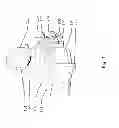
FIG. 1 is a schematic view of the structure of an electric saw in accordance with an embodiment of the present invention when the electric saw is in the form of a miter saw;
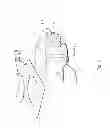
FIG. 2 is a schematic view of the structure of the electric saw shown in FIG. 1 when the removable cover of the stationary base and the removable cover of the angel adjustable cover are both removed, and the saw body is rotated 180° so that the saw blade is upwards;
FIG. 3 is a schematic view of the structure of the electric saw shown in FIG. 2 when the saw body is push up straight;
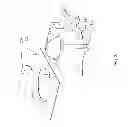
FIG. 4 is a schematic view of the structure of the electric saw shown in FIG. 3 when the saw body and the supporting column are pushed down transversely.
FIG. 5 is a schematic view of the structure of the electric saw shown in FIG. 4 when the saw body is pushed upright;
FIG. 6 is a schematic view of the electric saw shown in FIG. 5 when the saw body is pushed down transversely and the supporting column remains upright;
FIG. 7 is a schematic view of the structure of the electric saw shown in FIG. 6 when the saw body is pushed upright;
FIG. 8 is a schematic view of the structure of the electric saw shown in FIG. 7 when the saw body is pushed inside the chamber;
FIG. 9 is a schematic view of the structure of the electric saw shown in FIG. 8 when both the removable cover of the stationary base and the removable cover of the angle adjustable stand are put back so that the electric saw is ready to be used as a table saw.
DETAILED DESCRIPTION OF THE PRESENTLY PREFERRED EMBODIMENTS
A preferred embodiment of the present invention will be described hereinafter with reference to the drawings:
List of reference numbers in the figures is provided below:
- 101—motor;
- 102—saw blade;
- 103—removable cover of the stationary base;
- 104—removable cover of the angel adjustable base;
- 105—saw supporting column;
- 106—positioning pin;
- 107—fastening screw;
- 108—positioning pin;
- 109—fastening screw;
- 110—angle adjustable base;
- 111—stationary base;
- 112—saw body;
As shown in, e.g., FIG. 1, in accordance with one embodiment of the present invention, a saw support column 105, positioning pins 106 and 108, fastening screws 107 and 109 are provided to fix the saw body 112 on the stationary base 111. Pulling the positioning pins 106 and 108, loosening fastening screws 107 and 109, one can raise the height of the saw body 112 to meet the requirement of a miter saw or lower the height of the saw body 112 to meet the requirement of a table saw.
FIG. 1 shows a structure of the electric saw when it can be used as a miter saw in accordance with an embodiment of the present invention.
When the electric saw in accordance with an embodiment of the present invention needs to be used as a table saw, one needs to remove the removable cover 103 of the stationary base 111 and the removable cover 104 of the angle adjustable stand 104, loosen fastening screw 107, pull positioning pin 106, rotate saw body 112 180° so that the saw blade is upwards (see FIG. 2), push the saw body 112 upright (see FIG. 3), loosen fastening screw 109, pull positioning pin 108, push the saw body 112 transversely (see FIG. 4), loosen fastening screw 107, pull positing pin 106, push the saw body 112 upright (see FIG. 5), loosen fastening screw 109, pull positioning pin 108, push saw body 112 transversely (see FIG. 6), loosen fastening screw 107, pull positioning pin 106, push the saw body 112 upright (see FIG. 7), push the saw body 112 into the chamber of angle adjustable stand 110, put back removable covers 103 and 104 (see FIG. 9), then the electric saw can be used as a table saw.
The invention is not limited by the embodiments described above which are presented as examples only but can be modified in various ways within the scope of protection defined by the appended patent claims.
Claims
What is claimed is:1. A dual functional electric saw comprising a stationary base having a removable cover, an angle adjustable stand having a removable cover, a saw body, and a connection mechanism for fixing the saw body on the stationary base; wherein the angle adjustable stand comprises a chamber being capable of accommodating the saw body and the removable cover of the angle adjustable stand; the angle adjustable stand is surrounded and supported by the stationary base; the saw body comprises a motor and a saw blade; the connection mechanism comprises a saw supporting column which the is capable of being positioned and fastened at both ends so that height of the saw body can be adjusted to meet the requirements of a miter saw and a table saw, respectively.
2. The dual functional electric saw wherein the saw supporting column comprises a position pin and a fastening screw at both ends.
Images & Drawings included:





Sources:
- United States Patent and Trademark Office - verify current appl. status at the USPTO↗
Recent applications in this class:
- » 20250187087 2025-06-12
WORK MACHINE - » 20230390837 2023-12-07
COPING SYSTEM - » 20180221972 2018-08-09
Compound saw - » 20180133816 2018-05-17
MITER SAW - » 20160199923 2016-07-14
MITER SAW - » 20150258619 2015-09-17
CUTTING TOOL - » 20090223340 2009-09-10
Workpiece feeding device with angle detection means for saw machine