PHOSPHONIC ACID-CONTAINING BLENDS AND PHOSPHONIC ACID-CONTAINING POLYMERS
US20140213672A1
2014-07-31
14/165,456
2014-01-27
Abstract:
The invention relates to blends and blend membranes from low-molecular hydroxymethylene-oligo-phosphonic acids R—C(PO3H2)x(OH)y and polymers, the group R representing any organic group and the polymers containing the following functional groups: cation exchanger groups or their nonionic precursors of the type SO2X, X═HaI, OH, OMe, NR1R2, OR1 with Me=any metal cation or ammonium cation, R1, R2=H or any aryl- or alkyl group, POX2, COX and/or basic groups such as primary, secondary or tertiary amino groups, imidazole groups, pyridine groups, pyrazole groups etc. and/or OH groups. Low molecular hydroxymethylene-oligo-phosphonic acids R—C(PO3H2)x(OH)y are preferred in which x=2 and y=1. The invention also relates to low-molecular hydroxymethylene-oligo-phosphonic acids R—C(PO3H2)2(OH)1 and polymers, wherein the group R of the hydroxymethylene-oligophosphonic acid contains an aliphatic or aromatic basic group which ionically interacts with the acidic groups of the polymer or of the polymer mixture. The invention further relates to blends and blend membranes from low-molecular hydroxymethylene-oligo-phosphonic acids R—C(PO3H2)2(OH)1 and polymers, wherein the OH groups of the low-molecular hydroxymethylene-1,1-bisphosphonic acid are covalently cross-linked with each other or optionally with OH groups of the polymer. The invention also relates to polymers that are modified with the 1-hydroxymethylene-1,1-bisphosphonic acid group. The polymers are produced by reacting polymers which contain carboxylic acid groups or carboxylic halide groups —COHaI (Hal═F, Cl, Br, I) with phosphite compounds or by reacting polymeric aldehydes or polymeric keto compounds with phosphite esters while carrying out an amine catalysis, an oxidation of the intermediary hydroxyphosphonic acid with MnO2 or any other oxidant. The invention finally relates to methods for producing the aforementioned materials and to the use of membranes of the aforementioned materials in membrane processes and especially in fuel cells, even at temperatures of >100° C.
Inventors:
- Thomas Häring 34 🇩🇪 Stuttgart, Germany
- Jochen Kerres 3 🇩🇪 Ostfildern-Ruit, Germany
- Frank Schönberger 3 🇩🇪 Saarlouis, Germany
- Martin Hein 11 🇩🇪 Stuttgart, Germany
Interested in similar patents?
Get notified when new applications in this technology area are published.
Classification:
H01M8/1034 » CPC main
Fuel cells; Manufacture thereof; Fuel cells with solid electrolytes characterised by the electrolyte material; Polymeric electrolyte materials characterised by the chemical structure of the main chain of the ion-conducting polymer having phosphorus, e.g. sulfonated polyphosphazenes [S-PPh]
H01M8/10 IPC
Fuel cells; Manufacture thereof Fuel cells with solid electrolytes
Description
BACKGROUND OF THE INVENTION
Commercially available ionomer membranes based on perfluorinated sulfonic acids can be used at temperatures below 100° C. in electrochemical cells, especially in fuel cells and show in this temperature range good H+-conductivities and high (electro)chemical stability. They can't be used at temperatures above 100° C., because they dry out and fort his reason their proton conductivity decreases several orders of magnitude.1,2 However it makes sense to run a fuel cell at temperatures above 100° C. because the CO-tolerance of the fuel cell reaction in this temperature range is markedly greater due to a faster electrode kinetic as below 100° C.3. However as explained above is the use of sulfonated ionomer membranes at temperatures above 100° C. in fuel cells atmospheric pressure and with out humidifying of the membrane not possible. In the literature several approches for alternative proton conductors in the temperature range of approximately 100 to 200° C. can be foand. One of these approches is the incorporation of matter in the sulfonated fuel cell membrane, which is able to store water above 100° C. in the fuel cell membrane and to secure thereby a sufficient proton conductivity of sulfonated fuel cell membranes in this temperature range. Such matter comprises microporous particles in micrometre to nanometre size composed out of inorganic hydroxides, oxides or salts or out of inorganic/organic hybrid compoands, such as SiO24,5,6, TiO2, ZrO27, or from layered phosphates or from zirconium sulfophenylphosphonates, whereby the layered phosphates like zirconiumhydrogenphosphate or zirconiumsulfophenylphosphonate show also a self proton conductivity8,9. Another approach is the incorporation of phosphoric acid in basic polybenzimidazole-membranes, whereby the phosphoric acid works as proton conductor, because phosphoric acid can be a proton donor as well as a proton acceptor. These membranes can be used in fuel cells up to 200° C.10,11,12,13. 1K. T. Adjemian, S. Srinivasan, J. Benziger, A. B. Bocarsly, J. Power Sources 2002, 109(2), 356-3642S. C. Yeo, A. Eisenberg, J. Appl. Polym. Sci. 1977, 21, 875-8983 Q. Li et al., Chem. Mat. 15(2003) 48964 A. S. Aricò, P. Creti, P. L. Antonucci, V. Antonucci, Electrochem. Solid-State Lett. 1998, 1(2), 66-685 K. T. Adjemian, S. J. Lee, S. Srinivasan, J. Benziger, A. B. Bocarsly, J. Electrochem. Soc. 2002, 149(3), A256-A2616 I. Honma, H. Nakajima, O. Nishikawa, T. Sugimoto, S. Nomura, J. Electrochem. Soc. 2002, 149(10), A1389-A13927 K. A. Mauritz, Mat. Sci. Eng. 1998, C6, 121-1338 C. Yang, S. Srinivasan, A. S. Aricò, P. Creti. V. Baglio, V. Antonucci, Electrochem. Solid-State Lett. 2001, 44, A31-A349 G. Alberti, M. Casciola, Annu. Rev. Mater. Res. 2003, 33(1), 129-15410 R. F. Savinell; M. H. Litt; U.S. Pat. No. 5,525,436, Jun. 11, 199611 J. S. Wainright, J.-T. Wang, D. Weng, R. F. Savinell, M. H. Litt. J. Electrochem. Soc. 1995, 142, L12112 G. Calandann, M. Sansone, B. Benicewicz, E. W. Choe, Oe. Uensal, J. Kiefer, DE 10246459 A1, 200413 Y. L. Ma, J. S. Wainright, M. H. Litt, R. F. Savinell , J. Electrochem. Soc. 2004, 151(1) A8-A16
As the phosphoric acid can bleed out from these membranes below 100° C. (due to formation of liquid product water), membranes have been developed with the by itself proton-conducting phosphonic acid group. From the literature are also known several publications to make phosphonated ionomer membranes. They comprise perfluorinated phosphonated membranes14, phenylphosphonic acid-modified polyaryloxyphosphazenes15 or membranes based on aryl main chain polymers like Polysulfone Udell16,17 or polyphenylene oxide18. Research on phosphonic acid groups containing model compoands showed significant self proton conductivity also at reduced humidification19. 14 M. Yamabe, K. Akiyama, Y. Akatsuka, M. Kato. Eur. Polym. J. 2000, 36, 1035-104115 H. R. Allcock, M. A. Hofmann, C. M. Ambler, R. V. Morford, Macromolecules 2002, 35, 3484-348916 B. Lafitte, P. Jannasch, Journal of Polymer Science: Part A: Polymer Chemistry 2005, 43, 273-28617 K. Jakoby, K. V. Peinemann, S. P. Nunes, Macromol. Chem. Phys 204, 61-67, 200318 Xu and I. Cabasso, J. Polym. Mater. Sci. 1993, 120, 6819 K. D. Kreuer, S. J. Paddison, E. Spohr, M. Schuster, Chem. Rev. 2004, 104, 4637-4678
Polymers modified with phosphonic acid groups show however the following disadvantages which have hindered so far their use in fuel cells:
-
- so far experimentally only low phosphonation degree could be obtained (about one phosphonic acid group per polymer-repeating unit)15,20,21,17 20 H. R. Allcock, M. A. Hofmann, C. M. Ambler, S. N. Lvov, X. Y. Zhou, E. Chalkova, J. Weston, J. Membr. Sci. 2002, 201, 47-5421 Miyatake and Hay, J. Polym. Sci. 2001, 39, 3770
- there are no (water-free) conductivity data of phosphonated polymers published (only conductivity data of phosphonated oligomers are documented19)
- non-fluorinated arylphosphonic acids are in general only medium strong acids (pKs≈2) only low proton conductivities are obtained with the so far synthesised phosphonated ionomers
- phosphonic acids could so far only introduced as ester in polymers (Michaelis-Arbusov17 or Michaelis-Becker reaction18 or via lithiation20,16)
- hydrolysis of the ester of phosphonic acids to the free phosphonic acid has been reached so far only partially20
- problematic solubility of polymeric phosphonic acids (sparingly soluble in the “classic” solvents for ionomers like NMP, DMAc or DMF)
- polymeric phosphonic acids show bad film building properties (are very brittle)
- many phosphonation processes can not be transferred from low molecular compoands to high molecular compoands, in part due to solubility problems in the solvents used for these reactions
- in part polymer decomposition during the phosphonation reaction or during the hydrolysis of the ester of the phosphonic acid to the free phosphonic acid (in one experiment polymer decomposition from 20,000 g/mol to 2,000 g/mol has been observed)22 22 J. Kerres, F. Schönberger, unveröffentlichte Ergebnisse
- phosphonic acids tend at temperatures around 120° C. to condensate, which renders their use in fuel cells in the temperature range above >100° C. so far impossible.
SUMMARY
The objective of the present invention consists in the synthesis of mixtures of polymers containing 1-hydroxymethylene-1,1-bisphosphonic acid groups with the following properties:
-
- highest possible acidity of the phosphonic acid groups
- highest possible content of phosphonic acid groups
- suppression of the condensation of the phosphonic acid group
- highest possible proton conductivity also at reduced humidification and at temperatures up to 180° C.
- prevention of bleeding out of the polymer blends, if blends of polymeres with low molecular 1-hydroxymethylene-1,1-bisphosphonic acids according to the invention are used in membrane applications.
A further objective of this invention are processes to produce mixtures of polymers (blends) containing phosphonic acid groups.
Finally an objective of this invention is to apply the mixtures of polymers (blends) in membrane processes like gas separation, pervaporation, perstraction, PEM-electrolysis and secondary batteries like PEM- as well as direct methanol fuel cells especially at conditions of reduced humidification (0 to 50%) and higher temperature (temperatures of 60 to 180° C., especially temperatures of 80 to 180° C., and in particular temperatures of 100 to 130° C.).
BRIEF DESCRIPTION OF THE DRAWINGS
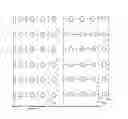
FIG. 1 shows preferred 1-hydroxymethylene-1,1-bisphosphonic acids, to be prepared from the respective carboxylic acids via reaction with PCI3/H3PO3 and subsequent hydrolysis.
FIG. 2 shows preparation procedure of 1-hydroxymethylenebisphosphonic acids from reaction of carboxylic acid chlorides with tris(trimethylsilylphosphite).
FIGS. 3-7 show 1-Hydroxymethylenebisphosphonic acids prepared via reaction of carboxylic acid chlorides with tris(trimethylsilylphosphite).
FIG. 8 shows ionical cross-linking between low-molecular hydroxymethylenebisphosphonic acid and the sulfonic acid groups of an ionomer.
FIG. 9 shows a covalent cross-linking between hydroxymethylenebisphosphonic acids and the OH groups of a polymer.
FIG. 10 shows a cross-linking of the OH groups of a 1-hydroxymethylene-1,1-bisphosphonic acid under network formation.
FIG. 11 shows cross-linking of the OH groups of 1-hydroxymethylene-1,1-bisphosphonic acid molecules with OH groups of a polymer via use of epichlorohydrin as cross-linker.
FIG. 12 shows preparation of PSU modified with 1-hydroxymethylene-1,1-bisphosphonic acid groups from PSU-carboxylic acid chloride.
FIGS. 13 and 14 show pKA values of low-molecular 1-hydroxymethylene-1,1-bisphosphonic acids according to the invention.
FIG. 15 shows pKA of the model compounds of two high-molecular 1-hydroxymethylene-1,1-bisphosphonic acids, according to the invention.
FIG. 16 shows preparation of a polythioethersulfone containing 1-hydroxymethylene-1,1-bisphosphonic acid groups via lithiation.
FIG. 17 shows preparation of a polyethersulfone containing 1-hydroxymethylene-1,1-bisphosphonic acid groups via lithiation.
FIGS. 18-33 show possible structures of the polymer backbone and preferred polymer structures.
DETAILED DESCRIPTION
It has been found surprisingly that the objective of the invention can be obtained by:
- I. Production of if Necessary Physically, Ionically or Covalently Cross-Linked Blends and Blend Membranes of Low Molecular hydroxymethylene-oligo-phosphonic acids R—C(PO3H2)x(OH)y with Polymers Containing the Following Functional Groups:
- cation exchange groups or there non-ionic precursors of the type:
- SO2X, X═Hal, OH, OMe, NR1R2, OR1 with Me=any metal cation or ammonium cation, R1, R2═H or any aryl- or alkyl moiety,
- POX2
- COX
- and/or
- basic groups like primary, secondary or tertiary amino groups, imidazole groups, pyridine groups, pyrazole groups etc.
- and/or
- OH groups.
- The preferred low molecular 1-hydroxymethylene-phosphonic acids according to the invention, exemplarily producible from carbonic acids by reaction with PCl3/H3PO3 and subsequent hydrolysis with H2O23,24,25,26,27 are shown in FIG. 1. Other preferred low molecular 1-hydroxymethylene-bisphosphonic acids according to the invention, producible from carbonic acids halides with tris(trimethylsilylphosphite)28,29,30,31, production process see FIG. 2 are shown in FIG. 3, FIG. 4, FIG. 5, FIG. 6 and FIG. 7. Another process to produce 1-hydroxymethylene-1,1-bisphosphonic acids consists in the reaction of tris(trimethylphosphite) with acid anhydrides like phtalic acid anhydrid32. 23 Gerard R. Kieczykowski, Ronald B. Jobson, David G. Melillo, Donald F. Reinhold, Victor J. Grenda, and Ichiro Shinkai, J. Org. Chem. 1995, 60, 8310-831224 Blum, H.; Worms, K. U.S. Pat. No. 4,327,039, 198225 Blum, H.; Worms, K. U.S. Pat. No. 4,407,761, 198326 Rosini, S.; Staibano, G. U.S. Pat. No. 4,621,077, 198627 Jary, J.; Rihakova, V.; Zobacova, A. U.S. Pat. No. 4,304,734, 198128 Marc Lecouvey, Isabelle Mallard, Theodorine Bailly, Ramon Burgada and Yves Leroux, Tetrahedron Letters 2001, 42, 8475-847829 Sekine, M.; Hata, T. J Chem. Soc. Chem Commun. 1978, 28530 Lecouvey, M.; Leroux, Y. Heteroatom Chem. 2000, 11(7), 556-56131 Sekine, M.: Okimoto, K.; Yamada, K.; Hata, T. J. Org. Chem. 1981, 46, 2097-210732 Guenin, E.; Degache, E.; Liquier, J.; Lecouvey, M. Eur. J. Org. Chem. 2004, 2983-2987
- cation exchange groups or there non-ionic precursors of the type:
A special embodiment of these blends is that between the polymers and the low molecular phosphonic acids ionic cross-links may be formed, for instance between the cation exchange groups of the polymer with a basic group (e.g. pyridine moiety) of the low molecular phosphonic acid compound, see FIG. 8. Another possibility of bonding of the low molecular hydroxymethylenephosphonic acids on the polymers is a covalent cross-link, for instance by crosslinking of the OH-group of the phosphonic acid compoand with an OH-group of the polymer via a ∀,T-dihalogene alcane, see FIG. 9. Other possible cross-linking reactions for the OH-group of the 1-hydroxymethylene-1,1-bisphosphonic acid group and if necessary with OH-groups of polymers according to the invention are:
-
- Cross-linking by addition of AgNO3 to the mixture of 1-hydroxymethylene-1,1-bisphosphonic acid containing OH-groups and if necessary polymers containing OH-groups ander hydrothermal conditions and reduction of AgNO3 to elemental silver nanoparticles and liberation of HNO333 (FIG. 10 concerning the cross-linking of OH-groups of different 1-hydroxymethylene-1,1-bisphosphonic acid molecules, if necessary by formation of never ending 3D networks by use of molecules with several 1-hydroxymethylene-1,1-bisphosphonic acid groups); 33 Luo, L.-B. ; Yu, S.-H.; Qian, H.-S.; Zhou, T. J. Am. Chem. Soc. 2005, 127, 2822
- Cross-linking of 1-hydroxymethylene-1,1-bisphosphonic acids with OH groups containing polymers by use of epichlorhydrine as cross-linker (FIG. 11)34,35; 34 Wang, Z.; Luo, J.; Zhu, X. X.; Jin, S.; Tomaszewski, M. J. Comb. Chem. 2004, 6, 961-96635 Wan, Y.; Huang, W. Q.; Wang, Z.; Zhu, X. X. Polymer 2004, 45(1), 71-77
- Cross-linking of OH groups of 1-hydroxymethylene-1,1-bisphosphonic acids and if necessary of OH groups of the polymer with glutaraldehyde36; 36 Zhao, D.; Liao, G.; Gao, G.; Liu, F. Macromolecules 2006, published on Web Jan. 12, 2006, http://pubs.acs.org/cgi-bin/asap.cgi/mamobx/asap/pdf/ma0524191.pdf
- Cross-linking of OH groups of 1-hydroxymethylene-1,1-bisphosphonic acids and if necessary of OH groups of the polymer with melamine-formaldehyd cross-linker37; 37 Benson, M. T. Ind.. Eng. Chem. Res. 2003, 42, 4147-4155
- Cross-linking of OH groups of 1-hydroxymethylene-1,1-bisphosphonic acids and if necessary of OH groups of the polymers after reaction of the OH groups with Zcinnamon acid chloride by photocross-linking (cycloaddition) under UV light38; 38 Hu, Y.; Gamble, V.; Painter, P. C. ; Coleman, M. M. Macromolecules 2002, 35, 1289-1298
- Cross-linking of OH groups of 1-hydroxymethylene-1,1-bisphosphonic acids and if necessary of OH groups of the polymer with polyvalent cations, e.g. Ca2+ 39; 39 Bonapasta, A. A.: Buda, F., Colombet, P.; Guerrini, G. Chem. Mater. 2002, 14, 1016-1022
- In principal all types of cross-linking reactions which rely on cross-linking reactions of OH groups are applicable to the 1-hydroxymethylene-1,1-bisphosphonic acids according to the invention and if necessary OH groups containing polymers.
Covalent cross-linking prevents diffusion of the phosphonic acid compound out of the polymer and increases the mecanical stability of the blended films.
By the above described covalent cross-linking processes interpenetrating network (IPN) of the most different structure and composition can be formed. An example of this follows below. Exemplarily the following components are dissolved in an aprotic solvent such as N-methylpyrrolidone (NMP), N,N-dimethylacetamide (DMAc), N,N-dimethylformamide (DMF) or dimethylsulfoxide (DMSO): a polymer with sulfochloride groups, a cross-linker for sulfochloride groups like 4,4′-diaminodiphenylsulfone40, a bifunctional 1-hydroxymethylene-1,1-bisphosphonic acid like 1,4-bis(1-hydroxymethylene-1,1-bisphosphonic acid)benzene and a cross-linker for the OH groups of 1-hydroxymethylene-1,1-bisphosphonic acid like glutaraldehyde. After making a homogeneous solution of all components, it is coated on a support with a doctor knife and the solvent is evaporated. An IPN is formed from the network of sulfochlorated polymer with difunctional amine and the network of 1,4-bis(1-hydroxymethylene-1,1-bisphosphonic acid)benzene and glutaraldehyde, that can be posttreated by mineral acid (0.1 to 80% H2SO4, 0.1 to 37% HCl or 0.1 to 85% phosphoric acid) and if necessary storage in water to remove an excess of mineral acid. An example of a hybride polymer network (HPN) is for example: in a dipolar-aprotic solvent (see above) the following components are dissolved: a polymer with sulfonate groups (—SO3Me) and sulfinate groups (—SO2Me) in the salt form with Me representing alkali metal cation, earth alkali metal cation, any ammonium ion, Ag+-Ion, 3-(1-hydroxy-1,1-bisphosphonic acid)-pyridine, a α,ω-dihalogene alcane like 1,4-diiodine butane as cross-linker for the sulfinate groups (S-alkylation of the sulfinate groups41) and as cross-linker for the OH groups of 1-hydroxymethylene-1,1-bisphosphonic acid groups e.g. glutaraldehye36. After making a homogeneous solution of all components, it is coated on a support with a doctor blade and the solvent is evaporated. The formed HPN can be posttreated as follows: 1. Post-treatment in mineral acid (0.1 to 80% H2SO4, 0.1 to 37% HCl or 0.1 to 85% phosphoric acid) and if necessary 2. subsequent storage in water to remove an excess of mineral acid. The formed HPN consists of a covalent network of the polymer with sulfinate and sulfonate groups42, whereby the sulfinate groups are cross-linked by S-alkylation with 1,4-diiodine butane and the network of 3-(1-hydroxy-1,1-bisphosphonic acid)-pyridine and glutaraldehyde. In addition ionic interactions exist between both networks between the pyridine groups of 3-(1-hydroxy-1,1-bisphosphonic acids)-pyridins and the sulfonate groups of the sulfonated polymer. Also the 1,4-diiodine butane cross-linker can cross-link also a part of the pyridine groups by alkylation, whereby mixed cross-linking bridges between the sulfinate groups and the pyridine groups are formed43. 40 R. Nolte, K. Ledjeff, M. Bauer, R. Mülhaupt, R., J. Memb. Sci. 1993, 83, 211-22041 Kerres, J.; Cui, W.; Junginger, M. J. Memb. Sci. 1998, 139, 227-24142 Kerres, J.; Zhang, W.; Cui, W. J. Polym. Sci.: Part A: Polym. Chem. 1998, 36, 1441-144843 Kerres, J.; Zhang, W.; Tang, C. M. U.S. Pat. No. 6,767,585; granted at Jul. 27, 2004
- 2. Production of Polymeric 1-hydroxymethylene-1,1-bisphosphonic acids from Carboxylated Polymers
As already mentioned in part 1, it is known, that 1-hydroxymethylene-1,1-bisphosphonic acids can be made from acid chlorides R—COCl or acid anhydrides with tris(trimethylsilyl)phosphite and following hydrolysis of the silyl compound or by reaction of carbonic acids with phosphorous trichloride in phosphorous acid. Surprisingly it has been found that this reaction is successful also with polymeric carbonic acids/polymeric carbonic acid halides. Polymers modified with the 1-hydroxymethylene-1,1-bisphosphonic acid groups are also part of this invention. In FIG. 12 is shown the production of polysulfone Udel® modified with 1-hydroxymethylene-1,1-bisphosphonic acid groups from PSU-carbonic acid chloride. In principal with this synthetic method all carboxylated polymers can be reacted to polymers containing the 1-hydroxymethylene-1,1-bisphosphonic acid group. Semi empirical calculation with the Software ACD Laboratories (pKA module) have shown surprisingly, that the acidity of 1-hydroxymethylene-1,1-bisphosphonic acids of the type R—C(PO3H2)x(OH)y (here x=2 and y=1) as in FIG. 13 and FIG. 14 have a high acidity for phosphonic acids of pKA=0 up to even pKA=−1. Semi empirical calculation with the Software ACD Laboratories (pKA module) on polymeric model compounds containing the 1-hydroxymethylene-1,1-bisphosphonic acid groups have shown surprisingly that also the phosphonic acid groups of the corresponding polymers show a high acidity for phosphonic acids of about pKA=0 (FIG. 15).
- 3. Production of Polymeric 1-hydroxymethylene-1,1-bisphosphonic acids from Polymers Containing Carbonyl Groups (Aldehyde or Ceto Groups)
In the literature there is one publication describing the production of 1-hydroxymethylene-1,1-bisphosphonic acids from aldehyds44. It has been found surprisingly, that this reaction can be carried out with polymers carrying aldehyd groups. The reaction is shown exemplarily in FIG. 16 for an aldehyd-modified polythioethersulfone made from lithiated polythioethersulfone by reaction of N,N-dimethylformamide (DMF)45. Also surprisingly was that polymers carrying ceto groups (made for example as in46) can be modified with this method with 1-hydroxymethylene-1,1-bisphosphonic acid groups. An example of such a reaction is shown in FIG. 17. 44 Y. L. Xie. Q. Zhu. X. R. Qin, Y. Y. Xie, Chinese Chemical Letters 2003, 14(1), 25-2845 M. D. Guiver, H. Zhang, G. P. Robertson, Y. Dai, Journal of Polymer Science, Part A: Polymer Chemistry 2001, 39, 675-68246 J. Kerres, A. Ullrich, T. Häring, U.S. Pat. No. 6,590,067; granted at Jul. 8, 2003; European Patent EP1 105 433 B1; granted at Oct. 27, 2004
In principal all common polymers containing the functional groups as mentioned in part 1 can be used. The following polymers are preferred:
-
- polyolefines like polyethylene, polypropylene, polyisobutylene, polynorbornene, polymethylpentene, polyisoprene, poly(1,4-butadiene), poly(1,2-butadiene)
- styrene(co)polymers like polystyrene, poly(methylstyrene), poly(α,β,β-trifluorstyrene), poly(pentafluorostyrene)
- polyvinylalkohols and their copolymers
- polyvinylphenols and their copolymers
- poly(4-vinylpyridine), poly(2-vinylpyridine) and their copolymers
- perfluorinated ionomers like Nafion® or their SO2Hal precursor of Nation® (Hal=F, CI, Br, I), Dow®-membrane, GoreSelect®-membrane
- sulfonated PVDF and/or the SO2Hal-precursor, whereby Hal represents fluorine, chlorine, bromine or iodine
- (het)aryl main chain polymers like:
- polyetherketones like polyetherketone PEK Victrex®, polyetheretherketone PEEK Victrex®, polyetherketoneketone PEKK, polyetheretherketoneketone PEEKK, polyetherketoneetherketoneketone PEKEKK Ultrapek®
- polyethersulfone like polysulfone Udel®, polyphenylsulfone Radel R®, polyetherethersulfone Radel A®, polyethersulfone PES Victrex®
- poly(benz)imidazole like PBI Celazol® and other oligomers and polymers containing the (benz)imidazole building block whereby the (benz)imidazole group can be in the main chain or in the polymer side chain polyphenyleneether like e.g. poly(2,6-dimethyloxyphenylene), poly(2,6-diphenylox-yphenylene)
- polyphenylensulfide and copolymers
- poly(1,4-phenylene) or poly(1,3-phenylene), which can be modified in the side chain if necessary in with benzoyl-, naphtoyl- or o-phenyloxy-1,4-benzoyl groups, m-phenyloxy-1,4-benzoylgroups or p-phenyloxy-1,4-benzoyl groups.
- poly(benzoxazole) and copolymers
- poly(benzthiazole) and copolymers
- poly(phtalazinone) and copolymers
- polyaniline and copolymers
In principle all polymers especially all aryl main chain polymers are possible as base polymers for the polymers and polymer mixtures according to the invention. Also all possible block copolymers from these polymers, especially from aryl main chain polymers are possible, whereby the following types of block copolymers are preferred:
-
- block copolymers made from cation exchange group modified blocks (—COX, POX2, SO2X with X═OH, OMet, NR2, Met=metal cation, ammonium ion, OR with R=alkyl or aryl) and from unmodified blocks;
- block copolymers made from OH group modified blocks and from unmodified block;
- block copolymers made from blocks containing basic groups and from unmodified block; thereby the choice of basic groups is not limited, however preferred are heterocyclic or heteroaromatic, e.g. pyridyl-, imidazolyl-, benzimidazolyl- or pyrazolyl groups;
- block copolymers, made from blocks modified with hydrophobic groups (e.g. trimethylsilyl —Si(CH3)3, trifluormethyl —CF3, fluoride —F) and from blocks modified with cation exhcange groups (—COX, —POX2, —SO2X with X═OH, OMet, NR2, Met=metal cation, ammonium ion, OR with R=alkyl or aryl);
- block copolymers from acidic blocks containing cation exchange groups and blocks containing basics groups;
- block copolymers with OH groups containing blocks and acidic groups containing blocks;
- block copolymers with OH groups containing blocks and basic groups containing blocks.
- Any combination of the above mentioned block copolymers are possible.
Especially preferred polymer construction units and polymers are presented in der FIG. 18, FIG. 19, FIG. 20, FIG. 21, FIG. 22, FIG. 23, FIG. 24, FIG. 25, FIG. 26, FIG. 27, FIG. 28, FIG. 29, FIG. 30, FIG. 31, FIG. 32 and FIG. 33.
All common procedures for the phosphonation, carboxylation and/or sulfonation of the polymers can be applied. The most important procedures are presented in the following:
Sulfonation:
Process via metalation: first metalation (e.g. with n-butyl lithium), then reaction with a S-electrophil (SO2, SO3, SOCl2, SO2Cl2), then if necessary reaction to the sulfonic acid (during the reaction of lithiated polymers with SO2 sulfinates are formed, which are processed with an oxidation agent like H2O2, NaOCl, KMnO4 etc. to the corresponding sulfonates47, during the reaction of lithiated polymers with SO2Cl2 sulfochlorides are formed, which are hydrolysed with water, acids or bases to the corresponding sulfonic acids48). 47 J. Kerres, W. Cui, P. Reichle, J. Polym. Sci.: Part A: Polym. Chem. 34, 2421-2438 (1996)48 J. A. Kerres, A. J. van Zyl, J. Appl. Polym. Sci. 74, 428-438 (1999)
Process via electrophilic sulfonation: reaction of the polymer with concentrated sulfuric acid49,50, H2SO4—SO351,52, chlorsulfonic acid, SO3-triethylphosphate, SO3-pyridine or other usual S-electrophiles. Also other not explicitly described sulfonation processes can be used for the introduction of the sulfonic acid group. 49 F. Helmer-Metzmann, F. Osan, A. Schneller, H. Ritter, K. Ledjeff, R. Nolte, R. Thorwirth, EP 0574 791 B1, Dec. 22, 199950 S. Kaliuguine, S. D. Mikhailenko, K. P. Wang, P. Xing, G. P. Robertson, M. D. Guiver, Catalysis Today 2003, 82, 213-22251 H. H. Ulrich, G. Rafler, Angew. Makromol. Chem. 1998, 263, 71-7852 J. Kerres, C.-M. Tang, C. Graf, Ind. Eng. Chem. Res. 2004, 43(16), 4571-4579 (available via URL: http://pubs.acs.org/cgibin/asap.cgi/iecred/asap/pdf/ie030762d.pdf)
Also polymers can be used according to the invention where sulfonated monomers are polymerised/polycondensated, e.g. as described by McGrath et al.53,54,55. 53 Y. S. Kim, F. Wang, M. Hickner, T. A. Zawodzinski, J. E. McGrath. J. Membr. Sci. 2003, 212, 26354 W. L. Harrison. F. Wang, J. B. Mecham, V. A. Bhanu, M. Hill, Y. S. Kim, J. E. McGrath, J. Polym. Sci., Part A: Polym. Chem. 2003, 41, 226455 Y. S. Kim. M. A. Hickner, L. Dong, B. S. Pivovar, J. E. McGrath, J. Membr. Sci. 2004, 243, 317
Phosphonation
Apart from the processes according to the invention of the reaction of carbonic acid groups or carbonic acid derivatives like carbonic acid chloride or carbonic acid anhydride with phosphorous acid derivatives like PCl3, phosphorous acid, phosphorous acid ester or tris(trimethylsilyl)phosphite, the usual procedures (phosphonation of the polymers15,16,17,18 or phosphonation of monomers with subsequent polymerisation/polycondensation14) can be applied. The best known reactions for the phosphonation of polymers are the Michaelis-Arbusov-reaction or the Michaelis-Becker-reaction. Also other here not explicitly described phosphonation processes can be used for the introduction of the phosphonic acid group. A possible process is the metalation of the polymer and the subsequent reaction of the metallated polymer with a halogenated phosphor acid ester or phosphonic acid ester (examples: Chlorphosphorsäurediaryl16- or -alkylester, 2-bromethanphosphonic acid dialkylester, 3-brompropanphosphonic acid dialkylester etc.).
Carboxylation
The polymers can be carboxylated with all common procedures. Picked is here the carboxylation of polymers via lithiated intermediates like the lithiation of polysulfon PSU Udel or the lithiation of polyphenylene oxide with subsequent reaction of the lithiated intermediate with solid or gaseous CO256,57. From the polymeric carbonic acid the corresponding acid halide can be made by reaction with thionylchloride (for the following reaction with e.g. tris(trimethylsilyl)phosphite to the corresponding 1-hydroxymethylene-1,1-bisphosphonic acid). Also the nucleophilic substitution reaction of electron poor halogene aromates with KCN and subsequent saponification of the CN group to the COOH group are mentioned here. Moreover methyl aromates can be reacted with potassium permanganate to the corresponding aromatic carbonic acids, e.g. 2-, 3- or 4-methylpyridines. Aliphatic carbonic acids are also obtainable by oxidation of aliphatic alcohols or aldehydes. 56 Guiver, M. D. Ph.D. Dissertation, Carletown University 1987, Ottawa-Ontario, Canada57 Beihoffer, T. W.: Glass, J. E. Polymer 1986, 27, 1626-32
APPLICATION EXAMPLES
- 1. Preparation of an Ionically Cross-Linked Blend from a 1-hydraxymethylene-1,1-bisphosphonic Acid Containing a Pyridine Group and a Sulfonated Arylene Main-Chain Polymer (Universal Procedure)
3 g of the sulfonated arylene main-chain polymer in the SO3Na form are dissolved in DMSO to a 10% solution. It is dissolved so much of the pyridine-containing 1-hydroxymethylene-1,1-bisphosphonic acid in the Na+ form in DMSO to a 10% solution, that there is 1 sulfonate group per 1 pyridine group. Thereafter the solutions are mixed together. The combined solution is cast onto a glass plate to a thin film with a doctor knife. Then the DMSO is removed via evaporation at temperatures between 50 and 150° C. and, if necessary, low pressure of 800-10 mbar. Then the polymer film is removed under water from the glass plate. The polymer film is posttreated as follows:
-
- 1. In 1 to 50% base (alkali base such as NaOH, KOH, LiOH, etc., earth alkali such as Ba(OH)2, Ca(OH)2, aqueous ammonia or aqueous primary, secondary or tertiary amines or quaternary ammonium salts) at temperatures between 0 to 100° C. for 1 to 480 hours;
- 2. in 0.1 to 90% mineral acid (HCl, HBr, WSO4, H3PO4) at temperatures from 0 to 100° for 2 to 480 hours;
- 3. in fully desalted water at temperatures from 0 to 100° C. for 2 seconds to 480 hours;
- 4. in 0.1 to 10 molar ZrOCl2-solution at temperatures from 0 to 100° C. for 2 to 480 hours;
- 5. in fully desalted water at temperatures from 0 to 100° C. for 2 seconds to 480 hours;
- 6. in 0.1 to 90% H3PO4 at temperatures from 0 to 100° C. for 2 to 480 hours;
- 7. in fully desalted water at temperatures from 0 to 100° C. for 2 seconds to 480 hours.
In doing so discrete steps of the posttreatment can be skipped and/or the sequence (order) of the posttreatment can be exchanged in any order.
- 2. Preparation of a Covalently Cross-Linked Blend of an agl-1-hydroxymethylene-1,1-bisphosphonic acid and a Polymer which Contains OH Groups, whereas the Low-Molecular aryl-1-hydroxymethylene-1,1-bisphosphonic acid is Bound to the Polymer via a Dialdehyde Cross-Linker (Universal Procedure)
3 g of a polymer which contains OH groups is dissolved in a dipolar-aprotic solvent or a protic solvent, e.g. in DMSO. Subsequently the low-molecular aryl-1-hydroxymethylene-1,1-bisphosphonic acid is dissolved in the same solvent, either in the H form or in the Na+ form. Then the glutaraldehyde is added into the solution of the low-molecular 1-hydroxymethylene-1,1-bisphosphonic acid, namely per mole OH groups of the low-molecular aryl-1-hydroxymethylene-1,1-bisphosphonic acid ½ mol glutaraldehyde. Subsequently the two solutions are mixed together.
The combined solution is cast onto a glass plate to a thin film with a doctor knife. Then the DMSO is removed via evaporation at temperatures between 50 and 150° C. and, if necessary, low pressure of 800-10 mbar. Then the polymer film is removed under water from the glass plate. The polymer film is posttreated as follows:
-
- 1. In 1 to 50% base (alkali base such as NaOH, KOH, LiOH, etc., earth alkali such as Ba(OH)2, Ca(OH)2, aqueous ammonia or aqueous primary, secondary or tertiary amines or quaternary ammonium salts) at temperatures between 0 to 100° C. for 1 to 480 hours;
- 2. in 0.1 to 90% mineral acid (HCl, HBr, H2SO4, H3PO4) at temperatures from 0 to 100° for 2 to 480 hours;
- 3. in fully desalted water at temperatures from 0 to 100° C. for 2 to 480 hours;
- 4. in 0.1 to 10 molar ZrOCl2-solution at temperatures from 0 to 100° C. for 2 to 480 hours;
- 5. in fully desalted water at temperatures from 0 to 100° C. for 2 seconds to 480 hours;
- 6. in 0.1 to 90% H3PO4 at temperatures from 0 to 100° C. for 2 to 480 hours;
- 7. in fully desalted water at temperatures from 0 to 100° C. for 2 seconds to 480 hours. In doing so discrete steps of the posttreatment can be skipped and/or the sequence (order) of the posttreatment can be exchanged in any order.
- 3. Preparation of a Polymer Modified with 1-hydroxymethylene-1,1-bisphosphonic Acid Groups from a Polymeric Acid Choride at the Example of PSU Udel
Carboxylated PSU with two carboxylic groups per repeating unit is prepared according to 56 For the preparation of the PSU-di acidchloride the PSU-dicarboxylic acid is dissolved in a 9-fold excess of thionylchloride, referring to the mass of polymer. A small amount of N,N-dimethylformamide is added to this mixture, and the reaction mixture is refluxed for 72 hours. The PSU-diacidchloride is precipitated in a large excess of isopropanol, and excess thoinylchloride is washed out. The PSU-di-acidchloride is dired to weight constancy. Subsequently 10 g of the PSU-di-acidchloride are dissolved in 1000 ml anhydrous THF and filled in a dried 2000 ml gass flask which was silylated before. Under argon is cooled down to −78° C. Subsequently tris(trimethylsilylphosphite)e (per milliequivalent acidchloride 1 millimol tris(trimethylsilylphosphite)e) is added via syringe under vigorous stirring.
At this temperature it is stirred for 2 hours, and subsequently it is warmed up to −10° C.
Then to the polymer a 10-fold excess is added (per 1 millimol tris(trimethylsilylphosphite)e 20 millimol methanol) to hydrolyze the silyl ester. The reaction solution volume is reduced to 10% of the initial volume via rotating of of the THF, and subsequently the polymer is precipitated in 1L of 1-molar HCl. The polymeric precipitate is filtered off, is washed with 1-molar HCl, and is taken up in 250 ml water. Subsequently the aqueous polymer mixture is dialyzed via dialysis tube. Then the water of the dialysate is evaporated, and the polymer is dried over P4O10 until weight constancy under oil pump vacuum.
Claims
1. Blends and blendmembranes from low molecular hydroxymethylene-oligo-phosphonic acids R—C(PO3H2)x(OH)y and polymeres, characterised in that the radical R is any organic radical and that the polymers contain the following functional groups:
cation exchange groups or their non-ionic precursor of the type SO2X, where X represents halogene, OH, OMe, NR1R2, OR1 where Me represents any metal cation, transition metal cation like ZrO2+ or TiO2+ or ammonium cation, R1 and R2 represent H or any aryl- or alkyl radical, PDX2, COX and/or
basic groups like primary, secondary or tertiary amino groups, imidazole groups, pyridine groups, pyrazole groups etc.
and/or
OH groups.
Images & Drawings included:



Sources:
- United States Patent and Trademark Office - verify current appl. status at the USPTO↗
Similar patent applications:
Recent applications in this class:
- » 20250118784 2025-04-10
Membrane Electrode Assembly for High Temperature PEM Fuel Cells and Water Electrolysis - » 20220293988 2022-09-15
Cesium-deficient cesium phosphates for proton conducting electrolytes - » 20210376366 2021-12-02
Nitrogen-doped phosphoric acid fuel cell electrolyte - » 20180131027 2018-05-10
FLEXIBLE INORGANIC FUEL CELL MEMBRANE - » 20170170505 2017-06-15
PHOSPHONIC ACID-CONTAINING BLENDS AND PHOSPHONIC ACID-CONTAINING POLYMERS - » 20170149080 2017-05-25
Phosphonium cations and polymers incorporating them - » 20140194581 2014-07-10
Polymer, a method of preparing the same, composite prepared from the polymer, and electrode and composite membrane each including the polymer or the composite - » 20120214882 2012-08-23
Poly(perfluorocyclobutane) ionomer with phosphonic acid groups for high temperature fuel cells - » 20120119410 2012-05-17
Highly basic ionomers and membranes and anion/hydroxide exchange fuel cells comprising the ionomers and membranes - » 20100137460 2010-06-03
ELECTROCHEMICAL DEVICES CONTAINING ANIONIC-EXCHANGE MEMBRANES AND POLYMERIC IONOMERS