Apple Tree named 'Stark Gugger'
US20140223622P1
2014-08-07
13/815,149
2013-02-04
Abstract:
Malus domestica Borkh ‘Stark Gugger’ variety is distinguished from the ‘Starking Delicious’ variety and other Red Delicious varieties by the a unique combination of characteristics including purple red fruits with solid flush coloration on 100% of the surface, a fruit shape that is long truncated-conical with pronounced crowning at distal end, fruit coloration that starts 10 days earlier than other Red Delicious varieties; an anticipation of fruit maturation of 5-7 days compared to other Red Delicious variety and a growth habit that is standard (not spur) 20% stronger than other Red Delicious standard.
Inventors:
- Werner Nussbaumer 1 🇮🇹 Leifers, Italy
- Griba Baumschulgenossenschaft landw. Gesellschaft 1 🇺🇸 , United States
Interested in similar patents?
Get notified when new applications in this technology area are published.
Classification:
A01H5/00 IPC
Products
A01H5/00 IPC
Angiosperms, i.e. flowering plants, characterised by their plant parts; Angiosperms characterised otherwise than by their botanic taxonomy
Description
LATIN NAME OF THE GENUS AND SPECIES
The Latin name of the genus and species of the plant variety disclosed herein is Malus domestica Borkh.
VARIETY DENOMINATION
The inventive cultivar of Malus domestica Borkh disclosed herein has been given the varietal denomination ‘Stark Gugger’.
BACKGROUND OF THE INVENTION
The present invention relates to a new and distinct Red Delicious variety of apple tree named ‘Stark Gugger’, which was discovered as a sport limb mutation on a ‘Starking Delicious’ plant in a cultivated field of the Farm ‘Gugger’ in Bressanone area, Bolzano province. The mutated branch was easily identified and noticed because of the anticipated and strong red-purple and solid-flush coloration of the fruits compared to the other fruits on the plant (FIG. 1).
The progeny was first asexually propagated in Spring 2005 and 10 trees were initially grown. The first observed fruiting of the propagated trees occurred in the 2006 season and confirmed the intensity of the fruit red-purple coloration and the stability of the mutation. Anticipation of 5-7 days in maturation time also has been observed compared to other Stark Delicious clones.
In the following years, many other trees were asexually propagated, planted and evaluated in other locations in Bolzano province and Verona province. All the trees of ‘Stark Gugger’ have been observed to remain true to type over successive asexually propagated generations and maintain the intensity of colour and the anticipation in fruit maturation.
SUMMARY OF THE INVENTION
The ‘Stark Gugger’ variety is distinguished from the ‘Starking Delicious’ variety and other Red Delicious varieties by the following unique combination of characteristics: Purple red fruits with solid flush coloration on 100% of surface; a fruit shape that is long truncated-conical with pronounced crowning at distal end; a fruit coloration that starts 10 days earlier than other Red Delicious varieties; an anticipation of fruit maturation of 5-7 days compared to other Red Delicious variety; and a growth habit that is standard (not spur) 20% stronger than other Red Delicious standard.
Compared to ‘Sandidge’ (U.S. Plant Pat. No. 6,190), ‘Stark Gugger’ has standard growth habit (not spur), solid flush red purple coloration (not striped), and 7 days earlier maturation time.
Compared to ‘Jeromine’ (PBR grant number 6599), ‘Stark Gugger’ has 20% higher standard growth on M9 rootstocks, and 5 to 7 days earlier maturation time.
Compared to ‘Early Red One’ (U.S. Plant Pat. No. 3,556), ‘Stark Gugger’ has 20% higher standard growth on M9 rootstocks, 5 days earlier maturation time and solid flush red purple coloration (not striped).
Asexual reproduction of this new variety by grafting and budding onto rootstock shows that the foregoing and all other characteristics and distinctions come true to form and are established and transmitted through succeeding propagations.
BRIEF DESCRIPTION OF THE DRAWINGS
The colours of these illustrations may vary with lighting conditions and, therefore, colour characteristics of this new variety should be determined with reference to the observations described herein, rather than from these illustrations alone.
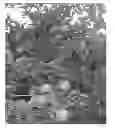
FIG. 1 illustrates the ‘Starking Delicious’ mother plant where the ‘Stark Gugger’ mutation has been identified. A branch on the top of the plant presented fully coloured dark red apples and earlier coloration compared to the lower branches of original ‘Starking Delicious’.
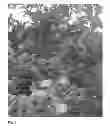
FIG. 2 and FIG. 3 illustrate 4 year old ‘Stark Gugger’ trees of second generation at harvesting time. The plants vegetatively propagated on M9 rootstocks, present a growing habit of type standard with medium growth and spreading branches, predominance of bearing on shoots.
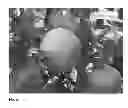
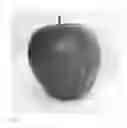
FIG. 4 illustrates a typical ‘Stark Gugger’ apple at picking time with solid flush dark red colour and long truncated conical shape.
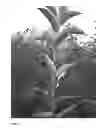
FIG. 5 illustrates ‘Stark Gugger’ actively growing shoot at middle of July, the bark of the shoot and the basal part of leaf are greyed-purple coloured.
FIG. 6 illustrates the early red purple coloration of ‘Stark Gugger’ apples already at middle of July.
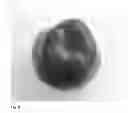
FIGS. 7-9 illustrate a ‘Stark Gugger’ apple after harvesting (wiped from the wax with a dry rag). FIG. 7, profile; FIG. 8, calix eye; FIG. 9, stalk cavity.
FIG. 10 illustrates the flesh of ‘Stark Gugger’ on the equatorial section and the seeds.
DETAILED BOTANICAL DESCRIPTION
The following detailed description of the ‘Stark Gugger’ variety is based on observations made during the 2012 growing season in a high density ‘Stark Gugger’ planting field in Bressanone area, Bolzano Province (Italy).
Certain characteristics of this variety may change with changing environmental conditions (e.g., light, temperature, moisture), nutrient availability, and/or other factors. Quantified measurements are expressed as an average of measurements taken from a number of individual plants of the new variety. The measurements of any individual plant, or any group of plants, of the new variety may vary from the stated average. Colour descriptions and other terminology are used in accordance with their ordinary dictionary descriptions, unless the context clearly indicates otherwise. Colour designations are made with reference to The Royal Horticultural Society (R.H.S.) Colour Chart.
- Parentage: ‘Stark Gugger’ variety originated by a sport on the top part of a ‘Starking Delicious’ standard plant, identified in 2004 in a cultivated field of the Farm ‘Gugger’ in Bressanone area, Bolzano province. The mutated branch was easily identified and noticed because of the anticipated and strong red purple coloration of the fruits compared to the other ‘Starking Delicious’ fruits (FIG. 1).
- Tree: The trees here described are four-year-old trees grown on M9 rootstock deriving from the second generation vegetatively propagated ‘Stark Gugger’ sport. (FIG. 2 and FIG. 3).
- Vigour and overall shape: ‘Stark Gugger’ trees on M9 rootstock show a standard ramified (non spur) growth habit with medium vigour, 20% stronger than Red Delicious ‘Jeromine’ and other Red Delicious standard clones.
-
- Height.—3.30 m.
- Width.—1.20 m.
-
- Trunk: Medium Stocky; diameter, 45 mm at 200 mm above the graft union; bark texture, smooth; bark colour, Brown RHS N200-C.
- Primary branches: Basal branches emerge at 700 mm from the soil with an angle of about 60 to 90 degrees. Three year old branches: length, 600-700 mm; diameter measured at the base, 27 mm; crotch angle, 70 to 90 degree; colour Greyed-Red RHS 182C.
-
- One-year old branches.—length, 340 mm; tichness, 7.8 mm; internode length, 32 mm; colour at middle of July, Greyed-Purple RHS 183D; pubescence, medium-high White RHS N155A; number of lenticels per square centimetre, 8; lenticel shape, elongated-round; lenticels colour Grey RHS 198C.
-
- Bearing: Annual, principally on flower-buds on shoots, sometimes on spurs; very low or not subjected to alternate bearing.
- Hardiness: European hardiness Zone 6, comparable to other Red Delicious varieties.
- Drought, disease and insect resistance: susceptibility to classical apple disease comparable to other Red Delicious varieties.
- Leaves: shape, elliptic; length, medium-long 104 mm; width, 4.9 mm; length/width ratio, 2.12; blade margins, bi-crenate; apex, acuminate; base shape, truncate; colour of upper surface, Green RHS 133A; colour of lower surface, Green RHS 143A; pubescence on lower surface, light-medium; pubescence colour, White RHS N155A; leaf attitude in relation to shoot, upward to outward (FIG. 5). Petiole: length, medium 36 mm; thickness, medium 2.7 mm, colour, Yellow-Green RHS 147C tinged on lower surface on Greyed-Purple RHS 185C; petiole pubescence, light, colour White RHS N155A. Stipules: quantity, 2 opposite; thin; length 7 mm; colour, Yellow-Green RHS 147B.
- Flowers: Flower buds (unopened flower): number per cluster, 5 to 6; length, 15 mm; diameter, 10 mm; shape, round-conical; colour, Red-Purple RHS 61C. Open flower: size, medium-large; diameter, 43 mm; pollination requirement varieties, ‘Gala’ ‘Golden Delicious’ ‘Granny Smith’ ‘Idared’ ‘Summerred’ and other varieties flowering in the same period except for Red Delicious group.
- Petals: number per flower, 5; relative position of petal margins, slightly overlapping; shape, ovoid-elliptic; length, 20 mm; width, 14 mm; apex, rounded; base, conical pointed; margin, smooth; colour of upper surface, White RHS NN155D; colour of lower surface, White RHS N155D.
- Pistil: size, medium 16 mm long; stigma colour, Yellow-Green RHS 145D; styles quantity, 5; style colour, Yellow-Green RHS 145B; ovary colour, Green RHS 143A.
- Anthers: quantity 20 to 25 per flower; size, 2.3 mm; presence of pollen; colour of pollen, Yellow RHS 4B.
- Sepals: quantity, 5; shape, conical pointed; colour, Green RHS 143A.
- Pedicel: length 20 mm; diameter, 2 mm; colour, Green RHS 143A.
- Bloom season: in 2012 at Bressanone area in Bolzano Province, Italy, blooming began the 10th of April; full bloom was the 16th of April; finishing on the 20th of April.
- Fruit: quantity per cluster, 1 to 3; size, large; diameter (average of 50 typical fruits), 85 mm; weight, 272 g; ratio height/width, 1.09; general shape in profile, elongated truncate-conical (FIG. 7); the maximum diameter is in medium-high position; ribbing is present; pronounced crowning at calix end; depth of calix eye, 11 mm; width of calix end, 8 mm; depth of calix end eye, 10 mm; width of calix end eye, 23 mm (FIG. 8); depth of stalk cavity, 15 mm; width of stalk cavity, 31 mm; length of stalk, 22 mm; thickness of stalk, 2.7 mm; colour of stalk, Greyed-Orange RHS 176A (FIG. 9); partially open sepals, (FIG. 8) length of sepals, 3.5 mm. FIG. 4 shows a typical ‘Stark Gugger’ apple at picking time.
- Fruit skin: background colour, Red RHS 47A; over-colour, Purple-Red RHS N77A; amount of over-colour, 95 to 100% coverage; intensity of over-colour, dark purple; pattern of over-colour, solid flush without stripes (FIG. 7); thickness, thin to medium with purple colour penetrating in the first flesh cell layers (FIG. 10); bloom of skin, wax is present; greasiness of skin, absent; russet around stalk cavity, absent or very weak; russet around the calix eye, absent or very weak; number of cheeks per square cm, 5 to 6; shape of cheeks, round; size of cheeks, 0.7 mm; colour of cheeks, Greyed-White RHS 156D; russet around cheeks, absent.
- Fruit flesh: firmness, medium to firm; texture, medium to fine; colour, Yellow RHS 4D (FIG. 10); flavour, sweet; at harvest time 12-12.5 Brix and 3-3.5% acidity; aroma, good and intense aroma classical of the original ‘Starking Delicious’; juiciness, moderately-juicy.
- Fruit core: vascular bundles evident; five partially open locules; usually 1 to 2 seeds per locule, shape of seed, oval elongated; colour of seeds, Greyed-Orange RHS 176A;
- Fruit picking time: in 2012 at Bressanone area in Bolzano Province, Italy, the picking of ‘Stark Gugger’ began the 13th of September, (14 days earlier than ‘Golden Delicious’). The high and early coloration allow for harvesting this variety in one picking.
Table 1, below, reports apple maturation analysis of 12 fruits for each variety at two times. ‘Stark Gugger’ and ‘Jeromine’ were cultivated in the same field with the same growing conditions. At both times ‘Stark Gugger’ shows anticipated starch degradation (in the scale 1 is minimum, 5 is maximum starch hydrolysis) and anticipated sugar accumulation compared to Jeromine.
| TABLE 1 |
| Apple maturation analysis. |
| Starch content | Sugar | Firmness | Acidity | |||
| Date | Location | Variety | (1 to 5 scale) | (Brix) | (kg/cm2) | (g/l) |
| Aug. 9, 2012 | Gugger Farm, | ‘Stark | 1.81 | 11.4 | 8.05 | 3.6 |
| Bressanone (BZ) | Gugger’ | |||||
| Aug. 9, 2012 | Gugger Farm, | ‘Jeromine’ | 1.5 | 10.2 | 7.73 | 3.2 |
| Bressanone (BZ) | ||||||
| Dec. 9, 2012 | Gugger Farm, | ‘Stark | 2.12 | 12.9 | 6.94 | 2.9 |
| Bressanone (BZ) | Gugger’ | |||||
| Dec. 9, 2012 | Gugger Farm, | ‘Jeromine’ | 1.75 | 10.3 | 7.73 | 2.9 |
| Bressanone (BZ) | ||||||
Claims
What is claimed is:1. A new and distinct cultivar of Malus domestica Borkh named ‘Stark Gugger’, substantially as illustrated and described herein.
Images & Drawings included:




Sources:
- United States Patent and Trademark Office - verify current appl. status at the USPTO↗
Recent applications in this class:
- » 20240292771 2024-08-29
Campanula plant named 'Twilight' - » 20240251691 2024-07-25
HYDRANGEA PLANT NAMED 'HYLV17520' - » 20240251690 2024-07-25
Vaccinium Plant Named 'BWPBLUE02' - » 20240251689 2024-07-25
BLUEBERRY PLANT NAMED 'FC13-113' - » 20240251688 2024-07-25
BLUEBERRY PLANT NAMED 'FCM14-057' - » 20240237567 2024-07-11
PONGAMIA VARIETIES - » 20240224827 2024-07-04
PELARGONIUM PLANT NAMED 'PEQZ0103' - » 20240215470 2024-06-27
Agapanthus plant named 'Monsapho' - » 20240215469 2024-06-27
plant named ‘LOCORA3519’ - » 20240206359 2024-06-20
CORYLUS PLANT NAMED 'BWM01'