Coating, coating layer system, coated superalloy component
US20140234652A1
2014-08-21
14/348,606
2012-09-18
✅ Patent granted
US 9,309,780 B2
2016-04-12
WO; PCT/EP2012/068304; 20120918
WO; WO2013/056935; 20130425
Michael E La Villa
Beusse Wolter Sanks & Maire
2032-09-22
Abstract:
Coatings as may be used in a gas turbine are provided. A nickel based coating may include 15 to 40 wt % cobalt, 10 to 25 wt % chromium, 5 to 15 wt % aluminum, 0.05 to 1 wt % yttrium and/or at least one of elements from lanthanum series, 0.05 to 8 wt % ruthenium or iron, 0 to 1 wt % iridium, 0.05 to 5 wt % molybdenum, 0 to 3 wt % silicon, 0 to 5 wt % tantalum, 0 to 2 wt % hafnium, unavoidable impurities, and a balance of nickel. A cobalt based coating may include 15 to 40 wt % nickel, 15 to 28 wt % chromium, 5 to 15 wt % aluminum, 0.05 to 1 wt % yttrium and/or at least one of elements from lanthanum series, 0.05 to 5 wt % ruthenium and/or molybdenum, 0 to 2 wt % iridium, 0 to 3 wt % silicon, 0 to 5 wt % tantalum, hafnium, unavoidable impurities, and a balance of cobalt.
Assignee:
- SIEMENS AKTIENGESELLSCHAFT 12,417 🇩🇪 Munich, Germany
Applicant:
Interested in similar patents?
Get notified when new applications in this technology area are published.
Classification:
F01D25/005 » CPC main
Component parts, details, or accessories, not provided for in, or of interest apart from, other groups Selecting particular materials
C22C19/055 » CPC further
Alloys based on nickel or cobalt based on nickel with chromium and Mo or W with the maximum Cr content being at least 20% but less than 30%
C22C19/056 » CPC further
Alloys based on nickel or cobalt based on nickel with chromium and Mo or W with the maximum Cr content being at least 10% but less than 20%
F01D25/00 IPC
Component parts, details, or accessories, not provided for in, or of interest apart from, other groups
C23C28/3215 » CPC further
Coating for obtaining at least two superposed coatings either by methods not provided for in a single one of groups - or by combinations of methods provided for in subclasses and or; Coatings combining at least one metallic layer and at least one inorganic non-metallic layer including at least one pure metallic layer with at least one metal alloy layer at least one MCrAlX layer
C23C28/345 » CPC further
Coating for obtaining at least two superposed coatings either by methods not provided for in a single one of groups - or by combinations of methods provided for in subclasses and or; Coatings combining at least one metallic layer and at least one inorganic non-metallic layer including at least one inorganic non-metallic material layer, e.g. metal carbide, nitride, boride, silicide layer and their mixtures, enamels, phosphates and sulphates with at least one oxide layer
C23C28/3455 » CPC further
Coating for obtaining at least two superposed coatings either by methods not provided for in a single one of groups - or by combinations of methods provided for in subclasses and or; Coatings combining at least one metallic layer and at least one inorganic non-metallic layer including at least one inorganic non-metallic material layer, e.g. metal carbide, nitride, boride, silicide layer and their mixtures, enamels, phosphates and sulphates with at least one oxide layer with a refractory ceramic layer, e.g. refractory metal oxide, ZrO, rare earth oxides or a thermal barrier system comprising at least one refractory oxide layer
F01D5/288 » CPC further
Blades; Blade-carrying members ; Heating, heat-insulating, cooling or antivibration means on the blades or the members; Blades; Selecting particular materials; Particular measures relating thereto; Measures against erosion or corrosion Protective coatings for blades
Y10T428/12 » CPC further
Stock material or miscellaneous articles All metal or with adjacent metals
Y10T428/1266 » CPC further
Stock material or miscellaneous articles; All metal or with adjacent metals; Composite; i.e., plural, adjacent, spatially distinct metal components [e.g., layers, joint, etc.] O, S, or organic compound in metal component
Y10T428/12618 » CPC further
Stock material or miscellaneous articles; All metal or with adjacent metals; Composite; i.e., plural, adjacent, spatially distinct metal components [e.g., layers, joint, etc.] with additional, spatially distinct nonmetal component; Oxide-containing component Plural oxides
Y10T428/12667 » CPC further
Stock material or miscellaneous articles; All metal or with adjacent metals; Composite; i.e., plural, adjacent, spatially distinct metal components [e.g., layers, joint, etc.]; O, S, or organic compound in metal component Oxide of transition metal or Al
Y10T428/12861 » CPC further
Stock material or miscellaneous articles; All metal or with adjacent metals; Composite; i.e., plural, adjacent, spatially distinct metal components [e.g., layers, joint, etc.]; Transition metal-base component Group VIII or IB metal-base component
C23C28/00 IPC
Coating for obtaining at least two superposed coatings either by methods not provided for in a single one of groups - or by combinations of methods provided for in subclasses and or
F01D5/28 IPC
Blades; Blade-carrying members ; Heating, heat-insulating, cooling or antivibration means on the blades or the members; Blades Selecting particular materials; Particular measures relating thereto; Measures against erosion or corrosion
C22C30/00 » CPC further
Alloys containing less than 50% by weight of each constituent
C22C19/07 » CPC further
Alloys based on nickel or cobalt based on cobalt
C22C19/05 IPC
Alloys based on nickel or cobalt based on nickel with chromium
B32B15/04 IPC
Layered products comprising a layer of metal comprising metal as the main or only constituent of a layer, next to another layer of a
C22C19/03 » CPC further
Alloys based on nickel or cobalt based on nickel
C22C19/00 » CPC further
Alloys based on nickel or cobalt
C23C30/00 » CPC further
Coating with metallic material characterised only by the composition of the metallic material, i.e. not characterised by the coating process
Y10T428/12611 » CPC further
Stock material or miscellaneous articles; All metal or with adjacent metals; Composite; i.e., plural, adjacent, spatially distinct metal components [e.g., layers, joint, etc.] with additional, spatially distinct nonmetal component Oxide-containing component
Y10T428/12931 » CPC further
Stock material or miscellaneous articles; All metal or with adjacent metals; Composite; i.e., plural, adjacent, spatially distinct metal components [e.g., layers, joint, etc.]; Transition metal-base component; Group VIII or IB metal-base component Co-, Fe-, or Ni-base components, alternative to each other
Y10T428/12937 » CPC further
Stock material or miscellaneous articles; All metal or with adjacent metals; Composite; i.e., plural, adjacent, spatially distinct metal components [e.g., layers, joint, etc.]; Transition metal-base component; Group VIII or IB metal-base component Co- or Ni-base component next to Fe-base component
Y10T428/12944 » CPC further
Stock material or miscellaneous articles; All metal or with adjacent metals; Composite; i.e., plural, adjacent, spatially distinct metal components [e.g., layers, joint, etc.]; Transition metal-base component; Group VIII or IB metal-base component Ni-base component
Y10T428/12979 » CPC further
Stock material or miscellaneous articles; All metal or with adjacent metals; Composite; i.e., plural, adjacent, spatially distinct metal components [e.g., layers, joint, etc.]; Transition metal-base component; Group VIII or IB metal-base component; Fe-base component; Containing 0.01-1.7% carbon [i.e., steel] Containing more than 10% nonferrous elements [e.g., high alloy, stainless]
Y10T428/264 » CPC further
Stock material or miscellaneous articles; Web or sheet containing structurally defined element or component, the element or component having a specified physical dimension; Coating layer not in excess of 5 mils thick or equivalent Up to 3 mils
Y10T428/265 » CPC further
Stock material or miscellaneous articles; Web or sheet containing structurally defined element or component, the element or component having a specified physical dimension; Coating layer not in excess of 5 mils thick or equivalent; Up to 3 mils 1 mil or less
Description
The invention relates to a coating, a coating layer system and a coated superalloy component preferably to be used in a gas turbine's hot gas path.
When further increasing engine efficiency, output power, availability and reliability in the current gas turbine development, this effort is often limited by temperature capacity and lifetime of protective coatings for protection against hot corrosion and oxidation and bonding thermal barrier coating on the hot turbine components. The currently used coatings are so called MCrAlY coatings developed by major gas turbine manufactures. Most gas turbine manufactures use there proprietary coatings since commercially available coatings are much less effective.
The term MCrAlY coatings is widely applied, wherein M means cobalt or nickel or a mixture of cobalt and nickel. These coatings may be used as corrosion resistant overlays or as bond-coats for use with thermal barrier coatings. Since in the first and second stage of a gas turbine metal temperatures may exceed 850° C. two predominant corrosion mechanics have been identified to be accelerated. One is the high temperature oxidation occurring at temperatures above 950° C. and the other mechanism is the so called type-I-hot-corrosion-occurring at aproximately 850° C. to 950° C.
During the last ten years the demand for coatings in gas turbines increased, which led to an increase in price of the coatings, which contain comparatively large amounts of rare earth or minor elements which's availability is increasingly tight.
Today's MCrAlY coatings rely very much on yttrium incorporation to have so called pegging and scavenge effects to increase oxidation and corrosion resistance of the coatings.
However, it has been recently found that the yttrium content in MCrAlY may not be optimized. Nijdam T J, Sloof W G. (Acta Materia/ia 2007;55:5980) reported that yttrium oxide inclusions in the protective aluminum oxide scale on top of the MCrAlY provide fast oxygen diffusion routes and therefore accelerate oxidation of the coating.
Further Smialek J L, Jayne Q T, Schaeffer J C and Murphy W H (Thin Solid Films 1994; 253:285; Smialek J L; Metallurgical Transactions A. Physical Metallurgy and Material Science 1991;22A:739) state that a high sulfur content of bigger than 10 ppm (parts per million) existed in the current MCrAlY layer shortening coating lifetime.
Typically ceramic coating(s) are used on a hot gas component of a gas turbine, for example turbine blades, combustors, transition ducts, sealing segments, and nozzle guide vanes, providing the components with thermal insulating or sealing functions. For the thermal insulating, the ceramic coatings are called thermal barrier coatings (TBC) which are characterized by a low thermal conductivity and typically consist of zirconia stabilized by yttria generally deposited by plasma spraying and electron beam physical vapor deposition on the substrate. Often a bond-coat is necessary to avoid exceeding residual stresses caused by different thermal expansion of the substrate and the ceramic thermal barrier coating(s). Most often the bond-coat is applied on the surface as a MCrAlY bond-coat.
It is one task of the invention to optimize the coating constitution, in order to achieve a good thermal stability of coating phase structures and a high mechanical durability. It is another task to optimize the content and combination of the rare earth and minor elements in coatings, in order to minimize growths of oxides on top of the coating and inter-diffusion between coating and superalloy substrates which lead to a rapid consumption of the Al reservoir in coatings thereby coating lifetime.
It is still another task of the invention to avoid the implementation of sulfur in the coating system shortening the coating lifetime.
To overcome the technical limitations outlined above and as a reaction to the dramatic increase in price of rare earth elements a coating according to claim 1, a coating layer system according to claim 7 and a coated superalloy component especially a blade, a vane, or a sealing segment of a gas turbine hot gas path is proposed according to the invention. The respectively dependent claims refer to preferred embodiments of the invention.
By introduction of other minor elements like ruthenium, iridium, molybdenum, silicon, hafnium, tantalum, and elements in lanthanum series the necessary amount of yttrium is significantly reduced, which efficiently minimize the negative effects of yttrium. The coating and coating system according to the invention can be characterized by the term MCrAlX alloy coating, wherein M stands for nickel or cobalt or both of these elements and X is a combination of minor elements such as yttrium, ruthenium, iridium, silicon, hafnium, or tantalum and others.
The new coating alloy according to the invention performs in a very efficient way because the introduction of ruthenium, molybdenum, or/and iridium reduces the diffusion rate of aluminum and forms a diffusion barrier to minimize the inter-diffusion between the MCrAlX coating and the substrate.
A preferred embodiment of the coating layer according to claim 1 provides a reduction of the sulfur content to below 10 ppm which increases the coating lifetime.
Preferably the coating is applied in a thickness in the range of 30 to 800 μm depending on the type of application and the application method. Preferred application methods are thermal spraying in air, thermal spraying in vacuum, thermal spraying in protected atmosphere, physical vapor deposition, and plating on nickel or cobalt based superalloys.
The coating according to one of the claims 1 to 6 can be applied as a single coating or as a bond-coat underlying an adherent ceramic coating(s) compensating different thermal expansions between the substrate and the ceramic coating(s) on the one hand and improving especially the oxidation resistance of the superalloy component.
Summarizing this invention results in MCrAlX (as defined above) coatings with a higher temperature capacity and longer lifetime compared to conventional MCrAlY coatings.
The following relates to preferred embodiments of the invention with reference to drawings illustrating the currently best mode of putting the invention into practice.
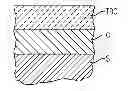
FIG. 1 shows a first embodiment of the invention, wherein the coating to the invention is applied as a single layer to a substrate and
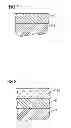
FIG. 2 shows a second embodiment of the invention, wherein the coating according to claim 1 is an intermediate layer of a coating layer system to be applied on a substrate.
FIG. 1 shows a substrate as covered with an adherent coating C of a consistency outlined in claim 1. The coating C is applied on a substrate by way of thermal spraying in air or vacuum or protected atmosphere or by way of physical vapor deposition or by way of plating. The substrate is part of a superalloy gas turbine component, for example a gas turbine vane or a gas turbine blade or a combustor part.
FIG. 2 shows a substrate covered at least partially by a layer system comprising a coating as a lower layer directly provided on the substrate, which coating C is an intermediate layer provided as a bond-coat for the adherent ceramic coating(s) TBC. The coating C has the composition outlined in claim 1. The substrate is a blade or a vane or a combustor part or a sealing segment of a gas turbine exposed to the hot gas.
The ceramic coating(s) consist of at least 70 wt % zirconium oxide and is stabilized by at least one of yttrium oxide, magnesium oxide, and oxides of elements in lanthanum series. The bond-coat compensates different thermal expansion between the ceramic coating(s) and the superalloy substrate.
Claims
1. A nickel based coating comprising:
| 15 to 40 | weight percent of | cobalt, |
| 10 to 23 | weight percent of | chromium, |
| 5 to 15 | weight percent of | aluminum, |
| 0.05 to 1 | weight percent of | yttrium and/or at least one of |
| elements from lanthanum series, | ||
| 0.05 to 5 | weight percent of | ruthenium, |
| 0 to 2 | weight percent of | iridium, |
| 0.05 to 5 | weight percent of | molybdenum, |
| 0 to 3 | weight percent of | silicon, |
| 0 to 20 | weight percent of | iron |
| 0 to 5 | weight percent of | tantalum, |
| 0 to 2 | weight percent of | hafnium, |
and unavoidable impurities,
and a balance of nickel.
2. The coating according to claim 1, containing 0.1 to 0.6 weight percent of silicon.
3. The according to claim 1, containing 0.3 to 0.7 weight percent of tantalum.
4. The coating according to claim 1, containing 0.1 to 0.5 weight percent of hafnium.
5. A coating layer according to claim 1, wherein the content of sulfur is reduced to below 10 ppm (parts per million).
6. A coating layer according to claim 1, wherein the thickness of the coating is between 30-800 μm.
7. A coating layer system comprising a lower first layer on a substrate and an adherent upper second layer, wherein the first layer is a coating according to claim 1 and the second layer is a ceramic coating or multiple ceramic coatings.
8. The coating layer system according to claim 7, wherein each of ceramic coatings includes
zirconium dioxide
and a stabilizer.
9. The coating layer system according to claim 7, wherein the stabilizer is at least one of yttrium oxide, magnesium oxide, and oxides of elements in lanthanum series.
10. A coated superalloy component comprising:
a substrate article formed of a superalloy and
an adherent coating according to claim 1.
11. The coated superalloy component according to claim 11, wherein the superalloy component is a blade, a vane, or a sealing segment of a gas turbine's hot gas path.
12. A coated superalloy component comprising:
a substrate article formed of a superalloy and
an adherent coating layer system according claim 8 covering at least a portion of the substrate article's surface.
Images & Drawings included:
Sources:
- United States Patent and Trademark Office - verify current appl. status at the USPTO↗
Similar patent applications:
Recent applications in this class:
- » 20250250908 2025-08-07
AIR TURBINE STARTER - » 20250237156 2025-07-24
COMPOSITE STRUCTURE FOR A TURBINE ENGINE - » 20250237155 2025-07-24
COMPOSITE STRUCTURE FOR A TURBINE ENGINE - » 20250188849 2025-06-12
ASSEMBLY FOR AN EXHAUST CONE IN A TURBOMACHINE NOZZLE - » 20250137387 2025-05-01
METAL COUPON WITH POROUS REGION FOR COMPONENT AND COMPONENT WITH SAME - » 20250101880 2025-03-27
ALUMINUM-CHROMIUM OXIDE COATING AND METHOD THEREFOR - » 20250059895 2025-02-20
THERMAL PROTECTION METHODS USING BARRIER COATINGS WITH STRAIN TOLERANCE GROOVES - » 20240318576 2024-09-26
ENVIRONMENTAL BARRIER COATING WITH THERMAL RESISTANCE - » 20240287915 2024-08-29
Turbine shroud with ceramic matrix composite blade track segments and method of assembly - » 20240175372 2024-05-30
REMOVABLE LAYER TO ADJUST MOUNT STRUCTURE OF A TURBINE VANE FOR RE-STAGGER
Recent applications for this Assignee:
- » 20250262772 2025-08-21
PLACE CONDITIONED PICK FOR ROBOTIC PICK AND PLACE OPERATIONS - » 20250242498 2025-07-31
SYSTEM AND METHOD FOR PICK POSE ESTIMATION FOR ROBOTIC PICKING WITH ARBITRARILY SIZED END EFFECTORS - » 20250216836 2025-07-03
PRIORITIZATION BETWEEN AGENTS IN AGENT-BASED PROCESS AUTOMATION - » 20250168873 2025-05-22
WLAN Communication Method and Devices - » 20250168152 2025-05-22
Communication System, Adapter for a Terminal and Method for Securely Transmitting Time-Critical Data within the Communication System - » 20250166165 2025-05-22
TRAINING SYSTEMS FOR SURFACE ANOMALY DETECTION - » 20250162095 2025-05-22
Method for Operating a Machine Tool, Computer Program Product, Control Unit, Machine Tool, Simulation Program Product and Use of the Control Unit - » 20250147755 2025-05-08
INDUSTRIAL APPLICATION PACKAGE MANAGEMENT - » 20250126041 2025-04-17
METHOD OF CAPTURING PACKETS FROM APPLICATIONS HOSTED ON CONTAINERS - » 20250117920 2025-04-10
SELF-SUPERVISED ANOMALY DETECTION FRAMEWORK FOR VISUAL QUALITY INSPECTION IN MANUFACTRUING