Service differentiation in a network sharing architecture
US20140235236A1
2014-08-21
14/350,252
2012-10-04
✅ Patent granted
US 10,425,804 B2
2019-09-24
WO; PCT/EP2012/069559; 20121004
WO; WO2013/050435; 20130411
Marcos Batista
Fay Sharpe LLP
2032-10-04
Abstract:
In an embodiment, there is provided a method for service differentiation in a network sharing architecture for a mobile network wherein an Access Network AN is shared by different Service Providers SPs, said method comprising at least one step based on an identification of an SP by an SP identity that does not require this SP to own a PLMD-Id, for service differentiation in said AN.
Inventors:
- Laurent Thiebaut 39 🇫🇷 Nozay, France
- Cristina Gallmann 1 🇫🇷 Nozay, France
- Eric Brigant 1 🇫🇷 Rambouillet, France
Assignee:
- ALCATEL LUCENT 3,442 🇫🇷 Paris, France
- Alcatel Lucent 269 🇫🇷 Nozay, France
Applicant:
Interested in similar patents?
Get notified when new applications in this technology area are published.
Classification:
H04W8/02 » CPC main
Network data management Processing of mobility data, e.g. registration information at HLR [Home Location Register] or VLR [Visitor Location Register]; Transfer of mobility data, e.g. between HLR, VLR or external networks
H04W4/00 » CPC further
Services specially adapted for wireless communication networks; Facilities therefor
H04W8/26 » CPC further
Network data management Network addressing or numbering for mobility support
Description
The present invention generally relates to mobile communication networks and systems.
Detailed descriptions of mobile communication networks and systems can be found in the literature, such as in particular in Technical Specifications published by standardization bodies such as for example 3GPP (3rd Generation Partnership Project).
Examples of mobile communication systems include GPRS/UMTS (specified in particular in 3GPP TS 23.060) and Evolved Packet System EPS (specified in particular in 3GPP TS 23.401). Mobile communication systems (for example GPRS/UMTS, EPS) comprise a Core Network (for example GPRS/UMTS Core Network, Evolved Packet Core EPC) providing IP connectivity services, and accessed by User Equipment UE via a Radio Access Network RAN (for example GERAN/UTRAN, E-UTRAN). By way of example, an architecture for EPS is recalled in FIG. 1, taken from 3GPP TS 23.401.
Network sharing is a way for mobile operators to share the heavy deployment costs for mobile networks and is becoming more and more important. There may be various forms and scenarios of network sharing. Two configurations allowing different CN operators to share a RAN are identified in 3GPP TS 23.251: Multi-Operator Core Network (MOCN) and Gateway Core Network (GWCN). In the GWCN configuration, CN nodes interfacing with the shared RAN, also referred to as Access Gateway (such as for example MME or SGSN) are also shared.
As will be explained later with more detail, there is a need to improve service differentiation in a network sharing architecture allowing different Service Providers to share a common Access Network. More generally there is a need to improve network sharing in mobile networks.
Embodiments of the present invention in particular address such needs.
These and other objects are achieved, in one aspect, in an embodiment, by a method for service differentiation in a network sharing architecture for a mobile network wherein an Access Network AN is shared by different Service Providers SPs, said method comprising at least one step based on an identification of an SP by an SP identity that does not require this SP to own a PLMN-Id, for service differentiation in said AN.
These and other objects are achieved, in other aspects, by mobile network entities for performing such method.
Some embodiments of apparatus and/or methods in accordance with embodiments of the present invention are now described, by way of example only, and with reference to the accompanying drawings, in which:
FIG. 1 is intended to recall an example of architecture for EPS,
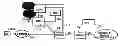
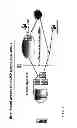
FIGS. 2 to 5 are intended to illustrate different examples of network sharing architecture for a mobile network,
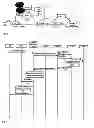
FIG. 6 is intended to illustrate an example of procedure carried out at initial access to a shared network, in EPS by way of example, according to embodiments of the present invention.
Some embodiments of the present invention aim at enlarging currently available solutions for the case where the network/operator that provides the IP service and that owns the subscription of the user is different from the network/operator that provides the actual access to a licensed radio such as a 3gpp radio, especially in the case where the former network is not associated with a PLMN-Id. PLMN-Id is defined in 3gpp 23.003. A Public Land Mobile Network is uniquely identified by its PLMN identifier. PLMN-Id consists of Mobile Country Code (MCC) and Mobile Network Code (MNC).
In the following:
-
- the operator that provides the IP service and that owns the subscription of the user is called the “Service Provider” (SP)
- the operator that provides the actual access to a licensed radio such as a 3gpp radio is called the “Access Provider”
An Access Provider providing access to many SPs is sometimes referred as “wholesaler”.
As the Access Provider delivers a 3gpp radio access service, it has to be associated with a PLMN-Id
In many cases, such as when the user can roam between PLMN, the “Service Provider” owns itself a PLMN-Id but in some cases it does not own a PLMN-Id.
Possible solutions for the split between an Access Provider and a Service Provider are illustrated in FIGS. 2 to 5 showing different examples of network sharing, including cases where the SP has a PLMN-Id and cases where the SP has no PLMN-Id.
Cases where the Service Provider Has a PLMN-Id.
Supporting a PLMN-Id means the Service Provider has to negotiate roaming agreements with all the PLMN worldwide which is cumbersome task
1) MOCN (Multiple Operator Core Network) such as defined in 3gpp TS 23.251. In this kind of deployment:
-
- The Service Provider is a full PLMN that just delegates the RAN to another PLMN (RAN sharing). It is also called a “Core Operator” in this deployment.
- The Identity of the Core operator is displayed on the UE (based on Core PLMN-Id)
- The RAN knows which PLMN it is serving: service segregation/charging per service provider are possible.
- When accessing to the Radio, the UE tells the RAN via relevant RRC (Radio Resource Control) which Core Operator it wants to access. This feature requires support from the UE (mandatory for LTE)
- There are e.g. in RAN (e.g. ENB) configuration parameters defining min, max (%) resources per Core Operator (per QCI). These are configured by the Access (RAN) operator based on agreement with Core operator.
- An Issue with this deployment is that: the RAN has the cumbersome task maintain CDR (Charging Records) per Core PLMN
- Each Core enforces its own policies (roaming right, Control of RAN for HO policies, . . . )
- This is depicted in FIG. 2
2) GWCN (Gateway Core Network) such as defined in 3gpp TS 23.251 when the Service Provider has a PLMN-Id. In this kind of deployment: - The Service Provider is either a full PLMN (this corresponds then to a basic roaming case) or is a MVNO with a PLMN-Id. Each operator (Access, Service Provider) has its own PLMN-Id.
- The Identity of the Service Provider may be displayed on the UE (USIM parameters) when the UE is camping on the partner Access Provider
- The RAN does NOT know which PLMN it is serving: service segregation per Service Provider not possible at RAN level
- Core policies (roaming right, Control of RAN for HO policies, . . . ) are those of the Access operator (MVNO users are handled as roamers). The Access Operator knows the Identity of the Service Provider based on the PLMN-Id part of the IMSI
- This is depicted in FIG. 3
Cases where the Service Provider does not Have a PLMN-Id
In this case the Service Provider is hooked with a “partner” Access Provider as the IMSI of the users of the Service Provider are allocated within a range belonging to this partner Access Provider. On the other round this allows the SP to benefit from the roaming agreements of the partner Access Provider.
3) GWCN (Gateway Core Network) such as defined in 3gpp TS 23.251 when the Service Provider has not got a PLMN-Id. In this kind of deployment:
-
- The PLMN-Id of the MVNO UE is the PLMN-Id of the partner Access operator (MNO)
- The Identity of the Service Provider may be displayed on the UE (USIM parameters)
- The RAN does NOT know which PLMN it is serving: service segregation per Service Provider not possible at RAN level
- Core policies (roaming right, Control of RAN for HO policies, . . . ) are those of the Access operator (MVNO users may be detected based on the IMSI range) (IMSI range used to charge the MVNO)
- This is depicted in FIG. 4
4) The Service Provider is an ISP (Internet Service Provider) that desires to provide a Fixed Broadband Access to its users. In this kind of deployment (very similar to the previous case: GWCN without the MVNO having a PLMN-Id): - The PLMN-Id of the ISP UE is the PLMN-Id of the partner Access operator (MNO)
- The Identity of the Service Provider may be displayed on the UE (USIM parameters)
- The RAN does NOT know which PLMN it is serving: service segregation per Service Provider not possible at RAN level.
- Core policies (roaming right, Control of RAN for HO policies, . . . ) are those of the partner Access operator (ISP users may be detected based on the IMSI range) (IMSI range used to charge the ISP)
- This is depicted in FIG. 5
To Summarize
-
- Either (MVNO or GWCN when the Service Provider has a PLMN-Id) the Service Provider has a PLMN-Id and thus has to negotiate roaming agreements with all the PLMN worldwide which is cumbersome task.
- Or the Service Provider has no PLMN-Id. In this case service segregation per Service Provider not possible at the level of the RAN of the Access Provider (Wholesaler). Thus the following features are not possible
- Service differentiation per Service Provider
- Issuing statistics at RAN level allowing to monitor the SLA between the Access Provider and Service Providers
Embodiments of the present invention aim at determining solutions allowing the Access Provider to adapt its service based on the Identity of the Service Provider even though the Service Provider is not identified by a PLMN-Id.
Example of cases where the Access Provider adapts its service based on the Identity of the Service Provider (SP):
-
- the RAN of the Access Provider may allocate to a given SP an aggregated minimum and/or maximum capacity over the radio interface and over the backhaul resources. This aggregated capacity may be set per QoS class and may e.g. correspond to throughput or to a number of bearers.
- The RAN of the Access Provider may be given rules about which network (PLMN-Id, Radio Access Type) an UE of the SP may be handed-over to.
- The RAN of the Access Provider may hold Performance & statistical counters allowing to monitor the SLA between the Access Provider (wholesaler) and each of the Service Providers
Embodiments of the present invention provide a solution where
-
- the Service Provider does not need a PLMN-Id and thus does not need to negotiate roaming agreements with all the PLMN worldwide
- The Identity of the Service Provider is added onto the Interface of the RAN allowing service segregation per Service Provider at the level of the RAN of the Access Provider
Embodiments of the present invention may be used in the cases where the Service Provider corresponds to e.g.
-
- An MVNO without a PLMN-Id
- An ISP
- A corporate organisation (e.g. enterprise or public organisation).
In some embodiments of the present invention, the Service Provider Identity is used within RAN and MME/SGSN of the Access Operator like a PLMN-Id (e.g. leveraging or mimicking the configuration defined per PLMN-Id defining the min, max (%) of resources that may be allocated over the radio per Core Operator).
In some embodiments of the present invention, following steps may be provided:
1) The Access Operator determines the Identity of the Service Provider.
2) The Service Provider identity is used by the Access Gateway (MME or SGSN) of the Access Operator to steer the service it provides and is passed onto the Interface of the RAN (Gb, lu, S1)
3) The RAN enforces service segregation per Service Provider. At Hand-Over, the Service Provider Identity should be passed from source RAN Node to target RAN Node.
Embodiments for implementing above-mentioned steps may be as follows:
1) The Access Operator determines the Identity of the Service Provider.
This determination may take place according to any of following mechanisms
-
- Based on the IMSI range: Each Service Provider corresponds to a range within the IMSI addressing space of the partner Access Provider. The Access Gateway (MME or SGSN) of the partner Access Operator determines the Identity of the Service Provider based on this IMSI range.
- i. This does not require modification of the interface of the Access Gateway (MME or SGSN)
- ii. but can only apply in the Access Gateway (MME or SGSN) of the partner Access Provider.
- Determined based on the APN: Some APN values are reserved to each Service Provider.
- i. This does not require modification of the interface of the Access Gateway (MME or SGSN) but can only apply in the Access Gateway (MME or SGSN) of the partner Access Provider. Furthermore it may provide some difficulty when the APN should have a pre-defined value (like the one defined by GSMA for IMS)
- Determined based on the subscription: the Identity of the service provider is passed from the HSS to the Access Gateway (MME or SGSN). This requires the addition of such a parameter over S6a/S6d/Gr (defined in 3gpp TS 29.272 and TS 29.002)
- Determined based on PCRF policies: The PCRF, based on its policy rule engine (e.g. based on the IMSI range and/or some subscription parameters in the SPR, Service Policy Repository, holding the per user policy context, such as defined in 3gpp 23.203) determines the Identity of the service provider and passes it over Gx to the PGW/GGSN that may use it for its own policies (or for the Charging related information it creates) and passes it to the Access Gateway (MME or SGSN) over S5/S8 (Interfaces of the PGW/GGSN towards the SGW and MME/SGSN in 3gpp 23.401) and S4/S11.
- i. This mechanism provides more flexibility but requires more interface modifications
- ii. The PCRF may use the Identity of the service Provider as an input parameter to determine the QoS/charging/etc. policies to apply to an user.
- Based on the IMSI range: Each Service Provider corresponds to a range within the IMSI addressing space of the partner Access Provider. The Access Gateway (MME or SGSN) of the partner Access Operator determines the Identity of the Service Provider based on this IMSI range.
In a shorter term, the solution based on the IMSI range may be the most likely as it involves no new interface. In a longer term, the solution based on PCRF determination may provide the best flexibility as especially the charging information held by all nodes (PGW, SGW) may contain the Identity of the Service Provider.
2) The Service Provider identity is used by the Access Gateway (MME or SGSN) of the Access Operator to steer the service it provides and is passed onto the Interface of the RAN (e.g. Gb, lu, S1)
The Identity of the Service Provider is added as a parameter of
-
- BSSGP (for Gb/GERAN i.e. in 3gpp TS 48.018),
- RANAP (for lu/UTRAN i.e. in 3gpp TS 25.413),
- S1-AP (for S1/ERAN i.e. in 3gpp TS 36.413),
The Service Provider Identity is used within MME/SGSN of the Access Operator like a PLMN-Id (e.g. leveraging or mimicking the configuration defined per PLMN-Id for the inter-PLMN and inter-RAT Hand-Over policies of the MME/SGSN).
3) The RAN enforces service segregation per Service Provider. At Hand-Over, the Service Provider Identity should be passed from source RAN Node to target RAN Node.
-
- The Service Provider Identity is used within RAN of the Access Operator like a PLMN-Id (e.g. leveraging or mimicking the configuration defined per PLMN-Id defining e.g. the min, max (%) of resources that may be allocated over the radio per Core Operator).
- The Service Provider Identity is used within the RAN and the Access Gateway (e.g. MME/SGSN) of the Access Operator like a PLMN-Id to issue relevant statistics. These statistics are used to check the SLA between the Access Provider (Wholesale) and each of the Service Providers.
- The Service Provider Identity is used within the Access Gateway (e.g. MME/SGSN) of the Access Operator like a PLMN-Id to issue relevant charging information. These statistics are used by the Access Provider (Wholesale) to bill each of the Service Providers.
- the Service Provider Identity is passed from source RAN Node to target RAN Node in Hand-Over related signalling
- Anyhow the target Access Gateway (MME/SGSN) should also pass it to the target RAN, in case the Source Access Gateway or RAN would not support the feature
An additional feature may be supported where the policy manager (PCRF) can optionally provide aggregated QoS parameters per Service Provider in addition with the policy rules for a given user.
-
- The PCRF provides the aggregated QoS parameters per Service Provider to the RAN via PCC related communication channels (Gx to the PGW then S5 to the SGW, then S4/S11 to MME/SGSN then over Gb/lu/S1)
- This assumes the PCRF is the entity of the Access Operator that determines the Identity of the Service Provider.
FIG. 6 is intended to illustrate in a simplified way an example of procedure carried out at initial access to a shared network, in EPS by way of example, according to embodiments of the present invention.
FIG. 6 is intended to illustrate in a simplified way some modifications necessary for the determination of the SP name by the PCRF and notification of this attribute to the Access Gateway (MME/SGSN) and to the RAN.
Following steps may be provided:
-
- The UE sends an Attach Request message to the Access Gateway (MME/SGSN).
- The Access Gateway (MME/SGSN) sends a Create Session Request message (containing IMSI, APN) to a P-GW selected based on the APN.
- The P-GW sends an Indication of Create Session Request message (containing IMSI, APN) to the PCRF.
- The PCRF sends a Get User Profile request to the SPR.
- The PCRF (having received the User Profile) determines the SP name.
- The PCRF may use the SP name to determine further policy rules (QoS, rating group for the IP-CAN session)
- The PCRF sends Policy Rules containing the SP name to the P-GW.
- The P-GW sends a Create Session Response message containing the SP name to the Access Gateway (MME/SGSN).
- The Access Gateway(MME/SGSN) determines the Access Gateway policies based on the SP name.
- The Access Gateway (MME/SGSN) sends an Initial Context Setup Request message containing the SP name to the RAN.
- The RAN determines the RAN policies based on the SP name.
- The Access Gateway (MME/SGSN) sends an Attach Accept message to the UE.
In one aspect, there is provided a method for service differentiation in a network sharing architecture for a mobile network wherein an Access Network AN is shared by different Service Providers SPs.
In an embodiment, said method comprises at least one step based on an identification of an SP by an SP identity that does not require this SP to own a PLMN-Id, for service differentiation in said AN.
In an embodiment, said method comprises a step of:
-
- a mobile network entity determining an SP identity.
In an embodiment, said method comprises a step of:
-
- a mobile network entity providing an SP identity to another mobile network entity.
In an embodiment, said method comprises a step of:
-
- an AN entity adapting its service based on an SP identity.
In an embodiment, said method comprises a step of:
-
- an AN entity determining its policies based on an SP identity.
In an embodiment, said method comprises a step of:
-
- an AN entity determining its roaming and/or handover policies based on an SP identity.
In an embodiment, said method comprises a step of:
-
- determining an SP identity based on an IMSI range within an IMSI addressing space of an Access Provider operating said AN.
In an embodiment, said method comprises a step of:
-
- determining an SP identity based on an Access Point Name APN value reserved for said SP.
In an embodiment, said method comprises a step of:
-
- determining an SP identity based on subscription information.
In an embodiment, said method comprises a step of:
-
- determining an SP identity based on policies managed by a policy manager.
In an embodiment:
-
- said AN comprises a Radio Access Network RAN.
In an embodiment:
-
- said AN comprising a Radio Access Network RAN and one or more Core Network CN nodes connected to said RAN.
In an embodiment, said method comprises a step of determining an SP identity performed by at least one of:
-
- MME or SGSN
- PCRF.
In an embodiment, said method comprises at least one of the steps of:
-
- HSS providing an SP identity to MME or SGSN,
- PCRF providing an SP identity to P-GW,
- P-GW providing an SP identity to MME or SGSN,
- MME or SGSN providing an SP identity to RAN.
In an embodiment, said method comprises at least one of the steps of:
-
- MME or SGSN determining its policies based on an SP identity
- RAN determining its policies based on an SP identity.
Other aspects relate to mobile network entities configured for performing such method.
A person of skill in the art would readily recognize that steps of various above-described methods can be performed by programmed computers. Herein, some embodiments are also intended to cover program storage devices, e.g., digital data storage media, which are machine or computer readable and encode machine-executable or computer-executable programs of instructions, wherein said instructions perform some or all of the steps of said above-described methods. The program storage devices may be, e.g., digital memories, magnetic storage media such as a magnetic disks and magnetic tapes, hard drives, or optically readable digital data storage media. The embodiments are also intended to cover computers programmed to perform said steps of the above-described methods.
Claims
1. A method for service differentiation in a network sharing architecture for a mobile network wherein an Access Network AN is shared by different Service Providers SPs, said method based on an identification of an SP by an SP identity that does not require this SP to own a PLMN-Id, for service differentiation in said AN.
2. A method according to claim 1, comprising:
a mobile network entity determining an SP identity.
3. A method according to claim 1, comprising:
a mobile network entity providing an SP identity to another mobile network entity.
4. A method according to claim 1, comprising:
an AN entity adapting its service based on an SP identity.
5. A method according to claim 1, comprising:
an AN entity determining its policies based on an SP identity.
6. A method according to claim 1, wherein:
an AN entity determining its roaming and/or handover policies based on an SP identity.
7. A method according to claim 1, comprising:
determining an SP identity based on an IMSI range within an IMSI addressing space of an Access Provider operating said AN.
8. A method according to claim 1, comprising:
determining an SP identity based on an Access Point Name APN value reserved for said SP.
9. A method according to claim 1, comprising:
determining an SP identity based on subscription information.
10. A method according to claim 1, comprising:
determining an SP identity based on policies managed by a policy manager.
11. A method according to claim 1, wherein:
said AN comprises a Radio Access Network RAN.
12. A method according to claim 1, wherein:
said AN comprising a Radio Access Network RAN and one or more Core Network CN nodes connected to said RAN.
13. A method according to claim 1, wherein determining an SP identity is performed by at least one of:
MME or SGSN
PCRF.
14. A method according to claim 1, wherein providing an SP identity by a mobile network entity to another mobile network entity comprises at least one of:
HSS providing an SP identity to MME or SGSN,
PCRF providing an SP identity to P-GW,
P-GW providing an SP identity to MME or SGSN,
MME or SGSN providing an SP identity to RAN.
15. A method according to claim 1, wherein an AN entity adapting its service based on an SP identity comprises at least one of:
MME or SGSN determining its policies based on an SP identity
RAN determining its policies based on an SP identity.
16. A mobile network entity configured for performing a method according to claim 1.
Images & Drawings included:


Sources:
- United States Patent and Trademark Office - verify current appl. status at the USPTO↗
Recent applications in this class:
- » 20250287193 2025-09-11
ROAMING IN A MULTI-LINK DEVICE TOPOLOGY - » 20250247685 2025-07-31
ROAMING MANAGEMENT BY SIM APPLET - » 20250211964 2025-06-26
COMMUNICATION METHOD AND APPARATUS - » 20250203338 2025-06-19
MULTI-LINK ROAMING ACROSS MULTIPLE PHYSICAL APS IN WI-FI NETWORKS - » 20250193651 2025-06-12
SYSTEM FOR EVALUATING CROSS-NETWORK VOICE PERFORMANCE - » 20250184711 2025-06-05
DISASTER ROAMING METHOD AND APPARATUS, TERMINAL, FIRST COMMUNICATION DEVICE, AND SECOND NETWORK - » 20250175782 2025-05-29
POWER REDUCTION METHOD AND MOBILE COMMUNICATION DEVICE - » 20250168618 2025-05-22
PLMN ROAMING FOR PRIVATE NETWORK SUBSCRIBERS - » 20250168617 2025-05-22
System and Method for Wireless Roaming - » 20250150802 2025-05-08
REPORTING OF MOBILITY AND HANDOVER RELATED MEASUREMENTS AND EVENTS FOR AIML POSITIONING
Recent applications for this Assignee:
- » 20230422295 2023-12-28
METHODS FOR IMPLEMENTING UPLINK CHANNEL ACCESS IN ELAA-BASED COMMUNICATION SYSTEM - » 20220224375 2022-07-14
GAIN ADAPTATION FOR DOWNSTREAM VECTORING SYSTEMS - » 20220123764 2022-04-21
Encoding and decoding with differential encoding size - » 20210399907 2021-12-23
Method for delivering dynamic policy rules to an end user, according on his/her account balance and service subscription level, in a telecommunication network - » 20210289531 2021-09-16
Method and device for multiple input multiple output communications - » 20210289527 2021-09-16
METHODS FOR A MOBILE COMMUNICATION SYSTEM, A BASE STATION, AND A MOBILE STATION, MOBILE COMMUNICATION SYSTEM, BASE STATION, AND MOBILE STATION - » 20210289472 2021-09-16
Method and apparatus for managing resources in communication system - » 20210289428 2021-09-16
Hidden node discovery for multiple-input-multiple-output (MIMO) in unlicensed frequency bands - » 20210289385 2021-09-16
Method for managing a virtual radio access network and method for calibrating a software component - » 20210288850 2021-09-16
Device to process data to be transmitted via a first radio module