Self-wrapping EMI shielding textile sleeve and method of construction thereof
US20140262476A1
2014-09-18
13/801,889
2013-03-13
✅ Patent granted
US 9,277,684 B2
2016-03-01
-
-
Courtney Smith | Rashen E Morrison
Robert L. Stearns | Dickinson Wright, PLLC
2033-11-02
Abstract:
A self-wrapping, textile sleeve for routing and protecting elongate members from electromagnetic interference and a method of construction thereof is provided. The sleeve has an elongate wall constructed from interlaced yarns. At least one of the yarns is provided as heat-settable polymeric yarn that is heat-set to bias the wall into a self-wrapping configuration about a longitudinal central axis of the sleeve to bring opposite edges into overlapping relation with one another to provide a generally tubular cavity in which the elongate members are received. Further, at least one of the yarns is provided as a bi-component metallic wire having an aluminum core and an outer layer of copper.
Inventors:
- Benoit Laurent 13 🇫🇷 Trosly Breuil, France
- Thierry RODRIGUES 6 🇫🇷 Ecouen, France
- Patrick Thomas 2 🇫🇷 2 Rue de la Petite Vitesse, France
Assignee:
- Federal-Mogul Powertrain, Inc. 50 🇺🇸 Southfield, MI, United States
Applicant:
Interested in similar patents?
Get notified when new applications in this technology area are published.
Classification:
H05K9/0007 » CPC main
Screening of apparatus or components against electric or magnetic fields Casings
H05K9/0007 » CPC main
Screening of apparatus or components against electric or magnetic fields Casings
H05K9/00 IPC
Screening of apparatus or components against electric or magnetic fields
H05K9/00 IPC
Screening of apparatus or components against electric or magnetic fields
H05K13/00 » CPC further
Apparatus or processes specially adapted for manufacturing or adjusting assemblages of electric components
H05K13/00 » CPC further
Apparatus or processes specially adapted for manufacturing or adjusting assemblages of electric components
D03D1/0058 » CPC further
Woven fabrics designed to make specified articles; Protective fabrics Electromagnetic radiation resistant
H02G3/0481 » CPC further
Installations of electric cables or lines in or on buildings, equivalent structures or vehicles; Details; Protective tubings or conduits or channels or other supports; Tubings, i.e. having a closed section with a circular cross-section
D10B2101/20 » CPC further
Inorganic fibres Metallic fibres
D10B2401/041 » CPC further
Physical properties; Heat-responsive characteristics thermoplastic; thermosetting
D03D1/00 IPC
Woven fabrics designed to make specified articles
D03D1/00 IPC
Woven fabrics; Methods of weaving other than those characterised by the operation of a particular loom
H02G3/04 IPC
Installations of electric cables or lines in or on buildings, equivalent structures or vehicles; Details Protective tubings or conduits or channels or other supports
D03D15/00 IPC
Woven fabrics characterised by the material, structure or properties of the fibres, filaments, yarns, threads or other warp or weft elements used
H02G15/18 » CPC further
Cable fittings; Cable junctions protected by sleeves, e.g. for communication cable
Y10T29/49227 » CPC further
Metal working; Method of mechanical manufacture; Electrical device making Insulator making
Description
BACKGROUND OF THE INVENTION
1. Technical Field
This invention relates generally to sleeves for protecting elongate members, and more particularly to self-wrapping textile sleeves.
2. Related Art
It is known to wrap wires and wire harnesses in protective sleeves, such as in automobiles, aircraft or aerospace craft, to provide protection to the wires against abrasion, fluid and thermal effects. In order to achieve the desired protection, the protective sleeve may have multiple layers, with some of the layers being specifically provided for different types of protection. For example, one layer may be provided for water resistance, e.g. a sheet of plastic material, while another layer may be provided for abrasion resistance, and yet another layer may be provided for protection against thermal conditions, e.g. a non-woven layer, and yet another layer constructed of copper wire may be provided for protection against electromagnet interference. Unfortunately, although the aforementioned multilayer sleeves may provide suitable protection against the various environmental and electromagnetic conditions, they typically are bulky and high mass, particularly resulting from solid copper wire, thereby being relatively heavy and exhibiting limited flexibility. This can prove troublesome in some applications, particularly applications requiring routing through tight, winding areas, and applications having weight restrictions, such as aircraft and aerospace applications, for example. In addition, the multilayered sleeves typically come at an increased cost.
SUMMARY OF THE INVENTION
One aspect of the invention provides a self-wrapping, textile sleeve for routing and protecting elongate members against electromagnetic interference is provided. The sleeve has an elongate wall constructed from interlaced yarns. At least one of the yarns is provided as heat-settable polymeric yarn that is heat-set to bias the wall into a self-wrapping configuration about a longitudinal central axis of the sleeve to bring opposite edges into overlapping relation with one another to provide a generally tubular cavity in which the elongate members are received. Further, at least one of the yarns is provided as a bi-component metallic wire having an aluminum core and an outer layer of copper.
In accordance with another aspect of the invention, the self-wrapping, textile sleeve is woven from a plurality of the polymeric yarns with at least some of the polymeric yarns extending in a fill direction.
In accordance with another aspect of the invention, the self-wrapping, textile sleeve is woven with a plurality of the bi-component yarns. At least some of the bi-component yarns extend generally parallel to the longitudinal central axis and at least some of the bi-component yarns extend in a fill direction transverse to the longitudinal central axis.
In accordance with another aspect of the invention, a method of constructing a self-wrapping, textile sleeve for routing and protecting elongate members against electromagnet interference is provided. The method includes interlacing heat-settable polymeric yarns with bi-component metallic wires having an aluminum core and an outer layer of copper to form an elongate wall having opposite edges extending between opposite ends. Further, heat-setting the heat-settable polymeric yarns to bias the opposite edges of the wall into a self-wrapping configuration about a longitudinal central axis of the sleeve to bring the opposite edges into overlapping relation with one another and forming a generally tubular cavity in which the elongate members are received.
In accordance with another aspect of the invention, the method includes weaving at least some of the polymeric yarns in a fill direction transverse to the central longitudinal axis and weaving at least some of the bi-component yarns in a warp direction extending generally parallel to the longitudinal central axis and at least some of the bi-component yarns extending in the fill direction.
In accordance with another aspect of the invention, the method includes bringing the bi-component yarns extending in the warp direction into electrical communication with the bi-component yarns extending in the fill direction.
BRIEF DESCRIPTION OF THE DRAWINGS
These and other aspects, features and advantages will become readily apparent to those skilled in the art in view of the following detailed description of presently preferred embodiments and best mode, appended claims, and accompanying drawings, in which:
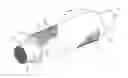
FIG. 1 is a schematic perspective partial view of a textile, self-wrapping sleeve constructed in accordance with one aspect of the invention carrying and protecting elongate members therein;
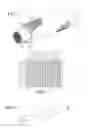
FIG. 2 is a fragmentary view of the encircled area 2 of FIG. 1; and
FIG. 3 is a perspective view of a bi-component metallic yarn of the sleeve of FIG. 1.
DETAILED DESCRIPTION OF PREFERRED EMBODIMENTS
Referring in more detail to the drawings, FIG. 1 shows a schematic view of textile, self-wrapping sleeve, referred to hereafter as sleeve 10, constructed in accordance with one aspect of the invention. The sleeve 10 has a self-wrapping elongate wall 12, upon being heat-formed, for routing and protecting elongate members, such as wires or a wire harness 14, for example, from exposure to abrasion, thermal and other environmental conditions, such as exposure to fluid, and against electromagnet interference (EMI). The elongate wall 12 is constructed from a plurality of interlaced heat-settable polymeric yarns 16, and to facilitate providing protection against EMI, a plurality of bi-component metallic yarns, also referred to as bi-component wires 18, which consist of a core of aluminum wire 20 and an outer layer of copper 22. The polymeric yarns 16 are heat-set to bias the wall 12 into a self-wrapping tubular configuration about a longitudinal central axis 24 to bring lengthwise extending opposite edges 26, 28 into overlapping relation with one another In addition to the elongate member 14 being protected against EMI,
The wall 12 can be constructed having any suitable size, including length, diameter and wall thickness. The opposite edges 26, 28 extend generally parallel to the central axis 18 between opposite ends 32, 34. When the wall 12 is in its self-wrapped tubular configuration, generally free from any externally applied forces, the edges 26, 28 overlap one another at least slightly to fully enclose the cavity 30 circumferentially, and thus, the wall 12 provides enhanced protection to the wires 14 contained in the cavity 20 against EMI about a full circumference of the wall 12. The sides 24, 26 are readily extendable away from one another under an externally applied force to at least partially open and expose the cavity 30. Accordingly, the wires 14 can be readily disposed into the cavity 30 during assembly or removed from the cavity 30 during service. Upon releasing the externally applied force, the edges 26, 28 return automatically under a bias imparted within the polymeric yarns 16 as a result of being heat-set in their curled configuration.
The wall 12 can be constructed at least in part from multifilament and/or monofilament polymeric yarns 16, with at least one or more of the yarns 16 being heat-settable. For example, one or more of the yarns 16 can be provided as a heat-settable polymeric material, such as polyphenylene sulfide (PPS), for example, which can be heat set at a temperature of about 200-225 degrees Celsius. The wall 12 is woven from the heat-settable yarns 16 extending in at least the fill direction, transverse to the longitudinal central axis 24, and can further be woven to extend in a warp direction, generally parallel to the longitudinal central axis 24. Further, the bi-component copper-clad aluminum wires 18 are woven in at least one of the fill and warp directions, and preferably in both the fill and warp direction so as to be brought into conductive, electrical contact with one another to enhance protection against EMI. With the bi-component wires 18 having an aluminum core 20, the wires have a reduced mass relative to solid copper wire, and thus, provide the sleeve 10 with a reduced weight. Meanwhile, with the outer layer of the bi-component wires 18 being provided as a copper layer 20, the wires 18 are provided with the electrical conductivity necessary to provide the desire protection against EMI.
Obviously, many modifications and variations of the present invention are possible in light of the above teachings. It is, therefore, to be understood that within the scope of the appended claims, the invention may be practiced otherwise than as specifically described.
Claims
What is claimed is:1. A self-wrapping, textile sleeve for routing and protecting elongate members against electromagnetic interference, comprising:
an elongate wall constructed from interlaced yarns, at least one of said yarns being a heat-settable polymeric yarn that is heat-set to bias said wall into a self-wrapping configuration about a longitudinal central axis of said sleeve to bring opposite edges into overlapping relation with one another to provide a generally tubular cavity in which the elongate members are received; and
at least one of said yarns being provided as a bi-component metallic wires having an aluminum core and an outer layer of copper.
2. The self-wrapping, textile sleeve of claim 1 wherein said wall is woven from a plurality of said at least one polymeric yarn with at least some of said polymeric yarns extending in a fill direction.
3. The self-wrapping, textile sleeve of claim 2 wherein said at least one bi-component yarn includes a plurality of said bi-component yarns, at least some of said bi-component yarns extending generally parallel to said longitudinal central axis and at least some of said bi-component yarns extending in a fill direction transverse to said longitudinal central axis.
4. The self-wrapping, textile sleeve of claim 3 wherein said bi-component yarns extending in said warp direction are in electrical communication with said bi-component yarns extending in said fill direction.
5. A method of constructing a self-wrapping, textile sleeve for routing and protecting elongate members against electromagnetic interference, comprising:
interlacing heat-settable polymeric yarns with bi-component metallic wires having an aluminum core and an outer layer of copper to form an elongate wall having opposite edges extending between opposite ends; and
heat-setting the heat-settable polymeric yarns to bias the opposite edges of the wall into a self-wrapping configuration about a longitudinal central axis of the sleeve to bring the opposite edges into overlapping relation with one another and forming a generally tubular cavity in which the elongate members are received.
6. The method of claim 5 further including weaving at least some of the polymeric yarns in a fill direction transverse to the central longitudinal axis and weaving at least some of the bi-component yarns in a warp direction extending generally parallel to the longitudinal central axis and at least some of the bi-component yarns extending in the fill direction.
7. The method of claim 6 further including bringing the bi-component yarns extending in the warp direction into electrical communication with the bi-component yarns extending in the fill direction.
Images & Drawings included:
Sources:
- United States Patent and Trademark Office - verify current appl. status at the USPTO↗
Recent applications in this class:
- » 20250287554 2025-09-11
ELECTROMAGNETIC INTERFERENCE SHIELDING STRUCTURES - » 20250248014 2025-07-31
ELECTRONIC DEVICE - » 20250194063 2025-06-12
METHOD FOR ENSURING THE ELECTRICAL SHIELDING OF A DEVICE HOUSING - » 20250113470 2025-04-03
ENCLOSURE - » 20250113469 2025-04-03
APPARATUS FOR PROVIDING AN ELECTRONIC UNIT WITH CLIPS FOR ATTACHMENT TO A PANEL - » 20250089226 2025-03-13
Shielded case for wireless earpieces - » 20240407144 2024-12-05
Shielding cover and circuit board assembly - » 20240397682 2024-11-28
DISPLAY DEVICE AND VEHICLE EQUIPPED WITH THE SAME - » 20240381598 2024-11-14
SHIELDED ELECTRONIC COMPONENT - » 20240244808 2024-07-18
Electronic Control Device
Recent applications for this Assignee:
- » 20180222144 2018-08-09
Wrappable laminated textile sleeve with enhanced flexibility and method of reducing cracking in a foil layer of a wrappable textile sleeve - » 20160144805 2016-05-26
Nonwoven acoustic sleeve and method of construction thereof - » 20160021799 2016-01-21
Protective sleeve with bonded wire filaments and methods of construction thereof - » 20150337465 2015-11-26
Flexible, abrasion resistant woven textile sleeve and method of construction thereof - » 20150327351 2015-11-12
Clothes Dryer Static Charge Dissipating Device, System Therewith And Method Of Reducing Static Charge Buildup In Clothes In Clothes Dryers - » 20150093556 2015-04-02
WRAPPABLE LAMINATED TEXTILE SLEEVE WITH ENHANCED FLEXIBILITY AND METHOD OF REDUCING CRACKING IN A FOIL LAYER OF A WRAPPABLE TEXTILE SLEEVE - » 20150027623 2015-01-29
Wrappable protective sleeve with closure and locating feature and methods of construction and use thereof - » 20140356564 2014-12-04
Wrapped textile sleeve with bonded closure mechanism NAD method of construction thereof - » 20140305536 2014-10-16
Wrappable textile sleeve with extendable electro-functional yarn leads and method of construction thereof - » 20140273699 2014-09-18
Warp knit wrappable sleeve with extendable electro-functional yarns and method of construction thereof