Door safety locking apparatus
US20140265378A1
2014-09-18
13/845,249
2013-03-18
✅ Patent granted
US 9,267,315 B2
2016-02-23
-
-
Alyson M Merlino
Park & Associates IP Law, P.C.
2033-10-24
Abstract:
A door safety locking apparatus door safety locking apparatus including: a body mounted inside a housing; a locker mounted inside a door opening and closing the interior of the housing in such a manner as to be separably fitted to the body; a dog coupled to the interior of the body by means of a shaft and having a locking protrusion formed on the upper end thereof to lock a coupling hole pierced on the locker thereonto; a tilting rod coupled at the front end thereof to the dog by means of a pin and coupled at the end portion thereof to the bottom surface of the interior of the body by means of a hinge, to guide the dog being rotated around the shaft in accordance with the pulling operation of the locker; and a spring fitted around the outer periphery of the tilting rod to elastically support the tilting rod guiding the rotating operation of the dog.
Assignee:
- Poong Won Industry Co., Ltd. 4 🇰🇷 Gimhae-City, South Korea
- Poong Won Industry Co., Ltd. 5 🇰🇷 , South Korea
Applicant:
Interested in similar patents?
Get notified when new applications in this technology area are published.
Classification:
E05C3/124 » CPC main
Fastening devices with bolts moving pivotally or rotatively with latching action with latch under compression force between its pivot and the striker
E05C3/12 IPC
Fastening devices with bolts moving pivotally or rotatively with latching action
D06F39/14 » CPC further
Details of washing machines not specific to a single type of machines covered by groups - ; Casings; Tubs Doors or covers; Securing means therefor
E05B47/0004 » CPC further
Operating or controlling locks or other fastening devices by electric or magnetic means with electric actuators; Constructional features thereof with electromagnets having a movable core said core being linearly movable
E05C19/024 » CPC main
Other devices specially designed for securing wings, e.g. with suction cups; Automatic catches, i.e. released by pull or pressure on the wing with a bifurcated latch
A47L15/4259 » CPC further
Washing or rinsing machines for crockery or tableware; Details; Details of the casing; Details of the loading door Arrangements of locking or security/safety devices for doors, e.g. door latches, switch to stop operation when door is open
E05B47/0603 » CPC further
Operating or controlling locks or other fastening devices by electric or magnetic means; Controlling mechanically-operated bolts by electro-magnetically-operated detents the detent moving rectilinearly
E05B65/0046 » CPC further
Locks or fastenings for special use; For refrigerators or cold rooms with a bifurcated bolt
E05B65/0053 » CPC further
Locks or fastenings for special use; For refrigerators or cold rooms with safety release from inside
Y10T292/702 » CPC further
Closure fasteners; Keepers; With movable dog, catch or striker Pivoted or swinging
E05C3/06 IPC
Fastening devices with bolts moving pivotally or rotatively without latching action with operating handle or equivalent member moving otherwise than rigidly with the bolt
E05C19/02 IPC
Other devices specially designed for securing wings, e.g. with suction cups Automatic catches, i.e. released by pull or pressure on the wing
E05B47/06 IPC
Operating or controlling locks or other fastening devices by electric or magnetic means Controlling mechanically-operated bolts by electro-magnetically-operated detents
E05B65/00 IPC
Locks or fastenings for special use
E05B47/00 IPC
Operation or control of locks by non-mechanical means, e.g. from a distance
E05B47/00 IPC
Operating or controlling locks or other fastening devices by electric or magnetic means
A47L15/42 IPC
Washing or rinsing machines for crockery or tableware Details
E05B15/02 IPC
Other details of locks; Parts for engagement by bolts of fastening devices Striking-plates; Keepers; Bolt staples; Escutcheons
Description
FIELD OF THE INVENTION
The present invention relates to a door safety locking apparatus, and more particularly, to a door safety locking apparatus that allows a locked state of a door to be automatically released if a given pressure is applied from the interior of the door in a mechanical way, thereby preventing safety accidents from happening.
BACKGROUND OF THE INVENTION
Generally, a door is provided to all kinds of electronic products such as refrigerators, washing machines and the like, and thus, the door is rotated around a hinge shaft to open and close the interior of the electronic product.
On the other hand, the door of the electronic product has a separate locking apparatus for preventing the door from being arbitrarily open while the electronic product is being operated.
One example of such conventional door locking apparatuses has been disclosed in Korean Patent Application Laid-Open No. 10-2005-0066293 (entitled ‘door safety apparatus for washing machine), wherein the door safety apparatus includes a washing machine door, a pressing protrusion formed on the inner periphery of the door in such a manner as to be detachable from the door, and a sensing switch adapted to be pressed by means of the pressing protrusion, if the door is closed, to sense the closing of the door, so that if the sensing switch is pressed by means of the pressing protrusion, the pressing protrusion is brought into contact with the contact point provided in the interior of the sensing switch, thereby sensing the closing of the door.
According to the above-mentioned prior art, even though the door is closed in the situation where a child or animal is locked in the washing machine, the washing machine is not operated to previously prevent safety accidents like asphyxial deaths from happening.
Since the above-mentioned prior art senses the door closing in an electrical way, however, malfunctions of the electrical product frequently occur to cause the reliability of the product to be deteriorated.
SUMMARY OF THE INVENTION
Accordingly, the present invention has been made in view of the above-mentioned problems occurring in the prior art, and it is an object of the present invention to provide a door safety locking apparatus that allows a locked state of a door to be automatically released just by pushing the door outwardly even if a child is locked in an electronic product by means of door closing, thereby previously preventing various safety accidents from happening.
To accomplish the above object, according to the present invention, there is provided a door safety locking apparatus including: a body mounted inside a housing; a locker mounted inside a door opening and closing the interior of the housing in such a manner as to be separably fitted to the body; a dog coupled to the interior of the body by means of a shaft and having a locking protrusion formed on the upper end thereof to lock a coupling hole pierced on the locker thereonto; a tilting rod coupled at the front end thereof to the dog by means of a pin and coupled at the end portion thereof to the bottom surface of the interior of the body by means of a hinge, to guide the dog being rotated around the shaft in accordance with the pulling operation of the locker; and a spring fitted around the outer periphery of the tilting rod to elastically support the tilting rod guiding the rotating operation of the dog.
According to the present invention, preferably, the body further has a stopper pin adapted to be inserted into a solenoid valve mounted thereon in such a manner as to be drawn therefrom to restrict the rotation of the dog in accordance with the operation of the solenoid valve.
BRIEF DESCRIPTION OF THE DRAWINGS
The above and other objects, features and advantages of the present invention will be apparent from the following detailed description of the preferred embodiments of the invention in conjunction with the accompanying drawings, in which:
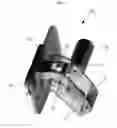
FIG. 1 is a three-dimensional view showing the locking state between a body and a locker of a door safety locking apparatus according to the present invention;
FIG. 2 is a sectional view of FIG. 1;
FIG. 3 is a three-dimensional view showing the unlocking state between the body and the locker of the door safety locking apparatus according to the present invention;
FIG. 4 is a sectional view of FIG. 3; and
FIG. 5 is a three-dimensional view showing the state where a stopper pin is drawn by means of the operation of a solenoid valve in the door safety locking apparatus according to the present invention.
DETAILED DESCRIPTION OF THE INVENTION
Hereinafter, an explanation on a door safety locking apparatus according to the present invention will be in detail given with reference to the attached drawings.
In the following description, a preferred embodiment of the present invention will be given to accomplish the technical subjects as mentioned above, and other preferred embodiments of the present invention will be replaced with the configuration of the present invention.
According to the present invention, a door safety locking apparatus is configured to allow the locked state of a door to be automatically released just by pushing the door outwardly, in a state of being mounted at the inside of the door, so that if a child is locked in an electronic product by means of door closing, he just pushes the door outwardly to open, thereby preventing various safety accidents from happening.
FIGS. 1 and 2 show the locking structure between a body and a locker constituting a door safety locking apparatus according to the present invention, and FIGS. 3 and 4 show the unlocking state between the body and the locker of the door safety locking apparatus according to the present invention.
As shown in FIGS. 1 to 4, a door safety locking apparatus 100 according to the present invention largely includes a body 10 mounted inside a housing 200 constituting the outer shape of an electronic product like a washing machine, a refrigerator, and so on and a locker 50 mounted on a door 300 opening and closing the internal space of the housing 200.
The body 10, which constitutes the outer shape of the door safety locking apparatus 100, is empty in the interior thereof and has an insertion hole 12 penetrated into the front surface thereof to insert the locker 50 thereinto.
A dog 14 is coupled to the interior of the body 10 by means of a shaft 16. The dog 14 has the upper end having a locking protrusion 18 formed to lock a coupling hole 52 of the locker 50 thereonto and the lower end coupled to the front end of a tilting rod 20 as will be described later by means of a pin 24. As the locker 50 is pushed outwardly to pull the locking protrusion 18, the dog 14 is rotated around the shaft 16 to allow the locked state of the locker 50 onto the locking protrusion 18 to be released.
The body 10 further includes the tilting rod 20 mounted at the inside thereof. The tilting rod 20 is coupled at the end portion thereof to the bottom surface of the interior of the body 10 by means of a hinge 22 and coupled at the front end thereof to the lower end of the dog 14 by means of the pin 24, so that during the rotation of the dog 14, the tilting rod 20 is tiltedly operated around the hinge 22, thereby guiding the rotating operation of the dog 14.
The tilting rod 20 has a spring 26 fitted around the outer periphery thereof. The spring 26 serves to elastically support the tilting rod 20 being tiltedly operated around the hinge 22 to guide the rotating operation of the dog 14.
The locker 50 is adapted to be inserted into the insertion hole 12 of the body 10 in accordance with the closing operation of the door 300, in the state of being mounted at the inside of the door 300. The locker 50 has the coupling hole 52 penetrated thereinto. The coupling hole 52 is locked to the locking protrusion 18 of the dog 14 if the locker 50 is fitted to the insertion hole 12 of the body 10, thereby coupledly fitting the locker 50 to the body 10 to lock the door 100.
On the other hand, as shown in FIG. 5, a solenoid valve 60 is mounted on the body 10 and has a stopper pin 62 adapted to be inserted thereinto in such a manner as to be drawn therefrom. The stopper pin 62 is drawn to penetrate the body 10 by means of the electrical operation of the solenoid valve 60 and restricts the rotation of the dog 14 to prevent the door 100 from being released from the locking state. In normal cases, the stopper pin 62 is drawn from the solenoid valve 60 in the state of being inserted thereinto in accordance with a user's demand, thereby restricting the rotation of the dog 14.
Hereinafter, an explanation on the operating state of the door safety locking apparatus according to the present invention will be in detail given with reference to FIGS. 1 to 4.
If the closing operation of the door 300 is performed, as shown in FIGS. 1 and 2, the locker 50 is first inserted into the insertion hole 12 of the body 10, and accordingly, the coupling hole 52 formed on the locker 50 is locked onto the locking protrusion 18 of the dog 14 to allow the locker 50 to be fixedly coupled to the body 10, thereby finishing the locked state of the door 300.
On the other hand, as shown in FIGS. 3 and 4, if the door 300 is closed in the state where a child is locked in the housing 200 due to his carelessness, the door 300 is just pushed outwardly by him, so that the locker 50 mounted inside the door 300 is pushed outwardly to pull the locking protrusion 18 of the dog 14, and accordingly, the dog 14 is rotated around the shaft 16 to allow the locked state of the locker 50 onto the locking protrusion 18 to be released. Thus, the locked state of the door 300 is automatically released to open the door 300.
Under the user's demand, further, if it is desired to prevent the releasing state of the door 300 in the case where the door 300 is pushed outwardly, as shown in FIG. 5, electric current is sent to the solenoid valve 60 and the stopper pin 62 is exposed to the outside. Accordingly, the stopper pin 62 is penetrated into the body 10 and supports the dog 14 being rotated in the state of being located behind the door 14, thereby restricting the rotation of the dog 14, and thus, the locking state of the locker 50 onto the locking protrusion 18 of the dog 14 is not released, thereby preventing the locked state of the door 300 from being released.
As set forth in the foregoing, the door safety locking apparatus according to the present invention is configured to allow the locked state of the door to be automatically released just by pushing the door outwardly, so that if a child is locked in an electronic product by means of door closing, he just pushes the door outwardly to open, thereby previously preventing various safety accidents from happening.
While the present invention has been described with reference to the particular illustrative embodiments, it is not to be restricted by the embodiments but only by the appended claims. It is to be appreciated that those skilled in the art can change or modify the embodiments without departing from the scope and spirit of the present invention.
Claims
What is claimed is:1. A door safety locking apparatus 100 includes:
a body 10 mounted inside a housing 200;
a locker 50 mounted inside a door 300 opening and closing the interior of the housing 200 in such a manner as to be separably fitted to the body 10;
a dog 14 coupled to the interior of the body 10 by means of a shaft 16 and having a locking protrusion 18 formed on the upper end thereof to lock a coupling hole 52 pierced on the locker 50 thereonto;
a tilting rod 20 coupled at the front end thereof to the dog 14 by means of a pin 24 and coupled at the end portion thereof to the bottom surface of the interior of the body 10 by means of a hinge 22, to guide the dog 14 being rotated around the shaft 16 in accordance with the pulling operation of the locker 50;
a spring 26 fitted around the outer periphery of the tilting rod 20 to elastically support the tilting rod 20 guiding the rotating operation of the dog 14; and
a stopper pin 62 adapted to be inserted into a solenoid valve 60 mounted on the body 10 in such a manner as to be drawn therefrom to restrict the rotation of the dog 14 in accordance with the operation of the solenoid valve 60.
Images & Drawings included:



Sources:
- United States Patent and Trademark Office - verify current appl. status at the USPTO↗
Similar patent applications:
Recent applications in this class:
- » 20250163736 2025-05-22
LATCHBOLT MECHANISM AND LATCHBOLT ACCOMMODATING MECHANISM - » 20250003268 2025-01-02
Latchbolt mechanism and latchbolt accommodating mechanism - » 20220307301 2022-09-29
TRACTION BATTERY SECURING ASSEMBLY AND METHOD - » 20210131152 2021-05-06
Latchbolt mechanism and latchbolt accommodating mechanism - » 20190249472 2019-08-15
Secondary retention device for bi-parting doors - » 20180230723 2018-08-16
Latch for a cabinet - » 20180179793 2018-06-28
INSTANT CENTER LATCH SYSTEM - » 20170051542 2017-02-23
Latching handle assembly - » 20160369539 2016-12-22
Window Vent Stop with Flexible Side Engagement Pieces - » 20150204121 2015-07-23
LOCK FOR A FLAP OR DOOR
Recent applications for this Assignee:
- » 20140109344 2014-04-24
Door hinge - » 20140109344 2014-04-24
Door hinge - » 20120060323 2012-03-15
Door hinge - » 20120060323 2012-03-15
Door hinge - » 20090260409 2009-10-22
Door lock device - » 20090260409 2009-10-22
Door lock device - » 20070101542 2007-05-10
Door hinge