System and Method for Gamefied Rapid Application Development Environment
US20140272886A1
2014-09-18
14/203,527
2014-03-10
Abstract:
A gamification application development system. The system has specialized game development toolbars and a suite of tools. The tools are used to create gamification of continuing education training and are adapted to be used by individuals who are not game designers.
Interested in similar patents?
Get notified when new applications in this technology area are published.
Classification:
G06F8/00 » CPC further
Arrangements for software engineering
G09B7/07 » CPC main
Electrically-operated teaching apparatus or devices working with questions and answers of the multiple-choice answer-type, i.e. where a given question is provided with a series of answers and a choice has to be made from the answers providing for individual presentation of questions to a plurality of student stations
G06F9/44 IPC
Arrangements for program control, e.g. control units using stored programs, i.e. using an internal store of processing equipment to receive or retain programs Arrangements for executing specific programs
Description
CROSS REFERENCE TO RELATED APPLICATIONS
This application claims priority to U.S. Provisional Patent applications 61/784,592 filed Mar. 14, 2013 and 61/824,114 filed May 16, 2013
TECHNICAL FIELD
This disclosure relates to game and educational materials development systems.
BACKGROUND
No game and educational materials development systems are now known that include use of an application development environment with one or more specialized game development toolbars and a suite of tools that can be used to create gamification of Continuing Legal Education (CLE) and other continuing education training
DISCLOSURE
A Gamefied Rapid Application Development Environment (GRADE) is disclosed. It gives experts in any field simple tools to quickly author or create a game that desirably embodies or captures some or all of the expert's expertise, that is playable by professionals or by non-professionals, and can be used as a teaching and learning device, or just for pure entertainment.
The GRADE includes use of an application development environment with one or more specialized game development toolbars and a suite of tools. These tools can be used to create gamification of Continuing Legal Education (CLE) and other continuing education training and the like, and are advantageously adapted as well to be used by individuals who are not game designers.
An animatic and hyperlinked educational game is disclosed. The game has profuse animated sequences which serve to “gamefy” traditional teaching pedagogy to support and illustrate the teaching points of the game.
BRIEF DESCRIPTION OF THE DRAWINGS
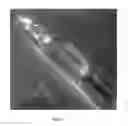
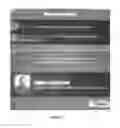
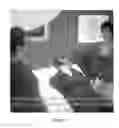
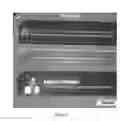
FIGS. 1-17 are animatic stills from the GRADE.
DETAILED DESCRIPTION
An example game flow goes like this:
In an animated game scenario, there is modeled a precipitating event (here, a multi-car collision). FIGS. 1 and 2. After the precipitating event, there is a triage stage, also animated and with inserted text windows for questions and choice options. FIGS. 3 and 4. In the example (at the scene of the car accident), there are 3 victims (described) and an EMT triage quest “who to treat first” is provided.
For each response to the quest, the answer is acknowledged as either correct or incorrect, and in either case, right or wrong, there is an option for the viewer to call up (via imbedded hyperlinks) an expert opinion and other educational materials. FIG. 5.
A player's incorrect choices trigger serio-comedic animated “fun/failure” sequences providing humorous emphasis on the shortcomings of the choice. FIG. 6. The “fun/failure” sequences are intentionally spectacular and engaging, designed to elicit proven positive “game play” emotions from the player which drive home a teaching point, even though the player makes an incorrect choice, and which increase the players desire to try again to “get it right”.
The first example of gamefying teaching pedagogy is in the roadside accident (first responder) scene where the player (a first responder) incorrectly fails to chose to make sure the wandering accident victim is escorted to the side of the road, out of danger from passing traffic. In this example, due to an incorrect player choice, the wandering victim is hit by another vehicle and knocked down dead. Spectacularly and unexpectedly, a ghost immediately arises from the body and berates the first responder for failing to make sure he was escorted to the side of the road and out of harms way.
In another example of gamification of teaching pedagogy, at the hospital, application of “spot video lecture” pedagogy is incorporated into a classic medical triage query of “who to treat first”. There are four patients and for each there is a separate query of “what treatment or test to provide first”. FIG. 7. Again, for each response the answer is acknowledged as either correct or incorrect, and in either case, right or wrong, there is an option for the viewer to call up an expert opinion (in the form of a “spot video lecture) and to access additional related educational materials on the “spot”. FIG. 8. The missed diagnosis of a “sleeping victim” (as pointed out in the doctor's spot video on “Percherons Artery”, incorporates utilization of an immediate detailed video into the teaching pedagogy.
In the example (back at the scene of the accident), gamefication of a law enforcement triage, with legal evidence implications, is presented to the player. FIGS. 9, 10 and 11. A suspect has powder on her sweater (and there is an optional conflict of interest wrinkle not fully presented where the officer is strongly attracted to the beautiful suspect). The quest presented is “how best to proceed in the absence of probable cause” or “how to perfect probable cause”.
Again, for each response the answer is acknowledged as either correct or incorrect, and in either case there is an option for the viewer to call up an expert opinion and other educational materials.
In this particular example, there is the incorporation of an option for an extended search, a game-within-a-game. The search game is played out in an animation of a trunk full of objects, where clicking on an object removes it from view and reveals what is beneath it, until the player determines probable cause is deemed established. FIGS. 12 and 13.
This example then segues to a courtroom for a legal triage and query sequence about what is the proper legal evidentiary motion to bring in view of the evidence obtained. In FIG. 14 the answer is acknowledged as either correct or incorrect, and in either case there is an option for the viewer to call up an expert opinion and other educational materials.
Here an incorrect choice triggers another serio-comedic, “fun/failure” animated sequence providing emphasis on the teaching point of the exercise and the shortcomings of the choice that was made. FIGS. 15 and 16.
At the game end, viewer/student/player choices are tabulated and a “community” comparison of the scores of others in the comparable community is provided so the player can see how well they played in comparison to the universe of other gamers worldwide. Links to several additional sources of educational materials are also provided. FIG. 17.
In compliance with the statute, the invention has been described in language more or less specific as to structural features. It is to be understood, however, that the invention is not limited to the specific features shown, since the means and construction shown comprise preferred forms of putting the invention into effect. The invention is, therefore, claimed in any of its forms or modifications within the legitimate and valid scope of the appended claims, appropriately interpreted in accordance with the doctrine of equivalents.
Claims
I claim:1. A gamification application development system having one or more specialized game development toolbars and a suite of tools, the tools used to create gamification of continuing education training, the tools adapted to be used by individuals who are not game designers.
2. An educational game having a plurality of animated and hyperlinked sequences serving to “gamefy” traditional teaching pedagogy to support and illustrate the teaching points of the game.
Images & Drawings included:






Sources:
- United States Patent and Trademark Office - verify current appl. status at the USPTO↗
Similar patent applications:
Recent applications in this class:
- » 20250046207 2025-02-06
INTERACTIVE DIGITAL LEARNING PLATFORM SYSTEM - » 20220068154 2022-03-03
Secure Testing Device with Combiner - » 20210174693 2021-06-10
AN INTERFACE FOR TRAINING CONTENT OVER A NETWORK OF MOBILE DEVICES - » 20210065574 2021-03-04
METHOD AND SYSTEM FOR PROMPTLY CONNECTING A KNOWLEDGE SEEKER TO A SUBJECT MATTER EXPERT - » 20200357297 2020-11-12
Systems and methods for inquiry-based learning including collaborative question generation - » 20200118456 2020-04-16
Secure Testing Device With Combiner - » 20190392724 2019-12-26
Secure Testing Device - » 20190139435 2019-05-09
Systems and methods for inquiry-based learning including collaborative question generation - » 20180357916 2018-12-13
Secure testing device - » 20180350256 2018-12-06
Learning method and system