Method of forming Cu(InGa)Sand Cu(InGa)Senanoparticles
US20140273336A1
2014-09-18
14/191,486
2014-02-27
✅ Patent granted
US 9,099,606 B2
2015-08-04
-
-
Brook Kebede
US Naval Research Laboratory | Rebecca L. Forman
2034-02-27
Abstract:
A method for synthesizing Cu(InxGa1-x)S2 and Cu(InxGa1-x)Se2 nanopowders using flame spray pyrolysis to form solar cell absorber materials. The flame spray product is the oxide nanoparticles of the absorber materials (copper indium gallium oxide). The oxide nanoparticles may be deposited directly onto glass substrates. The oxide nanoparticles are then sulfurdized or selenized with a post deposition anneal directly on the substrate to form the absorber layer for a solar cell device.
Inventors:
- Jasbinder S. Sanghera 175 🇺🇸 Ashburn, VA, United States
- Ishwar D. Aggarwal 36 🇺🇸 Charlotte, NC, United States
- Colin C. Baker 22 🇺🇸 Alexandria, VA, United States
- Woohong Kim 42 🇺🇸 Lorton, VA, United States
- Shyam S. Bayya 57 🇺🇸 Ashburn, VA, United States
Assignee:
- The United States of America, as represented by the Secretary of the Navy 4,501 🇺🇸 Washington, DC, United States
Applicant:
Interested in similar patents?
Get notified when new applications in this technology area are published.
Classification:
H01L31/0322 » CPC further
Semiconductor devices sensitive to infra-red radiation, light, electromagnetic radiation of shorter wavelength or corpuscular radiation and specially adapted either for the conversion of the energy of such radiation into electrical energy or for the control of electrical energy by such radiation; Processes or apparatus specially adapted for the manufacture or treatment thereof or of parts thereof; Details thereof characterised by their semiconductor bodies characterised by the material; Inorganic materials including, apart from doping materials or other impurities, only compounds not provided for in groups - comprising only ABC chalcopyrite compounds, e.g. Cu In Se, Cu Ga Se, Cu In Ga Se
H01L21/00 IPC
Processes or apparatus adapted for the manufacture or treatment of semiconductor or solid state devices or of parts thereof
H01L31/18 » CPC main
Semiconductor devices sensitive to infra-red radiation, light, electromagnetic radiation of shorter wavelength or corpuscular radiation and specially adapted either for the conversion of the energy of such radiation into electrical energy or for the control of electrical energy by such radiation; Processes or apparatus specially adapted for the manufacture or treatment thereof or of parts thereof; Details thereof Processes or apparatus specially adapted for the manufacture or treatment of these devices or of parts thereof
H01L31/032 IPC
Semiconductor devices sensitive to infra-red radiation, light, electromagnetic radiation of shorter wavelength or corpuscular radiation and specially adapted either for the conversion of the energy of such radiation into electrical energy or for the control of electrical energy by such radiation; Processes or apparatus specially adapted for the manufacture or treatment thereof or of parts thereof; Details thereof characterised by their semiconductor bodies characterised by the material; Inorganic materials including, apart from doping materials or other impurities, only compounds not provided for in groups -
Description
PRIORITY CLAIM
The present application is a non-provisional application claiming the benefit of U.S. Provisional Application No. 61/786,664, filed on Mar. 15, 2013 by Colin C. Baker et al., entitled “Method of Forming Cu(InxGa1-x)Se Nanoparticles,” the entire contents of which is incorporated herein by reference.
BACKGROUND OF THE INVENTION
1. Field of the Invention
The present invention relates to synthesizing Cu(InxGa1-x)S2 and Cu(InxGa1-x)Se2 nanoparticles and, more specifically, to synthesizing these nanoparticles using flame spray pyrolysis.
2. Description of the Prior Art
Thin film chalcopyrite solar cell absorber layers of CuInSe2, CuInS2, Cu(InxGa1-x)S2, and Cu(InxGa1-x)Se2, or their mixtures, generally known as CIS or CIGS, have been investigated since the 1980's. They have efficiencies superior to CdTe and can be produced using non-vacuum technology, thus cutting down on costs. The record efficiency for a chalcopyrite based solar device to date is 19.9%, and the theoretical efficiency is about 30%. The band gap of these materials can be adjusted from 1.0-2.4 eV by controlling the ratio of In to Ga. Some of the methods to produce these materials have included coating inks onto substrates followed by a post deposition anneal in H2S, or H2Se, electro deposition of precursors, paste coating, and chemical spray pyrolysis. In many cases the precursors in these methods require the use of pyridine, a highly hazardous material. Furthermore, a difficulty for these processes is that it is difficult to obtain dense films, where a film thickness of 1-2 μm should be obtained.
Flame synthesis techniques are non-vacuum gas phase processes that have been shown to be very effective in producing high purity oxide nanoparticles on an industrial scale. In these processes precursor materials are either volatile, or are aerosolized by various means. Upon being sprayed, precursor droplets evaporate and undergo combustion in the flame. The aerosol species that are formed are rapidly quenched as they leave the reaction zone, leading to the formation of oxide nanoparticles.
A method for synthesizing Cu(InxGa1-x)S2 and Cu(InxGa1-x)Se2 nanoparticles using flame spray pyrolysis with a post deposition sulfurdization or selenization to form a solar cell absorber layer has never been demonstrated before. Other methods to synthesize CIGS nanoparticles require either expensive vacuum equipment, or many processing steps, often with harmful chemicals and application onto substrates with more time consuming and involved methods such as doctor blade techniques.
BRIEF SUMMARY OF THE INVENTION
The aforementioned problems are overcome in the present invention which provides a method of forming Cu(InxGa1-x)S2 and Cu(InxGa1-x)Se2 nanoparticles by performing flame spray pyrolysis on copper, indium and gallium precursor materials to form a copper indium gallium oxide that is sulfurdized or selenized by heating in H2S or H2Se gas. Also disclosed is the related nanoparticles made by this method and the related method of making a solar cell absorber layer.
The present invention provides a method of forming Cu(InxGa1-x)S2 and Cu(InxGa1-x)Se2 chalcopyrite solar cell absorber layer nanoparticles through deposition with flame spray pyrolysis and post deposition treatment in an H2S or H2Se environment. Nanoparticles of these materials have never been produced by this method and are an excellent candidate as the absorber layer in solar cell devices. The technique is a non-vacuum process, and the precursor materials are non-harmful chemicals, which is a distinct advantage over other processes. The present invention uses flame spray pyrolysis to produce CIGS nanopowders with a post synthesis treatment in flowing sulfur or selenium atmospheres. This synthesis method has never been reported for CIGS absorber layers.
These and other features and advantages of the invention, as well as the invention itself, will become better understood by reference to the following detailed description, appended claims, and accompanying drawings.
BRIEF DESCRIPTION OF THE DRAWINGS
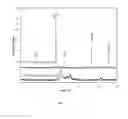
FIG. 1 shows XRD patterns for a copper indium gallium oxide sample prepared by flame spray pyrolysis and a sample with post deposition sulfurdization.
FIG. 2 is a TEM image of a cluster of CIGS nanoparticles.
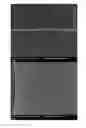
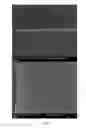
FIG. 3 shows SEM images of CIGS nanoparticles. Copper indium gallium oxide nanoparticles were deposited directly on a molybdenum coated sodalime glass substrate and given a post deposition anneal in sulfur to form CIGS. A cross section of a typical film is given (top) and viewed directly (bottom).
DETAILED DESCRIPTION OF THE INVENTION
The present invention provides a method for synthesizing Cu(InxGa1-x)S2 and Cu(InxGa1-x)Se2 nanopowders using the technique of flame spray pyrolysis to form solar cell absorber layers. Precursor materials, including a copper precursor, an indium precursor, and a gallium precursor, are used for the flame spray pyrolysis. Cu(NO3)2.xH2O, Ga(NO3)3.xH2O, and In(NO3)3.xH2O dissolved in ethanol may be used as precursor materials. The flame spray product is the oxide of these precursor materials, denoted as CIGO (copper indium gallium oxide). The CIGO is sulfurdized by heating in H2S gas to form Cu(InxGa1-x)S2 nanopowders or selenized by heating in H2Se gas to form Cu(InxGa1-x)Se2 nanopowders.
The oxide nanopowders can be deposited directly onto a glass substrate, such as a molybdenum coated soda lime glass substrate. The oxide nanopowders are then sulfurdized or selenized with a post deposition anneal directly on the substrate to form the absorber layer for a solar cell device. A commercial flame spray pyrolysis system can be used to synthesize the nanoparticles.
EXAMPLES
The liquid precursor was fed through a commercially available flame spray apparatus nozzle at flow rates of 5 ml/min with the aid of an O2 dispersion gas/oxidant that had a flow rate of 5 L/min. Small pilot flames ignited from flowing 1.5 L/min CH4 and 3 L/min O2 forming a ring pattern were used as the flame ignition source and as a supporting flame for the larger central flame. The pilot flame ringlet surrounded a central capillary tube that sprayed the precursor solution mixed with an oxygen dispersion gas to form precursor droplets that underwent combustion in the large central flame. The powders were either deposited directly on molybdenum coated sodalime glass substrates heated by the flame to 400° C., or collected on glass fiber filter paper mounted in a commercial water cooled stainless steel collection chimney. For the case of deposition on the filter media the powders were removed by scraping with a Teflon scraper.
The copper precursor used was Cu(NO3)2.xH2O, the indium precursor used was In(NO3)3.xH2O, and the gallium precursor was Ga(NO3)3.xH2O. All precursors were mixed in the appropriate amounts to form Cu(In0.7Ga0.3)-oxide upon deposition. However, the ratio of Ga to In can be modified in the precursor concentration to vary the band gap of the final CIGS film.
All chemicals were purchased from Sigma Aldrich and were 99.999% pure. The resultant CIG-oxide nanopowder was then sulfurdized by heating the material at 550° C. in 20 ccm H2S gas for 3 hours. Sulfurdization was also carried out by vaporizing solid sulfur.
The material phase for the particles was characterized with x-ray diffraction (XRD) in a Scintag XDS 2000 diffractometer using Cu-kα radiation. The particle size was characterized using a JEOL JEM 2200FS transmission electron microscope working at 200 kV. The film coating was characterized with JEOL SEM and EDS was performed to determine the atomic percent of the individual constituents.
Example 1
This example gives an XRD pattern for the CuInGa-Oxide precursor film after flame spray deposition on molybdenum coated sodalime glass substrate and a pattern for the same film after sulfurdization with H2S gas at 20 ccm, 550° C. for 3 hours (FIG. 1). The precursor is an unknown phase and is a mixture of oxides as there is no known single phase compound with this stoichiometry. The sulfurdized phase is indexed to CuInGaS2.
Example 2
This example gives a TEM image for a representative sample of a cluster of CuInGaS2 nanoparticles (FIG. 2). The nanoparticles range from 50-100 nm in diameter.
Example 3
This example gives an SEM image for the cross section of a CIGO thin film deposited on molybdenum coated sodalime glass substrate and subsequently sulfurdized (FIG. 3). The CIGS absorber layer varies between 50-75 μm thick.
The above descriptions are those of the preferred embodiments of the invention. Various modifications and variations are possible in light of the above teachings without departing from the spirit and broader aspects of the invention. It is therefore to be understood that the claimed invention may be practiced otherwise than as specifically described. Any references to claim elements in the singular, for example, using the articles “a,” “an,” “the,” or “said,” is not to be construed as limiting the element to the singular.
Claims
What is claimed as new and desired to be protected by Letters Patent of the United States is:1. A method of forming Cu(InxGa1-x)S2 and Cu(InxGa1-x)Se2 nanoparticles, comprising:
performing flame spray pyrolysis on precursor materials to form copper indium gallium oxide, wherein the precursor materials comprise a copper precursor, an indium precursor, and a gallium precursor; and
sulfurdizing or selenizing the copper indium gallium oxide by heating the copper indium gallium oxide in H2S or H2Se gas.
2. The method of claim 1, wherein the precursor materials comprise Cu(NO3)2.xH2O, Ga(NO3)3.xH2O, and In(NO3)3.xH2O.
3. The method of claim 1, wherein after performing flame spray pyrolysis, the precursor materials form Cu(In0.7Ga0.3)-oxide.
4. The method of claim 1, wherein the copper indium gallium oxide is deposited onto a substrate before sulfurdizing or selenizing.
5. The method of claim 1, wherein the copper indium gallium oxide is collected on filter paper before sulfurdizing or selenizing.
6. Cu(InxGa1-x)S2 or Cu(InxGa1-x)Se2 nanoparticles made by the method comprising:
performing flame spray pyrolysis on precursor materials to form copper indium gallium oxide, wherein the precursor materials comprise a copper precursor, an indium precursor, and a gallium precursor; and
sulfurdizing or selenizing the copper indium gallium oxide by heating the copper indium gallium oxide in H2S or H2Se gas.
7. The nanoparticles of claim 6, wherein the precursor materials comprise Cu(NO3)2.xH2O, Ga(NO3)3.xH2O, and In(NO3)3.xH2O.
8. The nanoparticles of claim 6, wherein after performing flame spray pyrolysis, the precursor materials form Cu(In0.7Ga0.3)-oxide.
9. The nanoparticles of claim 6, wherein the copper indium gallium oxide is deposited onto a substrate before sulfurdizing or selenizing.
10. The nanoparticles of claim 6, wherein the copper indium gallium oxide is collected on filter paper before sulfurdizing or selenizing.
11. A method of forming a solar cell absorber layer, comprising:
performing flame spray pyrolysis on precursor materials comprising Cu(NO3)2.xH2O, Ga(NO3)3.xH2O, and In(NO3)3.xH2O to form copper indium gallium oxide;
depositing the copper indium gallium oxide onto a substrate; and
sulfurdizing or selenizing the deposited copper indium gallium oxide by heating the copper indium gallium oxide in H2S or H2Se gas.
12. The method of claim 11, wherein after performing flame spray pyrolysis, the precursor materials form Cu(In0.7Ga0.3)-oxide.
Images & Drawings included:

Sources:
- United States Patent and Trademark Office - verify current appl. status at the USPTO↗
Recent applications in this class:
- » 20250072153 2025-02-27
SLOT-DIE TYPE GAS DISTRIBUTION DEVICE FOR PHOTOVOLTAIC MANUFACTURING - » 20240421241 2024-12-19
AUTOMATIC ALIGNMENT DEVICE AND ALIGNMENT METHOD FOR PHOTOVOLTAIC MODULE FILM - » 20240405150 2024-12-05
METHOD OF RECOVERING HGCDTE DETECTOR PERFORMANCE AFTER HIGH TEMPERATURE BIAS-INDUCED DEFECT GENERATION - » 20240347667 2024-10-17
FILM PREPARATION METHOD, SOLAR CELL, PHOTOVOLTAIC DEVICE, AND PHOTOVOLTAIC SYSTEM - » 20240339553 2024-10-10
APPARATUS FOR MANUFACTURING THIN FILM DEVICES - » 20240304745 2024-09-12
METHOD FOR RECYCLING SOLAR PANEL AND SOLAR PANEL RECYCLING SYSTEM FOR IMPLEMENTING THE SAME - » 20240250201 2024-07-25
LOCAL PATTERNING AND METALLIZATION OF SEMICONDUCTOR STRUCTURES USING A LASER BEAM - » 20240250200 2024-07-25
APPARATUS AND METHOD FOR REFURBISHING BACK SIDES OF SOLAR MODULES - » 20240213394 2024-06-27
METHOD FOR LAMINATING SOLAR CELLS - » 20240194818 2024-06-13
MANUFACTURING METHOD FOR SOLAR CELL, MULTI-JUNCTION SOLAR CELL, SOLAR CELL MODULE, AND PHOTOVOLTAIC POWER GENERATION SYSTEM
Recent applications for this Assignee:
- » 20240409833 2024-12-12
Sustainable turbine and diesel fuels from isoprene and α olefins - » 20240322426 2024-09-26
Phased Array of Electrolytic Fluid Antennas and a Method for Dynamically Beam Steering the Same - » 20240237991 2024-07-18
Simplified field use junctional tourniquets - » 20240119734 2024-04-11
System and method for efficient filtering, clustering, tracking and persistent motion detection for event cameras - » 20240118137 2024-04-11
Gyro stabilized modular laser measurement device - » 20240069125 2024-02-29
Apparatus and methods for virtually linear and temperature-independent sensing of magnetic fields - » 20240044623 2024-02-08
Fragmentation pattern, optimized for drawn cup warheads with a dome and cylindrical wall - » 20240036295 2024-02-01
Digital Adaptive Optics Encoder Module - » 20230190301 2023-06-22
Simplified field use junctional tourniquets - » 20230160661 2023-05-25
Long distance shooting tool for target identification, communication, and ballistic data