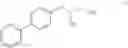
Synthesis of R-biphenylalaninol
US20140296559A1
2014-10-02
14/236,999
2012-08-16
✅ Patent granted
US 9,139,515 B2
2015-09-22
WO; PCT/EP2012/066038; 20120816
WO; WO2013/026773; 20130228
Kamal Saeed | Janet L Coppins
Pierce Atwood LLP | Raymond G. Arner
2032-08-16
Abstract:
This invention relates to a novel process for the synthesis of R-biphenylalaninol and to intermediate compounds that are formed in the process according to the invention, i.e. novel intermediates useful in the synthesis of R-biphenylalaninol. The in vention also relates to R-biphenylalaninol, The process according to the invention, the intermediates to of R-biphenylalaninol and of R-biphenylalaninol are all useful in the synthesis of pharmaceutically active compounds.
Inventors:
- Peter Hans Riebel 2 🇳🇱 Echt, Netherlands
- Michael Wolberg 2 🇳🇱 Echt, Netherlands
- Petrus Johannes Hermsen 3 🇳🇱 Echt, Netherlands
- Peter Hans Ermann 1 🇳🇱 Echt, Netherlands
- Andreas Hendrikus Maria De Vries 1 🇳🇱 Echt, Netherlands
Assignee:
- DSM IP ASSETS B.V. 1,844 🇳🇱 Heerlen, Netherlands
- DSM FINE CHEMICALS AUSTRIA NFG. GMBH & CO KG 9 🇦🇹 Linz, Austria
- DPx Holdings B.V. 1 🇺🇸 Framingham, MA, United States
Applicant:
Interested in similar patents?
Get notified when new applications in this technology area are published.
Classification:
C07C269/04 » CPC main
Preparation of derivatives of carbamic acid, i.e. compounds containing any of the groups , the nitrogen atom not being part of nitro or nitroso groups from amines with formation of carbamate groups
C07C215/28 » CPC further
Compounds containing amino and hydroxy groups bound to the same carbon skeleton having hydroxy groups and amino groups bound to acyclic carbon atoms of the same carbon skeleton the carbon skeleton being unsaturated and containing six-membered aromatic rings
C07C233/51 » CPC main
Carboxylic acid amides having carbon atoms of carboxamide groups bound to hydrogen atoms or to acyclic carbon atoms having the nitrogen atom of at least one of the carboxamide groups bound to a carbon atom of a hydrocarbon radical substituted by carboxyl groups with the substituted hydrocarbon radical bound to the nitrogen atom of the carboxamide group by an acyclic carbon atom having the carbon atom of the carboxamide group bound to an acyclic carbon atom of a carbon skeleton containing six-membered aromatic rings
C07C231/12 » CPC further
Preparation of carboxylic acid amides by reactions not involving the formation of carboxamide groups
C07C231/02 IPC
Preparation of carboxylic acid amides from carboxylic acids or from esters, anhydrides, or halides thereof by reaction with ammonia or amines
C07C233/73 » CPC further
Carboxylic acid amides having carbon atoms of carboxamide groups bound to carbon atoms of six-membered aromatic rings having the nitrogen atom of at least one of the carboxamide groups bound to a carbon atom of a hydrocarbon radical substituted by singly-bound oxygen atoms with the substituted hydrocarbon radical bound to the nitrogen atom of the carboxamide group by an acyclic carbon atom of a carbon skeleton containing six-membered aromatic rings
C07C233/87 » CPC further
Carboxylic acid amides having carbon atoms of carboxamide groups bound to carbon atoms of six-membered aromatic rings having the nitrogen atom of at least one of the carboxamide groups bound to a carbon atom of a hydrocarbon radical substituted by carboxyl groups with the substituted hydrocarbon radical bound to the nitrogen atom of the carboxamide group by an acyclic carbon atom of a carbon skeleton containing six-membered aromatic rings
C07C213/02 » CPC further
Preparation of compounds containing amino and hydroxy, amino and etherified hydroxy or amino and esterified hydroxy groups bound to the same carbon skeleton by reactions involving the formation of amino groups from compounds containing hydroxy groups or etherified or esterified hydroxy groups
C07C235/26 IPC
Carboxylic acid amides, the carbon skeleton of the acid part being further substituted by oxygen atoms having carbon atoms of carboxamide groups bound to acyclic carbon atoms and singly-bound oxygen atoms bound to the same carbon skeleton the carbon skeleton being saturated and containing rings
C07C271/16 » CPC further
Derivatives of carbamic acids, i.e. compounds containing any of the groups , the nitrogen atom not being part of nitro or nitroso groups; Esters of carbamic acids having oxygen atoms of carbamate groups bound to acyclic carbon atoms with the nitrogen atoms of the carbamate groups bound to hydrogen atoms or to acyclic carbon atoms to carbon atoms of hydrocarbon radicals substituted by singly-bound oxygen atoms
Description
This invention relates to a novel process for the synthesis of R-biphenylalaninol and to intermediate compounds that are formed in the process according to the invention, i.e. novel intermediates useful in the synthesis of R-biphenylalaninol. The invention also relates to R-biphenylalaninol. The process according to the invention, the intermediates to of R-biphenylalaninol and of R-biphenylalaninol are all useful in the synthesis of pharmaceutically active compounds.
BACKGROUND OF THE INVENTION
The present invention relates to methods to prepare N-Boc protected biphenylalaninol, which is a key intermediate in the synthesis of pharmaceutically active compounds, e.g. neutral endopeptidase (NEP) inhibitors (see e.g.U.S. Pat. No. 4,722,810 and EP00590442.
R-biphenylalaninol is a novel compound. However, S-biphenylalaninol is mentioned and used in PCT-application WO9902153 (Table 1, page 25). However, the origin/preparation of this material is not disclosed. The synthesis of the racemic compound is described in CN10120924 (based on information disclosed in English abstract) The route described therein, however, is relatively long and requires an additional resolution step to obtain the desired enantiomerically enriched product. The S-enantiomer of Boc protected biphenyl alaninol has also been reported in patent applications U.S. Pat. No. 7,618,981; US20070149516; WO2005107762; WO20070149516; and WO2008138561. The typical synthetic method described therein to prepare the S-enantiomer of Boc protected biphenyl alaninol is based on the hydride reduction of Boc-protected biphenyl alanine ( ) which in turn can be prepared from enantiomerically pure biphenyl alanine using well established chemistry (Greene's Protective Groups in Organic Synthesis, 4th edition, page 725).
Several synthetic methods for preparation of D-biphenyl alanine have been reported. However, these are based on the use of expensive raw materials (D-Tyr; J. Med. Chem. 1995, 38, 1689) or rely on an (enzymatic) resolution of the corresponding racemic ester (EP1980622), which makes them less attractive from a commercial point of view. In addition, synthetic routes based on asymmetric hydrogenation of the N-acyl dehydroamino acid derivatives are known (Adv. Synth. Cat. 2003, 345, 308). The disadvantage of this approach is that the required hydrolysis of the N-acetyl group is time consuming and may give rise to erosion of enantiomeric excess.
Therefore, there is a strong need to develop inexpensive methods to prepare N-Boc protected biphenylalaninol. It is found that the present invention meets this objective and thus provides a process that is industrially advantageous.
SUMMARY OF THE INVENTION
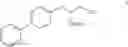
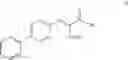
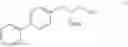
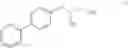
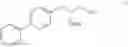
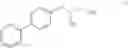
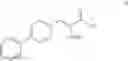
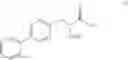
This invention provides methods for preparing N-Boc protected biphenylalaninol of formula 5. The process according to the present invention is summarized in scheme 1. By reacting biphenyl formaldehyde with N-benzoylglycine and an anhydride a compound of formula 1 is obtained. Said compound is next converted into a compound of formula 2. Asymmetric hydrogenation of the latter compounds yields a compound of formula 3, which can be converted into a compound of formula 4. Hydrogenolysis and subsequent N-Boc protection yields the desired compound 5.
In the present application, the following abbreviations have been used: Boc=butoxycarbonyl, Bz=benzoyl with formula C6H5C(O)— and Bn=benzyl with formula C6H5CH2—.
Substrate 2 can be asymmetrically hydrogenated to the target compound 3 with hydrogen in the presence of catalytically active, optically active rhodium or iridium complexes. The catalytically active complex used is preferably a rhodium complex formed by reaction of an Rh(I) complex with an optically active enantiomerically enriched chiral monodentate phosphoramidite ligand. The synthesis of such ligands, the use, the conditions for use and numerous examples of such ligands are described in WO02/04466, which is hereby incorporated by reference.
The catalytically active, optically active complexes for the asymmetric hydrogenation can be represented by the formula MLaXbSc, where M is a transition metal, to be chosen from rhodium and iridium, L is an enantiomerically enriched chiral monodentate phosphoramidite ligand having the formula (VI),
where Cn together with the two O-atoms and the P-atom forms a substituted or non-substituted ring with 2-4 C-atoms, R1 and R2 each independently stand for H, an optionally substituted alkyl, aryl, aralkyl or alkaryl group, or may form a (heterocyclic) ring together with the N-atom to which they are bound, X is a counter ion and S is a ligand, a ranges from 0.5 to 3, b and c each independently range from 0 to 2. Preferably R1 and R2 each independently represent an alkyl group, for instance an alkyl group with 1-6 C-atoms, in particular 1-3 C-atoms, most preferably C1 and C2 represent a methyl group. The alkyl, aryl, aralkyl and alkaryl groups preferably have 1-20 C-atoms and can optionally be substituted with for instance one or more hydroxy, alkoxy, nitrile or carboxylic ester groups, or halogens. R1 and/or R2 may be part of a polymeric backbone.
The catalyst according the formula MLaXbSc may be neutral, anionic or cationic. The catalyst may consist of a preformed complex having the formula MLaXbSc. These complexes can be prepared by reacting the chiral ligand with a catalyst precursor. Preferably, however, the catalyst is formed in situ by adding the chiral ligand to a solution of a catalyst precursor which may contain a ligand that is easily removed by hydrogenation. The amount of optically active ligand to be added for example may range from 0.5 to 5, preferably from 1 to 3.5, equivalents relative to the metal. Preferably a small excess of optically active ligand is applied relative to the desired amount of optically active ligand in the catalyst. The optimum ratio of optically active ligand to metal in the catalyst may differ per optically active ligand and per metal and can readily be determined by means of experiments.
In the chiral ligand L of formula (I) Cn and/or R1 and/or R2 are chiral or are part of a chiral entity. Cn preferably represents a chiral substituted C4 chain (chain with 4 optionally substituted C-atoms), of predominantly one configuration, for example with an enantiomeric excess larger than 95%, in particular larger than 99%, more in particular larger than 99.5%. Preferably Cn together with the two O-atoms and the P-atom forms a 7-membered ring with 4 C-atoms which 2 by 2 form part of an aryl group or a naphthyl group. Some examples of suitable chiral ligands according to the invention are the following:
It will be understood that where one enantiomer is represented, the other enantiomer is similarly applicable.
Thus, the process according to the invention is a process for preparing a compound of formula I:
which process comprises the steps of:
-
- a) asymmetrically hydrogenating a compound of formula II, wherein R=H, a linear or branched alkyl, an arylalkyl or aryl group in the presence of a catalytically active, optically active metal complex
-
- to give a compound of formula III
-
- b) followed by reducing compound III to give a compound of formula IV
-
- c) followed by hydrogenolysing compound IV to give a compound of formula V
-
- d) followed by Boc-protection of compound V to give the compound of formula I.
- e) optionally isolating the compound of formula I
Many different R groups may be used, as long as they do not comprise any groups that interfere with the reactions that have to take place to synthesize any one of compounds III or IV. In a preferred embodiment of the process according to the invention, the R-groups will be either H or a C1-C12 linear or branched alkyl, a C1-C12 arylalkyl or C1-C12 aryl, wherein the aryl rings may optionally comprising hetero atoms, such as e.g. N and O, and wherein the R-group may optionally be substituted. Suitable substituents are known to a person skilled in the art, and will be chosen such that they will not interfere with the desired reaction taking place. R preferably is H or a C1-C4 alkyl group.
In a preferred embodiment of the process according to the invention, step c) and d) are combined by performing the hydrogenolysis in the presence of Boc2O to provide compound I directly. With this process the number of steps is advantageously reduced and isolation of intermediate V is avoided.
The asymmetric hydrogenation of 2 is advantageously carried out at a temperature of 20° C. to 200° C. and a hydrogen pressure of 1 to 200 bar. The molar ratio of catalyst to susbtrate is advantageously 1:1000 to 1:5000, preferably 1:1000 to 1:2000. Examples of suitable solvents for the asymmetric hydrogenation are esters such as ethyl acetate, chlorinated solvents such a dichloromethane or ethers such as tetrahydrofuran. Preferably tetrahydrofuran is used.
The conversion of ester 3 to amino alcohol 4 can be achieved using commonly known reagents for the reduction of esters and amides such as lithium aluminum hydride or borane (March Advance Organic Chemistry, 6th edition page 1806 and 1841). This can be done in two separate steps but preferably in a singles step using a reagent which is known to reduce both moieties such as lithiumaluminum hydride.
Debenzylation of compound 4 can be achieved through commonly known techniques, such as hydrogenolysis using hydrogen and a palladium catalyst (Greene's Protective Groups in Organic Synthesis, 4th edition, page 814). Boc-protection of the thus obtained amino alcohol can be achieved using standard techniques (Greene's Protective Groups in Organic Synthesis, 4th edition, page 725).
The metal-ligand catalyst complex according to the invention is preferably catalytically active, optically active metal complex that is formed from a Rh(I) complex and an enantiomerically enriched optically active phosphoramidite monodentate ligand. Most preferably, the phosphoramidaite ligand is (S)-1-(dinaptho[2,1-d:1′,2′-f][1,3,2]dioxaphosphepin-4-yl)piperidine (S-PiPhos)
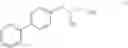
The invention also relates to a compound of formula II
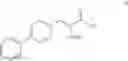
The invention also relates to a compound of formula III
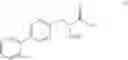
The invention also relates to a compound of formula IV
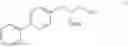
The invention also relates to a compound of formula V
All compounds according to the invention are preferably substantially pure. In the framework of this invention, substantially pure is define as comprising less than 2 wt % of the S-isomer, more preferably comprising less than 1 wt %, and most preferably less than 0.5 wt % S-isomer. Preferably, the compounds according to the invention are optically pure compounds.
It should be noted that the synthesis of a racemic mixture of a compound according to formula III with R=methyl has been reported in Tetrahedron Lett. 2000, 7121, and with R=ethyl in CN101555211. The optically pure compound is, however, not described.
EXAMPLES
Example 1
a: Synthesis of Compound 3
The catalyst was prepared from bis(1,5-cyclooctadiene)rhodium(I) tetrafluoroborate (7.5 mg; 20 μmol) and (S)-1-(dinaptho[2,1-d:1′,2′-f][1,3,2]dioxaphosphepin-4-yl)piperidine (S-PiPhos) (17.6 mg; 44 μmol) in CH2Cl2. Of this solution 500 μl was added to a solution of 360 mg of 2 in 5 ml of CH2Cl2. The thus obtained mixture was hydrogenated (25 bar H2; 25° C.) until full conversion was reached (based on HPLC and 1H NMR), providing compound 3 is quantitative yield (e.e. >99.5%, determined by chiral HPLC: Chiralpak IA-3; n-heptane:ethanol 85:15 v/v; 30° C., 1 mL/min).
| H2 pressure | |||||
| Solvent | S/C | (bar) | T (° C.) | e.e. (%) | |
| THF | 500 | 25 | 25 | >99.5 | |
| EtOAc | 500 | 25 | 25 | 99.4 | |
| CH2Cl2 | 500 | 25 | 25 | 99.6 | |
| CH2Cl2 | 1000 | 25 | 25 | 98.5 | |
| THF | 1000 | 10 | 25 | 99.86 | |
| 2-Me THF | 1000 | 10 | 25 | 99.92 | |
| 2-Me THF | 1000 | 25 | 25 | 99.90 | |
| CH2Cl2 | 1000 | 10 | 25 | 99.95 | |
Example 1b
Autoclave Run at S/C=3000 in THF
Catalyst preparation: Rh(NBD)2BF4 (94.0 mg; 0.25 mmol) was dissolved in anhydrous and oxygen free dichloromethane (5 mL). To this solution was added (S)-1-(dinaptho[2,1-d:1′,2′-f][1,3,2]dioxaphosphepin-4-yl)piperidine (S-PiPhos) (201 mg; 0.50 mmol) portionwise. The color changed slowly to orange. After stirring for 1 h, the catalyst was precipitated by addition of dry and oxygen free n-heptane (10 mL). The precipitate was filtered off, washed with dry and oxygen free n-heptane, dried under reduced pressure, yielding 278 mg catalyst.
An autoclave of 200 mL was charged with 2 (36.25 g; 101 mmol), the catalyst (36 mg; 33 μmol); S/C=3000) and THF (120 mL) under nitrogen. Then, the reactor was pressurized to 30 bars and stirred for 16 h. The reactor was depressurized, vented with nitrogen and the volatiles were removed in vacuo resulting in 36.4 g, 100%) product with an e.e.>99%.
Example 2
Synthesis of Compound 4
To a dried 50 ml round bottom flask were added 1029 mg (2.87 mmol) of 3 and 10 ml of dry THF. To the obtained solution, LiAlH4 was added portion wise (total 290 mg; 7.63 mmol). The reaction mixture was subsequently heated to reflux and stirred for 2 hours. After cooling to 20° C. the reaction was quenched by the addition of THF/water (3:1). The obtained mass was diluted with water (2 ml) and THF (10 ml). The precipitated salts were removed by filtration and the filtrate was concentrated in vacuo providing compound 4 is quantitative yield.
Example 3
Synthesis of Compound 5
125 mg of compound 4, 50 mg of Pd/C (Escat 1961; BASF) and 172 mg Boc2O in THF (5 ml) were hydrogenated for 18 hours (30° C., 5 bar). The catalyst was removed by filtration and the filtrate concentrated in vacuo. Upon triturating of the oily residue with CHCl3 compound 5 crystallized. (e.e. >99%).
Claims
1. A process for preparing a compound of formula I
wherein Boc=butoxycarbonyl, which process comprises the steps of:
a) asymmetrically hydrogenating a compound of formula II
wherein R=H, C1-C12 linear or branched alkyl, C1-C12 arylalkyl or C1-C12 aryl, wherein the aryl rings may optionally comprise hetero atoms, wherein R may optionally be substituted, wherein Bz=benzoyl, in the presence of a catalytically active, optically active metal complex to give a compound of formula III
b) followed by reducing compound III to give a compound of formula IV
wherein Bn=benzyl.
c) followed by hydrogenolysing compound IV to give a compound of formula V
d) followed by Boc-protection of compound V to give the compound of formula I,
e) optionally isolating the compound of formula I, wherein step c) and d) are combined by performing the hydrogenolysis in the presence of Boc2O to provide compound I directly.
2. The process of claim 1 wherein the catalytically active, optically active metal complex is formed from a Rh(I) complex and an optically active enentiomerically enriched phosphoramidite monodentate ligand.
3. An optically pure compound of formula II
wherein R=C1-C12 linear or branched alkyl, C1-C12 arylalkyl or C1-C12 aryl, wherein the aryl rings may optionally comprise hetero atoms, wherein R may optionally be substituted and wherein Bz=benzoyl.
4. The compound of formula III
wherein R=C1-C12 linear or branched alkyl, C1-C12 arylalkyl or C1-C12 aryl, wherein the aryl rings may optionally comprise hetero atoms, wherein R may optionally be substituted and wherein Bz=benzoyl.
5. The compound of formula IV
wherein Bn=benzyl.
6. The compound of formula V
Images & Drawings included:












Sources:
- United States Patent and Trademark Office - verify current appl. status at the USPTO↗
Recent applications in this class:
- » 20250263365 2025-08-21
O-SUBSTITUTED SERINE DERIVATIVE PRODUCTION METHOD - » 20250122148 2025-04-17
HIGH-SELECTIVITY KCNQ4 POTASSIUM CHANNEL AGONIST, PREPARATION METHOD THEREFOR AND USE THEREOF - » 20250109098 2025-04-03
METHOD FOR PREPARING BENZYLAMINE DERIVATIVE THROUGH AMINATION OF BENZYLIC C-H BOND UNDER VISIBLE LIGHT-INDUCED NICKEL CATALYSIS - » 20230391715 2023-12-07
NOVEL PROCESS FOR PREPARING SOLRIAMFETOL HYDROCHLORIDE - » 20230212110 2023-07-06
CARBAMATE PRODUCTION METHOD, CARBAMATE ESTER PRODUCTION METHOD, AND UREA DERIVATIVE PRODUCTION METHOD - » 20220017456 2022-01-20
O-substituted serine derivative production method - » 20220002236 2022-01-06
Method for preparing dicarbamate compounds from diamines and the catalyst thereof - » 20210332006 2021-10-28
Carbon dioxide-reversibly-protected chain extension-crosslinking agent and preparation method and use thereof - » 20210179548 2021-06-17
Method for producing carbamate and method for producing isocyanate - » 20200148631 2020-05-14
Process for the synthesis of aromatic carbamates
Recent applications for this Assignee:
- » 20250069708 2025-02-27
COMPUTER-BASED METHOD FOR DETERMINING A SUNSCREEN COMPOSITION COMPRISING A PLURALITY OF UV FILTER SUBSTANCES - » 20240327777 2024-10-03
Fermentation system, feed controller, and related methods - » 20240293437 2024-09-05
METHODS OF SELECTIVELY MODULATING GASTROINTESTINAL MICROBIAL GROWTH - » 20240237688 2024-07-18
Steviol glycoside transport - » 20240148953 2024-05-09
CENTRIFUGE - » 20240026152 2024-01-25
Synthetic membrane composition comprising a polyurethane and a polyoxazoline - » 20230270920 2023-08-31
Method of making an osteoconductive fibrous article and a medical implant comprising such osteoconductive fibrous article - » 20230227862 2023-07-20
Biosynthesis of retinoids - » 20230227510 2023-07-20
Steviol glycoside transport - » 20230212486 2023-07-06
Process for the preparation of a stable beverage