Container for food products and method for manufacturing such container
US20140299618A1
2014-10-09
14/344,874
2012-09-19
✅ Patent granted
US 9,533,795 B2
2017-01-03
WO; PCT/IB2012/054964; 20120919
WO; WO2013/042051; 20130328
James Sells
Blank Rome LLP
2033-05-18
Abstract:
A container for food products is defined by a cup-shaped basket, which is made of a first polymeric material, and is provided with a gripping handle connected to the basket in rotary manner by means of two coupling elements, which are made of a second polymeric material, and are welded to the basket itself.
Assignee:
- SIROPACK ITALIA S.R.L. 2 🇮🇹 Cesenatico, Italy
- Siropack Italia S.r.l. 1 🇮🇱 Cesenatico, Israel
Applicant:
Interested in similar patents?
Get notified when new applications in this technology area are published.
Classification:
B65D25/2844 » CPC main
Details of other kinds or types of rigid or semi-rigid containers; Handles; Swingable handles provided on a local area of the side wall(s) Vertical, e.g. U-shaped
B65D25/28 IPC
Details of other kinds or types of rigid or semi-rigid containers Handles
B29C65/601 » CPC further
Joining of preformed parts ; Apparatus therefor using mechanical means or mechanical connections, e.g. form-fits; Riveting or staking using extra riveting elements, i.e. the rivets being non-integral with the parts to be joined
B29C65/60 IPC
Joining of preformed parts ; Apparatus therefor using mechanical means or mechanical connections, e.g. form-fits Riveting or staking
B29C65/7838 » CPC further
Joining of preformed parts ; Apparatus therefor; Means for handling the parts to be joined, e.g. for making containers or hollow articles, e.g. means for handling sheets, plates, web-like materials, tubular articles, hollow articles or elements to be joined therewith; Means for discharging the joined articles from the joining apparatus; Positioning the parts to be joined, e.g. aligning, indexing or centring from the inside, e.g. of tubular or hollow articles
B29C65/7841 » CPC further
Joining of preformed parts ; Apparatus therefor; Means for handling the parts to be joined, e.g. for making containers or hollow articles, e.g. means for handling sheets, plates, web-like materials, tubular articles, hollow articles or elements to be joined therewith; Means for discharging the joined articles from the joining apparatus Holding or clamping means for handling purposes
B29C66/1122 » CPC further
General aspects of processes or apparatus for joining preformed parts; General aspects dealing with the joint area or with the area to be joined; Particular design of joint configurations particular design of the joint cross-sections; Joint cross-sections comprising a single joint-segment, i.e. one of the parts to be joined comprising a single joint-segment in the joint cross-section; Single lapped joints Single lap to lap joints, i.e. overlap joints
B29C66/21 » CPC further
General aspects of processes or apparatus for joining preformed parts; General aspects dealing with the joint area or with the area to be joined; Particular design of joint configurations particular design of the joint lines, e.g. of the weld lines said joint lines being formed by a single dot or dash or by several dots or dashes, i.e. spot joining or spot welding
B29C66/304 » CPC further
General aspects of processes or apparatus for joining preformed parts; General aspects dealing with the joint area or with the area to be joined; Particular design of joint configurations Joining through openings in an intermediate part of the article
B29C66/532 » CPC further
General aspects of processes or apparatus for joining preformed parts; General aspects of joining tubular articles; General aspects of joining long products, i.e. bars or profiled elements; General aspects of joining single elements to tubular articles, hollow articles or bars; General aspects of joining several hollow-preforms to form hollow or tubular articles; Joining tubular articles, profiled elements or bars; Joining single elements to tubular articles, hollow articles or bars; Joining several hollow-preforms to form hollow or tubular articles; Joining single elements to tubular articles, hollow articles or bars Joining single elements to the wall of tubular articles, hollow articles or bars
B29C66/61 » CPC further
General aspects of processes or apparatus for joining preformed parts; General aspects of joining tubular articles; General aspects of joining long products, i.e. bars or profiled elements; General aspects of joining single elements to tubular articles, hollow articles or bars; General aspects of joining several hollow-preforms to form hollow or tubular articles Joining from or joining on the inside
B29C66/712 » CPC further
General aspects of processes or apparatus for joining preformed parts characterised by the composition, physical properties or the structure of the material of the parts to be joined; Joining with non-plastics material characterised by the composition of the plastics material of the parts to be joined the composition of one of the parts to be joined being different from the composition of the other part
B29C66/81429 » CPC further
General aspects of processes or apparatus for joining preformed parts; General aspects of machine operations or constructions and parts thereof; General aspects of the pressing elements, i.e. the elements applying pressure on the parts to be joined in the area to be joined, e.g. the welding jaws or clamps characterised by the design of the pressing elements, e.g. of the welding jaws or clamps characterised by the surface geometry of the part of the pressing elements, e.g. welding jaws or clamps, coming into contact with the parts to be joined comprising a single ridge, e.g. for making a weakening line; comprising a single tooth comprising a single tooth
B29C66/81463 » CPC further
General aspects of processes or apparatus for joining preformed parts; General aspects of machine operations or constructions and parts thereof; General aspects of the pressing elements, i.e. the elements applying pressure on the parts to be joined in the area to be joined, e.g. the welding jaws or clamps characterised by the design of the pressing elements, e.g. of the welding jaws or clamps characterised by the constructional aspects of the pressing elements, e.g. of the welding jaws or clamps comprising a plurality of single pressing elements, e.g. a plurality of sonotrodes, or comprising a plurality of single counter-pressing elements, e.g. a plurality of anvils, said plurality of said single elements being suitable for making a single joint
B29C66/8322 » CPC further
General aspects of processes or apparatus for joining preformed parts; General aspects of machine operations or constructions and parts thereof characterised by the movement of the joining or pressing tools; Reciprocating joining or pressing tools Joining or pressing tools reciprocating along one axis
B29C66/8432 » CPC further
General aspects of processes or apparatus for joining preformed parts; General aspects of machine operations or constructions and parts thereof; Specific machine types or machines suitable for specific applications; Machines for making separate joints at the same time in different planes; Machines for making separate joints at the same time mounted in parallel or in series Machines for making separate joints at the same time mounted in parallel or in series
B29C66/73921 » CPC further
General aspects of processes or apparatus for joining preformed parts characterised by the composition, physical properties or the structure of the material of the parts to be joined; Joining with non-plastics material characterised by the intensive physical properties of the material of the parts to be joined, by the optical properties of the material of the parts to be joined, by the extensive physical properties of the parts to be joined, by the state of the material of the parts to be joined or by the material of the parts to be joined being a thermoplastic or a thermoset characterised by the material of the parts to be joined being a thermoplastic or a thermoset characterised by the material of at least one of the parts being a thermoplastic characterised by the materials of both parts being thermoplastics
B29L2031/463 » CPC further
Other particular articles; Knobs or handles, push-buttons, grips Grips, handles
B29L2031/713 » CPC further
Other particular articles; Containers; Packaging elements or accessories, Packages Baskets
B29L2031/737 » CPC further
Other particular articles Articles provided with holes, e.g. grids, sieves
Y10T156/10 » CPC further
Adhesive bonding and miscellaneous chemical manufacture Methods of surface bonding and/or assembly therefor
Y10T156/1002 » CPC further
Adhesive bonding and miscellaneous chemical manufacture; Methods of surface bonding and/or assembly therefor with permanent bending or reshaping or surface deformation of self sustaining lamina
Y10T156/1056 » CPC further
Adhesive bonding and miscellaneous chemical manufacture; Methods of surface bonding and/or assembly therefor with cutting, punching, tearing or severing Perforating lamina
B32B37/00 IPC
Methods or apparatus for making layered products; Treatment of the layers or of the layered products
B32B37/00 IPC
Methods or apparatus for laminating, e.g. by curing or by ultrasonic bonding
B29C65/78 IPC
Joining of preformed parts ; Apparatus therefor Means for handling the parts to be joined, e.g. for making containers or hollow articles, e.g. means for handling sheets, plates, web-like materials, tubular articles, hollow articles or elements to be joined therewith; Means for discharging the joined articles from the joining apparatus
B65D25/2867 » CPC further
Details of other kinds or types of rigid or semi-rigid containers; Handles with respective ends fixed to local areas of two opposite sides or wall-part
B29C65/08 » CPC further
Joining of preformed parts ; Apparatus therefor by heating, with or without pressure using ultrasonic vibrations
B29C66/63 » CPC further
General aspects of processes or apparatus for joining preformed parts; General aspects of joining tubular articles; General aspects of joining long products, i.e. bars or profiled elements; General aspects of joining single elements to tubular articles, hollow articles or bars; General aspects of joining several hollow-preforms to form hollow or tubular articles Internally supporting the article during joining
B29C65/00 IPC
Joining of preformed parts ; Apparatus therefor
Description
TECHNICAL FIELD
The present invention relates to a container for food products.
BACKGROUND ART
In the field of the production of containers for food products, it is known to manufacture a container comprising a cup-shaped basket which is delimited by a bottom wall and a lateral wall, and is provided with a gripping handle coupled to the basket in a rotatory manner by means of two eyelets, which extend through the free ends of the handle, and are fixed to the basket by means of punching.
Since the basket and the handle are made of polymeric material and the eyelets are made of metal material, the containers for food products of the known type described above have several drawbacks, mainly deriving from the fact that the presence of a polymeric material and a metallic material involves the separate collection of the baskets and the handles on the one part and on the other part of the eyelets and therefore making operations for the disposal of such containers relatively complex and expensive.
DISCLOSURE OF INVENTION
It is an object of the present invention to provide a container for food products which is free from the above drawbacks and which is simple and economical to implement.
According to the present invention there is provided a container for food products as claimed in claims 1 to 8.
The present invention relates also to a method for manufacturing a container for food products.
According to the present invention, there is provided a method for manufacturing a container for food products as claimed in claims 9 to 14.
BRIEF DESCRIPTION OF THE DRAWINGS
The present invention will now be described with reference to the accompanying drawings, which illustrate a non-limiting embodiment, wherein:
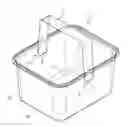
FIG. 1 is a perspective view of a preferred embodiment of the container for food products of the present invention;
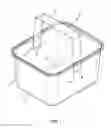
FIG. 2 is a schematic sectional view of the container of FIG. 1; and
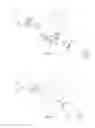
FIGS. 3 to 5 schematically show three successive steps of the production process of the container of FIGS. 1 and 2.
BEST MODE FOR CARRYING OUT THE INVENTION
With reference to FIG. 1, with 1 is indicated, as a whole, a container for food products, for example fruit and vegetable products, comprising a cup-shaped basket 2 which is delimited at the bottom by a bottom wall 3, and is limited, also, by a lateral wall 4 substantially transverse to the wall 3 itself.
The basket 2 is made of a polymeric material, and is provided with an elongated handle 5, which enables the gripping of the container 1, and is also made of a polymeric material identical to, or different from, the polymeric material of the basket 2.
The handle 5 is substantially U-shaped, and comprises two free ends 6, which are folded inside the wall 4, are provided, each, with a respective hole 7 (FIGS. 2 and 3) obtained through the handle 5, and are connected to the wall 4 itself in a rotatable manner.
Each free end 6 is connected to the wall 4 by means of a coupling element 8, which presents, in this case, a substantially circular shape, is made of a polymeric material identical to, or different from, the polymeric material of the basket 2 and identical to, or different from, the polymeric material of the handle 5, and is welded to the wall 4 by means of welding, in this case an ultrasonic welding.
According to that mentioned above, it should be specified that the polymeric materials of the basket 2, the handle 5, and of the coupling elements 8 can be simple polymers or copolymers.
As illustrated in FIGS. 3 to 5, the container 1 is assembled into a die 9, which presents a substantially parallelepiped shape corresponding to the shape of the internal cavity of the basket 2, and presents two cavities 10 of substantially circular shape, which are obtained in correspondence with two lateral faces 11 of the die 9 opposite to each other, and are adapted to receive and retain, each, a respective element 8 (FIG. 3).
The die 9 has, furthermore, an upper face 12 adapted to receive and retain the handle 5 in its initial flat configuration, and cooperates with a lifting device (not shown) adapted for moving the basket 2 on the die 9 so as to fold into a U-shape the handle 5 on the die 9, above the elements 8, and inside the basket 2 itself (FIG. 4).
Once the basket 2 is moved on the die 9 and the handle 5 is folded between the basket 2 and the elements 8, each element 8 is welded to the wall 4 of the basket 2 by means of a respective ultrasonic welder 13 movable to and from an operative welding position, in which the welder 13 is substantially in contact with the basket 2.
Since the two welders 13 are shaped so as to weld each element 8 and the wall 4 inside the respective hole 7, the two welds substantially lead to the formation of two pin elements, which extend through the corresponding holes 7, and allow the handle 5 to rotate freely with respect to the basket 2.
Furthermore, since the container 1 is made entirely of polymeric material, the disposal operations of the entire container 1 are relatively simple and inexpensive and does not involve any separate collection of the different elements that constitute the container 1 itself.
Claims
1. A container for food products comprising a cup-shaped basket (2), which is delimited by a bottom wall (3) and by a lateral wall (4), and is made of a first polymeric material; a handle (5) for holding the container; and two coupling elements (8) for coupling the free ends (6) of the handle (5) to the basket (2) in a rotatory manner; and characterised in that each coupling element (8) is made of a second polymeric material, and is welded to the basket (2).
2. A container according to claim 1, wherein said first and second polymeric material are identical to each other.
3. A container according to claim 1, wherein said first and second polymeric material are different from each other.
4. A container according to claim 1, wherein the coupling elements (8) are connected to the basket (2) by means of ultrasonic welding.
5. A container according to claim 1, wherein the handle (5) is made of a third polymeric material, which is identical to or different from the first polymeric material and identical to or different from the second polymeric material.
6. A container according to claim 1, wherein each free end (6) presents a hole (7), which is obtained through the handle (5); each coupling element (8) being welded to the basket (2) inside the hole (7) of the relative free end (6).
7. A container according to claim 1, wherein each free end (6) of the handle (5) is arranged between the basket (2) and the relative coupling element (8).
8. A container according to claim 1, wherein the coupling elements (8) are welded to the lateral wall (4) of the basket (2).
9. Method for manufacturing containers for food products, each container comprising a cup-shaped basket (2), which is delimited by a bottom wall (3) and by a lateral wall (4), and is made of a first polymeric material, and a handle (5) for holding the container; the method comprising the step of:
coupling each free end (6) of the handle (5) to the basket (2) in a rotatory manner by means of a relative coupling element (8);
and being characterised in that:
each coupling element (8) is made of a second polymeric material and is welded to the basket (2).
10. A method according to claim 9, wherein the coupling elements (8) are welded to the lateral wall (4) of the basket (2).
11. A method according to claim 9, wherein the coupling elements (8) are connected to the basket (2) by means of ultrasonic welding.
12. A method according to claim 9, wherein the coupling elements (8) are welded to the basket (2) with the free ends (6) of the handle (5) arranged between the basket (2) and the coupling elements (8) themselves.
13. A method according to claim 9 and comprising, furthermore, the steps of:
making a hole (7) in correspondence to each free end (6) of the handle (5); and
welding each coupling element (8) to the basket (2) inside the hole (7) of the relative free end (6).
14. A method according to claim 9 and comprising, furthermore, the steps of:
arranging the coupling elements (8) on a die (8); and
moving the basket (2) on the die (9) interposing the handle (5), so as to bend the handle (5) around the die (9), on the coupling elements (8), and inside the basket (2) starting from an initial flat configuration.
Images & Drawings included:

Sources:
- United States Patent and Trademark Office - verify current appl. status at the USPTO↗
Similar patent applications:
- » 20150329267
CONTAINER FOR FOOD PRODUCTS, A METHOD FOR MANUFACTURING OF A CONTAINER, METHOD FOR DETECTING INTERNAL GAS AND A PRODUCTION SYSTEM FOR FILLING CONTAINERS - » 20090123607
Self-rising dough-containing food product and related manufacturing methods - » 20140065249
Sprouted cereal, method for manufacturing same, food product containing same, and BDNF production accelerator - » 20170354173
Sprouted cereal, method for manufacturing same, food product containing same, and BDNF production accelerator - » 20160318647
CONTAINER FOR FOOD PRODUCTS AND METHOD TO MANUFACTURE IT - » 20220177168
Container for food products and method to manufacture it - » 10309349
Method of manufacturing an aerated carbohydrate containing food product - » 20210337852
SOLID FOOD PRODUCT COMPOSITION CONTAINING FOOD MATERIAL CONTAINING INSOLUBLE DIETARY FIBER, AND METHOD FOR MANUFACTURING THE SAME - » 20050123655
Container-packed, oil-in-water type emulsified food product and method for manufacture thereof - » 20150086682
METHOD FOR MANUFACTURING EDIBLE TRANSPARENT MATERIALS THAT CAN BE USED AS CONTAINERS FOR FOOD PRODUCTS, AND USES THEREOF
Recent applications in this class:
- » 20230322444 2023-10-12
DRINKING VESSEL WITH ROTATING HANDLE - » 20130240550 2013-09-19
Handle assembly for plastic container - » 20070012707 2007-01-18
Swivel handle vessel - » 20060157372 2006-07-20
Shipping device - » 13315649 2013-11-26
Doll organizer
Recent applications for this Assignee:
- » 20220177168 2022-06-09
Container for food products and method to manufacture it