Structure of a connection member with engaging-disengaging members
US20140302703A1
2014-10-09
14/224,959
2014-03-25
✅ Patent granted
US 9,197,017 B2
2015-11-24
-
-
Hae Moon Hyeon
Birch, Stewart, Kolasch & Birch, LLP
2034-03-25
Abstract:
A fore connection member, comprising a fore connection member body and engaging-disengaging members. The engaging-disengaging members are pivoted to side surfaces of the fore connection member body respectively, and each comprise a recess, a grab, an operating end, an abutting end and a pivoting end. The engaging-disengaging members each have the pivoting end thereof pivoted to a corresponding one of the side surfaces and pivots about the fore connection member body. The operating end and the abutting end are disposed at two sides of the pivoting end respectively, the grab is provided with a hook portion facing the abutting end, and a circular arc abutting portion disposed at the abutting end comprises a circular arc abutting surface smoothly connected to the recess. A rear connection member for use with the fore connection member and a connection member comprising the fore connection member and the rear connection member are also provided.
Assignee:
- Dinkle Enterprise Co., Ltd. 6 🇹🇼 New Taipei City, Taiwan
- DINKLE ENTERPRISE CO., LTD. 72 🇹🇼 New Taipei, Taiwan
Applicant:
Interested in similar patents?
Get notified when new applications in this technology area are published.
Classification:
H01R13/62977 » CPC main
Details of coupling devices of the kinds covered by groups or -; Means for facilitating engagement or disengagement of coupling parts or for holding them in engagement; Additional means for facilitating engagement or disengagement of coupling parts, e.g. aligning or guiding means, levers, gas pressure electrical locking indicators, manufacturing tolerances Pivoting levers actuating linearly camming means
H01R13/629 IPC
Details of coupling devices of the kinds covered by groups or -; Means for facilitating engagement or disengagement of coupling parts or for holding them in engagement Additional means for facilitating engagement or disengagement of coupling parts, e.g. aligning or guiding means, levers, gas pressure electrical locking indicators, manufacturing tolerances
Y10T403/595 » CPC further
Joints and connections; Manually releaseable latch type having operating mechanism Lever
H01R13/62966 » CPC main
Details of coupling devices of the kinds covered by groups or -; Means for facilitating engagement or disengagement of coupling parts or for holding them in engagement; Additional means for facilitating engagement or disengagement of coupling parts, e.g. aligning or guiding means, levers, gas pressure electrical locking indicators, manufacturing tolerances; Comprising exclusively pivoting lever Comprising two pivoting levers
H01R13/6335 » CPC further
Details of coupling devices of the kinds covered by groups or -; Means for facilitating engagement or disengagement of coupling parts or for holding them in engagement; Additional means for facilitating engagement or disengagement of coupling parts, e.g. aligning or guiding means, levers, gas pressure electrical locking indicators, manufacturing tolerances for disengagement only comprising a handle
H01R13/633 IPC
Details of coupling devices of the kinds covered by groups or -; Means for facilitating engagement or disengagement of coupling parts or for holding them in engagement; Additional means for facilitating engagement or disengagement of coupling parts, e.g. aligning or guiding means, levers, gas pressure electrical locking indicators, manufacturing tolerances for disengagement only
H01R13/62 IPC
Details of coupling devices of the kinds covered by groups or - Means for facilitating engagement or disengagement of coupling parts or for holding them in engagement
Description
BACKGROUND OF THE INVENTION
1. Technical Field
The present invention relates to an improved structure of a connection member, and more particularly, to an improved structure of a connection member which is capable of increasing the convenience in engagement and disengagement, saving time and labor and improving the product quality.
2. Description of Related Art
A connection member (e.g., a terminal structure that is generally used for connecting signal lines in an electronic device) can be used to achieve the purpose of signal transmission. In other words, it is often needed to transmit a signal between different electronic parts in the electronic device; and in this case, the signal lines of the different electronic parts must be connected with each other so that the signal can be transmitted between the different electronic parts.
In order to connect the signal lines, the signal line of one of the electronic parts is integrated into a rear terminal structure (e.g., a male terminal structure), the signal line of another electronic part is integrated into a fore terminal structure (e.g., a female terminal structure corresponding to the male terminal structure), and then the rear terminal structure and the fore terminal structure are inserted into each other. In this way, signal transmission can be carried out between the different electronic parts.
As described above, the rear terminal structure and the fore terminal structure are inserted into each other, and the rear terminal structure and the fore terminal structure are disengaged from each other when being idle or maintained. However, whether having the rear terminal structure and the fore terminal structure inserted into or disengaged from each other, it is conventionally accomplished through manpower without design of a labor-saving or assistant construction. Consequently, the rear terminal structure and the fore terminal structure in the prior art are particularly inconvenient in use and are labor-intensive and time-consuming.
BRIEF SUMMARY OF THE INVENTION
A fore connection member of the present invention comprises a fore connection member body and two engaging-disengaging members.
The fore connection member body comprises two side surfaces. The two engaging-disengaging members are pivoted to the two side surfaces respectively and each comprise a recess, a grab, an operating end, an abutting end and a pivoting end. Each of the engaging-disengaging members has the pivoting end thereof pivoted to a corresponding one of the side surfaces of the fore connection member body and pivots about the fore connection member body. The operating end and the abutting end are disposed at two sides of the pivoting end respectively. The grab is provided with a hook portion facing the abutting end. The abutting end is provided with a circular arc abutting portion comprising a circular arc abutting surface, and the circular arc abutting surface is smoothly connected to the recess.
A distance from the operating end to the pivoting end is larger than a distance from the abutting end to the pivoting end.
The fore connection member is a fore terminal structure.
A rear connection member of the present invention is for use with the fore connection member as described above, and comprises a rear connection member body and two protrusions.
The rear connection member body comprises two side surfaces. The two protrusions are disposed on the two side surfaces respectively, and each comprise an abutting portion and a snap-fitting portion. Each of the protrusions has a recessed portion recessed longitudinally with respect to the abutting portion, and the recessed portion is smoothly connected to the abutting portion.
The rear connection member is a rear terminal structure.
A connection member of the present invention comprises the fore connection member and the rear connection member as described above. The rear connection member and the fore connection member are longitudinally inserted into each other. Each of the protrusions of the rear connection member is contained in the recess of each of the engaging-disengaging members of the fore connection member. The abutting end of each of the engaging-disengaging members of the fore connection member correspondingly extends into the recessed portion of each of the protrusions of the rear connection member, and the hook portion of each of the engaging-disengaging members of the fore connection member is correspondingly snap-fitted in the snap-fitting portion of each of the protrusions of the rear connection member.
The connection member is a terminal structure.
Accordingly, the purpose of increasing the convenience in engagement and disengagement, saving time and labor and improving the product quality can be achieved through the aforesaid structural design.
BRIEF DESCRIPTION OF THE SEVERAL VIEWS OF THE DRAWINGS
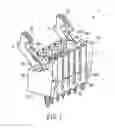
FIG. 1 is a perspective view of a fore connection member according to a first preferred embodiment of the present invention.
FIG. 2 is a perspective view of a rear connection member according to the first preferred embodiment of the present invention.
FIG. 3 is a perspective view of a connection member according to the first preferred embodiment of the present invention.
FIG. 4 is a schematic view I illustrating an action of snap-fitting the fore connection member and the rear connection member according to the first preferred embodiment of the present invention into each other.
FIG. 5 is a schematic view II illustrating the action of snap-fitting the fore connection member and the rear connection member according to the first preferred embodiment of the present invention into each other.
FIG. 6 is a schematic view III illustrating the action of snap-fitting the fore connection member and the rear connection member according to the first preferred embodiment of the present invention into each other.
FIG. 7 is a schematic view I illustrating an action of disengaging the fore connection member and the rear connection member according to the first preferred embodiment of the present invention from each other.
FIG. 8 is a schematic view II illustrating the action of disengaging the fore connection member and the rear connection member according to the first preferred embodiment of the present invention from each other.
FIG. 9 is a schematic view III illustrating the action of disengaging the fore connection member and the rear connection member according to the first preferred embodiment of the present invention from each other.
FIG. 10 is a perspective view of a fore connection member according to a second preferred embodiment of the present invention.
FIG. 11 is a perspective view of a rear connection member according to the second preferred embodiment of the present invention.
FIG. 12 is a perspective view of a connection member according to the second preferred embodiment of the present invention.
FIG. 13 is a schematic view I illustrating an action of snap-fitting the fore connection member and the rear connection member according to the second preferred embodiment of the present invention into each other.
FIG. 14 is a schematic view II illustrating the action of snap-fitting the fore connection member and the rear connection member according to the second preferred embodiment of the present invention into each other.
FIG. 15 is a schematic view III illustrating the action of snap-fitting the fore connection member and the rear connection member according to the second preferred embodiment of the present invention into each other.
FIG. 16 is a schematic view IV illustrating the action of snap-fitting the fore connection member and the rear connection member according to the second preferred embodiment of the present invention into each other.
DETAILED DESCRIPTION OF THE INVENTION
Referring to FIG. 1, there is shown a perspective view of a fore connection member according to a first preferred embodiment of the present invention.
FIG. 1 shows a fore connection member 1 (e.g., a fore terminal structure shown in FIG. 1), which comprises a fore connection member body 2 and two engaging-disengaging members 3. The fore connection member body 2 comprises two side surfaces 21. The two engaging-disengaging members 3 are pivoted to the two side surfaces 21 of the fore connection member body 2 respectively and each comprise a recess 31, a grab 32, an operating end 33, an abutting end 34 and a pivoting end 35. Each of the engaging-disengaging members 3 has the pivoting end 35 thereof pivoted to a corresponding one of the side surfaces 21 of the fore connection member body 2 and pivots about the fore connection member body 2. The operating end 33 and the abutting end 34 are disposed at two sides of the pivoting end 35 respectively. The grab 32 is provided with a hook portion 321 facing the abutting end 34. The abutting end 34 is provided with a circular arc abutting portion 341 comprising a circular arc abutting surface 342, and the circular arc abutting surface 342 is smoothly connected to the recess 31.
In the aforesaid structural design, the operating end 33, the pivoting end 35 and the abutting end 34 pivot according to the lever principle, and the detailed operations will be described hereinbelow.
Referring to FIG. 2, there is shown a perspective view of a rear connection member according to the first preferred embodiment of the present invention.
FIG. 2 shows a rear connection member 4 (e.g., a rear terminal structure shown in FIG. 2) for use with the fore connection member 1 as described above, and the rear connection member 4 comprises a rear connection member body 5 and two protrusions 6. The rear connection member body 5 comprises two side surfaces 51. The two protrusions 6 are disposed on the two side surfaces 51 of the rear connection member body 5 respectively, and each comprise an abutting portion 61 and a snap-fitting portion 62. Each of the protrusions 6 has a recessed portion 63 recessed longitudinally with respect to the abutting portion 61, and the recessed portion 63 is smoothly connected to the abutting portion 61.
Referring to FIG. 3, there is shown a perspective view of a connection member according to the first preferred embodiment of the present invention.
FIG. 3 shows a connection member 7 (e.g., a terminal structure shown in FIG. 3), and the connection member 7 comprises the fore connection member 1 and the rear connection member 4 as described above. The rear connection member 4 and the fore connection member 1 are longitudinally inserted into each other. Each of the protrusions 6 of the rear connection member 4 is contained in the recess 31 of each of the engaging-disengaging members 3 of the fore connection member 1. The abutting end 34 of each of the engaging-disengaging members 3 of the fore connection member 1 correspondingly extends into the recessed portion 63 of each of the protrusions 6 of the rear connection member 4, and the hook portion 321 of each of the engaging-disengaging members 3 of the fore connection member 1 is correspondingly snap-fitted in the snap-fitting portion 62 of each of the protrusions 6 of the rear connection member 4.
Referring to FIG. 4 to FIG. 6 together, FIG. 4 is a schematic view I illustrating an action of snap-fitting the fore connection member and the rear connection member according to the first preferred embodiment of the present invention into each other; FIG. 5 is a schematic view II illustrating the action of snap-fitting the fore connection member and the rear connection member according to the first preferred embodiment of the present invention into each other; and FIG. 6 is a schematic view III illustrating the action of snap-fitting the fore connection member and the rear connection member according to the first preferred embodiment of the present invention into each other. Also, refer to FIG. 1 and FIG. 2 together.
The fore connection member 1 and the rear connection member 4 are longitudinally inserted and snap-fitted into each other, as shown in FIG. 4. Thereafter, the abutting portion 61 of each of the protrusions 6 of the rear connection member 4 firstly makes contact with and abuts against the circular arc abutting portion 341 of the abutting end 34 of each of the engaging-disengaging members 3 of the fore connection member 1, as shown in FIG. 5. Because the circular arc abutting portion 341 comprises the circular arc abutting surface 342 which is smoothly connected to the recess 31, each of the protrusions 6 of the rear connection member 4 can smoothly slide into the recess 31 of each of the engaging-disengaging members 3 of the fore connection member 1, as shown in FIG. 6. Meanwhile, because the operating end 33, the pivoting end 35 and the abutting end 34 of each of the engaging-disengaging members 3 of the fore connection member 1 pivot according to the lever principle, each of the engaging-disengaging members 3 of the fore connection member 1 pivots about the fore connection member body 2 when the abutting portion 61 of each of the protrusions 6 of the rear connection member 4 abuts against the circular arc abutting portion 341 of the abutting end 34 of each of the engaging-disengaging members 3 of the fore connection member 1. Moreover, the grab 32 of each of the engaging-disengaging members 3 pivots towards each of the protrusions 6 of the rear connection member 4, and the hook portion 321 is correspondingly snap-fitted in the snap-fitting portion 62. Meanwhile, the abutting end 34 of each of the engaging-disengaging members 3 of the fore connection member 1 correspondingly extends into the recessed portion 63 of each of the protrusions 6 of the rear connection member 4. Thus, the fore connection member 1 and the rear connection member 4 are longitudinally inserted and snap-fitted into each other to form the connection member 7. In other words, when it is desired to longitudinally insert and snap-fit the fore connection member 1 and the rear connection member 4 into each other, the fore connection member 1 and the rear connection member 4 can be automatically snap-fitted into each other in a time-saving and labor-saving way so long as they are close to and press each other.
Referring to FIG. 7 to FIG. 9 together, FIG. 7 is a schematic view I illustrating an action of disengaging the fore connection member and the rear connection member according to the first preferred embodiment of the present invention from each other; FIG. 8 is a schematic view II illustrating the action of disengaging the fore connection member and the rear connection member according to the first preferred embodiment of the present invention from each other; and FIG. 9 is a schematic view III illustrating the action of disengaging the fore connection member and the rear connection member according to the first preferred embodiment of the present invention from each other. Also, refer to FIG. 1 and FIG. 2 together.
On the contrary, when it is desired to disengage the fore connection member 1 and the rear connection member 4 from each other, the operating end 33 of each of the engaging-disengaging members 3 of the fore connection member 1 can be pulled by a force, as shown by an arrow of FIG. 7. Thereafter, as shown in FIG. 8, each of the engaging-disengaging members 3 of the fore connection member 1 also pivots about the fore connection member body 2 with the pivoting end 35 pivoted to the fore connection member body 2 being used as a rotation shaft, and drives the abutting end 34 to pivot. Thereby, the abutting end 34 of each of the engaging-disengaging members 3 of the fore connection member 1 firstly abuts against the recessed portion 63 of each of the protrusions 6 of the rear connection member 4 to disengage the fore connection member 1 and the rear connection member 4 from each other by a distance (as shown in FIG. 8, the fore connection member 1 and the rear connection member 4 are disengaged from each other by a distance). Likewise, because the circular arc abutting portion 341 of the abutting end 34 of each of the engaging-disengaging members 3 of the fore connection member 1 comprises the circular arc abutting surface 342 which is smoothly connected to the recess 31, each of the protrusions 6 of the rear connection member 4 can smoothly slide out of the recess 31. Then, each of the engaging-disengaging members 3 also further pivots about the fore connection member body 2 with the pivoting end 35 pivoted to the fore connection member body 2 being used as a rotation shaft, and also drives the abutting end 34 to further pivot. Because the recessed portion 63 of each of the protrusions 6 is smoothly connected to the abutting portion 61, the circular arc abutting portion 341 of the abutting end 34 of each of the engaging-disengaging members 3 of the fore connection member 1 slides from the recessed portion 63 of each of the protrusions 6 of the rear connection member 4 to the abutting portion 61 smoothly and abuts against the abutting portion 61 so that the abutting portion 61 is moved away from the circular arc abutting portion 341 (i.e., the fore connection member 1 and the rear connection member 4 are further disengaged from each other by a larger distance). Meanwhile, the grab 32 of each of the engaging-disengaging members 3 of the fore connection member 1 is disengaged from the snap-fitting portion 62 of each of the protrusions 6 of the rear connection member 4 (i.e., the fore connection member 1 and the rear connection member 4 are completely disengaged from each other), as shown in FIG. 9.
As described above, when it is desired to disengage the fore connection member 1 and the rear connection member 4 from each other, it is only needed to apply a force to the operating end 33 of each of the engaging-disengaging members 3 and enable the circular arc abutting portion 341 of the abutting end 34 of each of the engaging-disengaging members 3 to abut against the recessed portion 63 of each of the protrusions 6 according to the lever principle so that the fore connection member 1 and the rear connection member 4 abut against each other to be disengaged by a distance firstly. Thereafter, the circular arc abutting portion 341 of the abutting end 34 of each of the engaging-disengaging members 3 smoothly slides to and abuts against the abutting portion 61 so that the fore connection member 1 and the rear connection member 4 abut against each other to be disengaged by a larger distance. In this way, the fore connection member 1 and the rear connection member 4 can be disengaged from each other in a time-saving and labor-saving way. Through the structural design of two-stage disengagement, the fore connection member 1 and the rear connection member 4 can be completely loosened during disengagement so as to be completely disengaged from each other; that is, when a force is applied to the operating end 33 of each of the engaging-disengaging members 3 to disengage the fore connection member 1 and the rear connection member 4 from each other, a maximum displacement can be achieved at a minimum operating angle (pivoting the engaging-disengaging member 3) (the circular arc abutting portion 341 of the abutting end 34 of the engaging-disengaging member 3 firstly abuts against the recessed portion 63 of each of the protrusions 6 and then abuts against the abutting portion 61).
As described above, no matter when the fore connection member 1 and the rear connection member 4 are snap-fitted into or disengaged from each other, the aforesaid purpose can be achieved simply and successfully through the aforesaid structural design (i.e., the purpose of increasing the convenience in engagement and disengagement, saving time and labor and improving the product quality can be achieved through the aforesaid structural design).
Referring to FIG. 1 again, in this embodiment, a distance from the operating end 33 of each of the engaging-disengaging members 3 to the pivoting end 35 is larger than a distance from the abutting end 34 to the pivoting end 35. This distance (length) design may be changed depending on actual needs; that is, the aforesaid distance (length) design may be changed depending on actual needs under the consideration of the lever principle (the moment).
The fore connection member, the rear connection member and the connection member formed by them may be such structures as terminal blocks, connectors and tracks. For example, the fore connection member is a female terminal structure, the rear connection member is a male terminal structure, and the connection member is a terminal structure.
Referring to FIG. 10, there is shown a perspective view of a fore connection member according to a second preferred embodiment of the present invention.
FIG. 10 shows a fore connection member 1′ (e.g., a fore terminal structure shown in FIG. 10), which comprises a fore connection member body 2′ and two engaging-disengaging members 3′. The fore connection member body 2′ comprises two side surfaces 21′. The two engaging-disengaging members 3′ are pivoted to the two side surfaces 21′ of the fore connection member body 2′ respectively and each comprise a recess 31′, a grab 32′, an operating end 33′, an abutting end 34′ and a pivoting end 35′. Each of the engaging-disengaging members 3′ has the pivoting end 35′ thereof pivoted to a corresponding one of the side surfaces 21′ of the fore connection member body 2′ and pivots about the fore connection member body 2′. The operating end 33′ and the abutting end 34′ are disposed at two sides of the pivoting end 35′ respectively. The grab 32′ is provided with a hook portion 321′ facing the abutting end 34′. The abutting end 34′ is provided with a circular arc abutting portion 341′ comprising a circular arc abutting surface 342′, and the circular arc abutting surface 342′ is smoothly connected to the recess 31′.
In the aforesaid structural design, like the first preferred embodiment, the operating end 33′, the pivoting end 35′ and the abutting end 34′ pivot according to the lever principle, and the detailed operations will be described hereinbelow.
Referring to FIG. 11, there is shown a perspective view of a rear connection member according to the second preferred embodiment of the present invention. Also, referring to FIG. 13 together, there is shown a schematic view I illustrating an action of snap-fitting the fore connection member and the rear connection member according to the second preferred embodiment of the present invention into each other.
FIG. 11 shows a rear connection member 4′ (e.g., a rear terminal structure shown in FIG. 11) for use with the fore connection member 1′ as described above, and the rear connection member 4′ comprises a rear connection member body 5′ and two protrusions 6′. The rear connection member body 5′ comprises two side surfaces 51′ (referring to FIG. 13). The two protrusions 6′ are disposed on the two side surfaces 51′ of the rear connection member body 5′ respectively, and each comprise an abutting portion 61′ (referring to FIG. 13) and a snap-fitting portion 62′ (referring to FIG. 13). Each of the protrusions 6′ has a recessed portion 63′ (referring to FIG. 13) recessed longitudinally with respect to the abutting portion 61′, and the recessed portion 63′ is smoothly connected to the abutting portion 61′.
Referring to FIG. 12, there is shown a perspective view of a connection member according to the second preferred embodiment of the present invention. Also. referring to FIG. 16 together, there is shown a schematic view IV illustrating the action of snap-fitting the fore connection member and the rear connection member according to the second preferred embodiment of the present invention into each other.
FIG. 12 shows a connection member 7′ (e.g., a terminal structure shown in FIG. 12), and the connection member 7′ comprises the fore connection member 1′ and the rear connection member 4′ as described above. As can be known from FIG. 12 and FIG. 16, the rear connection member 4′ and the fore connection member 1′ are longitudinally inserted into each other. Each of the protrusions 6′ of the rear connection member 4′ is contained in the recess 31′ of each of the engaging-disengaging members 3′ of the fore connection member P. The abutting end 34′ of each of the engaging-disengaging members 3′ of the fore connection member 1′ correspondingly extends into the recessed portion 63′ of each of the protrusions 6′ of the rear connection member 4′, and the hook portion 321′ of each of the engaging-disengaging members 3′ of the fore connection member 1′ is correspondingly snap-fitted in the snap-fitting portion 62′ of each of the protrusions 6′ of the rear connection member 4′.
Referring to FIG. 13 to FIG. 16 together, FIG. 13 is a schematic view I illustrating an action of snap-fitting the fore connection member and the rear connection member according to the second preferred embodiment of the present invention into each other as described above; FIG. 14 is a schematic view II illustrating the action of snap-fitting the fore connection member and the rear connection member according to the second preferred embodiment of the present invention into each other; FIG. 15 is a schematic view III illustrating the action of snap-fitting the fore connection member and the rear connection member according to the second preferred embodiment of the present invention into each other; and FIG. 16 is a schematic view IV illustrating the action of snap-fitting the fore connection member and the rear connection member according to the second preferred embodiment of the present invention into each other as described above. Also, refer to FIG. 10 and FIG. 11 together.
The fore connection member 1′ and the rear connection member 4′ are longitudinally inserted and snap-fitted into each other, as shown in FIG. 13. Then, the abutting portion 61′ of each of the protrusions 6′ of the rear connection member 4′ firstly makes contact with and abuts against the circular arc abutting portion 341′ of the abutting end 34′ of each of the engaging-disengaging members 3′ of the fore connection member 1′, as shown in FIG. 14. Because the circular arc abutting portion 341′ comprises the circular arc abutting surface 342′ which is smoothly connected to the recess 31′, each of the protrusions 6′ of the rear connection member 4′ can smoothly slide into the recess 31′ of each of the engaging-disengaging members 3′ of the fore connection member 1′, as shown in FIG. 15. Meanwhile, because the operating end 33′, the pivoting end 35′ and the abutting end 34′ of each of the engaging-disengaging members 3′ of the fore connection member 1′ pivot according to the lever principle, each of the engaging-disengaging members 3′ of the fore connection member 1′ pivots about the fore connection member body 2′ when the abutting portion 61′ of each of the protrusions 6′ of the rear connection member 4′ abuts against the circular arc abutting portion 341′ of the abutting end 34′ of each of the engaging-disengaging members 3′ of the fore connection member P. Moreover, the grab 32′ of each of the engaging-disengaging members 3′ pivots towards each of the protrusions 6′ of the rear connection member 4′, and the hook portion 321′ is correspondingly snap-fitted in the snap-fitting portion 62′. Meanwhile, the abutting end 34′ of each of the engaging-disengaging members 3′ of the fore connection member 1′ correspondingly extends into the recessed portion 63′ of each of the protrusions 6′ of the rear connection member 4′. Thus, the fore connection member 1′ and the rear connection member 4′ are longitudinally inserted and snap-fitted into each other to form the connection member 7′, as shown in FIG. 16. In other words, when it is desired to longitudinally insert and snap-fit the fore connection member 1′ and the rear connection member 4′ into each other, the fore connection member 1′ and the rear connection member 4′ can be automatically snap-fitted into each other in a time-saving and labor-saving way so long as they are close to and press each other.
Refer again to FIG. 13, FIG. 15 and FIG. 16 together, and also refer to FIG. 10 and FIG. 11 together.
On the contrary, when it is desired to disengage the fore connection member 1′ and the rear connection member 4′ from each other, it is only needed to execute the operations in the order opposite to that shown in FIG. 13, FIG. 15 and FIG. 16, and the operations are all as described in the first preferred embodiment. In other words, the operating end 33′ of each of the engaging-disengaging members 3′ of the fore connection member 1′ can be pulled by a force, as shown by an arrow of FIG. 16. Likewise, because the circular arc abutting portion 341′ of the abutting end 34′ of each of the engaging-disengaging members 3′ of the fore connection member 1′ comprises the circular arc abutting surface 342′ which is smoothly connected to the recess 31′, each of the protrusions 6′ of the rear connection member 4′ can smoothly slide out of the recess 31′, as shown in FIG. 15. Meanwhile, each of the engaging-disengaging members 3′ also pivots about the fore connection member body 2′ with the pivoting end 35′ pivoted to the fore connection member body 2′ being used as a rotation shaft, and drives the abutting end 34′ to pivot. Therefore, the circular arc abutting portion 341′ of the abutting end 34′ of each of the engaging-disengaging members 3′ of the fore connection member 1′ abuts against the abutting portion 61′ of each of the protrusions 6′ of the rear connection member 4′ so that the abutting portion 61′ is moved away from the circular arc abutting portion 341′, and the grab 32′ of each of the engaging-disengaging members 3′ of the fore connection member 1′ is disengaged from the snap-fitting portion 62′ of each of the protrusions 6′ of the rear connection member 4′ (i.e., the fore connection member 1′ and the rear connection member 4′ are disengaged from each other), as shown in FIG. 13. In other words, when it is desired to disengage the fore connection member 1′ and the rear connection member 4′ from each other, it is only needed to apply a force to the operating end 33′ of each of the engaging-disengaging members 3′ and enable the circular arc abutting portion 341′ of the abutting end 34′ of each of the engaging-disengaging members 3′ to abut against the abutting portion 61′ of each of the protrusions 6′ according to the lever principle so that the fore connection member 1′ and the rear connection member 4′ can abut against each other to be disengaged in a time-saving and labor-saving way.
As described above and as described in the first preferred embodiment, no matter when the fore connection member 1′ and the rear connection member 4′ are snap-fitted into or disengaged from each other, the aforesaid purpose can be achieved simply and successfully through the aforesaid structural design (i.e., the purpose of increasing the convenience in engagement and disengagement, saving time and labor and improving the product quality can be achieved through the aforesaid structural design). In other words, the various efficacies described in the first preferred embodiment can also be achieved through the structure described in the second preferred embodiment.
Referring to FIG. 10 again, in this embodiment, a distance from the operating end 33′ of each of the engaging-disengaging members 3′ to the pivoting end 35′ is larger than a distance from the abutting end 34′ to the pivoting end 35′. As described in the first preferred embodiment, this distance (length) design may be changed depending on actual needs; that is, the aforesaid distance (length) design may be changed depending on actual needs under the consideration of the lever principle (the moment).
As described in the first preferred embodiment, the fore connection member, the rear connection member and the connection member formed by them may be such structures as terminal blocks, connectors and tracks. For example, the fore connection member is a fore terminal structure, the rear connection member is a rear terminal structure, and the connection member is a terminal structure.
Referring to FIG. 10 and FIG. 14 again, a stop block 211′ is disposed on the two side surfaces 21′ of the fore connection member body 2′ respectively; a stop surface 36′ is formed between the abutting end 34′ and the pivoting end 35′ of each of the engaging-disengaging members 3′; and each of the engaging-disengaging members 3′ pivots about the fore connection member body 2′ and has the stop surface 36′ thereof abut against the stop block 211′. In other words, when the fore connection member 1′ and the rear connection member 4′ are snap-fitted into or disengaged from each other, the pivoting extent of each of the engaging-disengaging members 3′ can be limited by the stop block 211′, as shown in FIG. 14 (i.e., each of the engaging-disengaging members 3′ is prevented from pivoting to such an extent that the grab 32′ and the abutting portion 61′ cannot be accurately aligned with each other).
Claims
1. A fore connection member, comprising:
a fore connection member body, comprising two side surfaces; and
two engaging-disengaging members, being pivoted to the two side surfaces respectively and each comprising a recess, a grab, an operating end, an abutting end and a pivoting end, wherein each of the engaging-disengaging members has the pivoting end thereof pivoted to a corresponding one of the side surfaces of the fore connection member body and pivots about the fore connection member body, the operating end and the abutting end are disposed at two sides of the pivoting end respectively, the grab is provided with a hook portion facing the abutting end, the abutting end is provided with a circular arc abutting portion comprising a circular arc abutting surface, and the circular arc abutting surface is smoothly connected to the recess.
2. The fore connection member of claim 1, wherein a distance from the operating end to the pivoting end is larger than a distance from the abutting end to the pivoting end.
3. The fore connection member of claim 1, wherein the fore connection member is a fore terminal structure.
4. A rear connection member for use with the fore connection member of claim 1, the rear connection member comprising:
a rear connection member body, comprising two side surfaces; and
two protrusions, being disposed on the two side surfaces respectively and each comprising an abutting portion and a snap-fitting portion, wherein each of the protrusions has a recessed portion recessed longitudinally with respect to the abutting portion, and the recessed portion is smoothly connected to the abutting portion.
5. The rear connection member of claim 4, wherein the rear connection member is a rear terminal structure.
6. A connection member, comprising the fore connection member of claim 1 and a rear connection member for use with the fore connection member, the rear connection member comprising:
a rear connection member body, comprising two side surfaces; and
two protrusions, being disposed on the two side surfaces respectively and each comprising an abutting portion and a snap-fitting portion, wherein each of the protrusions has a recessed portion recessed longitudinally with respect to the abutting portion, and the recessed portion is smoothly connected to the abutting portion,
wherein the rear connection member and the fore connection member are longitudinally inserted into each other, each of the protrusions of the rear connection member is contained in the recess of each of the engaging-disengaging members of the fore connection member, the abutting end of each of the engaging-disengaging members of the fore connection member correspondingly extends into the recessed portion of each of the protrusions of the rear connection member, and the hook portion of each of the engaging-disengaging members of the fore connection member is correspondingly snap-fitted in the snap-fitting portion of each of the protrusions of the rear connection member.
7. The connection member of claim 6, wherein the connection member is a terminal structure.
Images & Drawings included:



Sources:
- United States Patent and Trademark Office - verify current appl. status at the USPTO↗
Recent applications in this class:
- » 20250279613 2025-09-04
Connector - » 20240347969 2024-10-17
CONNECTOR ASSEMBLY - » 20240339784 2024-10-10
CONNECTOR FITTING STRUCTURE - » 20240154362 2024-05-09
ELECTRICAL CONNECTOR ARRANGEMENT WITH MATE-ASSIST SLIDER - » 20230307871 2023-09-28
LEVER-TYPE CONNECTOR - » 20230027033 2023-01-26
Terminal with release lever - » 20210013676 2021-01-14
Method and apparatus for the alignment and locking of removable elements with a connector - » 20190280431 2019-09-12
Connector - » 20190036273 2019-01-31
Electrical plug connection - » 20180375255 2018-12-27
Electrical connector housings with cam-lock couplings
Recent applications for this Assignee:
- » 20240275085 2024-08-15
Composite elastic wiring device - » 20240213716 2024-06-27
CONNECTOR STRUCTURE FOR SECURE INSTALLATION - » 20240178614 2024-05-30
Plug connector - » 20240178612 2024-05-30
Plug connector - » 20240072474 2024-02-29
Jumper terminal belt structure - » 20230396002 2023-12-07
Terminal block bus structure and bus module thereof - » 20230369786 2023-11-16
Terminal block with handle structure - » 20230327373 2023-10-12
Terminal block structure and unbuckling unit thereof - » 20230327348 2023-10-12
Wire terminal block coupling separation member - » 20230246351 2023-08-03
Terminal block with handle structure