Hydrangea Plant named 'BC7.13'
US20140304866P1
2014-10-09
13/986,181
2013-04-08
Abstract:
A new and distinct cultivar of Hydrangea macrophylla (Thunb.) named ‘BC7.13’ originated as a controlled cross between varieties. The cultivar ‘BC7.13’ can be blue or red depending on the acidity of the soil and the presence of aluminum. The variety ‘BC7.13’ has compact, attractive inflorescences with relatively large sepalous florets, attractive sepal pigmentation, and stems that branch easily and are relatively strong. When grown without aluminum, the upper sides of the sepals of the sepalous florets are primarily R.H.S. 61 B (red-purple group) and the under sides of the sepals are R.H.S 70 C (red-purple group).
Interested in similar patents?
Get notified when new applications in this technology area are published.
Classification:
A01H5/00 IPC
Products
A01H5/00 IPC
Angiosperms, i.e. flowering plants, characterised by their plant parts; Angiosperms characterised otherwise than by their botanic taxonomy
Description
BOTANICAL CLASSIFICATION
Hydrangea macrophylla (Thunb.) ‘BC7.13’
VARIETY DENOMINATION
‘BC7.13’
BACKGROUND OF THE INVENTION
This invention relates to a new and distinct cultivar of the Saxifragaceae family. The botanical name of the plant is Hydrangea macrophylla (Thunb.) ‘BC7.13’.
The new cultivar originated as a seedling from a controlled cross between the unpatented variety ‘LK49’, which was the pollen parent, and a commercial variety known as ‘Benedict’ to the inventor, which was the seed parent. ‘LK49’ is relatively compact plant with wiry stems, relatively small leaves, relatively small sepalous florets, and inflorescences that are resistant to being damaged by conditions in commercial coolers.
The variety ‘BC7.13’ has compact, attractive inflorescences with relatively large sepalous florets, attractive sepal pigmentation and stems that branch easily and are relatively strong. This combination of characteristics makes the plant ideal for commercial production as an ornamental potted plant. Below is a table comparing the new variety to similar varieties. The variety ‘BC7.14’ is the subject of a current patent application and is a cross between parents ‘LK49’ and the commercial variety known to the inventor as ‘Venedig’ which may be an alias for the patented variety ‘Venice Raven’—U.S. Plant Pat. 10,928. ‘BC7.14’ was treated with aluminum to produce a blue pigmentation. The new variety was grown alongside ‘Venedig’ (grown as a pink variety) as a control.
| TABLE 1 | ||||
| Commerical | ||||
| variety | ||||
| Currently | ‘Venedig’ | |||
| Currently | Patent | which may | ||
| Patent | Pending | be U.S. | ||
| Pending | Variety | Plant Patent | ||
| Variety | ‘BC7.14’ | 10,928 | ||
| New | New | 13/135,034 | ‘Venice Raven’ | |
| Variety | Variety | blued with | Grown without | |
| ‘BC7.13’ | ‘BC7.12’ | aluminum | aluminum | |
| Leaf size | 9 cm × 16.5 cm | 9 cm × 16.5 cm | 8 cm × 13.5 cm | Unknown |
| Plant | 18″ in 6″ pot. | 17″ in 6″ pot. | 14″ in 6″ pot. | 12″ in 6″ pot- |
| height | observed controls | |||
| grown alongside new | ||||
| variety. | ||||
| Stem | Stems are | Stems are | Strong | Strong-observed |
| strength | relatively | strong. | controls grown | |
| strong. | alongside new | |||
| variety | ||||
| Sepal | Upper side of | Upper side of | Upper side of sepals | Upper side of sepals |
| Pigmen- | sepals is R.H.S. | sepals is R.H.S. | is R.H.S. 94 A | is R.H.S. 74 C (red- |
| tation | 61 B (red- | 67 A (red- | (violet-blue group) | purple group). Under |
| purple group); | purple group); | to 86 B | side of sepals is | |
| Under side of | Under side of | (violet group); Under | R.H.S. 75 B (purple | |
| sepals is R.H.S. | sepals is R.H.S. | side of sepals is | group) observed | |
| 70 C (red- | 68 A (red- | R.H.S. 93 D (violet | controls grown | |
| purple group). | purple group). | group) to 86 C | alongside new | |
| (violet group). | variety. | |||
| Sepalous | 65 mm | 60 mm | 50 mm | 50 mm-observed |
| Floret | controls grown | |||
| Size | alongside new | |||
| variety | ||||
The new cultivar ‘BC7.13’ has been successfully asexually reproduced under controlled environmental conditions at a nursery in Half Moon Bay, Calif. under the direction of the inventor with its distinguishing characteristics remaining stable.
Asexual reproduction was first accomplished when vegetative cuttings were taken from the initially selected plant. Examination of asexually reproduced, successive generations grown in Half Moon Bay, Calif. show that the combination of characteristics as herein disclosed for ‘BC7.13’ remains firmly fixed.
DESCRIPTION OF THE DRAWINGS
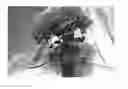
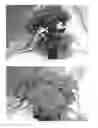
The accompanying drawings consist of color photographs that show the typical plant form, including the inflorescence, foliage, and sepals.
FIG. 1 is a view of the entire plant showing its form, growth habit, dark green foliage, inflorescence, and the color of its sepals.
FIG. 2 is a view of the entire plant showing its form, growth habit, dark green foliage, inflorescence, and the color of its sepals.
FIG. 3 is a close-up view of the adaxial surface of a mature leaf.
FIG. 4 is a close-up view of the base of the stem.
FIG. 5 is a close-up view of the upper side of a panicle of the new variety.
FIG. 6 is a close-up view of the center of a panicle of the new variety.
DESCRIPTION OF THE NEW PLANT
The plants shown in the figures are approximately 50 weeks old. The plant started out as cuttings, taken from the stem of a grown plant. The cuttings were placed in a pot and the soil was periodically fertilized. The plant was pinched early to promote lateral branches.
‘BC7.13’ has not been observed under all possible environmental conditions. The phenotype may vary significantly with variations in environment such as temperature, light intensity and day length. Color determinations were made with The Royal Horticultural Society (R.H.S.) Colour Chart, in association with the Flower Council of Holland, located in Lieden.
- The plant:
-
- Origin.—Controlled cross. The new cultivar originated as a seedling from a controlled cross between the commercial variety known to the inventor as ‘Benedict’ which was the seed parent, and the unpatented variety ‘LK49’, which was the pollen parent.
- Form.—Upright, compact shrub. A typical plant with a mature inflorescence that is ready for sale is approximately 18″ high and has a diameter of 15″ when grown in a 6″ pot with appropriate soil amendments. Plants typically have 4 to 6 stems with one inflorescence between each stem.
- Growth.—Upright, vigorous growth habit. Inflorescence is large. The plant branches easily with shoots forming at the base of the plant. Lateral branches are similar in appearance and form to the main stems.
- Stems.—Lenticels are present. Lenticels are R.H.S. 86 A (violet group) and are 1 to 4 mm long. The surface of young stems is glabrous. Stems become woody as they age. The color of typical young stems and young lateral branches is R.H.S. 144 A (green group). The older portions of the stems are R.H.S. 199 B (grey-brown group) Younger portions of the stems are 6 mm in diameter. Older portions of the stems are 6 mm in diameter.
- Foliage.—Abundant. Leaves are opposite on stem and lateral branches. Shape of leaf. — Elliptic with acute base and apex. Margins are serrate. Texture. — Glabrous; veins dominate on the underside of the leaf and are sunken on the upper leaf surface. Color. — Mature leaves have an upper side that is R.H.S. 147 A (yellow-green group), and an under side that is R.H.S. 138 B (green group). Leaves are pinnately veined. The midvein and veins branching off the midvein are large and prominent on the underside of the leaves. Veins are R.H.S. 138 B (yellow-green group). Leaves are as wide as 8 cm and 11 cm long. Petioles are smooth and 2 to 3.5 cm long and 3 mm wide. Petioles are R.H.S. 138 B (yellow-green group).
-
- Buds:
-
- Form.—Globose with 4 to 5 connate, elliptic, smooth petals for both sepalous and non-sepalous buds. Buds in the center of the inflorescence are non-sepalous. The buds ringing the outside of the inflorescence will develop into sepalous florets. Buds are approximately 1 mm by 1 mm when very young. Buds can be 4 mm in diameter and still unopened. Color of buds is R.H.S. 73 A (red-purple group).
- Aspect.—Smooth.
- Arrangement.—Borne on branched panicles.
-
- Inflorescence:
-
- Form.—Paniculate. Terminal. As many as 100 individual flowers (florets) per inflorescence. Both sepalous florets and non-sepalous florets borne on same panicle. Flowers do not produce a fragrance. The peduncle for the inflorescence is strong and upright. Non-sepalous florets in the center of the panicle develop early on cymes that are later hidden by the sepalous florets. Florets, both sepalous and non-sepalous, have anthers and style. Inflorescences are long-lasting, changing color as they age.
- Size of inflorescence.—Compact and somewhat flat. Individual inflorescence size is dependent on the number of florets. A typical inflorescence can grow as large as 8″ in diameter, and 4″ high.
- Shape.—Clusters of numerous small florets; sepalous florets overlap one another. Sepals are persistent.
- Appearance.—Showy.
-
- Florets:
-
- General.—The non-sepalous florets at the center of the inflorescence open first. Sepalous and non-sepalous florets are perfect and complete. Corolla: Generally, for both sepalous and non-sepalous florets the petals fall off as flower matures. Petals are typically 4 mm long and 3 mm wide. Petals are R.H.S. 73 A (red-purple group). Lenticels that are very small are present on pedicels of both sepalous and non-sepalous florets. Lenticels are R.H.S. 59 B (red-purple) group. Pedicel of both sepalous and non-sepalous florets are primarily R.H.S. 68 A (red-purple group) when inflorescence is ready for commercial sale. Pedicels of non-sepalous florets are 4 mm long, and pedicels of sepalous florets are up to 20 mm long.
- Stamens.—8 to 10 stamens. Pollen is R.H.S. 155 C (yellow-white group). Plant produces abundant pollen. Filament is R.H.S. 77 A (purple group) and 2 to 3 mm long. Anther is 1 mm long and is regular and basally attached.
- Stigma.—Two style each. Each style has one stigma. Style is typically 2 mm long. For young inflorescences ready for commercial sale style is R.H.S. 77 A (red-purple group) and stigma is R.H.S. 67 A (red-purple group).
- Ovary.—Ovary is partially inferior.
- Sepalous florets.—General. — Veins dominate on the underside of the sepals. Number of sepals. — 4 sepals per floret. Aspect of sepals. — Smooth and glaucescent. Shape of sepals. — Reniform with acuminate apex. Edges are entire, but with crenation. Size of sepals. — As the florets mature, the sepals enlarge and overlap each other more and more, until, often, there is no space between the sepals when the petals of the florets open. Sepals at maturity are typically 44 mm long and 40 mm wide. Flowers are typically 6.5 cm in diameter. The upper sides of the sepals are primarily R.H.S. 61 B (red-purple group) and the under sides of the sepals are primarily R.H.S. 70 C (red-purple group).
- Fruit.—none.
- Disease and pest resistance.—unknown.
-
Claims
I claim:1. A new and distinct Hydrangea macrophylla plant named ‘BC7.13’ substantially as herein shown and described.
Images & Drawings included:


Sources:
- United States Patent and Trademark Office - verify current appl. status at the USPTO↗
Recent applications in this class:
- » 20240292771 2024-08-29
Campanula plant named 'Twilight' - » 20240251691 2024-07-25
HYDRANGEA PLANT NAMED 'HYLV17520' - » 20240251690 2024-07-25
Vaccinium Plant Named 'BWPBLUE02' - » 20240251689 2024-07-25
BLUEBERRY PLANT NAMED 'FC13-113' - » 20240251688 2024-07-25
BLUEBERRY PLANT NAMED 'FCM14-057' - » 20240237567 2024-07-11
PONGAMIA VARIETIES - » 20240224827 2024-07-04
PELARGONIUM PLANT NAMED 'PEQZ0103' - » 20240215470 2024-06-27
Agapanthus plant named 'Monsapho' - » 20240215469 2024-06-27
plant named ‘LOCORA3519’ - » 20240206359 2024-06-20
CORYLUS PLANT NAMED 'BWM01'