Amphiphilic macromolecule and use thereof
US20140316092A1
2014-10-23
14/235,016
2011-09-16
✅ Patent granted
US 9,738,741 B2
2017-08-22
WO; PCT/CN2011/001576; 20110916
WO; WO2013/013354; 20130131
Ling Choi | David L Miller
Polsinelli PC
2033-12-31
Abstract:
The present invention provides an amphiphilic macromolecule and the use thereof. The amphiphilic macromolecules have repeating structural units: structural units to adjust molecular weight and molecular weight distribution and charging property effects, high stereo-hindrance structural units, and amphiphilic structural units, which are suitable for fields such as oil field well drilling, well cementation, fracturing, oil gathering and transfer, sewage treatment, sludge treatment and papermaking, etc., and can be used as an oil-displacing agent for enhanced oil production, a heavy oil viscosity reducer, a fracturing fluid, a clay stabilizing agent, a sewage treatment agent, a papermaking retention and drainage aid or a reinforcing agent, etc.
Inventors:
- Jinben Wang 4 🇨🇳 Beijing, China
- Xiaohui Xu 7 🇨🇳 Beijing, China
- Xuefeng Shi 4 🇨🇳 Beijing, China
- Yuchun Han 2 🇨🇳 Beijing, China
- Yilin Wang 5 🇨🇳 Beijing, China
- Haike Yan 4 🇨🇳 Beijing, China
Assignee:
- BEIJING JUNLUN RUNZHONG SCIENCE & TECHNOLOGY CO., LIMITED 3 🇨🇳 Beijing, China
- BEIJING JUNLUN RUNZHONG SCIENCE & TECHNOLOGY CO., LIMITED 1 🇨🇳 , China
Applicant:
Interested in similar patents?
Get notified when new applications in this technology area are published.
Classification:
C08F220/56 » CPC main
Copolymers of compounds having one or more unsaturated aliphatic radicals, each having only one carbon-to-carbon double bond, and only one being terminated by only one carboxyl radical or a salt, anhydride ester, amide, imide or nitrile thereof; Monocarboxylic acids having less than ten carbon atoms; Derivatives thereof; Amides or imides; Amides, e.g. N,N-dimethylacrylamide or N-isopropylacrylamide Acrylamide; Methacrylamide
C08F226/02 » CPC main
Copolymers of compounds having one or more unsaturated aliphatic radicals, each having only one carbon-to-carbon double bond, and at least one being terminated by a single or double bond to nitrogen or by a heterocyclic ring containing nitrogen by a single or double bond to nitrogen
C04B24/163 » CPC further
Use of organic materials as active ingredients for mortars, concrete or artificial stone, e.g. plasticisers; Sulfur-containing compounds; Macromolecular compounds comprising sulfonate or sulfate groups obtained by reactions only involving carbon-to-carbon unsaturated bonds
C04B24/2652 » CPC further
Use of organic materials as active ingredients for mortars, concrete or artificial stone, e.g. plasticisers; Macromolecular compounds obtained by reactions only involving carbon-to-carbon unsaturated bonds Nitrogen containing polymers, e.g. polyacrylamides, polyacrylonitriles
C04B24/2688 » CPC further
Use of organic materials as active ingredients for mortars, concrete or artificial stone, e.g. plasticisers; Macromolecular compounds obtained by reactions only involving carbon-to-carbon unsaturated bonds Copolymers containing at least three different monomers
C08F220/34 » CPC further
Copolymers of compounds having one or more unsaturated aliphatic radicals, each having only one carbon-to-carbon double bond, and only one being terminated by only one carboxyl radical or a salt, anhydride ester, amide, imide or nitrile thereof; Monocarboxylic acids having less than ten carbon atoms; Derivatives thereof; Esters Esters containing nitrogen, e.g. N,N-dimethylaminoethyl (meth)acrylate
C08F220/36 » CPC further
Copolymers of compounds having one or more unsaturated aliphatic radicals, each having only one carbon-to-carbon double bond, and only one being terminated by only one carboxyl radical or a salt, anhydride ester, amide, imide or nitrile thereof; Monocarboxylic acids having less than ten carbon atoms; Derivatives thereof; Esters; Esters containing nitrogen, e.g. N,N-dimethylaminoethyl (meth)acrylate containing oxygen in addition to the carboxy oxygen, e.g. 2-N-morpholinoethyl (meth)acrylate or 2-isocyanatoethyl (meth)acrylate
C09K8/604 » CPC further
Compositions for drilling of boreholes or wells; Compositions for treating boreholes or wells, e.g. for completion or for remedial operations; Compositions for stimulating production by acting on the underground formation containing surfactants Polymeric surfactants
C09K8/608 » CPC further
Compositions for drilling of boreholes or wells; Compositions for treating boreholes or wells, e.g. for completion or for remedial operations; Compositions for stimulating production by acting on the underground formation specially adapted for clay formations Polymer compositions
C09K8/882 » CPC further
Compositions for drilling of boreholes or wells; Compositions for treating boreholes or wells, e.g. for completion or for remedial operations; Compositions for stimulating production by acting on the underground formation; Compositions based on water or polar solvents containing organic compounds macromolecular compounds obtained by reactions only involving carbon-to-carbon unsaturated bonds
C04B24/267 » CPC further
Use of organic materials as active ingredients for mortars, concrete or artificial stone, e.g. plasticisers; Macromolecular compounds obtained by reactions only involving carbon-to-carbon unsaturated bonds of ethylenically unsaturated dicarboxylic acid polymers, e.g. maleic anhydride copolymers containing polyether side chains
C04B24/2694 » CPC further
Use of organic materials as active ingredients for mortars, concrete or artificial stone, e.g. plasticisers; Macromolecular compounds obtained by reactions only involving carbon-to-carbon unsaturated bonds; Copolymers containing at least three different monomers containing polyether side chains
C04B2103/46 » CPC further
Function or property of ingredients for mortars, concrete or artificial stone Water-loss or fluid-loss reducers, hygroscopic or hydrophilic agents, water retention agents
C08F220/06 » CPC further
Copolymers of compounds having one or more unsaturated aliphatic radicals, each having only one carbon-to-carbon double bond, and only one being terminated by only one carboxyl radical or a salt, anhydride ester, amide, imide or nitrile thereof; Monocarboxylic acids having less than ten carbon atoms; Derivatives thereof; Acids; Metal salts or ammonium salts thereof Acrylic acid; Methacrylic acid; Metal salts or ammonium salts thereof
C08F232/04 » CPC further
Copolymers of cyclic compounds containing no unsaturated aliphatic radicals in a side chain, and having one or more carbon-to-carbon double bonds in a carbocyclic ring system having no condensed rings having one carbon-to-carbon double bond
C09K8/584 » CPC further
Compositions for drilling of boreholes or wells; Compositions for treating boreholes or wells, e.g. for completion or for remedial operations; Compositions for enhanced recovery methods for obtaining hydrocarbons, i.e. for improving the mobility of the oil, e.g. displacing fluids characterised by the use of specific surfactants
C09K8/60 IPC
Compositions for drilling of boreholes or wells; Compositions for treating boreholes or wells, e.g. for completion or for remedial operations Compositions for stimulating production by acting on the underground formation
C09K8/68 » CPC further
Compositions for drilling of boreholes or wells; Compositions for treating boreholes or wells, e.g. for completion or for remedial operations; Compositions for stimulating production by acting on the underground formation; Compositions for forming crevices or fractures; Compositions based on water or polar solvents containing organic compounds
C09K8/88 IPC
Compositions for drilling of boreholes or wells; Compositions for treating boreholes or wells, e.g. for completion or for remedial operations; Compositions for stimulating production by acting on the underground formation; Compositions based on water or polar solvents containing organic compounds macromolecular compounds
C04B24/16 IPC
Use of organic materials as active ingredients for mortars, concrete or artificial stone, e.g. plasticisers Sulfur-containing compounds
C09K8/467 » CPC further
Compositions for drilling of boreholes or wells; Compositions for treating boreholes or wells, e.g. for completion or for remedial operations; Compositions for cementing, e.g. for cementing casings into boreholes; Compositions for plugging, e.g. for killing wells containing inorganic binders, e.g. Portland cement containing additives for specific purposes
C09K8/035 » CPC further
Compositions for drilling of boreholes or wells; Compositions for treating boreholes or wells, e.g. for completion or for remedial operations; Well-drilling compositions; Specific additives for general use in well-drilling compositions Organic additives
C08F12/28 » CPC further
Homopolymers and copolymers of compounds having one or more unsaturated aliphatic radicals, each having only one carbon-to-carbon double bond, and at least one being terminated by an aromatic carbocyclic ring; Monomers containing only one unsaturated aliphatic radical containing one ring substituted by hetero atoms or groups containing heteroatoms; Nitrogen Amines
C08F12/30 » CPC further
Homopolymers and copolymers of compounds having one or more unsaturated aliphatic radicals, each having only one carbon-to-carbon double bond, and at least one being terminated by an aromatic carbocyclic ring; Monomers containing only one unsaturated aliphatic radical containing one ring substituted by hetero atoms or groups containing heteroatoms Sulfur
C08F12/12 » CPC further
Homopolymers and copolymers of compounds having one or more unsaturated aliphatic radicals, each having only one carbon-to-carbon double bond, and at least one being terminated by an aromatic carbocyclic ring; Monomers containing only one unsaturated aliphatic radical containing one ring; Hydrocarbons Monomers containing a branched unsaturated aliphatic radical or a ring substituted by an alkyl radical
C04B24/26 IPC
Use of organic materials as active ingredients for mortars, concrete or artificial stone, e.g. plasticisers; Macromolecular compounds obtained by reactions only involving carbon-to-carbon unsaturated bonds
C08F12/08 » CPC further
Homopolymers and copolymers of compounds having one or more unsaturated aliphatic radicals, each having only one carbon-to-carbon double bond, and at least one being terminated by an aromatic carbocyclic ring; Monomers containing only one unsaturated aliphatic radical containing one ring; Hydrocarbons Styrene
C08F212/08 » CPC further
Copolymers of compounds having one or more unsaturated aliphatic radicals, each having only one carbon-to-carbon double bond, and at least one being terminated by an aromatic carbocyclic ring; Monomers containing only one unsaturated aliphatic radical containing one ring; Hydrocarbons Styrene
C08F212/12 » CPC further
Copolymers of compounds having one or more unsaturated aliphatic radicals, each having only one carbon-to-carbon double bond, and at least one being terminated by an aromatic carbocyclic ring; Monomers containing only one unsaturated aliphatic radical containing one ring; Hydrocarbons Monomers containing a branched unsaturated aliphatic radical or a ring substituted by an alkyl radical
C08F212/14 » CPC further
Copolymers of compounds having one or more unsaturated aliphatic radicals, each having only one carbon-to-carbon double bond, and at least one being terminated by an aromatic carbocyclic ring; Monomers containing only one unsaturated aliphatic radical containing one ring substituted by heteroatoms or groups containing heteroatoms
Description
TECHNICAL FIELD
This invention relates to an amphiphilic macromolecule and uses thereof, and this amphiphilic macromolecule is applicable to oilfield drilling, well cementing, fracturing, crude oil gathering and transporting, sewage treating, sludge treating and papermaking, and it can be used as intensified oil producing agent and oil displacing agent, heavy oil viscosity reducer, fracturing fluid, clay stabilizer, sewage treating agent, retention aid and drainage aid and strengthening agent for papermaking.
BACKGROUND OF INVENTION
The solution viscosity and viscosity stability of the polymer used for tertiary oil recovery are important indicators to determine its using effect. Reservoir temperature, mineralization degree of formation water and injection water affect the viscosifying capacity of the polymer solution directly. For partially hydrolyzed polyacrylamide, although it has obvious viscosifying action in fresh water, the hydrodynamic radius of polymer macromolecules decreases with the increase of reservoir temperature, mineralization degree of formation water and injection water, in the meantime, the increase of the adsorption amount of this polymer on the surface of rocks also decrease the valid concentration of the solution, resulting a decline of the solution viscosity. Amphiphilic macromolecule is an important class of water-soluble polymer; by introducing a small amount of hydrophobic group on the hydrophilic macromolecular chains, an intramolecular or intermolecular hydrophobic interaction is generated, rendering the macromolecules to form a steric network structure, and thus has a remarkable viscosifying effect. By increasing the hydrophobic group content on the macromolecule chain or increasing the molecular weight, the impacts of high temperature and high salinity can be resisted to some extent; however, it may also result in deterioration of dissolving capacity of polymer, substantial increase of dissolving time, easy shear degradation of macromolecular chain and easy adsorption on the rock and other problems. Furthermore, with the increase of formation temperature and water mineralization degree, these problems are particularly serious.
Heavy oil resource has become one of the important natural resources for strategic replacement, but it's difficult to exploit. The main reason is that the heavy oil is high in viscosity, high in gum, asphaltenes contents or wax content, not easily flow in formation, wellbore and pipeline. Additionally, because of the great oil-water mobility ratio, it will also cause fast water breakthrough, high water content, and easy formation sand production and other serious problems negatively affecting the oil production.
Nowadays, to keep the viscosifying properties and viscosity stability of the polymer solution, and to improve its ability for heavy oil emulsification, dispersion and viscosity-reduction have great significance on the enhance of crude oil recovery and the maximizing of tapping of the potential underground residual crude oil.
BRIEF DESCRIPTION OF THE INVENTION
In the following context of this invention, unless otherwise defined, the same variable group, and molecular and structural formula have the same definitions.
The instant invention relates to an amphiphilic macromolecule. This amphiphilic macromolecule has repeating units as described below: a structural unit A for adjusting molecular weight, molecular weight distribution and charge characteristics, a highly sterically hindered structural unit B and an amphiphilic structural unit C.
In an embodiment, the structural unit A for adjusting molecular weight, molecular weight distribution and charge characteristics comprises (meth)acrylamide monomer unit A1 and/or (meth)acrylic monomer unit A2. Preferably, the structural unit A includes (meth)acrylamide monomer unit A1 and/or (meth)acrylic monomer unit A2 simultaneously. In the art, the molecular weight of the amphiphilic macromolecule may be selected as needed, preferably, this molecular weight may be selected between 1000000-20000000.
Preferably, the (meth)acrylamide monomer unit A1 has a structure of formula (1):
In formula (1), R1 is H or a methyl group; R2 and R3 are independently selected from the group consisting of H and a C1-C3 alkyl group; R2 and R3 are preferably H.
Preferably, the (meth)acrylic monomer unit A2 is (meth)acrylic acid and/or (meth)acrylate. Preferably the (meth)acrylate is sodium methacrylate.
Preferably, based on 100 mol % of the entire amphiphilic macromolecule repeating units, the molar percentage of (meth)acrylamide monomer unit A1 is 70-99 mol %; preferably 70-90 mol %, more preferably 70-78 mol %.
Preferably, the molar percentage of (meth)acrylic acid monomer unit A2 in the whole amphiphilic polymer repeat unit is 1-30 mol %; preferably 1-28 mol %, and more preferably 20-28 mol %.
In another embodiment, the structural unit A for the regulation of molecular weight, molecular weight distribution and charge characteristics has a structure of formula (2):
wherein, R1 is H or a methyl group; R2 and R3 are independently selected from the group consisting of H and a C1-C3 alkyl group; R2 and R3 are preferably H; R4 is selected from H or a methyl group; Gr is —OH or —O−Na+; m and n represent the molar percentages of the structural units in the entire amphiphilic macromolecule repeating unit, and m is 70-99 mol %, preferably 70-90 mol %, more preferably 70-78 mol %; n is 1-30 mol %, preferably 1-28 mol %, more preferably 20-28 mol %.
In another embodiment, in formula (2), R1-R3 are preferably H, and Gr is preferably —O−Na+.
In another embodiment, the highly sterically hindered structural unit B contains at least a structure G, wherein the structure G is a cyclic hydrocarbon structure formed on the basis of two adjacent carbon atoms in the main chain, or is selected from a structure of formula (3), and the highly sterically hindered structural unit B optionally contains a structure of formula (4):
In formula (3), R5 is H or a methyl group; preferably H; R6 is a radical selected from the group consisting of the structures of formulas (5) and (6).
In formula (5), a is an integer from 1 to 11; preferably 1-7;
In formula (4), R7 is H; R8 is selected from H, —SO3H and salts thereof, —(CH2)2CH3Cl, —CH2N+(CH3)2(CH2)ξCH3Cl or —CH2N+(CH3)2(CH2)2N+(CH3)2(CH2)σCH32 Cl−; ξ and σ are respectively integers from 1 to 15, preferably 1-11.
Preferably, the highly sterically hindered structural unit B comprises a structure G and a structure of formula (4).
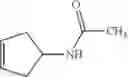
In another embodiment, the cyclic hydrocarbon structure formed on the basis of two adjacent carbon atoms in the main chain is selected from the group consisting of:
Preferably, the molar percentage of structure G of the highly sterically hindered structural unit B in the entire amphiphilic macromolecule repeating units is 0.02-2 mol %; preferably 0.02-1.0 mol %, more preferably 0.1-0.5 mol %.
Preferably, the molar percentage of the structure of formula (4) of the highly sterically hindered structural unit B in the entire amphiphilic macromolecule repeating units is 0.05-5 mol %; preferably 0.1-2.5 mol %, more preferably 0.1-1.5 mol %.
In another embodiment, the highly sterically hindered structural unit B has a structure of formula (7):
In formula (7), the definition on G is as described above, preferably the structure of formula (3),
the definitions on R7 and R8 are as described in formula (4); x and y represent the molar percentages of the structure units in the entire amphiphilic macromolecule repeating units, and x is 0.02-2 mol %, preferably 0.02-1.0 mol %, more preferably 0.1-0.5 mol %; y is 0.05-5 mol %, preferably 0.1-2.5 mol %, and more preferably 0.1-1.5 mol %.
In another embodiment, the amphiphilic structural unit C has a structure of formula (8):
In formula (8), R9 is H or a methyl group; R10 is —N+(CH3)2(CH2)rCH3X−, —N+((CH2)sCH3)3X−or —N+(CH3)((CH2)tCH3)2X−; r is an integer from 3 to 21; s is an integer from 2 to 9; t is an integer from 3 to 15; X−is Cl−or Br−. Preferably, r is from 3 to 17, s is from 2 to 5, t is from 3 to 11.
Preferably, the molar percentage of amphiphilic structural unit C in the entire amphiphilic macromolecule repeating units is 0.05-10 mol %; preferably 0.1-5.0 mol %, more preferably 0.5-1.5 mol %.
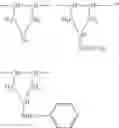
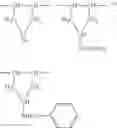
In another embodiment, the amphiphilic macromolecule has a structure of formula (9):
In formula (9), the definitions on R4, m and n are as described in formula (2); the definitions on R7, R8, G, x and y are as described in formula (7); the definitions on R9, and R10 are as described in formula (8); z represents the molar percentage of this structural unit in the entire amphiphilic macromolecule repeat units, and z is 0.05-10 mol %, preferably 0.1-5.0 mol %, more preferably 0.5-1.5 mol %.
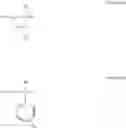
Specifically, this present invention provides a high molecular compound having a structure of formulas (I)-(X):
The molecular weight of the amphiphilic macromolecule described above is between 1000000 and 20000000; preferably between 3000000 and 13000000.
The measurement of the molecular weight M is as follows: The intrinsic viscosity [η] is measured by Ubbelohde viscometer as known in the art, then the obtained intrinsic viscosity [η] value is used in the following equation to obtain the desired molecular weight M:
M=802[η]1.25
The amphiphilic macromolecule according to this present invention can be prepared by known methods in the art, for example, by polymerizing the structural unit for adjusting molecular weight, molecular weight distribution and charge characteristics, the highly sterically hindered structural unit and the amphiphilic structural unit in the presence of an initiator. The polymerization process can be any type well known in the art, such as, suspension polymerization, emulsion polymerization, solution polymerization, precipitation polymerization, etc.
A typical preparation method is as follows: the above monomers are each dispersed or dissolved in an aqueous system under stiffing, the monomer mixture is polymerized by the aid of an initiator under nitrogen atmosphere to form the amphiphilic macromolecule. The so far existing relevant technologies for preparing an amphiphilic macromolecule can all be used to prepare the amphiphilic macromolecule of this invention.
All the monomers for preparing the amphiphilic macromolecule can be commercially available, or can be prepared on the basis of prior art technology directly, and some monomers' synthesis are described in details in specific examples.
DESCRIPTION OF FIGURES
FIG. 1 depicts the relationship of viscosity vs. concentration of the amphiphilic macromolecules obtained from examples 1-5 of the invention in saline having a degree of mineralization of 1×10⁴ mg/L at a temperature of 60.
FIG. 2 depicts the relationship of viscosity vs. temperature of the amphiphilic macromolecules obtained from the examples 1-5 of the invention in saline having a degree of mineralization of 1×10⁴ mg/L at the concentration of 1750 mg/L.
DETAILED DESCRIPTION OF THE INVENTION
The present invention is further illustrated below by combining specific examples; however, this invention is not limited to the following examples.
Example 1
This example synthesized the amphiphilic macromolecule of formula (I):
The synthesis of the amphiphilic macromolecule of this example was as follows:
Firstly, water, accounting for ¾ of the total weight of the reaction system, was charged into a reactor, then various monomers, totally accounting for ¼ of the total weight of the reaction system, were charged into the reactor as well, and the molar percentages m, n, x, y, z for each repeating units were 78%, 20%, 0.25%, 0.5%, 1.25% in succession. The mixture was stirred until complete dissolution, and a pH adjusting agent was then added in to adjust the reaction solution to have a pH value of about 8, then nitrogen gas was introduced in for 30 minutes to remove oxygen contained therein. An initiator was added into the reactor under the protection of nitrogen gas, and nitrogen gas was further continued for 10 minutes, then the reactor was sealed. The reaction was conducted at a temperature of 18; after 5 hours, the reaction was ended with a complete conversion. After the drying of the obtained product, powdered amphiphilic macromolecule was obtained. The molecular weight of the amphiphilic macromolecule was 970×104.
Example 2
This example synthesized the amphiphilic macromolecule of formula (II):
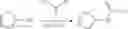
The synthesis route of the monomer
was as follows:
The synthesis of the amphiphilic macromolecule of this example was as follows:
Firstly, water, accounting for ¾ of the total weight of the reaction system, was charged into a reactor, then various monomers, totally accounting for ¼ of the total weight of the reaction system, were charged into the reactor as well, and the molar percentages m, n, x, y, z for each repeating units were 75%, 23%, 0.25%, 0.25%, 1.5% in succession. The mixture was stirred until complete dissolution, and a pH adjusting agent was then added in to adjust the reaction solution to have a pH value of about 8, then nitrogen gas was introduced in for 40 minutes to remove oxygen contained therein. An initiator was added into the reactor under the protection of nitrogen gas, and nitrogen gas was further continued for 10 minutes, then the reactor was sealed. The reaction was conducted at a temperature of 22; after 5 hours, the reaction was ended with a complete conversion. After the drying of the obtained product, powdered amphiphilic macromolecule was obtained. The molecular weight of the amphiphilic macromolecule was 1030×104.
Example 3
This example synthesized the amphiphilic macromolecule of formula (III):
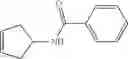
The synthesis route of the monomer
was as follows:
The synthesis of the amphiphilic macromolecule of this example was as follows:
Firstly, water, accounting for ¾ of the total weight of the reaction system, was charged into a reactor, then various monomers, totally accounting for ¼ of the total weight of the reaction system, were charged into the reactor as well, and the molar percentages m, n, x, y, z for each repeating units were 73%, 26%, 0.1%, 0.1%, 0.8% in succession. The mixture was stirred until complete dissolution, and a pH adjusting agent was then added in to adjust the reaction solution to have a pH value of about 9, then nitrogen gas was introduced in for 30 minutes to remove oxygen contained therein. An initiator was added into the reactor under the protection of nitrogen gas, and nitrogen gas was further continued for 10 minutes, then the reactor was sealed. The reaction was conducted at a temperature of 25; after 6 hours, the reaction was ended with a complete conversion. After the drying of the obtained product, powdered amphiphilic macromolecule was obtained. The molecular weight of the amphiphilic macromolecule was 620×104.
Example 4
This example synthesized the amphiphilic macromolecule of formula (IV):
The synthesis route of the monomer
was as follows:
The synthesis of the amphiphilic macromolecule of this example was as follows:
Firstly, water, accounting for ¾ of the total weight of the reaction system, was charged into a reactor, then various monomers, totally accounting for ¼ of the total weight of the reaction system, were charged into the reactor as well, and the molar percentages m, n, x, y, z for each repeating units were 75%, 23%, 0.1%, 0.4%, 1.5% in succession. The mixture was stirred until complete dissolution, and a pH adjusting agent was then added in to adjust the reaction solution to have a pH value of about 9, then nitrogen gas was introduced in for 30 minutes to remove oxygen contained therein. An initiator was added into the reactor under the protection of nitrogen gas, and nitrogen gas was further continued for 10 minutes, then the reactor was sealed. The reaction was conducted at a temperature of 25; after 6 hours, the reaction was ended with a complete conversion. After the drying of the obtained product, powdered amphiphilic macromolecule was obtained. The molecular weight of the amphiphilic macromolecule was 390×104.
Example 5
This example synthesized the amphiphilic macromolecule of formula (V):
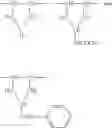
The synthesis route of the monomer
was as follows:
The synthesis of the amphiphilic macromolecule of this example was as follows:
Firstly, water, accounting for ¾ of the total weight of the reaction system, was charged into a reactor, then various monomers, totally accounting for ¼ of the total weight of the reaction system, were charged into the reactor as well, and the molar percentages m, n, x, y, z for each repeating units were 78%, 21%, 0.1%, 0.1%, 0.8% in succession. The mixture was stirred until complete dissolution, and a pH adjusting agent was then added in to adjust the reaction solution to have a pH value of about 8, then nitrogen gas was introduced in for 30 minutes to remove oxygen contained therein. An initiator was added into the reactor under the protection of nitrogen gas, and nitrogen gas was further continued for 10 minutes, then the reactor was sealed. The reaction was conducted at a temperature of 25; after 6 hours, the reaction was ended with a complete conversion. After the drying of the obtained product, powdered amphiphilic macromolecule was obtained. The molecular weight of the amphiphilic macromolecule was 390×104.
Example 6
This example synthesized the amphiphilic macromolecule of formula (VI):
The synthesis of the amphiphilic macromolecule of this example was as follows:
Firstly, water, accounting for ¾ of the total weight of the reaction system, was charged into a reactor, then various monomers, totally accounting for ¼ of the total weight of the reaction system, were charged into the reactor as well, and the molar percentages m, n, x, y, z for each repeating units were 73.5%, 25%, 0.5%, 0.5%, 0.5% in succession. The mixture was stirred until complete dissolution, and a pH adjusting agent was then added in to adjust the reaction solution to have a pH value of about 8, then nitrogen gas was introduced in for 30 minutes to remove oxygen contained therein. An initiator was added into the reactor under the protection of nitrogen gas, and nitrogen gas was further continued for 10 minutes, then the reactor was sealed. The reaction was conducted at a temperature of 45; after 3 hours, the reaction was ended with a complete conversion. After the drying of the obtained product, powdered amphiphilic macromolecule was obtained. The molecular weight of the amphiphilic macromolecule was 680×104.
Example 7
This example synthesized the amphiphilic macromolecule of formula (VII):
The synthesis of the amphiphilic macromolecule of this example was as follows:
Firstly, water, accounting for ¾ of the total weight of the reaction system, was charged into a reactor, then various monomers, totally accounting for ¼ of the total weight of the reaction system, were charged into the reactor as well, and the molar percentages m, n, x, y, z for each repeating units were 75%, 23%, 0.25%, 0.25%, 1.5% in succession. The mixture was stirred until complete dissolution, and a pH adjusting agent was then added in to adjust the reaction solution to have a pH value of about 9, then nitrogen gas was introduced in for 30 minutes to remove oxygen contained therein. An initiator was added into the reactor under the protection of nitrogen gas, and nitrogen gas was further continued for 10 minutes, then the reactor was sealed. The reaction was conducted at a temperature of 55; after 3 hours, the reaction was ended with a complete conversion. After the drying of the obtained product, powdered amphiphilic macromolecule was obtained. The molecular weight of the amphiphilic macromolecule was 690×104.
Example 8
This example synthesized the amphiphilic macromolecule of formula (VIII):
The synthesis of the amphiphilic macromolecule of this example was as follows:
Firstly, water, accounting for ¾ of the total weight of the reaction system, was charged into a reactor, then various monomers, totally accounting for ¼ of the total weight of the reaction system, were charged into the reactor as well, and the molar percentages m, n, x, y, z for each repeating units were 70%, 28%, 0.15%, 0.75%, 1.1% in succession. The mixture was stirred until complete dissolution, and a pH adjusting agent was then added in to adjust the reaction solution to have a pH value of about 8, then nitrogen gas was introduced in for 30 minutes to remove oxygen contained therein. An initiator was added into the reactor under the protection of nitrogen gas, and nitrogen gas was further continued for 10 minutes, then the reactor was sealed. The reaction was conducted at a temperature of 55; after 3 hours, the reaction was ended with a complete conversion. After the drying of the obtained product, powdered amphiphilic macromolecule was obtained. The molecular weight of the amphiphilic macromolecule was 390×104.
Example 9
This example synthesized the amphiphilic macromolecule of formula (IX):
The synthesis of the amphiphilic macromolecule of this example was as follows:
Firstly, water, accounting for ¾ of the total weight of the reaction system, was charged into a reactor, then various monomers, totally accounting for ¼ of the total weight of the reaction system, were charged into the reactor as well, and the molar percentages m, n, x, y, z for each repeating units were 75%, 23.5%, 0.5%, 0.5%, 0.5% in succession. The mixture was stirred until complete dissolution, and a pH adjusting agent was then added in to adjust the reaction solution to have a pH value of about 8, then nitrogen gas was introduced in for 30 minutes to remove oxygen contained therein. An initiator was added into the reactor under the protection of nitrogen gas, and nitrogen gas was further continued for 10 minutes, then the reactor was sealed. The reaction was conducted at a temperature of 50; after 2.5 hours, the reaction was ended with a complete conversion. After the drying of the obtained product, powdered amphiphilic macromolecule was obtained. The molecular weight of the amphiphilic macromolecule was 430×104.
Example 10
This example synthesized the amphiphilic macromolecule of formula (X):
The synthesis of the amphiphilic macromolecule of this example was as follows:
Firstly, water, accounting for ¾ of the total weight of the reaction system, was charged into a reactor, then various monomers, totally accounting for ¼ of the total weight of the reaction system, were charged into the reactor as well, and the molar percentages m, n, x, y, z for each repeating units were 74%, 23%, 0.5%, 1.5%, 1% in succession. The mixture was stirred until complete dissolution, and a pH adjusting agent was then added in to adjust the reaction solution to have a pH value of about 8, then nitrogen gas was introduced in for 30 minutes to remove oxygen contained therein. An initiator was added into the reactor under the protection of nitrogen gas, and nitrogen gas was further continued for 10 minutes, then the reactor was sealed. The reaction was conducted at a temperature of 50; after 2 hours, the reaction was ended with a complete conversion. After the drying of the obtained product, powdered amphiphilic macromolecule was obtained. The molecular weight of the amphiphilic macromolecule was 560×104.
Measurement Examples
Measurement Example 1
Saline having a mineralization degree of 1×10⁴ mg/L was used to prepare amphiphilic macromolecule solutions with different concentrations, and the relationship between the concentration, temperature and the viscosity of the solution was determined. The results were shown in FIG. 1 and FIG. 2.
The figures showed that the amphiphilic macromolecule solutions of examples 1-5 still have favorable viscosifying capacity under the condition of high temperature and high degree of mineralization. The highly sterically hindered unit in the amphiphilic macromolecule reduced the rotational degree of freedom in the main chain and increased the rigidity of the macromolecule chain, which made the macromolecule chain difficult to curl and tend to stretch out, thus enlarging the hydrodynamic radius of the macromolecule; in the meantime, the amphiphilic structural unit associated each other to form the microdomain by intramolecular- or intermolecular-interaction, thus enhancing the viscosifying capacity of the solution remarkably under the conditions of high temperature and high salinity.
Measurement Example 2
Testing method: Under a testing temperature of 25, 25 ml electric dehydration crude oil samples from three types of oilfields were added in a 50 ml test tube with a plug, then 25 ml aqueous solutions of amphiphilic macromolecule with different concentrations formulated with distilled water were added in. The plug of the test tube was tightened, then the test tube was shaken manually or by using an oscillating box for 80-100 times in horizontal direction, and the shaking amplitude should be greater than 20 cm. After sufficient mixing, the plug of the test tube was loosed. Viscosity reduction rate for crude oil was calculated according to the following equation:
Viscosity reduction rate ( % ) = viscosity of crude oil sample - viscosity after mixing viscosity of crude oil sample × 100
Table 1 Experimental results of the heavy oil viscosity reduction of the amphiphilic macromolecule obtained from the example 6-example 10. (oil-water ratio 1:1, 25)
| oil-water volume ratio | ||||||
| (1:1) | oil | viscosity | oil | viscosity | oil | viscosity |
| test temperature | sample | reduction | sample | reduction | sample | reduction |
| (25° C.) | 1 | rate (%) | 2 | rate (%) | 3 | rate (%) |
| initial viscosity (mPa · s) | 1800 | — | 6700 | — | 18000 | — |
| Example 6 | 400 mg/L | 850 | 52.78 | 2300 | 65.67 | 4700 | 73.89 |
| 600 mg/L | 550 | 69.44 | 1475 | 77.99 | 2350 | 86.94 | |
| 800 mg/L | 340 | 81.11 | 975 | 85.45 | 1250 | 93.06 | |
| 1000 mg/L | 280 | 84.44 | 750 | 88.81 | 950 | 94.72 | |
| 1200 mg/L | 220 | 87.78 | 650 | 90.30 | 825 | 95.42 | |
| Example 7 | 400 mg/L | 910 | 49.44 | 2400 | 64.18 | 4450 | 75.28 |
| 600 mg/L | 590 | 67.22 | 1600 | 76.12 | 2100 | 88.33 | |
| 800 mg/L | 450 | 75.00 | 1175 | 82.46 | 1050 | 94.17 | |
| 1000 mg/L | 340 | 81.11 | 830 | 87.61 | 890 | 95.06 | |
| 1200 mg/L | 260 | 85.56 | 680 | 89.85 | 780 | 95.67 | |
| Example 8 | 400 mg/L | 820 | 54.44 | 2050 | 69.40 | 4250 | 76.39 |
| 600 mg/L | 470 | 73.89 | 1370 | 79.55 | 1975 | 89.03 | |
| 800 mg/L | 315 | 82.50 | 850 | 87.31 | 1325 | 92.64 | |
| 1000 mg/L | 230 | 87.22 | 675 | 89.93 | 930 | 94.83 | |
| 1200 mg/L | 200 | 88.89 | 590 | 91.19 | 850 | 95.28 | |
| Example 9 | 400 mg/L | 925 | 48.61 | 2270 | 66.12 | 4700 | 73.89 |
| 600 mg/L | 630 | 65.00 | 1420 | 78.81 | 2550 | 85.83 | |
| 800 mg/L | 450 | 75.00 | 940 | 85.97 | 1480 | 91.78 | |
| 1000 mg/L | 380 | 78.89 | 680 | 89.85 | 1050 | 94.17 | |
| 1200 mg/L | 340 | 81.11 | 530 | 92.09 | 880 | 95.11 | |
| Example 10 | 400 mg/L | 820 | 54.44 | 1900 | 71.64 | 5100 | 71.67 |
| 600 mg/L | 530 | 70.56 | 1250 | 81.34 | 2900 | 83.89 | |
| 800 mg/L | 390 | 78.33 | 825 | 87.69 | 1890 | 89.50 | |
| 1000 mg/L | 305 | 83.06 | 650 | 90.30 | 1400 | 92.22 | |
| 1200 mg/L | 260 | 85.56 | 575 | 91.42 | 1175 | 93.47 | |
Table 1 showed that the amphiphilic macromolecules of examples 6-10 had good effects for viscosity reduction as to all three oil samples. With the increase of the concentration of the amphiphilic macromolecule solution, the viscosity reduction rate increased. And, when the concentration of the amphiphilic macromolecule solution was the same, the viscosity reduction rate increased with the enhancing of the viscosity of the oil sample. It was believed that the amphiphilic macromolecule could reduce the viscosity of the crude oil remarkably via a synergetic effect between the highly sterically hindered structural unit and the amphiphilic structural unit, which could emulsify and disperse the crude oil effectively.
INDUSTRIAL APPLICATION
The amphiphilic macromolecule of this invention can be used in oilfield drilling, well cementing, fracturing, crude oil gathering and transporting, sewage treating, sludge treating and papermaking, and it can be used as intensified oil producing agent and oil displacing agent, heavy oil viscosity reducer, fracturing fluid, clay stabilizer, sewage treating agent, retention aid and drainage aid and strengthening agent for papermaking.
The amphiphilic macromolecule of this invention is especially suitable for crude oil exploitation, for instance, it can be used as an intensified oil displacement polymer and a viscosity reducer for heavy oil. When it is used as an oil displacement agent, it has remarkable viscosifying effect even under the condition of high temperature and high salinity, and can thus enhance the crude oil recovery. When it is used as a viscosity reducer for heavy oil, it can remarkably reduce the viscosity of the heavy oil and decrease the flow resistance thereof in the formation and wellbore by emulsifying and dispersing the heavy oil effectively.
Claims
1-12. (canceled)
13. An amphiphilic macromolecule comprising: as repeating units, a structural unit A for adjusting molecular weight, molecular weight distribution and charge characteristics, a highly sterically hindered structural unit B and an amphiphilic structural unit C, the highly sterically hindered structural unit B comprises a structure G and a structure of formula (4), wherein the structure G is a cyclic hydrocarbon structure formed on the basis of two adjacent carbon atoms in the main chain, or is selected from a structure of formula (3):
wherein in formula (3), R5 is H or a methyl group, preferably H; R6 is a radical selected from the group consisting of the structures of formula (5) and formula (6):
in formula (5), a is an integer from 1 to 11.
in formula (4), R7 is H; R8 is selected from the group consisting of H, —SO3H and salts thereof, 4CH2)2CH3Cl, —CH2N+(CH3)2(CH2)ξCH3Cl−, and —CH2N+(CH3)2(CH2)2N+(CH3)2(CH2)σCH32 Cl−; ξ and σ are respectively integers from 1 to 15; and
the amphiphilic structural unit C has a structure of formula (8):
in formula (8), R9 is H or a methyl group; R10 is —N+(CH3)2(CH2)rCH3X−, —N+((CH2)sCH3)3X−or —N+(CH3)((CH2)tCH3)2X−; r is an integer from 3 to 21; s is an integer from 2 to 9; t is an integer from 3 to 15; and X−is Cl−or Br−.
14. The amphiphilic macromolecule as claimed in claim 13, wherein the structural unit A for adjusting the molecular weight, molecular weight distribution and charge characteristics comprises a (meth)acrylamide monomer unit A1 and/or a (meth)acrylic monomer unit A2.
15. The amphiphilic macromolecule as claimed in claim 14, wherein based on 100 mol % of the entire amphiphilic macromolecule repeating units, the molar percentage of the (meth)acrylamide monomer unit A1 is 70-99 mol %; and the molar percentage of the (meth)acrylic monomer unit A2 is 1-30 mol %.
16. The amphiphilic macromolecule as claimed in claim 13, wherein based on 100 mol % of the entire amphiphilic macromolecule repeating units, the molar percentage of the structure G is 0.02-2 mol %; and the molar percentage of the structure of formula (4) is 0.05-5 mol %.
17. The amphiphilic macromolecule as claimed in claim 13, wherein based on 100 mol % of the entire amphiphilic macromolecule repeating units, the molar percentage of the structure of formula (8) is 0.05-10 mol %.
18. The amphiphilic macromolecule as claimed in claim 13, wherein the structural unit A for adjusting molecular weight, molecular weight distribution and charge characteristics has a structure of formula (2):
wherein in formula (2), R1 is H or a methyl group; R2 and R3 are independently selected from the group consisting of H and a C1-C3 alkyl group; R4 is selected from the group consisting of H and a methyl group; Gr is —OH or —O−Na+; m and n represent the molar percentages of the structural units in the entire amphiphilic macromolecule, and m is from 70 to 99 mol %; n is from 1 to 30 mol %.
19. The amphiphilic macromolecule as claimed in claim 13, wherein the cyclic hydrocarbon structure formed on the basis of the two adjacent carbon atoms in the main chain is selected from the group consisting of:
20. The amphiphilic macromolecule as claimed in claim 13, wherein the highly sterically hindered structural unit B has a structure of formula (7):
wherein in formula (7), the definition on G is as described in claim 13; the definitions on R7 and R8 are as described in formula (4); x and y respectively represent the molar percentages of the structural units in the entire amphiphilic macromolecule, and x is from 0.02 to 2 mol %, y is from 0.05 to 5 mol %.
21. The amphiphilic macromolecule as claimed in claim 13, wherein the amphiphilic macromolecule has a structure of formula (9):
wherein in formula (9), R4 is selected from the group consisting of H and a methyl group; m and n represent the molar percentages of the structural units in the entire amphiphilic macromolecule, and m is from 70 to 99 mol %; n is from 1 to 30 mol %; the definitions on G, R7, R8, x and y are as described in formula (7); the definitions on R9 and R10 are as described in formula (8); z represents the molar percentage of this structural unit in the entire amphiphilic macromolecule, and z is from 0.05 to 10 mol %.
22. The amphiphilic macromolecule as claimed in claim 13, which is a compound of formulas (I)-(X):
23. The amphiphilic macromolecule as claimed in claim 13, wherein the amphiphilic macromolecule has a molecular weight of between 1000000-20000000.
24. The amphiphilic macromolecule as claimed in claim 13 for use in oilfield drilling, well cementing, fracturing, crude oil gathering and transporting, sewage treating, sludge treating and papermaking as intensified oil producing agent and oil displacing agent, heavy oil viscosity reducer, fracturing fluid, clay stabilizer, sewage treating agent, retention aid and drainage aid and strengthening agent for papermaking.
Images & Drawings included:



























Sources:
- United States Patent and Trademark Office - verify current appl. status at the USPTO↗
Similar patent applications:
- » 20150065672
Amphiphilic macromolecule and use thereof - » 20160068467
Amphiphilic macromolecules and methods of use thereof - » 20110059180
Method for Preparing Nanoparticles Based on Functional Amphiphilic Molecules or Macromolecules, and the Use Thereof - » 20140308343
Method for preparing nanoparticles based on functional amphiphilic molecules or macromolecules, and the use thereof - » 20120022159
AMPHIPHILIC STAR-LIKE OR SCORPION-LIKE MACROMOLECULES, VARIOUS COMPOSITIONS AND USES THEREOF
Recent applications in this class:
- » 20250257163 2025-08-14
SPIROPYRAN-BASED PHOTO-HYDROGEL - » 20250136735 2025-05-01
POLYMER, TACKIFIER AND PREPARATION METHOD THEREFOR, AND DRILLING FLUID - » 20250026876 2025-01-23
CATIONIC EMULSION TERPOLYMER FOR INCREASING CAKE SOLIDS - » 20250019480 2025-01-16
SILICON ANODE BINDER - » 20240400738 2024-12-05
POLYMER-CONTAINING COMPOSITIONS HAVING REDUCED HYDROPHOBIC LIQUID CONTENT AND METHODS - » 20240343849 2024-10-17
TAGGED POLYMER AND METHOD - » 20240309138 2024-09-19
NOVEL (METH)ACRYLAMIDE POLYMER, RESIN COMPOSITION CONTAINING SAME, AND MOLDED BODY THEREOF - » 20240301107 2024-09-12
ACRYLIC RUBBER, RUBBER COMPOSITION AND RUBBER CROSSLINKED PRODUCT - » 20240150508 2024-05-09
PHOTO-SWITCHABLE CHEMISTRY FOR REVERSIBLE HYDROGELS AND REUSABLE FLOW CELLS - » 20240043594 2024-02-08
Polymers and membranes with acrylamide moiety
Recent applications for this Assignee:
- » 20150183911 2015-07-02
Amphiphilic macromolecule and the purpose of this amphiphilic macromolecule - » 20150065672 2015-03-05
Amphiphilic macromolecule and use thereof