THERMOSTAT FOR A HVAC
US20140316586A1
2014-10-23
14/256,570
2014-04-18
Abstract:
A thermostat for a HVAC comprising:
-
- a data communication port for connection to the HVAC,
wherein the thermostat is arranged to - communicate via the data communication port an operating parameter of the HVAC, and
- estimate an energy consumption of the HVAC from the communicated operating parameter of the HVAC.
- a data communication port for connection to the HVAC,
The operating parameter may express a fraction of a nominal load of the HVAC, the thermostat being arranged to estimate the energy consumption from a multiplication of the operating parameter and a nominal energy consumption parameter of the HVAC at the nominal load.
Inventors:
- Hendrik Johannes KALK 2 🇳🇱 Deventer, Netherlands
- Willem Boesveld 1 🇳🇱 PG De Vecht, Netherlands
- Cornelis Jan Herman Van Wijk 1 🇳🇱 Apeldoorn, Netherlands
- Tetiana Zavialova 1 🇺🇦 Krolevets, Ukraine
- Erica Cusell 1 🇳🇱 Deventer, Netherlands
Assignee:
- Robert Bosch GMBH 17,237 🇩🇪 Stuttgart, Germany
Interested in similar patents?
Get notified when new applications in this technology area are published.
Classification:
G05D23/1917 » CPC main
Control of temperature characterised by the use of electric means using digital means
G05D23/19 IPC
Control of temperature characterised by the use of electric means
Description
The invention relates to a thermostat.
Thermostats for controlling a room temperature in e.g. domestic heating systems are widely used. The thermostat may be used for control of a domestic heating device of a domestic heating system such as a central heating system, for providing heated liquid medium to a radiator of the heating system and/or providing heated tap water. In particular, domestic heating devices are part of a central heating system in buildings, for example houses. The heated liquid medium is supplied to a radiator, such as a wall-mounted panel, for heating the building and/or for providing heated tap water. The thermostat may also be used to control an air conditioner and/or a ventilation, or any combination of heating, ventilation and air conditioning. Generally, a device for heating, ventilation and/or air conditioning is referred to in this document as a HVAC.
From originally being implemented as electromechanical devices that switch the heating system on and off in dependence on a temperature sensitive switching element, the thermostats developed into electronic control devices, with added functionality such as an electronic clock thermostat that raises and lowers a temperature setpoint in accordance with a preset clock program. Furthermore, the previous on-off control developed into a modulated control, whereby a heating power output of the domestic heating device of the heating system is modulated in steps or continuously over a heating power range.
The invention aims to provide an improved thermostat.
In order to achieve this goal, according to a first aspect of the invention, there is provided a thermostat for a HVAC comprising:
-
- a data communication port for connection to the HVAC,
wherein the thermostat is arranged to - communicate via the data communication port an operating parameter of the HVAC; and
- estimate an energy consumption of the HVAC from the communicated operating parameter of the HVAC.
The thermostat calculates an estimation of the energy consumption from an operating parameter of the HVAC. The operating parameter is thereto communicated between the HVAC and the thermostat. The operating parameter may be a setting that is determined by the thermostat in order to be transmitted (communicated) to the HVAC or a parameter that is sent (communicated) from the HVAC and received by the thermostat. As the energy consumption is estimated from an operating parameter of the HVAC, no data is required from an energy meter (e.g. a gas meter or a electricity meter as applicable) which enables to obtain an estimate of the energy consumption of the HVAC even in combination with conventional energy meter that does not incorporate any data communication facilities. The energy may be gas (such as natural gas, biogas), electricity or any suitable energy source. An accurate result may be obtained using as operating parameter a modulation level of the burner, as this parameter is in a direct relation to the momentary energy consumption, e.g. gas consumption. The modulation level may be determined by the thermostat (and communicated to the HVAC) or may be determined by the HVAC (and communicated to the thermostat). The thermostat may determine an estimated energy consumption by multiplying the modulation level with a nominal energy consumption parameter of the HVAC. For example, in case the nominal energy consumption parameter of the HVAC yields a gas consumption of 1 m̂3 per hour, and the modulation level would be 40%, the estimated energy consumption would yield 40% of 1 m̂3 per hour, being 0.4 m̂3 per hour. In case of an on-off control of the HVAC, the operating parameter may be a percentage of time during which the HVAC is on, which parameter may similarly be multiplied by the nominal energy consumption parameter to obtain an estimated energy consumption. The nominal energy consumption parameter may be stored in the HVAC and transmitted to the thermostat, or may be programmed into the thermostat, e.g. at installation. Alternatively, the thermostat may store a table of nominal energy consumption parameter values per type of HVAC, and upon receipt of a type code from the HVAC, read a corresponding one of the nominal energy consumption parameter values from the table. Accordingly, an accurate estimation of the energy consumption which takes account of the type of HVAC, may be obtained by using a nominal energy consumption parameter. Generally, the thermostat is connected via its data communication port to the HVAC for controlling an operation of the HVAC so as to achieve a temperature setpoint as set by the thermostat. The thermostat may communicate via the data communication port with the HVAC (and/or vice versa) by means of an on/off signal, a data communication protocol such as a standard or proprietary data communication protocol, or any other suitable means. The connection from the thermostat to the HVAC via the data communication port may be a wired 1 to 1 connection, however other types of connection are possible too, for example a wired data communication network type connection, a wireless data communication network type connection such as an RF connection, Zigbee, etc. It is noted that in case of the application of such a network connection between the thermostat and the HVAC, the data communication port and the further data communication port via which the thermostat may communicate with a user device, a server, etc. (as will be described below) may communicate via a same network, such as a home automation network.
- a data communication port for connection to the HVAC,
In a combustion type HVAC, the operating parameter may alternatively or further comprise a combustion supply air stream parameter, for example a ventilator rotational speed, a combustion supply air stream as measured by a sensor, etc. Given a typical ratio between fuel (e.g. gas, oil) and air required for combustion, the supply of air to the combustion process in the HVAC provides an indication of the amount of fuel as consumed.
As illustrated from the above examples, the thermostat may be arranged to multiply the operating parameter by the nominal energy consumption parameter, thereby obtaining a reliable. estimate from an operating parameter that expresses a fraction of the nominal load of the HVAC (namely in these examples the modulation level) and a nominal energy consumption at nominal load (i.e. an energy consumption of the HVAC at nominal load, i.e. in the above example at a modulation level of 100%).
The operating parameter may instead of or in addition to the above examples comprise a temperature of the heating fluid (e.g. heating water) as output by the HVAC, a temperature of the heating fluid as provided to the HVAC and/or a heating fluid circulation flow rate parameter, e.g. a pump speed of a heating fluid circulation pump. The thermostat may determine a temperature difference between the heating fluid as output by the HVAC and as provided to the HVAC and deriving a heat output of the HVAC from the heating fluid circulation flow rate parameter and the determined temperature difference. An energy consumption may be estimated from the heat output. An efficiency ratio, such as an average efficiency ratio as stored in the thermostat may be taken into account to estimate the energy consumption.
The HVAC may comprise any heating device, such as a domestic heating device, such as a gas fired heater, an oil fired heater, a combination of a gas or oil fired heater with a solar system and/or heat pump, etc., a ventilation device, and/or an air conditioner device, or any combination of these devices. Thus, the term HVAC may be understood as a heating, ventilation and/or air conditioning device.
In order to calculate a total energy consumption over a certain time period, the thermostat may be arranged to accumulate the estimated energy consumption over time.
In an embodiment, the accumulating the estimated energy consumption over time comprises accumulating the operating parameter over time, and multiplying the accumulated operating parameter by the nominal energy consumption to obtain the accumulated estimated energy consumption. As a result, the determination of the estimated energy consumption and associated calculations need not be repetitively made, hence reducing a data processing load on the thermostat as the remaining calculation need only be made once. Thereto, the parameter (e.g. the modulation level) may e.g. be logged periodically, e.g. once per second, and accumulated over a certain time period to derive an estimate of a total energy consumption over the logged time period.
In case the HVAC comprises a plurality of functions, logging of the operating parameter may be performed per function, so that an estimate of the energy consumption may be provided per function. For example, in case of a domestic heating device with integrated tap water heating, the operating parameter may be logged for the space heating and for the tap water heating separately, so that estimates of both may be provided. Generally the estimated energy consumption may be displayed to the user on a display of the thermostat and/or transmitted by the thermostat to a user device, such as a mobile telephone, computer, etc. The thermostat may thereto be connected to a data network, as will be described in more detail elsewhere in this document.
The thermostat may be arranged to compare the estimated energy consumption with a predetermined threshold, and to display an icon on the display device when the estimated energy consumption is below the threshold. The icon may thereby indicate to the user that the energy consumption is below a certain level as set by the threshold, so that economic heating may be indicated.
A forecast of a total energy consumption over a time period may be made, e.g. by linearly extrapolating an estimated energy consumption over a past sub time period. This may for example be useful for forecasting a total consumption of e.g. a present month, based on the estimate as determined over e.g. a past week. For forecasting over larger time periods, seasonal effects may be taken into account, e.g. by scaling the estimated total energy consumption over a past time period in a previous year, the scaling being performed based on a comparison of this year's energy estimate over a past sub time period with the energy estimate over the sub time period in the previous years. For example, having stored the energy estimate data over last year, the thermostat may at the end of February, based on the stored estimate of January and February of the present year, and the comparison with the stored estimate of January and February of the previous year, forecast a total energy consumption over the present years by dividing the stored estimate of January and February of the present year by stored estimate of January and February of the previous year, and multiplying by the stored estimate of the entire previous year. Generally, dividing the stored estimate of the present sub-time period by stored estimate of the sub time period of the previous year, and multiplying by the stored estimate of the entire time period of the previous year.
According to a second aspect of the invention, the thermostat is arranged for
-
- starting a timer in response to receiving a tap water heating active message,
- periodically increasing the timer value as long as the tap water heating active message is received,
- comparing the timer value with an shower notification timer value, and
- sending a tap water temperature low signal to the HVAC when reaching or exceeding the shower notification timer value. Thereby, energy and water saving may be provided, as when a user takes a shower which exceeds a predetermined maximum showering time as set by the timer value, the supply of heated water may be stopped, for example in that the heating of the tap water by the HVAC is stopped or in that a tap water temperature setpoint is decreased. The shower notification timer value may e.g. be user defined. The heating of tap water may be interrupted for example for a predetermined time, e.g. a minute or a few minutes (which may likewise be timed by the timer), enabling to provide heated tap water again for a next person taking a shower. The timer may be reset by the thermostat each time when heated tap water has been provided by the HVAC and a supply of the tap water is stopped before the timer reaching the notification timer value, so as to avoid the supply of heated tap water to be stopped unintentionally.
A pre-notification that the time is soon to expire, e.g. in the form of a short pulse of colder water, may be provided to the user in that the thermostat is further arranged for
-
- storing a pre-notification timer value of the timer having a value to be reached by the timer before reaching the shower notification timer value,
- comparing the timer value with a shower pre-notification timer value, and
- sending a tap water pulse temperature low signal to the HVAC when reaching the shower pre-notification timer value in order for the HVAC to pulse the tap water temperature to a lower value.
According to a third aspect of the invention, the thermostat is arranged for:
- receiving an event setpoint, the event setpoint being associated to an event time and an event temperature,
- setting a clock program to the received event temperature starting from the event time. By entering a programming of the thermostat in a form of events, a convenient, fast and easily understood programming may be provided, as a user only is required to enter data relating to the event: its time and an associated temperature. For example: wake up at 7 a.m., set temperature to 18 degrees Celsius, leave home at 8 a.m. and set temperature to 15 degrees Celsius, etc. Instead of entering a temperature for each event, the user may associate each event with a certain preset temperature, e.g. a vacation temperature, an absence temperature, a comfort temperature, etc.
- The thermostat may comprise a further data communication port (such as a wired or wireless network connection), the thermostat being arranged to receive the event setpoint via the further data communication port. The event setpoint may be set at a remote control application, which may for example run on a smartphone, notebook computer, tablet computer, any other smart device (such as a smart TV), at the thermostat itself, etc., whereby the remote control application communicates with the thermostat via the further data communication port. The thermostat may be connected, via the further data communication port, with a data communication network, to which the device at which the remote control application runs, also connects.
The event setpoints may for example comprise at least one of wake up, leave, come home and sleep.
The event setpoint may be provided by an alarm clock and may comprise an alarm clock time. The alarm clock time (such as an alarm clock of a mobile telephone, smartphone, etc.) may be transmitted via the data communication network (e.g. a wireless network to which both the thermostat and the mobile telephone, smart phone, etc., are connected, such as a Wi-Fi wireless network, etc.) to the thermostat, enabling the thermostat to synchronize an event (such a awake up event) to the alarm clock time. Other events, such as entered in an electronic agenda of the smartphone, telephone, tablet computer of the user, etc., may be sent to the thermostat and applied by the thermostat to derive event settings therefrom. Examples may include: children arriving home early, away on weekend trip, etc. may trigger the thermostat to set events accordingly so as to raise the temperature to a comfort temperature as of the moment the children arrive from school, lower the temperature to a vacation temperature as of the moment of being away on a weekend trip, etc.
According to a fourth aspect of the invention, the thermostat comprises a further data communication port and be arranged to
- establish a connection via the further data communication port to an electronic home appliance; and
- to monitor if the electronic home appliance is active; and
- to set a thermostat setpoint to a comfort temperature when the electronic home appliance is active. For example on a Friday night, in a weekend, etc., a user may tend to deviate from normal schedules and for example stay awake longer, for example watching television. The electronic home appliance that is active then (for example a smart television, a smartphone, etc.) may communicate with the thermostat (via e.g. a (wireless) network at home) causing the thermostat to stay at comfort level as long as the electronic home appliance is active. In an embodiment, the electronic home appliance may be provided with a thermostat communication software application, such as a thermostat communication software app, which is arranged to detect when the electronic home appliance is on, to transmits data to the thermostat to indicate to the thermostat that the electronic home appliance is on. The thermostat may then maintain the comfort temperature in response to the receipt of the data that indicates that the electronic home appliance is on. Alternatively, the thermostat may be arranged to interrogate a network communication device (such as a network router) of a network to which the electronic home appliance is connected, whether the electronic home appliance is on, and maintain the comfort temperature in response to the receipt of data that indicates that the electronic home appliance is active. As a further alternative, the thermostat may be arranged to ping an address of the appliance (e.g. an Internet protocol IP address), and when receiving a response, the thermostat is aware of the appliance being active. The appliance may for example be at least one of a television, a tablet computer and a smartphone.
According to a fifth aspect of the invention, the thermostat comprises the further data communication port and may be arranged to
- establish a connection via the further data communication port to a wireless communication network,
- receive from the wireless communication network information about a connection to or location of a mobile user device,
- derive from the received information about the connection to or location of the mobile user device if the mobile user device resides in a predetermined proximity area; and
- setting a temperature setpoint of the thermostat to a comfort temperature when derived that the mobile user device resides in the predetermined proximity zone, and
- setting the temperature setpoint of the thermostat to an absence temperature when derived that the mobile user device does not reside in the predetermined proximity zone.
Thereby, as users tend to take their mobile user device with them, the presence or absence of the mobile user device in the proximity zone may be user by the thermostat to correspondingly set the temperature setpoint to presence or absence. The proximity zone may be defined in various ways. As a practical example, the proximity zone is determined by a coverage area of a wireless home local area network, e.g. a Wi-Fi network in situ, so that, when the mobile user device connects to the wireless network, the temperature level is set by the thermostat to comfort level and vice versa. A software program running on the users mobile communication device may transmit its location, or the fact that it connects to the wireless communication network, or similar information to the thermostat, which in response thereto sets the temperature accordingly. The proximity zone may also be determined by a predetermined maximum distance in geo-location between the thermostat and the users mobile device. The mobile user device may determine its position, and send it to the thermostat via wireless data communication. The determined position of the users mobile user device may be compared with a geo-location of the thermostat and/or the HVAC, which comparison may be performed by the thermostat. Alternatively, the mobile user device may perform the comparison and send the outcome (the mobile user device in the proximity zone or out of the proximity zone) to the thermostat.
Different comfort temperatures may be associated with different users, accordingly the thermostat may comprise a first comfort temperature setpoint associated with a first mobile user device and a second comfort temperature setpoint associated with a second mobile user device, the thermostat being arranged to set the comfort temperature to the first comfort temperature setpoint when having derived that the first mobile user device resides in the predetermined proximity zone, set the comfort temperature to the second comfort temperature setpoint when having derived that the second mobile user device resides in the predetermined proximity zone and
- set the comfort temperature to a highest one of the first and second comfort temperature setpoints when having derived that the first and second mobile user devices reside in the predetermined proximity zone.
Accordingly to a sixth aspect of the invention, the thermostat comprises the further data communication port and is arranged for:
- storing location data representing a geo-location of the thermostat, and
- requesting via the further data communication port a temperature at the geo-location Hence, an outdoor temperature may be acquired by the thermostat without requiring to install an outdoor temperature senor and associated cabling. The thermostat may control the HVAC using a measured indoor temperature (e.g. measured by means of a temperature sensor of the thermostat), the received temperature at the geo location, or both. In case the outside temperature is accompanied by a prognosis, the thermostat may take account thereof, For example, in case of prognoses of a temperature rise, the thermostat may control the HVAC so as to reduce a heating by the HVAC, so as to save energy by the anticipation.
According to a seventh aspect of the invention, the display device of the thermostat comprises a touch sensitive display, the thermostat being arranged for:
- blocking a touch input signal from the touch sensitive display for a predetermined time period after detecting a touch moving from a first zone of the touch sensitive display to a second zone of the touch sensitive display.
- Cleaning of the touch screen may be enabled (without risking that the cleaning motion changes settings or otherwise results in unintended commands) by the blocking of the touch screen. The blocking of the touch screen may be effected for a predetermined time, e.g. one minute, and an icon or other information that informs the user about the blocking state, may correspondingly be displayed on the display. For user convenience, and to easily distinguish the touch that instructs the thermostat to go into the blocking state, from another touch, the first and second zones may extend along opposite edges (e.g. a left and right side, a top and bottom side) of the touch sensitive display.
In order to avoid the display to go into unintended blocking, thus distinguishing an intended blocking motion from another one, the touch sensitive display may be blocked for the predetermined time period only when a direction of movement of the touch from the first zone to the second zone has an angle of less then 45 degrees in respect of a direction perpendicular to the edges along which the first and second zones extend.
Alternatively or additionally to the restriction of the angle of movement to 45 degrees in respect of the direction perpendicular to the edges along which the first and second zones extend, the zones may extend along a half or a quarter of the length of the edge, allowing to prevent unintended blocking by a user making a swipe movement while being sufficiently large to allow the user to activate the blocking when intended. It will be understood that the various aspects of the invention may be combined into a same thermostat, however each of the disclosed aspects may be implemented as such, i.e. without implementing other aspects of the invention in the same thermostat.
The invention will further be explained in the context of the appended drawing and corresponding description, in which a non limiting embodiment of the invention is disclosed, wherein:
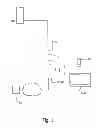
FIG. 1 depicts a block schematic overview of a heating system comprising a thermostat according to One or more of the aspects of the invention;
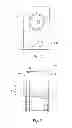
FIG. 2 depicts a schematic front view of a thermostat in accordance with one or more aspects of the invention; and
FIG. 3 depicts a schematic front view of a thermostat in accordance with one or more aspects of the invention.
FIG. 1 depicts a thermostat TH, such as a room thermostat, which is connected via a wired connection to a HVAC, such as in this example a domestic heating device HD, such as a gas fired heating device or any other heating device, e.g. of a central heating system, a tap water heating device or a combined heating device that provides central heating as well as tap water heating. It will be understood that, although in the examples as described reference is made to a (domestic) heating device, any other type of HVAC could be applied as well. The connection between the domestic heating device and the thermostat may be a wired connection. Generally, use is made of a standard wiring as may be pre-installed in the domestic environment, e.g. a dual lead, triple lead or quadruple lead cable. Conventionally, the wired connection was used for on-off switching, however use may be made of a data exchange protocol, while electric power may be supplied from the heating device to the thermostat via the same leads or separate leads of the connection. The thermostat is equipped with a data communication port, such as a data communication interface, or in more conventional implementations an on-off switch, etc. Optionally, electrical power may be supplied to the thermostat via the same port (e.g. a two wire connection for combined data communication and electrical power supply). The thermostat TH is connected to a communication network, in this example a data communication network, more particularly a wireless data communication network, such as a Wi-Fi network or a network or other data communication link in accordance with any other wireless data communication standard. The thermostat thereto comprises a further data communication port, such as in this example a wireless data communication port. The network in this example also connects to a mobile user device MUD, such as a smartphone or a tablet computer. Furthermore, the network in this example connects to a television, such as a so called smart television or Internet enabled television. The wireless communication network may connect via the Internet to a variety of servers that may provide data, such as a weather server that provides weather data. The server may provide a plurality of services, for example weather data, time data (that provides an exact time for setting a clock of the thermostat), software update data, etc. The services may be provided by the server itself, or may in turn be requested by the server from some other network entity that is connected to the internet.
FIG. 2 depicts a schematic front view of the thermostat TH, and shows a touch sensitive display TDS. Information depicted on the touch sensitive display comprises a temperature TMP depicted in numeric digits, and a 12 hour time scale TS which is represented by a circular scale surrounding the temperature display IMP. A coloured line segments of a coloured circle, concentric with the circular scale, indicates a setpoint temperature using a colour tone, whereby blue colour tones represent low temperatures and red colour tones represent higher temperatures. An infrared presence detector IRD may be provided to detect a presence of a person. The thermostat may be arranged to bring the display of the thermostat into an active state when a presence of a person is detected, and bring the display into a standby state otherwise, thus saving energy and increasing an operational life time of the thermostat.
A variety of aspects of the invention may be implemented in the thermostat TH, for example by means of suitable software programming of the thermostat. The aspects as described below may be implemented each as such, or may be combined into a single thermostat. It is thus expressly noted that the various aspects of the invention may, but not necessarily need to be combined with each other. Each of these aspects will be described below.
Energy Consumption
In order to estimate an energy consumption, the thermostat receives via the data communication port an operating parameter of the domestic heating device. The heating device may periodically send the operating parameter to the thermostat, by itself or on (a one time or repeated) request from the thermostat. Thus, the operating parameter may be provided to the thermostat in a polling type of data exchange, or a push type or in any other suitable way. The further data communication port is in this example formed by the wireless communication interface of the thermostat. Any other communication interface type may be provided, such as a wired interface, an infrared interface, a one to one connection, a network connection, etc. Alternatively, the thermostat may determine the operating parameter of the heating device and sent it to the heating device, thereby the thermostat controlling an operation of the heating device. Anyhow, having obtained the operating parameter, the thermostat estimates an energy consumption of the heating device from the operating parameter. The operating parameter is in this example a modulation level of the heating device. The modulation level, as set by the thermostat, determines a heat demand, and consequently the heating demand, thus the modulation level, is in a direct relation to the energy consumption rate of the heating device. For example, in a gas fired heating device, the heating device sets a level of the burner proportionally to the modulation level, thus a gas consumption being substantially proportional to the modulation level. A momentary energy consumption, such as gas consumption, of the heating device may thus be estimated from the operating parameter. The operating parameter such as the modulation level (or other parameter that represents a fraction of the nominal load of the heating device) may be multiplied by a nominal energy consumption parameter (e.g. a full load energy consumption) so as to provide an accurate estimate taking account of the typical energy consumption of the heating device.
By accumulating the estimated energy consumption over time e.g. per hour, per day, per week, etc, an estimated total energy consumption over such time period may be obtained, which may be presented to the user, either on the display of the thermostat, or via the smartphone, tablet, notebook or other user device as connected to the wireless network. An data processing wise efficient implementation may be provided in that the thermostat logs or accumulates the operating parameter (e.g. the modulation level) and performs the calculation to calculate the energy consumption from the logged or accumulated data, only when the estimate is required.
Furthermore, the estimated energy consumption (or the averaged estimated energy consumption over an averaging time period, may be compared with a predetermined threshold, and an icon be displayed on the display device when the estimated energy consumption is below the threshold, so as to indicate an economic operation.
Shower Notification.
When a user takes a shower, tap water heating is activated and remains activates during the showering. The heating device sends its status to the thermostat. A timer may be provided in the thermostat to keep track of the shower time (i.e. the time during which the heating device is in a tap water heating status. In order to warn a user taking a shower that a preset shower time is exceeded, a warning is provided to the user in that the thermostat transmits a message to the heating device for (e.g. temporarily) reducing a tap water heating temperature or a heated tap water supply rate, causing the user to be aware that the time has exceeded and/or to stop the showing because of the unpleasant sensation of colder water. The thermostat thus starts a timer in response to receiving a tap water heating on message, periodically increases the timer value as long as the tap water heating on message is received, compares the timer value with an shower notification timer value, and sends a tap water temperature low signal to the domestic heating device when reaching or exceeding the shower notification timer value.
In order to prevent the user from being suddenly faced with cold(er) water or no water, a pre notification is provided by the thermostat in the form of a brief interruption of the heated tap water supply or a brief temperature reduction thereof. A corresponding command may be sent by the thermostat to the heating device when a pre-notification value of the timer is reached. The shower time and pre-notification time may for example be set by a user, e.g. selected in a corresponding input menu at the touch sensitive display of the thermostat, or via the smartphone, computer or other connected device. For example, the shower time may be set at 15 or 20 minutes and the corresponding pre-notification time 3 minutes before expiry of the shower time.
Event Clock Program
Clock program setting conventionally requires a user to enter a time span and a temperature setpoint as desired during such time span. The user would thus for example enter from 0 h-7 h 15 temperature at 15 degrees, from 7 h 15 to 8 h 15 at 18 degrees, from 8 h 15 to 18 h 00 at 15 degrees, from 18 h 15 to 22 h 30 at 20 degrees and from 22 h 30 to 24 h 00 at 15 degrees. A user convenient and fast alternative way of programming is provided in that event setpoints are entered. Using the above schedule as an example, the following setpoints may be entered: 7 h 15: wakeup, 8.15 leave, 18.15 home, 22.30 sleep. Event setpoints may thus be entered each being associated to an event time and event temperature. The clock program then follows to the corresponding temperature starting from the event time.
- The user may enter the event temperature in the form of a temperature setting or in the form of an activity, to which a pre-set or user-set temperature may be related. By setting the temperature in the form of an activity, an easy, fast and user convenient programming is provided, as the user would only need to set (e.g. select) corresponding times and activities. The preset events from which the user may select may for example comprise wake up, leave, come home, sleep and/or vacation. A corresponding temperature is associated with each event.
A further advantage may be provided to the user in that the events as entered into the thermostat may be synchronized to events as for example set in an electronic agenda of a user device, such as a user's smartphone or computer. For example, an alarm clock time as set by the user may be transmitted to the thermostat by software residing in the user device, a remote control software running on the user device may thereto be provided with an alarm clock function that interacts with the clock program as described so that the thermostat synchronizes its wake up event to the received alarm clock time.
Presence Detection 1
A clock program of the thermostat may also be adjusted or overruled from a monitoring of user activity. For example, the thermostat may receive data from an electronic home appliance, such as a smart television, a smartphone, a tablet computer etc. that at least informs the thermostat that the appliance is active (which in turn may be an indication of the presence of a user). The thermostat may either connect with a software program running on the appliance, which software program informs the thermostat if the appliance is on, or the thermostat may contact a router or other element of the wireless network WiFi, in order to receive data therefrom that signals the appliance is active (i.e. is involved in network communication or not). As a further possible implementation, the thermostat may be arranged to ping an address of the appliance (e.g. an internet protocol IP address), and when receiving a response, the thermostat is aware of the appliance being active. As long as the appliance is active, by the thermostat will keep the setpoint temperature at a comfort level. i.e. at a level corresponding to a presence of the user, and may thereby overrule a clock program.
Presence Detection 2
The presence or absence of a user may be detected by the thermostat from a location of a mobile user device, such as a mobile user device (e.g. a telephone, a smartphone, etc.) Thereto, the thermostat receives via the wireless communication network information about a connection to or location of the user device. The thermostat may either receive data that signals that the user device is connected to the wireless local network (and therefore, is in proximity of the building) or data that informs the thermostat about a location of the user device (such as derived from a position of the user device as derived from a GPS position measurement device comprised in the user device). The thermostat derives from the received data about the connection to or location of the mobile user device if the mobile user device resides in a predetermined proximity area (i.e. an area in and/or around the building) and the thermostat sets its temperature setpoint to a comfort temperature when derived that the mobile user device resides in the predetermined proximity zone, and to an absence temperature when derived that the mobile user device does not reside in the predetermined proximity zone. Alternatively, the user device determines from the measured location if the location is within the proximity zone and sends the outcome of the determination to the thermostat. Thus, when the user device is signaled to be in or near the building, the temperature setpoint is raised so that the heating device may be activated, while a detection of an absence of the user device automatically leads to a lowering of the temperature so as to automatically save energy in case the user device is not present.
In case of multiple users (e.g. multiple inhabitants of the building where the heating device and thermostat are installed) each user device is associated by the thermostat with a corresponding setpoint temperature. When a user is detected to be present (as derived from the presence of the corresponding user device) the thermostat sets the setpoint temperature to the setpoint temperature associated with the user device whose presence has been detected. Thus, in case user device A is associated with a comfort temperature of 19° C. and user device 2 with a comfort temperature of 20° C., the thermostat sets his setpoint temperature to 19° C. when user device 1 is detected to be present and to 20° C. when user device 2 is detected to be present. When both user devices are detected, the thermostat sets the setpoint temperature to the highest one of the associated setpoints of the user devices that are detected to be present, i.e. in this example the thermostat will set its setpoint to 20° C. (i.e. the highest one of 19 and 20° C.).
Outdoor Temperature Sensor
In order to obviate a need for installing an outdoor temperature sensor, the thermostat may connect via the Wi-Fi network or other communication interface with a server that provides weather information The thermostat stores location data representing a geo-location (e.g. position, address, geo-coordinates, GPS coordinates, etc.) of the thermostat, and in order to obtain an cuticle outdoor temperature, requests from the server a temperature at the geo-location.
Touch Sensitive Display Locking
In order to allow convenient cleaning of the touch sensitive display of the thermostat, the thermostat blocks a touch input signal from the touch sensitive display (i.e. blocks touch signals received at the display) for a predetermined time period (e.g. a minute) after detecting a predetermined touch, an example of which being depicted in FIG. 3, e.g. a touch MV moving from a first zone (e.g. an edge zone E1) of the touch sensitive display TDS to a second zone (e.g. a second edge zone E2 opposite to the first edge zone) of the touch sensitive display TDS. The first and second zones for example extend along opposite edges of the touch sensitive display.
In order to distinguish a blocking touch swipe from another one, the touch sensitive display is blocked only when a direction of movement of the touch from the first zone Z1 to the second zone Z2 has an angle α of less than 45 degrees in respect of a direction perpendicular to the left and right edges of the display. Alternatively or additionally to the restriction of the angle of movement to 45 degrees in respect of the direction perpendicular to the edges along which the first and second zones extend, the zones may extend along a half length HL or a quarter length QL of the edge, allowing to prevent unintended blocking by a user making a swipe movement while being sufficiently large to allow the user to activate the blocking when intended. In this example, the half length and quarter length are centered, however alternatively may be provided for example at an end, e.g. a top side or bottom side of the edges.
The functions of the thermostat, such as for example described in this document, may be implemented by means of for example software that may be executed by a data processing device, such as a microprocessor. The software may be updated by a transmission from the server, via the internet and the data network (such as in the depicted example the WiFi network) of updated software to the thermostat.
Various aspects of the invention also follow from the below numbered clauses which form part of the description:
- 1. A thermostat for a HVAC comprising:
- a data communication port for connection to the HVAC,
- wherein the thermostat is arranged to
- communicate via the data communication port an operating parameter of the HVAC, and
- estimate an energy consumption of the HVAC from the communicated operating parameter of the HVAC.
- 2. The thermostat according to clause 1, wherein the operating parameter expresses a fraction of a nominal load of the HVAC, the thermostat being arranged to estimate the energy consumption from a multiplication of the operating parameter and a nominal energy consumption parameter of the HVAC at the nominal load.
- 3. The thermostat according to any of the preceding clauses, wherein the thermostat is arranged to accumulate the estimated energy consumption over time.
- 4. The thermostat according to clause 3, wherein the accumulating the estimated energy consumption over time comprises accumulating the operating parameter over time, and multiplying the accumulated operating parameter by the nominal energy consumption to obtain the accumulated estimated energy consumption.
- 5. A thermostat for a HVAC preferably according to any of the preceding clauses, wherein the thermostat is arranged to estimate an energy consumption of the HVAC, compare the estimated energy consumption with a predetermined threshold, and to display an icon on a display device of the thermostat when the estimated energy consumption is below the threshold.
- 6. A thermostat for a HVAC preferably according to any of the preceding clauses, wherein the thermostat is arranged for
- starting a timer in response to receiving a tap water heating active message,
- periodically increasing the timer value as long as the tap water heating active message is received,
- comparing the timer value with an shower notification timer value, and
- sending a tap water temperature low signal to the HVAC when reaching or exceeding the shower notification timer value.
- 7. The thermostat according to clause 6, wherein the thermostat is further arranged for
- storing a pre-notification timer value of the timer having a value to be reached by the timer before reaching the shower notification timer value,
- comparing the timer value with a shower pre-notification timer value, and
- sending a tap water pulse temperature low signal to the HVAC when reaching the shower pre-notification timer value in order for the HVAC to pulse the tap water temperature to a lower value.
- 8. A thermostat for a HVAC preferably according to any of the preceding clauses, being arranged for
- receiving an event setpoint, the event setpoint being associated to an event time and an event temperature,
- setting a clock program to the received event temperature starting from the event time.
- 9. The thermostat according to clause 8, comprising a further data communication port for connection to a data communication network, the thermostat being arranged to receive the event setpoint via the further data communication port.
- 10. The thermostat according to clause 8 or 9, wherein the event setpoints comprise at least one of wake up, leave, come home and sleep.
- 11. The thermostat according to any of clauses 8-10, wherein the event setpoint comprises an alarm clock time.
- 12. A thermostat for a HVAC preferably according to any of the preceding clauses, comprising a further data communication port for connection to a data communication network, the thermostat being arranged to
- establish a connection via the further data communication port to an electronic home appliance connected with the data communication network;
- monitor if the appliance is active, and
- set a thermostat setpoint to a comfort temperature when the appliance is active.
- 13. The thermostat according to clause 12, wherein the appliance is at least One of a television, a tablet computer and a smartphone.
- 14. A thermostat for a HVAC preferably according to any of the preceding clauses, comprising a further data communication port, the thermostat being arranged to
- establish via the further data communication port a connection to a wireless communication network,
- receive via the wireless communication network information about a connection to or location of a mobile user device,
- derive from the received information about the connection to or location of the mobile user device if the mobile user device resides in a predetermined proximity area,
- setting a temperature setpoint of the thermostat to a comfort temperature when derived that the mobile user device resides in the predetermined proximity zone, and
- setting the temperature setpoint of the thermostat, to an absence temperature when derived that the mobile user device does not reside in the predetermined proximity zone.
- 15. The thermostat according to clause 14, comprising a first comfort temperature setpoint associated with a first mobile user device and a second comfort temperature setpoint associated with a second mobile user device, the thermostat being arranged to set the comfort temperature to the first comfort temperature setpoint when having derived that the first mobile user device resides in the predetermined proximity zone,
- set the comfort temperature to the second comfort temperature setpoint when having derived that the second mobile user device resides in the predetermined proximity zone, and
- set the comfort temperature to a highest one of the first and second comfort temperature setpoints when having derived that the first and second mobile user devices reside in the predetermined proximity zone.
- 16. A thermostat for a HVAC preferably according to any of the preceding clauses comprising a further data communication port.
- wherein the thermostat is arranged for
- storing location data representing a geo-location of the thermostat, and
- requesting via the further data communication port a temperature at the geo-location.
- 17. A thermostat for a HVAC and comprising a display device, the thermostat preferably according to any of the preceding clauses, wherein the display device comprises a touch sensitive display, the thermostat being arranged for:
- blocking a touch input signal from the touch sensitive display for a predetermined time period after detecting a touch Moving from a first zone of the touch sensitive display to a second zone of the touch sensitive display.
- 18. The thermostat according to clause 17, wherein the first and second zones extend along opposite edges of the touch sensitive display.
- 19. The thermostat according to clause 17 or 18, wherein the touch sensitive display is blocked for the predetermined time period only when a direction of movement of the touch from the first zone to the second zone has an angle of less then 45 degrees in respect of a direction perpendicular to the edges along which the first and second zones extend.
- 20. The thermostat according to clause 18 or 19, wherein the zones extend along a half, preferable a quarter of a length of the edges.
Claims
1-18. (canceled)
19. A thermostat for a HVAC, comprising:
a thermostat arrangement including a data communication port for connection to the HVAC;
wherein the thermostat arrangement is configured to communicate via the data communication port an operating parameter of the HVAC, and to estimate an energy consumption of the HVAC from the communicated operating parameter of the HVAC.
20. The thermostat of claim 19, wherein the operating parameter expresses a fraction of a nominal load of the HVAC, and wherein the thermostat is configured to estimate the energy consumption from a multiplication of the operating parameter and a nominal energy consumption parameter of the HVAC at the nominal load.
21. The thermostat of claim 19, wherein the thermostat is configured to accumulate the estimated energy consumption over time.
22. The thermostat of claim 21, wherein the accumulating the estimated energy consumption over time comprises accumulating the operating parameter over time, and multiplying the accumulated operating parameter by the nominal energy consumption to obtain the accumulated estimated energy consumption.
23. The thermostat of claim 19, wherein the thermostat is configured to compare the estimated energy consumption with a predetermined threshold, and to display an icon on a display device of the thermostat when the estimated energy consumption is below the threshold.
24. The thermostat of claim 19, wherein the thermostat arrangement is configured to start a timer in response to receiving a tap water heating active message, periodically increase the timer value as long as the tap water heating active message is received, compare the timer value with an shower notification timer value, and send a tap water temperature low signal to the HVAC when reaching or exceeding the shower notification timer value.
25. The thermostat of claim 24, wherein the thermostat arrangement is configured to store a pre-notification timer value of the timer having a value to be reached by the timer before reaching the shower notification timer value, compare the timer value with a shower pre-notification timer value, and send a tap water pulse temperature low signal to the HVAC wherein reaching the shower pre-notification timer value for the HVAC to pulse the tap water temperature to a lower value.
26. The thermostat of claim 19, wherein the thermostat arrangement is configured to receive an event setpoint, the event setpoint being associated to an event time and an event temperature, and to set a clock program to the received event temperature starting from the event time.
27. The thermostat of claim 26, further comprising:
a further data communication port for connection to a data communication network, wherein the thermostat arrangement is configured to receive the event setpoint via the further date communication port.
28. The thermostat of claim 26, wherein the event setpoints include at least one of wake up, leave, come home and sleep.
29. The thermostat of claim 26, wherein the event setpoint includes an alarm clock time.
30. The thermostat of claim 27, wherein the thermostat arrangement is configured to establish a connection via the further data communication port to an electronic home appliance connect with the data communication network, to monitor if the appliance is active, and to set a thermostat setpoint to a comfort temperature when the appliance is active.
31. The thermostat of claim 30, wherein the appliance includes at least one of a television, a tablet computer and a smartphone.
32. The thermostat of claim 30, wherein the thermostat is configured to establish via the further data communication port a connection to a wireless communication network, to receive via the wireless communication network information about a connection to or location of a mobile user device, to derive from the received information about the connection to or location of the mobile user device if the mobile user device resides in a predetermined proximity area, to set a temperature setpoint of the thermostat to a comfort temperature when derived that the mobile user device resides in the predetermined proximity zone, and to set the temperature setpoint of the thermostat to an absence temperature when derived that the mobile user device does not reside in the predetermined proximity zone.
33. The thermostat of claim 32, wherein a first comfort temperature setpoint is associated with a first mobile user device and a second comfort temperature set point is associated with a second mobile user device, and wherein the thermostat arrangement is configured to set the comfort temperature to the first comfort temperature setpoint when having derived that the first mobile user device resides in the predetermined proximity zone, to set the comfort temperature to the second comfort temperature set point when having derived that the second mobile user device resides in the predetermined proximity zone, and to set the comfort temperature to a highest one of the first and second comfort temperature setpoints if it is derived that the first and second mobile user devices reside in the predetermined proximity zone.
34. The thermostat of claim 30, wherein the thermostat is configured to store location data representing a geo-location of the thermostat, and to request via the further data communication port a temperature at the geo-location.
35. The thermostat of claim 30, wherein the display device includes a touch sensitive display, and wherein the thermostat arrangement is configured to block a touch input signal from the touch sensitive display for a predetermined period after detecting a touch moving from a first zone of the touch sensitive display to a second zone of the touch sensitive display.
36. The thermostat of claim 35, wherein the first zone and the second zone extend along opposite edges of the touch sensitive display.
Images & Drawings included:
Sources:
- United States Patent and Trademark Office - verify current appl. status at the USPTO↗
Similar patent applications:
- » 20240053040
HVAC thermostat assembly and wall-plate connector - » 20220357066
Ultraviolet Germicidal Irradiation Light and Bipolar Ionization Control by HVAC Thermostats - » 20170102723
HVAC thermostat with fuel control - » 20130338839
Flexible functionality partitioning within intelligent-thermostat-controlled HVAC systems - » 20200224918
POWER SUPPLIES FOR THERMOSTATS IN HVAC SYSTEMS - » 20170146261
FLEXIBLE FUNCTIONALITY PARTITIONING WITHIN INTELLIGENT-THERMOSTAT-CONTROLLED HVAC SYSTEMS - » 20150205310
Configurable thermostat for controlling HVAC system - » 20200149771
HVAC SYSTEM WITH THERMOSTAT GATEWAY - » 20190063770
HVAC SYSTEM INCLUDING THERMOSTAT WITH AUTOMATIC COMPONENT REPLACEMENT CAPABILITIES - » 20240068690
SMART THERMOSTAT FOR DUCTLESS HVAC UNITS
Recent applications in this class:
- » 20250172957 2025-05-29
NEURAL NETWORK DRIVEN MANAGEMENT OPTIMIZATION FOR SYSTEM OF CHILLER DEVICES - » 20250155905 2025-05-15
Device and Computer-Supported Method for Determining a Control Protocol for a Microfluidic System - » 20250076905 2025-03-06
COMMAND TO OBTAIN TEMPERATURE DATA - » 20250068195 2025-02-27
SYSTEMS, METHODS, AND APPARATUS FOR CORRECTING THERMAL PROCESSING OF SUBSTRATES - » 20240353878 2024-10-24
OIL INJECTED AIR COMPRESSOR AND METHOD FOR CONTROLLING THE SAME, AND STORAGE MEDIUM AND ELECTRONIC DEVICE - » 20240353877 2024-10-24
ENERGY STORAGE CONTAINER TEMPERATURE CONTROL METHOD, APPARATUS AND ELECTRONIC DEVICE - » 20240295888 2024-09-05
REMOTELY PROGRAMMABLE SENSING AND CONTROL UNIT FOR LIQUID TEMPERATURE AND LEVEL - » 20240288889 2024-08-29
TEMPERATURE ADAPTATIONS FOR COORDINATED CONTROL OF MULTIPLE COMPONENTS FOR CLOSED-LOOP ENCLOSURE COOLING - » 20240281011 2024-08-22
AIR-COOLED DEVICE AND METHOD FOR CONTROLLING AN AIR-COOLED DEVICE - » 20240241530 2024-07-18
DYNAMIC MODELS FOR MOTOR WINDING TEMPERATURE
Recent applications for this Assignee:
- » 20250154580 2025-05-15
ENZYME TRANSLOCATORS IN NANOGAP WITH 3' -ESTERS - » 20250137033 2025-05-01
DNA UNFOLDING USING A FREE-END TAG FLOW MODIFIER - » 20250119751 2025-04-10
A BLUETOOTH COMMUNICATION METHOD AND SYSTEM - » 20240388068 2024-11-21
Method for producing a spark plug, and spark plug - » 20240386514 2024-11-21
Method for identifying a motor vehicle - » 20240344493 2024-10-17
High-pressure fuel pump - » 20240328334 2024-10-03
Method for heating an exhaust system - » 20240309822 2024-09-19
Method and device for operating an internal combustion engine - » 20240300615 2024-09-12
Method for controlling an electric drive motor of an electrically drivable bicycle - » 20240294161 2024-09-05
Method for venting a cylinder of a piston-cylinder unit of a power brake pressure generator of a hydraulic power brake system