Guzmania plant named 'Candy Corn'
US20140317816P1
2014-10-23
13/986,278
2013-04-18
Abstract:
A new and distinct Guzmania cultivar named ‘Candy Corn’ is disclosed, characterized an inflorescence of unique coloration and configuration. The new variety is a Guzmania, normally used as an indoor ornamental plant.
Interested in similar patents?
Get notified when new applications in this technology area are published.
Classification:
A01H5/00 IPC
Products
A01H5/00 IPC
Angiosperms, i.e. flowering plants, characterised by their plant parts; Angiosperms characterised otherwise than by their botanic taxonomy
Description
LATIN NAME OF THE GENUS AND SPECIES
Guzmania hybrid.
VARIETY DENOMINATION
‘Candy Corn’
BACKGROUND OF THE INVENTION
The new cultivar is a product of a chance discovery. The new variety originated as a chance, whole plant mutation from the, unpatented, variety Guzmania hybrid ‘Marjan.’ The new variety was discovered by the inventor, Jeffrey Kent Jul. 1, 1993 at a commercial greenhouse in Vista, Calif. belonging to the inventor.
Asexual reproduction of the new cultivar ‘Candy Corn’ was first performed in Vista, Calif. by vegetative cuttings in the 1994. ‘Candy Corn’ has since produced several generations by vegetative cuttings and has shown that the unique features of this cultivar are stable and reproduced true to type.
SUMMARY OF THE INVENTION
The cultivar ‘Candy Corn’ has not been observed under all possible environmental conditions. The phenotype may vary somewhat with variations in environment such as temperature, day length, and light intensity, without, however, any variance in genotype.
The following traits have been repeatedly observed and are determined to be the unique characteristics of ‘Candy Corn’ These characteristics in combination distinguish ‘Candy Corn’ as a new and distinct Guzmania cultivar:
1. Short plant height.
2. Completely unique yellow and red striped inflorescence coloration.
3. Broad plant habit, with lower foliage angled nearly horizontal.
4. Narrow foliage with only slight arch.
PARENTAL COMPARISON
Plants of the new cultivar ‘Candy Corn’ are similar to the parent variety ‘Marjan’ in most horticultural characteristics. However, ‘Candy Corn’ differs from the parent in having a distinctive red stripe throughout the inflorescence whereas the parent has a solid yellow inflorescence. Additionally, the new variety is shorter than the parent.
COMMERCIAL COMPARISON
‘Candy Corn’ can be compared to the patented commercial variety Guzmania ‘Hilda,’ unpatented. Plants of ‘Hilda’ are similar to plants of ‘Candy Corn’ in most horticultural characteristics, however, ‘Candy Corn’ has an inflorescence with a distinctive red stripe, whereas ‘Hilda’ has a solid yellow inflorescence. Additionally, foliage of ‘Candy Corn’ is somewhat narrower than that of ‘Hilda’.
‘Candy Corn’ can be compared to the unpatented commercial variety Guzmania ‘Ostera’. Plants of ‘Ostera’ are similar to plants of ‘Candy Corn’ in most horticultural characteristics, however, ‘Candy Corn’ has an inflorescence with a distinctive red stripe, whereas ‘Ostera’ has an inflorescence which is orange, red and yellow, however in solid coloration, without striping. Additionally, the new variety is shorter than ‘Ostera’ and more suitable for 12 cm pot production.
BRIEF DESCRIPTION OF THE PHOTOGRAPH
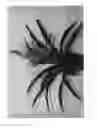
The accompanying photograph in FIG. 1 illustrates in full color a typical plant of ‘Candy Corn’ grown in a greenhouse in Calif. This plant is approximately 1 year old, shown in a 6 inch pot. The photograph was taken using conventional techniques and although colors may appear different from actual colors due to light reflectance it is as accurate as possible by conventional photographic techniques.
DETAILED BOTANICAL DESCRIPTION
In the following description, color references are made to The Royal Horticultural Society Colour Chart except where general terms of ordinary dictionary significance are used. The following observations and measurements describe ‘Candy Corn’ plants grown in a climate controlled greenhouse in Miami, Fla. Temperatures ranged from 70° F. to 72° F. night and 80° F. to 87° F. day. No artificial light, photoperiodic treatments or chemical treatments were given to the plants. Measurements and numerical values represent averages of typical plant types.
- Botanical classification: Guzmania hybrid ‘Candy Corn’
- Age of the plant described: Approximately 1 year from a vegetative cutting.
- Container size of the plant described: 6 inch.
- Plant:
- Growth habit: Upright, arching, forming compact rosettes around a single axis. Single, straight, upright inflorescence arising from the center of plant.
- Height: Approximately 32 cm in a 6 inch pot, measured from the soil level of the pot to top of inflorescence.
- Plant spread: Approximately 56 cm in a 6 inch pot.
- Normal pot size: 4″, 6″ pots.
- Growth rate: Moderate.
- Branching characteristics: Upright, non-branching.
- Number of leaves per stem: Approximately 15.
- Stem length: Approximately 6 cm.
- Stem width: Approximately 6 cm.
- Stem color: Near RHS Yellow-Green 144C with stripes near 144A.
- Stem texture: Smooth.
- Age of plant described: Approximately 1 year.
- Foliage:
- Leaf:
-
- Arrangement.—Whorled, single occurring basal rosettes.
- Average length.—Approximately 32 cm.
- Average width.—Approximately 3.2 cm.
- Shape of blade.—Ligulate.
- Aspect.—Recurved.
- Apex.—Acute.
- Base.—Sheathing Sheath length: Average 3.5 cm Sheath width: Average 4.5 cm. Sheath color: Near RHS Yellow-Green 144C with stripes near 144A.
- Margin.—Entire.
- Texture of top surface.—Smooth, matte.
- Texture of bottom surface.—Smooth, matte.
- Color.—Young foliage upper side: Near RHS 137B Young foliage under side: Near RHS 137C Mature foliage upper side: Near RHS 139A Mature foliage under side: Near RHS 137C.
- Venation.—Type: Parallel. Venation coloration: Indistinguishable from foliage coloration.
-
- Petiole: Not present, sessile.
- Inflorescence:
- General description: Simple spike(scape) consisting of many bracts only. Individual flowers are not distinguishable. Flower parts are highly compressed together. Spike emerges from the centre of the rosette. Inflorescence is formed by conspicuous bracts.
- Inflorescence height, excluding scape: Approximately 32 cm.
- Inflorescence width: Approximately 16.5 cm.
- Scape:
-
- Length.—Approximately 14 cm.
- Width.—Approximately 2.0 cm.
- Aspect.—Very straight, Approximately 75° angle to rosette.
- Strength.—Very strong.
- Color.—Near RHS Yellow-green N144D with infrequent stripes near Red 44A.
-
- Bracts:
-
- Scape/lowermost bracts.—
- Shape.—Ligulate.
- Length.—Approximately 8.5 cm, excluding sheath.
- Width.—Approximately 3.0 cm.
- Quantity.—Average 6.
- Tip.—Acute.
- Base.—Sheathed. Sheath length: Approximately 3.5 cm Sheath width: Approximately 3.5 cm. Sheath color: Near RHS Yellow-Green 145C.
- Margin.—Entire. Color Upperside: Margins near have a background color near RHS Greyed-Yellow 160A with faint stripes near 137C. Center of blade Yellow 11B with heavy stripes near Red 46C. Tip near Green 137A. Color Underside: Margins near have a background color near RHS Yellow 10C with faint stripes near 137C. Center of blade Yellow 11B with heavy stripes near Red 46C. Tip near Green 137C.
- Terminal bracts.—
- Shape.—Ligulate.
- Length.—Approximately 6.5 cm, excluding sheath.
- Width.—Approximately 3 cm.
- Quantity.—Average 9.
- Tip.—Acute.
- Base.—Sheathed. Sheath length: Approximately 2 cm. Sheath width: Approximately 3.2 cm. Sheath color: Near RHS Yellow 9D with faint stripes near Red 46A.
- Margin.—Entire.
- Coloration terminal bracts.—Upperside: Background color near RHS Yellow 11A stripes near Red 45B. Underside: Background color near RHS Yellow 11 A stripes near Red 45B.
-
- Other characteristics:
- Disease resistance: Neither resistance nor susceptibility to diseases or pests has been observed in this variety.
- Drought tolerance and cold tolerance: Observed to tolerate temperatures to 40° C. without any negative effects. Temperature tolerance above this range has not been observed. Tolerance of cold temperatures has not been observed.
- Fruit/seed production: Not observed.
Claims
What is claimed is:1. A new and distinct cultivar of Guzmania plant named ‘Candy Corn’ as herein illustrated and described.
Images & Drawings included:

Sources:
- United States Patent and Trademark Office - verify current appl. status at the USPTO↗
Recent applications in this class:
- » 20240292771 2024-08-29
Campanula plant named 'Twilight' - » 20240251691 2024-07-25
HYDRANGEA PLANT NAMED 'HYLV17520' - » 20240251690 2024-07-25
Vaccinium Plant Named 'BWPBLUE02' - » 20240251689 2024-07-25
BLUEBERRY PLANT NAMED 'FC13-113' - » 20240251688 2024-07-25
BLUEBERRY PLANT NAMED 'FCM14-057' - » 20240237567 2024-07-11
PONGAMIA VARIETIES - » 20240224827 2024-07-04
PELARGONIUM PLANT NAMED 'PEQZ0103' - » 20240215470 2024-06-27
Agapanthus plant named 'Monsapho' - » 20240215469 2024-06-27
plant named ‘LOCORA3519’ - » 20240206359 2024-06-20
CORYLUS PLANT NAMED 'BWM01'