Assembly for wood floors and veneers
US20140318065A1
2014-10-30
14/135,643
2013-12-20
✅ Patent granted
US 9,140,020 B2
2015-09-22
-
-
Brian D Mattei
Hoglund & Pamias, PSC | Robert J. Rios
2033-12-20
Abstract:
The invention of this model refers to an assembly to build preferably wood floors or veneers, that which consists of three elements: a metallic profile with a design that allows supporting a wood or similar material plate, a coupling staple that supports a sloping wall of the profile and fits its base on a slot in the width of the wood plate and that allows the adjacency of other floor or veneer plates.
Applicant:
Interested in similar patents?
Get notified when new applications in this technology area are published.
Classification:
E04F15/225 » CPC further
Flooring; Resiliently-mounted floors, e.g. sprung floors Shock absorber members therefor
E04F15/02044 » CPC main
Flooring; Flooring or floor layers composed of a number of similar elements Separate elements for fastening to an underlayer
E04F2015/02094 » CPC further
Flooring; Flooring or floor layers composed of a number of similar elements; Separate elements for fastening to an underlayer with load-supporting elongated furring elements between the flooring elements and the underlayer with additional fastening elements between furring elements and flooring elements the additional fastening elements located in-between two adjacent flooring elements Engaging side grooves running along the whole length of the flooring elements
E04F15/22 IPC
Flooring Resiliently-mounted floors, e.g. sprung floors
E04F15/02 IPC
Flooring Flooring or floor layers composed of a number of similar elements
E04F15/04 » CPC further
Flooring; Flooring or floor layers composed of a number of similar elements only of wood , e.g. with wooden connecting members
Description
TECHNOLOGICAL SECTOR
This invention belongs to the area of wood constructions, specially the construction of floors and veneers with wood plates, although the use of other similar materials such as plastics or alike is not excluded. It refers to the assembly or manual coupling needing the use of fixation tools and materials such as nails, screws, glues and such assembly composes for its execution of a metallic profile configured or designed to hold and slide a coupling staple that adjust on a wood plate inside a slot or groove made on the width of such plate.
BACKGROUND
In the field of wood floors and veneers manufacturing the use of glues and adhesives and fixation tools such as nails, tacks, screws and other is being traditionally used. Our assembly model and based on traditional techniques has envisioned a manual coupling based on three elements that do not need any tools or materials for its execution. These three elements are the wood plate, worked on its width with grooved, a rail or profile specially designed to allow the assembly and a coupling staple in the wood slot that makes easier to join the other plates that conform the floor or veneer.
This assembly, as proposed in this application, is designed in such a way that the three elements mentioned above and their interrelation guarantee stability and consistency in the construction of hand-made floors or veneers.
INVENTION TECHNICAL DESCRIPTION AND EXECUTION
Invention shall be understood from the following figures:
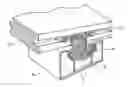
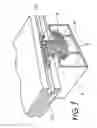
FIG. 1 shows a cross-section view of the assembly with the three elements mentioned above: profile, plate and staple.
FIG. 2 shows a front view of model assembly.
FIG. 3 shows an alternative assembly in which the profile has a variation of design.
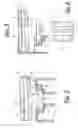
FIG. 4 shows a top view with the characteristics of design of the coupling staple between the wood profile and plate.
Based on FIGS. 1 and 2, the assembly of the new model consists of an extruded aluminum metallic profile (1) with a symmetric conformation with regard to the central axis with flat sides or bases (A) and (B) that supports on the top base a wood rectangular plate (2) which width and length has slots (2) in each side, and a piece or staple (3) that allows the coupling between two wood plates (2) adjacent to the intermediate slot (2).
This staple (3) is an element made of plastic and according to FIGS. 2 and 4, it is button-shaped with an spherical slotted cap head (6) held in an intermediate column that end in a base (7) also slotted with some grooves (8) on the lower face.
The staple's head or cap (3) makes support contact on a point (4) on a ramp or inclination of the profile inner walls (1) with easy sliding on such sloping planes, while the rectangular base (7) matches or couples with the slot (2) on the wood plate width(2).
Grooves (8) on the staple base (7) serve to assemble the base with wood through a slot with a rigidity to counteract oscillating motions on wood plates assembled when they are stepped in the case of floors, as seen in the partial view of FIG. 2. FIG. 3 shows a variation of design in the profile(1) in which one wing extends to a wall (59 with an end fold that acts as a wall framework in the case of veneers, without altering, for example, the functionality of the other two assembly elements. Staple (3) of assembly used as an example, has a cap-shaped spherical head that may have another configuration such as a parallelogram on its head with sloping sides. These staples allow wood coupling not only adjacently parallel to the plates but for intersection coupling in any angles when conforming floors in non-regular polygonal areas. This easiness is because the staple in any of the modalities described above, allows turning supported on the profile sloping wall.
Claims
1. Assembly for floors and veneers, to be executed manually, wherein a metallic profile coupling (1) holds a floor or veneer plate (2) that has along its width a slot (2) and a staple (3) that supports on its head (6) on the lower side of the profile in the contact point (4) and fits on the base (7) inside the plate (2) slot (2).
2. Assembly for floors and veneers according to claim 1, wherein the profile (1) has a wing-shaped extension (2) with an end fold.
3. Assembly for floors and veneers according to claim 1, wherein the staple (3) has grooves on its head (6) and on the join base (7) it has on one of its side of contact with the slot (2) grooves (8) that cushion the plates (2) motion.
Images & Drawings included:
Sources:
- United States Patent and Trademark Office - verify current appl. status at the USPTO↗
Recent applications in this class:
- » 20250146304 2025-05-08
HIDDEN FASTENER FREE DECK CLIP - » 20250129616 2025-04-24
ROTATING T-CLIP AND METHODS OF USE - » 20250027323 2025-01-23
DECK INSTALLATION SYSTEMS AND METHODS FOR INSTALLING SAME - » 20250019974 2025-01-16
Versatile Modular Flooring Device and System - » 20250012092 2025-01-09
SET OF PARTS FOR INSTALLING A FLOOR COVERING - » 20250003234 2025-01-02
DECK BOARD ASSEMBLY AND COMPONENTS THEREOF, AND METHODS OF MANUFACTURING AND USING THE SAME - » 20240392583 2024-11-28
FLOORBOARD UNIT AND FLOORBOARD CONNECTING STRUCTURE - » 20240376724 2024-11-14
HIDDEN FASTENER UNIT AND RELATED METHOD OF USE - » 20240368899 2024-11-07
HIDDEN FASTENER UNIT AND RELATED METHOD OF USE - » 20240352747 2024-10-24
Bracket for Interconnecting the Terminal End of Deck Boards and Related Methods