Method for forming thermoplastic composites
US20140353883A1
2014-12-04
13/908,043
2013-06-03
✅ Patent granted
US 9,661,888 B2
2017-05-30
-
-
Monica Huson
Alan D. Kamrath | Kamrath IP Lawfirm, P.A.
2034-04-21
Abstract:
A method for forming thermoplastic composites comprising: (a). cutting a thermoplastic film and a cloth material, wherein the thermoplastic film is comprised of a surface layer and an adhesive layer, and a melting point of the surface layer is higher than the adhesive layer; (b). placing the thermoplastic film on a platform of a molding machine, facing the adhesive layer upwardly, and covering the cloth material on the thermoplastic film, wherein the platform includes a plurality of channels defined therein, a plurality of concave and convex patterns arranged on a top surface thereof, and plural pores evenly formed on the top surface thereof and communicating with the plurality of channels; (c). heating the thermoplastic film by using a heating unit so as to melt the adhesive layer and to soften the surface layer.
Assignee:
- CHAEI HSIN ENTERPRISE CO., LTD. 11 🇹🇼 Taichung, Taiwan
Applicant:
Interested in similar patents?
Get notified when new applications in this technology area are published.
Classification:
D06M17/10 » CPC main
Producing multi-layer textile fabrics by applying synthetic resins as adhesives Polyurethanes polyurea
B29C51/10 » CPC further
Shaping by thermoforming, i.e. shaping sheets or sheet like preforms after heating , e.g. shaping sheets in matched moulds or by deep-drawing; Apparatus therefor Forming by pressure difference, e.g. vacuum
B29C65/4815 » CPC further
Joining of preformed parts ; Apparatus therefor using adhesives, i.e. using supplementary joining material; solvent bonding characterised by the type of adhesives; Non-reactive adhesives, e.g. physically hardening adhesives Hot melt adhesives, e.g. thermoplastic adhesives
B29C65/18 » CPC further
Joining of preformed parts ; Apparatus therefor by heating, with or without pressure using heated tools
B29C65/544 » CPC further
Joining of preformed parts ; Apparatus therefor using adhesives, i.e. using supplementary joining material; solvent bonding applying the adhesive between pre-assembled parts by suction
B29C66/00145 » CPC further
General aspects of processes or apparatus for joining preformed parts; Joining in special atmospheres characterised by the type of environment; Gaseous environments Vacuum, e.g. partial vacuum
B29C66/1122 » CPC further
General aspects of processes or apparatus for joining preformed parts; General aspects dealing with the joint area or with the area to be joined; Particular design of joint configurations particular design of the joint cross-sections; Joint cross-sections comprising a single joint-segment, i.e. one of the parts to be joined comprising a single joint-segment in the joint cross-section; Single lapped joints Single lap to lap joints, i.e. overlap joints
B29C66/30326 » CPC further
General aspects of processes or apparatus for joining preformed parts; General aspects dealing with the joint area or with the area to be joined; Particular design of joint configurations the joint involving an anchoring effect making use of protusions or cavities belonging to at least one of the parts to be joined making use of cavities belonging to at least one of the parts to be joined in the form of porosity
B29C66/472 » CPC further
General aspects of processes or apparatus for joining preformed parts; General aspects of joining substantially flat articles, e.g. plates, sheets or web-like materials; Making flat seams in tubular or hollow articles; Joining single elements to substantially flat surfaces; Joining single elements to sheets, plates or other substantially flat surfaces said single elements being substantially flat
B29C66/712 » CPC further
General aspects of processes or apparatus for joining preformed parts characterised by the composition, physical properties or the structure of the material of the parts to be joined; Joining with non-plastics material characterised by the composition of the plastics material of the parts to be joined the composition of one of the parts to be joined being different from the composition of the other part
B29C66/71 » CPC further
General aspects of processes or apparatus for joining preformed parts characterised by the composition, physical properties or the structure of the material of the parts to be joined; Joining with non-plastics material characterised by the composition of the plastics material of the parts to be joined
B29C66/73115 » CPC further
General aspects of processes or apparatus for joining preformed parts characterised by the composition, physical properties or the structure of the material of the parts to be joined; Joining with non-plastics material characterised by the intensive physical properties of the material of the parts to be joined, by the optical properties of the material of the parts to be joined, by the extensive physical properties of the parts to be joined, by the state of the material of the parts to be joined or by the material of the parts to be joined being a thermoplastic or a thermoset characterised by the intensive physical properties of the material of the parts to be joined; Thermal properties Melting point
B29C66/81241 » CPC further
General aspects of processes or apparatus for joining preformed parts; General aspects of machine operations or constructions and parts thereof; General aspects of the pressing elements, i.e. the elements applying pressure on the parts to be joined in the area to be joined, e.g. the welding jaws or clamps characterised by the composition, by the structure, by the intensive physical properties or by the optical properties of the material constituting the pressing elements, e.g. constituting the welding jaws or clamps characterised by the structure of the material constituting the pressing elements, e.g. constituting the welding jaws or clamps being porous or sintered
B29C66/81455 » CPC further
General aspects of processes or apparatus for joining preformed parts; General aspects of machine operations or constructions and parts thereof; General aspects of the pressing elements, i.e. the elements applying pressure on the parts to be joined in the area to be joined, e.g. the welding jaws or clamps characterised by the design of the pressing elements, e.g. of the welding jaws or clamps characterised by the constructional aspects of the pressing elements, e.g. of the welding jaws or clamps being a fluid inflatable bag or bladder, a diaphragm or a vacuum bag for applying isostatic pressure
B29C66/82661 » CPC further
General aspects of processes or apparatus for joining preformed parts; General aspects of machine operations or constructions and parts thereof; Pressure application arrangements, e.g. transmission or actuating mechanisms for joining tools or clamps without using a separate pressure application tool, e.g. the own weight of the parts to be joined using fluid pressure directly acting on the parts to be joined by means of vacuum
B29C66/8322 » CPC further
General aspects of processes or apparatus for joining preformed parts; General aspects of machine operations or constructions and parts thereof characterised by the movement of the joining or pressing tools; Reciprocating joining or pressing tools Joining or pressing tools reciprocating along one axis
B32B37/1018 » CPC further
Methods or apparatus for laminating, e.g. by curing or by ultrasonic bonding characterised by the pressing technique, e.g. using action of vacuum or fluid pressure using only vacuum
B29C66/7332 » CPC further
General aspects of processes or apparatus for joining preformed parts characterised by the composition, physical properties or the structure of the material of the parts to be joined; Joining with non-plastics material characterised by the intensive physical properties of the material of the parts to be joined, by the optical properties of the material of the parts to be joined, by the extensive physical properties of the parts to be joined, by the state of the material of the parts to be joined or by the material of the parts to be joined being a thermoplastic or a thermoset characterised by the optical properties of the material of the parts to be joined, e.g. fluorescence, phosphorescence at least one of the parts to be joined being coloured
B29C66/7352 » CPC further
General aspects of processes or apparatus for joining preformed parts characterised by the composition, physical properties or the structure of the material of the parts to be joined; Joining with non-plastics material characterised by the intensive physical properties of the material of the parts to be joined, by the optical properties of the material of the parts to be joined, by the extensive physical properties of the parts to be joined, by the state of the material of the parts to be joined or by the material of the parts to be joined being a thermoplastic or a thermoset characterised by the extensive physical properties of the parts to be joined Thickness, e.g. very thin
B29C66/8122 » CPC further
General aspects of processes or apparatus for joining preformed parts; General aspects of machine operations or constructions and parts thereof; General aspects of the pressing elements, i.e. the elements applying pressure on the parts to be joined in the area to be joined, e.g. the welding jaws or clamps characterised by the composition, by the structure, by the intensive physical properties or by the optical properties of the material constituting the pressing elements, e.g. constituting the welding jaws or clamps characterised by the composition of the material constituting the pressing elements, e.g. constituting the welding jaws or clamps
B29K2995/0065 » CPC further
Properties of moulding materials, reinforcements, fillers, preformed parts or moulds; Other properties Permeability to gases
B29L2031/4814 » CPC further
Other particular articles; Wearing apparel; Headwear Hats
B29L2031/50 » CPC further
Other particular articles; Wearing apparel Footwear, e.g. shoes or parts thereof
B32B2305/18 » CPC further
Condition, form or state of the layers or laminate; Fibres of continuous length Fabrics, textiles
B29C65/48 IPC
Joining of preformed parts ; Apparatus therefor using adhesives, i.e. using supplementary joining material; solvent bonding
B29C65/00 IPC
Joining of preformed parts ; Apparatus therefor
B29C65/54 IPC
Joining of preformed parts ; Apparatus therefor using adhesives, i.e. using supplementary joining material; solvent bonding applying the adhesive between pre-assembled parts
B32B37/10 IPC
Methods or apparatus for laminating, e.g. by curing or by ultrasonic bonding characterised by the pressing technique, e.g. using action of vacuum or fluid pressure
B32B38/06 » CPC further
Ancillary operations in connection with laminating processes Embossing
B29C66/729 » CPC further
General aspects of processes or apparatus for joining preformed parts characterised by the composition, physical properties or the structure of the material of the parts to be joined; Joining with non-plastics material characterised by the structure of the material of the parts to be joined Textile or other fibrous material made from plastics
A41H43/04 » CPC main
Other methods, machines or appliances Joining garment parts or blanks by gluing or welding; Gluing presses
B29C66/7392 » CPC further
General aspects of processes or apparatus for joining preformed parts characterised by the composition, physical properties or the structure of the material of the parts to be joined; Joining with non-plastics material characterised by the intensive physical properties of the material of the parts to be joined, by the optical properties of the material of the parts to be joined, by the extensive physical properties of the parts to be joined, by the state of the material of the parts to be joined or by the material of the parts to be joined being a thermoplastic or a thermoset characterised by the material of the parts to be joined being a thermoplastic or a thermoset characterised by the material of at least one of the parts being a thermoplastic
B29C66/7294 » CPC further
General aspects of processes or apparatus for joining preformed parts characterised by the composition, physical properties or the structure of the material of the parts to be joined; Joining with non-plastics material characterised by the structure of the material of the parts to be joined; Textile or other fibrous material made from plastics Non woven mats, e.g. felt
B29C2793/0081 » CPC further
Shaping techniques involving a cutting or machining operation before shaping
Description
FIELD OF THE INVENTION
The present invention relates to a method for forming thermoplastic composites in which the cloth material and the thermoplastic film are combined tighter to form the thermoplastic composites with a varying shape so as to produce shoes, purses, and hats further.
BACKGROUND OF THE INVENTION
A conventional method for forming thermoplastic composites is disclosed in TW Publication No. 1269703, wherein the film layer, the thermoplastic film, and fabric are rolled by two rollers together to form three-dimensional patterns, but the three-dimensional patterns are not obvious.
Another conventional method for forming thermoplastic composites is disclosed in TW Publication No. 1266693, wherein the cloth material and the thermoplastic film are hot pressed by an upper mold and a lower mild, yet concave and convex patterns on the upper mold and the lower mold are not three-dimensional obviously.
The present invention has arisen to mitigate and/or obviate the afore-described disadvantages.
SUMMARY OF THE INVENTION
The primary object of the present invention is to provide a method for forming thermoplastic composites in which the cloth material and the thermoplastic film are combined tighter to form the thermoplastic composites with a varying shape so as to produce shoes, purses, and hats further.
To obtain the above objective, a method for forming thermoplastic composites according to a first embodiment of the present invention contains steps of:
(a). cutting a thermoplastic film and a cloth material, wherein the thermoplastic film is comprised of a surface layer and an adhesive layer, and a melting point of the surface layer is higher than the adhesive layer;
(b). placing the thermoplastic film on a platform of a molding machine, facing the adhesive layer upwardly, and covering the cloth material on the thermoplastic film, wherein the platform includes a plurality of channels defined therein, a plurality of concave and convex patterns arranged on a top surface thereof, and plural pores evenly formed on the top surface thereof and communicating with the plurality of channels;
(c). heating the thermoplastic film by using a heating unit so as to melt the adhesive layer and to soften the surface layer, wherein air in the plurality of channels is drawn by a vacuum unit, and a top surface of the cloth layer is pressed by a pressing member, the plural pores draws the thermoplastic film and the cloth material downwardly, and the pressing member presses the cloth material, such that the adhesive layer of the thermoplastic film penetrates into the cloth material, the adhesive layer adheres with the cloth material, the surface layer of the thermoplastic film corresponds to the plurality of concave and convex patterns of the platform, thus forming three-dimensional patterns.
To obtain the above objective, a method for forming thermoplastic composites according to a second embodiment of the present invention contains steps of:
(a). cutting a thermoplastic film and a cloth material, wherein the thermoplastic film is comprised of a surface layer and an adhesive layer, and a melting point of the surface layer is higher than the adhesive layer;
(b). placing the cloth material on a platform of a molding machine, and then putting an adhesive layer of the thermoplastic film on the cloth material, wherein the platform includes a plurality of channels 31 defined therein, and plural pores evenly formed on the top surface thereof and communicating with the plurality of channels;
(c). heating the thermoplastic film by using a heating unit so as to melt the adhesive layer, wherein air in the plurality of channels is drawn by a vacuum unit, and a top surface of the thermoplastic film is pressed by a pressing member, the plural pores draw the thermoplastic film and the cloth material downwardly, and the pressing member presses the thermoplastic film, such that the adhesive layer of the thermoplastic film penetrates into the cloth material.
BRIEF DESCRIPTION OF THE DRAWINGS
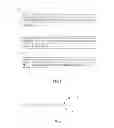
FIG. 1 is a flow chart of a method for forming thermoplastic composites according to a first embodiment of the present invention.
FIG. 2 is an amplified cross sectional view showing a thermoplastic film of the method for forming thermoplastic composites according to the first embodiment of the present invention.
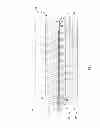
FIG. 3 is a perspective view showing the operation of the method for forming thermoplastic composites according to the first embodiment of the present invention.
FIG. 4 is a cross sectional view showing the operation of the method for forming thermoplastic composites according to the first embodiment of the present invention.
FIG. 5 is a perspective view showing a finished product formed by the method for forming thermoplastic composites according to the first embodiment of the present invention.
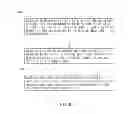
FIG. 6 is a flow chart of a method for forming thermoplastic composites according to a second embodiment of the present invention.
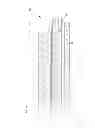
FIG. 7 is a cross sectional view showing the operation of the method for forming thermoplastic composites according to the second embodiment of the present invention.
DETAILED DESCRIPTION OF THE PREFERRED EMBODIMENTS
With reference to FIGS. 1-5, a method for forming thermoplastic composites according to a first embodiment of the present invention contains steps of:
(a). cutting a thermoplastic film 10 and a cloth material 20, wherein a size of the thermoplastic film 10 is less than that of the cloth material 20, and the thermoplastic film 10 is made of thermoplastic polymeric material and colorant by ways of an extruder, and the thermoplastic polymeric material is selected from TPU+SBR, TPU+SEBS, TPU+TPR, TPU+EPDM, TPU+TPU hot melt adhesives and TPU+Nylon elastomer, and wherein a color is printed, coated or surface sandwiched on the thermoplastic film 10, a thickness of the thermoplastic film 10 is 0.05 to 2.5 mm, the thermoplastic film 10 is comprised of a surface layer 11 and an adhesive layer 12 (as shown in FIG. 2), wherein a melting point of the surface layer 11 is 5° C. higher than the adhesive layer 12, and the cloth material is selected from woven, knitted fabrics, non-woven and sandwich mesh;
(b). placing the thermoplastic film 10 on a platform 30 of a molding machine, facing the adhesive layer 12 upwardly, and covering the cloth material 20 on the thermoplastic film 10 (as illustrated in FIG. 3), wherein the platform 30 includes a plurality of channels 31 defined therein, a plurality of concave and convex patterns 32 arranged on a top surface thereof, and plural pores 33 evenly formed on the top surface thereof and communicating with the plurality of channels 31, wherein the concave and convex patterns 3 are the same or varying, and a diameter of each pore is 0.001 mm;
(c). heating the thermoplastic film 10 by using a heating unit 40 so as to melt the adhesive layer 12 and to soften the surface layer 11, wherein air in the plurality of channels 34 is drawn by a vacuum unit 34, and a top surface of the cloth layer 20 is pressed by a pressing member 50, wherein the pressing member 50 has an air insulation film 51 and a press mold 52, a melting point of the air insulation film 51 is higher than that of the surface layer 11, and the air insulation film 51 is made of rubber or silicone, and the air insulation film 51 is covered on the platform 30 and the cloth material 20, the press mold 52 is pressed on the air insulation film 51.
Thereby, when the vacuum unit 34 operates, a pressure between the top surface of the platform 30 and the gas insulation film 51 is lower than atmospheric pressure and is a negative pressure to draw the gas insulation film 51 downwardly so that the gas insulation film 51 presses the cloth material 20, and the press mold 52 presses the gas insulation film 51, such that the adhesive layer 12 of the thermoplastic film 10 penetrates into the cloth material 20, hence the adhesive layer 12 adheres with the cloth material 20. In addition, the plural pores 33 draw the thermoplastic film 10 and the cloth material 20 downwardly, such that the surface layer 11 of the thermoplastic film 10 corresponds to the plurality of concave and convex patterns 32 of the platform 30, thus forming three-dimensional patterns obviously (as shown in FIG. 5). Also, the cloth material 20 and the thermoplastic film 10 are combined tighter to form the thermoplastic composites with a varying shape so as to produce shoes, purses, and hats further.
It is to be noted that the pressing member 50 is comprises of the air insulation film 51 or the press mold 52. For example, when gaps of the cloth material 20 are large, the pressing member 50 is the air insulation film 51, and the heating unit 40 is fixed in the platform 30 or the press mold 52.
Referring to FIGS. 6 and 7, a method for forming thermoplastic composites according to a second embodiment of the present invention contains steps of:
(a). cutting a thermoplastic film 10 and a cloth material 20;
(b). placing the cloth material 20 on a platform 30 of a molding machine, and then putting an adhesive layer 12 of the thermoplastic film 10 on the cloth material 20, wherein the platform 30 includes a plurality of channels 31 defined therein and plural pores 33 evenly formed on the top surface thereof and communicating with the plurality of channels 31;
(c). heating the thermoplastic film 10 by using a heating unit 40 so as to melt the adhesive layer 12, wherein air in the plurality of channels 34 is drawn by a vacuum unit 34, and a top surface of the thermoplastic film 10 is pressed by a pressing member 50.
Thereby, when the vacuum unit 34 operates, a pressure between the top surface of the platform 30 and the gas insulation film 51 is lower than atmospheric pressure and is a negative pressure to draw the gas insulation film 51 downwardly so that the gas insulation film 51 presses the thermoplastic film 10, and the press mold 52 presses the gas insulation film 51, the plural pores 33 draw the thermoplastic film 10 and the cloth material 20 downwardly, such that the adhesive layer 12 of the thermoplastic film 10 penetrates into the cloth material 20, hence the adhesive layer 12 adheres with the cloth material 20. In addition, the cloth material 20 and the thermoplastic film 10 are combined tighter to form the thermoplastic composites with a varying shape so as to produce shoes, purses, and hats further.
It is to be noted that the pressing member 50 is comprises of the air insulation film 51 or the press mold 52. For example, when gaps of the cloth material 20 are large, the pressing member 50 is the air insulation film 51, and the heating unit 40 is fixed in the platform 30 or the press mold 52.
While the preferred embodiments of the invention have been set forth for the purpose of disclosure, modifications of the disclosed embodiments of the invention as well as other embodiments thereof may occur to those skilled in the art. Accordingly, the appended claims are intended to cover all embodiments which do not depart from the spirit and scope of the invention.
Claims
What is claimed is:1. A method for forming thermoplastic composites comprising:
(a). cutting a thermoplastic film and a cloth material, wherein the thermoplastic film is comprised of a surface layer and an adhesive layer, and a melting point of the surface layer is higher than the adhesive layer;
(b). placing the thermoplastic film on a platform of a molding machine, facing the adhesive layer upwardly, and covering the cloth material on the thermoplastic film, wherein the platform includes a plurality of channels defined therein, a plurality of concave and convex patterns arranged on a top surface thereof, and plural pores evenly formed on the top surface thereof and communicating with the plurality of channels;
(c). heating the thermoplastic film by using a heating unit so as to melt the adhesive layer and to soften the surface layer, wherein air in the plurality of channels is drawn by a vacuum unit, and a top surface of the cloth layer is pressed by a pressing member, the plural pores draws the thermoplastic film and the cloth material downwardly, and the pressing member presses the cloth material, such that the adhesive layer of the thermoplastic film penetrates into the cloth material, the adhesive layer adheres with the cloth material, the surface layer of the thermoplastic film corresponds to the plurality of concave and convex patterns of the platform, thus forming three-dimensional patterns.
2. A method for forming thermoplastic composites comprising steps of:
(a). cutting a thermoplastic film and a cloth material, wherein the thermoplastic film is comprised of a surface layer and an adhesive layer, and a melting point of the surface layer is higher than the adhesive layer;
(b). placing the cloth material on a platform of a molding machine, and then putting an adhesive layer of the thermoplastic film on the cloth material, wherein the platform includes a plurality of channels 31 defined therein, and plural pores evenly formed on the top surface thereof and communicating with the plurality of channels;
(c). heating the thermoplastic film by using a heating unit so as to melt the adhesive layer, wherein air in the plurality of channels is drawn by a vacuum unit, and a top surface of the thermoplastic film is pressed by a pressing member, the plural pores draw the thermoplastic film and the cloth material downwardly, and the pressing member presses the thermoplastic film, such that the adhesive layer of the thermoplastic film penetrates into the cloth material.
3. The method for forming thermoplastic composites as claimed in claim 1, wherein the pressing member is a press mold.
4. The method for forming thermoplastic composites as claimed in claim 2, wherein the pressing member is a press mold.
5. The method for forming thermoplastic composites as claimed in claim 3, wherein the heating unit is a press mold.
6. The method for forming thermoplastic composites as claimed in claim 4, wherein the heating unit is a press mold.
7. The method for forming thermoplastic composites as claimed in claim 3, wherein the heating unit is a platform.
8. The method for forming thermoplastic composites as claimed in claim 4, wherein the heating unit is a platform.
9. The method for forming thermoplastic composites as claimed in claim 3, wherein the pressing member is an air insulation film, and a melting point of the air insulation film is higher than the surface layer and is covered on the platform.
10. The method for forming thermoplastic composites as claimed in claim 4, wherein the pressing member is an air insulation film, and a melting point of the air insulation film is higher than the surface layer and is covered on the platform.
11. The method for forming thermoplastic composites as claimed in claim 3, wherein the pressing member includes an air insulation film and a press mold, and a melting point of the air insulation film is higher than the surface layer and is covered on the platform, the press mold presses on the air insulation film.
12. The method for forming thermoplastic composites as claimed in claim 4, wherein the pressing member includes an air insulation film and a press mold, and a melting point of the air insulation film is higher than the surface layer and is covered on the platform, the press mold presses on the air insulation film.
13. The method for forming thermoplastic composites as claimed in claim 1, wherein the thermoplastic film is made of thermoplastic polymeric material and colorant by ways of an extruder.
14. The method for forming thermoplastic composites as claimed in claim 2, wherein the thermoplastic film is made of thermoplastic polymeric material and colorant by ways of an extruder.
15. The method for forming thermoplastic composites as claimed in claim 1, wherein the thermoplastic polymeric material is selected from TPU+SBR, TPU+SEBS, TPU+TPR, TPU+EPDM, TPU+TPU hot melt adhesives and TPU+Nylon elastomer.
16. The method for forming thermoplastic composites as claimed in claim 2, wherein the thermoplastic polymeric material is selected from TPU+SBR, TPU+SEBS, TPU+TPR, TPU+EPDM, TPU+TPU hot melt adhesives and TPU+Nylon elastomer.
17. The method for forming thermoplastic composites as claimed in claim 1, wherein a color is printed, coated or surface sandwiched on the thermoplastic film.
18. The method for forming thermoplastic composites as claimed in claim 1, wherein a color is printed, coated or surface sandwiched on the thermoplastic film.
Images & Drawings included:



Sources:
- United States Patent and Trademark Office - verify current appl. status at the USPTO↗
Similar patent applications:
- » 20230218805
Implantable medical device with thermoplastic composite body and method for forming thermoplastic composite body - » 20200289714
Implantable medical device with thermoplastic composite body and method for forming thermoplastic composite body - » 20230250255
THERMOPLASTIC RESIN COMPOSITION AND MEMBER, AND METHOD OF MANUFACTURING MEMBER FORMED FROM THERMOPLASTIC RESIN COMPOSITION AND METHOD OF ENHANCING MECHANICAL STRENGTH - » 20190092922
Thermoplastic vulcanizate composition, method of forming the same and product thereof - » 20140117582
Method for forming thick thermoplastic composite structures - » 20090079109
METHOD FOR FORMING A THERMOPLASTIC COMPOSITE - » 20130154151
Method for Forming a Thermoplastic Composition that Contains a Renewable Biopolymer - » 20110039047
SYSTEM AND METHOD FOR FORMING THERMOPLASTIC-COMPOSITE TUBING - » 20130157031
Method for forming a thermoplastic composition that contains a plasticized starch polymer - » 20150099091
Method of forming a composite thermoplastic material with continuous fiber reinforcement by stamping
Recent applications in this class:
- » 20210198842 2021-07-01
Thermally fusible sheet body - » 20210108365 2021-04-15
IMITATION LEATHER VINYL, KNITS, AND OTHER WOVEN FABRICS WITH ELASTOMERIC PROPERTIES AND METHODS THEREOF - » 20140053969 2014-02-27
Method of forming a stitched multi-layer fabric - » 20130260111 2013-10-03
Laminated articles having discontinuous bonded regions - » 20080210132 2008-09-04
Isocyanate group-terminated urethane prepolymer, process for producing the same, and adhesive comprising the urethane prepolymer - » 20050112971 2005-05-26
Curable extruded adhesive laminate system for manufacturing collapsible structures - » 20050053759 2005-03-10
Controlled air permeability composite fabric articles having enhanced surface durability
Recent applications for this Assignee:
- » 20230279611 2023-09-07
Method for manufacturing leather article - » 20210277597 2021-09-09
Method for dyeing and removing colored impurities - » 20210256585 2021-08-19
Method for determining a design of a customized footwear object - » 20210068504 2021-03-11
Method for assembling shoe components - » 20190336830 2019-11-07
Ball structure and manufacturing method thereof - » 20190298003 2019-10-03
Apparatus for assembling shoe components - » 20190008237 2019-01-10
Method of preparing shoe components - » 20180065353 2018-03-08
Method of forming three-dimensional composite - » 20150064300 2015-03-05
Molding machine for making thermoplastic composites - » 20130286495 2013-10-31
Reflective film structure for preformed structural element