Kork'd Cooz
US20150008232A1
2015-01-08
13/937,140
2013-07-08
Abstract:
A Kork'd Cooz is a drink Koozie in which a rubberized or silicone cork insert suitable for application into a bottle opening, is attached to the Koozie by a means for securing it, leaving a length for it to reach the bottle top. The cork insert will mold into a bottle top to prevent mess and keep sediment or insects out of beverage.
Inventors:
- Michael Justin Fidanza 1 🇺🇸 JENSEN BEACH, FL, United States
- MICHAEL JUSTIN FIDANZA 1 🇺🇸 , United States
Assignee:
- MICHAEL JUSTIN FIDANZA 1 🇺🇸 JENSEN BEACH, FL, United States
Interested in similar patents?
Get notified when new applications in this technology area are published.
Classification:
B65D81/3837 » CPC main
Containers, packaging elements, or packages, for contents presenting particular transport or storage problems, or adapted to be used for non-packaging purposes after removal of contents with thermal insulation rigid container in the form of a bottle, jar or like container
B65D81/38 IPC
Containers, packaging elements, or packages, for contents presenting particular transport or storage problems, or adapted to be used for non-packaging purposes after removal of contents with thermal insulation
B65D55/16 » CPC further
Accessories for container closures not otherwise provided for Devices preventing loss of removable closure members
Description
Be it known that I have invented a new and improved design for a Koozie, in reference to U.S. Application No. 61/796,373 filed on Nov. 9, 2012, to be named the Kork'd Cooz, of which the following is a specification;
GENERAL FIELD
The Kork'd Cooz will simplify and enhance day to day recreational drinking of bottled and canned beverages in an active situation.
U.S. PATENT DOCUMENTS
Some products of the prior art have been provided as disclosed in U.S. Pat. Nos. D677,978; D677,523; D677,119. My invention is an attempt to resolve the outlined deficiencies in the prior products.
There are drink caps on the market but they are of a lid design or a decorated cork. Those that can mold into a drink top to completely seal it off are sold solely as Cork toppers. I am using rubber/silicone cork to mold into the opening of a bottle for best fit. Its attachment to the Koozie not only keeps drink cooler but makes it easy to pop on and off the bottle opening without losing or dropping the cork.
BACKGROUND OF THE INVENTION
While the soda can caps may seem to fill a similar role, those caps can easily get lost. You need to make sure you put it in a safe spot upon removal, and they come in various colors, but not themes. Using a conventional cork does not guarantee multiple uses, as it can wear down, break, or get lost.
The Kork'd Cooz has a cap that can easily be inserted or removed off your bottle and is attached to the Koozie so it doesn't get lost. When on the go, boating, being active, or if you're scatter brained—it'll greatly benefit the consumer by being attached to the Koozie. The Koozie will come in themes: Example—a sports themed kookie with a football shaped cork, a “girlie” Koozie that is jeweled and glittery. This will appeal to a wide range of consumers.
CLAIM AND PREFERRED EMBODIMENT OF THE INVENTION
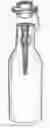
Referring now to the drawing, there is shown in FIG. 1, a corked cap made from silicone attached to a neoprene Koozie by a chain of stainless steel metal as to prevent rusting. Alternately, the cork may be made of rubber and attached by another durable Material, such as urethane. Kork'd Cooz may come in various sizes for cans and themes for various interests of consumers.
History of the Invention
The name Koozie was coined as a trademark, according to Norwood Promotional Products which sells them. It was originally a trademark of the company whose 1979 invention it was: Texas company Radio Cap Corporation (RCC). RCC registered the trademark in 1980; but the registration lapsed in 2001. Norwood had bought RCC in 1989, and it re-registered the trademark in February 2004. The beer Koozie has evolved in both material and style.
The materials of which the beer Koozie has been made include plain foam, neoprene, closed cell foam and EVA foam. Some companies create Koozies for 40 oz. bottles, others adjust to fit the wide variety of sizes of beverage container,
The material used to construct the Koozie is designed to insulate the enclosed beverage from external sources of radiant and conducted heat i.e. heat from a hand/or the sun). Corks have been used as bottle stoppers for as long as we have had Wine. The Greeks in the 5th century BCE sometimes used corks to close wine jugs. Following in their footsteps, the Romans also used the cork as a stopper and also coated corks with pitch to seal the closure.
ILLUSTRATIONS
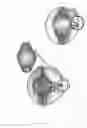
FIG. 1—Front view of neoprene Koozie with attached rubber or silicone cork.
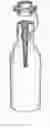
FIG. 2—Front view of neoprene Koozie with attached rubber or silicone cork pushed closed into bottle opening.
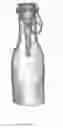
FIG. 3—Side view of neoprene Koozie with attached rubber or silicone cork pushed closed into bottle opening.
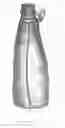
FIG. 4—Aerial view of neoprene Koozie with attached rubber or silicone cork, both pushed closed into bottle opening and uncorked.
Claims
What is claimed is:1. Referring to FIG. 1, a corked cap made from silicone which is attached to a neoprene Koozie by a stainless steel chain. Alternately, the cap may be made of rubber and attached by some other durable, rust resistant material such as urethane. Kork'd Cooz may come in various sizes for various containers based on the interest of consumers.
It should be understood, of course, that the foregoing relates to exemplary embodiments of the invention and that modifications may be made without departing from the spirit and scope of the invention as set fourth in the previous claims.
Images & Drawings included:
Sources:
- United States Patent and Trademark Office - verify current appl. status at the USPTO↗
Recent applications in this class:
- » 20250074687 2025-03-06
PORTABLE INSULATED LUNCH BOX - » 20210016956 2021-01-21
CONTAINER FOR FOOD ITEMS - » 20170349357 2017-12-07
Shock-proof mineral container and mounting structure thereof - » 20170240338 2017-08-24
Vessel for containing heated or cooled beverages - » 20140091097 2014-04-03
INSULATED FOOD JAR WITH CAMPFIRE OR STOVE HEATABLE INNER CONTAINER - » 20120177789 2012-07-12
STAY COOL BAND