Configurable traffic zone control system
US20150045987A1
2015-02-12
14/521,975
2014-10-23
✅ Patent granted
US 9,402,164 B2
2016-07-26
-
-
Thomas Tarcza | Richard Goldman
2034-10-23
Abstract:
A configurable traffic zone control system (14) includes transmitter structure (16) associated with a traffic zone (10). The transmitter structure includes a transmitter (18) for transmitting a wireless signal (20) indicative of a speed requirement of the traffic zone. Receiver structure (24) is provided in a vehicle (26) for receiving the wireless signal such that based on the wireless signal, speed of the vehicle is automatically controlled to be at or below the speed requirement while the vehicle is in the traffic zone.
Assignee:
- CONTINENTAL AUTOMOTIVE SYSTEMS, INC. 998 🇺🇸 Auburn Hills, MI, United States
Applicant:
Interested in similar patents?
Get notified when new applications in this technology area are published.
Classification:
G08G1/096725 » CPC further
Traffic control systems for road vehicles; Arrangements for giving variable traffic instructions having an indicator mounted inside the vehicle, e.g. giving voice messages; Systems involving transmission of highway information, e.g. weather, speed limits where the received information might be used to generate an automatic action on the vehicle control where the received information generates an automatic action on the vehicle control
G08G1/096741 » CPC further
Traffic control systems for road vehicles; Arrangements for giving variable traffic instructions having an indicator mounted inside the vehicle, e.g. giving voice messages; Systems involving transmission of highway information, e.g. weather, speed limits where a selection of the information might take place where the source of the transmitted information selects which information to transmit to each vehicle
G08G1/096783 » CPC further
Traffic control systems for road vehicles; Arrangements for giving variable traffic instructions having an indicator mounted inside the vehicle, e.g. giving voice messages; Systems involving transmission of highway information, e.g. weather, speed limits where the system is characterised by the origin of the information transmission where the origin of the information is a roadside individual element
B60K2031/0091 » CPC further
Vehicle fittings, acting on a single sub-unit only, for automatically controlling vehicle speed, i.e. preventing speed from exceeding an arbitrarily established velocity or maintaining speed at a particular velocity, as selected by the vehicle operator Speed limiters or speed cutters
H04W4/02 IPC
Services specially adapted for wireless communication networks; Facilities therefor Services making use of location information
B60K31/00 IPC
Vehicle fittings, acting on a single sub-unit only, for automatically controlling vehicle speed, i.e. preventing speed from exceeding an arbitrarily established velocity or maintaining speed at a particular velocity, as selected by the vehicle operator
B60W10/06 » CPC further
Conjoint control of vehicle sub-units of different type or different function including control of propulsion units including control of combustion engines
B60W10/184 » CPC further
Conjoint control of vehicle sub-units of different type or different function including control of braking systems with wheel brakes
G01S19/01 » CPC further
Satellite radio beacon positioning systems; Determining position, velocity or attitude using signals transmitted by such systems Satellite radio beacon positioning systems transmitting time-stamped messages, e.g. GPS [Global Positioning System], GLONASS [Global Orbiting Navigation Satellite System] or GALILEO
H04M1/725 IPC
Substation equipment, e.g. for use by subscribers; Mobile telephones; Cordless telephones, i.e. devices for establishing wireless links to base stations without route selection Cordless telephones
H04W4/06 » CPC further
Services specially adapted for wireless communication networks; Facilities therefor Selective distribution of broadcast services, e.g. multimedia broadcast multicast service [MBMS]; Services to user groups; One-way selective calling services
H04W4/16 » CPC further
Services specially adapted for wireless communication networks; Facilities therefor Communication-related supplementary services, e.g. call-transfer or call-hold
B60K31/0058 » CPC further
Vehicle fittings, acting on a single sub-unit only, for automatically controlling vehicle speed, i.e. preventing speed from exceeding an arbitrarily established velocity or maintaining speed at a particular velocity, as selected by the vehicle operator responsive to externally generated signalling
B60T7/18 » CPC further
Brake-action initiating means for automatic initiation; for initiation not subject to will of driver or passenger operated by remote control, i.e. initiating means not mounted on vehicle operated by wayside apparatus
G08G1/0967 IPC
Traffic control systems for road vehicles; Arrangements for giving variable traffic instructions having an indicator mounted inside the vehicle, e.g. giving voice messages Systems involving transmission of highway information, e.g. weather, speed limits
Description
FIELD
This invention relates to traffic zones and, more particularly, to a method and system for providing a configurable and adjustable speed limit in a traffic zone and for controlling a vehicle's speed and operator cellular communication while in the traffic zone.
BACKGROUND
Bright signs, flashing lights and even a parked motorcycle policeman aren't always enough to stop motorists from speeding through school or construction traffic zones. Furthermore, driver distraction rises due to the proliferate amount of new electronics in automobiles. One of the biggest distractions is texting and/or cellular phone use. Distracted drivers and speeding vehicles pose a significant danger to children in the school traffic zone or workers in the construction traffic zone.
Thus, there is a need to provide a traffic zone control system that regulates vehicle speed by automated controls and regulates cellular wireless transmission in a particular traffic zone.
SUMMARY
An object of the invention is to fulfill the need referred to above. In accordance with the principles of the present invention, this objective is achieved by a configurable traffic zone control system that includes transmitter structure associated with a traffic zone. The transmitter structure includes a transmitter for transmitting a wireless signal indicative of a speed requirement of the traffic zone. Receiver structure is provided in a vehicle for receiving the wireless signal such that based on the wireless signal, the speed of the vehicle is automatically controlled to be at or below the speed requirement while the vehicle is in the traffic zone.
In accordance with another aspect of an embodiment, a method is provided for controlling a vehicle in a particular traffic zone. The method provides transmitter structure associated with the traffic zone. The transmitter structure includes a transmitter for transmitting a wireless signal indicative of a speed requirement of the traffic zone. The wireless signal is received at the vehicle. Based on the wireless signal, the speed of the vehicle is automatically controlled to be at or below the speed requirement while the vehicle is in the traffic zone.
Other objects, features and characteristics of the present invention, as well as the methods of operation and the functions of the related elements of the structure, the combination of parts and economics of manufacture will become more apparent upon consideration of the following detailed description and appended claims with reference to the accompanying drawings, all of which form a part of this specification.
BRIEF DESCRIPTION OF THE DRAWINGS
The invention will be better understood from the following detailed description of the preferred embodiments thereof, taken in conjunction with the accompanying drawings, wherein like reference numerals refer to like parts, in which:
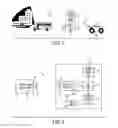
FIG. 1 is a schematic diagram of a school traffic zone employing a configurable traffic zone control system in accordance with an embodiment.
FIG. 2 is a block diagram of the configurable traffic zone control system employed in FIG. 1.
DETAILED DESCRIPTION OF EXEMPLARY EMBODIMENTS
With reference to FIG. 1, a school traffic zone 10 includes a speed limit sign 12 to indicate the legal speed limit through the zone 10 when school is in session. In accordance with an embodiment, a configurable traffic zone control system, generally indicated at 14 is provided. As best shown in FIG. 2, the system 14 includes transmitter structure 16 associated with the traffic zone 10. The transmitter structure 16 is preferably mounted on or adjacent to the speed limit sign 12 or is mounted anywhere in or near the traffic zone 10. The transmitter structure 16 includes a transmitter 18 for transmitting a wireless signal 20 indicative of a speed requirement of the traffic zone 10. The signal 20 can be transmitted, for example by using radio frequency (RF), infrared (IR), or cellular wireless communication. The transmitter structure 16 also includes a processor 22 that can be programmed to set the speed requirement of the speed zone 10 so as to be configurable as to the time of day, multiple enforcements during the day, calendar days, and/or to special events.
With reference to FIG. 2, the system 10 also includes receiver structure 24 disposed in a vehicle 26 that includes a receiver 27 for receiving the signal 20 from the transmitter structure 16 as the vehicle 26 approaches and enters the traffic zone 10. The receiver structure 24 electrically communicates with an intelligent cruise control (ICC) unit 28 of the vehicle 26 that communicates with the engine control unit (ECU) 30 and the brake control unit 32 of the vehicle 26 to automatically control the speed of the vehicle 26 so as to operate at or below the speed requirement of the traffic zone 10. Such speed control can be implemented, for example, in the manner disclosed in U.S. Patent Application Publication No. 20100217494 A1, the content of which is hereby incorporated into this specification by reference.
Thus, the receiver structure 24 will receive the wireless signal 20 containing data for the speed limit in the traffic zone 10 and the ICC unit 28 will control the ECU 30 and brake unit 32 to correct and slow the vehicle 26 per the adjustable periods programmed into the transmitter structure 16. In addition, if a cellular call is in process while the vehicle 26 is approaching and entering the protected zone 10, the system 14 will place the call on hold and send a notification message (preferably a voice message) to the other party that the call is on hold and will resume when the vehicle 26 leaves the protected zone 10. Emergency calls would be allowed in case of emergencies.
Placing the call on hold or preventing texting while entering the traffic zone 10 can be implemented by the signal 20 activating a signal broadcasting system 34 in the vehicle 26 that emits a wireless signal 36 received by a sensor 38 in the cellular device 40 such as the driver's cell phone or the vehicle's telematics system. The sensor 38 processes the signal 36 to place the call on hold or prevents texting until the signal 20 is no longer received, due to exiting the traffic zone 10. An example of such a signal broadcasting system 34 and its function is disclosed in U.S. Patent Application Publication No. 20110294465A1, the content of which is hereby incorporated by reference into the present specification. Alternatively, the signal 20 can be received directly by the telematics system 40 that is capable of receiving and placing cellular calls. The telematics system 40 can process the signal 20 to place a cellular call on hold (and can provide notification to the other party) until signal 20 is no longer received. The receiver structure 24 can be part of the telematics system 40.
The system 14 provides a configurable and adjustable speed limit zone. As noted above, the speed limit in the zone 10 can be varied by time of day and by calendar days, or can be configured as the user desires. Thus, the system 14 can control the speed zone 10 only during days school is in session and/or when children are present.
Although the system 14 has been described for use in a school traffic zone, it can be appreciated that the system 14 can be used in construction traffic zone, near day care centers, or in any traffic zone that requires the driver to reduce the vehicle's speed.
Since many vehicles have on-board GPS mapping systems that knows that the vehicle is near a school, the GPS mapping system 42 (as part of the telematics system 40) can be configured to map the school traffic zone. Thus, the on-board GPS mapping system 42 can include the receiver structure 24, or the function thereof, and receive the signal 20 from the transmitter structure 16 at the GPS location of the school, day care center, etc. and initiate the vehicle speed and cell device control as described above.
The foregoing preferred embodiments have been shown and described for the purposes of illustrating the structural and functional principles of the present invention, as well as illustrating the methods of employing the preferred embodiments and are subject to change without departing from such principles. Therefore, this invention includes all modifications encompassed within the scope of the following claims.
Claims
1. A method of controlling wireless communications devices located in a vehicle, when the vehicle is in a particular traffic zone, the method comprising:
transmitting a first wireless signal from a location inside the particular traffic zone, the first wireless signal indicative of the existence of the particular traffic zone;
receiving the first wireless signal at the vehicle;
broadcasting a second wireless signal in the vehicle, responsive to receiving the first wireless signal; and
detecting the second wireless signal at a wireless communications device located in the vehicle; and
at least partially disabling the wireless communications device in the vehicle, responsive to the wireless communications device in the vehicle, detecting said second wireless signal.
2. The method of claim 1, wherein the step of at least partially disabling the wireless device comprises preventing texting while the vehicle is in the particular traffic zone.
3. The method of claim 1, wherein the first wireless signal is transmitted via a cellular communication.
4. The method of claim 1, wherein the step of detecting the second wireless signal at a wireless communications device comprises detecting the second wireless signal by a sensor in a driver's cell phone.
5. The method of claim 1, wherein the step of at least partially disabling the wireless device comprises placing a call on hold while the vehicle is in the particular traffic zone.
6. The method of claim 1, further comprising: allowing emergency calls while the vehicle is in the particular traffic zone.
7. The method of claim 1, wherein the wireless communications device in the vehicle is a cellular device for a telematics system of the vehicle.
8. The method of claim 1, further comprising: selectively transmitting the first wireless signal based on time of day and/or calendar days.
9. (canceled)
10. The method of claim 1, wherein the vehicle includes a telematics system including a global positioning system (GPS), the method further comprising: determining a position of the vehicle via the GPS, and if the position of the vehicle is in the traffic zone, receiving the second wireless signal.
11. A configurable traffic zone control system comprising:
a first receiver located in a vehicle, the first receiver configured to receive a first wireless signal transmitted from a traffic zone transmitter, the first wireless signal indicating the presence of a particular traffic zone;
a second signal broadcasting system coupled to the first receiver, the second signal broadcasting system configured to transmit a second wireless signal to cellular communications devices within the vehicle, the second wireless signal being configured to cause a cellular communications device within the vehicle to be at least partially disabled upon receipt of the second wireless signal.
12. The system of claim 11, wherein the second signal broadcasting system is configured to transmit a second wireless signal that prevents texting using a cellular communications device, while the vehicle is within the particular traffic zone.
13. The system of claim 11, wherein the second signal broadcasting system is configured to transmit a second wireless signal that places a cellular call on hold while the vehicle is in the particular traffic zone.
14. (canceled)
15. (canceled)
16. (canceled)
17. The system of claim wherein the first receiver is part of a vehicle telematics system.
18. The system of claim 17, wherein the telematics system includes a global positioning system (GPS) constructed and arranged to determine if the vehicle is in the traffic zone.
19. (canceled)
Images & Drawings included:

Sources:
- United States Patent and Trademark Office - verify current appl. status at the USPTO↗
Similar patent applications:
- » 20130158847
CONFIGURABLE TRAFFIC ZONE CONTROL SYSTEM
Recent applications in this class:
- » 20190149956 2019-05-16
Systems and methods for vehicle telematics registration - » 20190132706 2019-05-02
Identifying a geographic location for a stationary micro-vehicular cloud - » 20190104385 2019-04-04
Quality of service in vehicle - » 20190069139 2019-02-28
Determining locations of cargo transportation units using image data - » 20190037363 2019-01-31
VEHICLE BASED ACOUSTIC ZONING SYSTEM FOR SMARTPHONES - » 20190014446 2019-01-10
Computation service for mobile nodes in a roadway environment - » 20180359611 2018-12-13
Tracking a wireless device using a seamless handoff between a vehicle and a mobile device - » 20180338225 2018-11-22
HUMAN OCCUPANCY DETECTION IN A TRANSPORTATION VEHICLE - » 20180324558 2018-11-08
Systems and methods for collaborative vehicle mission operations - » 20180279089 2018-09-27
COMPONENT SPECIFICATION NOTIFICATION SYSTEM, METHOD, AND DEVICE
Recent applications for this Assignee:
- » 20250168811 2025-05-22
TRANSCEIVER ASSIGNMENT AND POSITION INITIALIZATION SYSTEM AND METHOD - » 20250100488 2025-03-27
BATTERY MANAGEMENT FOR C-V2X (CELLULAR VEHICLE-TO-EVERYTHING) - » 20250050850 2025-02-13
DRIVER DIRECTIONAL CONTROL DURING BRAKE-TO-STEER MANUAL DRIVING USING MODEL PREDICTIVE CONTROL - » 20250014353 2025-01-09
SYSTEM AND METHOD FOR CREATING ENVIRONMENTAL MODEL FOR INTELLIGENT INTERSECTION FUNCTIONS - » 20240375657 2024-11-14
METHOD FOR OPERATING A DECELERATION SYSTEM, CONTROL DEVICE, DECELERATION SYSTEM, AND VEHICLE COMPRISING A DECELERATION SYSTEM - » 20240359693 2024-10-31
SURFACE RECOGNITION DURING DIFFERENTIAL BRAKING - » 20240326592 2024-10-03
VEHICLE INFORMATION DISPLAY WITH SELECTIVE LOCAL DIMMING - » 20240319281 2024-09-26
DETECTING RECHARGEABLE BATTERY SUPPLIER CELL BASED ON MEASURING CHARGE/DISCHARGE DV/DT - » 20240294189 2024-09-05
CRASH AVOIDANCE VIA INTELLIGENT INFRASTRUCTURE - » 20240294177 2024-09-05
CRASH AVOIDANCE VIA INTELLIGENT INFRASTRUCTURE