Wearable device for fishing
US20150057968A1
2015-02-26
14/032,319
2013-09-20
✅ Patent granted
US 10,251,382 B2
2019-04-09
-
-
Michael P Nghiem
Nelson Mullins Riley & Scarborough LLP
2033-10-12
Abstract:
Various implementations described herein are directed to a wearable device used to record fishing data. The wearable device may include a housing. The housing may include a sensor or sensors to detect motion. The housing may include a computer system with a processor and memory. The memory may have a plurality of executable instructions. When the executable instructions are executed by the processor, the processor may receive motion data from the sensor or sensors and determine whether a cast has been made.
Assignee:
- Navico Holding AS 164 🇳🇴 Egersund, Norway
Applicant:
Interested in similar patents?
Get notified when new applications in this technology area are published.
Classification:
G01B21/00 » CPC main
Measuring arrangements or details thereof in so far as they are not adapted to particular types of measuring means of the preceding groups
G06F11/34 IPC
Error detection; Error correction; Monitoring; Monitoring Recording or statistical evaluation of computer activity, e.g. of down time, of input/output operation ; Recording or statistical evaluation of user activity, e.g. usability assessment
H04N21/4335 » CPC further
Selective content distribution, e.g. interactive television or video on demand [VOD]; Client devices specifically adapted for the reception of or interaction with content, e.g. set-top-box [STB]; Operations thereof; Processing of content or additional data, e.g. demultiplexing additional data from a digital video stream; Elementary client operations, e.g. monitoring of home network or synchronising decoder's clock; Client middleware; Content storage operation, e.g. storage operation in response to a pause request, caching operations Housekeeping operations, e.g. prioritizing content for deletion because of storage space restrictions
G06F16/9535 » CPC further
Information retrieval; Database structures therefor; File system structures therefor; Details of database functions independent of the retrieved data types; Retrieval from the web; Querying, e.g. by the use of web search engines Search customisation based on user profiles and personalisation
G06T7/246 » CPC further
Image analysis; Analysis of motion using feature-based methods, e.g. the tracking of corners or segments
G11B27/17 » CPC further
Editing; Indexing; Addressing; Timing or synchronising; Monitoring; Measuring tape travel; Indexing; Addressing; Timing or synchronising; Measuring tape travel by using information not detectable on the record carrier the information being derived from movement of the record carrier, e.g. using tachometer using electrical sensing means
G06T11/206 » CPC further
2D [Two Dimensional] image generation; Drawing from basic elements, e.g. lines or circles Drawing of charts or graphs
G11B31/00 IPC
Arrangements for the associated working of recording or reproducing apparatus with related apparatus
G11B27/34 » CPC further
Editing; Indexing; Addressing; Timing or synchronising; Monitoring; Measuring tape travel; Indexing; Addressing; Timing or synchronising; Measuring tape travel Indicating arrangements
A61B5/1118 » CPC further
Measuring for diagnostic purposes ; Identification of persons; Detecting, measuring or recording devices for testing the shape, pattern, colour, size or movement of the body or parts thereof, for diagnostic purposes; Measuring movement of the entire body or parts thereof, e.g. head or hand tremor, mobility of a limb Determining activity level
G01C21/203 » CPC further
Navigation; Navigational instruments not provided for in groups -; Instruments for performing navigational calculations Specially adapted for sailing ships
G06Q50/01 » CPC further
Systems or methods specially adapted for specific business sectors, e.g. utilities or tourism Social networking
G01C21/20 » CPC further
Navigation; Navigational instruments not provided for in groups - Instruments for performing navigational calculations
H04Q9/00 » CPC further
Arrangements in telecontrol or telemetry systems for selectively calling a substation from a main station, in which substation desired apparatus is selected for applying a control signal thereto or for obtaining measured values therefrom
G06F11/3438 » CPC further
Error detection; Error correction; Monitoring; Monitoring; Recording or statistical evaluation of computer activity, e.g. of down time, of input/output operation ; Recording or statistical evaluation of user activity, e.g. usability assessment monitoring of user actions
G01S15/96 » CPC further
Systems using the reflection or reradiation of acoustic waves, e.g. sonar systems; Sonar systems specially adapted for specific applications for locating fish
B63B49/00 » CPC further
Arrangements of nautical instruments or navigational aids
G11B27/031 » CPC further
Editing; Indexing; Addressing; Timing or synchronising; Monitoring; Measuring tape travel; Editing, e.g. varying the order of information signals recorded on, or reproduced from, record carriers Electronic editing of digitised analogue information signals, e.g. audio or video signals
G01S7/003 » CPC further
Details of systems according to groups Transmission of data between radar, sonar or lidar systems and remote stations
G06F11/3013 » CPC further
Error detection; Error correction; Monitoring; Monitoring; Monitoring arrangements specially adapted to the computing system or computing system component being monitored where the computing system is an embedded system, i.e. a combination of hardware and software dedicated to perform a certain function in mobile devices, printers, automotive or aircraft systems
H04N5/232 » CPC further
Details of television systems; Studio circuitry; Studio devices; Studio equipment ; Cameras comprising an electronic image sensor, e.g. digital cameras, video cameras, TV cameras, video cameras, camcorders, webcams, camera modules for embedding in other devices, e.g. mobile phones, computers or vehicles; Television cameras ; Cameras comprising an electronic image sensor, e.g. digital cameras, video cameras, camcorders, webcams, camera modules specially adapted for being embedded in other devices, e.g. mobile phones, computers or vehicles Devices for controlling television cameras, e.g. remote control ; Control of cameras comprising an electronic image sensor
A61B5/1123 » CPC further
Measuring for diagnostic purposes ; Identification of persons; Detecting, measuring or recording devices for testing the shape, pattern, colour, size or movement of the body or parts thereof, for diagnostic purposes; Measuring movement of the entire body or parts thereof, e.g. head or hand tremor, mobility of a limb Discriminating type of movement, e.g. walking or running
A61B5/11 IPC
Measuring for diagnostic purposes ; Identification of persons; Detecting, measuring or recording devices for testing the shape, pattern, colour, size or movement of the body or parts thereof, for diagnostic purposes Measuring movement of the entire body or parts thereof, e.g. head or hand tremor, mobility of a limb
G06F3/014 » CPC further
Input arrangements for transferring data to be processed into a form capable of being handled by the computer; Output arrangements for transferring data from processing unit to output unit, e.g. interface arrangements; Input arrangements or combined input and output arrangements for interaction between user and computer; Arrangements for interaction with the human body, e.g. for user immersion in virtual reality Hand-worn input/output arrangements, e.g. data gloves
G06F3/017 » CPC further
Input arrangements for transferring data to be processed into a form capable of being handled by the computer; Output arrangements for transferring data from processing unit to output unit, e.g. interface arrangements; Input arrangements or combined input and output arrangements for interaction between user and computer Gesture based interaction, e.g. based on a set of recognized hand gestures
G06F3/0231 » CPC further
Input arrangements for transferring data to be processed into a form capable of being handled by the computer; Output arrangements for transferring data from processing unit to output unit, e.g. interface arrangements; Input arrangements or combined input and output arrangements for interaction between user and computer; Input arrangements using manually operated switches, e.g. using keyboards or dials; Arrangements for converting discrete items of information into a coded form, e.g. arrangements for interpreting keyboard generated codes as alphanumeric codes, operand codes or instruction codes Cordless keyboards
G06F11/3476 » CPC further
Error detection; Error correction; Monitoring; Monitoring; Recording or statistical evaluation of computer activity, e.g. of down time, of input/output operation ; Recording or statistical evaluation of user activity, e.g. usability assessment; Performance evaluation by tracing or monitoring Data logging
G06F15/0225 » CPC further
Digital computers in general ; Data processing equipment in general manually operated with input through keyboard and computation using a built-in program, e.g. pocket calculators User interface arrangements, e.g. keyboard, display; Interfaces to other computer systems
G08C17/02 » CPC further
Arrangements for transmitting signals characterised by the use of a wireless electrical link using a radio link
G06Q50/00 IPC
Systems or methods specially adapted for specific business sectors, e.g. utilities or tourism
G06T7/292 » CPC further
Image analysis; Analysis of motion Multi-camera tracking
G06F3/01 IPC
Input arrangements for transferring data to be processed into a form capable of being handled by the computer; Output arrangements for transferring data from processing unit to output unit, e.g. interface arrangements Input arrangements or combined input and output arrangements for interaction between user and computer
H04N5/91 » CPC further
Details of television systems; Television signal recording Television signal processing therefor
G06F11/30 IPC
Error detection; Error correction; Monitoring Monitoring
G06F11/3058 » CPC further
Error detection; Error correction; Monitoring; Monitoring Monitoring arrangements for monitoring environmental properties or parameters of the computing system or of the computing system component, e.g. monitoring of power, currents, temperature, humidity, position, vibrations
G06T2207/10016 » CPC further
Indexing scheme for image analysis or image enhancement; Image acquisition modality Video; Image sequence
G06T2207/30196 » CPC further
Indexing scheme for image analysis or image enhancement; Subject of image; Context of image processing Human being; Person
G08C2201/32 » CPC further
Transmission systems of control signals via wireless link; User interface Remote control based on movements, attitude of remote control device
H04Q2209/43 » CPC further
Arrangements in telecontrol or telemetry systems using a wireless architecture using wireless personal area networks [WPAN], e.g. 802.15, 802.15.1, 802.15.4, Bluetooth or ZigBee
G01C9/00 IPC
Measuring inclination, e.g. by clinometers, by levels
G01C17/00 IPC
Compasses; Devices for ascertaining true or magnetic north for navigation or surveying purposes
G01C19/00 IPC
Gyroscopes; Turn-sensitive devices using vibrating masses; Turn-sensitive devices without moving masses; Measuring angular rate using gyroscopic effects
G06F3/023 IPC
Input arrangements for transferring data to be processed into a form capable of being handled by the computer; Output arrangements for transferring data from processing unit to output unit, e.g. interface arrangements; Input arrangements or combined input and output arrangements for interaction between user and computer; Input arrangements using manually operated switches, e.g. using keyboards or dials Arrangements for converting discrete items of information into a coded form, e.g. arrangements for interpreting keyboard generated codes as alphanumeric codes, operand codes or instruction codes
G06F15/02 IPC
Digital computers in general ; Data processing equipment in general manually operated with input through keyboard and computation using a built-in program, e.g. pocket calculators
G06T11/20 IPC
2D [Two Dimensional] image generation Drawing from basic elements, e.g. lines or circles
G06T7/60 » CPC further
Image analysis Analysis of geometric attributes
A01K99/00 » CPC further
Methods or apparatus for fishing not provided for in groups -
G06Q10/00 » CPC further
Administration; Management
A01K79/00 » CPC further
Methods or means of catching fish in bulk not provided for in groups - , e.g. fish pumps; Detection of fish; Whale fishery
G11B27/28 » CPC further
Editing; Indexing; Addressing; Timing or synchronising; Monitoring; Measuring tape travel; Indexing; Addressing; Timing or synchronising; Measuring tape travel by using information detectable on the record carrier by using information signals recorded by the same method as the main recording
G01S7/00 IPC
Details of systems according to groups
G06F3/0346 » CPC further
Input arrangements for transferring data to be processed into a form capable of being handled by the computer; Output arrangements for transferring data from processing unit to output unit, e.g. interface arrangements; Input arrangements or combined input and output arrangements for interaction between user and computer; Arrangements for converting the position or the displacement of a member into a coded form; Pointing devices displaced or positioned by the user, e.g. mice, trackballs, pens or joysticks ; Accessories therefor with detection of the device orientation or free movement in a 3D space, e.g. 3D mice, 6-DOF [six degrees of freedom] pointers using gyroscopes, accelerometers or tilt-sensors
A01K97/00 » CPC main
Accessories for angling
G11B31/006 » CPC further
Arrangements for the associated working of recording or reproducing apparatus with related apparatus with video camera or receiver
G06F2201/835 » CPC further
Indexing scheme relating to error detection, to error correction, and to monitoring Timestamp
G06K9/00 IPC
Methods or arrangements for recognising patterns
Description
CROSS-REFERENCE TO RELATED APPLICATIONS
This application claims the benefit of U.S. Provisional Patent Application Ser. No. 61/868,444, filed Aug. 21, 2013 titled FISHING DATA COLLECTION AND USE, and the disclosure of which is incorporated herein by reference.
BACKGROUND
This section is intended to provide background information to facilitate a better understanding of various technologies described herein. As the section's title implies, this is a discussion of related art. That such art is related in no way implies that it is prior art. The related art may or may not be prior art. It should therefore be understood that the statements in this section are to be read in this light, and not as admissions of prior art.
Accurate data, including, for example, a count of fishing casts made, can be very useful for a fisherman. A device that can capture this data can provide advantages to a fisherman. Such advantages include requiring less time to record information, and collecting more accurate data.
SUMMARY
Described herein are implementations of various technologies for an apparatus for recording fishing data. The apparatus is a wearable device. The apparatus includes a housing. The housing includes a sensor or sensors to detect motion. The housing includes a computer system with a processor and memory. The memory has a plurality of executable instructions. In one implementation, when the executable instructions are executed by the processor, the processor may receive motion data from the sensor or sensors and determine whether a fishing cast has been made.
Described herein are also implementations of various technologies for a method for recording motion data corresponding to a fishing cast. In one implementation, a non-transitory computer-readable medium having stored thereon computer-executable instructions which, when executed by a computer, cause the computer to perform various actions. The actions may include receiving motion data from a sensor or sensors. The received motion data may be analyzed to determine whether a cast has been made. If a cast has been made, the occurrence of the cast and the time of the cast may then be recorded.
Described herein are also implementations of various technologies for a method for recording motion data corresponding to a fish bite or a caught fish. In one implementation, a non-transitory computer-readable medium having stored thereon computer-executable instructions which, when executed by a computer, cause the computer to perform various actions. The actions may include receiving motion data from a sensor or sensors. In one implementation, the received motion data may be analyzed to determine whether a bite or catch has occurred. If a catch or bite has occurred, the occurrence of the catch or bite and the time of the catch or bite may then be recorded.
The above referenced summary section is provided to introduce a selection of concepts in a simplified form that are further described below in the detailed description section. The summary is not intended to identify key features or essential features of the claimed subject matter, nor is it intended to be used to limit the scope of the claimed subject matter. Furthermore, the claimed subject matter is not limited to implementations that solve any or all disadvantages noted in any part of this disclosure.
BRIEF DESCRIPTION OF THE DRAWINGS
Implementations of various techniques will hereafter be described with reference to the accompanying drawings. It should be understood, however, that the accompanying drawings illustrate only the various implementations described herein and are not meant to limit the scope of various techniques described herein.
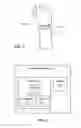
FIG. 1 illustrates a wearable device in accordance with implementations of various techniques described herein.
FIG. 2 is a block diagram of a wearable device in accordance with implementations of various techniques described herein.
FIG. 3 is a flow diagram describing the operation of a fishing motion detecting software loaded in a wearable device in accordance with implementations of various techniques described herein.
FIG. 4 is an illustration of a wearable device wirelessly transmitting data to a marine electronics device and receiving data from the device in order to begin recording data in accordance with implementations of various techniques described herein.
FIG. 5 illustrates a schematic diagram of a computing system in which the various technologies described herein may be incorporated and practiced.
FIG. 6 illustrates a schematic of a marine electronics device in accordance with implementations of various techniques described herein.
DETAILED DESCRIPTION
The discussion below is directed to certain specific implementations. It is to be understood that the discussion below is only for the purpose of enabling a person with ordinary skill in the art to make and use any subject matter defined now or later by the patent “claims” found in any issued patent herein.
It is specifically intended that the claimed invention not be limited to the implementations and illustrations contained herein, but include modified forms of those implementations including portions of the implementations and combinations of elements of different implementations as come within the scope of the following claims. It should be appreciated that in the development of any such actual implementation, as in any engineering or design project, numerous implementation-specific decisions must be made to achieve the developers' specific goals, such as compliance with system-related and business related constraints, which may vary from one implementation to another. Moreover, it should be appreciated that such a development effort might be complex and time consuming, but would nevertheless be a routine undertaking of design, fabrication, and manufacture for those of ordinary skill having the benefit of this disclosure. Nothing in this application is considered critical or essential to the claimed invention unless explicitly indicated as being “critical” or “essential.”
Reference will now be made in detail to various implementations, examples of which are illustrated in the accompanying drawings and figures. In the following detailed description, numerous specific details are set forth in order to provide a thorough understanding of the present disclosure. However, it will be apparent to one of ordinary skill in the art that the present disclosure may be practiced without these specific details. In other instances, well-known methods, procedures, components, circuits and networks have not been described in detail so as not to unnecessarily obscure aspects of the embodiments.
It will also be understood that, although the terms first, second, etc. may be used herein to describe various elements, these elements should not be limited by these terms. These terms are only used to distinguish one element from another. For example, a first object or step could be termed a second object or step, and, similarly, a second object or step could be termed a first object or step, without departing from the scope of the invention. The first object or step, and the second object or step, are both objects or steps, respectively, but they are not to be considered the same object or step.
The terminology used in the description of the present disclosure herein is for the purpose of describing particular implementations only and is not intended to be limiting of the present disclosure. As used in the description of the present disclosure and the appended claims, the singular forms “a,” “an” and “the” are intended to include the plural forms as well, unless the context clearly indicates otherwise. It will also be understood that the term “and/or” as used herein refers to and encompasses any and all possible combinations of one or more of the associated listed items. It will be further understood that the terms “includes,” “including,” “comprises” and/or “comprising,” when used in this specification, specify the presence of stated features, integers, steps, operations, elements, and/or components, but do not preclude the presence or addition of one or more other features, integers, steps, operations, elements, components and/or groups thereof.
As used herein, the term “if” may be construed to mean “when” or “upon” or “in response to determining” or “in response to detecting,” depending on the context. Similarly, the phrase “if it is determined” or “if [a stated condition or event] is detected” may be construed to mean “upon determining” or “in response to determining” or “upon detecting [the stated condition or event]” or “in response to detecting [the stated condition or event],” depending on the context. As used herein, the terms “up” and “down”; “upper” and “lower”; “upwardly” and downwardly”; “below” and “above”; and other similar terms indicating relative positions above or below a given point or element may be used in connection with some implementations of various technologies described herein.
Various implementations of a wearable device described herein will now be described in more detail with reference to FIGS. 1-6.
Wearable Device for Fishing
Fishermen often record details of their fishing trips so that the information can be referenced at a later time, and so that the trip can be analyzed. Using a wearable device that captures motion and determines when a cast has been made, fishing data could easily be recorded by a computer system without the need for significant user input. Accordingly, FIG. 1 illustrates a wearable device 100 in accordance with various implementations described herein. The wearable device 100 may be worn around the fisherman's arm or wrist. The wearable device 100 could also be attached to a fishing rod.
The wearable device 100 may include a housing 120. In one implementation, the housing 120 may be in the shape of a band. The housing 120 may be made of a combination of plastics and rubbers, or of any other synthetic material. The housing 120 may also be waterproof. The housing 120 may include a clasp, or another mechanism to aid in removal of the housing 120 from a user's arm.
FIG. 2 illustrates a block diagram of the wearable device 100 in accordance with various implementations described herein. As shown in FIG. 2, the housing 120 may include a computer 130 and at least one motion sensor 140. The at least one motion sensor 140 may include one or more accelerometers, gyroscopes, muscle activity sensors, any other motion sensor, or any combination of motion sensors. The at least one motion sensor 140 is configured to capture motion data.
The computer 130 is described in more detail in FIG. 5. In one implementation, the computer 130 may be loaded with software to analyze motion data from the at least one motion sensor 140. For instance, the software may analyze motion data to determine when a fishing cast motion has been made. The software may also record that a cast has been made and the time of the cast, e.g., a timestamp. The software is described in more detail in FIG. 3.
The wearable device 100 may include one or more buttons 110. The one or more buttons 110 may be used for user input. In one implementation, the one or more buttons 110 may be used to input the occurrence of a catch. The catch may then be recorded. In another implementation, the one or more buttons 110 may be used to input the weight of a caught fish. The weight may then be recorded. In yet another implementation, a user may press a button 110 to input the occurrence of a catch, and then may press the same or different button 110 to input the weight of the caught fish. The occurrence of the catch and the weight may then be recorded. In still another implementation, the one or more buttons 110 may be used to input the occurrence of a bite.
The wearable device may contain a display 150. The display may be a series of Light Emitting Diodes (LED). The display may be a Liquid Crystal Display (LCD).
The wearable device 100 may include wireless technology, such as Bluetooth, Wi-Fi, cellular technology such as GSM or CDMA, satellite communication, or any other wireless technology. In one implementation, the wearable device 100 may be connected wirelessly to a marine electronics device 600, which is described in more detail in FIG. 6. Although the wearable device 100 is described as being wirelessly connected to a marine electronics device 600, it should be understood that the wearable device 100 may be connected to any computer system, including a portable computer system, a smart phone device, a remote server, a cloud server and the like. It should also be understood that the wearable device 100 may be connected to any other device able to store fishing data, e.g., data logging device.
The marine electronics device 600 or a computer system, including a smart phone, may record additional data, such as location, weather, or other data. The data from the marine electronics device 600 or computer system and the wearable device 100 may then be combined to provide comprehensive data regarding a fishing trip. The combined data may then be transmitted to a remote server or cloud. In one implementation, the combined data may be transmitted to a smart phone device, which then transmits the data to a remote server or cloud. In another implementation, the combined data may be transmitted to the data logging device, which may then transmit the combined data at a later time. In yet another implementation, the data from the wearable device 100 may be transmitted to the remote server or cloud via the smart phone without using the marine electronics device 600. In still another implementation, the data from the wearable device may be transmitted to a data logging device prior to being transmitted to a remote server or cloud via the smart phone.
Fishing Motion Detection
FIG. 3 illustrates a flow diagram of a cast detection method 300 in accordance with implementations of various techniques described herein. In one implementation, method 300 may be performed by the computer 130. It should be understood that while method 300 indicates a particular order of execution of operations, in some implementations, certain portions of the operations might be executed in a different order. Further, in some implementations, additional operations or steps may be added to the method 300. Likewise, some operations or steps may be omitted.
As mentioned above, the computer 130 contained in a wearable device 100 may be loaded with a set of instructions (software) to analyze data received from one or more sensors. The software may receive motion data from the at least one motion sensor 140 in the wearable device. The software may analyze the motion data and determine when a cast has been made. The software may record the occurrence of the cast and time of the cast, e.g., a timestamp in memory, e.g., inside the computer 130. The record may be a database, a log, or any other method of recording the fishing data. The record may be a number representing the amount of casts that have occurred, with the number being incremented after each cast. The amount of casts may be shown on a display 150.
At block 310, the computer 130 may be synchronized to a marine electronics device or a portable computer device, such as a smart phone. This step is optional. In one implementation, the computer 130 may be wirelessly synchronized to the marine electronics device 600. FIG. 4 illustrates the wearable device 100 being synchronized to the marine electronics device.
At block 320, the software may enter a standby mode in which data may be received from the at least one motion sensor 140 and analyzed. At this step, the software may continuously monitor for a cast. Once a cast is detected, the cast and the timestamp corresponding to the detected cast may be recorded (block 330). In one implementation, the software may determine the type of cast used using motion sensor data (block 330). The software may determine whether the cast made is a basic cast, roll cast, side cast, or any other type of cast. The software may then record the type of cast made (block 330). Then, the software returns to the standby mode (block 310).
While in standby mode (block 310), the software may detect a catch or a bite. The software may detect a catch or a bite based on the motion sensor data. Once a bite or a catch is detected, the occurrence of a bite or a catch and their corresponding timestamp may be recorded (block 340/350). The record may be a database, a log, or any other method of recording the fishing data. The record may be a number representing the amount of bites or catch that have occurred, with the number being incremented after each bite or catch. The amount of bites or catch may be shown on a display 150. Then, the software returns to the standby mode (block 320).
In one implementation, the bites and catches may be detected using one or more buttons 110. To indicate a bite, a user may press a first button 110. To indicate a catch, a user may press a second, different button 110. Alternately, a user may press a button 110 and then quickly release the button 110 to indicate the occurrence of a bite. The user may also press the same button 110 and hold the button 110 down for a longer time to indicate a catch.
Once a catch is detected, the software may receive further user input corresponding to the weight of the caught fish (block 360). If the software receives further user input, the software may then record the weight of the caught fish (block 360). The record may be a database, a log, or any other method of recording the fishing data. The inputted weight may be shown on a display 150. Then, the software returns to the standby mode (block 320).
In one implementation, the weight is entered using one or more buttons 110. A weight may be entered by pushing the one or more buttons 110 a number of times to correspond to the weight of the caught fish. For example, to enter a three pound fish, a button 110 may be pressed three times.
When the trip is over, the software may transmit the recorded data wirelessly to the connected device, e.g., the marine electronics device 600 (block 370). In one implementation, the software may transmit the record data after each new entry, or at any other interval. For example, the transmission may be made after each cast. The transmission may be to a remote server or to any computer system, including a smart phone or a marine electronics device.
Marine Electronics Device
FIG. 6 illustrates a schematic diagram of a marine electronics device 600 in accordance with various implementations described herein. The marine electronics device 600 includes a screen 605. In certain implementations, the screen 605 may be sensitive to touching by a finger. In other implementations, the screen 605 may be sensitive to the body heat from the finger, a stylus, or responsive to a mouse. The display device 600 may display marine electronic data 615. The marine electronic data types 615 may include chart data, radar data, sonar data, steering data, dashboard data, navigation data, fishing statistics, and the like. The marine electronics device 600 may also include a plurality of buttons 620, which may be either physical buttons or virtual buttons, or a combination thereof. The contents of the marine display device 600 are described in more detail with reference to FIG. 5.
Computing System
Implementations of various technologies described herein may be operational with numerous general purpose or special purpose computing system environments or configurations. Examples of well known computing systems, environments, and/or configurations that may be suitable for use with the various technologies described herein include, but are not limited to, personal computers, server computers, hand-held or laptop devices, multiprocessor systems, microprocessor-based systems, set top boxes, programmable consumer electronics, network PCs, minicomputers, mainframe computers, smart phones, and the like.
The various technologies described herein may be implemented in the general context of computer-executable instructions, such as program modules, being executed by a computer. Generally, program modules include routines, programs, objects, components, data structures, etc. that performs particular tasks or implement particular abstract data types. Further, each program module may be implemented in its own way, and all need not be implemented the same way. While program modules may all execute on a single computing system, it should be appreciated that, in some implementations, program modules may be implemented on separate computing systems or devices adapted to communicate with one another. A program module may also be some combination of hardware and software where particular tasks performed by the program module may be done either through hardware, software, or both.
The various technologies described herein may also be implemented in distributed computing environments where tasks are performed by remote processing devices that are linked through a communications network, e.g., by hardwired links, wireless links, or combinations thereof. In a distributed computing environment, program modules may be located in both local and remote computer storage media including memory storage devices.
FIG. 5 illustrates a computer system 500 into which implementations of various technologies and techniques described herein may be implemented. Computing system 700 may be a conventional desktop, a handheld device, a wearable device, a controller, a personal digital assistant, a server computer, an electronic device/instrument, a laptop, a tablet, or part of a navigation system, marine electronics, or sonar system. It should be noted, however, that other computer system configurations may be used.
The computing system 500 may include a central processing unit (CPU) 521, a system memory 522 and a system bus 523 that couples various system components including the system memory 522 to the CPU 521. Although only one CPU is illustrated in FIG. 5, it should be understood that in some implementations the computing system 500 may include more than one CPU. The system bus 523 may be any of several types of bus structures, including a memory bus or memory controller, a peripheral bus, and a local bus using any of a variety of bus architectures. By way of example, and not limitation, such architectures include Industry Standard Architecture (ISA) bus, Micro Channel Architecture (MCA) bus, Enhanced ISA (EISA) bus, Video Electronics Standards Association (VESA) local bus, and Peripheral Component Interconnect (PCI) bus also known as Mezzanine bus. The system memory 522 may include a read only memory (ROM) 524 and a random access memory (RAM) 525. A basic input/output system (BIOS) 526, containing the basic routines that help transfer information between elements within the computing system 500, such as during start-up, may be stored in the ROM 524. The computing system may be implemented using a printed circuit board containing various components including processing units, data storage memory, and connectors.
The computing system 500 may further include a hard disk drive 527 for reading from and writing to a hard disk, a magnetic disk drive 528 for reading from and writing to a removable magnetic disk 529, and an optical disk drive 530 for reading from and writing to a removable optical disk 531, such as a CD ROM or other optical media. The hard disk drive 527, the magnetic disk drive 528, and the optical disk drive 530 may be connected to the system bus 523 by a hard disk drive interface 532, a magnetic disk drive interface 533, and an optical drive interface 534, respectively. The drives and their associated computer-readable media may provide nonvolatile storage of computer-readable instructions, data structures, program modules and other data for the computing system 500.
Although the computing system 500 is described herein as having a hard disk, a removable magnetic disk 529 and a removable optical disk 531, it should be appreciated by those skilled in the art that the computing system 500 may also include other types of computer-readable media that may be accessed by a computer. For example, such computer-readable media may include computer storage media and communication media. Computer storage media may include volatile and non-volatile, and removable and non-removable media implemented in any method or technology for storage of information, such as computer-readable instructions, data structures, program modules or other data. Computer storage media may further include RAM, ROM, erasable programmable read-only memory (EPROM), electrically erasable programmable read-only memory (EEPROM), flash memory or other solid state memory technology, CD-ROM, digital versatile disks (DVD), or other optical storage, magnetic cassettes, magnetic tape, magnetic disk storage or other magnetic storage devices, or any other medium which can be used to store the desired information and which can be accessed by the computing system 500. Communication media may embody computer readable instructions, data structures, program modules or other data in a modulated data signal, such as a carrier wave or other transport mechanism and may include any information delivery media. By way of example, and not limitation, communication media may include wired media such as a wired network or direct-wired connection, and wireless media such as acoustic, RF, infrared and other wireless media. Combinations of any of the above may also be included within the scope of computer readable media.
A number of program modules may be stored on the hard disk 527, magnetic disk 529, optical disk 531, ROM 524 or RAM 525, including an operating system 535, one or more application programs 536, program data 538, and a database system 555. The operating system 535 may be any suitable operating system that may control the operation of a networked personal or server computer, such as Windows® XP, Mac OS® X, Unix-variants (e.g., Linux® and BSD®), and the like.
A user may enter commands and information into the computing system 500 through input devices such as a keyboard 540 and pointing device 542. Other input devices may include a microphone, joystick, game pad, satellite dish, scanner, user input button, or the like. These and other input devices may be connected to the CPU 521 through a serial port interface 546 coupled to system bus 523, but may be connected by other interfaces, such as a parallel port, game port or a universal serial bus (USB). A monitor 547 or other type of display device may also be connected to system bus 523 via an interface, such as a video adapter 548. In addition to the monitor 547, the computing system 500 may further include other peripheral output devices such as speakers and printers.
Further, the computing system 500 may operate in a networked environment using logical connections to one or more remote computers 549. The logical connections may be any connection that is commonplace in offices, enterprise-wide computer networks, intranets, and the Internet, such as local area network (LAN) 551 and a wide area network (WAN) 552. The remote computers 549 may each include application programs 536 similar to that as described above. The computing system 500 may use a Bluetooth radio to wirelessly communicate with another device.
When using a LAN networking environment, the computing system 500 may be connected to the local network 551 through a network interface or adapter 553. When used in a WAN networking environment, the computing system 500 may include a modem 554, wireless router or other means for establishing communication over a wide area network 552, such as the Internet. The modem 554, which may be internal or external, may be connected to the system bus 523 via the serial port interface 546. In a networked environment, program modules depicted relative to the computing system 500, or portions thereof, may be stored in a remote memory storage device 550. It will be appreciated that the network connections shown are exemplary and other means of establishing a communications link between the computers may be used.
While the foregoing is directed to implementations of various techniques described herein, other and further implementations may be devised without departing from the basic scope thereof, which may be determined by the claims that follow. Although the subject matter has been described in language specific to structural features and/or methodological acts, it is to be understood that the subject matter defined in the appended claims is not necessarily limited to the specific features or acts described above. Rather, the specific features and acts described above are disclosed as example forms of implementing the claims.
Although the subject matter has been described in language specific to structural features and/or methodological acts, it is to be understood that the subject matter defined in the appended claims is not necessarily limited to the specific features or acts described above. Rather, the specific features and acts described above are disclosed as example forms of implementing the claims.
Claims
What is claimed is:1. A wearable device, comprising:
a housing having:
at least one sensor that detects motion; and
a computer system having a processor and memory having stored thereon a plurality of executable instructions which, when executed by the processor, cause the processor to receive motion data from the at least one sensor and determine whether the received motion data corresponds to a cast.
2. The wearable device of claim 1, wherein the memory further comprises executable instructions which, when executed by the processor, cause the processor to record that a cast has occurred and a timestamp corresponding to the cast.
3. The wearable device of claim 1, wherein the memory further comprises executable instructions which, when executed by the processor, cause the processor to transmit the number of casts that have occurred and the corresponding timestamps to a computer.
4. The wearable device of claim 3, further comprising a wireless communication device for transmitting data to the computer.
5. The wearable device of claim 1, further comprising at least one user input button configured to record a catch upon receipt of a first input.
6. The wearable device of claim 5, wherein the at least one user input button is configured to record weight information upon receipt of a second input after the first input.
7. The wearable device of claim 1, further comprising at least one user input button configured to record a catch, a timestamp corresponding to the catch, a bite, weight information corresponding to the catch, or combinations thereof.
8. The wearable device of claim 1, wherein the housing further comprises a display for displaying information pertaining to the number of casts that have occurred.
9. The wearable device of claim 1, wherein the at least one sensor comprises at least one accelerometer, at least one gyroscope sensor, at least one muscle activity sensor, or combinations thereof.
10. The wearable device of claim 1, wherein the housing is composed of a plastic, a rubber, or combinations thereof.
11. The wearable device of claim 1, wherein the memory further comprises executable instructions which, when executed by the processor, cause the processor to determine the type of cast and record the type of cast.
12. A non-transitory computer-readable medium having stored thereon a plurality of computer-executable instructions which, when executed by a computer, cause the computer to:
receive motion data from one or more motion sensors;
analyze the motion data;
determine that the motion data corresponds to a casting motion while fishing; and
record that a cast has occurred and a timestamp corresponding to the cast.
13. The non-transitory computer-readable medium of claim 12, wherein the computer-executable instructions further cause the computer to:
determine the type of cast; and
record the type of cast.
14. The non-transitory computer-readable medium of claim 12, wherein the computer-executable instructions further cause the computer to:
record the cast and the timestamp corresponding to the cast in memory; and
transmit the recorded data to a computer.
15. The non-transitory computer-readable medium of claim 14, wherein the recorded data transmission occurs after each cast.
16. The non-transitory computer-readable medium of claim 12, wherein the computer-executable instructions further cause the computer to record the number of casts that have occurred.
17. A non-transitory computer-readable medium having stored thereon a plurality of computer-executable instructions which, when executed by a computer, cause the computer to:
receive motion data from one or more motion sensors;
analyze the motion data;
determine that the motion data corresponds to the occurrence of a catch or bite; and
record that the catch or the bite has occurred and a timestamp corresponding to the catch or bite.
18. The non-transitory computer-readable medium of claim 17, wherein the computer-executable instructions further cause the computer to:
record the catch or bite and the timestamp corresponding to the catch or bite in memory; and
transmit the recorded data to a computer.
19. The non-transitory computer-readable medium of claim 18, wherein the recorded data transmission occurs after each catch or bite.
20. The non-transitory computer-readable medium of claim 17, wherein the computer-executable instructions further cause the computer to record the number of catches or bites that have occurred.
Images & Drawings included:



Sources:
- United States Patent and Trademark Office - verify current appl. status at the USPTO↗
Similar patent applications:
- » 18238125
Wearable fishing pole holding device
Recent applications in this class:
- » 20250137778 2025-05-01
AUTOMATIC CALIBRATION FOR SUBTRACTIVE FABRICATION MACHINES - » 20240401941 2024-12-05
POWER-EFFICIENT, PERFORMANCE-EFFICIENT, AND CONTEXT-ADAPTIVE POSE TRACKING - » 20240377192 2024-11-14
Stereognostic Ability Evaluation System, Stereognostic Ability Evaluation Device, Stereognostic Ability Evaluation Program, and Stereognostic Ability Evaluation Method - » 20230194254 2023-06-22
WEAR AMOUNT ESTIMATION DEVICE, WEAR AMOUNT LEARNING DEVICE, AND WEAR AMOUNT MONITORING SYSTEM - » 20200240778 2020-07-30
MOTION MEASUREMENT METHOD AND MOTION MEASUREMENT SYSTEM - » 20190331485 2019-10-31
MOVEMENT LINE INFORMATION GENERATION SYSTEM, MOVEMENT LINE INFORMATION GENERATION METHOD AND MOVEMENT LINE INFORMATION GENERATION PROGRAM - » 20190331484 2019-10-31
Movement line information generation system, movement line information generation method and movement line information generation program - » 20190234731 2019-08-01
Adaptive method for measuring movements - » 20190170510 2019-06-06
Augmented reality measurement and schematic system including tool having relatively movable fiducial markers - » 20190120618 2019-04-25
Use of offline algorithm to determine location from previous sensor data when location is requested
Recent applications for this Assignee:
- » 20220268585 2022-08-25
Anchoring systems and methods for marine vessels - » 20210284310 2021-09-16
Systems and methods for rotational control of a trolling motor - » 20210270963 2021-09-02
Sonar system with acoustic beam reflector - » 20210165068 2021-06-03
Marine chart and sonar image presentation systems and methods - » 20210141048 2021-05-13
Marine electronic device for presentment of nautical charts and sonar images - » 20210129963 2021-05-06
Battery and performance optimization mode for marine motor operation - » 20210031894 2021-02-04
Trolling motor steering assembly with stall prevention - » 20210025967 2021-01-28
Rotating radar system utilizing MIMO radar processing - » 20200341463 2020-10-29
Castable sonar devices and operations in a marine environment - » 20200292701 2020-09-17
Wading staff with a sonar transducer