Sedum plant named 'Rosetta'
US20150059040P1
2015-02-26
13/987,669
2013-08-20
Abstract:
A new and distinct hybrid of Sedum plant substantially as shown and described, with blue green leaves, spring growth with opening leaves that look like cabbages, cream colored flowers in medium inflorescences, a medium, upright, arching habit, and excellent vigor.
Assignee:
- Terra Nova Nurseries, Inc. 140 🇺🇸 Canby, OR, United States
Interested in similar patents?
Get notified when new applications in this technology area are published.
Classification:
A01H5/00 IPC
Products
A01H5/00 IPC
Angiosperms, i.e. flowering plants, characterised by their plant parts; Angiosperms characterised otherwise than by their botanic taxonomy
Description
BOTANICAL DENOMINATION
Sedum telephium (Syn. Hylotelephium telephium)
VARIETY DESIGNATION
‘Rosetta’
BACKGROUND OF THE INVENTION
The present invention relates to a new and distinct cultivar of Sedum telephium and given the cultivar name of ‘Rosetta’. Sedum is in the family Crassulaceae. The new cultivar is part of a planned breeding program to make short, compact, multicrown plants. The new cultivar originated from a controlled cross of a proprietary seedlings, 29-5, as the seed parent, and 29-6, as the pollen parent.
Compared to the seed parent, Sedum 29-5, the new cultivar is shorter and has much better quality foliage. Compared to the pollen parent, Sedum 29-6, the new cultivar has a smaller, bluer green leaves, and a better habit.
Compared to Sedum ‘Flab Gray’, an unpatented plant, the new variety has smaller leaves, shorter internodes, and is more upright.
This new and unique Sedum is distinguished by:
1. blue green leaves,
2. spring growth with opening leaves that look like cabbages,
3. cream colored flowers in medium inflorescences,
4. a medium, upright, arching habit, and
5. excellent vigor.
This new cultivar has been reproduced only by asexual propagation (division and tissue culture). Each of the progeny exhibits identical characteristics to the original plant. Asexual propagation by division and tissue culture using standard micropropagation techniques with terminal and lateral shoots, as done in Canby, Oreg., shows that the foregoing characteristics and distinctions come true to form and are established and transmitted through succeeding propagations. The present invention has not been evaluated under all possible environmental conditions. The phenotype may vary with variations in environment without a change in the genotype of the plant.
BRIEF DESCRIPTION OF THE DRAWINGS
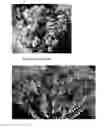
FIG. 1 shows the foliage of a 3 year old Sedum ‘Rosetta’ growing in the trial field in mid May in Canby, Oreg.
FIG. 2 shows the same plant in late June.
FIG. 3 shows a 9 month old Sedum ‘Rosetta’ in bloom in the trial field in late September in Canby, Oreg.
FIG. 4 shows the mature habit on a 4 year old Sedum Rosetta’ in the trial field in seed in mid October in Canby, Oreg.
DETAILED PLANT DESCRIPTION
The following is a detailed description of the new Sedum hybrid based on observations of a four year old specimen grown in the trial field in full sun under typical outdoor conditions in Canby, Oreg. Canby is Zone 8 on the USDA Hardiness map. Temperatures range from a high of 95° F. in August to 32° F. in January. Normal rainfall in Canby is 42.8 inches per year. The color descriptions are all based on The Royal Horticultural Society Colour Chart, 5th edition.
- Plant:
-
- Type.—herbaceous perennial.
- Hardiness.—USDA Zone 4 to 9.
- Size.—55 cm tall from the ground to the base of the inflorescence and 91 cm wide.
- Habit.—upright.
- Vigor.—excellent.
-
- Stem:
-
- Number.—54.
- Size.—45 cm long and 19 mm wide.
- Internode length.—1 cm long.
- Color.—Yellow Green 147D.
- Texture.—succulent.
- Surface.—glabrous.
-
- Leaf:
-
- Type.—simple.
- Arrangement.—variable.
- Shape.—ovate.
- Apex.—obtuse.
- Base.—obtuse.
- Venation.—pinnate.
- Margins.—irregularly serrate to entire.
- Blade size.—grows to 6.5 cm long and 4.7 cm wide.
- Surface.—glabrous on both sides.
- Texture.—thick, spongy, succulent.
- Petiole.—leaves sessile.
- Leaf color.—topside between Greyed Green 189A and Yellow Green 147B with the vein Yellow Green 147D; bottom side closest to Greyed Green 191A with vein Yellow Green 147D.
-
- Inflorescence:
-
- Type.—terminal, corymbose, umbel-like.
- Number of flowers.—500 to 1000 per stem (increases with age).
- Pedicels.—1 mm to 2.5 mm long, 1 mm wide, glabrous, Yellow Green 148C.
- Peduncle.—grows to 7 cm tall and 8 mm wide, Yellow Green 147C tinted Greyed Purple 187B in sun, glabrous.
- Size.—grows to 21 cm deep and 15 cm wide.
- Bloom period.—August through September in Canby, Oreg.
-
- Flower bud:
-
- Size.—3 mm wide, 3 mm deep.
- Description.—ovoid.
- Color.—White 155C tinted Greyed Purple 183C at top.
-
- Flower:
-
- Type.—actinomorphic.
- Shape.—stellate.
- Size.—5 mm deep and 6 mm wide.
- Corolla description.—5 mm deep and 6 mm wide, 5 petals, each elliptical, 5 mm long and 2 mm wide, margins entire, tip acuminate, glabrous on both sides, top and bottom side White NN155C with the main vein on back side tinted Greyed Purple 183C at top.
- Calyx description.—1 mm deep and 2.5 mm wide, stellate, 5 lobes, divided to the base, margins entire, tip acute, glabrous, Yellow Green 148C on both sides.
- Stamen description.—10, 4.2 mm long, filaments 3 mm long and White 155C, anthers sterile and reduced, no pollen.
- Pistil description.—5 separate prominent carpels, each 3 mm deep and 1.5 mm wide, Yellow Green 145C overall, style less than 1 mm long.
- Fragrance.—none.
- Lastingness.—each stem lasts up to a month.
-
- Fruit:
-
- Type.—Ventrally dehiscent follicle, erect, attenuate.
- Fertility.—low.
- Size.—3 mm wide and 3 mm deep.
- Color.—Greyed Orange 165A.
-
- Seed: None seen
- Disease and pest resistance or tolerance: Pest and disease resistance are typical for this type of Sedum. No known resistances.
Claims
I claim:1. A new and distinct hybrid of Sedum plant as herein illustrated and described.
Images & Drawings included:


Sources:
- United States Patent and Trademark Office - verify current appl. status at the USPTO↗
Recent applications in this class:
- » 20240292771 2024-08-29
Campanula plant named 'Twilight' - » 20240251691 2024-07-25
HYDRANGEA PLANT NAMED 'HYLV17520' - » 20240251690 2024-07-25
Vaccinium Plant Named 'BWPBLUE02' - » 20240251689 2024-07-25
BLUEBERRY PLANT NAMED 'FC13-113' - » 20240251688 2024-07-25
BLUEBERRY PLANT NAMED 'FCM14-057' - » 20240237567 2024-07-11
PONGAMIA VARIETIES - » 20240224827 2024-07-04
PELARGONIUM PLANT NAMED 'PEQZ0103' - » 20240215470 2024-06-27
Agapanthus plant named 'Monsapho' - » 20240215469 2024-06-27
plant named ‘LOCORA3519’ - » 20240206359 2024-06-20
CORYLUS PLANT NAMED 'BWM01'
Recent applications for this Assignee:
- » 20190133016 2019-05-02
Begonia plant named 'Citra' - » 20180332756 2018-11-15
plant named ‘TNECHKY’ - » 20180168090 2018-06-14
plant named ‘TNHEUNER’ - » 20180168089 2018-06-14
plant named ‘TNHEUNEA’ - » 20180014447 2018-01-11
plant named ‘TNBEGRM’ - » 20170374791 2017-12-28
×plant named ‘Plum Cascade’ - » 20170374779 2017-12-28
Veronica plant named 'TNVERVB' - » 20170049035 2017-02-16
Sedum plant named ‘Dark Magic’ - » 20170049033 2017-02-16
plant named ‘Banana Popsicle’ - » 20170049032 2017-02-16
plant named ‘Poco Yellow’