Method of Torrefacation of a Biomass Comprising the Step of Cooling the Torrefaction
US20150107499A1
2015-04-23
14/117,998
2012-05-16
Abstract:
The invention relates to a method and an arrangement for torrefaction of a biomass. Said method and arrangements allows for precise control of torrefaction temperature, which is crucial for accurate control of the quality and properties of the torrefied material. The method comprising a step of cooling the torrefaction reaction so as to at least partly counteract a temperature increase derived from the exothermic torrefaction reactions
Inventors:
- Ingemar Olofsson 8 🇸🇪 Umea, Sweden
- Martin Nordwaeger 6 🇸🇪 Umea, Sweden
- Anders Nordin 7 🇸🇪 Umea, Sweden
- Katrina Aberg 1 🇸🇪 Nordmaling, Sweden
Assignee:
- BIOENDEV AB 5 🇸🇪 Umeå, Sweden
Interested in similar patents?
Get notified when new applications in this technology area are published.
Classification:
C10B21/10 » CPC main
Heating of coke ovens with combustible gases Regulating and controlling the combustion
C10B39/06 » CPC further
Cooling or quenching coke; Wet quenching in the oven
C10B7/10 » CPC further
Coke ovens with mechanical conveying means for the raw material inside the oven with conveyor-screws
F23G5/20 » CPC further
Incineration of waste ; Incinerator constructions; Details, accessories or control therefor having rotating or oscillating drums
Description
TECHNICAL FIELD
The present invention relates to the field of torrefaction of biomass. In particular, it relates to a method and an arrangement for precise control of torrefaction temperature, which is crucial for accurate control of the quality and properties of the torrefied material.
BACKGROUND
-
- To be able to compete with and replace fossil fuel energy carriers such as coal, oil and natural gas, lignocellulosic biomass would benefit from some form of pre-treatment method to overcome inherent drawbacks. The pre-treatment method torrefaction has been shown to improve biomass fuel qualities such as energy density, water content and milling, feeding and hydrophobic properties [1-4]. These improvements establish torrefaction as a key process in facilitating an expanding market for biomass raw materials. Torrefaction is a thermal pre-treatment method that normally takes place in a substantially inert (oxygen free) atmosphere at a temperature of about 220-600° C. During the process course a combustible gas comprising different organic compounds is released from the biomass feedstock in addition to the torrefied biomass.
- The process of producing a torrefied material from lignocellulosic biomass can be said to include four stages:
1) a drying step, wherein free water retained in the biomass is removed;
2) a heating step in which physically bound water is released and the temperature of the material is elevated to the desired torrefaction temperature;
3) a torrefaction stage, in which the material is actually torrefied and which starts when the material temperature reaches about 220° C.-230° C. During this stage, the biomass partly decomposes and releases different types of volatiles, such as hydroxy acetone, methanol, propanal, short carboxylic acids and other hydro carbons. In particular, the torrefaction stage is characterised by decomposition of hemicellulose at temperatures from 220° C.-230° C., and at higher torrefaction temperatures cellulose and lignin also starts to decompose and release volatiles; cellulose decomposes at a temperature of 305-375° C. and lignin gradually decomposes over a temperature range of 250-500° C.;
4) a cooling step to terminate the process and facilitate handling. The torrefaction process is terminated as soon as the material is cooled below 220° C. -230° C.
SUMMARY OF THE PRESENT DISCLOSURE
The requirements for quality and properties of the torrefied products differ considerably depending of the intended use of the product. The inventors have realized that it is crucial to be able to precisely control the torrefaction temperature in order to generate a torrefied product with the desired characteristics. The present invention is based on the insight that exothermal, temperature-increasing reactions, takes place during the torrefaction process and that the amount of generated energy differs considerably between different types of lignocellulosic materials. For example, the inventors have discovered that the torrefaction of woody biomass from eucalyptus generates considerably more energy by exothermal reactions than the torrefaction of woody biomass from spruce. The exothermal reactions in the torrefaction process thus makes it hard to keep a constant torrefaction temperature and to obtain a torrefied product of a desired and reproducible quality. Hence, the inventors have realized a need for improved torrefaction methods which allows for a precise control of torrefaction temperature and which facilitates accurate control of the quality and properties of the torrefied material.
-
- The inventors have solved the problem described above with a method of torrefaction of a dried and heated biomass, comprising the step of cooling the torrefaction reaction so as to at least partly counteract a temperature increase derived from the exothermic torrefaction reactions. Another aspect of the invention relates to a torrefaction arrangement comprising at least one torrefaction zone wherein the torrefaction zone comprises means for cooling and optionally also means for heating and wherein the means for cooling is connected to a cooling source.
BRIEF DESCRIPTION OF THE FIGURES
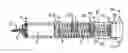
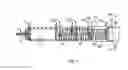
FIG. 1 shows a torrefaction arrangement comprising a torrefaction zone wherein the torrefaction zone comprises means for cooling.
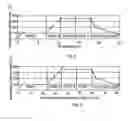
FIG. 2 shows a typical temperature variation in the torrefaction arrangement shown in FIG. 1. Note that the cooling zone is not shown in FIG. 1.
FIG. 3 shows a typical temperature variation in the torrefaction arrangement disclosed in FIG. 1. Note that the cooling zone is not shown in FIG. 1.
DEFINITIONS
Torrefaction:
A thermal pre-treatment method that takes place in a virtually inert (oxygen free) atmosphere at a temperature above 220° C. but below 600° C. and which produces a torrefied biomass and combustible gases. During a torrefaction stage, parts of the biomass, in particular hemicellulose, decompose and give off different types of organic volatiles. In a torrefaction process starting from raw biomass, the actual torrefaction stage is preceded by a drying stage wherein free water retained in the biomass is removed and by a heating stage wherein the biomass is heated to the desired torrefaction temperature.
Heating Zone:
A specific region of a compartment in a torrefaction arrangement, located upstream of a torrefaction zone in relation to a biomass inlet of a torrefaction arrangement, comprising means for specifically regulating the temperature in said specific region and wherein the temperature of a biomass is increased to a temperature near the desired torrefaction temperature prior to torrefaction.
Torrefaction Zone:
A specific region of a compartment in a torrefaction arrangement, located downstream of a heating zone in relation to a biomass inlet of a torrefaction arrangement, comprising means for specifically regulating the temperature in said specific region and wherein the temperature of a previously heated biomass is kept virtually constant at the desired torrefaction temperature for a desired torrefaction time wherein a desired torrefaction temperature is in a range between 220° C. to 600° C.
Drying Zone
A specific region of a compartment in a torrefaction arrangement, located upstream of a heating zone in relation to a biomass inlet of a torrefaction arrangement, comprising means for regulating the temperature in said specific region and wherein a biomass is dried to a water content below 10% prior to heating.
Cooling Zone
A specific region in a torrefaction arrangement, located downstream of a torrefaction zone in relation to a biomass inlet of a torrefaction arrangement, comprising means for regulating the temperature in said specific region and wherein the biomass is cooled to a temperature below 220° C. preferably below 100° C.
Connecting Zone
A specific region in a torrefaction arrangement located immediately upstream of a heating zone and immediately downstream of a torrefaction zone in relation to a biomass inlet of said torrefaction arrangement.
Torrefaction Time:
The time the temperature of the material is kept virtually constant at the torrefaction temperature
Transport Screw:
Any type of helicoidal material transport devices including discontinuous helicoidal transport devices. The helicoidal transport device can be fixed to a central shaft or to the inner casing of a compartment, such as a drum, surrounding the transport screw.
DETAILED DESCRIPTION
-
- In one aspect the invention relates to a method of torrefaction of a dried and heated biomass, comprising the step of cooling the torrefaction reaction so as to at least partly counteract a temperature increase derived from the exothermic torrefaction reactions. Preferably the temperature in the torrefaction zone is controlled using means for cooling and optionally also means for heating. The means for cooling can easily be subjected to fouling, since gases released from the biomass material in the torrefaction zone will condense on the said means for cooling. Therefore, in a preferred embodiment of the invention, the means for cooling and heating are inter changeable. Thereby heating/cooling means which becomes fouled during the cooling can be cleaned by heating up the said means for heating/cooling which leads to evaporation of the said condensed gases. In one additional embodiment the said means for cooling and heating are represented by heat exchangers.
- In another embodiment the biomass is heated in a heating zone and thereafter torrefied in a torrefaction zone and preferably the residence time in the torrefaction zone is controlled separately from the residence time in the heating zone.
Cooling of the torrefaction reaction enables precise control of torrefaction temperature which facilitates accurate control of the quality and properties of the torrefied material. Therefore, in a preferred embodiment of the invention the material temperature of the biomass during the torrefaction stage should be kept virtually constant such as that the maximum temperature and the minimum temperature of the biomass in a torrefaction zone deviates with at most 50° C., preferably with at most 40° C., preferably with at most 30° C. preferably with at most 20° C., preferably with at most 10° C. preferably with at most 5° C. and more preferably with at most 2° C. In another embodiment, before a dried and heated material reaches a desired torrefaction temperature an additional heating can take place in the torrefaction zone. Prior to this short additional heating the temperature can be more than 50° C. below the desired torrefaction temperature, for example 60° C. or 65° C. or 70° C. or 75° C. or even 80° C. below the desired torrefaction temperature.
-
- In a preferred embodiment the residence time in the heating zone is controlled by controlling the rotational speed of a heating zone transport screw and in another preferred embodiment the residence time in the torrefaction zone is controlled by controlling the rotational speed of a torrefaction zone transport screw.
According to another embodiment of the invention the temperature of the biomass entering a first heating zone is between 90° C. and 130° C. According to another embodiment of the invention the temperature of the biomass leaving a heating zone deviates from the torrefaction temperature with at most 80° C., such as 75° C., such as 70° C., such as 60° C., such as 65° C., such as 60° C., such as 55° C., preferably at most 50° C., preferably with at most 40° C., preferably with at most 30° C., preferably with at most 20° C., preferably with at most 15° C., preferably with at most 10° C. and more preferably with at most 5° C.
The preferred torrefaction temperature according to the present invention is in the range between 220° C. to 600° C., such as 220-500° C., such as 220-450° C., such as 220-400° C., such as 230-600° C., such as 230-500° C., such as 230-450° C., such as 230-400° C., preferably 240-500° C., preferably 240-400° C., preferably 240-350° C. most preferably 270-350° C.
The preferred torrefaction time according to the present invention is in the range between 1 and 60 minutes preferably between 1 and 30 minutes, preferably 2-25 minutes and more preferably 2-20 minutes. The torrefaction time normally refers to the residence time of the dried and heated biomass in a torrefaction zone. According to one embodiment, the cooling is performed during the second half of the torrefaction time or in the downstream half of the torrefaction zone. Such an embodiment may be preferred as the heat from the exothermal reactions may accumulate over the torrefacation reaction leading to an increased need for cooling during the later stage of the torrefaction reaction.
In another embodiment of the invention the material is dried in a drying zone before the material enters the heating zone and preferably the water content in the biomass is lower than 10%, preferably lower than 7%, preferably lower than 5%, preferably lower than 4% preferably lower than 3%, preferably lower than 2%, more preferably lower than 1% when the biomass enters the heating zone. In another embodiment the torrefied material is cooled in a cooling zone after the material have been torrefied in the torrefaction zone.
According to another embodiment the material is heated in the heating zone using the means for heating in the heating zone and the temperature in the torrefaction zone is regulated using heat generated from the exothermic energy generated from the biomass during the torrefaction process and cooling supplied from the means for cooling in the torrefaction zone. External heating can also be supplied in the torrefaction zone to control the torrefaction temperature via the means for heating in the torrefaction zone. According to another embodiment no external heating is used in the torrefaction zone. According to a preferred embodiment the biomass is represented by lignocellulosic biomass.
-
- Another aspect of the invention relates to a torrefaction arrangement comprising at least one torrefaction zone wherein the torrefaction zone comprises means for cooling and optionally also means for heating and wherein the means for cooling is connected to a cooling source. Said cooling source may be any vessel or arrangement containing a cooling media or a coolant. The cooling media can be in liquid phase or in gaseous phase. In one embodiment the cooling media is a liquid such as water or thermal oil and in another embodiment the cooling media is a gas or a gas mixture such as air or cold flue gases. In one embodiment the cold flue gases are withdrawn from a boiler in connection with the torrefaction arrangement. In another embodiment the cold flue gases are withdrawn from the drying zone in the torrefaction arrangement. In a preferred embodiment of the invention the means for cooling and heating are interchangeable and preferably said means for heating and/or cooling is represented by heat exchangers. In an other embodiment the torrefaction arrangement further comprises at least one heating zone wherein said heating zones comprises means for heating and wherein the torrefaction arrangement comprises material transport arrangements such as that the residence time of the material in the torrefaction zones can be controlled separately from the residence time in the heating zone(s). In a preferred embodiment the torrefaction arrangement comprised at least two compartments wherein the material transport in at least one of the compartment can be controlled separately from the material transport in the other compartments and in which the torrefaction zone(s) are located in a different compartment than the heating zone(s). At least one, preferably at least two of the compartments can be represented by rotatable drums in which screws may be fixed such that the material therein is transported when the drum rotates. In another embodiment, the residence time in the heating zone can be controlled by the rotational speed of a first rotatable drum and the residence time in the torrefaction zone(s) is independent of the rotational speed of said first rotatable drum. Preferably the residence time in the torrefaction zone is controlled by the rotation speed of a second rotatable drum wherein the residence time in the heating zone(s) is independent of the rotation speed of said second rotatable drum. In one additional embodiment the at least two compartments are connected with a connecting zone. The material transport in said connecting zone can be mediated by gravity or by mechanical measures and the material transport in the connecting zone is preferably independent of the material transport in the torrefaction zone. Preferably, the connecting zone comprises means for measuring the material surface temperature of the material in the connecting zone, the gas temperature, the oxygen concentration, the pressure, the gas composition or product parameters. In another embodiment at least one of the material transport arrangements in the torrefaction arrangement is represented by a helicoid screw or a flight conveyor and wherein the helicoid screw preferentially can be represented by a helicoid screw flight or a helicoid screw flighting welded on a central pipe or a helicoidal screw feeder. In another embodiment the torrefaction arrangement further comprises at least one drying zone. Said drying zone is preferably located in a different compartment than the torrefaction zone and the material transport in the drying zone is preferably independent of the material transport in the torrefaction zone. The material transport arrangement in the drying zone can for example be represented by a helicoid screw or a flight conveyor and wherein the helicoid screw preferentially can be represented by a helicoid screw flight or a helicoid screw flighting welded on a central pipe or a helicoidal screw feeder. In another embodiment the material transport arrangement in the drying zone and the heating zone is represented by a common transport screw. In a different embodiment the material transport in the drying zone is separate from the material transport in the heating zone. The torrefaction arrangement can further comprise at least one cooling zone and said cooling zone can preferably comprise at least one screw cooler. Note that the cooling of the cooling zone is different from the cooling of the torrefaction zone.
DETAILED DESCRIPTION OF EXEMPLARY EMBODIMENTS
-
- FIG. 1 shows a torrefaction arrangement having a biomass inlet (1) wherein the biomass is introduced in the torrefaction arrangement by means of a feeding screw (2). The biomass is dried in a drying zone (3) wherein heat is supplied to the drying zone (3) by means of a heating media (e.g. hot gases) through a drying zone heating media inlet (4) and wherein the heating media leaves the drying zone through the drying zone heating media outlet (5). Dried biomass is transported through the drying zone (3) at a speed regulated by the feeding speed in the biomass inlet (1) and enters the heating zone (6) where the temperature of the biomass is elevated to a temperature near the desired torrefaction temperature. The heat is supplied to the heating zone (6) by means of a heating media through a heating zone heating media inlet (7) which leaves the heating zone through a heating zone heating media outlet (8). The heated material enters a first torrefaction zone (9) in which the temperature can be controlled by introducing heating media and/or cooling media in the first torrefaction zone heating/cooling media inlet (10) wherein said heating/cooling media exits the first torrefaction zone through the torrefaction zone heating/cooling media outlets (11). The biomass thereafter enters a second torrefaction zone (12) wherein the temperature can be controlled using special means for cooling (18) wherein the means for cooling (18) is connected to a cooling source. Cooling media can be supplied to the second torrefaction zone via the torrefaction zone cooling media inlet (13) and said cooling media exits the torrefaction zone via a torrefaction zone cooling media outlet (14). The cooling media inlet (13) is connected to cooling source. The material transport in the heating zone (6) and torrefaction zones (9, 12) is driven by a common transport screw which is attached to a drum enclosing the heating zone (6) and torrefaction zones (9, 12). The said drum can be attached to a threading (15). Torrefaction gases from the drying zone (3), heating zone (6) and torrefaction zones (9, 12) are collected from the torrefaction gas outlet (16) for combustion or processing. Torrefied biomass exits the torrefaction arrangement through a torrefied biomass outlet (17) and is preferably subsequently cooled to a temperature below 100 ° C.
FIG. 2 shows typical temperatures of the biomass in the different zones in the torrefaction arrangement disclosed in FIG. 1: Zone 1 represents the drying zone (3), zone 2 represents the heating zone (6), zone 3 represents the first torrefaction zone (9) and zone 4 represents the second torrefaction zone (12). In the drying zone (3) the biomass is dried, typically to a water content of 2-10% (w/w) and the temperature is elevated to about 100° C. In the heating zone (6), the material is post-dried to about 0% moisture (w/w) and the temperature of the material is elevated to close to the desired torrefaction temperature which in this example is 350° C. In the torrefaction zones the temperature is kept virtually constant at the desired torrefaction temperature for a time corresponding to the desired torrefaction time. Cooling of the torrefaction reaction in the torrefaction zones counteracts a temperature increase derived from the exothermic torrefaction reactions and thereby facilitates the constant temperature in the torrefaction zones. In FIG. 1 the second torrefaction zone have special means for cooling the torrefaction reaction (18) but the torrefaction reaction can also be cooled using cooling media which is introduced to the torrefaction zones via the torrefaction zone cooling media inlet (11, 13) Thereafter the temperature is decreased below 100° C. in a cooling zone.
FIG. 3 shows typical times and temperatures of the biomass in the different zones in the torrefaction arrangement disclosed in FIG. 1. In the present example the torrefaction temperature is 350° C. and the torrefaction time is 20 minutes.
REFERENCES
[1] M. J Prins et al. More efficient biomass gasification via torrefaction. Energy 2006, 31, (15), 3458-3470.
[2] P. C. A. Bergman et al. Torrefaction for Entrained Flow Gasification of Biomass; Report C-05-067; Energy Research Centre of The Netherlands (ECN): Petten, The Netherlands, July 2005;
[3] K. Håkansson et al. Torrefaction and gasification of hydrolysis residue. 16th European biomass conference and exhibition, Valencia, Spain. ETAFlorence, 2008.
[4] A. Nordin, L. Pommer, I. Olofsson, K. Håkansson, M. Nordwaeger, S. Wiklund Lindström, M. Brostöm, T. Lestander, H. Örberg, G. Kalén, Swedish Torrefaction R&D program. First Annual Report 2009-12-18 (2009).
Claims
1. A method of torrefaction of a dried and heated biomass, comprising the step of cooling a torrefaction reaction so as to at least partly counteract a temperature increase derived from exothermic torrefaction reactions, wherein the biomass is woody biomass from spruce or eucalyptus.
2. A method according to claim 1 wherein a temperature of the torrefaction reaction is controlled using means for cooling and an optional means for heating.
3. A method according to claim 2 wherein the means for cooling and heating are interchangeable.
4. A method according to claim 2 wherein the means for heating and/or cooling is represented by heat exchangers.
5. A method according to claim 1 wherein a temperature of the biomass during the torrefaction reaction is kept within a temperature range of 50° C.
6. A method according to claim 1, wherein a residence time of the dried and heated biomass in the torrefaction reaction is controlled separately from a residence time in a heating step preceding the torrefaction reaction.
7. A torrefaction arrangement comprising at least one torrefaction zone wherein the torrefaction zone comprises means for cooling and an optional means for heating and wherein the means for cooling is connected to a vessel or arrangement containing a cooling media, which cooling media is water.
8. A torrefaction arrangement according claim 8 wherein the means for cooling and heating are interchangeable.
9. A torrefaction arrangement according to claim 8 wherein the means for heating and/or cooling are heat exchangers.
10. A torrefaction arrangement according to claim 7 further comprising at least one heating zone wherein the at least one heating zone comprises means for heating and wherein the torrefaction arrangement comprises material transport arrangements such that a residence time of a material in the torrefaction zone can be controlled separately from the residence time in the at least one heating zone.
11. A torrefaction arrangement according to claim 7, wherein the torrefaction zone comprises a helicoid screw or a flight conveyor.
12. A torrefaction arrangement according to claim 11 comprising a helicoid screw, which is a helicoid screw flight or a helicoid screw flighting welded on a central pipe or a helicoidal screw feeder.
13. A torrefaction arrangement according to claim 7 comprising a first compartment in which the at least one heating zone is arranged and a second compartment in which the at least one torrefaction zone is is/are arranged.
14. A torrefaction arrangement according to claim 13 wherein at least one of the compartments is a rotatable drum.
15. A torrefaction arrangement according to claim 14, wherein:
the first compartment is a first rotatable drum connected to a first device for controlling the rotational speed of the first rotatable drum; and
the second compartment is a second rotatable drum connected to a second device for controlling the rotational speed of the second rotatable drum independent of the rotational speed of the first rotatable drum such that a residence time in the at least one heating zone can be controlled separately of a residence time in the at least one torrefaction zone.
16. A torrefaction arrangement according to claim 14, wherein a screw is fixed in the rotatable drum such that the material therein is transported when the drum rotates.
Images & Drawings included:
Sources:
- United States Patent and Trademark Office - verify current appl. status at the USPTO↗
Recent applications in this class:
- » 20250101310 2025-03-27
MONITORING AND MODULATION SYSTEM FOR A COKE OVEN BATTERY - » 20240417623 2024-12-19
METHOD FOR OPERATING A COKE OVEN PLANT - » 20240228881 2024-07-11
AUTOMATIC DRAFT CONTROL SYSTEM FOR COKE PLANTS - » 20240132780 2024-04-25
Automatic draft control system for coke plants - » 20210163821 2021-06-03
Automatic draft control system for coke plants - » 20180208851 2018-07-26
Carbide producing method and carbide producing device - » 20160319197 2016-11-03
Automatic draft control system for coke plants - » 20160060531 2016-03-03
CARBONIZATION DEVICE - » 20160053180 2016-02-25
CARBONIZATION DEVICE - » 20140305784 2014-10-16
Gasifier and method of using the same for gasification of biomass and solid waste
Recent applications for this Assignee:
- » 20170362524 2017-12-21
Method and system for energy efficient torrefaction of biomass - » 20140325900 2014-11-06
METHOD AND AN ARRANGEMENT FOR EFFICIENT TORREFACTION OF BIOMASS - » 20140208995 2014-07-31
Countercurrent oxygen enhanced torrefaction - » 20140202072 2014-07-24
Method for monitoring and control of torrefaction temperature