Calibration system for solar collector installation
US20150122308A1
2015-05-07
14/591,063
2015-01-07
✅ Patent granted
US 9,312,804 B2
2016-04-12
-
-
Tony Ko
Dickinson Wright PLLC
2035-01-07
Abstract:
A solar concentrator calibration tool that compensates for inconsistencies in the fabrication, assembly and installation of a solar collector system, permits the solar collector to perform optimally. The calibration tool provides feedback information to a supervisory control processor, allowing the processor to compare the expected position of the sun to the “actual” position found by the calibration tool. The processor then generates a calibration signal, thereafter used by the collector's movement control mechanism, to compensate the tracking of the solar collector to accurately follow the movement of the sun, unconstrained by the effects of the construction inconsistencies.
Assignee:
- CEWA Technologies 1 🇺🇸 Wyomissing, PA, United States
Applicant:
Interested in similar patents?
Get notified when new applications in this technology area are published.
Classification:
H02S20/32 » CPC main
Supporting structures for PV modules; Supporting structures being movable or adjustable, e.g. for angle adjustment specially adapted for solar tracking
G01D5/3473 » CPC further
Mechanical means for transferring the output of a sensing member; Means for converting the output of a sensing member to another variable where the form or nature of the sensing member does not constrain the means for converting; Transducers not specially adapted for a specific variable characterised by optical transfer means, i.e. using infra-red, visible, or ultra-violet light with attenuation or whole or partial obturation of beams of light the beams of light being detected by photocells using displacement encoding scales Circular or rotary encoders
H01L31/052 » CPC further
Semiconductor devices sensitive to infra-red radiation, light, electromagnetic radiation of shorter wavelength or corpuscular radiation and specially adapted either for the conversion of the energy of such radiation into electrical energy or for the control of electrical energy by such radiation; Processes or apparatus specially adapted for the manufacture or treatment thereof or of parts thereof; Details thereof adapted as photovoltaic [PV] conversion devices Cooling means directly associated or integrated with the PV cell, e.g. integrated Peltier elements for active cooling or heat sinks directly associated with the PV cells
H01L31/056 » CPC further
Semiconductor devices sensitive to infra-red radiation, light, electromagnetic radiation of shorter wavelength or corpuscular radiation and specially adapted either for the conversion of the energy of such radiation into electrical energy or for the control of electrical energy by such radiation; Processes or apparatus specially adapted for the manufacture or treatment thereof or of parts thereof; Details thereof adapted as photovoltaic [PV] conversion devices; Optical elements directly associated or integrated with the PV cell, e.g. light-reflecting means or light-concentrating means the light-reflecting means being of the back surface reflector [BSR] type
H01L31/0547 » CPC further
Semiconductor devices sensitive to infra-red radiation, light, electromagnetic radiation of shorter wavelength or corpuscular radiation and specially adapted either for the conversion of the energy of such radiation into electrical energy or for the control of electrical energy by such radiation; Processes or apparatus specially adapted for the manufacture or treatment thereof or of parts thereof; Details thereof adapted as photovoltaic [PV] conversion devices; Optical elements directly associated or integrated with the PV cell, e.g. light-reflecting means or light-concentrating means comprising light concentrating means of the reflecting type, e.g. parabolic mirrors, concentrators using total internal reflection
H02S40/00 » CPC further
Components or accessories in combination with PV modules, not provided for in groups -
H02S40/44 » CPC further
Components or accessories in combination with PV modules, not provided for in groups -; Thermal components Means to utilise heat energy, e.g. hybrid systems producing warm water and electricity at the same time
H01L31/02024 » CPC further
Semiconductor devices sensitive to infra-red radiation, light, electromagnetic radiation of shorter wavelength or corpuscular radiation and specially adapted either for the conversion of the energy of such radiation into electrical energy or for the control of electrical energy by such radiation; Processes or apparatus specially adapted for the manufacture or treatment thereof or of parts thereof; Details thereof; Details; Circuit arrangements of general character for the devices for devices characterised by at least one potential jump barrier or surface barrier Position sensitive and lateral effect photodetectors; Quadrant photodiodes
Y02B10/20 » CPC further
Integration of renewable energy sources in buildings Solar thermal
Y02B10/20 » CPC further
Integration of renewable energy sources in buildings Solar thermal
Y02E10/47 » CPC further
Energy generation through renewable energy sources; Solar thermal energy, e.g. solar towers Mountings or tracking
Y02E10/47 » CPC further
Energy generation through renewable energy sources; Solar thermal energy, e.g. solar towers Mountings or tracking
Y02E10/52 » CPC further
Energy generation through renewable energy sources; Photovoltaic [PV] energy PV systems with concentrators
Y02E10/52 » CPC further
Energy generation through renewable energy sources; Photovoltaic [PV] energy PV systems with concentrators
H01L31/042 IPC
Semiconductor devices sensitive to infra-red radiation, light, electromagnetic radiation of shorter wavelength or corpuscular radiation and specially adapted either for the conversion of the energy of such radiation into electrical energy or for the control of electrical energy by such radiation; Processes or apparatus specially adapted for the manufacture or treatment thereof or of parts thereof; Details thereof adapted as photovoltaic [PV] conversion devices PV modules or arrays of single PV cells
H01L31/0525 IPC
Semiconductor devices sensitive to infra-red radiation, light, electromagnetic radiation of shorter wavelength or corpuscular radiation and specially adapted either for the conversion of the energy of such radiation into electrical energy or for the control of electrical energy by such radiation; Processes or apparatus specially adapted for the manufacture or treatment thereof or of parts thereof; Details thereof adapted as photovoltaic [PV] conversion devices; Cooling means directly associated or integrated with the PV cell, e.g. integrated Peltier elements for active cooling or heat sinks directly associated with the PV cells including means to utilise heat energy directly associated with the PV cell, e.g. integrated Seebeck elements
H01L31/054 IPC
Semiconductor devices sensitive to infra-red radiation, light, electromagnetic radiation of shorter wavelength or corpuscular radiation and specially adapted either for the conversion of the energy of such radiation into electrical energy or for the control of electrical energy by such radiation; Processes or apparatus specially adapted for the manufacture or treatment thereof or of parts thereof; Details thereof adapted as photovoltaic [PV] conversion devices Optical elements directly associated or integrated with the PV cell, e.g. light-reflecting means or light-concentrating means
G01D5/347 IPC
Mechanical means for transferring the output of a sensing member; Means for converting the output of a sensing member to another variable where the form or nature of the sensing member does not constrain the means for converting; Transducers not specially adapted for a specific variable characterised by optical transfer means, i.e. using infra-red, visible, or ultra-violet light with attenuation or whole or partial obturation of beams of light the beams of light being detected by photocells using displacement encoding scales
H01L31/02 IPC
Semiconductor devices sensitive to infra-red radiation, light, electromagnetic radiation of shorter wavelength or corpuscular radiation and specially adapted either for the conversion of the energy of such radiation into electrical energy or for the control of electrical energy by such radiation; Processes or apparatus specially adapted for the manufacture or treatment thereof or of parts thereof; Details thereof Details
Description
CROSS-REFERENCE TO RELATED APPLICATIONS
This U.S. patent application is a continuation application of U.S. patent application Ser. No. 13/897,268, filed May 17, 2013, now pending, which is a continuation of U.S. patent application Ser. No. 12/841,360, filed Jul. 22, 2010, now U.S. Pat. No. 8,466,400, issued Jun. 18, 2013, which claims the benefit of U.S. Provisional Application No. 61/228,440, filed Jul. 24, 2009, now expired. This patent application incorporates by reference, the entirety of U.S. patent application Ser. Nos. 13/897,268, 12/841,360, and 61/228,440.
TECHNICAL FIELD
The present invention relates to the installation of a solar collector and, more particularly, to a system for providing alignment between the sun and the collector, regardless of the physical characteristics of the solar collector support system.
BACKGROUND OF THE INVENTION
In the increasingly important field of renewable energy production, solar power is a highly promising technology. In some cases, this technology employs solar cells, also known as photovoltaic (PV) cells, to convert solar radiation into direct current electricity. Solar cells may be arranged into arrays of flat panels, in which sunlight directly impinges upon large surface areas of solar cells. Or, solar cells may be used in photovoltaic concentrators, in which mirrors and lenses reflect and focus solar energy onto a much smaller solar cell. In other cases, solar irradiance is concentrated and focused onto a cavity receiver to produce thermal energy. While the efficiency of any solar power system is largely quantified by the ability of the concentrator to convert solar energy into electricity, the ability of the solar energy system to track the sun's movements also has a large effect on a solar power system's efficiency. That is, it remains an important consideration in solar energy systems to be able to effectively and efficiently adjust the angle of the solar panel/collector to maximize the intensity of the sunlight being collected.
One type of tracking system utilizes pedestal-mounted designs, in which a solar module is generally mounted on a vertical pole, or pedestal, which is itself inserted into the ground. Various mechanical linkages and motors are then used to tilt the panel on the support pole in one or two axes according to the sun's movements.
In addition to pedestal-mounted designs, many other tracking systems have utilized combinations of sliding rails, pin joints, ball-and-sockets, rotating wheels, and more. These non-pedestal designs involve multiple supports, typically located around the perimeter of the solar module, to anchor and control the module's movement. For instance, one prior art arrangement comprises a circular, ring-mounted reflector which is supported by a pair of diametrically-opposing levers, with a third lever located below and mid-way between the connections of the lever pair. The three levers use an assembly of linkages to turn the reflector to its desired position, which can include turning the reflector face-down to a protective stowed position.
While numerous tracking systems have been designed and implemented, problems remain with site preparation, “stack-up” tolerances as a result of the solar collector fabrication and assembly, as well as with the installation of the collector itself at the site. That is, solar collectors require the construction of a precise foundation and subsequent optical alignment in order to accurately align the collector with the sun during installation and thereafter track the sun's motion across the sky. The high costs associated with site preparation and fabrication of such a foundation impacts the economic viability of installing large-area solar collector fields (that is, an installation of a large number of separate collectors which are then operated as a “system”).
SUMMARY OF THE INVENTION
The need remaining in the prior art is addressed by the present invention, which relates to the installation of a solar collector and, more particularly, to a calibration tool and procedure for creating “custom” tracking information that compensates for inaccuracies in an individual solar collector installation, thus maintaining alignment between the sun and the installed solar collector, regardless of various imperfections in the solar collector construction and installation.
In particular, the calibration tool of the present invention comprises a system that is removably attached to a solar collector system upon installation. The tool performs a calibration function by: (1) collecting a body of data defining the locations of a collector as it initially moves to track the sun's movement; (2) comparing this actual movement data with “expected” movement data (taken from standard solar charts and latitude/longitude information); (3) creating an adjustment “overlay” (in the form of the “difference” between these two sets of data); and (4) storing the overlay information within the collector's movement control mechanism.
The calibration tool comprises an alignment element (removably attached to the collector) used to sense the optimum alignment between the collector and the sun at any given point in time, a position encoder (also attached to the collector) to generate the collector's elevation and latitude information (in general, “position information”) at any given point in time, and a processor that collects and utilizes the information from both the alignment element and the position encoder, in conjunction with the “expected” sun movement information, to determine the offset between the actual and expected values and thereby generate the calibration information (offset data) used by the servomechanisms to control the movement of the collector.
In operation, the calibration tool functions to initially provide alignment between the sun and the collector and determine the initial position information (e.g., elevation and azimuth) of the collector. Thereafter, a calibration routine (stored in the processor) is followed for a period of time sufficient to determine the offset between the expected location of the sun (relative to the optical axis of the collector—from known reference sources) and the actual location of the sun (relative to the optical axis of the collector—from the position encoder data). The offset information is used by the processor to determine the calibration adjustment that will be required to be performed by the collector's servomechanisms to keep that particular collector in alignment with the sun's path. The information is then transferred to the servomechanisms and the calibration tool is removed from the collector.
It is an advantage of the arrangement of the present invention that the calibration tool is only required upon initial installation of a solar collector. Once the calibration is performed, the tool may be removed and is ready for use with another collector installation.
Moreover, the use of a calibration tool to perfect the alignment between the sun and the collector has been found to reduce the accuracy required in preparing the installation site, constructing the individual components of the system and building the system in the field. These reductions yield a significant cost savings over prior art arrangements that relied on precise alignment upon installation.
Other and further aspects and embodiments of the present invention will become apparent during the course of the following discussion and by reference to the accompanying drawings.
BRIEF DESCRIPTION OF THE DRAWINGS
Referring now to the drawings,
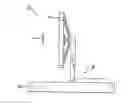
FIG. 1 illustrates an exemplary solar collector that may utilize the calibration tool of the present invention;
FIG. 2 is a side view of the collector of FIG. 1;
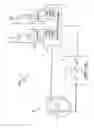
FIG. 3 is a diagram of an exemplary calibration tool formed in accordance with the present invention; and
FIG. 4 is a flowchart illustrating an exemplary process of performing solar collector calibration in accordance with the present invention.
DETAILED DESCRIPTION
FIG. 1 is a simple illustration of an exemplary solar collector 10 that can be calibrated with the system of the present invention to provide a tracking program that overcomes imperfections that may exist in the system components, installation site preparation and/or on-site construction of the solar collector itself. In this particular example, solar collector 10 includes a concentrating reflector 12 for re-directing impinging solar radiation onto a receiver 14 (or a secondary reflector positioned at that location). At an installation site, collector 10 may be attached to, for example, a concrete pad 20, or similar support structure. A mounting structure 30 is used to attach collector 10 to pad 20. Although not explicitly shown in this view, structure 30 also includes servomechanisms used to move collector 10 so as to track the sun's movement during the course of the day. A side view of the arrangement of FIG. 1 is shown in FIG. 2, which illustrates a particular configuration of mounting structure 30. As discussed above, the variations in site preparation and concentrator assembly will impact the alignment between collector 10 and the sun. For example, a “level” platform upon which to mount a collector should not exhibit an offset from “level” no greater than “millimeters” over a platform several meters in width. Variations in the dimensions of mounting structure 30 may also impact the alignment between collector 10 and the sun.
FIG. 3 illustrates an exemplary calibration tool 40 formed in accordance with the present invention to provide for a correction between the expected path of the sun's movements and the “actual” locations of the sun observed by receiver 14 as collector 10 moves to maintain alignment. As discussed above, the difference between the expected and actual values can be attributed to a variety of factors including, but not limited to, imperfections in the pad upon which the collector is installed, misalignment between system components, imperfections in the construction of the individual system components and/or construction imperfections in the actual installation of the solar collector system in the field. Calibration tool 40 is not permanently attached to solar collector 10, but is only used upon installation to determine the offset between the predicted and actual values and create an adjustment signal thereafter used by the collector's servomechanisms to control the movement of collector 10. Thereafter, calibration tool 40 is removed.
As shown in FIG. 3, calibration tool 40 includes an alignment element 42, a processor 44 and a position encoder 46. Alignment element 42 is used to periodically re-adjust the position of collector 10 to maintain the collector's optical axis in alignment with the location of the sun. In one embodiment, alignment element 42 comprises a quadrant photodiode sensor array that will create a series of electrical output signals based upon the amount of solar radiation received by the array. Various other types of arrangements may be used to form alignment element 42 including, but not limited to, a matrix configuration of photodiodes, a set of thermocouples, a camera; in general, any type of instrumentation that will be affected by radiation from the sun.
Processor 44 includes a control program that will cause the collector to adjust its position until alignment between the sun and alignment element 42 is achieved (i.e., when “maximum” solar radiance is measured by, for example, a photodiode array). Once alignment is achieved, the actual location information associated with the position of collector 10 (in terms of elevation and azimuth data) are recorded by position encoder 46 and transmitted to processor 44.
With this understanding of the operation of the elements forming calibration tool 40, an exemplary calibration process as performed in accordance with the present invention will now be described in detail.
FIG. 4 contains a flowchart of an exemplary process that can be used to implement the calibration process as provided in accordance with the present invention. The process begins at step 100 with the attachment of alignment element 42 and position encoder 46 to the solar collector system. In order to properly calibrate the alignment of the collector system with the location of the sun, alignment element 42 needs to be positioned along the optical axis of the system. In a preferred embodiment, alignment element 42 is positioned at receiver 14, allowing for its relatively straightforward attachment and later removal.
Once these elements are in place, the calibration process starts with an initial scan movement of collector 10 (step 110) and measurement of the optical signal (sun's radiance) impinging alignment element 42. This step can be thought of as a “centering” process to initially line up receiver 14 of the solar collector system with the position of the sun. As shown in step 120, the movement of collector 10 (under the control of the servomechanisms included in mounting structure 30) continues, with the power of the optical signal captured by alignment element 42 being transmitted to processor 44 until a signal associated with optimum alignment is achieved (e.g., maximum solar power is measured). At this point, an initial registration of collector 10 with the sun's location has been accomplished, and the location of collector 10 (elevation and azimuth) is transmitted from position encoders 46 to processor 44 (step 130).
Inasmuch as the sun continuously traverses a path across the horizon, collector 10 must remain aligned with the sun's position to continue to receive maximum radiance. The art is replete with systems that provide such tracking, as mentioned above. However, these systems are known to utilize only the ‘predicted’ or ‘expected’ movement of the sun (for a given geographic location, time of year, etc.) and do not take into account any irregularities introduced into the tracking by the imperfections in the solar collector system itself. It is the purpose of the present invention to understand these irregularities and calibrate the “path” followed by the collector so as to remain in alignment with the actual location of the sun.
Thus, the calibration process of the present invention continues at step 140 with the initiation of the calibration sequence. The sequence begins with the movement of collector 10 continuing to be controlled, for a predetermined period of time, by measuring the optical signal received by alignment element 42 so as to maintain alignment with the sun (step 150). As each movement is performed, the solar collector's location information from position encoders 46 (e.g., elevation and azimuth) is transmitted to processor 44 (step 160), which appends a timestamp to this location data and stores it in an included memory module (step 170).
At this point, a decision is made (step 180) to determine if the calibration time period has expired. Presuming the calibration period has not expired, the process returns to step 150, where the position of the collector is again re-aligned with the sun (using feedback from alignment element 42) and the associated elevation and azimuth information is transmitted to processor 44.
By repeating these steps for a predetermined period of time (measured in, perhaps, hours or minutes), a body of data is created that defines the actual position of the sun with respect to collector 10 that is required to maintain alignment therebetween. Once a sufficient amount of data has been gathered (as determined by the individual performing the calibration), the process moves on to step 190, where processor 44 functions to compare the collected actual data regarding the elevation and azimuth of the sun to the expected values associated with the geographic information stored therein.
Inasmuch as any installed solar collector will have one or more imperfections, the actual and predicted values will be different. Processor 44 then functions to determine this difference as an offset adjustment that needs to be made to the expected values of the sun's movements (associated with the movement over the course of an entire year) and transmits this offset adjustment as a calibration signal to the servomechanisms associated with mounting structure 30 (step 200). Once the calibration information has been stored in the servomechanisms, the calibration process is finished, and alignment element 42 and position encoder 46 are removed from the solar collector system (step 210).
It is to be understood that calibration tool 40 may be extended to control a network of solar concentrators that have been co-located in a distributed fashion across an ‘open field’ area. In conventional arrangements, such concentrator arrays have to compromise between land usage and shadowing of neighboring concentrators. Solar thermal collection is conducted only when the sun is 30 degrees off the horizon, resulting in an average of 6.25 hours/day of solar collection over the year. The control/tracking method of the present invention can be configured to raise the dishes in sequence as the sun breaks the horizon without shadowing. This would result in a 4% increase in annual capacity factor.
While the invention has been described with reference to the preferred embodiments, obvious modifications and alterations are possible by those skilled in the relevant art. Therefore, it is intended that the invention include all such modifications and alterations to the full extent that they come within the scope of the following claims or equivalents thereof.
Claims
What is claimed is:1. An alignment tool for a solar energy collector, comprising:
a sensor array, removably attached to the solar energy collector, that:
receives solar energy from a sun as the sun moves along a track,
senses an optimum alignment between the solar energy collector and the sun, the optimum alignment defined as an optical axis of the solar energy collector coincident with a maximum energy position of the sun, and
signals a movement control mechanism of the solar energy collector to maintain the optimum alignment;
a position encoder attached to the solar energy collector system that generates a first tracking signal indicating an actual azimuth and elevation of the solar energy collector relative to the track of the sun as the solar energy collector tracks the sun; and
a processor that executes a program of machine instructions to:
receive the first tracking signal,
use a second tracking signal indicating an expected azimuth and elevation of the solar energy collector relative to the sun,
determine an offset defined as a difference between the first and the second tracking signals, and
provide the offset to the movement control mechanism.
2. The alignment tool of claim 1, wherein the expected azimuth and elevation of the solar energy collector are based standard solar charts and latitude/longitude data of the solar energy collector.
3. The alignment tool of claim 1, wherein the sensor array comprises a quadrant photodiode sensor array, and wherein the quadrant photodiode sensor array generates a series of electrical output signals based on an amount of solar radiation received at each photodiode.
4. The alignment tool of claim 1, wherein the sensor array is removably attached along the optical axis of the solar energy collector, and wherein the solar energy collector maintains optimum alignment after removal of the sensor array.
5. The alignment tool of claim 1, wherein the offset is used by the movement control mechanism for each day of each year of operation of the solar energy collector.
6. An alignment system for a solar energy network comprising a plurality of co-located solar energy collectors, the alignment system, comprising:
an alignment tool removably attachable to each of the plurality of solar energy collectors, the alignment tool comprising:
a sensor array that when attached to a particular solar energy collector:
receives solar energy from a sun as the sun moves along a track,
senses an optimum alignment between the particular solar energy collector and the sun, the optimum alignment defined as an optical axis of the particular solar energy collector coincident with a maximum energy position of the sun, and
signals a movement control mechanism of the particular solar energy collector to maintain the optimum alignment;
a position encoder attached to the solar energy collector system that generates a first tracking signal indicating an actual azimuth and elevation of the particular solar energy collector relative to the track of the sun as the solar energy collector tracks the sun; and
a processor that, for each of the plurality of solar energy collectors, executes machine instructions to:
initiate solar energy collector tracking of the sun when the sun is at a predetermined altitude above a rising horizon relative to a solar energy collector and stops solar energy collector tracking when the sun is at a predetermined altitude above a setting horizon relative to the solar energy collector,
receive the first tracking signal,
use a second tracking signal indicating an expected azimuth and elevation of the solar energy collector relative to the sun,
determine an offset defined as a difference between the first and the second tracking signals, and
provide the offset to the movement control mechanism.
7. The alignment system of claim 6, wherein the processor executes the machine instructions to:
receive multiple first and second tracking signals over a period of time;
compute multiple offsets based on the received first and second tracking signals; and
provide the multiple offsets to the movement control mechanism
8. The alignment system of claim 6, wherein the sensor array comprises a set of thermocouples.
9. The alignment system of claim 6, wherein the sensor array comprises a matrix of photodiodes.
10. The alignment system of claim 6, wherein the sensor array comprises a camera.
11. The alignment system of claim 6, wherein the expected azimuth and elevation of each of solar energy collectors are based standard solar charts and latitude/longitude data of the solar energy collector.
12. The alignment system of claim 6, wherein the sensor array is removably attached along the optical axis of each of the solar energy collectors, and wherein the solar energy collectors maintain optimum alignment after removal of the sensor array.
13. The alignment system of claim 6, wherein the offset is used by the movement control mechanism for each day of each year of operation of the solar energy collector.
14. The alignment system of claim 6, wherein the predetermined altitude is approximately 30 degrees.
15. A method for optimizing movement of each of a plurality of solar energy collectors in an array of solar energy collectors relative to an actual track of a sun, comprising:
removably mounting an alignment tool comprising a position encoder and a sensor array on a first solar energy collector;
coupling the position encoder to a processor and the sensor array to a movement control mechanism of the first solar energy collector;
operating the first solar energy collector to maintain an optimum movement relative to the actual track of the sun by:
receiving solar energy sensing signals from the sensor array,
generating a movement control signal based on the solar energy sensing signals, and
supplying the movement control signal to the movement control mechanism to cause the first solar energy to follow the actual track of the sun;
determining, using the position encoder and the processor, azimuth and elevation values of the first solar energy collector as the first solar energy collector moves to follow the actual track of the sun;
comparing, by the processor, the determined azimuth and elevation values to expected values of azimuth and elevation based on solar charts and actual latitude and longitude of the first solar energy collector;
based on the comparison, determining by the processor, an offset value as a difference between the actual movement of the first solar energy collector when in optimum alignment with the sun and an expected movement of the first solar energy collector;
supplying the offset value to the movement control mechanism; and
detaching the alignment tool from the first solar energy collector.
16. The method of claim 15, further comprising:
repeating the method as applied to the first solar energy collectors for each of the other solar energy collectors in the solar energy collector array; and
initiating tracking of each of the solar energy collector of the sun when the sun is at a predetermined altitude above a rising horizon relative to a solar energy collector and stops solar energy collector tracking when the sun is at a predetermined altitude above a setting horizon relative to the solar energy collector.
17. The method of claim 16, wherein the predetermined altitude is approximately 30 degrees.
Images & Drawings included:


Sources:
- United States Patent and Trademark Office - verify current appl. status at the USPTO↗
Similar patent applications:
- » 20110017903
Calibration system for solar collector installation - » 20130247899
Calibration system for solar collector installation
Recent applications in this class:
- » 20250293634 2025-09-18
DRIVE SYSTEM FOR PHOTOVOLTAIC TRACKERS - » 20250293633 2025-09-18
SYSTEMS AND METHODS FOR REORIENTING SOLAR PANEL ARRAY ON IN-MOTION VEHICLES USING ENERGY COMPARISONS - » 20250286504 2025-09-11
SOLOR TRACKER AND CONTROL METHOD OF THE SOLAR TRACKER - » 20250286503 2025-09-11
TRACKING SYSTEMS FOR ADJUSTING A PHOTOVOLTAIC ARRAY - » 20250286502 2025-09-11
SYSTEMS AND METHODS FOR SOLAR MODULE ASSEMBLY - » 20250279745 2025-09-04
Responsive Colored Facades and Methods of Use - » 20250279744 2025-09-04
SOLAR MODULE FRAMES AND INSTALLATION - » 20250274075 2025-08-28
Solar Tracker Bearing Apparatus - » 20250247045 2025-07-31
VARIABLE ANGLE TORQUE TUBE CONNECTOR - » 20250247044 2025-07-31
SOLAR RACKING SYSTEM