Scalable video coding/multiplexing compatible with non-scalable decoders
US20150131712A1
2015-05-14
14/599,285
2015-01-16
✅ Patent granted
US 10,148,970 B2
2018-12-04
-
-
Jeffery L Williams
Baker and Hostetler LLP
2036-06-13
Abstract:
Scalable video coding and multiplexing compatible with non-scalable decoders is disclosed. In some embodiments, video data is received and encoded in a manner that renders at least a base layer to be compatible with a non-scalable video encoding standard, including by assigning for at least the base layer default values to one or more scalability parameters. In some embodiments, video data is received and encoded to produce an encoded video data that includes a base layer that conforms to a non-scalable video encoding standard and one or more subordinate non-scalable layers, which subordinate non-scalable layers do not by themselves conform to the non-scalable video encoding standard but which can he combined with the base layer to produce a result that does conform to the non-scalable video encoding standard, such that the result can be decoded by a non-scalable decoder. An identification data identifying those portions of the encoded video data that are associated with a subordinate non-scalable layer is included in the encoded video data.
Inventors:
- Hsi-Jung Wu 252 🇺🇸 San Jose, CA, United States
- David William Singer 69 🇺🇸 San Francisco, CA, United States
- Barin Geoffry Haskell 97 🇺🇸 Mountain View, CA, United States
- James Oliver Normile 36 🇺🇸 Los Altos, CA, United States
- Thomas Pun 1 🇨🇳 Hong Kong, China
Assignee:
- APPLE INC. 35,014 🇺🇸 Cupertino, CA, United States
Applicant:
Interested in similar patents?
Get notified when new applications in this technology area are published.
Classification:
H04N19/132 » CPC further
Methods or arrangements for coding, decoding, compressing or decompressing digital video signals using adaptive coding characterised by the element, parameter or selection affected or controlled by the adaptive coding Sampling, masking or truncation of coding units, e.g. adaptive resampling, frame skipping, frame interpolation or high-frequency transform coefficient masking
H04N21/2662 » CPC further
Selective content distribution, e.g. interactive television or video on demand [VOD]; Servers specifically adapted for the distribution of content, e.g. VOD servers; Operations thereof; Management operations performed by the server for facilitating the content distribution or administrating data related to end-users or client devices, e.g. end-user or client device authentication, learning user preferences for recommending movies; Channel or content management, e.g. generation and management of keys and entitlement messages in a conditional access system, merging a VOD unicast channel into a multicast channel Controlling the complexity of the video stream, e.g. by scaling the resolution or bitrate of the video stream based on the client capabilities
H04N19/33 » CPC further
Methods or arrangements for coding, decoding, compressing or decompressing digital video signals using hierarchical techniques, e.g. scalability in the spatial domain
H04N19/61 » CPC further
Methods or arrangements for coding, decoding, compressing or decompressing digital video signals using transform coding in combination with predictive coding
H04N19/196 » CPC further
Methods or arrangements for coding, decoding, compressing or decompressing digital video signals using adaptive coding characterised by the adaptation method, adaptation tool or adaptation type used for the adaptive coding being specially adapted for the computation of encoding parameters, e.g. by averaging previously computed encoding parameters
H04N19/187 » CPC further
Methods or arrangements for coding, decoding, compressing or decompressing digital video signals using adaptive coding characterised by the coding unit, i.e. the structural portion or semantic portion of the video signal being the object or the subject of the adaptive coding the unit being a scalable video layer
H04N21/4385 » CPC further
Selective content distribution, e.g. interactive television or video on demand [VOD]; Client devices specifically adapted for the reception of or interaction with content, e.g. set-top-box [STB]; Operations thereof; Processing of content or additional data, e.g. demultiplexing additional data from a digital video stream; Elementary client operations, e.g. monitoring of home network or synchronising decoder's clock; Client middleware; Interfacing the downstream path of the transmission network originating from a server, e.g. retrieving MPEG packets from an IP network Multiplex stream processing, e.g. multiplex stream decrypting
H04N21/6582 » CPC further
Selective content distribution, e.g. interactive television or video on demand [VOD]; Network structure or processes for video distribution between server and client or between remote clients; Control signalling between clients, server and network components; Transmission of management data between server and client, e.g. sending from server to client commands for recording incoming content stream ; Communication details between server and client ; Transmission of management data between client and server; Transmission by the client directed to the server Data stored in the client, e.g. viewing habits, hardware capabilities, credit card number
H04N21/8451 » CPC further
Selective content distribution, e.g. interactive television or video on demand [VOD]; Generation or processing of content or additional data by content creator independently of the distribution process; Content; Generation or processing of protective or descriptive data associated with content; Content structuring; Structuring of content, e.g. decomposing content into time segments using Advanced Video Coding [AVC]
H04N21/2343 IPC
Selective content distribution, e.g. interactive television or video on demand [VOD]; Servers specifically adapted for the distribution of content, e.g. VOD servers; Operations thereof; Processing of content or additional data; Elementary server operations; Server middleware; Processing of video elementary streams, e.g. splicing of video streams, manipulating MPEG-4 scene graphs involving reformatting operations of video signals for distribution or compliance with end-user requests or end-user device requirements
H04N21/2389 » CPC further
Selective content distribution, e.g. interactive television or video on demand [VOD]; Servers specifically adapted for the distribution of content, e.g. VOD servers; Operations thereof; Processing of content or additional data; Elementary server operations; Server middleware; Interfacing the downstream path of the transmission network, e.g. adapting the transmission rate of a video stream to network bandwidth; Processing of multiplex streams Multiplex stream processing, e.g. multiplex stream encrypting
H04N21/658 IPC
Selective content distribution, e.g. interactive television or video on demand [VOD]; Network structure or processes for video distribution between server and client or between remote clients; Control signalling between clients, server and network components; Transmission of management data between server and client, e.g. sending from server to client commands for recording incoming content stream ; Communication details between server and client ; Transmission of management data between client and server Transmission by the client directed to the server
H04N21/845 IPC
Selective content distribution, e.g. interactive television or video on demand [VOD]; Generation or processing of content or additional data by content creator independently of the distribution process; Content; Generation or processing of protective or descriptive data associated with content; Content structuring Structuring of content, e.g. decomposing content into time segments
H04N19/46 » CPC further
Methods or arrangements for coding, decoding, compressing or decompressing digital video signals Embedding additional information in the video signal during the compression process
H04N21/234327 » CPC further
Selective content distribution, e.g. interactive television or video on demand [VOD]; Servers specifically adapted for the distribution of content, e.g. VOD servers; Operations thereof; Processing of content or additional data; Elementary server operations; Server middleware; Processing of video elementary streams, e.g. splicing of video streams, manipulating MPEG-4 scene graphs involving reformatting operations of video signals for distribution or compliance with end-user requests or end-user device requirements by decomposing into layers, e.g. base layer and one or more enhancement layers
H04N19/30 » CPC main
Methods or arrangements for coding, decoding, compressing or decompressing digital video signals using hierarchical techniques, e.g. scalability
Description
CROSS REFERENCE TO OTHER APPLICATIONS
This application claims priority to U.S. Provisional Patent Application No. 60/782,807 (Attorney Docket No. P4226USP1) entitled SCALABLE VIDEO CODING/MULTIPLEXING COMPATIBLE WITH NON-SCALABLE DECODERS filed Mar. 16, 2006, which is incorporated herein by reference for all purposes; and to U.S. Provisional Patent Application No. 60/785,796 (Attorney Docket No. P4226USP2) entitled SCALABLE VIDEO CODING/MULTIPLEXING COMPATIBLE WITH NON-SCALABLE DECODERS filed Mar. 23, 2006, which is incorporated herein by reference for all purposes.
BACKGROUND OF THE INVENTION
In a scalable video coding/multiplexing scheme, it is desirable that the so-called base layer be compatible with a non-scalable video coding standard, e.g., H.264. It is also desirable that any multiplexing of additional scalable layers be carried out in such a way that non-scalable video decoders, which have no knowledge of scalability, will ignore all scalable layers and only decode the base layer.
BRIEF DESCRIPTION OF THE DRAWINGS
Various embodiments of the invention are disclosed in the following detailed description and the accompanying drawings.
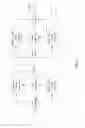
FIG. 1 is a block diagram illustrating an embodiment of a codec for scalable video coding.
FIG. 2 is a block diagram illustrating an embodiment of a codec comprising a non-scalable video decoder configured to decode the base layer of a compatible scalable video stream.
FIG. 3 is a block diagram illustrating an embodiment of a network gateway configured to route packets of video data based at least in part on whether a destination comprises a scalable or non-scalable decoder.
DETAILED DESCRIPTION
The invention can be implemented in numerous ways, including as a process, an apparatus, a system, a composition of matter, a computer readable medium such as a computer readable storage medium or a computer network wherein program instructions are sent over optical or electronic communication links. In this specification, these implementations, or any other form that the invention may take, may be referred to as techniques. A component such as a processor or a memory described as being configured to perform a task includes both a general component that is temporarily configured to perform the task at a given time or a specific component that is manufactured to perform the task. In general, the order of the steps of disclosed processes may be altered within the scope of the invention.
A detailed description of one or more embodiments of the invention is provided below along with accompanying figures that illustrate the principles of the invention. The invention is described in connection with such embodiments, but the invention is not limited to any embodiment. The scope of the invention is limited only by the claims and the invention encompasses numerous alternatives, modifications and equivalents. Numerous specific details are set forth in the following description in order to provide a thorough understanding of the invention. These details are provided for the purpose of example and the invention may be practiced according to the claims without some or all of these specific details. For the purpose of clarity, technical material that is known in the technical fields related to the invention has not been described in detail so that the invention is not unnecessarily obscured.
FIG. 1 is a block diagram illustrating an embodiment of a codec for scalable video coding. In some embodiments, in a scalable video coding/multiplexing scheme the base layer is rendered compatible with a non-scalable video coding standard by assigning default values for the base layer to all necessary scalability parameters, e.g., priority id, dependency id, temporal level id, etc. For the base layer, a scalable decoder (e.g., the base layer decoder of FIG. 1) is configured to use for the base layer the default values for the scalability parameters, instead of transmitted scalability parameters, making it unnecessary to transmit scalability parameters for base layer data. By this means, the base layer can adhere in all ways to the non-scalable standard, and it is not necessary to transmit any scalability parameters in the base layer data. The base layer data may be used by a non-scalable decoder directly, without having to strip, filter out, discard, ignore, or otherwise not use without being confused by transmitted scalability parameter data.
FIG. 2 is a block diagram illustrating an embodiment of a codec comprising a non-scalable video decoder configured to decode the base layer of a compatible scalable video stream. In some embodiments, non-scalable video decoders, which have no knowledge of scalability, are enabled to ignore all scalable layers and only decode the base layer by tagging packets, called NAL units or NALUs in the H.264 video encoding standard, that are not associated with the base layer with values that non-scalable decoders know to discard. In some embodiments, non-scalable H.264 decoders, such as the non-scalable decoder of FIG. 2, are configured to decode only NALUs having nal_unit_type syntax element values defined in the non-scalable H.264 standard and to ignore (e.g., discard without decoding or attempting to decode) NALUs having nal_unit_type syntax element values not defined in the non-scalable H.264 standard.
FIG. 3 is a block diagram illustrating an embodiment of a network gateway configured to route packets of video data based at least in part on whether a destination comprises a scalable or non-scalable decoder. In some embodiments, a network gateway or other network node, such as the network gateway of FIG. 3, is configured to route some NALUs to some destinations and other NALUs to other destinations. For example, if some destinations only contained non-scalable decoders (e.g., those associated with the first edge router of FIG. 3), then in some embodiments the gateway or other node would route to them only NALUs having nal_unit_type syntax element values defined in the non-scalable H.264 standard. Using this approach, network resources and/or bandwidth are not used to send to non-scalable decoders NALUs n usable by such decoders.
In some scalable video streams there may be more than one layer that conforms to the non-scalable standard, and in such cases it is desirable to identify such layers to decoders and/or gateways.
Thus, in some embodiments, different default scalability parameters are assigned to each non-scalable layer according to certain characteristics of that non-scalable layer. For example, in H.264 the default scalability parameters could depend on the sequence parameter set or picture parameter set of the non-scalable layer. This enables the scalable decoder to utilize any of the non-scalable layers as its base layer.
In some embodiments, a special NALU is inserted just before some or all of the non-scalable video NALUs. This special NALU indicates that the following NALU belongs to a layer in the scalable hierarchy, but that it's coding is compatible with the non-scalable standard. This special NALU could also contain scalability data pertaining to the following compatible NALU, e.g., priority id, dependency id, temporal level id, etc.
A non-scalable video decoder would ignore the special NALU and select one of the available non-scalable layers to decode and display. For example, the selection could be on the basis of profile and level of the non-scalable layers, or picture size. Or it could be by some other selection mechanism contained, for example, in a file format such as mp4. A gateway could use data in the special NALU to make routing decisions, or it could use mechanisms similar to those above that a decoder would use.
In some embodiments, the video data conforming to the non-scalable standard is contained in scalable NALUs, but in a form that is easily extractable for use by a non-scalable decoder. For example, in some embodiments the scalability data is contained in the front of the scalable NALUs. A gateway or preprocessor strips off the scalability data, changes the nal_unit_type syntax element value to a non-scalable value, and sends the result to one or more non-scalable decoders.
In sortie embodiments, the video data conforming to the non-scalable standard is contained in scalable NALUs having special nal_unit_type syntax element values or other syntax element values that identify the video data as being coded in a non-scalable form. In various embodiments, scalability data is contained in the front of these NALUs or in another prescribed location in the NALUs. A gateway or preprocessor strips off the scalability data, changes the nal_unit_type syntax element to a non-scalable value, and sends the result to one or more non-scalable decoders.
In some scalable video streams there may be some layers that, by themselves, do not conform to the non-scalable standard, but when combined with other layers do conform. For purposes of clarity we call these layers subordinate non-scalable layers. For example, with temporal scalability the base layer may conform to the non-scalable standard, but the subordinate non-scalable layers, by themselves, do not. However, when the subordinate non-scalable layers are combined correctly with the base layer, the overall result does conform to the non-scalable standard and can be decoded by non-scalable decoders.
In some embodiments, the subordinate non-scalable layers are labeled so that they can be easily identified by scalable decoders, preprocessors and/or gateways. In some embodiments, this is done by inserting a special NALU before the subordinate non-scalable layer NALUs. These special NALUs have nal_unit_type syntax element values or other syntax element values that identify the subordinate non-scalable layers. The subordinate non-scalable layer NALUs have nal_unit_type syntax element values conforming to the non-scalable standard. A gateway may then use data in the special NALUs to make its routing decisions. It may send only the base layer to some non-scalable decoders, the base layer plus some or all subordinate non-scalable layers to other non-scalable decoders, and some or all layers to scalable decoders.
In some embodiments, the video data of the subordinate non-scalable layers is contained in scalable NALUs, but in a form that is easily extractable for use by a non-scalable decoder. For example, in some embodiments the scalability data is contained in the front of the scalable NALUs. A gateway or preprocessor strips off the scalability data, changes the nal_unit_type syntax element value to a non-scalable value, and sends the result to non-scalable decoders.
Although the foregoing embodiments have been described in some detail for purposes of clarity of understanding, the invention is not limited to the details provided. There are many alternative ways of implementing the invention. The disclosed embodiments are illustrative and not restrictive.
Claims
What is claimed is:1-32. (canceled)
33. A method of encoding video data, comprising:
receiving a video data;
encoding the video data to produce an encoded video data that includes a base layer that conforms to a non-scalable video encoding standard and one or more subordinate non-scalable layers, which subordinate non-scalable layers do not by themselves conform to the non-scalable video encoding standard but which can be combined with the base layer to produce a result that does conform to the non-scalable video encoding standard, such that the result can be decoded by a non-scalable decoder; and
including in the encoded video data an identification data identifying those portions of the encoded video data that are associated with a subordinate non-scalable layer.
34. A method as recited in claim 33, wherein the identification data comprises a special NAL unit inserted before a NAL unit associated with a subordinate non-scalable layer.
35. A method as recited in claim 34, wherein the NAL unit associated with a subordinate non-scalable layer has a nal_unit_type syntax element value that conforms to the non-scalable video encoding standard.
36. A method as recited in claim 34, wherein the NAL unit associated with a subordinate non-scalable layer comprises a scalable NAL unit containing the video data of the subordinate non-scalable layer.
37. A method as recited in claim 36, further comprising configuring a forwarding node, pre-processor, or other entity to extract the video data of the subordinate non-scalable layer from the scalable NAL unit and provide the subordinate non-scalable layer to a non-scalable decoder.
38. A method as recited in claim 37, wherein extracting the video data of the subordinate non-scalable layer from the scalable NAL unit and providing the subordinate non-scalable layer to a non-scalable decoder comprises stripping scalability data from the scalable NAL unit and changing a first nal_unit_type syntax element value of the scalable NAL unit to a second nal_unit_type syntax element value that conforms to the non-scalable video encoding standard
39. A method as recited in claim 33, further comprising configuring a forwarding node to make a routing decision based at least in part on the identification data.
40. A method as recited in claim 39, wherein the forwarding node is configured to send only the base layer to a first destination associated with a first set of one or more non-scalable decoders and to send the base layer and one or more of said one or more subordinate non-scalable layers to a second destination associated with a second set of one or more non-scalable decoders.
41-56. (canceled)
57. A video encoding system, comprising:
a communication interface configured to receive a video data; and
a video encoder coupled to the communication interface and configured to encode the video data to produce an encoded video data that includes a base layer that conforms to a non-scalable video encoding standard and one or more subordinate non-scalable layers, which subordinate non-scalable layers do not by themselves conform to the non-scalable video encoding standard but which can be combined with the base layer to produce a result that does conform to the non-scalable video encoding standard, such that the result can be decoded by a non-scalable decoder; and include in the encoded video data an identification data identifying those portions of the encoded video data that are associated with a subordinate non-scalable layer.
58. A system as recited in claim 57, wherein the identification data comprises a special NAL unit inserted before a NAL unit associated with a subordinate non-scalable layer.
59. A system as recited in claim 58, wherein the NAL unit associated with a subordinate non-scalable layer has a nal_unit_type syntax element value that conforms to the non-scalable video encoding standard.
60. A system as recited in claim 58, wherein the NAL unit associated with a subordinate non-scalable layer comprises a scalable NAL unit containing the video data of the subordinate non-scalable layer.
61. A computer program product for encoding video data, the computer program product being embodied in a computer readable medium and comprising computer instructions for:
receiving a video data;
encoding the video data to produce an encoded video data that includes a base layer that conforms to a non-scalable video encoding standard and one or more subordinate non-scalable layers, which subordinate non-scalable layers do not by themselves conform to the non-scalable video encoding standard but which can be combined with the base layer to produce a result that does conform to the non-scalable video encoding standard, such that the result can be decoded by a non-scalable decoder; and
including in the encoded video data an identification data identifying those portions of the encoded video data that are associated with a subordinate non-scalable layer.
62. A computer program product as recited in claim 61, wherein the identification data comprises a special NAL unit inserted before a NAL unit associated with a subordinate non-scalable layer.
63. A computer program product as recited in claim 62, wherein the NAL unit associated with a subordinate non-scalable layer has a nal_unit_type syntax element value that conforms to the non-scalable video encoding standard.
64. A computer program product as recited in claim 62, wherein the NAL unit associated with a subordinate non-scalable layer comprises a scalable NAL unit containing the video data of the subordinate non-scalable layer.
65. A method of decoding encoded video data, comprising:
receiving an encoded video data that includes
(1) a base layer that conforms to a non-scalable video encoding standard and one or more subordinate non-scalable layers, which subordinate non-scalable layers do not by themselves conform to the non-scalable video encoding standard but which can be combined with the base layer to produce a result that does conform to the non-scalable video encoding standard, such that the result can be decoded by a non-scalable decoder; and
(2) an identification data identifying those portions of the encoded video data that are associated with a subordinate non-scalable layer; and
decoding the encoded video data, including by using the identification data to combine with the base layer one or more of said portions of the encoded video data that are associated with a subordinate non-scalable layer.
66. A video decoding system, comprising:
a communication interface configured to receive an encoded video data that includes
(1) a base layer that conforms to a non-scalable video encoding standard and one or more subordinate non-scalable layers, which subordinate non-scalable layers do not by themselves conform to the non-scalable video encoding standard but which can be combined with the base layer to produce a result that does conform to the non-scalable video encoding standard, such that the result can be decoded by a non-scalable decoder; and
(2) an identification data identifying those portions of the encoded video data that are associated with a subordinate non-scalable layer; and
a video decoder coupled to the communication interface and configured to decode the encoded video data, including by using the identification data to combine with the base layer one or more of said portions of the encoded video data that are associated with a subordinate non-scalable layer.
67. A computer program product for decoding encoded video data, the computer program product being embodied in a computer readable medium and comprising computer instructions for:
receiving an encoded video data that includes
(1) a base layer that conforms to a non-scalable video encoding standard and one or more subordinate non-scalable layers, which subordinate non-scalable layers do not by themselves conform to the non-scalable video encoding standard but which can be combined with the base layer to produce a result that does conform to the non-scalable video encoding standard, such that the result can be decoded by a non-scalable decoder; and
(2) an identification data identifying those portions of the encoded video data that are associated with a subordinate non-scalable layer; and
decoding the encoded video data, including by using the identification data to combine with the base layer one or more of said portions of the encoded video data that are associated with a subordinate non-scalable layer.
Images & Drawings included:



Sources:
- United States Patent and Trademark Office - verify current appl. status at the USPTO↗
Similar patent applications:
Recent applications in this class:
- » 20250287024 2025-09-11
ELECTRONIC DEVICE AND METHOD FOR PROCESSING SCALABLE CODEC IN ELECTRONIC DEVICE - » 20250287023 2025-09-11
USE OF HIERARCHICAL VIDEO AND IMAGE CODING FOR TELEPRESENCE - » 20250260833 2025-08-14
PICTURE ENCODING AND DECODING METHOD AND APPARATUS - » 20250254346 2025-08-07
PARAMETER DERIVATION IN CROSS COMPONENT MODE - » 20250247554 2025-07-31
RE-SAMPLING WITH PHASE OFFSET ADJUSTMENT FOR LUMA AND CHROMA TO SELECT FILTERS IN SCALABLE VIDEO CODING - » 20250234018 2025-07-17
METHOD AND APPARATUS FOR ROI-BASED VIDEO ENCODING/DECODING FOR MACHINE VISION - » 20250227270 2025-07-10
ENCODING METHOD, DECODING METHOD, ENCODING APPARATUS, DECODING APPARATUS, ELECTRONIC DEVICE, AND STORAGE MEDIUM - » 20250227269 2025-07-10
SIGNAL PROCESSING WITH OVERLAY REGIONS - » 20250220204 2025-07-03
SYSTEM AND METHOD FOR DATA COMPACTION UTILIZING HIERARCHICAL BEHAVIOR CODEBOOKS AND MISMATCH PROBABILITY ESTIMATION - » 20250211765 2025-06-26
DECODING DEVICE, ENCODING DEVICE, DECODING METHOD, AND ENCODING METHOD
Recent applications for this Assignee:
- » 20250294600 2025-09-18
LOWER LAYER CONTROL SIGNAL FOR DOWNLINK POSITIONING REFERENCE SIGNAL - » 20250294316 2025-09-18
TECHNIQUES FOR SYNCHRONIZING ULTRA-WIDE BAND COMMUNICATIONS - » 20250294255 2025-09-18
Optical Image Stabilization with Voice Coil Motor for Moving Image Sensor - » 20250293825 2025-09-18
IDENTIFYING VICTIM AND AGGRESSOR USER EQUIPMENT - » 20250293811 2025-09-18
HYBRID AUTOMATIC REPEAT REQUEST DISABLEMENT - » 20250291890 2025-09-18
UNLOCKING A DEVICE - » 20250291232 2025-09-18
CAMERA WITH FOLDED OPTICS HAVING MOVEABLE LENS - » 20250287250 2025-09-11
PARALLEL BEAM MANAGEMENT IN NEW BAND COMBINATIONS - » 20250286783 2025-09-11
ACTIVE BANDWIDTH PARTS SUPPORT FOR FRAGMENTED CARRIERS - » 20250286621 2025-09-11
COMMUNICATION DEVICES AND METHODS FOR HIGH-THROUGHPUT, LOW-POWER SIGNALING