Transmitting device and method of overlaying signals with the device
US20150134984A1
2015-05-14
14/529,640
2014-10-31
✅ Patent granted
US 9,418,225 B2
2016-08-16
-
-
Shawnchoy Rahman
DLA Piper LLP (US)
2034-10-31
Abstract:
A transmitting device that transmits data signals into a primary electricity grid, wherein the transmitting device connects to a power input of a computer system and overlays signals returned by the computer system into the primary electricity grid by modulating random data signals onto a line connected to the power input of the computer system.
Assignee:
- Fujitsu Technology Solutions Intellectual Property GmbH 65 🇩🇪 , Germany
Applicant:
Interested in similar patents?
Get notified when new applications in this technology area are published.
Classification:
G06F1/26 » CPC main
Details not covered by groups - and Power supply means, e.g. regulation thereof
H04B3/546 » CPC further
Line transmission systems; Systems for transmission via power distribution lines Combination of signalling, telemetering, protection
G06F2221/2123 » CPC further
Indexing scheme relating to security arrangements for protecting computers, components thereof, programs or data against unauthorised activity; Indexing scheme relating to and subgroups addressing additional information or applications relating to security arrangements for protecting computers, components thereof, programs or data against unauthorised activity Dummy operation
H04B2203/5495 » CPC further
Indexing scheme relating to line transmission systems; Aspects of powerline communications not already covered by and its subgroups; Systems for power line communications having measurements and testing channel
G06F21/55 IPC
Security arrangements for protecting computers, components thereof, programs or data against unauthorised activity; Monitoring users, programs or devices to maintain the integrity of platforms, e.g. of processors, firmware or operating systems Detecting local intrusion or implementing counter-measures
H04B3/54 IPC
Line transmission systems Systems for transmission via power distribution lines
H04B2203/5416 » CPC further
Indexing scheme relating to line transmission systems; Aspects of powerline communications not already covered by and its subgroups; Methods of transmitting or receiving signals via power distribution lines by adding signals to the wave form of the power source
Description
TECHNICAL FIELD
This disclosure relates to a transmitting device that transmits data signals into a primary electricity grid, the use of a transmitting device to transmit signals into a primary electricity grid, and to a method.
BACKGROUND
Security-relevant data such as passwords, for example, are a particular target of attacks on computer systems. What are known as side channel attacks are attacks on the security of a computer system not based on a direct interception of data signals. For example, load fluctuations on a primary power line correlate with the execution of individual processor commands. By what are known as “backscatter side channel” attacks, data signals can be obtained from these load fluctuations, and from the data signals thus obtained conclusions can in turn be drawn about the type of operation that a processor is running From these detected processor commands it is in turn possible to obtain information about processed data.
There is thus a need to provide a device, a use and a method of increasing the security of a computer system.
SUMMARY
I provide a transmitting device that transmits data signals into a primary electricity grid, wherein the transmitting device connects to a power input of a computer system and overlays signals returned by the computer system into the primary electricity grid by modulating random data signals onto a line connected to the power input of the computer system.
I also provide a method of overlaying signals of a computer system returned into a primary electricity grid, including generating random data signals, and modulating the generated data signals by a transmitting device onto a line connected to a power input of the computer system.
BRIEF DESCRIPTION OF THE DRAWINGS
Our devices and methods are explained in detail hereafter on the basis of examples and the figures.
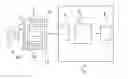
FIG. 1 shows a schematic representation of an arrangement according to one example.
FIG. 2 shows a schematic representation of an arrangement according to a further example.
LIST OF REFERENCE SIGNS
- 1 Transmitting device
- 2 Computer system
- 3 Primary electricity grid
- 4 Line
- 5 Power input
- 6 Power supply unit
- 7 Plug socket
- 8 Processor
- 9 Microcontroller
- 10 Transmitting unit
- 11 Plug socket adapter
- 12 Power LAN adapter
DETAILED DESCRIPTION
We provide a transmitting device that transmits data into a primary electricity grid. The transmitting device can connect to a power input of a computer system. By modulating random data signals onto a line of the primary electricity grid connected to the power input of the computer system, the transmitting device is adapted to overlay signals returned by the computer system into the primary electricity grid.
When a processor is executing working commands, it has a certain power consumption that depends on the particular processor command just being processed. This power consumption can be measured in a primary electricity grid. By measuring a power output of the primary electricity grid, conclusions can therefore be drawn about processor commands. This in turn allows conclusions to be drawn about data being processed by the processor. Our transmitting devices modulate random data signals onto a line of the primary electricity grid overlaid on the returned data signals of the processor of the computer system. It is thus no longer possible to obtain information about processor commands of the computer system from a measurement at the primary electricity grid.
Advantageously, the transmitting device is arranged in a power supply unit of the computer system.
Advantageously, the transmitting device is arranged in a plug socket adapter.
Further advantageously, the transmitting device comprises a power LAN adapter.
Because the transmitting device is arranged such that the data signals are modulated upstream of a plug socket, protection is provided against attacks from outside an area.
We also provide for the use of a transmitting device. The transmitting device is used to transmit signals into a primary electricity grid, for the purpose of overlaying signals of a computer system returned into the primary electricity grid. Data signals are modulated onto a line of the primary electricity grid connected to a power input of the computer system. Here, the data signals are random.
We further provide a method of overlaying signals of a computer system returned into a primary electricity grid. The method comprises the steps:
-
- generating random data signals, and
- modulating the generated data signals by a transmitting device onto a line of the primary electricity grid connected to a power input of the computer system.
FIG. 1 shows a transmitting device 1. The transmitting device 1 is arranged in a power supply unit 6 of a computer system 2 and connects via a power input 5, line 4 and a plug socket 7 to a primary electricity grid 3. The computer system 2 is a server. It may also be a desktop PC or some other data-processing device. The primary electricity grid 3 delivers a supply voltage for the computer system 2.
The computer system 2 comprises a processor 8. The processor 8 can process various commands. In this connection, different commands cause a different power consumption in the processor 8. Because the power consumption of the processor 8, and hence of the computer system 2, is dependent on the commands being processed, different loads occur at the power input 5 of the computer system 2. These can be measured at the primary electricity grid 3 as returned signals of the computer system 2.
The transmitting device 1 comprises a microcontroller 9, which generates random data and supplies this to a transmitting unit 10 of the transmitting device 1. The transmitting unit 10 modulates this random data onto the line 4. The modulated random data covers a bandwidth of the line 4, for example, 2 to 68 MHz. In particular, the modulated random data covers a band-width that corresponds to a bandwidth of the signals of the computer system 2 returned into the primary electricity grid 3. Thus, even after a filtering of a fixed frequency of the primary electricity grid 3, for example, 50 Hz, no information relating to processor signals can be obtained.
FIG. 2 shows an example in which the transmitting device 1 is arranged in a plug socket adapter 11 and comprises what is known as a power LAN adapter 12. The signal generated by the transmitting device 1 is modulated onto a connection (not shown in FIG. 2) of the plug socket adapter 11. The microcontroller 9 runs stored control software. Instead of information-bearing data signals, as customary in conventional power LAN adapters, the stored control software generates random data signals. The data signals thus generated are overlaid on returned data signals of the computer system and thus prevent the returned data signals from being spied on.
Claims
1. A transmitting device that transmits data signals into a primary electricity grid, wherein the transmitting device connects to a power input of a computer system and overlays signals returned by the computer system into the primary electricity grid by modulating random data signals onto a line connected to the power input of the computer system.
2. The transmitting device according to claim 1, wherein the transmitting device is arranged in a power supply unit of a computer system.
3. The transmitting device according to claim 1, wherein the transmitting device is arranged in a plug socket adapter between the primary electricity grid and the power input of the computer system.
4. The transmitting device according to claim 1, wherein the transmitting device comprises a power LAN adapter.
5. A method of overlaying signals of a computer system returned into a primary electricity grid, comprising:
generating random data signals; and
modulating the generated data signals by a transmitting device onto a line connected to a power input of the computer system.
6. The transmitting device according to claim 2, wherein the transmitting device comprises a power LAN adapter.
7. The transmitting device according to claim 3, wherein the transmitting device comprises a power LAN adapter.
Images & Drawings included:

Sources:
- United States Patent and Trademark Office - verify current appl. status at the USPTO↗
Recent applications in this class:
- » 20250291395 2025-09-18
POWER OVER ETHERNET CARD WITH EXPANDED POWER FOR POWER SOURCING EQUIPMENT - » 20250278126 2025-09-04
ENHANCED POWER SUBSTATION DIGITAL TWINS - » 20250266677 2025-08-21
FORCED CURRENT SHARING CIRCUIT, CHIP, MOTHERBOARD AND ELECTRONIC DEVICE - » 20250264923 2025-08-21
SYSTEMS AND METHODS FOR MODIFYING A SMART PHONE OR TABLET DEVICE FOR HYBRID AUTOMATED SMART DEVICE USE - » 20250264922 2025-08-21
APPARATUS AND METHOD FOR GPU POWER MANAGEMENT IN DISTRIBUTED DEEP LEARNING - » 20250258528 2025-08-14
SYSTEMS, METHODS, AND DEVICES FOR DATA CENTER POWER MANAGEMENT - » 20250244809 2025-07-31
MODULAR POWER DISTRIBUTION SYSTEM FOR INFORMATION PROCESSING DEVICES - » 20250244808 2025-07-31
PRIORITY BASED POWER ALLOCATION - » 20250231603 2025-07-17
In-Band Transfer of Power-Consumption Allocations among Processing Devices - » 20250231602 2025-07-17
PORTABLE ENTERPRISE COMPUTING CLUSTER
Recent applications for this Assignee:
- » 20180211800 2018-07-26
Switch assembly - » 20180168055 2018-06-14
Computer casing and computer system - » 20180109497 2018-04-19
Method of unblocking external computer systems in a computer network infrastructure, distributed computer network having such a computer network infrastructure as well as computer program product - » 20180101700 2018-04-12
Method of destroying file contents - » 20170336837 2017-11-23
Front module and desktop computer system - » 20170235346 2017-08-17
Assembly for a computer system and cable covering unit for an assembly - » 20170222811 2017-08-03
Routing method of forwarding task instructions between computer systems, computer network infrastructure and a computer program product - » 20170181273 2017-06-22
Assembly and electronic device with conductive mesh - » 20170131749 2017-05-11
Assembly for fixing a plugin unit in an installation cage of a computer system and method of producing an assembly - » 20170104413 2017-04-13
Power supply unit arrangement for an electronic device, power supply for an electronic device having at least a high-load state and a low-load state and computer system having a normal operating state and at least one energy saving state