DENTAL IMPLANT
US20150150652A1
2015-06-04
14/411,567
2013-07-18
Abstract:
Dental implant including a threaded shaft fitted with external threads (1) and a central tubular passage (2) fitted with an internal threaded portion (3), a fixing screw (5), complementary to it, which supports a dental crown or any other type of connection (6), and, in the end portion of the central tubular passage (2), there is a housing (7) to contain the medicament.
Inventors:
- Cristiano Vettori 2 🇮🇹 Pordenone, Italy
- Salvatore BELLINVIA 1 🇺🇸 , United States
- Cristiano VETTORI 1 🇺🇸 , United States
- Erica VETTORI 1 🇺🇸 , United States
- Carolina MALVAGNA 1 🇺🇸 , United States
Interested in similar patents?
Get notified when new applications in this technology area are published.
Classification:
A61C8/0006 » CPC main
Means to be fixed to the jaw-bone for consolidating natural teeth or for fixing dental prostheses thereon; Dental implants; Implanting tools; Not used, see subgroups; Consolidating natural teeth Periodontal tissue or bone regeneration
A61C8/0022 » CPC further
Means to be fixed to the jaw-bone for consolidating natural teeth or for fixing dental prostheses thereon; Dental implants; Implanting tools characterised by the shape Self-screwing
A61C8/0068 » CPC further
Means to be fixed to the jaw-bone for consolidating natural teeth or for fixing dental prostheses thereon; Dental implants; Implanting tools; Connecting the upper structure to the implant, e.g. bridging bars; Connecting devices for joining an upper structure with an implant member, e.g. spacers with an additional screw
A61J7/0092 » CPC further
Devices for administering medicines orally, e.g. spoons ; Pill counting devices; Arrangements for time indication or reminder for taking medicine for holding medicines in, or fixing medicines on, a tooth, e.g. holder containing medicines fixed on a tooth
A61M31/002 » CPC further
Devices for introducing or retaining media, e.g. remedies, in cavities of the body Devices for releasing a drug at a continuous and controlled rate for a prolonged period of time
A61C19/063 » CPC further
Dental auxiliary appliances; Implements for therapeutic treatment Medicament applicators for teeth or gums, e.g. treatment with fluorides
A61C19/06 IPC
Dental auxiliary appliances Implements for therapeutic treatment
A61M31/00 IPC
Devices for introducing or retaining media, e.g. remedies, in cavities of the body
A61C8/00 IPC
Means to be fixed to the jaw-bone for consolidating natural teeth or for fixing dental prostheses thereon; Dental implants; Implanting tools
A61J7/00 IPC
Devices for administering medicines orally, e.g. spoons ; Pill counting devices; Arrangements for time indication or reminder for taking medicine
A61J7/00 IPC
Administering medicines orally; Feeding-bottles in general; Teats; Devices for receiving spittle
Description
This invention concerns a dental implant. Various types of dental implants of differing forms are already known, for instance, with prosthetic connection and cylindrical or conical body. The implants mostly used are the endoseal type that have passed a series of clinical tests carried out following specific international protocols. The material generally used for said implants is titanium, a material that is able to create with a certain facility the union between the same implant and the bone (osseointegration).
More precisely, by osseointegration, one means the stable and lasting union between bone and implant that is able to allow the masticatory function without any complications. If, instead, osseointegration is not achieved, one must speak of fibro-integration that may mean a total failure, in which a stable bone-implant union is not created straight away or a partial failure in which the implant works without creating any problems only for a certain period of time. Among the most widespread problems that can be verified using the known implants, there is peri-implantitis which is an inflammation of the zone surrounding the implant, for which a tissue of defence is formed (the so called granulation tissue) in case of bacterial contamination of the implant surface. This tissue, in the most serious cases, may even come to replace the bone and to provoke osteomyelitis with consequent loss of the implant in a few weeks. Implants that lose osseointegration due to infectious causes have micro flora made up of spirochetes, fusobacteria and Gram negative rods and have an etiopathogenesis tightly correlated to the specific anatomical and histological morphostructure of the same tissues involved in the integration, to the superficial morphology of the fixtures and the precision of coupling of the implant components. Such particular conditions of the implant site mean that the principal etiological factor of peri-implant diseases is really that of infection.
Microbiological and clinical research has shown that an effective control of bacterial plaque reduces the possibility of peri-implant disease just as for periodontal disease. Until today, studies to overcome such problems have been concentrated on the external surface of implants using particular coatings able to contrast, at least partly, the occurrence of precocious and delayed bacterial infections, but still today it is necessary to place a pharmacological therapy in both a general and local way alongside the surgical therapy.
The subject of this invention is the realization of an implant made according to the known criteria, but that inside of which there is an empty space, of varying dimensions and shape, also identifiable as a prolongation of the receptive housing of the fixing screw or fixation of the superstructures or in a more apical or crown seating, created for this purpose, definable as a reservoir or housing, that communicates through one or more holes of various diameter with the external surface of the same implant in correspondence of any area of the smooth or rough surface (apical part, crown part, threaded part or any portion whatsoever in contact with the bone or mucous surfaces or of interface with the superstructure).
The communication of the aforesaid reservoir with the peri-implant environment can also be made by capillarity through the inside threading of the implant corresponding to the seat of insertion of the superstructure screw, with possible capillary diffusion of the substance directly inserted in the zone of implant emergency. Inside the aforesaid reservoir, one places a “tablet” made up of a disinfectant/antiseptic and/or an anti-inflammatory and/or an antibiotic/chemotherapy medicament and/or a factor stimulating bone regeneration and/or any medicine or derivate (for instance silver salts) suitable to encourage osseointegration and to contrast precocious and delayed infection. Such substance can be coated by a casing that determines a controlled release of it. This invention is therefore an implant able to resolve in a meaningful way the problems listed above through prevention and treatment of infections, through release of medicine from the interior of the same implant. In such way, the release of a disinfectant and/or antimicrobial is able to contrast bacterial contamination and an inflammatory reaction.
Furthermore, a growth factor may be used to accelerate the process of osseointegration.
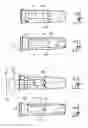
The invention is further clarified through illustration of the exemplary solution in the attached drawings, in which:
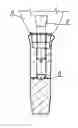
FIG. 1 illustrates a side view of the implant subject of this invention according to a first exemplary solution;
FIG. 2 illustrates a central cross-section of the implant in FIG. 1;
FIG. 3 illustrates a side view of the implant subject of this invention according to a further exemplary solution;
FIG. 4 illustrates a central cross-section of the implant in FIG. 3.
The dental implant in this invention includes a threaded shaft having external threads 1 endowed with a central passage 2, with an internal portion 3, also threaded, a fixing screw 5, complementary to said internal threaded portion, including a truncated-conical/cylindrical section adapted to receive a dental crown or an attachment 6 on it.
In the terminal part of the internally threaded portion there is a housing 7, of any shape (for instance inverted truncated-conical, cylindrical or spherical), that is connected with the external part of the same implant in contact with the bone, where infectious breeding grounds can be formed, through one or more connection canaliculi 8.
Inside the housing 7, a medicinal product is inserted, for instance, in the form of a tablet 9, which may be a disinfectant or an anti-inflammatory or an antibiotic/chemotherapy medicament and even a product stimulating bone regeneration or any medicine or derivate suitable to encourage osseointegration and to contrast precocious or delayed peri-implant infection.
Said tablet may be coated with a casing in such way as to determine a controlled release.
Said canaliculi can be of any convenient conformation in comparison to the axis of the implant so as to encourage the conduction of the medicament, where necessary.
If the tablet is totally consumed or it is necessary to replace the medicinal substance, it is possible to unscrew the fixing screw 5 and to insert the most opportune medicament and/or growth factor or any other useful product in the housing in that the latter is accessible through the aforesaid central passage 2.
There are many advantages of this system:
at the same time as the insertion of the implant we can obtain the release of a disinfectant and/or of an antimicrobial able to contrast bacterial contamination and an inflammatory reaction and/or a growth factor to accelerate the osseointegration;
at any later moment, after having unscrewed the superstructure of the same implant, one may insert the medicament or growth factor or any useful material in the reservoir;
the surgical procedure for insertion of the implant is not modified;
with the presence of the “tablet” one preventively intervenes on the possible complications before the highlighting of a radiological clinical situation with the result of an easier control of an infection/inflammation through a smaller quantity of active ingredient;
the waiting times for osseointegration are reduced, and at the same time the risks connected with an immediate load are reduced and secondary stability (stability in the middle/long term) is encouraged;
there is not the drawback of the quality-quantity deterioration of the active ingredient during the insertion of the implant in the bone;
the mechanical resistance of the implant is not jeopardized;
the external surface of the implant, whatever it may be, is unchanged;
at an industrial level, the production methodology of the same implant is not changed in a significant way, the holes being easy to make with innumerable techniques.
In an alternative solution illustrated in FIGS. 3 and 4, the housing 7 containing the medicinal tablet 9 is separated and independent from the central passage 2. In such case, the tablet containing the active ingredient is inserted inside the implant at the time of its realization or through the canaliculi of connection 8, before the insertion of the same implant in the tissue.
Claims
1. Dental implant comprising:
a threaded shaft fitted with external threads and central tubular passage fitted with an internal threaded portion, and
a fixing screw, complementary to the internal threaded portion it, which supports a dental connection, and
wherein an in e end portion of the central tubular passage includes there a housing ( )adapted to contain a tablet of at least one of the following:
anti-infective medicament,
anti-inflammatory medicament,
anti-bacterial medicament,
a medicament for stimulating tissue regeneration, and
a tablet containing a substance that encourages bone growth,
wherein the tablet is covered by a casing so as to facilitate a controlled release of the at least one of the medicament and the substance encouraging bone growth.
2. Dental implant according to claim 1, wherein said housing has an inverted truncated conical shape.
3. Dental implant according to claims 1 and 2, wherein said housing has at least one canaliculi connecting the housing with an external portion of the implant itself.
4. Dental implant according to claim 3, wherein the canaliculi connecting the external portion of the implant itself are longitudinal with respect to a vertical axis of the implant.
5. Dental implant according to claim 3, wherein the canaliculi connecting the external portion of the implant descend from the housing towards the external portion of the implant itself.
6-9. (canceled)
Images & Drawings included:
Sources:
- United States Patent and Trademark Office - verify current appl. status at the USPTO↗
Similar patent applications:
- » 20070020582
Abutment for a dental implant, dental implant comprising such an abutment, and method for the production of dentures by means of said dental implant - » 20190008614
Dental implant, insertion tool for dental implant and combination of dental implant and insertion tool - » 20230157794
DENTAL IMPLANT, INSERTION TOOL FOR DENTAL IMPLANT AND COMBINATION OF DENTAL IMPLANT AND INSERTION TOOL - » 20220249208
Threadless Dental Implant, System Including a Threadless Dental Implant, and Method of Attachment of a Threadless Dental Implant - » 20080299516
Dental implant, pieces to be connected to a dental implant, and the internal connection between the dental implant and each piece - » 20220061965
DENTAL IMPLANTS, DENTAL IMPLANT SYSTEMS, AND METHODS FOR MAKING AND USING SAME - » 20210205494
METHOD FOR PRODUCING A DENTAL IMPLANT, DENTAL IMPLANT, AND ABRASIVE BLASTING AGENT - » 20220054227
System and dental implant for reducing losses of dental implants or dental prostheses - » 20180092711
System and dental implant for reducing losses of dental implants or dental prostheses - » 20110318706
DENTAL IMPLANT, A DENTAL IMPLANT KIT AND A METHOD OF SECURING A DENTAL BRIDGE TO THE JAW OF THE PATIENT
Recent applications in this class:
- » 20250090278 2025-03-20
MAGNESIUM MESH WITH FEATURES DESIGNED TO BIOABSORB PROGRESSIVELY TO IMPROVE DENTAL BONE REGENERATION - » 20250049539 2025-02-13
IMPLANTS, FUNCTIONALIZED IMPLANT SURFACES AND RELATED SYSTEMS, DEVICES, COMPUTER PROGRAM PRODUCTS, AND METHODS - » 20250041027 2025-02-06
OSTEOCONDUCTIVE CERAMIC COMPOSITE BIOMATERIAL UTILIZING SOLUTION-POLYMERIZED ACRYLIC CARRIER AND METHOD OF MANUFACTURE - » 20250009480 2025-01-09
BONE REGENERATION SYSTEM - » 20250000622 2025-01-02
IMPLANT FIXTURE FOR REDUCING PERIODONTITIS - » 20240382290 2024-11-21
INNER POROUS SCREW TYPE IMPLANT - » 20240382289 2024-11-21
BONE SCREW FOR 3D GUIDED BONE REGENERATION - » 20240081955 2024-03-14
IMPLANT WITH ENHANCED OSTEOINDUCTIVITY - » 20240058103 2024-02-22
NANOFIBROUS TISSUE ENGINEERING MATRICES WITH IMPROVED CLINICAL HANDLING PROPERTIES FOR PERIODONTAL AND CRANIOFACIAL REGENERATION AND METHODS OF MAKING THE SAME - » 20240024079 2024-01-25
Devices for Tissue Augmentation