Cylinder system for tissue paper lamination
US20150165716A1
2015-06-18
14/132,701
2013-12-18
✅ Patent granted
US 9,527,270 B2
2016-12-27
-
-
Jacob T Minskey | Vishal I Patel
B. Aaron Schulman, Esq. | Stites & Harbison, PLLC.
2033-12-18
Abstract:
A cylinder system for tissue paper lamination comprising an embossing cylinder (22), which includes a combined DESL (1) and Point to Point (2) embossing, and for this purpose, higher elements (23) are provided for DESL process, and lower elements (24) for Point to Point process, such elements forming several relieves on paper surface and can compose figures, ribbing and all sorts of drawings.
Inventors:
- José Antonio LOGIODICE 1 🇧🇷 São Paulo-SP, Brazil
- José Antonio LOGIODICE 3 🇧🇷 Sao Paulo, Brazil
Assignee:
- ROLLTEC CILINDRO LTDA 1 🇧🇷 Guarulhos - SP, Brazil
Applicant:
Interested in similar patents?
Get notified when new applications in this technology area are published.
Classification:
B31D1/0075 » CPC main
Multiple-step processes for making flat articles ; Making flat articles by assembling, e.g. by laminating
B32B38/0012 » CPC further
Ancillary operations in connection with laminating processes Mechanical treatment, e.g. roughening, deforming, stretching
B31D1/00 IPC
Multiple-step processes for making flat articles ; Making flat articles
B32B37/14 » CPC main
Methods or apparatus for laminating, e.g. by curing or by ultrasonic bonding characterised by the properties of the layers
B32B38/00 IPC
Ancillary operations in connection with laminating processes
B31D5/02 » CPC further
Multiple-step processes for making three-dimensional articles ; Making three-dimensional articles including pressing
B32B38/06 » CPC further
Ancillary operations in connection with laminating processes Embossing
B31F2201/0787 » CPC further
Mechanical deformation of paper or cardboard without removing material; Embossing; Auxiliary operations Applying adhesive
B31F1/07 » CPC further
Mechanical deformation without removing material, e.g. in combination with laminating Embossing, i.e. producing impressions formed by locally deep-drawing, e.g. using rolls provided with complementary profiles
B31F2201/0717 » CPC further
Mechanical deformation of paper or cardboard without removing material; Embossing by tools working continuously; The tools being rollers Methods and means for forming the embossments
B31F2201/0738 » CPC further
Mechanical deformation of paper or cardboard without removing material; Embossing by tools working continuously; The tools being rollers; Characteristics of the rollers Cross sectional profile of the embossments
B31F2201/0743 » CPC further
Mechanical deformation of paper or cardboard without removing material; Embossing by tools working continuously; The tools being rollers; Roller cooperating with a non-even counter roller having a matching profile
B31F2201/0764 » CPC further
Mechanical deformation of paper or cardboard without removing material; Embossing; Characteristics of the embossed product; Multi-layered the layers being nested
B31F2201/0766 » CPC further
Mechanical deformation of paper or cardboard without removing material; Embossing; Characteristics of the embossed product; Multi-layered the layers being superposed tip to tip
Y10T156/14 » CPC further
Adhesive bonding and miscellaneous chemical manufacture Surface bonding means and/or assembly means with shaping, scarifying, or cleaning joining surface only
Description
FIELD OF THE INVENTION
The present invention relates to technical and functional improvements in a cylinder that combines two types of lamination typically made exclusively with different rollers.
BACKGROUND OF THE INVENTION
As is well known, the tissue paper, due to its peculiar characteristics, is widely used in different products, especially toilet paper, paper towels and napkins paper; however, to enhance the quality of such products, they undergo by laminating process, which traditionally can vary according to the product to be obtained.
Although there are several lamination processes, two of them are highlighted and given different designations such as: DESL and Point to Point, whereas they are more suitable for the production of toilet paper, paper towels and napkins paper, or others with the same characteristics.
The Point to Point lamination process is carried out between two synchronized steel cylinders, with extremely accurate rollers having less than 0.01 mm of circularity and less than 0.005 mm of ovalization, which allow a large volume of semi-finished product as toilet paper and paper towel, due to the cells structure. A padded is created, but it gives a flat appearance to the laminated paper.
DESL laminating process is carried out in a calendering roll called Marrying roll. The cylinders elements are slotted, but synchronized so that the male elements (high-relief) fit into the female parts (low-relief). This system generates a smaller volume on paper than Point to Point system, but it provides a 3D appearance with the impression of a larger volume.
SUMMARY OF THE INVENTION
The present invention provides technical and functional improvements in a cylinder by combining two types of lamination process typically made exclusively with different rollers. The improvement solves the problems or drawbacks of merging these two outcomes features on paper, which are volume and 3D appearance. The precision of adjustments on engraved cylinder is ensured through innovative processes in the manufacture of cylinders, despite having higher elements for the simulation of DESL.
The innovation in the production process and timing adjustments of the cylinders allow innovative results in the field of tissue and paper converting. The combination of these two technologies has not yet been presented in the market or disclosed before.
BRIEF DESCRIPTION OF THE DRAWINGS
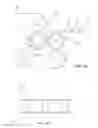
FIGS. 1A and 1B show schematic views highlighting the DESL tissue paper lamination process.
FIGS. 2A and 2B show schematic views highlighting the Point to Point tissue paper lamination process.
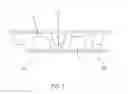
FIG. 3 illustrates a schematic view of the cylinders according to the invention that simultaneously combine the two processes.
DETAILED DESCRIPTION OF THE INVENTION
FIGS. 1A, 1B, 2A and 2B, includes two known technologies for embossing, one named DESL (1), and the other, Point to Point (2). The former technology provided to the paper a smaller volume than the Point to Point process, but provides a 3D appearance with the impression of a larger volume, while the latter provides a large volume of semi-finished product such as toilet paper and paper towels, due to cells structure.
On FIGS. 1A and 1B it is schematically shown the DESL process (1), whereby it can be seen that the two paper layers (3 and 4) pass through their respective embossing cylinders (5 and 6), which jointly operate with calendering rolls (7, 8 and 9), and other sizing rolls (10) so that after the embossing of the paper layers (3 and 4), the same overlap to form a double overlying layer (11), defining a lamination which is held in a calendering roll (8) called Marrying roll. At this point, the elements of cylinders are slotted, but synchronized, where the male elements (high relief) (12) fit into female elements (low relief) (13), resulting in a smaller volume in double paper (11) when compared with the Point to Point process (2), but providing a 3D appearance, creating the impression of a larger volume.
On FIGS. 2A and 2B it is schematically illustrated the Point to Point process (2), where the two paper layers (3 and 4) pass through their respective embossing cylinders (14 and 15), which operate in conjunction with calendering rolls (16, 17) and other sizing rollers (18). After the embossing of the paper layers (3 and 4), the same overlap to form a double overlying layer (19) where relieves of one paper and another have male elements glued on top (20) forming overlapped dots, while the female elements are combined to form a hollow portion (21), producing a padded effect, but giving a flat appearance to double-laminated paper.
Therefore, the Point to Point process is a lamination between two synchronized steel cylinders (14 and 15), both extremely accurate having less than 0.01 mm of circularity and less of 0.005 mm of ovalization, which allow a large volume of semi-finished product as toilet paper and paper towels, due to cells structure. Creating a padded, but with a flat appearance to the laminated paper.
As illustrated on FIG. 3, the present invention comprises an embossing cylinder (22) which includes a combined DESL (1) and Point to Point (2) embossing process. For this purpose, higher elements (23) are provided to DESL process and lower elements (24) for Point to Point process, such elements forming various relieves on paper surface and can compose figures, ribbing and all sorts of drawings.
The combination of both systems into a cylinder (22) definitely solves the problems or drawbacks of combining these two outcomes features in paper, such as volume and 3D appearance. The precision of adjustments on engraved cylinder is ensured through innovative processes in the manufacture of cylinders, even having higher elements for simulating DESL process.
It will be understood that certain characteristics and combinations of embossing rollers and cylinders, as well as the sizing systems, may considerably vary while maintaining the same functional concept for the assembly. Consequently, we note that the embodiment herein described in detail by way of example is clearly open to constructive variations, but always within the scope of the inventive concept herein described of an embossing cylinder (22), which includes combined DESL (1) and Point to Point (2) lamination process, and as many modifications can be made on herein detailed configuration according to the descriptive requirements of the law, it is understood that the present details should be interpreted in an illustrative and not limiting manner.
Claims
1. A cylinder system for tissue paper lamination comprising a DESL technology embossment process (1), and a Point to Point technology embossment process (2), wherein, at first process, the two paper layers (3 and 4) pass through their respective embossing cylinders (5 and 6), which jointly operate with calendering rolls (7, 8 and 9) and other sizing rollers (10), so that after the embossing of the paper layers (3 and 4), the said layers overlap to form a double overlying layer (11), defining a lamination which is held in a calendering roll (8) called Marrying roll, and at this point, the elements of cylinders are slotted, but synchronized, where the male elements (high relief) (12) fit into female elements (low relief) (13), which does not occur with Point to Point technology (2), where the two paper layers (3 and 4) pass through their respective embossing cylinders (14 and 15) which operate in conjunction with calendering rolls (16, 17), and other sizing rollers (18), so that after the embossment of the paper layers (3 and 4), the same overlap to form a double overlying layer (19), where the embossing of both papers have the male elements glued to the top (20) to form overlapping dots, while the female elements are combined to form a hollow part (21); and comprising an embossing cylinder (22) which includes a combined DESL and Point to Point embossing and higher elements (23) are provided for DESL and lower elements (24) for Point to Point process, such elements forming several relieves on paper surface and can compose figures, ribbing and all sorts of drawings.
Images & Drawings included:


Sources:
- United States Patent and Trademark Office - verify current appl. status at the USPTO↗
Recent applications in this class:
- » 20220234323 2022-07-28
ULTRASONICALLY JOINED HANG TAB - » 20180072013 2018-03-15
System and Method of Preparing and Sending Greeting Cards - » 20160361886 2016-12-15
Corrugated paperboard sheet manufacturing apparatus - » 20140024514 2014-01-23
Method and unit for making sections of padding for absorbent sanitary articles - » 20130228286 2013-09-05
Assembly of horizontal surfaces in a plant for production of corrugated board