Manufacturing method of partially cured composite components
US20150165747A1
2015-06-18
14/570,009
2014-12-15
✅ Patent granted
US 9,776,386 B2
2017-10-03
-
-
Barbara J Musser
Greer, Burns & Crain, Ltd.
2035-09-18
Abstract:
An efficient method for manufacturing a partially cured composite component intended to be joined with other component or components to form a composite structure and a manufacturing method of the composite structure. The partial curing of a composite layup is achieved using a mold comprising heat conductive elements and insulating elements and applying heat and pressure over the mold. The heat conductive elements are used to transmit or dissipate heat to/from the composite layup. The insulating elements are used to prevent the transmission or dissipation of heat to/from the composite layup.
Inventors:
- Victor Garcia Solares 1 🇪🇸 Getafe, Spain
- Pilar Munoz Lopez 1 🇪🇸 Getafe, Spain
- Mar Zuarzo Ruiz 1 🇪🇸 Getafe, Spain
- Betty Fantina Llorente 1 🇪🇸 Getafe, Spain
- Cyrille Collart 1 🇫🇷 Toulouse, France
- Bernard Duprieu 1 🇫🇷 Blagnac, France
Assignee:
- AIRBUS OPERATIONS (S.A.S.) 2,221 🇫🇷 Toulouse, France
- AIRBUS OPERATIONS, S.L. 158 🇪🇸 Getafe, Spain
- AIRBUS SAS 369 🇫🇷 Blagnac, France
Applicant:
Interested in similar patents?
Get notified when new applications in this technology area are published.
Classification:
B32B37/02 » CPC further
Methods or apparatus for laminating, e.g. by curing or by ultrasonic bonding characterised by a sequence of laminating steps, e.g. by adding new layers at consecutive laminating stations
B32B38/18 IPC
Ancillary operations in connection with laminating processes Handling of layers or the laminate
B32B38/0012 » CPC further
Ancillary operations in connection with laminating processes Mechanical treatment, e.g. roughening, deforming, stretching
B32B38/00 IPC
Ancillary operations in connection with laminating processes
B32B38/1808 » CPC further
Ancillary operations in connection with laminating processes; Handling of layers or the laminate characterised by the laying up of the layers
B32B37/18 » CPC main
Methods or apparatus for laminating, e.g. by curing or by ultrasonic bonding characterised by the properties of the layers with all layers existing as coherent layers before laminating involving the assembly of discrete sheets or panels only
B32B37/06 » CPC further
Methods or apparatus for laminating, e.g. by curing or by ultrasonic bonding characterised by the heating method
B29C66/0242 » CPC further
General aspects of processes or apparatus for joining preformed parts; General aspects dealing with the joint area or with the area to be joined; Preparation of the material, in the area to be joined, prior to joining or welding; Thermal pre-treatments Heating, or preheating, e.g. drying
B29C66/112 » CPC further
General aspects of processes or apparatus for joining preformed parts; General aspects dealing with the joint area or with the area to be joined; Particular design of joint configurations particular design of the joint cross-sections; Joint cross-sections comprising a single joint-segment, i.e. one of the parts to be joined comprising a single joint-segment in the joint cross-section Single lapped joints
B29C33/3828 » CPC further
Moulds or cores; Details thereof or accessories therefor characterised by the material or the manufacturing process Moulds made of at least two different materials having different thermal conductivities
B29C35/0266 » CPC further
Heating, cooling or curing, e.g. crosslinking or vulcanising; Apparatus therefor; Heating or curing, e.g. crosslinking or vulcanizing during moulding, e.g. in a mould Local curing
B29C66/131 » CPC further
General aspects of processes or apparatus for joining preformed parts; General aspects dealing with the joint area or with the area to be joined; Particular design of joint configurations particular design of the joint cross-sections; Single flanged joints; Fin-type joints; Single hem joints; Edge joints; Interpenetrating fingered joints; Other specific particular designs of joint cross-sections not provided for in groups - Single flanged joints, i.e. one of the parts to be joined being rigid and flanged in the joint area
B29C66/348 » CPC further
General aspects of processes or apparatus for joining preformed parts; General aspects dealing with the joint area or with the area to be joined Avoiding melting or weakening of the zone directly next to the joint area, e.g. by cooling
B29C66/532 » CPC further
General aspects of processes or apparatus for joining preformed parts; General aspects of joining tubular articles; General aspects of joining long products, i.e. bars or profiled elements; General aspects of joining single elements to tubular articles, hollow articles or bars; General aspects of joining several hollow-preforms to form hollow or tubular articles; Joining tubular articles, profiled elements or bars; Joining single elements to tubular articles, hollow articles or bars; Joining several hollow-preforms to form hollow or tubular articles; Joining single elements to tubular articles, hollow articles or bars Joining single elements to the wall of tubular articles, hollow articles or bars
B29C66/73751 » CPC further
General aspects of processes or apparatus for joining preformed parts characterised by the composition, physical properties or the structure of the material of the parts to be joined; Joining with non-plastics material characterised by the intensive physical properties of the material of the parts to be joined, by the optical properties of the material of the parts to be joined, by the extensive physical properties of the parts to be joined, by the state of the material of the parts to be joined or by the material of the parts to be joined being a thermoplastic or a thermoset characterised by the state of the material of the parts to be joined uncured, partially cured or fully cured the to-be-joined area of at least one of the parts to be joined being uncured, i.e. non cross-linked, non vulcanized
B29D99/0014 » CPC further
Subject matter not provided for in other groups of this subclass; Producing wall or panel-like structures, e.g. for hulls, fuselages, or buildings provided with ridges or ribs, e.g. joined ribs
B29L2031/3076 » CPC further
Other particular articles; Vehicles, e.g. ships or aircraft, or body parts thereof Aircrafts
Y10T156/1044 » CPC further
Adhesive bonding and miscellaneous chemical manufacture; Methods of surface bonding and/or assembly therefor with permanent bending or reshaping or surface deformation of self sustaining lamina; Subsequent to assembly of parallel stacked sheets only
B29C70/40 IPC
Shaping composites, i.e. plastics material comprising reinforcements, fillers or preformed parts, e.g. inserts comprising reinforcements only, e.g. self-reinforcing plastics; Shaping operations therefor Shaping or impregnating by compression not applied
B29C65/00 IPC
Joining of preformed parts ; Apparatus therefor
B29C33/38 IPC
Moulds or cores; Details thereof or accessories therefor characterised by the material or the manufacturing process
B29C35/02 IPC
Heating, cooling or curing, e.g. crosslinking or vulcanising; Apparatus therefor Heating or curing, e.g. crosslinking or vulcanizing during moulding, e.g. in a mould
B29D99/00 IPC
Subject matter not provided for in other groups of this subclass
B29C70/46 » CPC further
Shaping composites, i.e. plastics material comprising reinforcements, fillers or preformed parts, e.g. inserts comprising reinforcements only, e.g. self-reinforcing plastics; Shaping operations therefor; Shaping or impregnating by compression not applied for producing articles of definite length, i.e. discrete articles using matched moulds, e.g. for deforming sheet moulding compounds [SMC] or prepregs
B29C65/02 » CPC further
Joining of preformed parts ; Apparatus therefor by heating, with or without pressure
B29C66/721 » CPC further
General aspects of processes or apparatus for joining preformed parts characterised by the composition, physical properties or the structure of the material of the parts to be joined; Joining with non-plastics material characterised by the structure of the material of the parts to be joined Fibre-reinforced materials
Description
CROSS-REFERENCES TO RELATED APPLICATIONS
This application claims the benefit of the European patent application No. 13382509.1 filed on Dec. 13, 2013, the entire disclosures of which are incorporated herein by way of reference.
FIELD OF THE INVENTION
This invention relates to methods of manufacturing partially cured composite components and also to methods of manufacturing composite structures using partially cured composite components.
BACKGROUND OF THE INVENTION
Composites are made up from individual laminas bonded together at a certain temperature in a single consolidated laminate. Each layer is composed of a mixture of fibers and resin. The resin flows within and between the laminas before getting to its curing temperature.
Composite laminates are used extensively in the aeronautical industry as well as in other industries.
In conventional manufacturing processes, the components of a composite structure are manufactured independently and subsequently joined or assembled to reach the final structure.
Three types of techniques are available to get a final composite structure without using rivets as joining elements of its components: co-curing un-cured components, co-bonding cured components with un-cured components and bonding cured components between them (secondary bonding).
The co-curing technique is the best from a structural point of view but requires a complicate tooling for handling the assembly of un-cured components.
A known approach to solve this problem is using partially cured composite components because they can be better handled than fully un-cured components. In a known method to produce panels with two curing areas a composite layup is placed in a two chamber mold between four semi-rigid membranes and then, while vacuum is applied to the layup, temperature and pressure is exerted to the layup by fluids introduced into the chambers (see www.quickstep.com.au/ for further information).
A disadvantage of that method for, particularly, manufacturing partially cured large composite components is the complexity and cost of the tooling required.
The present invention is directed to the solution of said drawback.
SUMMARY OF THE INVENTION
An object of the present invention is to provide an efficient method for manufacturing a partially cured composite component intended to be joined with other component or components to form a composite structure.
Another object of the present invention is to provide a method for manufacturing a composite structure with partially cured components manufactured by the above method.
The method of manufacturing a partially cured composite component according to the invention comprises:
-
- placing a composite layup inside a mold comprising heat conductive and insulating elements, the heat conductive elements being placed to transmit heat to those portions of the composite layup that shall be fully cured or to dissipate heat from those portions of the composite layup that be shall be partially cured or remain un-cured, the heat insulating elements being placed to prevent the transmission of heat to those portions of the composite layup that shall be partially cured or remain un-cured or to prevent the dissipation of heat from those portions of the composite layup that shall be fully cured;
- applying heat and pressure to the mold.
A suitable combination of heat conductive and insulating elements taking into account the geometry of the composite component being manufactured and the desired curing degree of different portions of the same allows the application of a predetermined cycle of pressure and heat to the mold to achieve the desired result. In particular, the dimension of the transition portions between the cured and un-cured portions can be properly controlled.
Advantageously, the heat conductive and insulating elements are rigid elements. This facilitates the preparation of the mold and the control of the transmission of heat to the different portions of the composite layup.
Advantageously, pressure is applied on two opposite faces of the mold by mechanical pressure elements such as pressure plates. The aforementioned mold structure allows configuring the mold with two opposite faces adapted to the shape of the pressure elements being used.
Advantageously, heat is applied to the mold in one direction, for example by applying it on one side of the mold. This simplifies the tooling required. Depending on the component being manufactured, heat can be applied to the whole mold or only to an element of the mold.
The method of manufacturing a composite structure according to the invention comprises:
-
- preparing a first composite lay-up and one or more second composite layups;
- curing partially said one or more second composite layups according to the aforementioned method, leaving un-cured those portions intended to be joined to the first composite layup;
- assembling said layups bringing in contact said un-cured portions of said one or more second composite layups with the first layup;
- co-curing the assembled set of said layups.
This method is particularly applicable for the manufacture of, for example, skins of aircraft lifting surfaces reinforced with T-shaped or omega-shaped stringers, being the first layup the skin layup, the second layups the stringer layups and the un-cured portions of the stringers their feet and a portion of their webs.
Other characteristics and advantages of the present invention will be clear from the following detailed description of embodiments illustrative of its object in relation to the attached figures.
BRIEF DESCRIPTION OF THE DRAWINGS
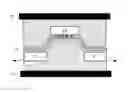
FIG. 1 is a schematic cross section illustrating an embodiment of the invention for the manufacture of a flat panel partially cured showing the panel lay-up and the tooling arrangement for performing the curing operation.
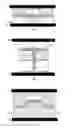
FIG. 2 is a schematic cross section illustrating an embodiment of the invention for the manufacture of a T-shaped stringer showing the stringer lay-up and the tooling arrangement for performing the curing operation.
FIG. 3 is a schematic cross section illustrating an embodiment of the invention for the manufacture of an omega-shaped stringer showing the stringer lay-up and the tooling arrangement for performing the curing operation.
DETAILED DESCRIPTION OF THE PREFERRED EMBODIMENTS
In relation to the curing degree of a portion of a composite component, in this specification an un-cured portion shall be understood as a portion with a curing degree lower than 20%, a cured portion as a portion with a curing degree higher than 80% and a partially cured portion as a portion with a curing degree between 20-80%.
In reference to FIG. 1, an embodiment of the method of the invention for manufacturing a composite flat panel with a central portion cured and two side portions partially cured will now be described.
In a first step, a composite layup 11 is disposed in a mold formed by steel boxes 21 and mica plates 23.
In a second step, heat and pressure are applied on the mold using a heated upper pressure plate 13 and a lower pressure plate 15.
Steel boxes 21, used as heat conductive elements, and mica plates 23, used as heat insulating elements, are arranged so that the heat comes from the heated upper pressure plate 13 to the central portion of the layup 11 through the upper steel box 21 as shown by the straight arrows of FIG. 1 to carry out curing. Heat is also transmitted through the layup 11 to its side portions, but part of that heat is dissipated (arrows D) through the lower steel boxes 21.
This arrangement allows controlling the application of heat to the layup 11 so that its central portion, disposed between the upper steel box 21 and the lower mica plate 23, is cured and the side portions, disposed between the upper mica plates 23 and the lower steel boxes 21, remain un-cured except in some portions close to the central portion where they are partially cured.
In reference to FIG. 2, an embodiment of the method of the invention for manufacturing a T-shaped stringer with a portion of the web cured, with the foot and a portion of the web un-cured and with an intermediate portion of the web partially cured, will now be described.
In a first step, a T-shaped composite layup 11 is disposed in a mold formed by steel boxes 21 and mica plates 23 with the web in the lower part and the foot in the upper part.
In a second step, heat and pressure are applied on the mold using the heated lower pressure plate 13 and the upper pressure plate 15.
Steel boxes 21, used as heat conductive elements, and mica plates 23, used as heat insulating elements, are arranged so that the heat comes from the heated lower pressure plate 13 to a first portion of the web of the layup 11 through the lower steel boxes 21, as indicated by the straight arrows in FIG. 2, to carry out curing. Heat is also transmitted through the layup 11 to the rest of the web and to the foot. In the remainder of the web, the mica plates 23 prevent heat from dissipating so that it can be partially cured. The foot remains un-cured because the upper steel box 21 allows the dissipation of the heat (arrows D) that arrives to the foot of the layup 11.
In reference to FIG. 3, an embodiment of the method of the invention for manufacturing an omega-shaped stringer with the head and a portion of the webs cured, with the feet and a portion of the webs un-cured and with an intermediate portion of the webs partially cured, will now be described.
In a first step, an omega-shaped composite layup 11 is disposed in a mold formed by a steel box 22, equipped with heating elements for acting as a self-heated module, steel boxes 21, used as heat conductive elements, and mica plates 23, used as heat insulating elements.
In a second step, pressure is applied on the mold by means of two pressure plates 15 and the self-heated module 22 is activated for the application of heat.
The self-heated module 22 and the mica plates 23 are arranged so that heat reaches the head of the omega-shaped layup 11 as indicated by the straight arrows in FIG. 3 to carry out curing. Heat is also transmitted through the webs of the layup 11. Mica plates 23 prevent heat dissipation so that the webs of the layup 11 can be partially cured. The lower steel boxes 21 allow the dissipation of heat (arrows D) arriving at the feet of the layup 11 so that they remain un-cured.
Method of manufacturing of a structure with composite components partially cured
In an embodiment to manufacture, for example, a skin reinforced with T-shaped stringers of an aircraft lifting surface, the method of the invention comprises:
-
- Preparing the composite layup corresponding to the skin and the composite layups corresponding to the T-shaped stringers.
- Partially curing the composite layups corresponding to the T-shaped stringers according to the method explained above in reference to FIG. 2. Its execution out-of-autoclave optimizes energy consumption.
- Assembling the un-cured skin layup and the partially cured T-shaped stringer layups bringing in contact the feet (un-cured) of the stringers layups with the skin layup (un-cured) using appropriate tooling. The tooling required for this assembly is less complex than the tooling required for the assembly of fully un-cured components because the stringers can be moved handling them by the cured portion of their webs and can be easily positioned over the skin layup using suitable positioners.
- Co-curing the assembled set of said layups in, for example, an autoclave.
Although the present invention has been described in connection with various embodiments, it will be appreciated from the specification that various combinations of elements, variations or improvements therein may be made, and are within the scope of the invention.
Claims
1. A method of manufacturing a partially cured composite component, the method comprising:
placing a composite layup inside a mold;
applying heat and pressure to the mold;
wherein the mold comprises heat conductive elements and insulating elements;
placing the heat conductive elements to transmit heat to those portions of the composite layup that shall be fully cured or to dissipate heat from those portions of the composite layup that shall be partially cured or that shall remain un-cured; and
placing the insulating elements to prevent the transmission of heat to those portions of the composite layup that shall be partially cured or that shall remain un-cured or to prevent the dissipation of heat from those portions of the composite layup that shall be fully cured.
2. A method according to claim 1, wherein the heat conductive elements and the insulating elements comprise rigid elements.
3. A method according to claim 2, wherein the pressure is applied over two opposing faces of the mold.
4. A method according to claim 3, wherein heat is applied over one of the faces of the mold where pressure is applied.
5. A method according to claim 2, wherein the pressure is applied over two opposing faces of the mold and the heat is applied directly from heat conductive elements of the mold provided with heating elements.
6. A method according to claim 2, wherein the heat conductive elements comprise steel boxes and the heat insulating elements comprise mica plates.
7. A method of manufacturing a composite structure, comprising:
preparing a first composite layup and one or more second composite layups;
curing partially said one or more second composite layups according to the method of claim 1 leaving un-cured those portions intended to be joined to the first composite layup;
assembling said first and second composite layups bringing in contact the un-cured portions of the one or more second composite layups with the first composite layup; and
co-curing the assembled set of said layups.
8. A method of manufacturing a composite structure according to claim 7, wherein:
the composite structure comprises a reinforced skin of an aircraft lifting surface, the first composite layup is the skin layup and the second composite layups are T-shaped or omega-shaped stringers layups;
the un-cured portions of the stringer layups intended to be joined to the skin layup comprise feet and a contiguous portion of webs of the stringer layups;
the end web portion of the stringer layups is cured;
an intermediate web portion of the stringer layups is partially cured.
Images & Drawings included:
Sources:
- United States Patent and Trademark Office - verify current appl. status at the USPTO↗
Recent applications in this class:
- » 20250289213 2025-09-18
SYSTEMS AND METHODS FOR FORMING LAMINATE COMPOSITE STRUCTURES - » 20250121591 2025-04-17
METHODS FOR PRODUCING COMPOSITES THAT MITIGATE STRICT FAYING SURFACE TOLERANCES - » 20250058556 2025-02-20
METHOD FOR MANUFACTURING A DECORATIVE LAMINATE PANEL - » 20250033343 2025-01-30
INSULATING GLAZING UNIT, SPACER, HOLDER, AND GLAZING ASSEMBLY TECHNOLOGY - » 20240262096 2024-08-08
LAMINATION APPARATUS AND METHOD - » 20240246328 2024-07-25
METHOD OF MANUFACTURING A FLEXIBLE DISPLAY SUBSTRATE AND PROCESS FILM FOR MANUFACTURING A FLEXIBLE DISPLAY SUBSTRATE - » 20240239093 2024-07-18
INSULATION ARTICLES INCLUDING CORROSION INHIBITORS AND METHODS OF PRODUCING THE SAME - » 20240157693 2024-05-16
Providing A Z Fiber Composite Component - » 20240075729 2024-03-07
METHOD FOR MANUFACTURING A LAMINATE, AN AMINOPLAST RESIN CATALYST USED THEREIN, AND A LAMINATE OBTAINED THEREBY - » 20240042749 2024-02-08
PARTITION FOR A COMMERCIAL OR TRANSPORT VEHICLE
Recent applications for this Assignee:
- » 20250201879 2025-06-19
Soft-Start Strategy Of A Fuel Cell - » 20250196988 2025-06-19
DEVICE FOR ABSORBING ENERGY BY COMPRESSION, AIRCRAFT COMPRISING AT LEAST ONE SUCH DEVICE - » 20250136265 2025-05-01
AIRCRAFT CARGO DOOR ACTUATION SYSTEM - » 20250136265 2025-05-01
AIRCRAFT CARGO DOOR ACTUATION SYSTEM - » 20250136264 2025-05-01
AIRCRAFT CARGO DOOR ACTUATION SYSTEM - » 20250136264 2025-05-01
AIRCRAFT CARGO DOOR ACTUATION SYSTEM - » 20250115365 2025-04-10
AIRCRAFT COMPRISING AT LEAST ONE ENGINE ATTACHMENT SYSTEM THAT HAS REDUCED VERTICAL BULK - » 20250078670 2025-03-06
METHOD FOR MANAGING TAXIING PATHS - » 20250076893 2025-03-06
METHOD AND DEVICE FOR OPTIMIZING A CLIMB PHASE OF AN AIRCRAFT, IN PARTICULAR IN TERMS OF FUEL CONSUMPTION - » 20250074608 2025-03-06
AIRCRAFT PYLON FAIRING, FAIRING ASSEMBLY, AIRCRAFT PYLON AND AIRCRAFT